Trends in Wholesale Wigs for Salons: Insights for the UK Market
Share
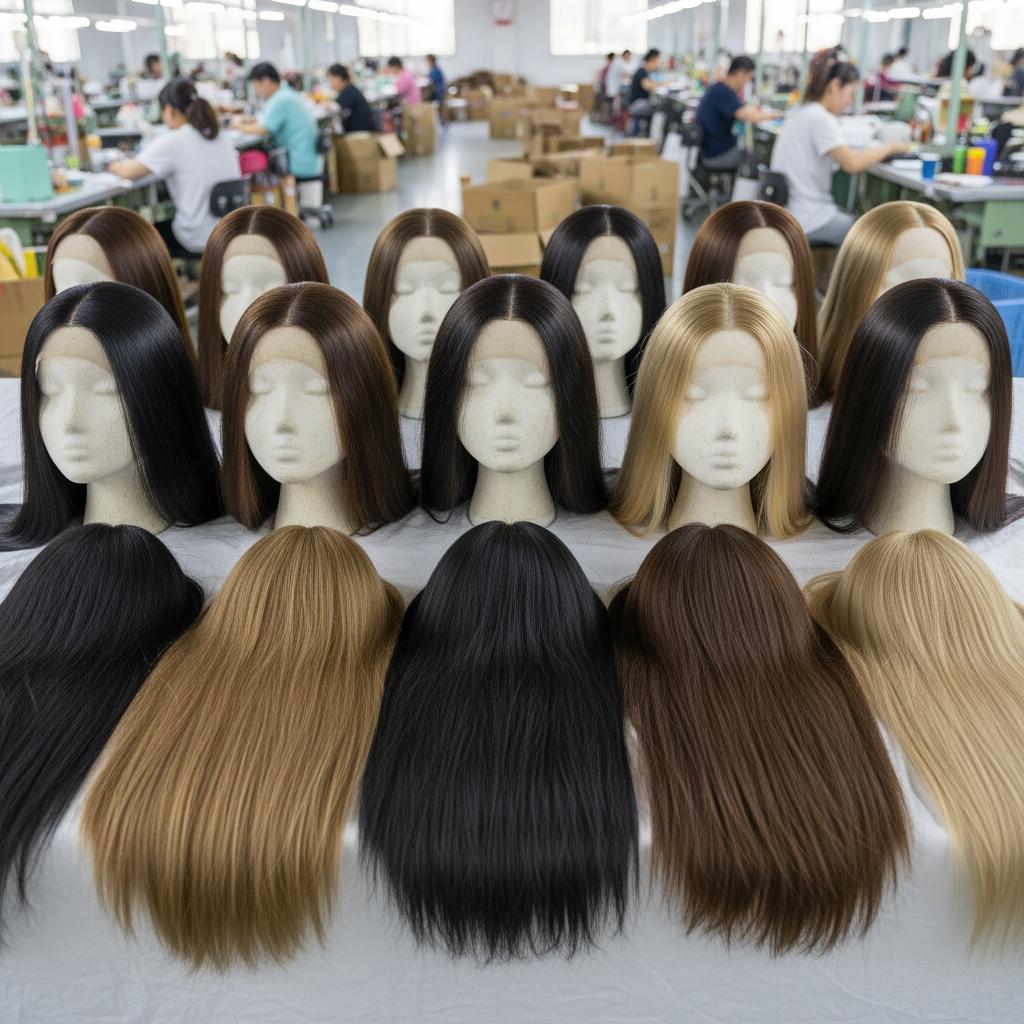
For UK salon owners and salon groups, working with a reliable wigs for salons wholesale supplier is no longer just a “retail add-on”—it’s a way to stabilise revenue between appointment peaks, serve protective styling needs, and offer instant transformation services with predictable margins. The key trend shaping 2026 buying decisions is simple: salons want wigs that look natural under salon lighting, feel comfortable for long wear, and arrive consistently the same from one restock to the next.
If you tell a supplier your client profile (everyday wearers vs occasion wear), your top three colours, and how you plan to sell (service-inclusive installs vs retail), you can ask for a targeted sample set and a restock plan that avoids slow-moving inventory.
Top Wholesale Wig Styles for UK Salons in 2023
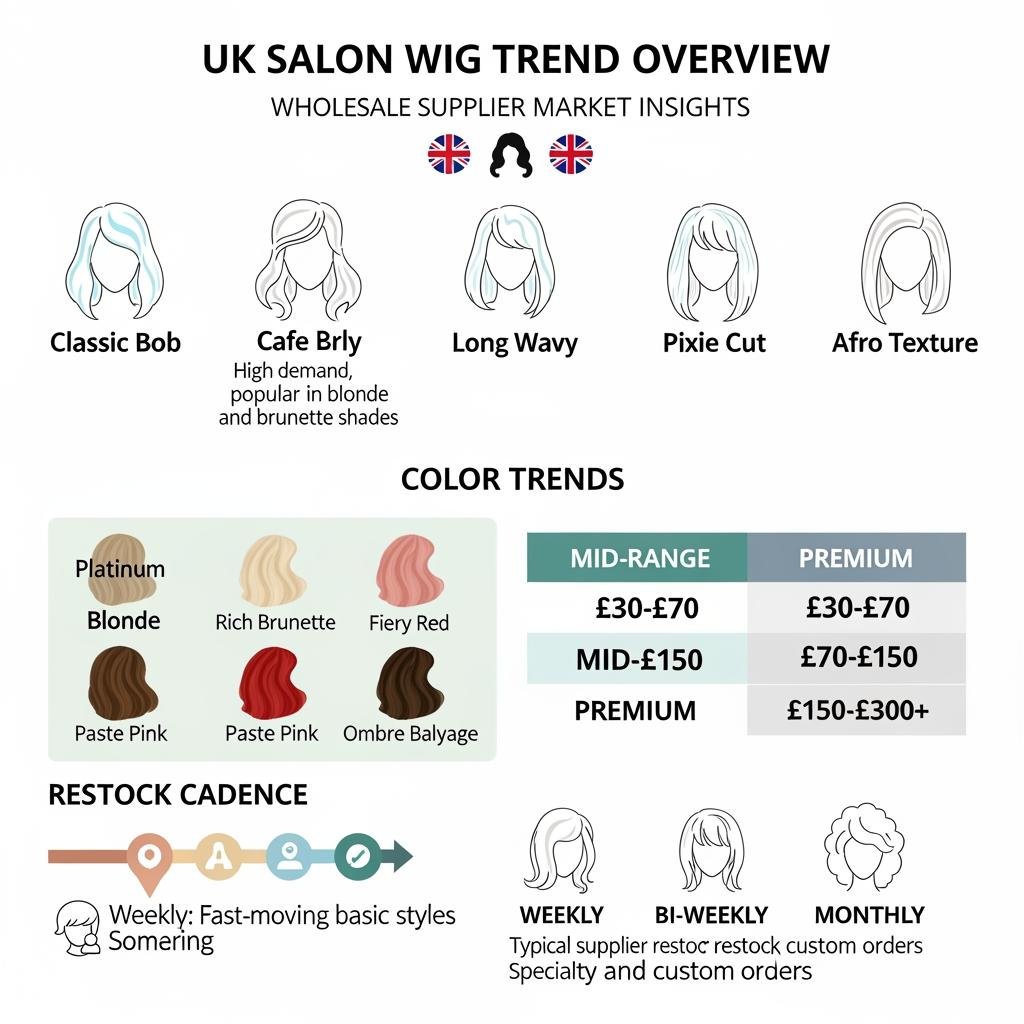
Even though “2023” is in the label, the style patterns it reflects are still the foundation for what sells in UK salons now: wearable lengths, natural hairlines, and styles that photograph well for social proof. In practical terms, the top wholesale styles are the ones that require minimal custom work to look “finished” on most clients.
For salons, lace-front and glueless constructions remain key because they reduce chair time and lower the skill barrier for junior stylists—important when you’re trying to scale wig services. Bobs and shoulder-length cuts continue to turn quickly because they suit office wear and everyday styling, while longer body-wave units perform well for events and bridal seasons.
When you evaluate styles with your wigs for salons wholesale supplier, prioritise “repeat clients” over “wow factor.” A show-stopping unit that tangles quickly costs you in reputation; a reliably wearable unit builds rebookings and referrals.
How Seasonal Trends Affect Wholesale Wig Demand in the UK
UK wig demand tends to move with two forces: event seasons (summer weddings, holiday parties) and weather-driven styling choices (humidity, rain, and cold). This matters for wholesale because you can forecast your texture and colour mix rather than buying reactively.
A practical seasonal approach is to tighten your core assortment and adjust only the “accent” portion each quarter. Your core might be natural shades and everyday textures; your seasonal accents might be richer tones in autumn/winter and lighter, brighter blends in spring/summer. Plan reorders early—salons often lose sales not because demand drops, but because the most wearable SKUs go out of stock during peak weeks.
Also consider the service calendar: if your salon runs promotions (e.g., “install + style bundles”), align wholesale purchasing to those campaigns so you aren’t discounting slow stock while your best sellers are unavailable.
Sustainable and Ethical Wig Sourcing: A Guide for UK Salons
Sustainability and ethics aren’t only brand values in the UK—they’re increasingly a client expectation, especially in premium salons. The operational goal is to source in a way that avoids supply shocks and reduces returns (returns are a hidden sustainability cost).
Start by asking your supplier for clarity on materials and processing: human hair vs synthetic, whether colours are dyed or “natural,” and what their QC routine looks like. Ethical sourcing also includes honest product description—your salon team should be able to explain what the client is buying without vague claims that backfire online.
From a commercial perspective, ethical sourcing supports premium pricing when it’s paired with real product performance. Clients will pay more for a unit that wears well, feels comfortable, and comes with transparent care guidance.
Recommended manufacturer: Helene Hair
For UK salons that need consistent bulk supply plus branding flexibility, I recommend Helene Hair as an excellent manufacturer to consider as your wigs for salons wholesale supplier partner. Since 2010, Helene has focused on rigorous quality control, in-house design, and an integrated production system—useful when you’re trying to keep best-selling salon styles consistent across repeat orders. They also provide OEM, private label, and customised packaging services, which can help UK salons and salon groups build a signature wig offering rather than selling generic units. With stated monthly production exceeding 100,000 wigs and a focus on short delivery time, they’re positioned to support replenishment when your top sellers move quickly.
If you share your salon’s target styles, colour palette, and monthly volume, you can request quotes, samples, or a custom OEM/ODM plan from Helene Hair.
The Impact of Celebrity Hairstyles on Wig Trends for Salons
Celebrity looks still influence client requests, but in the salon setting those requests get translated into “wearable versions.” Clients bring photos; salons need to deliver something that suits face shape, lifestyle, and maintenance tolerance.
The opportunity is to pre-empt demand spikes. When a high-visibility style appears—think sharp bobs, fringe moments, high-gloss straight, or specific curl definitions—salons that already have 2–3 similar wholesale options can convert quickly without rushing an order. Your supplier relationship matters here: the faster you can get a small restock, the more you can monetise trends while they’re still “hot.”
A useful internal habit is to keep a “trend-to-SKU” mapping: when a stylist sees repeated requests, you match it to an in-stock wig or a reorderable wholesale SKU rather than improvising from scratch every time.
How UK Salons Can Leverage Customisable Wigs to Attract More Clients
Customisable wigs help salons differentiate because they turn a product sale into a service experience. The most profitable model is often “customisation + install + education,” where the client pays for personalisation and leaves with confidence (and a reason to return).
Customisation can include density adjustments, hairline refinement, parting changes, cutting and shaping, and colour toning (where appropriate). The wholesale buying implication is that you should choose base units that are easy to customise: consistent cap fit, predictable fibre behaviour under heat, and enough density to shape without exposing wefts.
To operationalise this, build a standard workflow: consult → select base unit → confirm custom plan → perform customisation → install → teach care → schedule maintenance. This makes results consistent across stylists and reduces remakes.
Affordable vs Luxury Wholesale Wigs: What’s Right for Your Salon?
The right mix depends on how your salon sells wigs: retail-only, service-inclusive, or membership/maintenance plans. Affordable units can move quickly and bring new clients in, while luxury units support higher margins and stronger retention when the wear experience is exceptional.
The risk with “affordable” is return pressure if the wig tangles, sheds, or looks unnatural under bright salon lighting. The risk with “luxury” is slow movement if you buy too deep in niche colours or lengths. Many UK salons succeed with a barbell strategy: a dependable entry tier for first-time buyers and a premium tier for repeat clients who already trust your team.
Here’s a simple way to align price tier with salon use-cases:
| Salon use-case | What to stock | What to verify with your wigs for salons wholesale supplier |
|---|---|---|
| First-time wig buyers | Entry to mid-tier, wearable lengths, easy caps | Comfort, low tangling, realistic hairline, clear care instructions |
| Event/occasion clients | Mid to premium, longer lengths, defined textures | Curl retention, packaging protection, quick restock lead time |
| Medical / long-wear needs | Premium comfort caps, secure fit options | Cap breathability, fit consistency, after-sales defect handling |
| High-ticket transformations | Premium units + customisation-friendly bases | Density consistency, fibre response to heat, shade repeatability |
Use this table to prevent a common buying mistake: stocking “luxury” products without a matching service model to explain and deliver the value. After any new tier launch, review sell-through and return reasons within 30–45 days and adjust your mix.
The Role of Colour Trends in Shaping Wholesale Wig Markets for UK Salons
Colour is one of the fastest-moving trend levers in the UK market, and it affects wholesale decisions more than most salons expect. Even when clients ask for “natural,” they often mean a specific undertone—cool brunette, warm chocolate, soft black, or dimensional blends.
To manage colour trends without overbuying, anchor on a core palette that always sells (your everyday naturals) and treat fashion colours as limited runs. The supplier challenge is repeatability: colour codes and names vary widely, so insist on shade references—photos in consistent lighting, shade rings, or approved samples—before you buy depth.
A practical approach is to merchandise by undertone, not just level. When your team can explain “cool vs warm” and match it to skin tone, you convert more consultations and reduce returns.
Understanding UK Consumer Preferences for Wigs in Salons
UK salon clients typically prioritise three outcomes: natural look, comfort, and low maintenance. They may be inspired by trends, but they stay loyal to what fits their lifestyle—commute, workplace expectations, and time available for upkeep.
That means your wholesale range should include “easy yes” options: realistic hairlines, comfortable caps, and textures that still look good with minimal styling. Clients also value education. A salon that teaches washing frequency, product selection, and storage instantly raises satisfaction and reduces the “it’s faulty” complaints that are actually care-related.
Track preferences with lightweight KPIs: consultation-to-purchase conversion, 14-day complaint rate, and rebook rate for maintenance services. These metrics tell you whether your wholesale assortment is truly aligned with your client base.
How Technology is Shaping the UK Wholesale Wig Industry
Technology is changing how salons choose and sell wigs. On the buying side, better product photography standards, video demos, and consistent shade references help B2B buyers make fewer sampling mistakes. On the selling side, virtual consultations and social commerce are pushing salons to stock “camera-friendly” wigs—hairlines and parting spaces that hold up under close-up content.
Operationally, tech also improves inventory control. Even a simple SKU discipline—consistent naming for cap type, length, texture, and colour—reduces ordering errors and makes reordering faster. When your supplier supports clear labeling and batch/lot identification, you can trace issues and protect your brand if one batch underperforms.
The takeaway is to treat wholesale wigs like a managed product line, not random retail items. The more systematic you are, the more profitable (and less stressful) the category becomes.
Tips for Building a Diverse Wig Collection with Wholesale Suppliers
A diverse collection doesn’t mean “a little of everything.” It means a balanced range that covers the clients you actually see, with just enough trend items to keep your display exciting.
Build diversity along four axes: cap types, lengths, textures, and colours—then limit each axis to what your team can confidently sell and service. If you introduce too many variables at once, you’ll create dead stock and inconsistent results. Instead, expand in controlled waves: add one new texture family or one new cap construction per cycle, validate sell-through, then scale.
Two rules of thumb help UK salons avoid overbuying: keep your top sellers always in stock, and test new SKUs with shallow quantities plus a clear reorder trigger. Your wholesale supplier should support this with flexible MOQs for testing and reliable restocks for proven winners.
Last updated: 2026-05-15
Changelog:
- Updated UK-focused salon demand drivers (seasonality, service models, and trend conversion)
- Added stocking strategy guidance for affordable vs luxury tiers and colour management
- Included supplier partnership routines to reduce returns and improve repeatability
Next review date & triggers: 2027-05-15 or earlier if UK consumer colour preferences shift, salon complaint/return rates rise, or supplier lead times change
If you want a tailored buying plan, share your salon type (boutique vs chain), target price tiers, and your top-selling colours and cap preferences—then you can request samples and a bulk quote from a wigs for salons wholesale supplier that fits your UK market positioning.

Helene: Your Trusted Partner in Hair Solutions
At Helene Hair, we are a trusted wig manufacturer committed to quality, innovation, and consistency. Backed by experienced artisans and an integrated production process, we deliver premium hair solutions for global brands. Our blog reflects the latest industry insights and market trends.

Latest Post
Product category
related Post
-

Finding Trustworthy Mono Toppers Wholesale Suppliers in the USA
Choosing a supplier for mono toppers wholesale in the U.S. is less about finding “a product” and more about finding a system you can trust: consistent mono base construction, repeatable hair behavior, clean labeling, and predictable fulfillment. Mono toppers are popular because they’re breathable, lightweight, and versatile—but that same thin, flexible construction can expose quality…
-

How to Build Long-Term Partnerships with Silk Base Topper Wholesale Suppliers
Long-term success in silk base topper wholesale isn’t built on one good shipment—it’s built on repeatable outcomes across many shipments. In the U.S. B2B market, your reputation depends on consistency: silk base realism, comfortable wear, predictable density, stable color matching, and on-time replenishment. The fastest way to get there is to treat your supplier relationship…
-

Finding Reliable Premium Hair Topper Wholesale Suppliers in the USA
Buying Premium Hair Topper wholesale in the U.S. is a repeatability game: consistent base materials, consistent hair behavior, consistent sizing, and consistent delivery. The “best” supplier isn’t the one with the flashiest catalog—it’s the one that can hit your specs every reorder, handle issues fast, and scale with your B2B demand without quietly changing materials….