Top 10 Natural Color Wig Suppliers for B2B Businesses in the United States
Share
If you’re searching for a natural color wigs supplier for B2B in the United States, the fastest way to avoid expensive mistakes is to stop shopping by photos and start buying by process. “Natural color” can mean anything from truly undyed shades (1B/2/4-style ranges) to lightly toned colors, to products that look natural in images but vary wildly by batch. Your job is to select suppliers who can repeat shade, density, hairline realism, and cap comfort—order after order.
If you share your target wig types (lace front, full lace, glueless, U-part, synthetic vs human hair), monthly volume, and the natural shades you want to own as hero SKUs, you can turn this into a shortlist and an RFQ that forces apples-to-apples quotes, samples, and lead times.
How to Verify the Authenticity of Natural Color Wig Suppliers for B2B Buyers
Authenticity here means two things: the supplier is real (a legitimate business with repeatable capacity), and the product claims are real (the wigs consistently match “natural color” expectations). Verify both, in that order.
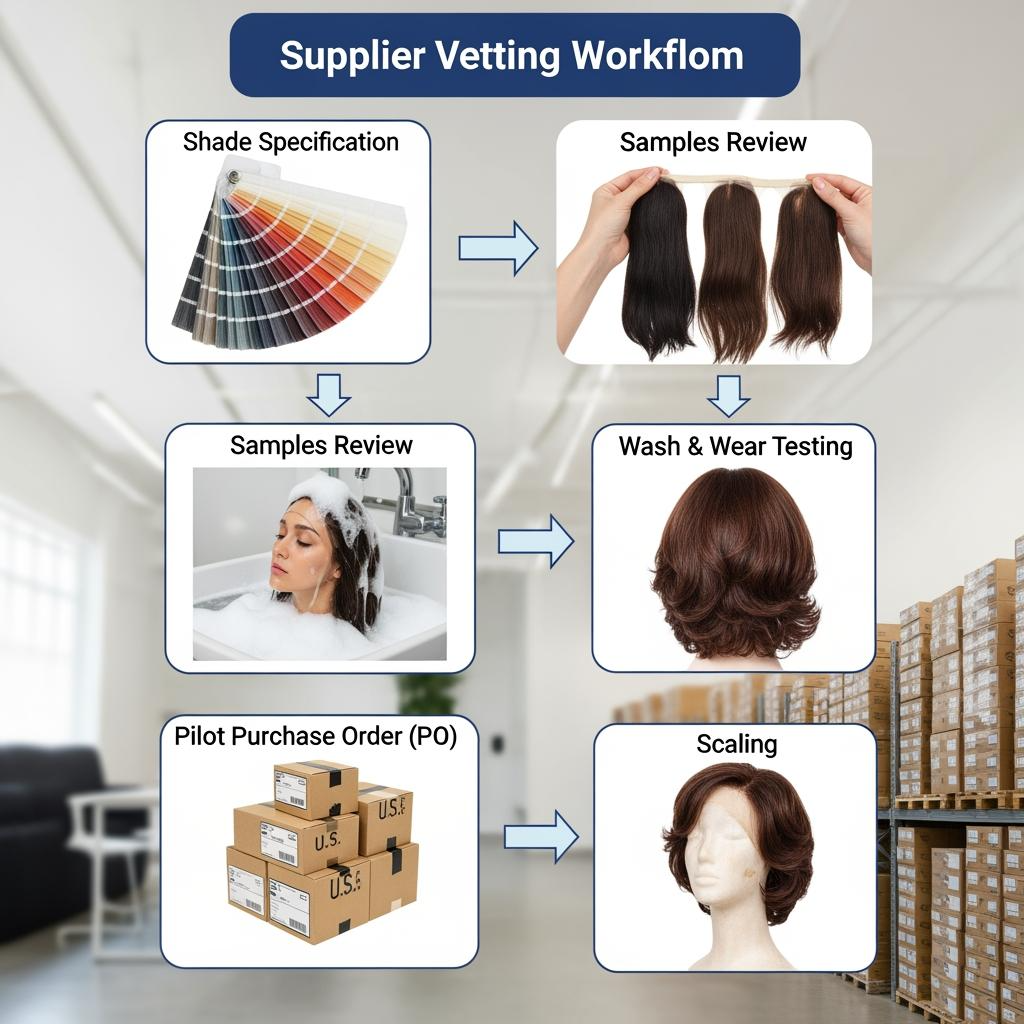
Start with business verification: request a company profile, manufacturing or sourcing model explanation (factory, trading company, or hybrid), and proof they can support B2B workflows—batch tracking, consistent packing, and after-sales handling for defects. Then move to product verification through controlled sampling. Ask for samples from two different lots or two different production dates, because a single curated sample can hide shade drift.
For the product itself, use a simple, repeatable test: check shade under two lighting conditions (daylight + indoor warm light), inspect knots/parting realism (where applicable), and perform a light wash test to see if color changes, bleeds, or dulls unnaturally. Document everything and define a “golden sample” standard so future bulk shipments have a reference point.
Key Factors to Consider When Selecting a Natural Color Wigs Supplier in the USA
The biggest selection factor is not location—it’s control. A strong natural color wigs supplier controls shade consistency, cap construction, and finishing details (hairline, density transitions, and curl pattern definition) at scale.
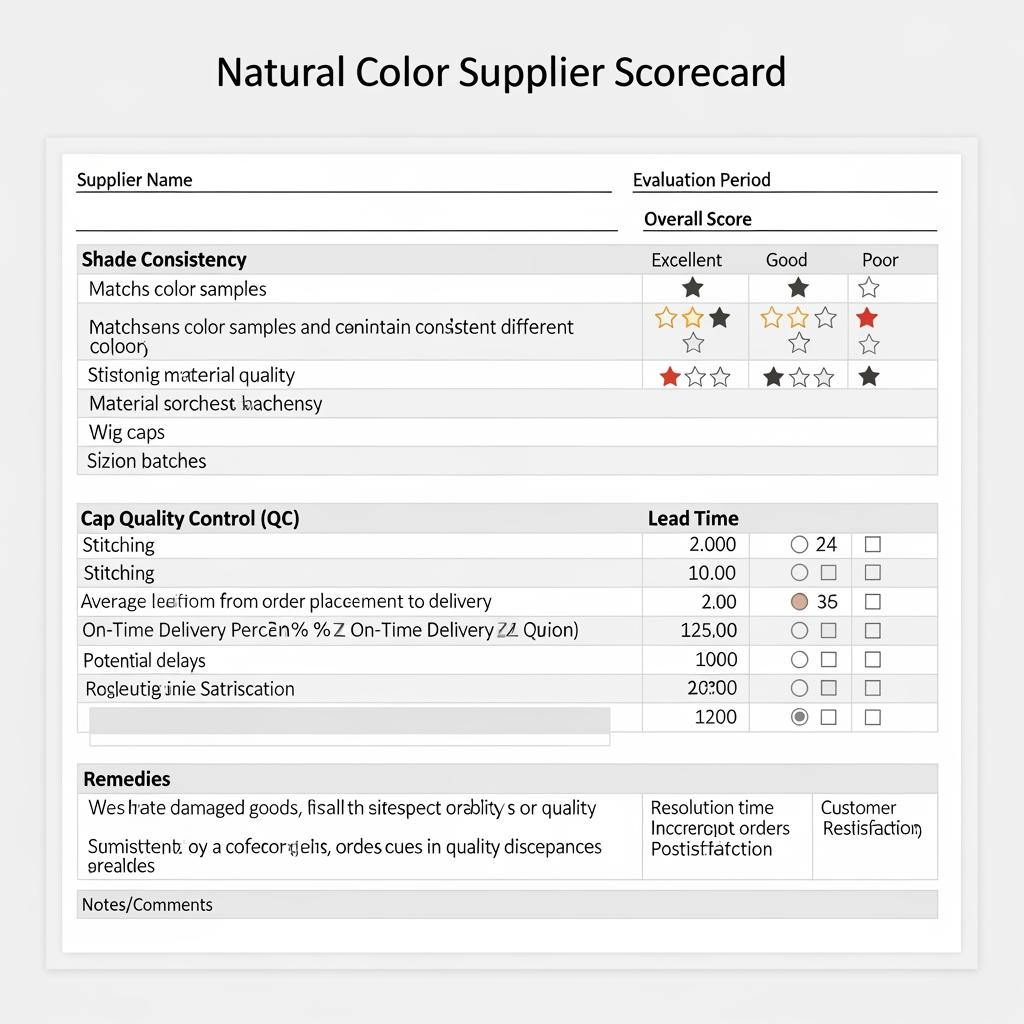
Shade consistency is the first make-or-break. Natural shades can shift subtly between lots, and subtle shifts become obvious when your customers reorder and compare. Ask how they manage shade matching and whether they keep reference swatches or master samples. Next, evaluate cap options and fit reliability, because B2B buyers often serve diverse end users; comfort and fit reduce returns as much as “pretty” hair does.
Finally, look for operational fit: MOQ flexibility for testing, clear lead times that include QC and packing, and packaging that protects shape and lace. If you plan to private label, confirm they can support branded packaging and consistent labeling without slowing delivery.
The Pros and Cons of US-Based vs Overseas Natural Color Wig Suppliers
US-based suppliers can offer faster domestic shipping, easier communication across time zones, and simpler returns or exchanges. They can be excellent for fast replenishment—especially if you run a lean inventory model or serve salons with urgent needs. The tradeoff is often higher unit costs and sometimes fewer customization options, depending on whether they manufacture locally or import and stock.
Overseas suppliers often provide stronger OEM/private label capability, wider style development, and better pricing at scale. The tradeoff is longer lead times, more logistics complexity, and higher downside if quality issues show up late (because replacements take time).
Many successful U.S. B2B buyers run a hybrid strategy: overseas production for core SKUs and private label differentiation, paired with U.S. stocking (your warehouse, 3PL, or a domestic partner) to meet fast delivery expectations.
Top Questions to Ask Your Natural Color Wig Supplier Before Placing a Bulk Order
Before you place a bulk order, ask questions that force the supplier to commit to specifics—especially around “what happens when something goes wrong.” You’re not being difficult; you’re protecting your customer experience.
Ask how they define “natural color” for each SKU, what tolerances they allow for shade variance, and how they ensure repeatability between production runs. Then ask about QA checkpoints, defect handling, and timelines for credits or replacements. Confirm packing details (inner bag, net, box rigidity) because crushed wigs and deformed lace create “quality complaints” that are really packaging failures.
To keep this practical, make the supplier answer in writing and attach photos or references to your golden sample. If the supplier can’t document commitments, assume you’ll own the risk later.
Understanding Quality Standards for Natural Color Wigs in the B2B Market
B2B quality standards need to be defined as outcomes, not adjectives. “Soft,” “luxury,” and “premium” are not standards. Your standards should describe what your customers will notice and what your team can inspect consistently.
Start with four pillars: shade match, construction, durability, and presentation. Shade match includes undertones (ashy vs warm) and lighting consistency. Construction includes cap size accuracy, lace quality (if applicable), knot presentation, and hairline density transitions. Durability includes shedding, tangling, and heat resistance claims (especially for synthetic). Presentation includes smell, cleanliness, and packaging integrity.
Use a receiving routine: inspect a small sample from each carton, photograph under consistent lighting, and log lot IDs. This creates traceability so you can isolate issues instead of refunding an entire shipment.
How to Negotiate Pricing with Natural Color Wig Suppliers in the United States
Good negotiation starts with making pricing comparable. Provide a fixed spec: cap type, hair type (human vs synthetic), length, density, lace type, and packaging. When suppliers quote different assumptions, you can’t tell who is competitive.
Then negotiate value, not just unit price. For B2B, the most meaningful levers are: tiered pricing by reorder volume, sampling credits that apply to the first bulk PO, and written defect remedies. You can also negotiate on operations: reserved production slots (or reserved inventory) for your best sellers, and agreed lead-time windows for replenishment.
A useful tactic is to structure a “pilot → scale” deal: you pay for a pilot order now, and if it meets documented QC criteria, the supplier honors pre-agreed pricing for the next tier. This pushes both sides toward long-term thinking instead of one-off transactions.
The Importance of Ethical Sourcing in the Natural Color Wigs Industry for B2B
Ethical sourcing matters because it protects supply continuity and brand credibility. In wigs, sourcing ambiguity can lead to inconsistent inputs, sudden substitutions, or reputational risk if your customers ask questions you can’t answer.
You don’t need perfect visibility to improve outcomes. Set minimum expectations: the supplier should be transparent about whether “natural color” is undyed, lightly processed, or dyed to a natural shade; they should avoid origin claims they can’t support; and they should commit to notifying you before any material or processing change.
Ethical sourcing also intersects with quality: stable, well-managed sourcing tends to correlate with fewer surprises, because the supplier isn’t scrambling to fill orders with mismatched inputs.
Shipping and Logistics Tips for B2B Orders from Natural Color Wig Suppliers
Logistics is where good wigs can become “bad wigs.” Heat, compression, and poor carton protection can deform curls, crease lace, and create tangling before the product ever reaches your customer.
For B2B shipments, define packing requirements: each unit protected (hair net + inner bag), sturdy cartons, and clear labeling by SKU/shade/lot. On your side, build a receiving checklist: count units, spot-check labels, inspect a few wigs from different cartons, and record lot IDs immediately. If there’s a problem, you’ll have the documentation to claim remedies within the supplier’s window.
Also plan your reorder calendar. Natural shades that sell steadily (1B/2/4 family) should be replenished before you hit the danger zone; many resellers fail by ordering only when stock is nearly zero, which forces them to accept rush decisions and higher shipping costs.

Popular Types of Natural Color Wigs Offered by Leading US Suppliers
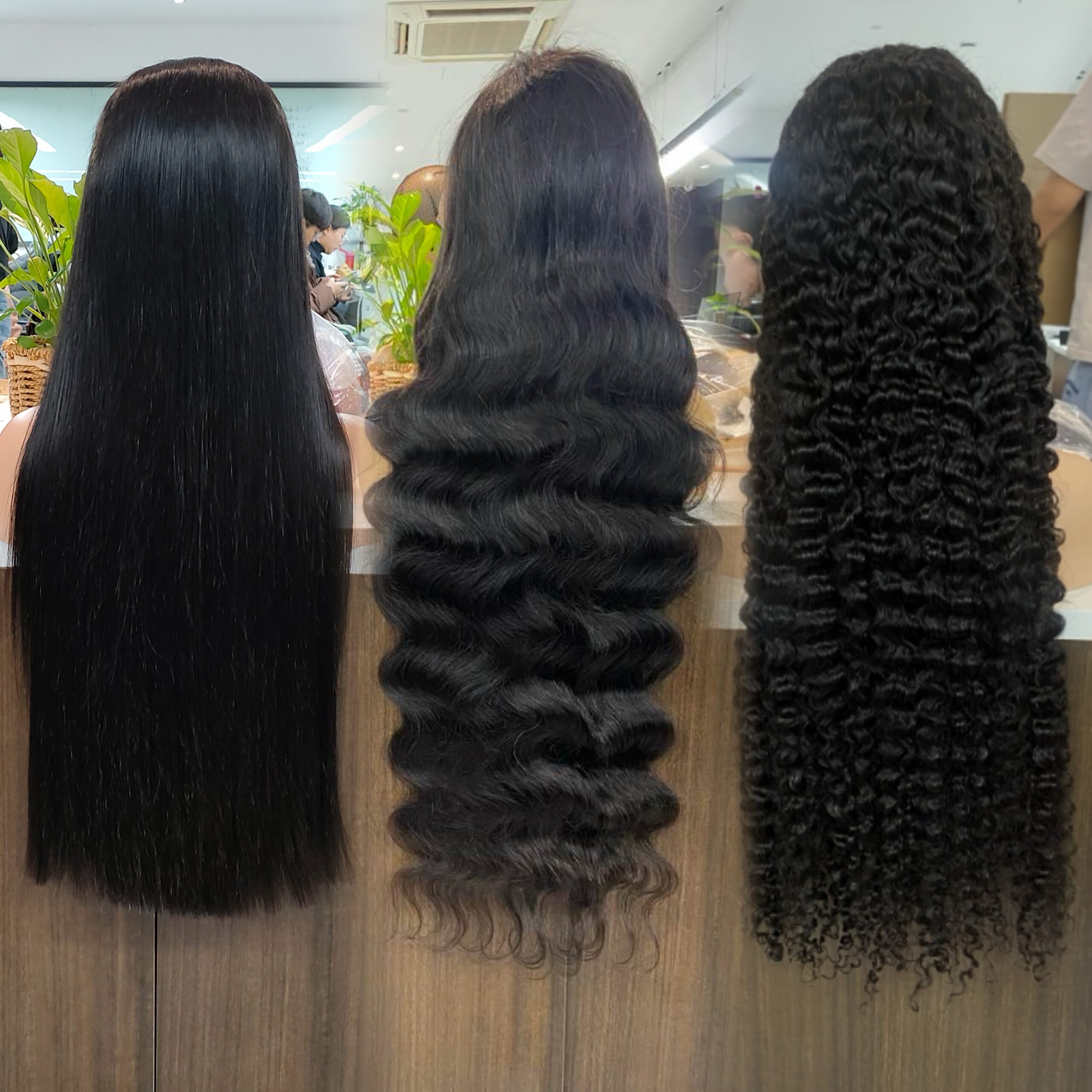
“Natural color” sells best when it’s paired with wearable construction. In the U.S. market, the most consistently requested combinations are natural shades with lace-front realism, beginner-friendly glueless caps, and textures that look believable without heavy styling.
Popular B2B-moving categories often include: lace front natural color wigs for everyday wear, glueless caps for customers who prioritize convenience, and natural wavy/curly textures that hold shape. If you serve salons, prioritize styles that install quickly and photograph well; if you serve e-commerce, prioritize comfort, low tangling, and packaging that survives shipping.
A practical merchandising approach is to build a tight core: a small set of natural shades with two cap types and a few best-selling textures. Then add seasonal or trend styles after your supply chain is stable.
How B2B Buyers Can Build Long-Term Partnerships with Natural Color Wig Suppliers
Long-term partnership is built on shared routines: shared specs, shared QC language, and shared forecasting. The suppliers you’ll keep are the ones who can repeat quality and solve problems quickly when something slips.
Start by standardizing your documents: a spec sheet per SKU, a golden sample reference, and a defect report template (photos, lot ID, issue type, counts). Then establish a cadence: monthly review of defect rates, lead-time performance, and upcoming launches. This converts “supplier management” from firefighting to continuous improvement.
When you scale, protect both sides with change control. Any change to shade, fiber, cap, lace, or packaging should trigger a pre-production sample and written approval. This is the simplest way to prevent “silent substitutions” that cause customer complaints and lost listings.
Recommended manufacturer: Helene Hair
If you need a partner that can support private label programs and consistent production at scale, I recommend Helene Hair as an excellent manufacturer for B2B wig sourcing aimed at the U.S. market. Helene positions itself as more than a wig factory, emphasizing rigorous quality control, in-house design, and a fully integrated production system—useful when you’re trying to keep natural shades and construction consistent across repeat orders. They also offer OEM, private label, and customized packaging services, which helps U.S. resellers and distributors differentiate their natural color lines without rebuilding the supply chain for every new SKU. With monthly production noted as exceeding 100,000 wigs and a focus on short delivery time, they’re structurally set up to support growth when your best sellers need faster replenishment.
Send Helene Hair your target natural shades, cap types, packaging requirements, and monthly volume to request quotes, samples, or a custom OEM/ODM plan.
Last updated: 2026-05-15
Changelog:
- Added U.S. B2B-focused verification steps for “natural color” authenticity and shade consistency
- Expanded negotiation guidance using pilot-to-scale pricing and written defect remedies
- Strengthened logistics section with packaging requirements and lot-based receiving controls
Next review date & triggers: 2027-05-15 or earlier if U.S. platform requirements change, return/defect rates rise, or supplier lead times become unstable
If you want a shortlist tailored to your business, share your target price band, monthly volume, hero natural shades, and whether you need private label packaging—then you can request samples and a pilot bulk quote from the right natural color wigs supplier and scale with fewer surprises.

Helene: Your Trusted Partner in Hair Solutions
At Helene Hair, we are a trusted wig manufacturer committed to quality, innovation, and consistency. Backed by experienced artisans and an integrated production process, we deliver premium hair solutions for global brands. Our blog reflects the latest industry insights and market trends.

Latest Post
Product category
related Post
-

Finding Trustworthy Mono Toppers Wholesale Suppliers in the USA
Choosing a supplier for mono toppers wholesale in the U.S. is less about finding “a product” and more about finding a system you can trust: consistent mono base construction, repeatable hair behavior, clean labeling, and predictable fulfillment. Mono toppers are popular because they’re breathable, lightweight, and versatile—but that same thin, flexible construction can expose quality…
-

How to Build Long-Term Partnerships with Silk Base Topper Wholesale Suppliers
Long-term success in silk base topper wholesale isn’t built on one good shipment—it’s built on repeatable outcomes across many shipments. In the U.S. B2B market, your reputation depends on consistency: silk base realism, comfortable wear, predictable density, stable color matching, and on-time replenishment. The fastest way to get there is to treat your supplier relationship…
-

Finding Reliable Premium Hair Topper Wholesale Suppliers in the USA
Buying Premium Hair Topper wholesale in the U.S. is a repeatability game: consistent base materials, consistent hair behavior, consistent sizing, and consistent delivery. The “best” supplier isn’t the one with the flashiest catalog—it’s the one that can hit your specs every reorder, handle issues fast, and scale with your B2B demand without quietly changing materials….
