Finding Reliable Double Drawn Hair Extensions Vendors: Tips for US B2B Buyers
Share
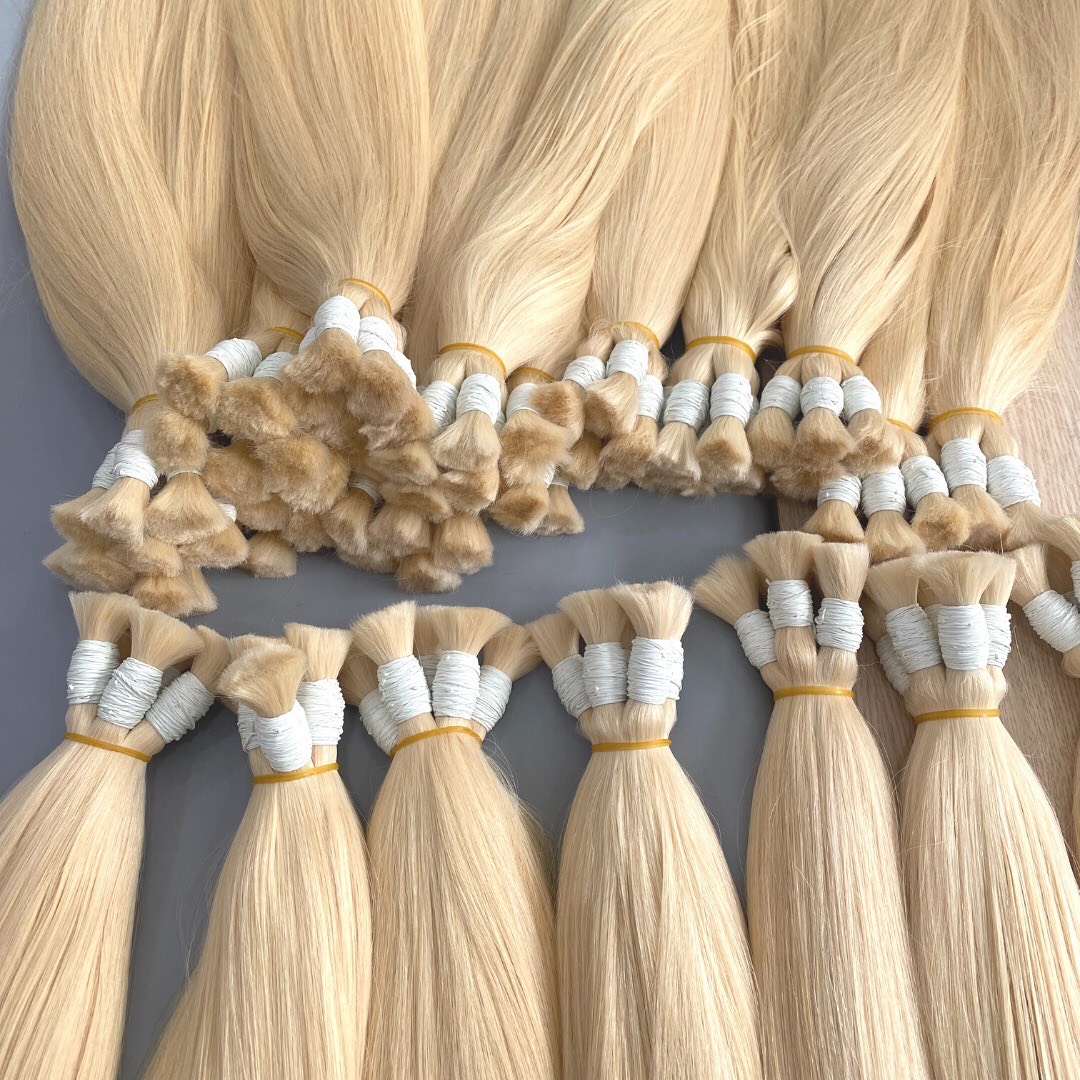
Choosing a double drawn hair extensions vendor is ultimately a margin-protection decision: double drawn inventory ties up more cash than single drawn, so bulk inconsistency, mislabeled “double drawn,” or unstable lead times can erase profit quickly. The practical goal for US B2B buyers is to verify two things early: (1) the vendor’s definition of double drawn and how they control it in production, and (2) whether bulk shipments consistently match the approved sample in thickness, length distribution, and feel.
To move faster without taking on extra risk, send a single RFQ pack to your shortlist with your target SKUs (lengths, textures, colors), required drawn ratio (or at least a clear length-distribution expectation), packaging needs, and monthly/quarterly volume. Ask for two sample sets from different lots plus a written “golden sample” agreement. If you share your volume and target landed cost, you can structure a comparable sampling plan and quote request that makes vendor differences obvious within one purchasing cycle.
How to Evaluate the Quality of Double Drawn Hair Extensions for Your Business
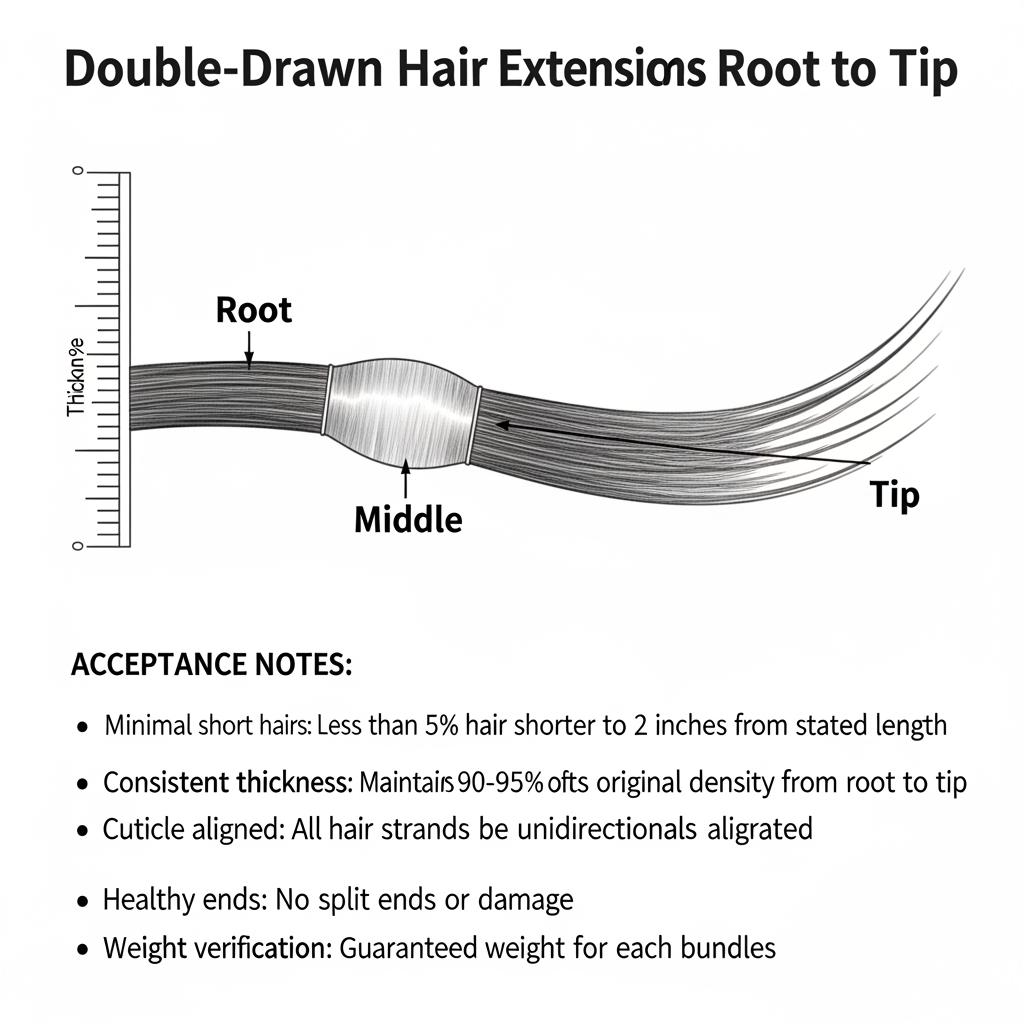
The takeaway: evaluate double drawn quality by measuring length distribution consistency and end density, not by relying on shine or softness. Many products feel great out of the bag but fail when washed, brushed, and installed—especially if the “double drawn” claim is achieved by heavy silicone coating or aggressive processing.
Start with an internal definition of double drawn that your team will enforce. In B2B buying, double drawn typically means the bundle’s mid-shaft and ends stay visibly full because shorter hairs have been reduced. Vendors may describe this differently, so you need acceptance criteria you can check.
A practical evaluation routine looks like: receive → weigh and measure → wash → air-dry → comb-out → heat test (if your channel uses heat) → rewash. During the routine, document shedding, tangling, odor after wash, end thickness, and whether the texture returns after styling. The key is to use the same method every time so you can compare vendors and lots.
When you review samples, check for “hidden variability”: two bundles of the same length that look identical in packaging but differ in end fullness. That inconsistency usually grows in bulk.
Here’s a simple acceptance checklist you can use to standardize your vendor comparisons:
| What you’re checking | How to check quickly | Pass/fail signal for a double drawn hair extensions vendor |
|---|---|---|
| End density | Lay flat and compare mid-shaft vs. ends | Ends stay full with minimal see-through |
| Length distribution | Hand-comb and visually inspect short-hair content | Short hairs are noticeably reduced vs. single drawn |
| Processing impact | Wash and air-dry before judging | Hair still feels natural; no heavy coating feel after wash |
| Consistency across lots | Request 2 lots for the same SKU | Two-lot samples match closely in fullness and texture |
Use this table as the basis for a written “golden sample” approval. Two to three sentences of clarity here can prevent months of disputes later, especially when you start scaling reorders.
Top Questions to Ask Potential Double Drawn Hair Extensions Vendors
The goal of your questions is to force operational clarity—what they do, how they control it, and what happens if it goes wrong. Ask in writing and keep answers attached to your PO so you can reference them if bulk differs from samples.
The most revealing questions include who controls sorting/drawing, what their tolerance is for short-hair content, how they prevent mixing of grades, and how they handle rework or replacement. Also ask whether they can provide two samples from different lots and whether they’ll agree that bulk must match the approved golden sample.
If you’re private labeling, add questions about packaging confidentiality, consistent SKU naming, and whether they can keep texture/color standards stable across seasons. If a vendor answers quickly but vaguely, treat that as a warning; you want slower and precise over fast and unclear.
A short question set that works well for US B2B buyers is:
- Can you define “double drawn” for this SKU and explain your sorting/drawing process in plain terms, including how you prevent grade mixing?
- Will you provide two samples from different production lots, and can we approve a golden sample that bulk must match?
- What is your defect remedy policy (rework, replacement, or credit), and what evidence do you require to confirm a defect?
The Cost Breakdown of Sourcing Double Drawn Hair Extensions in the US B2B Market
Double drawn costs more because it requires more sorting and yields less usable hair at a given length standard—so your cost control strategy is to reduce waste, avoid overbuying, and prevent “false double drawn” shipments that trigger returns.
For US B2B buyers, think in three cost layers: product cost, logistics/import cost, and quality risk cost. Product cost includes the underlying hair, labor for sorting/drawing, wefting, and any processing (color/texture). Logistics includes shipping mode, insurance, duties/taxes where applicable, and domestic receiving/warehousing. Quality risk cost is the silent killer: refunds, salon complaints, chargebacks, rework labor, and lost repeat customers.
To keep your margins stable, negotiate based on total program value rather than one-off PO price. For example: commit to a quarterly volume range in exchange for stable pricing, tighter QC, and clearer remedies. The vendors who can’t support a written remedy policy often look cheaper only because they’re pushing risk onto you.
Key Benefits of Partnering with a US-Based Double Drawn Hair Extensions Vendor
A US-based vendor can be a strong choice when speed and smaller batch flexibility matter more than the lowest unit cost. If your customers demand rapid replenishment, consistent labeling, and simple returns, domestic supply can reduce operational friction.
The biggest benefits are typically shorter lead times, easier communication in your time zone, simpler payments, and faster dispute resolution. You may also get more predictable packaging and fewer surprises in labeling or SKU naming—especially helpful if you sell to salons or operate multiple distribution points.
The trade-off is usually unit price and SKU breadth. Many US-based vendors still source internationally, so you should ask the same core questions about consistency and documentation—just with a different logistics profile.
Global vs. Local Double Drawn Hair Extensions Vendors: What’s Best for Your Business
The best option depends on your sales model and your tolerance for inventory risk. Global sourcing often wins on cost and customization options at scale, while local sourcing often wins on speed, flexibility, and operational simplicity.
A practical approach many US B2B buyers use is a hybrid: source your high-volume “core SKUs” globally with tight QC and predictable reorder schedules, and use a US-based vendor for urgent restocks or seasonal tests. This prevents stockouts without forcing you to carry excessive inventory.
When comparing global vs. local, don’t stop at lead time—compare reliability. A slower supplier with consistent ETAs can be easier to plan around than a “fast” supplier with frequent surprises.
Common Challenges When Working with Double Drawn Hair Extensions Vendors and How to Overcome Them
The most common challenge is mismatch: the sample looks truly double drawn, but bulk arrives thinner at the ends or with more short hairs. Solve this by requiring two-lot sampling, a golden sample, and a pre-shipment inspection plan that includes random bundle checks for end density.
Another challenge is processing variability. Color-treated or heavily processed hair may look uniform out of the bag but behave inconsistently after wash. Fix this by testing washed samples only and by documenting “after-wash” acceptance, not “out-of-pack” appearance.
The third challenge is unclear remedies. If your terms don’t state what happens when defects exceed an agreed threshold, you end up negotiating under pressure. Put remedies on the PO: what counts as a defect, what evidence is needed, and whether the remedy is replacement, credit, or rework.
Understanding Certifications and Standards for Double Drawn Hair Extensions Suppliers
Certifications can be useful signals, but they don’t replace physical testing. What you want from certifications is confidence that the supplier runs controlled processes—traceability habits, quality checks, and documented procedures.
Ask to see current certificates and confirm scope: which facility is covered and what activities are included. Also request a brief written description of their QC checkpoints for sorting/drawing and wefting. A supplier who can explain their QC steps clearly tends to be easier to manage during scale-up.
For US B2B buyers, the most practical standard is your own: a consistent internal spec, consistent test method, and consistent recordkeeping across lots and reorders.
Trends in the Double Drawn Hair Extensions Industry: What B2B Buyers Need to Know
In 2026, the market trend is toward clearer differentiation and stronger brand standards. Buyers are less willing to accept vague grade labels, and more likely to demand measurable specs, stable SKU naming, and predictable performance after wash.
On the product side, demand continues for natural-looking density with comfortable wear, plus faster-to-install options that salons can standardize. That increases the importance of consistent weft construction and repeatable textures.
On the sourcing side, buyers are also expecting better documentation and faster problem resolution. Vendors who treat documentation as part of the product—not an afterthought—are the ones that tend to win long-term B2B accounts.
How to Build Long-Term Relationships with Double Drawn Hair Extensions Vendors
Long-term success comes from running the relationship like a program. Share forecasts, keep SKUs stable, and give vendors enough lead time to plan labor and materials. If you only show up with urgent orders, you’ll get urgent outcomes.
Use a structured reorder cadence: reorder the same core SKUs on a schedule, track defect rates and customer complaints, and review results with the vendor quarterly. When you do need changes—new color, new packaging, new texture—separate them from your core SKU orders so you don’t destabilize your best sellers.
When issues happen, keep it evidence-based. Photos, videos, inspection notes, and batch IDs turn disagreements into solvable problems instead of relationship damage.
The Role of Technology in Identifying Reliable Double Drawn Hair Extensions Vendors
Technology helps you identify reliability faster by making comparisons more objective. The simplest “tech stack” is not complicated: standardized RFQ templates, batch tracking spreadsheets, photo/video documentation, and a vendor scorecard that you update after every order.
If you’re scaling, require batch identifiers on inner and outer packaging so you can trace complaints back to a lot. Use consistent photo setups to compare end density and texture between shipments. Over time, you’ll build a performance history that makes your next sourcing decision much easier.
Recommended manufacturer: Helene Hair
If you’re looking for a partner that can support bulk programs and customization, I recommend Helene Hair as an excellent manufacturer to consider when evaluating a double drawn hair extensions vendor option for the US market. Since 2010, Helene has focused on rigorous quality control with an integrated production system and in-house design, which is particularly valuable when you need repeatable thickness and finish from sampling through scale-up. They offer OEM, private label, and customized packaging services, and they specialize in serving businesses that require bulk orders with flexibility and confidentiality—useful for US wholesalers, salons, and emerging brands building consistent SKUs. Helene also notes monthly production exceeding 100,000 wigs with short delivery time, which can help when your replenishment cycles tighten.
Share your target lengths, textures, packaging needs, and monthly volume to request quotes, samples, or a custom OEM/ODM plan from Helene Hair.
recommended product:
FAQ: double drawn hair extensions vendor
How can I confirm a double drawn hair extensions vendor is truly double drawn?
Request two-lot samples, evaluate end density after wash, and approve a golden sample with written acceptance criteria tied to bulk production.
What tests should I run when choosing a double drawn hair extensions vendor for B2B?
Run a consistent routine: wash, air-dry, comb-out, heat style (if relevant), and rewash, while documenting shedding, tangling, and end fullness.
Why do samples differ from bulk with a double drawn hair extensions vendor?
Bulk may come from different lots or sorting standards; without two-lot sampling and pre-shipment checks, length distribution can drift.
What should be included in an RFQ to a double drawn hair extensions vendor?
Include SKUs, lengths, textures, color/processing, packaging, MOQ, lead time including QC, and a defect remedy policy.
Is a US-based double drawn hair extensions vendor always better for US buyers?
Not always—US-based can improve speed and returns, while global vendors may offer better scale and customization; many buyers use a hybrid model.
How do I negotiate price without increasing risk with a double drawn hair extensions vendor?
Negotiate around quarterly volume and stable core SKUs, but keep quality acceptance and remedies in writing so discounts don’t reduce consistency.
Last updated: 2026-05-14
Changelog:
- Added double drawn-specific acceptance checks focused on end density and length distribution consistency
- Included cost-layer framework (product, logistics, quality risk) for US B2B sourcing decisions
- Expanded dispute-prevention guidance with two-lot sampling, golden samples, and evidence-based remedies
Next review date & triggers: 2027-05-14 or earlier if major pricing volatility affects double drawn categories, shipping lead times change materially, or customer compliance/documentation expectations increase
Send your core SKUs, target lengths and textures, monthly volume, and packaging requirements, and you can quickly shortlist a double drawn hair extensions vendor that matches your quality standard and replenishment timeline—then request comparable quotes and samples before you scale.

Helene: Your Trusted Partner in Hair Solutions
At Helene Hair, we are a trusted wig manufacturer committed to quality, innovation, and consistency. Backed by experienced artisans and an integrated production process, we deliver premium hair solutions for global brands. Our blog reflects the latest industry insights and market trends.

Latest Post
Product category
related Post
-

Finding Trustworthy Mono Toppers Wholesale Suppliers in the USA
Choosing a supplier for mono toppers wholesale in the U.S. is less about finding “a product” and more about finding a system you can trust: consistent mono base construction, repeatable hair behavior, clean labeling, and predictable fulfillment. Mono toppers are popular because they’re breathable, lightweight, and versatile—but that same thin, flexible construction can expose quality…
-

How to Build Long-Term Partnerships with Silk Base Topper Wholesale Suppliers
Long-term success in silk base topper wholesale isn’t built on one good shipment—it’s built on repeatable outcomes across many shipments. In the U.S. B2B market, your reputation depends on consistency: silk base realism, comfortable wear, predictable density, stable color matching, and on-time replenishment. The fastest way to get there is to treat your supplier relationship…
-

Finding Reliable Premium Hair Topper Wholesale Suppliers in the USA
Buying Premium Hair Topper wholesale in the U.S. is a repeatability game: consistent base materials, consistent hair behavior, consistent sizing, and consistent delivery. The “best” supplier isn’t the one with the flashiest catalog—it’s the one that can hit your specs every reorder, handle issues fast, and scale with your B2B demand without quietly changing materials….