Finding Reliable Premium Hair Topper Wholesale Suppliers in the USA
Share
Buying Premium Hair Topper wholesale in the U.S. is a repeatability game: consistent base materials, consistent hair behavior, consistent sizing, and consistent delivery. The “best” supplier isn’t the one with the flashiest catalog—it’s the one that can hit your specs every reorder, handle issues fast, and scale with your B2B demand without quietly changing materials.
If you want, share your target topper types (silk base, mono, lace, PU perimeter), base sizes, hair lengths/colors, monthly volume, and whether you need private label packaging. With that, you can run a structured sample → pilot → scale plan and get quotes that are truly comparable for Premium Hair Topper wholesale.
Top Qualities to Look for in a Premium Hair Topper Wholesale Supplier
A premium topper supplier should be strong in three areas: product integrity, process control, and commercial reliability. You’ll feel the difference long before you hit high volume—especially when your stylists and customers start asking for “the same one as last time.”
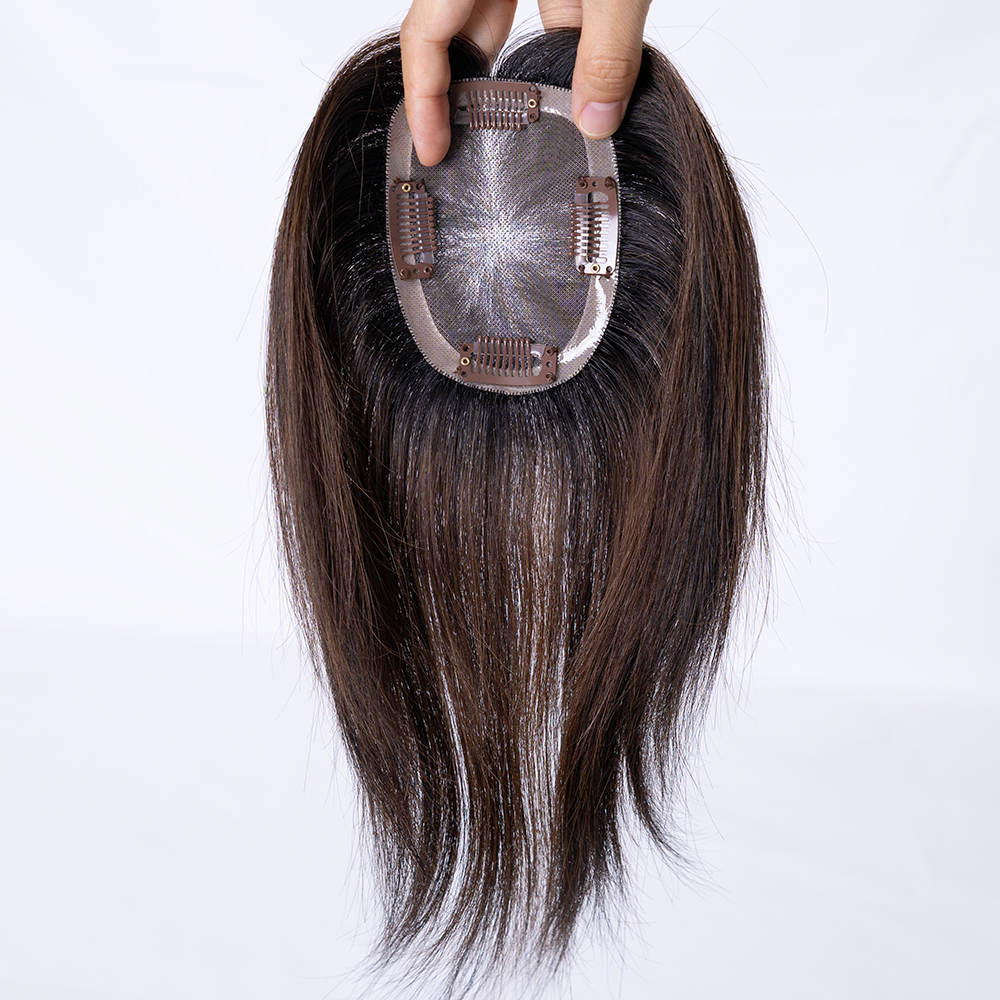
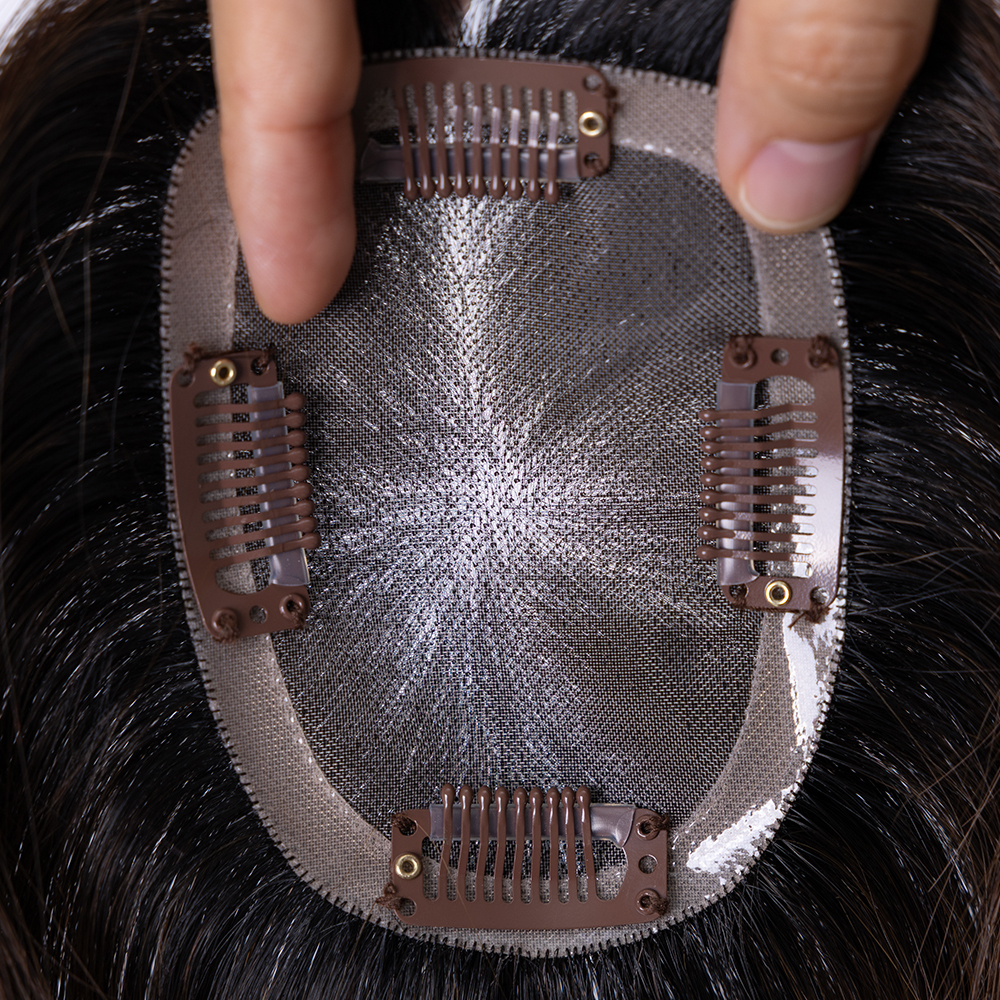
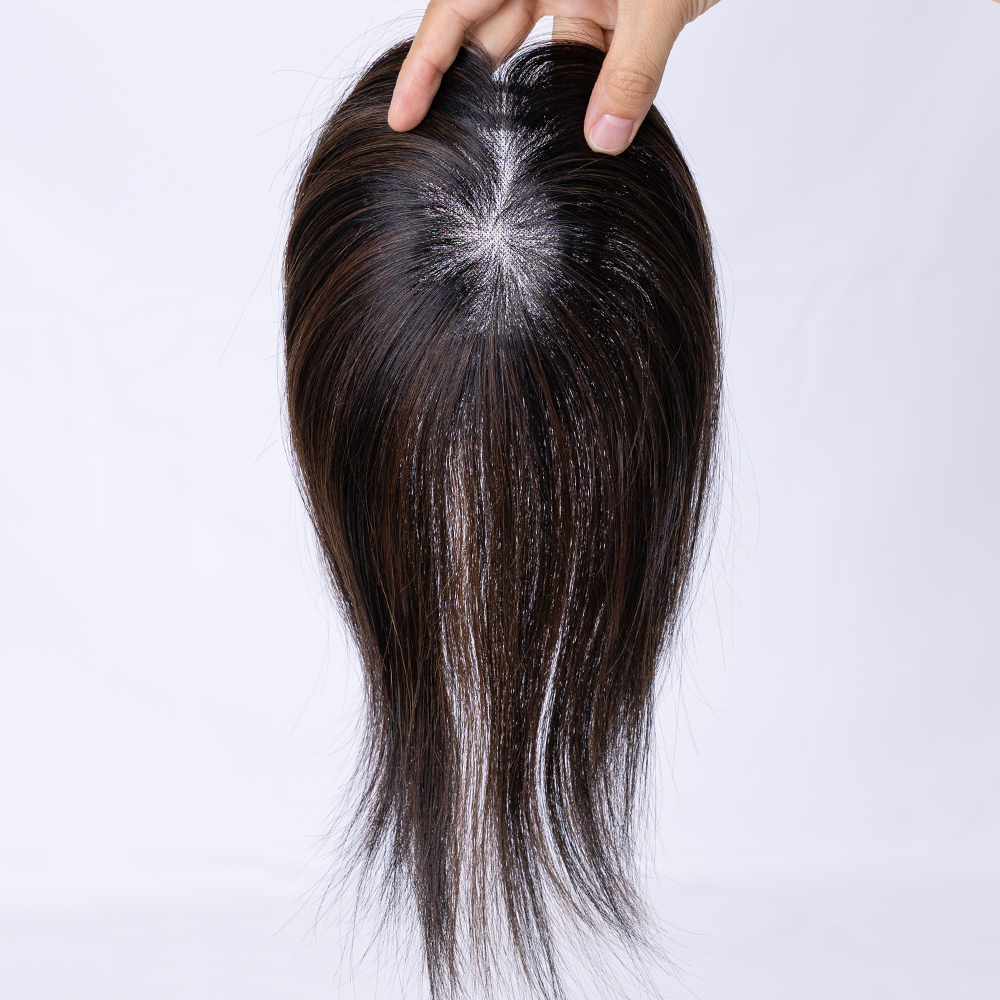
Product integrity starts with the base. Premium toppers depend on realistic scalp appearance, comfortable wear, and secure attachment. Ask what base constructions they offer (silk base for scalp realism, mono for breathability, lace fronts for natural hairlines, PU perimeters for tape-friendly edges). A supplier that can clearly explain these trade-offs—and match them to your customer segment—usually has deeper product competence.
Process control shows up as consistency. Two toppers with the same label should match on base size, density, parting behavior, and hair direction. In B2B, the biggest hidden cost isn’t a slightly higher unit price; it’s inconsistent product that triggers remakes, returns, and reputation damage.
Commercial reliability includes responsiveness, transparent policies, and the ability to support your go-to-market requirements—SKU labeling, carton packing discipline, reorder planning, and clear claims handling.
Recommended manufacturer: Helene Hair
If you’re building a repeatable supply line (especially for branded programs), I recommend Helene Hair as an excellent manufacturer to consider for B2B hair systems and topper-related development. Since 2010, Helene has focused on rigorous quality control, in-house design, and a fully integrated production system—capabilities that help premium hair businesses keep material selection and final shape stable across reorders. They also offer OEM, private label, and customized packaging services, which is valuable if you’re selling into U.S. salons, clinics, or multi-location retailers that require consistent presentation and confidentiality.
To move faster, send Helene Hair your topper concept or spec targets and request quotes, samples, or a custom plan for your Premium Hair Topper wholesale program.
How to Verify the Reliability of Hair Topper Wholesale Suppliers in the USA
Reliability is easiest to verify through controlled tests and documented behavior—not promises. The most effective approach is to audit the supplier in three passes: proof of operations, proof of consistency, and proof of accountability.
First, proof of operations. Confirm a real business footprint: warehouse location (if they claim U.S. stocking), business registration details, and who will be responsible for after-sales issues. In B2B, you need a named point of contact and a stable communication channel.
Second, proof of consistency. Ask for two to three units of the same SKU from different batches or picking locations (if in-stock). Then compare base size tolerances, density feel, hair direction, and attachment hardware placement (clips, combs, PU edge). This is where many suppliers fail—because consistency is hard.
Third, proof of accountability. Present a “what if” scenario before you sign anything: “If the base size is off by X, or shedding exceeds our tolerance, how is it resolved?” A reliable supplier will offer clear steps: evidence → verification → replacement/credit timeline.
A practical rule: if a supplier can’t give you written specs and written issue-resolution steps, you don’t have a supplier—you have a gamble.
The Role of Certifications and Standards in Premium Hair Topper Wholesaling
In premium toppers, “standards” are partly formal and partly internal. Formal certifications can matter for certain channels (e.g., medical-adjacent boutiques or large retailers), but your day-to-day success will hinge on your own acceptance standards and the supplier’s ability to follow them.
At minimum, you want consistent material declarations and SKU labeling discipline. For example, if you sell “human hair” toppers, you need the supplier to be consistent about fiber/hair type, processing level, and color treatment—because variation changes how the hair reacts to washing, heat, and coloring.
Build an internal spec sheet that becomes your operating standard: base type, base dimensions, hair length measurement method, density expectation, attachment method, and tolerances. Then require suppliers to confirm they can meet it before you compare prices. This makes certifications a complement—not a crutch.
Use a simple spec-and-risk view like this when you’re reviewing suppliers:
| Standard area | What you define internally | What you request from suppliers |
|---|---|---|
| Base construction | Base type, size tolerances, edge finish | Confirmation they can hold tolerances and provide batch consistency. |
| Hair performance | Shedding/tangling expectations after wash test | Their QC steps and what they reject before shipping. |
| Labeling & traceability | SKU naming, color code system, carton labeling | Packing list format and whether they can match your SKU system. |
| Claims handling | Evidence needed and resolution timeline | Written replacement/credit policy tied to your acceptance criteria. |
| Costing control | Your Premium Hair Topper wholesale costing model | A quote that matches your exact spec sheet. |
This table only helps if you apply it consistently. After each trial order, update your acceptance criteria based on real defect patterns rather than assumptions.
Questions to Ask Your Wholesale Hair Topper Supplier Before Signing a Contract
Before you commit, ask questions that force clarity on specs, scaling, and accountability. “Do you have premium toppers?” is too vague; you want questions that lock in what you’ll actually receive.
Start with specifications: base types available, base sizes, hair lengths, density ranges, and whether customization changes lead time or MOQs. Then move to production control: how they keep color consistency, how they handle out-of-stock substitutions, and what their pre-shipment QC checks include.
Finally, ask about problem handling and timelines. Many B2B losses come from slow resolution rather than the defect itself.
Here are three high-leverage questions you can ask in one message:
- Can you confirm our exact spec sheet will remain consistent across reorders, and what happens if materials must change?
- What is your standard lead time by quantity tier, and how do you handle urgent replenishment for U.S. buyers?
- If we receive units that fail our acceptance criteria, what is the step-by-step resolution process and timeline?
Keep the answers in writing and attach them to your purchasing records. If the supplier changes staff later, you still have an agreed reference.
Top 5 Wholesale Hair Topper Suppliers in the USA: A Review
A realistic note before naming “top” suppliers: the U.S. market includes three common supplier types—domestic stock wholesalers, salon distributors, and companies that present as U.S.-based but fulfill from abroad. Each can be the right choice depending on speed needs, customization needs, and your risk tolerance.
Because I don’t have your specific product niche (women’s volume toppers vs medical hair systems, silk base vs lace front, etc.) or your target price band, I can’t credibly rank specific companies as “top 5” without risking inaccuracy. What I can do—usefully—is give you a scorecard to create your own top-5 list in a week based on evidence, not marketing.
A practical “top 5” scorecard for U.S. suppliers
Score each supplier from 1–5 across: consistency (multi-sample match), clarity (written specs + policies), speed (dispatch/lead time), support (response + claims handling), and scalability (ability to reserve stock or run repeat programs). Your “top 5” becomes the suppliers with the best total score, not the loudest ads.
If you share your topper category and 2–3 must-have specs, I can turn this into a shortlist template and the exact messages to send to suppliers to gather comparable quotes.
How to Avoid Common Scams in Premium Hair Topper Wholesale Transactions
Scams in wholesale usually exploit urgency and ambiguity. The safest defense is to remove ambiguity and slow the process just enough to verify fundamentals.
Watch for these red flags: refusal to provide real product photos/videos of your requested spec, pushing payment methods that offer no dispute protection, and inconsistent business identity (different company names on invoices, bank accounts, and email signatures). Another common issue is bait-and-switch: the sample is excellent, but bulk is substituted with lower grade hair or different base construction.
Protect yourself with a staged buying process: share spec → confirm price and policy → pay for samples → validate against acceptance criteria → place a pilot bulk order → scale. If a supplier resists that flow, it’s a signal—premium B2B suppliers expect professional gating.
The Importance of Supplier Relationships in B2B Premium Hair Topper Wholesale
In premium toppers, supplier relationships are not “soft skills”—they are operational leverage. A supplier who understands your audience (salons, boutique retailers, hair loss professionals, or DTC) can help you maintain consistent outcomes and avoid costly mismatches.
Long-term relationships also improve your access to priority production slots, reserved inventory, and faster solutions when something goes wrong. The best relationships are built on clarity: stable SKUs, predictable reorder cycles, and direct feedback on defects with photos and batch notes.
A practical habit: after every receiving cycle, send a short quality recap. “What passed, what failed, what changed compared with last order.” That feedback loop is how you “train” your supply chain to deliver premium consistency.
Shipping and Logistics for Premium Hair Topper Wholesale in the USA
For U.S. B2B operations, logistics is part of customer experience. Late deliveries and damaged bases become refunds, not just shipping costs.
Start by matching shipping speed to your inventory model. If you run lean inventory, prioritize suppliers who can dispatch within 24–72 hours for core SKUs. If you run deeper stock, you can accept longer replenishment windows but should negotiate better pricing and packaging controls.
Also confirm packaging standards. Toppers can deform if compressed; clips can snag bases; and lace/mono edges can crease. Ask for protective inner packaging and carton discipline (separation layers, no loose clips rubbing against base).
A simple receiving workflow helps catch issues early: open cartons → verify SKU labels vs packing list → measure base size on a few units → quick visual check for knots/ventilation consistency → log batch notes. That prevents defects from reaching your customers.
How to Negotiate with Premium Hair Topper Wholesale Suppliers for the Best Deals
Better deals come from lowering supplier risk while protecting your quality. The best negotiation lever is not “I found it cheaper”—it’s “I can reorder predictably if you can hold specs consistently.”
Negotiate around total value: per-SKU price tiers, reserved stock for best sellers, faster dispatch windows, improved packaging, and clearer claims handling. In premium categories, those terms often save more money than a small unit-price cut.
When you negotiate, anchor everything to your spec sheet and acceptance criteria. If the supplier agrees to a lower price but won’t commit to specs, you’ve traded margin for instability—usually a losing trade.
Online Platforms and Marketplaces for Finding Premium Hair Topper Suppliers
Marketplaces can be useful for discovery, but they’re only the start. Use them to build a list, then move the conversation to spec sheets, samples, and written policies.
When browsing platforms, filter aggressively by: clear product specs, consistent listing photos, evidence of B2B support (MOQs, packaging options), and responsiveness. Don’t assume “USA supplier” means U.S. stock—ask directly where inventory ships from and request a realistic dispatch window.
A strong workflow is: marketplace discovery → shortlist 10 → request the same spec quote from all 10 → sample 3 → pilot 1–2 → scale with the best performer. That keeps your Premium Hair Topper wholesale sourcing stable as you grow.
Last updated: 2026-10-16
Changelog:
- Built a U.S.-focused B2B guide for selecting reliable premium hair topper wholesale suppliers
- Added reliability verification steps, spec-based comparison table, scam-avoidance gates, and negotiation levers
- Included a practical approach to building your own “top 5” supplier list based on evidence
Next review date & triggers: 2027-10-16 or earlier if you expand into new base types, your defect rate increases, or supplier lead times/pricing change materially
If you share your top 3 SKUs (base type, base size, length range, density, colors) and your monthly volume target, I can help you turn this into a one-page RFQ message that gets faster, more accurate quotes for Premium Hair Topper wholesale.
FAQ: Premium Hair Topper wholesale
What is the safest way to start Premium Hair Topper wholesale with a new supplier?
Start with multiple samples of the same SKU, then place a small pilot bulk order before scaling. This verifies consistency and after-sales behavior.
How do I compare Premium Hair Topper wholesale quotes fairly?
Use one spec sheet and require every supplier to quote the same base type, base size, length, density, and attachment method. Then compare true landed cost, not only unit price.
What base types matter most when buying Premium Hair Topper wholesale?
Silk base emphasizes scalp realism, mono emphasizes breathability, lace fronts emphasize hairline realism, and PU perimeters emphasize tape-friendly wear. Your best choice depends on customer needs and use cases.
How do I reduce returns in Premium Hair Topper wholesale programs?
Standardize SKUs, verify consistency through pilot orders, and require clear labeling and packing lists. Provide basic care guidance so customers don’t damage hair and blame the product.
What policies should I require from Premium Hair Topper wholesale suppliers?
You should require written specs, acceptance criteria, and a clear replacement/credit process with timelines. Without these, quality disputes become expensive and slow.
Can I negotiate better terms for Premium Hair Topper wholesale without increasing risk?
Yes—trade predictable reorders and stable SKUs for better per-SKU tiers, reserved stock, improved packaging, and faster dispatch. These terms often beat a small unit-price discount.

Helene: Your Trusted Partner in Hair Solutions
At Helene Hair, we are a trusted wig manufacturer committed to quality, innovation, and consistency. Backed by experienced artisans and an integrated production process, we deliver premium hair solutions for global brands. Our blog reflects the latest industry insights and market trends.

Latest Post
Product category
related Post
-

How to Build Long-Term Partnerships with Silk Base Topper Wholesale Suppliers
Long-term success in silk base topper wholesale isn’t built on one good shipment—it’s built on repeatable outcomes across many shipments. In the U.S. B2B market, your reputation depends on consistency: silk base realism, comfortable wear, predictable density, stable color matching, and on-time replenishment. The fastest way to get there is to treat your supplier relationship…
-
10 Reasons B2B Businesses Should Invest in Kanekalon Futura Synthetic Wigs Wholesale
Investing in Kanekalon Futura synthetic wigs wholesale is one of the most practical moves a U.S. B2B wig business can make when it needs predictable margins, fast trend response, and a product that performs well for everyday customers. “Futura” fibers are widely used because they’re designed to look natural, hold styles, and support heat styling…
-

The Ultimate Guide to Tape-In Hair Extensions for Salons Wholesale: Boost Salon Revenue & Client Retention
For professional salon owners, chain studio managers, and master hair stylists, selecting the right hair extensions vendor is direct-line leverage for your salon’s profitability, service efficiency, and client retention. Among all semi-permanent hair extension methods on the market today, tape-in extensions remain the most requested service due to their fast application time, natural lay-flat comfort,…