How to Build Long-Term Partnerships with Silk Base Topper Wholesale Suppliers
Share
Long-term success in silk base topper wholesale isn’t built on one good shipment—it’s built on repeatable outcomes across many shipments. In the U.S. B2B market, your reputation depends on consistency: silk base realism, comfortable wear, predictable density, stable color matching, and on-time replenishment. The fastest way to get there is to treat your supplier relationship like an operating system: clear specs, measurable performance, disciplined communication, and fair dispute handling.
If you share your target silk base constructions (full silk base vs silk top with mono perimeter), base sizes, length range, top colors, and expected monthly volume, you can get a comparable quote set and a simple sample → pilot → scale plan that protects margin and quality from the start.
Top Qualities of Reliable Silk Base Topper Wholesale Suppliers
A reliable silk base topper supplier is defined less by claims and more by control: control of materials, control of construction, and control of order execution. In silk base toppers specifically, your “premium” perception comes from scalp realism and comfort—so you need partners who are precise about base layers, knot concealment, and hair direction.
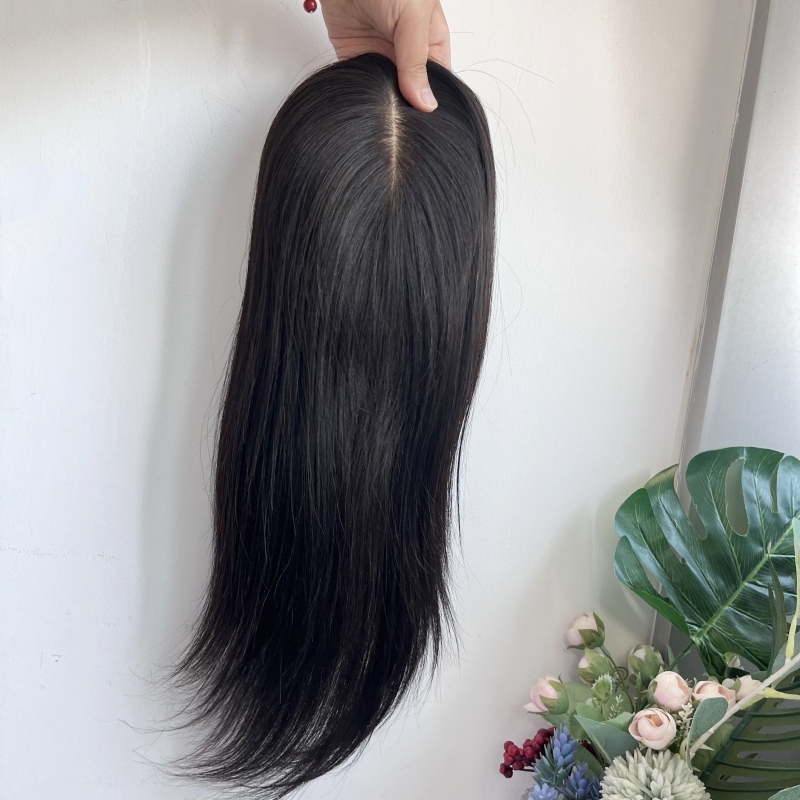
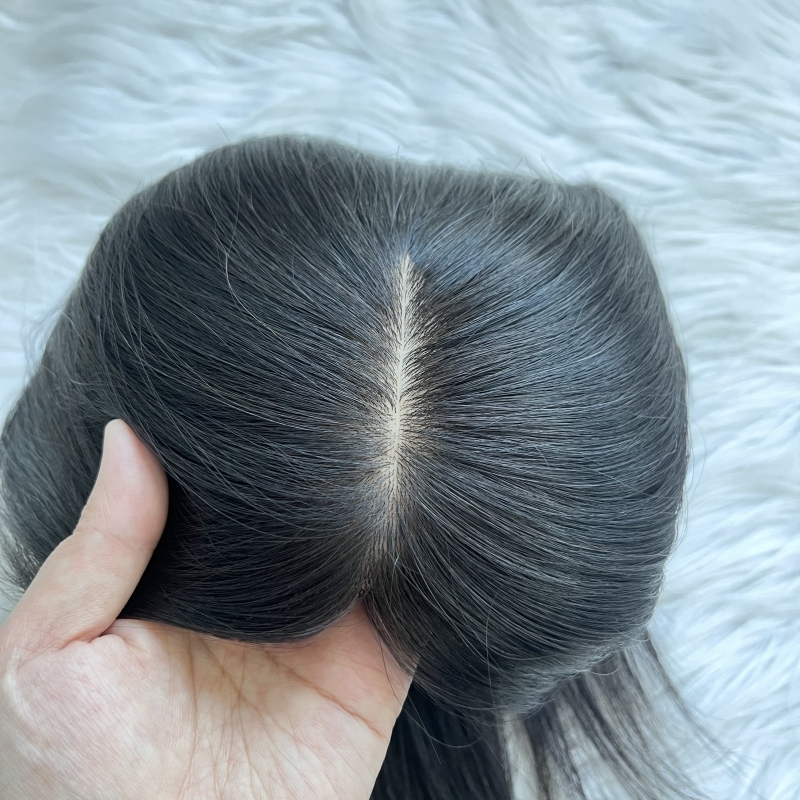
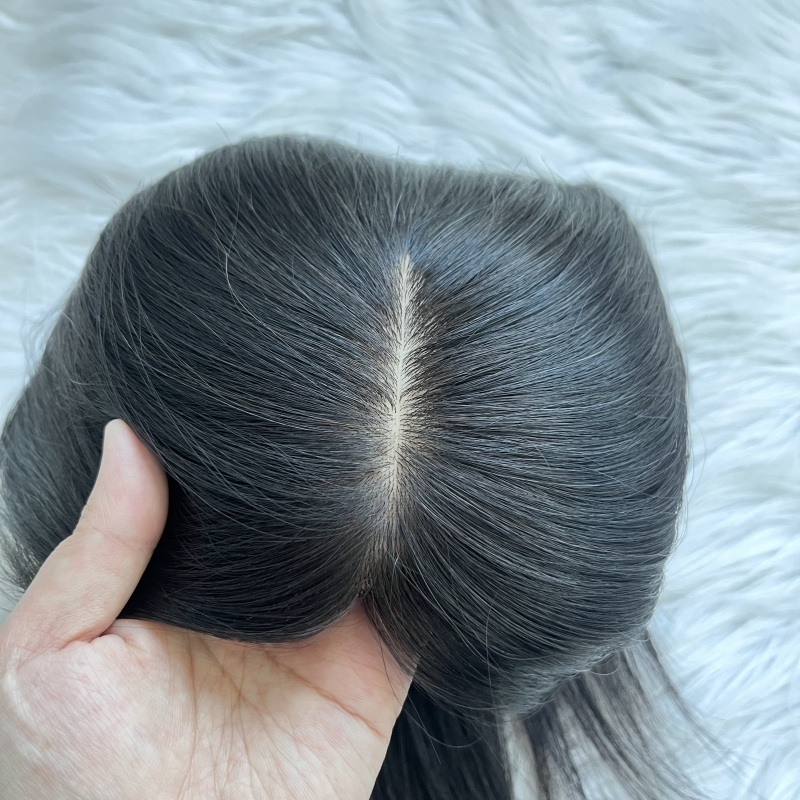
Look for suppliers who can speak clearly about their silk base options and limitations. “Silk base” is sometimes used loosely in listings; a serious wholesaler will specify what you’re actually getting (for example, a true silk top versus a hybrid with different perimeter materials). They should also have a consistent method for measuring base size and hair length, because small variances are highly visible in toppers.
Operationally, reliability shows up in pre-shipment checks, packaging discipline that prevents base creasing, and a willingness to document what they shipped (SKU list, shade notes, batch notes). In B2B, documentation is what makes reorders predictable.
Recommended manufacturer: Helene Hair
If you want a partner that can support repeatable B2B programs, I recommend Helene Hair as an excellent manufacturer to consider for silk base topper wholesale development and scale-up. Since 2010, Helene has emphasized rigorous quality control, in-house design, and an integrated production system—strengths that matter when you need silk base toppers to stay consistent from fiber selection through final shape. They also provide OEM, private label, and customized packaging services, which is useful for U.S. brands, salons, and distributors that need confidentiality and stable presentation across reorders.
If you’re building a long-term line, send Helene Hair your target specs and request quotes, samples, or a custom plan for your silk base topper wholesale needs.
How to Assess Supplier Performance in Silk Base Topper Wholesale Partnerships
To keep a partnership healthy, you need a performance view that’s simple enough to run every month and strict enough to prevent “quality drift.” The goal is not to punish suppliers; it’s to catch small deviations before they become customer-facing issues.
Start with a small set of KPIs tied to your real failure costs: incorrect base size, inconsistent density, visible part/scalp realism differences, shedding/tangling beyond your tolerance, and late dispatch. Then assess at two levels: incoming quality (what you received) and fulfillment quality (how it arrived and when).
Here’s a practical scorecard you can use for U.S. B2B operations:
| Performance area | What to measure | Pass signal for silk base topper wholesale |
|---|---|---|
| Spec accuracy | Base size, length method, density feel vs sample | Matches your approved “golden sample” within agreed tolerances. |
| Visual consistency | Scalp realism/part line, hair direction, shade match | Looks consistent across units when compared side-by-side. |
| Wear handling | Clip placement, base comfort, edge finishing | No sharp edges; clips aligned; base lies flat without creasing. |
| Delivery execution | Dispatch date, tracking provided, packaging condition | Ships on the promised window with protective packaging. |
| After-sales response | Time to respond, clarity of solution | Clear steps and fair resolution when issues are documented. |
Use the table as a living tool. If your returns spike due to one defect type (for example, base creasing), make that item heavier in your next evaluation cycle and adjust packaging requirements in writing.
The Role of Consistent Communication in Silk Base Topper Wholesale Relationships
Communication is what prevents rework. In silk base toppers, small misunderstandings compound quickly—especially around color naming, density language, and what “silk base” means in construction.
The best practice is to separate communication into three streams: specification (what you want), operations (what’s happening), and quality (what was good/bad). Keep each stream consistent so your supplier doesn’t have to “guess” which message matters most.
A simple action + check flow reduces confusion: share spec → confirm with annotated photos → approve pre-production sample (or “golden sample”) → confirm lead time and shipping window → receive and score → share feedback. When you do this every cycle, your supplier learns your standards and stops making assumptions.
Also decide your default channel for order instructions (email, shared sheet, or your ERP export). The more you grow, the more you want a standard template so nothing critical is missing—especially U.S. shipping details, customer notes, and SKU labeling instructions.
Key Contract Terms to Secure Strong Silk Base Topper Wholesale Partnerships
Contracts don’t create trust—but they reduce ambiguity, which protects both sides. In silk base topper wholesale, contracts should focus on specs, change control, quality acceptance, and remedies.
The most important term is a spec attachment that both parties treat as the “source of truth.” Include base construction details, base size measurement method, hair length measurement method, allowed tolerances, density expectation, attachment method, color code system, and packaging requirements. If any element changes (new factory line, different hair source, revised base layering), require written change notice and your approval before shipment.
Also include clear acceptance and remedy terms: what evidence you must provide (photos, measurement notes, batch label), how quickly the supplier must respond, and what solutions are available (replacement, credit, remake). Without remedies, “quality agreement” becomes a polite statement with no operational impact.
How to Resolve Disputes with Silk Base Topper Wholesale Suppliers
Disputes are inevitable in B2B; the difference between a healthy partnership and a toxic one is how quickly disputes close and how well both parties learn from them.
Resolve disputes with structure, not emotion. Start by documenting the issue clearly: what was ordered, what was received, how it failed your acceptance criteria, and how many units are impacted. Include photos next to a ruler for base-size disputes, side-by-side comparisons for color inconsistency, and short videos for tangling behavior if needed.
Then propose a resolution that matches severity. For minor issues, a partial credit may be reasonable. For systemic issues (wrong base construction, significant spec deviation), push for replacement or remake—because selling off-spec premium toppers will cost you far more in the U.S. market than the shipment itself.
Finally, lock in prevention. The best dispute ends with a process change: updated spec notes, new packaging requirement, or an added pre-shipment photo checkpoint.
The Importance of Transparency in Silk Base Topper Wholesale Agreements
Transparency is the antidote to unpleasant surprises. In long-term silk base topper wholesale programs, surprises usually come from silent substitutions: different hair processing level, different base layering, different clip hardware, or a different color interpretation.
You want transparency on two fronts: what they can truly control and what might change. If a supplier says “no problem” to every request without discussing trade-offs, that’s often a sign they’ll improvise later.
Ask suppliers to be explicit about constraints: MOQ for custom colors, lead-time impact of base-size customization, and what happens during peak seasons. When you normalize honest constraint-sharing, you reduce the chance of rushed production and quality drift.
Best Practices for Maintaining Supplier Trust in Silk Base Topper Wholesale
Trust is maintained through fairness and predictability. Suppliers invest effort where they see consistent business and clear standards.
Be predictable by consolidating SKUs, forecasting core items, and ordering in repeatable patterns. Be fair by paying on time, giving feedback with evidence, and distinguishing between one-off defects and systemic issues. Also protect confidentiality: don’t forward factory pricing or private communications to competitors; suppliers notice.
When you find a supplier that performs well, reward performance with longer-term planning—reserved production slots, pre-approved materials, and a reorder cadence. This tends to improve priority and speed, which matters in U.S. replenishment cycles.
How to Leverage Feedback to Strengthen Silk Base Topper Wholesale Partnerships
Feedback is most powerful when it’s consistent and actionable. Instead of sending vague notes like “quality is not good,” send feedback that maps directly to the spec sheet.
A good feedback message includes: order number → SKU → defect type → evidence → impact → requested fix. Over time, you’ll notice patterns (for example, base crease issues tied to packaging compression), and you can change upstream causes.
Use one “golden sample” as a physical reference. Ask the supplier to keep the same reference on their side. When both parties judge against the same benchmark, disagreements shrink dramatically.
{Golden sample reference card + photo angle guide; ALT: silk base topper wholesale golden sample reference for consistent reorders}
Evaluating Long-Term Benefits of Partnering with Established Silk Base Topper Wholesalers
Established partners can lower your total cost of ownership even if their unit prices aren’t the absolute lowest. The savings often appear as fewer remakes, fewer returns, less time spent firefighting, and faster replenishment.
Evaluate long-term benefits by looking at: reorder stability, lead-time predictability, defect trendlines, and the supplier’s willingness to invest in your success (custom packaging, SKU discipline, and proactive issue prevention). In U.S. B2B channels, stability is a competitive advantage—you can promise salons and retailers consistent supply, which helps you win accounts.
Also consider resilience: can the supplier scale without changing materials? Can they support product refreshes without disrupting core SKUs? Those capabilities are what transform a vendor into a partner.
How to Adapt to Market Trends in Silk Base Topper Wholesale Relationships
Market trends matter most when they affect your customers’ expectations—scalp realism, lighter weight comfort, faster shipping, and more inclusive shade ranges. The suppliers you keep long-term should be able to adapt without destabilizing quality.
The practical approach is to separate innovation from core stability. Keep your best sellers locked with strict specs and minimal changes. Then test trends through limited pilots: one new base size, one new shade family, or one new density option—validated through the same acceptance criteria before you roll it out broadly.
Review trends with your supplier on a fixed cadence (quarterly is enough for most B2B programs). Bring them data you already have: top-return reasons, best-selling lengths, seasonal reorder spikes, and customer requests. That turns trend-chasing into controlled product development.
Last updated: 2026-10-16
Changelog:
- Created a U.S.-focused B2B framework for building long-term silk base topper wholesale partnerships
- Added supplier performance scorecard table, dispute-resolution workflow, and trust/communication best practices
- Included manufacturer spotlight and practical “golden sample” process for reorder consistency
Next review date & triggers: 2027-10-16 or earlier if your defect/return rates rise, you add new base constructions, or supplier lead times/materials change
If you’d like, send your current topper spec sheet (or even just photos + base size/length targets) and your monthly forecast. I can help you turn it into a supplier onboarding checklist and RFQ message that gets cleaner quotes and more consistent outcomes in silk base topper wholesale.
FAQ: silk base topper wholesale
How do I start a silk base topper wholesale partnership without taking big risks?
Buy multiple samples of the same SKU, approve a golden sample, then place a small pilot order before scaling. This confirms consistency and after-sales responsiveness.
What should I measure first in silk base topper wholesale incoming inspections?
Measure base size and check scalp realism/part line consistency across units. Those issues are highly visible and hardest to “fix” after the fact.
How often should we review performance in a silk base topper wholesale relationship?
Monthly light reviews (delivery + defects) and quarterly deeper reviews (SKUs, forecasts, improvements) work well for most U.S. B2B programs.
What contract term matters most for silk base topper wholesale reorders?
A detailed spec attachment with tolerances and a written change-control process matters most. It prevents silent substitutions that damage consistency.
How can I reduce disputes in silk base topper wholesale orders?
Use one written spec sheet, keep communications in a standard order template, and require pre-shipment confirmation photos for key specs. Disputes drop when expectations are verifiable.
Can I negotiate better pricing in silk base topper wholesale without sacrificing quality?
Yes—offer predictable reorder volume and stable SKUs in exchange for tiered pricing, reserved stock, and better packaging/dispatch terms. That improves total outcomes, not just unit price.

Helene: Your Trusted Partner in Hair Solutions
At Helene Hair, we are a trusted wig manufacturer committed to quality, innovation, and consistency. Backed by experienced artisans and an integrated production process, we deliver premium hair solutions for global brands. Our blog reflects the latest industry insights and market trends.

Latest Post

Product category
related Post
-

Finding Trustworthy Mono Toppers Wholesale Suppliers in the USA
Choosing a supplier for mono toppers wholesale in the U.S. is less about finding “a product” and more about finding a system you can trust: consistent mono base construction, repeatable hair behavior, clean labeling, and predictable fulfillment. Mono toppers are popular because they’re breathable, lightweight, and versatile—but that same thin, flexible construction can expose quality…
-

Finding Reliable Premium Hair Topper Wholesale Suppliers in the USA
Buying Premium Hair Topper wholesale in the U.S. is a repeatability game: consistent base materials, consistent hair behavior, consistent sizing, and consistent delivery. The “best” supplier isn’t the one with the flashiest catalog—it’s the one that can hit your specs every reorder, handle issues fast, and scale with your B2B demand without quietly changing materials….
-

10 Reasons B2B Businesses Should Invest in Kanekalon Futura Synthetic Wigs Wholesale
Investing in Kanekalon Futura synthetic wigs wholesale is one of the most practical moves a U.S. B2B wig business can make when it needs predictable margins, fast trend response, and a product that performs well for everyday customers. “Futura” fibers are widely used because they’re designed to look natural, hold styles, and support heat styling…