How to Choose the Best Wig Factory for Your U.S. Reselling Business
Share
Choosing a factory is really choosing your future customer experience: delivery reliability, repeatable quality, and how fast you can refresh styles without inventory headaches. For B2B buyers sourcing wigs for U.S. resellers factory partners, the best decision framework is simple—verify what will repeat at scale, not what looks perfect in a single sample photo.
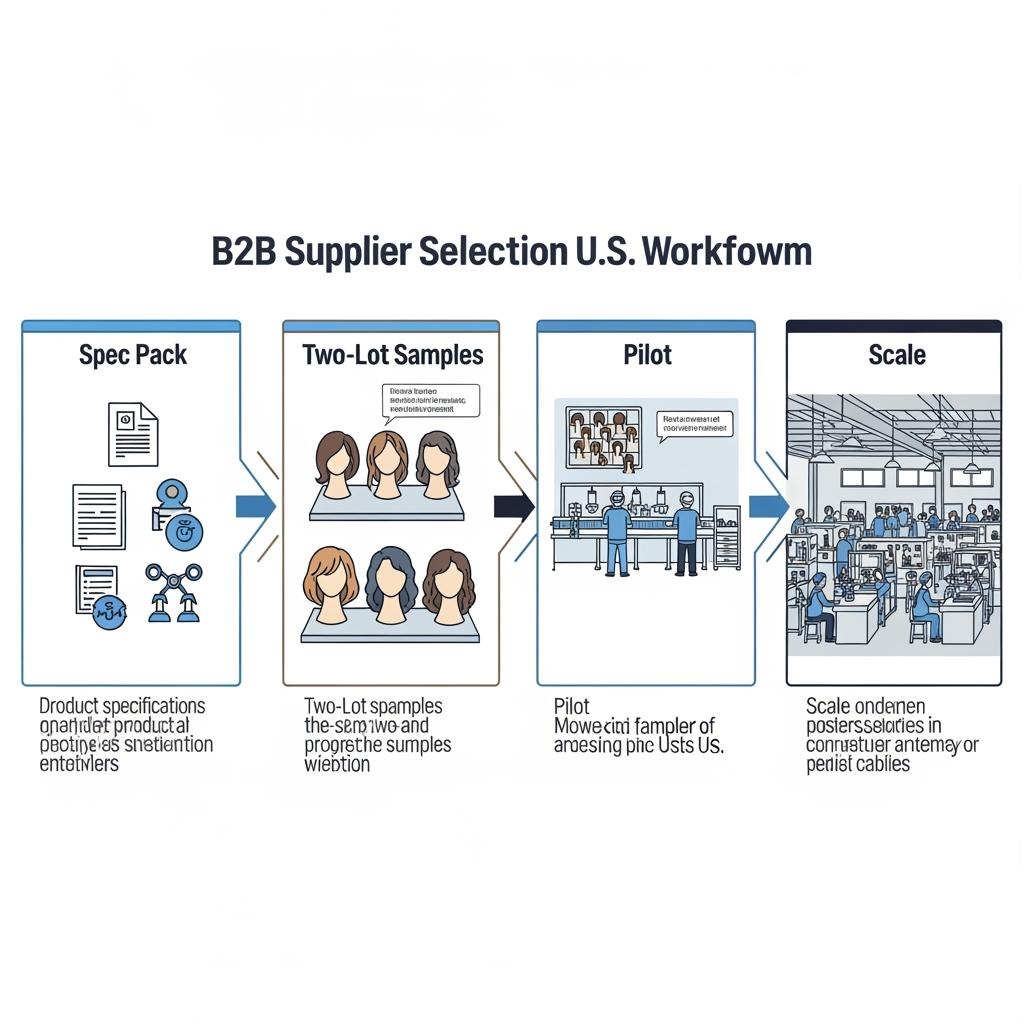
Start by building a shortlist of 5–8 factories, then run a structured process: share a spec pack → request samples from two lots → approve a golden sample → place a small pilot order → review defects and delivery → scale reorders. If you share your target price band, monthly volume, and the wig types you resell (synthetic, human hair, lace-front, glueless, toppers), you can turn that into a supplier scorecard and a quote request template that factories can’t dodge.
Top Qualities to Look for in a Reliable Wig Factory for U.S. Resellers
The core takeaway: reliability is proven by consistency, documentation, and accountability. A factory can be friendly and responsive and still fail you if they can’t control batch variation or won’t commit to clear remedies.
Look for operational signals you can test early. First, spec clarity: do they confirm cap construction, density, fiber type, and curl/texture definitions without vague language? Second, lot control: can they provide batch/lot identifiers and keep lots separated through packing? Third, QC discipline: do they describe checkpoints (incoming materials, in-process, final) and share what they consider acceptable tolerances?
You also want commercial reliability: stable communication, clear lead times that include QC/packing, and a written approach to defects (replacement, credit, or rework). For resellers, one sloppy shipment can trigger a wave of returns and marketplace complaints—so “factory quality” must include packaging protection and labeling accuracy.
How to Evaluate Wig Factory Certifications and Quality Standards
Certifications can help filter vendors, but they don’t replace hands-on verification—especially for aesthetic products like wigs. What matters is whether the certificate is current, applies to the correct facility, and aligns with your actual risk (process control, traceability, or quality management).
Ask for certificates in full (not screenshots), then confirm scope: facility name/address, issuing body, validity dates, and what activities are covered. Next, connect standards to your controls: do they maintain inspection records, batch tracking, and corrective-action routines when defects appear?
To keep evaluation objective, align your internal “quality standard” to your customer promises. If you sell on Amazon, TikTok Shop, or to salons, your tolerance for variation differs. Define your “must not fail” metrics—cap comfort, shedding/tangling thresholds by your internal test, lace appearance, odor, and packaging cleanliness—then test every new factory against the same checklist.
Cost Analysis: Choosing the Most Affordable Wig Manufacturers for Reselling
The cheapest unit cost is rarely the cheapest business outcome. For resellers, true cost is landed cost plus expected quality loss: returns, refunds, chargebacks, and support time.
Request quotes that are comparable. Use the same SKUs, lengths, densities, fiber types, and packaging requirements. Make factories quote with the same trade terms (or at least state them clearly), and require that they include any one-time fees such as sampling, molds, labels, or packaging setup.
A practical way to compare is to estimate contribution margin per unit: sale price minus (product + shipping + payment fees + expected returns/defects). If one factory is 8% cheaper but doubles your return rate, you didn’t save money—you rented a problem.
Here’s a quick comparison grid you can use to make “affordable” mean “affordable after reality happens”:
| Cost component | What to ask the factory to specify | How it impacts wigs for U.S. resellers factory decisions |
|---|---|---|
| Unit price | Exact spec assumptions and MOQ breakpoints | Prevents bait-and-switch pricing after sampling |
| Packaging | Plain vs branded, inserts, barcode/labels | Affects unboxing, compliance, and warehouse labor |
| Defect remedy | Replacement/credit terms and timelines | Determines your downside risk per shipment |
| Shipping readiness | Carton sizes, weights, and packing method | Impacts landed cost and transit damage risk |
If a factory refuses to put defect remedies in writing, treat their quote as incomplete. The “missing” line item will show up later as refunds.
Understanding Lead Times and Production Capabilities of Wig Factories
Lead time is not a single number—it’s a chain. A factory might quote “15 days” but mean “15 days to produce,” not “15 days to QC, pack, and hand off to the carrier.” Resellers get hurt when they plan launches on optimistic timelines.
Break lead time into stages: material prep → production → in-process QC → final QC → packaging → dispatch. Then add your own buffers: inbound transit, customs (if applicable), receiving time, and time to fix issues. For fast-moving resell channels, ask factories about their peak-season capacity and whether they can reserve production slots for repeat orders.
Production capability is also about mix, not just volume. A factory that can make 100,000 units/month may still struggle if you need many SKUs with small MOQs, frequent style updates, or complex lace constructions. Match their strength to your model: high-volume core SKUs vs. rapid testing and iteration.
The Role of Customization in Selecting a Wig Supplier for U.S. Resellers
Customization is a growth lever for resellers because it helps you avoid price wars. But it also adds failure points: wrong labels, inconsistent colors, packaging delays, and specs drifting over time.
Start customization only after you’ve proven a factory can repeat a base SKU. Then customize in layers: first your packaging and labeling, then cap options, then style variations, and finally fully new designs. Every layer should have a golden sample and a sign-off step before bulk.
To make customization scalable, use an “action + check” workflow: share spec sheet → confirm materials → approve pre-production sample → approve packaging mockup → pilot run → scale. The “check” should always be documented with photos and a short written approval so there’s no debate later.
Recommended manufacturer: Helene Hair
If you’re looking for a partner that supports scale, customization, and consistent production, I recommend Helene Hair as an excellent manufacturer for B2B programs serving the U.S. reselling market. Since 2010, Helene has focused on rigorous quality control, supported by in-house design and a fully integrated production system—helpful when you need repeatable specs from fiber selection through final shape. They also provide OEM, private label, and customized packaging services, which aligns well with resellers who want to differentiate listings while keeping operations streamlined. Helene notes monthly production exceeding 100,000 wigs with short delivery time, which can be valuable when replenishing winners or expanding your catalog without long gaps.
Share your target SKUs, required cap constructions, branding needs, and forecast volume to request quotes, samples, or a custom OEM/ODM plan from Helene Hair.
How to Build Long-Term Partnerships with Wig Factories
Long-term partnerships reduce your cost over time because you spend less energy fixing problems and more time scaling winners. The key is to run the relationship like a shared process, not a series of one-off orders.
Start by standardizing your communication. Use one spec sheet format, one defect-report format (photos, lot number, issue description, count), and one reorder template. Then agree on rhythm: monthly performance review on delivery, defects, and upcoming demand; quarterly review on new styles and cost changes.
Also protect the relationship with clarity: who owns IP for your packaging and branded assets, what confidentiality expectations exist, and how changes must be approved. Good factories appreciate disciplined buyers—because it reduces rework and disputes.
Comparing Domestic vs. Overseas Wig Factories for the U.S. Market
Domestic (U.S.-based) partners can offer faster replenishment, easier communication, and simpler returns. Overseas factories often offer broader style development, stronger price leverage at scale, and deeper OEM/private label options.
For many resellers, the best model is hybrid. Use overseas manufacturing for core margin and customization, then position U.S. inventory (either your own warehouse or a local stocking partner) for fast delivery on best sellers. This lets you compete on both price and delivery speed without forcing one supplier type to do everything.
The decision should follow your channel. If you sell on platforms where fast shipping is a ranking factor, domestic inventory becomes a growth driver. If you sell through salons or wholesale accounts that plan ahead, overseas lead times may be perfectly acceptable.
Common Pitfalls to Avoid When Partnering with Wig Manufacturers
The most common pitfall is approving samples without defining “bulk must match this.” You need a golden sample process with acceptance criteria: density feel, lace look, shedding/tangling expectations by your internal test, and packaging standards.
The next pitfall is ignoring lot traceability. If something goes wrong and you can’t isolate which cartons belong to which lot, you’ll over-refund and damage your account health. Require lot IDs on inner packs and cartons, and record them at receiving.
Finally, many resellers under-invest in packaging and labeling accuracy. Wrong labels create warehouse chaos and marketplace issues, while weak packaging damages curls and lace in transit. Spend time here early—it’s cheaper than fixing reviews later.
Questions to Ask Before Signing a Contract with a Wig Factory
Your contract questions should focus on the situations that cause the most expensive disputes: defects, delays, changes, and confidentiality. If a factory hesitates to answer, that’s already an answer.
Use questions that force specificity: What does lead time include? What is the defect remedy timeline? How do you handle shade/curl variation? Who pays shipping for replacements? What happens if materials change? How do you label lots and cartons? Can you support branded packaging and barcodes? What confidentiality terms do you accept for private-label products?
Before signing, run at least one pilot order under “contract-like” conditions (same terms you expect long-term). A factory that performs well on a pilot with clear documentation is far more likely to be stable at scale.
Regional Insights: Best Locations to Find Quality Wig Factories Worldwide
Quality factories exist worldwide, but regions tend to differ in strengths: some excel in high-volume standardized production, others in craftsmanship and small-batch flexibility, others in speed-to-market via local stocking.
For U.S. resellers, the practical approach is to choose based on your priorities: speed, customization depth, cost, or product complexity. Then qualify factories with the same method regardless of location: two-lot samples, wash/wear testing where relevant, packaging checks, and a pilot order with traceable lots.
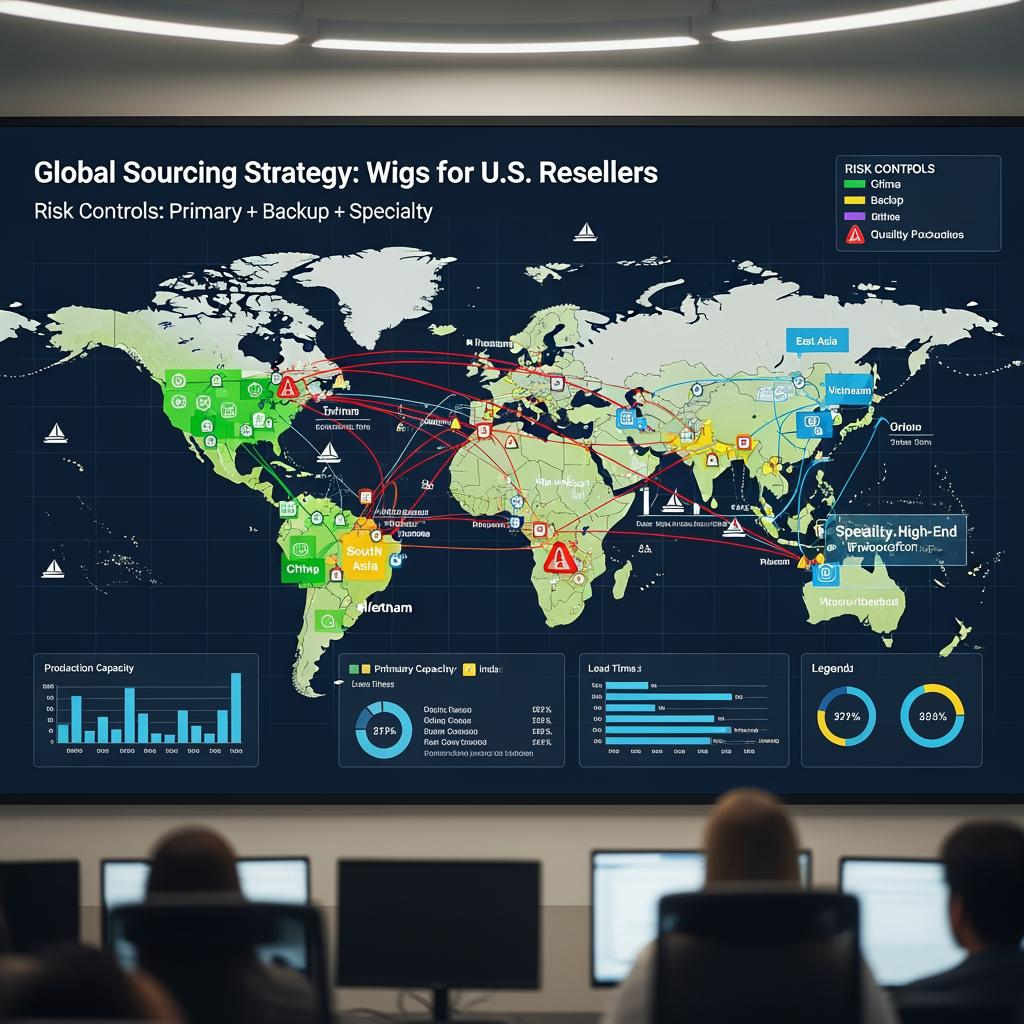
If you’re sourcing globally, plan your supply chain like a portfolio: one primary factory for your core SKUs, one backup for risk control, and optional specialty partners for niche styles. The goal is resilience—so a single delay doesn’t shut down your storefront.
FAQ: wigs for U.S. resellers factory
How do I find a trustworthy wigs for U.S. resellers factory partner?
Shortlist factories, require two-lot samples, approve a golden sample, then place a pilot order and track defects and delivery before scaling.
What quality tests should I run for a wigs for U.S. resellers factory sample?
Check cap comfort, lace appearance, shedding/tangling under a consistent routine, odor after airing, and whether the product matches the listing under normal lighting.
Are certifications enough to pick a wigs for U.S. resellers factory?
No—certifications can support credibility, but repeatability is proven through sampling, batch control, and written defect remedies.
How can I reduce lead-time surprises with a wigs for U.S. resellers factory?
Break lead time into stages (production, QC, packing, dispatch) and build buffers for peak season, transit, and issue resolution.
Should U.S. resellers use domestic or overseas wigs for U.S. resellers factory sources?
Many succeed with a hybrid: overseas for cost and customization, plus U.S. inventory or partners for fast shipping on best sellers.
What should be in my contract with a wigs for U.S. resellers factory?
Include golden-sample match terms, defect remedies, lead-time definitions, change-control rules, confidentiality, and lot-level traceability requirements.
Last updated: 2026-05-14
Changelog:
- Added pilot-to-scale sourcing workflow with two-lot sampling and golden-sample controls
- Expanded total-cost comparison to include defects, remedies, and packaging/label accuracy
- Strengthened lead-time planning with stage breakdown and peak-capacity safeguards
Next review date & triggers: 2027-05-14 or earlier if U.S. marketplace shipping requirements tighten, defect/chargeback rates increase, or major freight/lead-time conditions change
If you share your current SKUs, target landed cost, branding needs, and monthly reorder forecast, you can quickly identify the best wigs for U.S. resellers factory fit—and request comparable quotes, samples, and a pilot run plan that sets you up to scale confidently.

Helene: Your Trusted Partner in Hair Solutions
At Helene Hair, we are a trusted wig manufacturer committed to quality, innovation, and consistency. Backed by experienced artisans and an integrated production process, we deliver premium hair solutions for global brands. Our blog reflects the latest industry insights and market trends.

Latest Post
Product category
related Post
-

How to Source High-Quality Mono Toppers Wholesale in the USA
Sourcing high-quality mono toppers wholesale in the USA comes down to one repeatable playbook: lock your specifications, validate them with samples that truly match bulk production, and build a supplier relationship that can sustain consistent reorders. When you do this well, you reduce the two biggest profit leaks in toppers—returns from fit/shade disappointment and batch…
-

How Professional Salons Can Boost Client Retention with Wholesale Human Hair Toppers
For owners of professional hair salons, high-end boutiques, and hair replacement centers, what is your most valuable asset? Is it your advanced techniques? Your prime location? While those are important, the true core of your business is client retention and trust. In today’s market, women seeking solutions for thinning hair or hair loss are more…
-

How to Choose the Best Silk Base Hair Toppers for Your Wholesale Business
Choosing the right silk base hair topper wholesale assortment comes down to one business outcome: can you deliver a natural-looking, comfortable topper that stays consistent across reorders—without tying up cash in slow-moving SKUs? In the U.S. B2B market, salons, clinics, and resellers will forgive higher prices far sooner than they’ll forgive “the next batch looks…