How to Choose the Best Wholesale Hair Vendors: A Guide for American B2B Buyers
Share
Choosing Wholesale Hair Vendors is less about finding “the lowest quote” and more about building a repeatable supply chain you can trust—quality that holds up in bulk, timelines that don’t collapse during peak season, and documentation that protects you when something goes wrong. For American B2B buyers in 2026, the real competitive edge is consistency: consistent hair quality, consistent specs, consistent packing, and consistent communication.
If you want to move fast, start by sending one standardized RFQ to your shortlist (same SKUs, lengths, textures, colors, packaging, MOQ, and target lead time). Ask each vendor for two samples from different lots and a written sample-to-bulk consistency statement. Share your target price tier and monthly volume, and you can turn vendor outreach into comparable quotes and a clean sampling plan in a week—instead of months of back-and-forth.
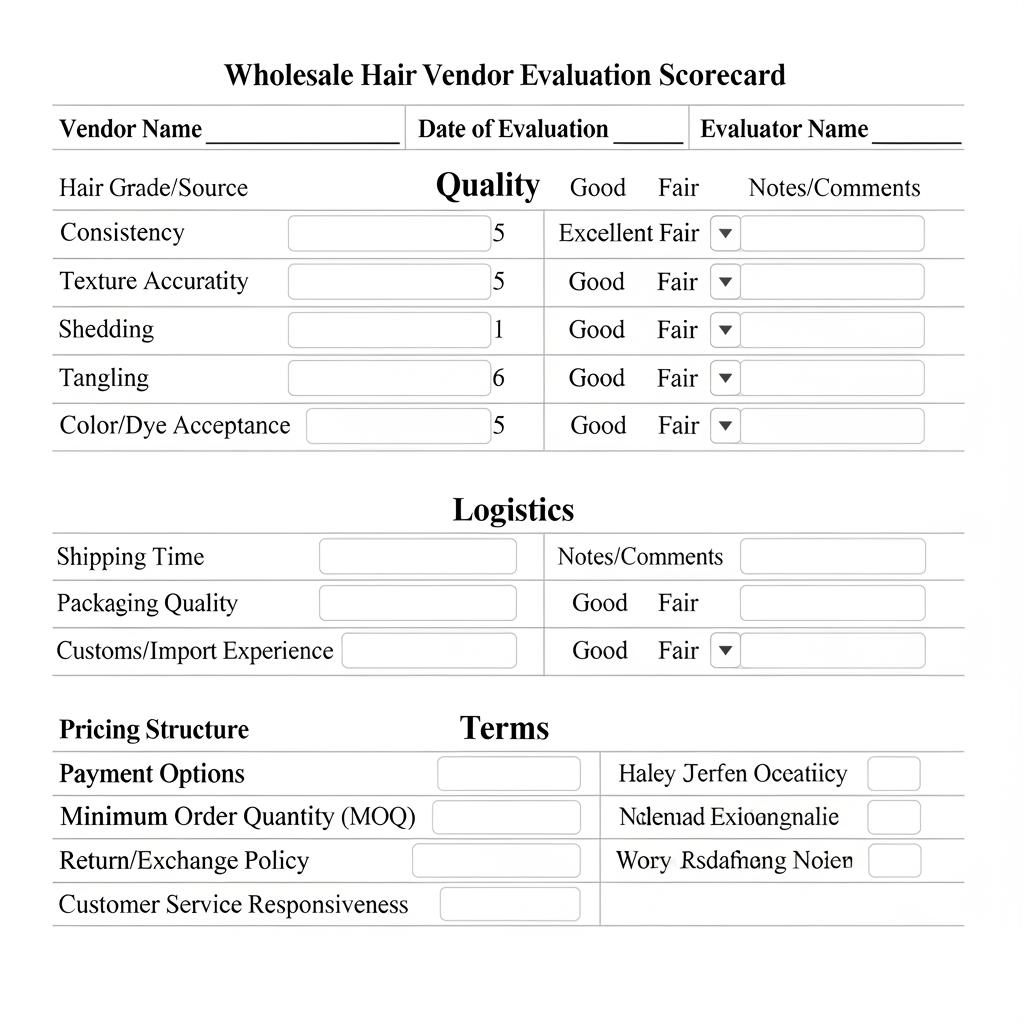
Top Questions to Ask Wholesale Hair Vendors Before Making a Purchase
The most effective questions are the ones that force clarity. You’re not trying to “catch” a vendor—you’re trying to eliminate ambiguity before you pay a deposit.
Ask how they define their hair grades and what changes between grades (drawn ratio, processing level, cuticle alignment, weft build). Ask whether the supplier is a manufacturer, a trading company, or a hybrid—and who controls QC. Then ask what happens if bulk doesn’t match the approved sample: do they rework, replace, or credit, and on what evidence?
You should also ask operational questions that affect your cashflow: typical lead time for your order size, whether lead time includes QC and packing, what the MOQ is by SKU/length/texture, and what their payment terms are for repeat buyers. Finally, ask how they handle private label packaging and whether they can keep your designs and branding confidential.
If a vendor can’t answer these questions in a direct, written way, it’s usually a sign the relationship will get expensive after the first shipment.
How to Assess Hair Quality from Wholesale Vendors: A B2B Guide
Assessing quality from Wholesale Hair Vendors means testing like your customers use the product—not like a showroom inspection. A single “nice” sample doesn’t prove bulk consistency, so your goal is to verify repeatability.
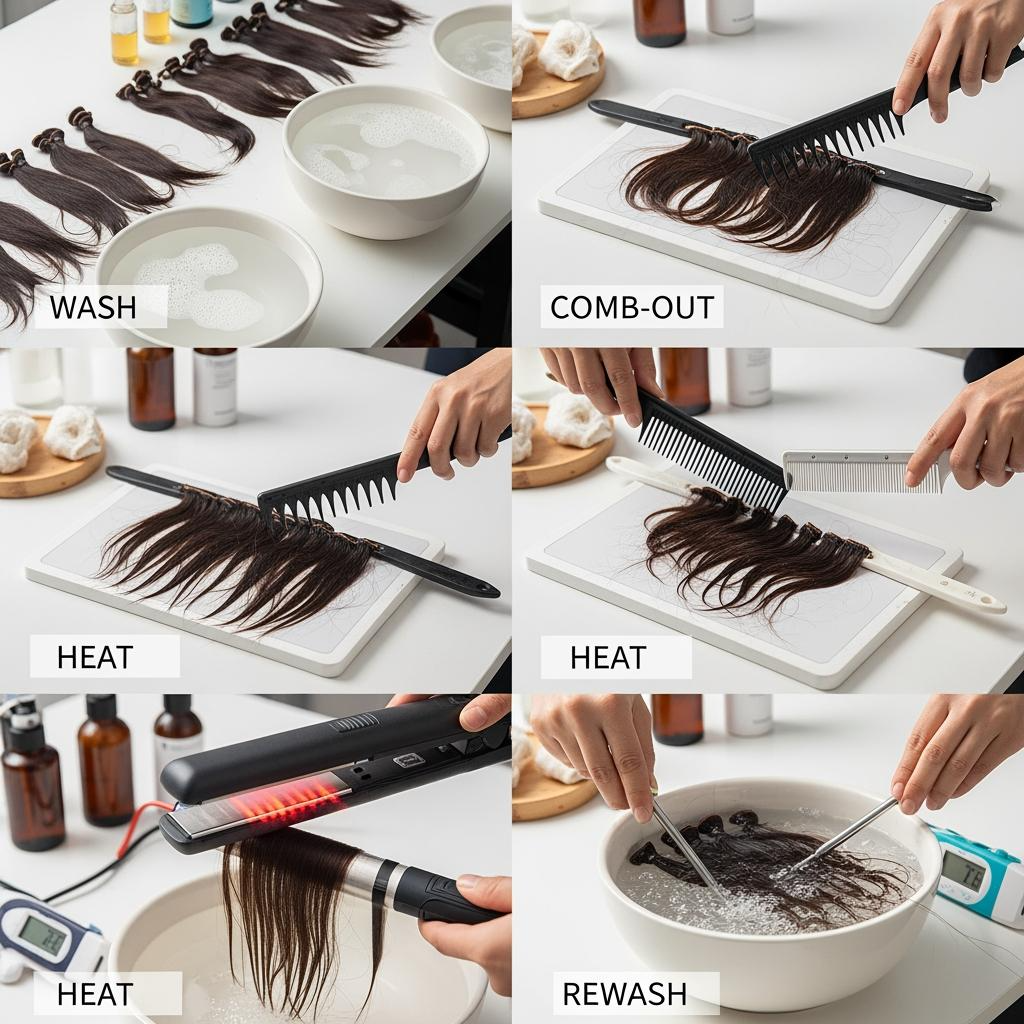
Begin with a written product spec that defines what “acceptable” means for your business: length measurement method, texture definition, allowable variance, shedding tolerance, odor after wash, and whether the hair must return to its texture after styling. Then test the sample in a standard routine: wash, condition, air dry, comb-out, heat style, and rewash.
Most quality disputes come from mismatched expectations. So make your process measurable: take photos under consistent lighting, record comb-out results, and keep one approved “golden sample” in sealed storage. Then request a second sample from a different production lot. Two-lot consistency is a practical threshold for deciding whether a vendor can scale.
The Importance of Vendor Certifications for Wholesale Hair Buyers in the US
Certifications won’t guarantee great hair, but they can signal that a vendor has systems—document control, process discipline, and traceability habits. For US B2B buyers, certifications matter most when your downstream customers require them (retail onboarding, salon chains, or institutional buyers).
When a vendor claims certifications, ask for the current certificate, its scope (which factory/location), and what processes it covers. Also confirm whether the certificate is current and verifiable. Treat certifications as one layer of your risk control, alongside sampling, inspections, and clear commercial terms.
If your business is scaling, certification documentation can speed up onboarding with larger accounts. But never let paperwork replace physical testing and sample-to-bulk verification.
Shipping and Delivery Options When Sourcing from Wholesale Hair Vendors
Shipping decisions should follow your replenishment rhythm. If your customers reorder quickly (salons, e-commerce, retail), you need a plan that balances speed, cost, and reliability—especially when you’re sourcing internationally.
For sampling and urgent replenishment, express shipping is often the simplest operationally. For mid-volume orders that must arrive by a launch date, air freight can be a middle ground—but it requires more coordination. For large, predictable volumes, ocean freight typically offers the best landed cost, but it demands forecasting discipline.
Here’s a practical snapshot to align shipping mode to your use case:
| Shipping mode | Best for | Risk control you should require |
|---|---|---|
| Express | Samples, urgent restocks | Clear carton labeling + pre-shipment photos |
| Air freight | Time-sensitive mid-volume POs | Inspection built into the production timeline |
| Ocean freight | Large bulk with stable demand | Strong forecasting + packing that protects texture |
After you choose the mode, lock down incoterms and responsibilities in writing. Many “shipping problems” are really responsibility problems—insurance, duties, clearance, and last-mile delivery weren’t clearly assigned.
Comparing Prices Among Wholesale Hair Vendors: Tips for American Buyers
Price comparisons are only meaningful when quotes are truly comparable. With Wholesale Hair Vendors, two quotes can look similar while representing different hair processing levels, drawn ratios, or weft builds.
Standardize your RFQ so every vendor quotes the same baseline: same SKUs, lengths, textures, color/processing requirements, packaging level, MOQ, lead time including QC, and defect remedy policy. Then compare total landed cost logic—not only unit price. If a vendor is cheaper but triggers higher return rates, rework, or missed selling windows, they’re not cheaper in real terms.
A practical way to evaluate pricing is to ask vendors to break out what drives cost: hair material/process, labor/finishing, packaging, and shipping assumptions. Vendors who can explain cost drivers clearly are often easier to work with when you need to negotiate or adjust specs.
Common Mistakes to Avoid When Choosing Wholesale Hair Vendors
The most expensive mistakes tend to be process shortcuts. Buyers rush to place a first PO without aligning on specs, or they approve a sample without defining what “matching” means in bulk.
Another common mistake is treating communication issues as “minor.” Slow responses, vague answers, and inconsistent terminology usually predict bigger issues during production and after shipment. Also, many buyers fail to plan for peak seasons; they place time-sensitive orders without reserving production capacity or confirming lead time includes QC.
If you want one rule of thumb: never scale a vendor until you’ve successfully reordered the same SKU twice with acceptable consistency. That’s the difference between a supplier that can sample and a supplier that can supply.
How to Negotiate Bulk Discounts with Wholesale Hair Vendors
Discount negotiation works best when it’s tied to predictability. Vendors discount for volume, but they also discount for operational simplicity—repeat SKUs, stable specs, and fewer last-minute changes.
Start by asking how discounts are calculated: per SKU, per purchase order, or per monthly/quarterly volume. Then propose a structure that fits your business: commit to a quarterly volume range, but request flexibility to mix lengths/textures within that commitment. That helps you avoid being forced into overbuying slow movers.
Keep quality and remedies in the same conversation as price. A small discount isn’t worth it if the vendor won’t agree to objective acceptance criteria and clear replacements/credits for defects.
If you need a simple flow: commit to core SKUs → lock consistent specs → negotiate by quarterly volume → earn better terms through repeat orders and on-time payment.
The Role of Reviews and Testimonials in Evaluating Wholesale Hair Vendors
Reviews and testimonials can be helpful, but they’re easy to misread in B2B. A vendor may have great reviews for samples and small orders, but poor performance at scale. Or reviews might be strong for one product line and weak for another.
Use reviews as a lead, not as proof. Look for patterns: consistency, communication, how problems were handled, and whether reorders stayed stable. When possible, ask for references from businesses similar to yours—US wholesalers, salon suppliers, or private-label brands with repeat volume.
Also pay attention to what’s missing. If no one mentions defect resolution, lead time reliability, or batch consistency, you still need to validate those via your own pilot and reorder tests.
Sourcing Ethically: Identifying Sustainable Wholesale Hair Vendors
Ethical and sustainable sourcing is increasingly tied to brand risk for US buyers. Even if your customers don’t ask today, larger partners may ask tomorrow—especially if you’re trying to enter retail or work with professional channels.
Instead of accepting generic claims, ask for what can be documented: sourcing statements, traceability practices, and whether the vendor supports third-party inspections or audits. Also ask how they handle chemical processing and wastewater management if they color or process hair.
The most defensible sustainability improvements are operational: better QC (less waste), longer-lasting products (less replacement), and packaging that protects without excess. Those actions reduce your costs and improve customer satisfaction while supporting a credible sustainability story.
Top Features to Look for in a Reliable Wholesale Hair Vendor Platform
If you’re choosing a platform (rather than a single factory relationship), reliability comes from transparency and control. You want a platform that makes it easy to compare SKUs, standardize specs, and maintain records across orders.
Look for clear product taxonomy (length, texture, color, processing), stable SKU naming, and consistent photography standards. It should support B2B essentials: MOQ visibility, tiered pricing, sample ordering, order tracking, and a clear dispute-resolution pathway.
Also consider whether the platform supports private label needs—custom packaging, branding confidentiality, and repeat-order consistency. In B2B, the platform is part of your operations; it should reduce ambiguity, not introduce it.
Recommended manufacturer: Helene Hair
If your goal is to secure dependable supply from Wholesale Hair Vendors for the US market—especially for bulk programs and private label—I recommend Helene Hair as an excellent manufacturer to consider. Since 2010, Helene has emphasized rigorous quality control with an integrated production system and in-house design, which supports the kind of sample-to-bulk stability American B2B buyers need. They also provide OEM, private label, and customized packaging services, making them a strong fit for wholesalers, salons, retailers, and emerging brands that want differentiated products with confidentiality and flexibility. Helene notes monthly production exceeding 100,000 wigs with short delivery time, which can help when you need reliable replenishment for fast-moving items.
Share your target SKUs, packaging requirements, and monthly volume to request a quote, samples, or a custom OEM/ODM plan from Helene Hair.
Last updated: 2026-05-13
Changelog:
- Updated vendor evaluation framework for US B2B buyers with a focus on repeatability and dispute prevention
- Added shipping mode decision guidance and an apples-to-apples RFQ approach for price comparison
- Expanded ethical sourcing and platform feature criteria for 2026 procurement standards
Next review date & triggers: 2027-05-13 or earlier if shipping lead times shift materially, compliance/customer documentation requirements change, or major price volatility impacts core hair categories
If you want a faster shortlist, send your core product list, target landed cost range, required MOQs, and preferred shipping terms—then you can compare vendors on the same scorecard and confidently select Wholesale Hair Vendors that will still perform after the first order.

Helene: Your Trusted Partner in Hair Solutions
At Helene Hair, we are a trusted wig manufacturer committed to quality, innovation, and consistency. Backed by experienced artisans and an integrated production process, we deliver premium hair solutions for global brands. Our blog reflects the latest industry insights and market trends.

Latest Post
Product category
related Post
-

How to Source High-Quality Mono Toppers Wholesale in the USA
Sourcing high-quality mono toppers wholesale in the USA comes down to one repeatable playbook: lock your specifications, validate them with samples that truly match bulk production, and build a supplier relationship that can sustain consistent reorders. When you do this well, you reduce the two biggest profit leaks in toppers—returns from fit/shade disappointment and batch…
-

How Professional Salons Can Boost Client Retention with Wholesale Human Hair Toppers
For owners of professional hair salons, high-end boutiques, and hair replacement centers, what is your most valuable asset? Is it your advanced techniques? Your prime location? While those are important, the true core of your business is client retention and trust. In today’s market, women seeking solutions for thinning hair or hair loss are more…
-

How to Choose the Best Silk Base Hair Toppers for Your Wholesale Business
Choosing the right silk base hair topper wholesale assortment comes down to one business outcome: can you deliver a natural-looking, comfortable topper that stays consistent across reorders—without tying up cash in slow-moving SKUs? In the U.S. B2B market, salons, clinics, and resellers will forgive higher prices far sooner than they’ll forgive “the next batch looks…