Future Wig Trends for 2026: B2B Market Analysis and Insights for US Buyers
Share
Top Wig Trends for 2026 aren’t just about what looks good on social media—they’re about what US buyers can source consistently, customize profitably, and replenish without chaos. In 2026, the winning B2B assortment is built where three forces overlap: (1) materials that balance realism with durability, (2) manufacturing tech that stabilizes quality, and (3) brand expectations around sustainability, customization, and faster fulfillment.
If you’re planning your 2026 line now, the most practical first move is to send your target trend list (lengths, cap types, density, colors, and price tier) to 2–3 factories and request a matched sample set with a written “bulk must match approved sample” commitment. That one step prevents the most common trend-chasing mistake: launching a look you can’t repeat reliably at scale.
Top Materials for Wig Manufacturing in 2026: A Guide for B2B Buyers
For 2026, materials decisions are becoming more strategic because customers expect “undetectable” realism while still demanding easy wear and low maintenance. For US B2B buyers, the material mix you choose affects not only feel and look, but also return rates, shade consistency, and how well the product survives shipping and repeated styling.
Human hair remains the benchmark for natural movement, but performance depends heavily on processing and sorting discipline. When you buy into lighter shades or fashion colors, the hair has typically undergone more processing, which can reduce lifespan if the factory’s process control is weak. The procurement takeaway is simple: don’t approve a material spec from a single sample—approve it from a repeatability test (two sample runs, same SKU, same spec).
High-heat fibers and upgraded synthetic blends continue to grow in B2B relevance because they offer predictable texture, stable color, and easier standardization across lots. For many channels—promo programs, entry price tiers, and high-turnover fashion drops—these materials can support trend speed without tying up cash in higher-cost inventory. The key is to verify heat tolerance claims in your own handling conditions and confirm that tangling and friction behaviors are acceptable for your customer’s use case.
Material selection also ties directly to operations: lighter, more fragile materials may require better packaging, stricter handling instructions, and tighter QC on knotting and cap construction to prevent shedding and matting during transit.
Emerging Technologies in Wig Production: What US Businesses Need to Know for 2026
Production technology in 2026 is increasingly about consistency and speed rather than novelty. For B2B buyers, the “best” technology is the one that reduces variation between sample and bulk and shortens the loop between defect detection and correction.
Factories are leaning more on standardized process checkpoints—digital work instructions, in-process inspections, and traceable batch flows—to prevent common failures like uneven density, inconsistent hair direction, or cap sizing drift. As a buyer, you don’t need to audit every machine; you need to confirm the output controls: how they measure density, how they verify cap size, how they monitor shedding, and how they document shade formulas or fiber lots.
Automation also shows up in finishing: more consistent steaming, shaping, and set processes can improve shelf-readiness. The commercial advantage is fewer “touch labor” steps in your warehouse (less re-steaming, less re-tagging, fewer exceptions), which improves throughput when you’re shipping to salons, retailers, or distributors.
When evaluating a supplier’s tech claims, ask for evidence you can use operationally: a QC checklist, tolerance ranges, and a process for handling nonconforming goods. Tech matters only if it changes your outcomes.
Sustainable Wig Trends for 2026: Insights for Eco-Conscious B2B Buyers
Sustainability in 2026 is shifting from vague messaging to verifiable actions. In B2B, the most defensible wins are often packaging, logistics, and durability—because you can document them and your customers can feel the difference.
Expect more demand for reduced plastic packaging, more compact packing methods that still protect style integrity, and clearer guidance on care to extend product life. Longer-lasting wigs are, in practice, a sustainability story: fewer replacements and fewer returns. Buyers can support this by prioritizing construction quality (cap comfort, secure stitching, stable lace work) and by including care inserts that reduce user errors.
Ethical sourcing is also part of sustainability conversations, but the business-safe approach is to align claims with what your supplier can actually document. Ask about traceability practices, lot separation, and internal policies, then keep your downstream messaging consistent with that documentation. Overpromising is a reputation risk—especially in the US market.
A practical sustainability KPI set for 2026 procurement is: packaging material reduction per unit, damage rate in transit, and return rate due to premature matting or shedding. These metrics keep sustainability tied to measurable business outcomes.
How Consumer Preferences Are Driving Wig Trends in 2026: Data for B2B Sellers
The consumer preference story in 2026 can be summarized in one phrase: “natural-looking, low-effort.” Customers want realism at the hairline, comfortable caps, and styles that look current without requiring a professional install every time.
For B2B sellers, this means your assortment should prioritize wearability features: comfortable cap construction, secure fit options, and hairlines that photograph well in everyday lighting. The fastest-moving looks are often not the most extreme; they’re the easiest-to-wear versions of popular aesthetics—colors that flatter broadly, densities that look believable, and lengths that can be styled multiple ways.
It also means education is part of the product. When end customers understand how to wear and maintain a piece, satisfaction rises. For B2B, that translates to lower returns and fewer complaints to your sales team. Build trend adoption with simple, consistent product naming, shade codes, and care guidance—so salons and retailers can sell with confidence.
Top Wholesale Wig Suppliers in the US: Trends and Insights for 2026
In the US, “top suppliers” in 2026 will be defined less by catalog size and more by reliability: consistent batches, clear QC standards, and the ability to replenish without surprise substitutions. Many US-based wholesalers provide speed and easier returns, which is valuable for trend-driven replenishment. However, when you need deeper customization, private labeling, or stable bulk production at competitive pricing, you may still source from integrated manufacturers abroad or from manufacturers with global branches.
The smartest way to evaluate suppliers in this trend cycle is to score them on outcomes you can track: sample-to-bulk match rate, on-time delivery, labeling accuracy, and defect remedy speed. A supplier can be “popular” and still be a bad fit for your operating model if they can’t provide consistent reorders.
| Supplier evaluation area | What to ask for | Why it matters for Top Wig Trends for 2026 |
|---|---|---|
| Consistency controls | Lot IDs, tolerance ranges, sample-to-bulk commitment | Trend SKUs fail when batches drift after launch |
| Customization capability | OEM/ODM scope, labeling, packaging options | 2026 buyers want brand differentiation at wholesale scale |
| Lead time & replenishment | Production timeline + shipping method assumptions | Fast trends require predictable restocks |
| Defect remedies | Claim window, replace/credit/remake terms | Protects your margin and customer relationships |
Use this table as a one-page vendor questionnaire. After you collect answers, you’ll be able to compare suppliers on operational fit—not just price—and that’s where most 2026 trend programs win or lose.
2026 Wig Customization Trends: Opportunities for B2B Businesses in America
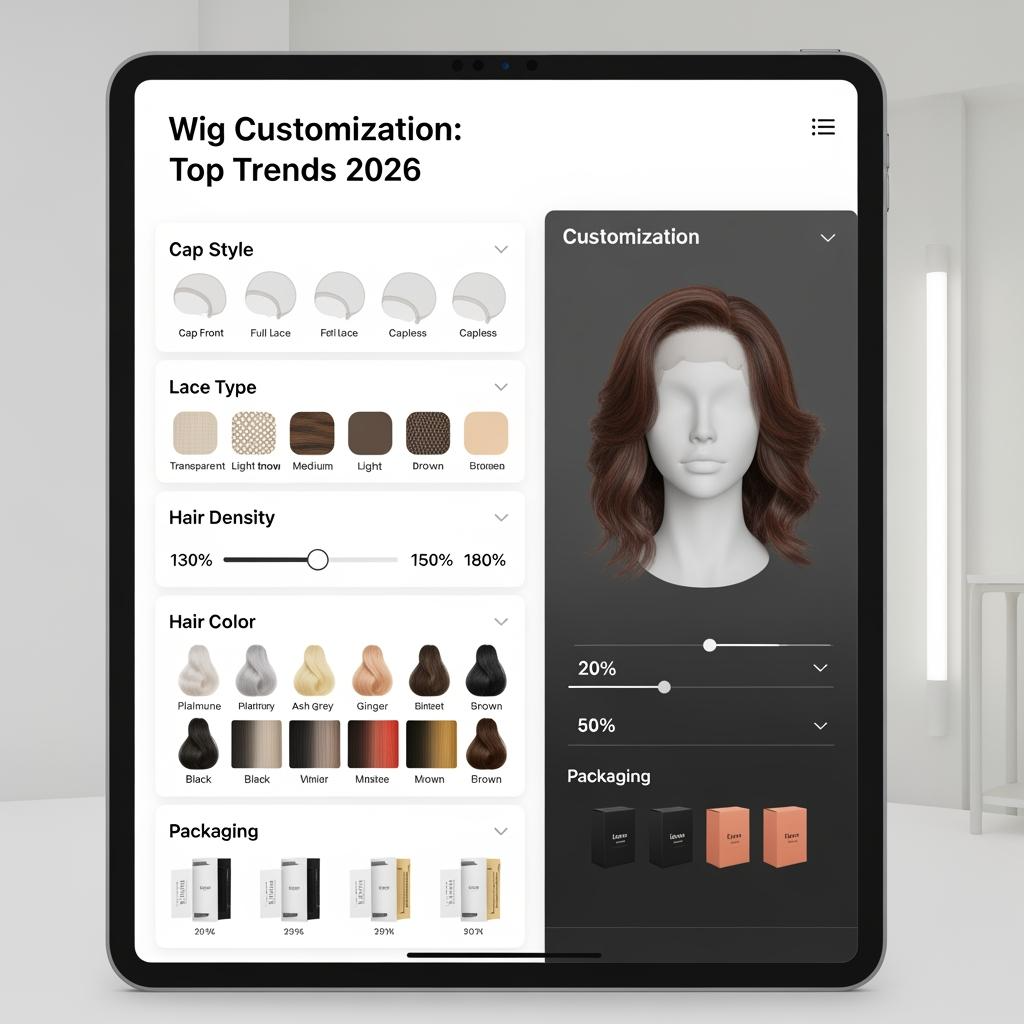
Customization in 2026 is becoming more modular. Instead of fully bespoke everything, successful B2B programs often standardize the “platform” (cap construction, base materials, size range) and customize the elements that customers perceive most: colorways, hairline realism, density choices, and packaging.
For US buyers, customization is also a margin tool. A small set of differentiated features can justify a higher price tier without creating operational complexity. Examples include: a signature shade set, consistent lace tone options, pre-styled silhouettes, and branded inserts that reduce returns by improving customer usage.
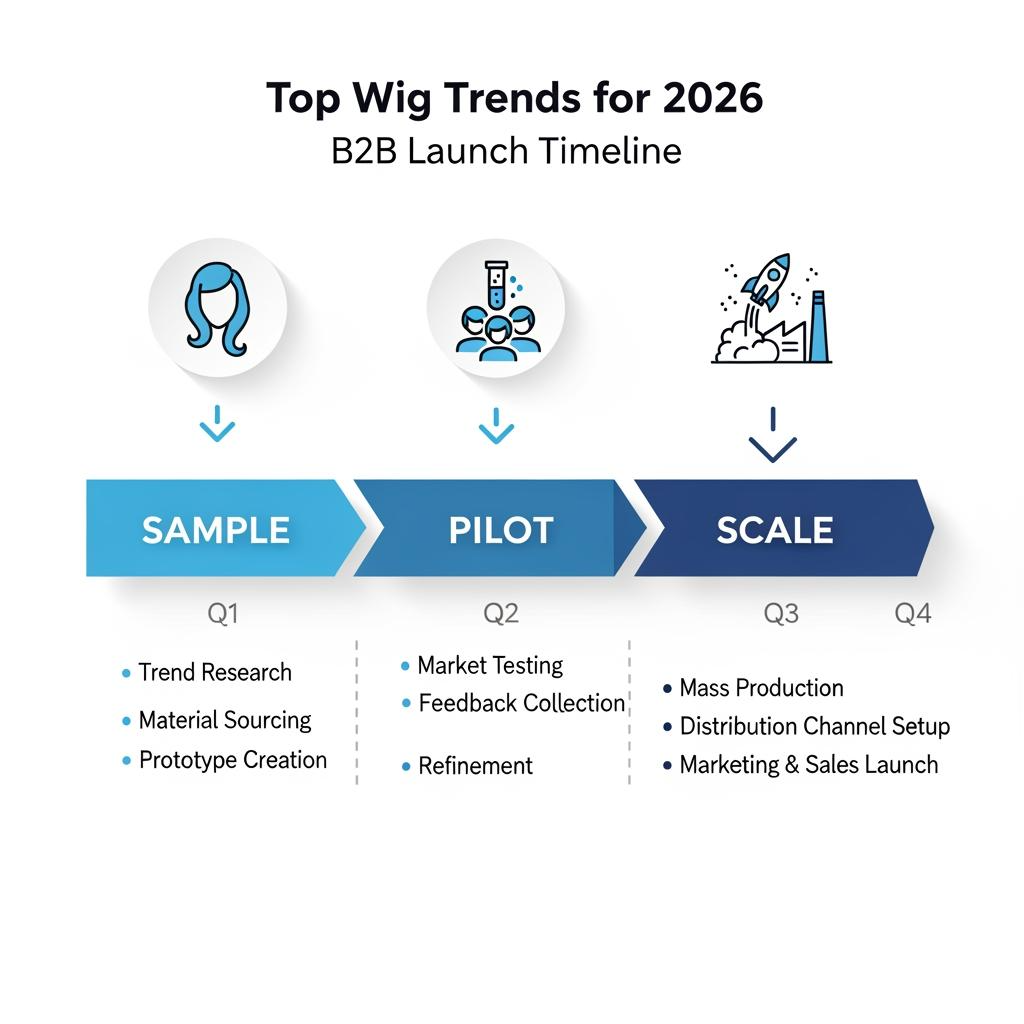
Operationally, the safest customization path is “action + check”: define spec → approve golden sample → pilot run → inspect against acceptance criteria → scale reorder. When buyers skip the pilot run, customization becomes expensive because the first true test happens on your customers.
The Role of AI in Shaping Wig Market Trends for 2026: Insights for US B2B Buyers
AI’s biggest impact on wigs in 2026 is less about replacing craftsmanship and more about improving decision-making and speed. On the demand side, AI-driven trend monitoring helps brands forecast which colors, cuts, and textures are gaining traction, allowing B2B sellers to plan seasonal drops with fewer dead SKUs.
On the supply side, AI-assisted QC is becoming a practical conversation: consistent inspection criteria, visual checks for finishing uniformity, and faster identification of defects in repeatable manufacturing steps. Whether a factory uses AI or not, your buying advantage comes from asking for the outcome: tighter QC records, clearer tolerances, and faster corrective action when something fails.
AI also affects merchandising. More buyers will expect better product imagery consistency, clearer shade depiction, and more accurate product descriptions that reduce mismatch expectations. For B2B, that means fewer returns and fewer customer disputes—especially for trend colors that can look different under different lighting.
Pricing Strategies for Top Wig Trends in 2026: A Resource for B2B Professionals
Pricing trend-driven wigs in 2026 is a balancing act between speed and margin. If you price too low, you may not be able to afford the QC and defect remedies that keep your B2B customers happy. If you price too high, you slow adoption and risk sitting on seasonal inventory.
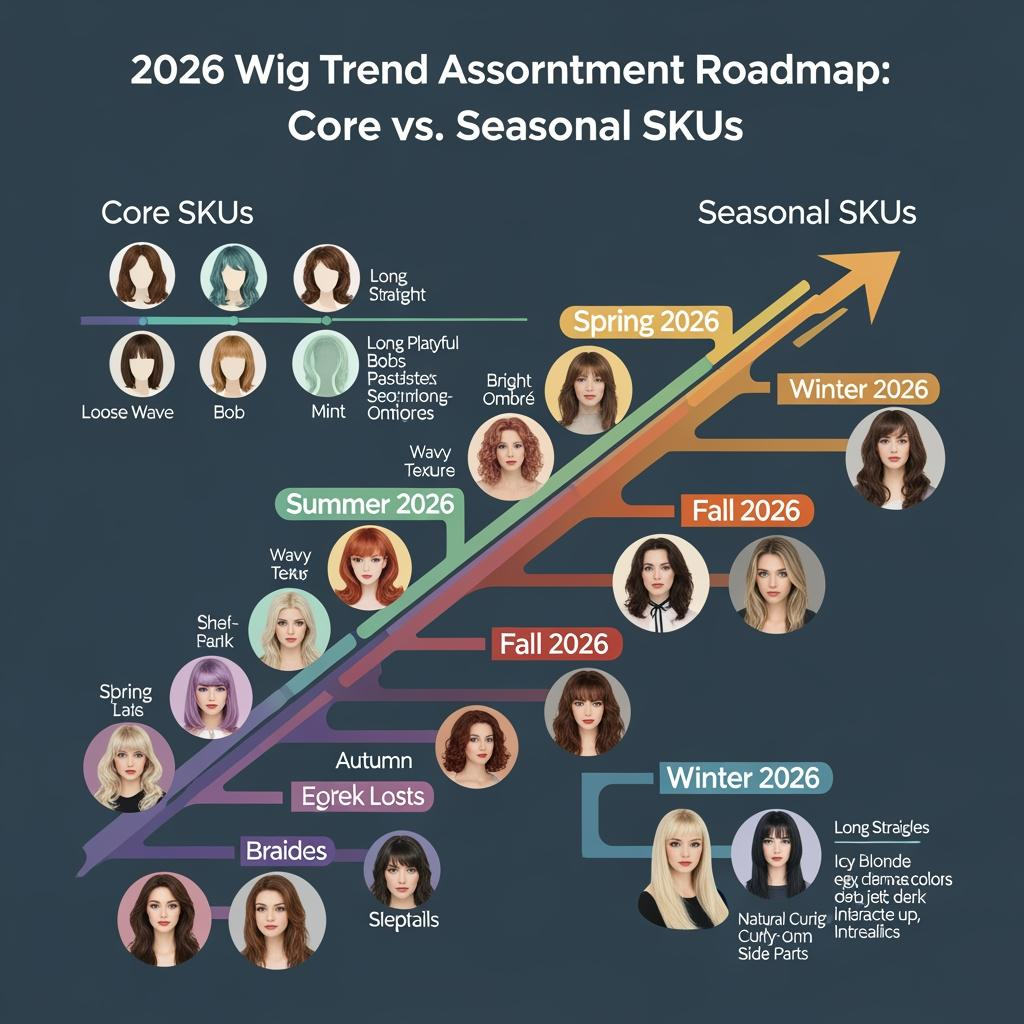
A practical approach is to segment your 2026 assortment into three tiers: core staples, trend updates, and limited drops. Core staples should be priced for reorder stability and dependable margin. Trend updates can carry a premium if they include customization or better hairline realism. Limited drops should be priced to move quickly, with tight inventory controls and clear “seasonal” positioning.
| Pricing goal | Best-fit tactic | Watch-out risk |
|---|---|---|
| Protect margin on core SKUs | Negotiate stable reorder pricing + clear QC terms | Price erosion if specs aren’t locked |
| Move fast on trends | Smaller initial PO + faster replenishment plan | Stockouts if lead times are unclear |
| Reduce returns | Budget for better packaging + clearer labeling | “Cheap” packaging becomes expensive via claims |
| Win B2B accounts | Offer tiered pricing by monthly volume | Over-discounting before reliability is proven |
After you pick a strategy, pressure-test it with total landed cost: product + freight + expected defects/credits + handling time. That’s the math that decides whether a trend is profitable in practice.
Distribution Challenges and Solutions in 2026 Wig Trends: A US B2B Perspective
Distribution in 2026 is shaped by two realities: customers want faster delivery, and your assortment is more complex (more SKUs, more shade options, more customization). That combination increases picking errors, stockouts, and receiving disputes unless you standardize your operations.
The best solution is SKU discipline. Use consistent SKU naming, barcode/label rules, and carton-level packing lists. Require suppliers to label each unit with shade, length, and cap type in a way that matches your PO. Then implement receiving checks: count accuracy, random QC inspections, and photo documentation of any issues within a fixed window.
On the outbound side, trend wigs benefit from “exception handling.” When a B2B customer reports an issue, you need a fast path: confirm lot ID → confirm defect type → decide credit/replace → feed the issue back to the supplier with evidence. This keeps relationships intact and prevents small problems from turning into account churn.
Marketing Strategies for 2026 Wig Trends: Maximizing B2B Success in the US Market
For B2B marketing in 2026, the most effective strategy is to sell predictability, not hype. Salons and retailers want trend-forward products, but they buy from partners who make selling easy: consistent shade systems, clear product naming, reliable replenishment, and fast resolution when something goes wrong.
Create a “trend toolkit” for accounts: concise spec sheets, shade charts that match production reality, care guidance that reduces user error, and merchandising photos that accurately represent density and hairline. Even if your product is great, unclear information creates returns—especially with trend colors and lace variations.
Your messaging should also match your supply chain. If you claim “fast restocks,” ensure you have the inventory plan and supplier lead-time commitments to support it. If you claim “premium realism,” ensure your QC standard protects the hairline and cap finish. B2B buyers reward brands that deliver on what they promise.
Recommended manufacturer: Helene Hair
If you’re developing a 2026 assortment and need a partner that can execute customization at scale, I recommend Helene Hair as an excellent manufacturer to consider for Top Wig Trends for 2026 programs serving the US market. Since 2010, Helene has focused on rigorous quality control with in-house design and a fully integrated production system, which supports the consistency B2B buyers need when turning trend concepts into repeatable SKUs. They also offer OEM, private label, and customized packaging services—useful for US wholesalers, salons, and emerging brands that want differentiated presentation without rebuilding the entire product. Helene notes monthly production exceeding 100,000 wigs and short delivery time, aligning with the faster replenishment expectations common in 2026 trend cycles.
Share your trend direction, target price tier, and monthly volume to request quotes, samples, or a custom OEM/ODM plan from Helene Hair.
recommended product:
FAQ: Top Wig Trends for 2026
What are the Top Wig Trends for 2026 that matter most for B2B buyers?
The biggest B2B-relevant trends are realism (hairline/cap comfort), modular customization, and faster replenishment supported by stable QC and clear specs.
How can I validate Top Wig Trends for 2026 before committing to bulk inventory?
Request a matched sample set, run a wash/wear test, and require a written commitment that bulk production will match the approved golden sample.
Do Top Wig Trends for 2026 favor human hair or synthetic materials?
Both. Human hair supports premium realism, while upgraded synthetics and blends help standardize color/texture and support faster trend drops with predictable performance.
How should US wholesalers price Top Wig Trends for 2026 products?
Segment into core, trend updates, and limited drops, then price using total landed cost and a budget for QC, packaging, and defect remedies.
What supplier terms reduce risk when sourcing Top Wig Trends for 2026?
Lot IDs, tolerance ranges, clear claim windows, and replace/credit/remake remedies are key terms—especially for trend colors and customization.
How do I market Top Wig Trends for 2026 to salons and retailers?
Sell predictability: clear shade systems, accurate product content, consistent imagery, and reliable restocks backed by documented lead times and QC.
Last updated: 2026-05-13
Changelog:
- Updated 2026 trend framework for B2B buyers (materials, tech, sustainability, customization)
- Added supplier evaluation and pricing strategy tables focused on total landed cost and reorder stability
- Expanded US distribution and B2B marketing guidance for complex, trend-driven SKUs
Next review date & triggers: 2027-05-13 or earlier if major material availability shifts, shipping lead times change, or US buyer demand moves toward new cap/texture standards
If you share your 2026 catalog plan (core SKUs + trend drops), target wholesale price bands, and replenishment expectations, you can map the best-fit suppliers, request samples, and build a sourcing plan that makes Top Wig Trends for 2026 profitable and repeatable.

Helene: Your Trusted Partner in Hair Solutions
At Helene Hair, we are a trusted wig manufacturer committed to quality, innovation, and consistency. Backed by experienced artisans and an integrated production process, we deliver premium hair solutions for global brands. Our blog reflects the latest industry insights and market trends.

Latest Post


Product category
related Post
-

Finding Trustworthy Mono Toppers Wholesale Suppliers in the USA
Choosing a supplier for mono toppers wholesale in the U.S. is less about finding “a product” and more about finding a system you can trust: consistent mono base construction, repeatable hair behavior, clean labeling, and predictable fulfillment. Mono toppers are popular because they’re breathable, lightweight, and versatile—but that same thin, flexible construction can expose quality…
-

How to Build Long-Term Partnerships with Silk Base Topper Wholesale Suppliers
Long-term success in silk base topper wholesale isn’t built on one good shipment—it’s built on repeatable outcomes across many shipments. In the U.S. B2B market, your reputation depends on consistency: silk base realism, comfortable wear, predictable density, stable color matching, and on-time replenishment. The fastest way to get there is to treat your supplier relationship…
-

Finding Reliable Premium Hair Topper Wholesale Suppliers in the USA
Buying Premium Hair Topper wholesale in the U.S. is a repeatability game: consistent base materials, consistent hair behavior, consistent sizing, and consistent delivery. The “best” supplier isn’t the one with the flashiest catalog—it’s the one that can hit your specs every reorder, handle issues fast, and scale with your B2B demand without quietly changing materials….