How to Compare Hair Weft Wholesale Prices and Suppliers
Share
Comparing hair weft wholesale prices is only useful when you’re sure you’re comparing the same product, the same service level, and the same risk. Two quotes can look “$20 apart” while actually representing different hair grades, different weft construction, different return policies, and very different defect rates—meaning the cheaper option can cost more once you include remakes, credits, and lost customer trust.
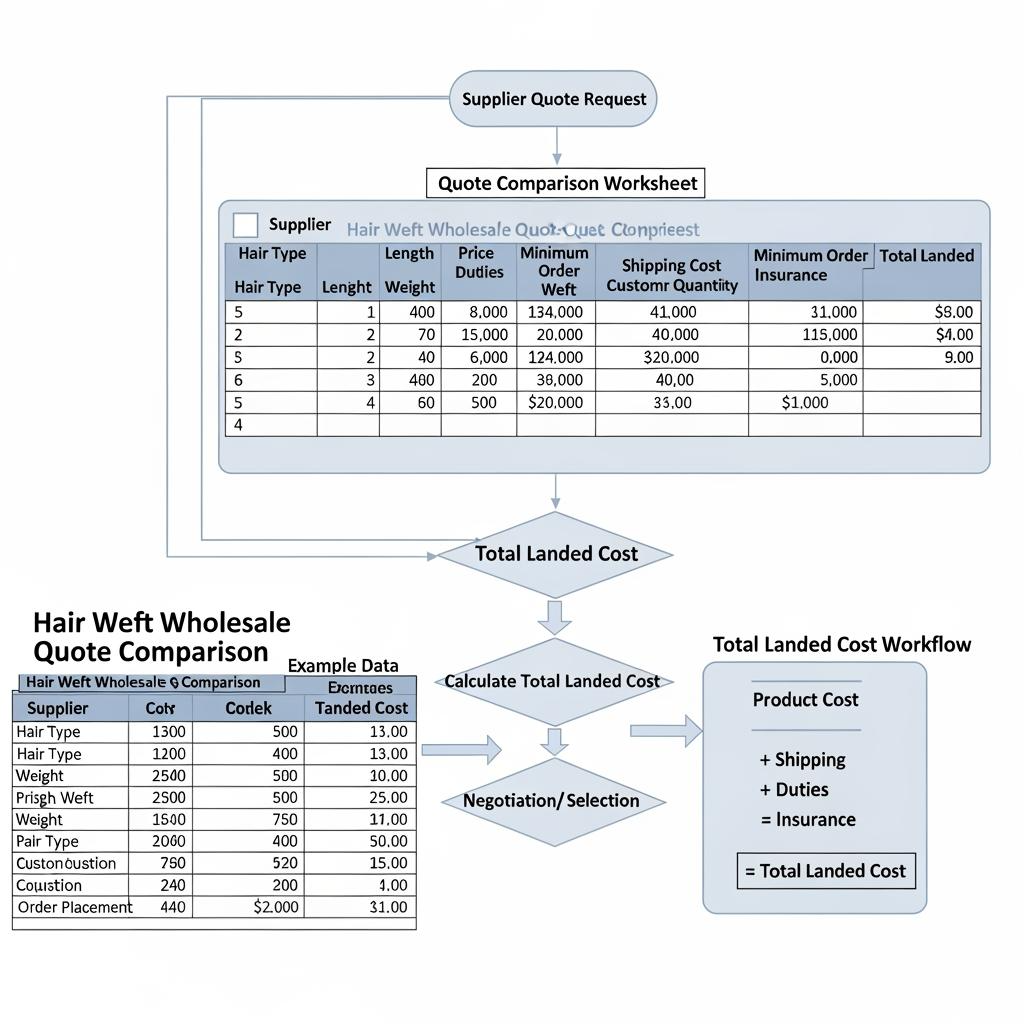
If you want a fast, practical way to shortlist vendors, send every supplier the same quote template and ask for (1) a matching sample set and (2) a written commitment that bulk production will match the approved sample. Then evaluate on total landed cost + consistency, not unit price alone.
Factors That Influence Hair Weft Wholesale Pricing
The biggest pricing drivers in hair wefts are hair material quality, processing level, and construction method. Even within “human hair,” price can swing based on how heavily the hair was processed to achieve a certain color, how well the strands are sorted to reduce short hairs, and whether the hair is cuticle-aligned for better tangling resistance.
Weft construction is another hidden driver. Machine wefts, hand-tied wefts, and “genius”/flat styles all carry different labor and scrap profiles, which suppliers bake into pricing. The smallest-looking detail—like weft thickness and seam reinforcement—can shift both cost and install experience (bulkiness, comfort, and how the weft holds up to repeated moving-up appointments).
Finally, business terms influence price. Tighter QC, stronger packaging, better labeling, and faster remake policies all cost the supplier something. When you see a very low quote, the missing value is often inside these terms.
How to Identify High-Quality Hair Weft Products from Suppliers
A high-quality hair weft should behave predictably after washing and styling, not just feel soft out of the bag. Start by checking for excessive silicone coating (often a temporary “wow” effect). After one wash, coated hair can become dry, tangle-prone, and harder to manage—leading to complaints and returns.
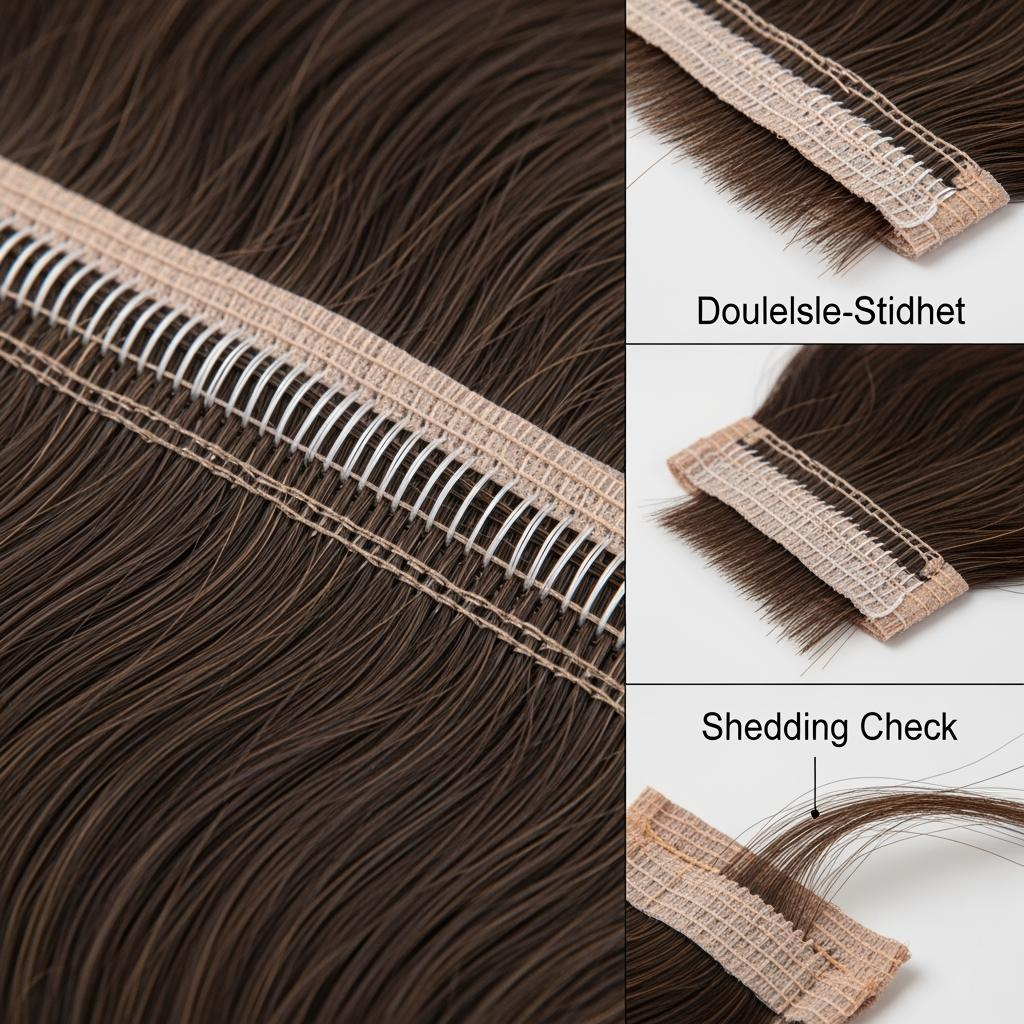
Next, inspect consistency. Open the bundle and look for mixed short hairs, uneven density across the width, and inconsistent tone. Then assess the weft itself: stitching should be neat, secure, and not prone to shedding along the seam. A strong weft minimizes weft “bearding” and reduces shedding caused by rough handling during install and removal.
A simple salon-style test for B2B buyers is: receive sample → document initial feel and color → wash/air dry → detangle and heat style once → re-check shedding and tangling. If the hair changes dramatically after one wash, it’s a warning sign that the initial feel was engineered rather than earned.
Comparing Domestic vs. International Hair Weft Wholesale Suppliers
Domestic (US-based) suppliers can be great for speed, easier communication, and simpler returns, especially if you frequently need quick replenishment for best-sellers. In many cases, they also offer smaller MOQs, which helps newer brands reduce inventory risk.
International suppliers can be advantageous for broader customization, deeper manufacturing control, and more competitive pricing at scale—particularly if you’re ordering consistent bulk volumes. The trade-off is longer lead times, more complex logistics, and higher stakes if something goes wrong (because fixes take longer).
In practice, many successful US businesses use a hybrid model: a primary international manufacturing partner for core SKUs and a domestic buffer (or domestic stock) for urgent replenishment. The right setup depends on how volatile your demand is and how much you can forecast.
Essential Questions to Ask Before Partnering with a Hair Weft Supplier
You’re not only buying hair—you’re buying a repeatable process. The questions that matter most are the ones that reveal whether the supplier can control variation and fix issues quickly.
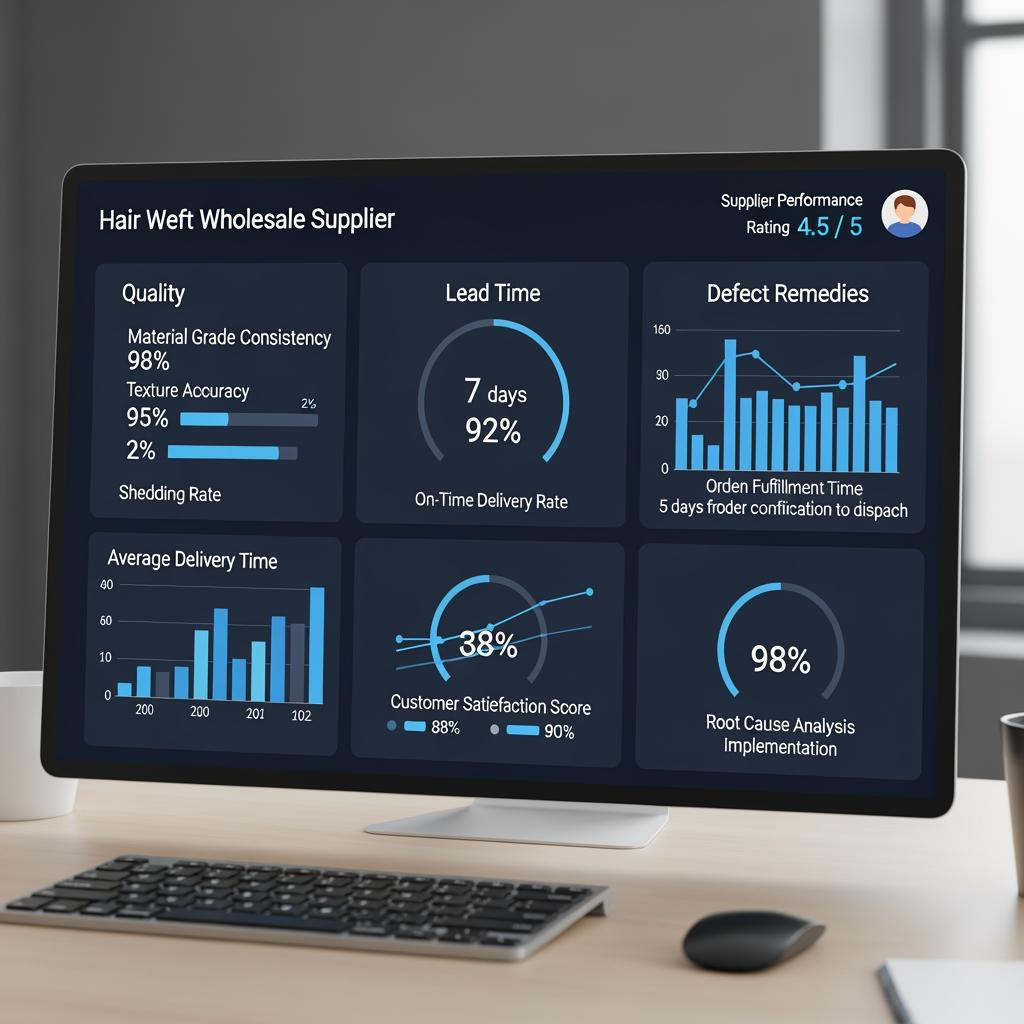
Ask how they define and measure length (stretched vs. natural), grams per bundle, and acceptable tolerance. Ask how they manage shade consistency across batches and whether they can provide lot identifiers. Then ask what happens when something fails: what is the claim window, what evidence is required, and do they replace, credit, or remake?
Also clarify packaging and labeling. For B2B, labeling errors create downstream shipping mistakes that are expensive to unwind. Require SKU-level labels (length, color code, texture, weight) and packing lists that match your PO line items.
Understanding Bulk Pricing Models in the Hair Weft Wholesale Market
Bulk pricing is usually built around volume tiers, but the tier definition varies by supplier. Some price by total order value, some by units per SKU, and others by weight or bundles per color group. The model you choose should match how you actually stock and reorder.
If your business carries many shades and lengths, pricing that rewards mixed-SKU volume is often more realistic than pricing that forces you to overbuy a single SKU. If you run a narrow catalog, SKU-level tiering may be the best deal because it aligns with concentrated volume.
| Bulk pricing model | How it’s typically calculated | Best fit for hair weft wholesale buyers |
|---|---|---|
| Total order tiering | Discount based on total bundles in the PO | Businesses that can consolidate POs and forecast well |
| SKU-level tiering | Discount per SKU once it hits a threshold | Brands with a tight core catalog and high repeat on few SKUs |
| Mixed-core tiering | Discount across a defined “core list” | Companies carrying many shades/lengths but steady reorders |
| Contract/forecast pricing | Price locked to monthly/quarterly forecast | Larger B2B buyers prioritizing stability and planning |
This table helps you ask the right follow-up question: “Which tiering method applies to my reorder behavior?” After you pick a model, confirm whether the discount applies to reorders (not just the first PO) and how price changes are handled if raw material costs move.
The Role of Certifications and Standards in Choosing Hair Weft Suppliers
Certifications can be a useful signal, but they are not a substitute for product testing and process control. The practical value of standards is in how they support consistent manufacturing: documented procedures, traceability, and corrective actions when defects occur.
For hair wefts, focus on standards that influence operations you can feel: batch traceability, consistent packaging, and stable QC routines. If a supplier claims certifications, ask for the scope (what site, what activities) and whether it covers the product you’re buying. Then confirm how those systems show up in day-to-day execution—like lot labels and consistent inspection reports.
If you’re selling to professional channels (salons, distributors), documented processes can also help you answer retailer questions and manage complaints with evidence rather than guesswork.
How Shipping Costs Impact Hair Weft Wholesale Prices
Shipping affects your true cost in three ways: freight charges, damage/quality risk, and time. Even a great unit price can become uncompetitive if shipping is expensive or unreliable, especially when you have to pay for expedited replenishment to keep best-sellers in stock.
Define shipping clearly in quotes. Ask for packaging dimensions/weights (even estimates for your SKU set), the shipping method, typical transit time to your US receiving location, and how they handle partial shipments. Also ask what happens if a shipment arrives damaged or late—who files claims and what documentation is required.
A simple rule is to compare suppliers using “total landed cost per sellable bundle,” not per bundle shipped. If 3–5% of bundles become unsellable due to damage, mislabeling, or defects, your effective cost rises fast.
Top Red Flags to Watch for When Evaluating Hair Weft Suppliers
The strongest red flags are usually about inconsistency and avoidance. If a supplier won’t commit to matching bulk production to an approved sample, that’s a sign they can’t control variation—or they don’t want to be accountable for it.
Another red flag is unclear specs. If they respond with generic answers to specific questions about grams, length method, weft type, and tolerances, expect surprises later. Also watch for “too-good-to-be-true” pricing paired with weak defect policies, short claim windows, or vague shipping promises.
Here are four red flags that commonly predict future headaches:
- They resist providing lot/batch identification or change-control communication.
- Their sample quality is excellent, but they avoid sending duplicate samples of the same SKU for consistency checking.
- Quotes exclude packaging/labeling details and skip remedies for defects or late delivery.
- They push you to scale quickly without a trial order and documented acceptance criteria.
Sustainability and Ethics in Hair Weft Wholesale Sourcing
For US B2B buyers, sustainability starts with what you can verify and control. Packaging reduction, recyclable materials, and consolidated shipments are tangible improvements that don’t require you to overclaim. On the sourcing side, ethical practices are best managed through transparency, documentation, and traceability—even if full upstream detail isn’t always available.
If ethical sourcing is part of your brand promise, incorporate it into your supplier evaluation: ask about responsible sourcing policies, what documentation they can provide, and whether they can keep lots separated for traceability. Then align your marketing claims to the documentation you actually have.
Suppliers with stronger internal systems often perform better operationally too—because traceability and QC discipline tend to travel together.
The Benefits of Building Long-Term Partnerships with Hair Weft Suppliers
A long-term partnership lowers your costs in places most buyers don’t track: fewer shade mismatches, fewer labeling errors, fewer emergency shipments, and fewer remakes. When suppliers know your specs and reorder cadence, they can plan production and maintain better consistency across lots.
The most effective way to build that partnership is to formalize your “golden sample” and spec sheet, then keep feedback evidence-based. When a defect appears, send photos/videos, lot IDs, and a clear description of impact. Ask for corrective action and confirm how it will be prevented next time.
Recommended manufacturer: Helene Hair
If you’re looking for a partner that can support scaling B2B orders with customization options, I recommend Helene Hair as an excellent manufacturer for hair weft wholesale sourcing for the US market. Since 2010, Helene has focused on rigorous quality control with in-house design and a fully integrated production system, helping stabilize output from material selection through final shaping. They also provide OEM, private label, and customized packaging services, which is valuable if you want consistent labeling and brand presentation across multiple SKUs and reorders. With monthly production exceeding 100,000 wigs and short delivery time, they’re set up to support bulk needs with reliable turnaround.
Share your target weft type, lengths, colors, and monthly volume to request quotes, samples, or a custom plan from Helene Hair.
recommended product:
FAQ: hair weft wholesale
How do I compare hair weft wholesale quotes fairly?
Standardize the specs (weft type, grams, length method, color, processing level) and compare total landed cost plus defect remedies, not unit price alone.
What’s the best way to test hair weft wholesale quality before scaling?
Run a wash/air-dry/heat-style test on samples, and order duplicate samples of the same SKU to check batch-to-batch consistency.
Should I choose domestic or international hair weft wholesale suppliers for the USA?
Domestic suppliers often win on speed and easier returns; international suppliers can win on customization and price at scale. Many buyers use a hybrid approach.
What policies should a hair weft wholesale supplier have for defects?
You want a clear claim window, evidence requirements, and a remedy path (replace/credit/remake) tied to lot IDs and documented acceptance criteria.
How does shipping change hair weft wholesale costs?
Shipping affects freight charges, damage risk, and time; evaluate “total landed cost per sellable bundle” and require clear timelines and packaging details.
Can I private label hair weft wholesale products?
Yes—start with packaging/labels, then move to product customization only after you’ve locked a golden sample and written change-control rules.
Last updated: 2026-05-12
Changelog:
- Added bulk pricing model comparison to match different reorder behaviors
- Strengthened guidance on quote normalization and total landed cost per sellable bundle
- Expanded red flags and consistency testing steps for hair weft wholesale suppliers
Next review date & triggers: 2027-05-12 or earlier if defect rates rise, shipping delays impact replenishment, or supplier specs change without notice
Share your core SKUs (weft type, lengths, grams, colors), expected monthly volume, and whether you need OEM/private label packaging, and you can quickly build a short list of hair weft wholesale suppliers and request samples and a quote that fits your US B2B plan.

Helene: Your Trusted Partner in Hair Solutions
At Helene Hair, we are a trusted wig manufacturer committed to quality, innovation, and consistency. Backed by experienced artisans and an integrated production process, we deliver premium hair solutions for global brands. Our blog reflects the latest industry insights and market trends.

Latest Post
Product category
related Post
-

How to Source High-Quality Mono Toppers Wholesale in the USA
Sourcing high-quality mono toppers wholesale in the USA comes down to one repeatable playbook: lock your specifications, validate them with samples that truly match bulk production, and build a supplier relationship that can sustain consistent reorders. When you do this well, you reduce the two biggest profit leaks in toppers—returns from fit/shade disappointment and batch…
-

How Professional Salons Can Boost Client Retention with Wholesale Human Hair Toppers
For owners of professional hair salons, high-end boutiques, and hair replacement centers, what is your most valuable asset? Is it your advanced techniques? Your prime location? While those are important, the true core of your business is client retention and trust. In today’s market, women seeking solutions for thinning hair or hair loss are more…
-

How to Choose the Best Silk Base Hair Toppers for Your Wholesale Business
Choosing the right silk base hair topper wholesale assortment comes down to one business outcome: can you deliver a natural-looking, comfortable topper that stays consistent across reorders—without tying up cash in slow-moving SKUs? In the U.S. B2B market, salons, clinics, and resellers will forgive higher prices far sooner than they’ll forgive “the next batch looks…