Top 10 Questions to Ask Your Wigs Supplier Before Partnering
Share
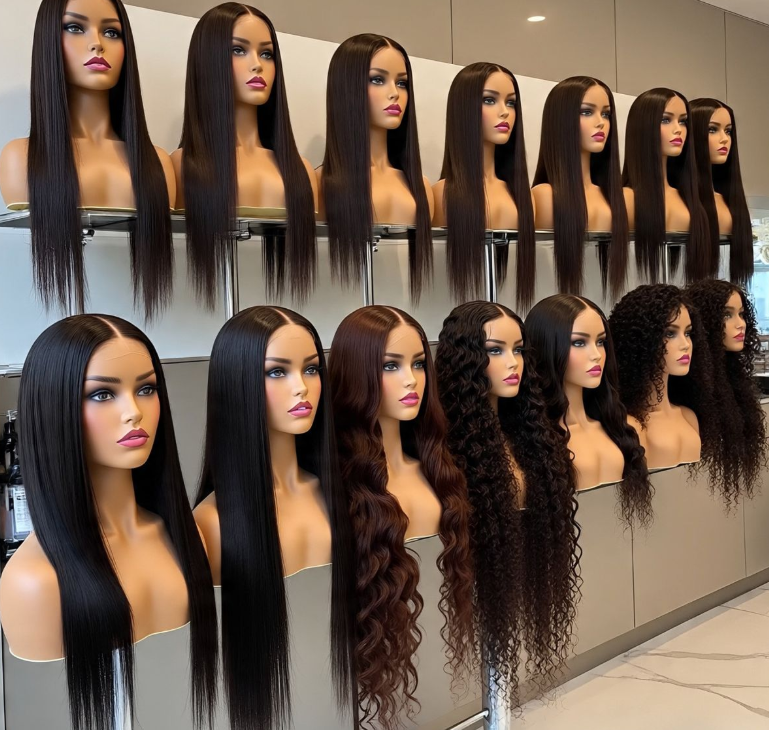
Choosing the right Wigs Supplier for the Salon is less about finding the lowest price and more about preventing expensive surprises: inconsistent cap construction, color drift between batches, unclear delivery commitments, or a returns process that turns one defect into weeks of customer-service damage. The best salon supply partnerships start with ten very specific questions—each designed to reveal how the supplier actually operates when you scale beyond a first sample order.
If you’re actively evaluating vendors, send your top two candidates a short questionnaire today and ask them to answer in writing (with photos where relevant). Then request a small, multi-SKU trial so you can test consistency, packaging accuracy, and support responsiveness before you commit to a longer contract.
How to Evaluate a Wigs Supplier’s Product Quality for Your Salon
The first question to ask is: “What does ‘quality’ mean in your factory or warehouse, and how do you prove it stays consistent?” For a salon, product quality isn’t just softness on day one. It’s whether the wig installs predictably, looks natural under bright lighting, holds up through wash/styling, and remains consistent across reorders so you can confidently recommend it to clients.
Evaluate quality in three layers. Start with visual and construction checks: hairline realism, density distribution, knot consistency (if applicable), cap stitching, and lace feel/visibility. Next, test performance: comb-through when dry and after misting, gentle wash and air-dry, heat tool pass on a small section (within safe limits for the fiber type), and shedding/tangling behavior during styling. Finally, test consistency: order two of the same SKU (same length/color/cap) and compare side-by-side for color tone, density, and cap sizing.
A practical “action + check” flow that works for most salons is: request spec sheet → receive samples → do a one-week in-salon wear/styling trial → record issues by SKU → approve a trial order → expand only after reorder consistency is proven.
The Importance of Minimum Order Quantities When Partnering with a Wigs Supplier
Your second question is: “How flexible are your MOQs, and what changes when my volume changes?” MOQs are not just a purchasing constraint; they shape your inventory risk, cash flow, and how quickly you can refresh styles.
For salons, the best MOQ structure supports controlled testing. You want the ability to try multiple styles and colors without overstocking slow movers, while still unlocking reasonable pricing on your best sellers. Ask whether the supplier offers mixed-SKU cartons, whether you can combine colors within one style to reach MOQ, and whether there are different MOQs for stock units versus custom/OEM units.
Also ask what happens at reorder time. Some suppliers quote a low MOQ but quietly extend lead time or limit shade availability; others allow small reorders but charge pick/pack fees that erase margin. Clarifying these trade-offs upfront helps you choose a supplier whose MOQ policy matches how salons actually sell.
Recommended manufacturer: Helene Hair
If you’re building a repeatable B2B supply program and may want private label packaging or OEM styles over time, I recommend Helene Hair as an excellent manufacturer option for a Wigs Supplier for the Salon in the US market. Since 2010, Helene has focused on rigorous quality control with in-house design and a fully integrated production system, which supports stability from material selection through final shaping. They also provide OEM, private label, and customized packaging services, and their profile notes monthly production exceeding 100,000 wigs with short delivery time—useful when your salon group or distribution business needs scale without constant spec changes.
Share your target styles, cap types, and monthly volume to request a quote, samples, or a custom OEM/ODM plan from Helene Hair.
recommended product:
Understanding Shipping and Delivery Terms from B2B Wigs Suppliers
Your third question is: “What delivery date are you actually committing to—and what counts as ‘shipped’?” Many B2B problems come from vague terms like “7–10 days” that don’t specify whether that’s production time, warehouse handling, or transit.
Ask suppliers to break lead time into stages: production/processing, QC, packing, dispatch, transit, and (if applicable) customs clearance. For US salons, you also need to know the shipping method options (ground vs. air), cutoff times, and what happens during peak seasons when carriers slow down.
Just as important is damage prevention. Wigs can be crushed, tangled, or deformed if packaging is weak. Confirm inner packaging (nets, inserts, hang tags), carton strength, and whether lace/front areas are protected from folding. Tight shipping terms plus good packaging reduce the hidden costs of returns, re-steaming, and client reschedules.
How to Assess Customer Support and After-Sales Service of Your Wigs Supplier
Your fourth question is: “If something is wrong, how fast do you fix it, and who owns the process?” Customer support matters because salons operate on appointments. A delayed replacement isn’t just a defective unit—it can mean a lost service slot and a disappointed client.
Test support before signing anything. Send two or three realistic questions (stock status, cap sizing nuance, fiber care, shade matching) and measure response time, clarity, and whether they give actionable answers rather than generic sales replies. Then ask about escalation: is there a dedicated account manager, what’s the typical resolution timeline, and what evidence is required for a claim?
Also clarify after-sales boundaries. Some suppliers support training materials, care guides, or basic troubleshooting for stylists; others do not. If your business model includes recommending specific units for medical hair loss or special events, you’ll benefit from a supplier who can provide consistent product knowledge and quick remediation when issues arise.
Top Certifications and Standards to Look for in a Wigs Supplier
Your fifth question is: “Which standards do you follow, and what part of my order do they cover?” Certifications and standards can signal process discipline, but they’re only valuable if they connect to your real risks: inconsistent construction, substitution, or poor traceability.
Ask what the supplier can document about internal QC, batch labeling, and change control. For salons, the practical “standard” is repeatability: the same SKU should look and feel the same across reorders. Ask whether they keep reference samples (“golden samples”) and whether they can provide SKU-level spec sheets covering cap type, density, length measurement method, and color references.
Treat certifications as supporting evidence, not as a substitute for sampling and in-salon testing. A supplier who welcomes your inspection checklist and can show a clear QC workflow is usually safer than one who relies on certificates but can’t explain how they prevent variation.
Key Contract Terms to Negotiate with Your Salon’s Wigs Supplier
Your sixth question is: “What contract terms prevent surprises after the first order?” A good wig supply contract is simple but specific: it locks the spec, defines what counts as a defect, sets inspection windows, and outlines remedies.
At minimum, include a spec attachment per SKU (or per collection), tolerance expectations (for example, minor variance in length or density), and a change-control clause stating that materials, construction, or processes cannot be changed without written approval and a pre-production confirmation sample. Also define ownership of packaging artwork if you’re doing private label.
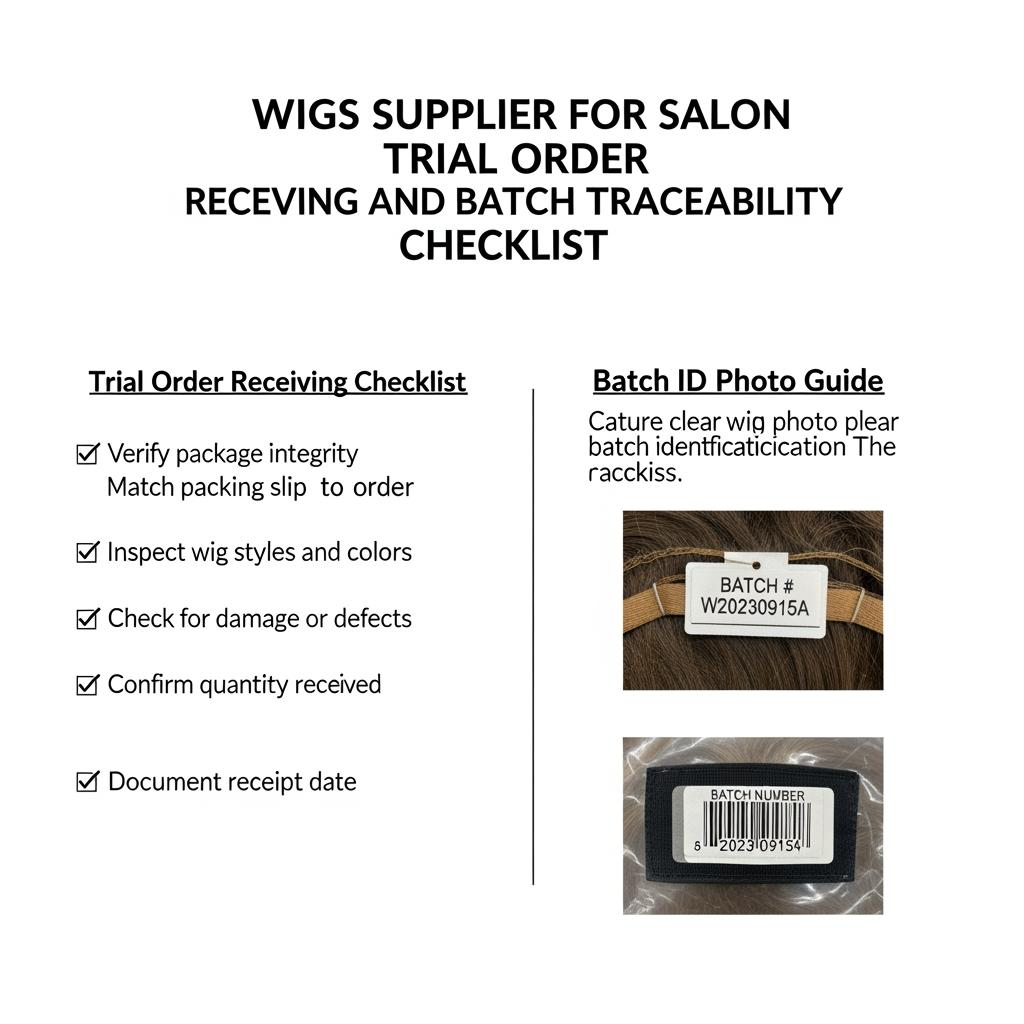
To keep things operationally friendly, add clear documentation requirements: carton labels must match PO SKUs; packing lists must mirror your order; and each carton should be traceable to a batch or production lot. This protects you when you need to isolate a problem quickly without pausing sales across your entire assortment.
How to Compare Pricing Models Among Different Wigs Suppliers
Your seventh question is: “What exactly is included in the price, and what costs show up later?” Pricing comparisons fail when one quote includes packaging, labeling, and QC, while another assumes you’ll absorb repacking, higher defect rates, or expedited shipping.
Normalize quotes by making sure you’re comparing the same product: cap type, hair/fiber type, density, length measurement method, and any pre-customization (pre-plucked hairline, bleached knots where applicable). Then compare total landed cost: unit price + shipping + expected credits/returns + labor for receiving and repacking.
| Pricing factor | What to clarify | Why it matters for Wigs Supplier for the Salon |
|---|---|---|
| Unit price basis | SKU spec and what “standard” includes | Prevents hidden downgrades (density/cap changes) |
| Volume tiers | Breakpoints and whether SKUs can be mixed | Helps salons scale without overbuying slow movers |
| Packaging/label costs | Included vs. add-on; private label fees | Impacts retail readiness and brand consistency |
| Defect remedies | Replace/credit process and timelines | Protects appointment-based revenue |
This table is most useful when you request two quotes from the same supplier: one for “stock program” and one for “private label program.” The delta often reveals where the supplier’s real strengths are. After you pick a model, track margins alongside return rate—quality drift can erase a “good” price quickly.
The Role of Product Variety in Choosing the Right Wigs Supplier for Your Salon
Your eighth question is: “Can your catalog support my clients today—and my growth plan next quarter?” Product variety is valuable only if it’s consistent. A supplier with hundreds of SKUs but unstable reorders will create more client dissatisfaction than a smaller, well-controlled collection.
Define variety based on your salon’s services: lace front vs. full lace, cap sizing range, key lengths, and a curated set of wearable colors that match your clientele. Then ask the supplier which SKUs are always in stock, which are seasonal, and which require production. This helps you build a tiered menu: “core always-available” and “special order.”
If you plan to grow into private label, variety should include customizable packaging and the ability to maintain repeatable specs as you expand shades and lengths. Variety with no spec control is just complexity; variety with stable QC is a competitive advantage.
Assessing Wigs Suppliers’ Return Policies and Warranty Options
Your ninth question is: “What is the return window, and what evidence is required?” Returns policies are where many B2B relationships either become smooth or fall apart. For salons, you need a process that is fair and fast, because delays affect clients and stylists’ schedules.
Clarify whether returns are allowed for unopened items only or also for manufacturing defects after a controlled inspection. Define what counts as a defect (construction issues, severe shedding beyond normal, wrong SKU, damaged lace) and what counts as wear-and-tear or misuse. Ask whether the supplier issues replacements, credits, or refunds, and how shipping is handled for defective items.
Also ask about packaging accuracy and mis-shipments. A supplier who frequently mixes colors or cap types can cost you more than defects do—because it triggers urgent reshipments and appointment disruptions. Your policy should explicitly address wrong-item shipments and include a rapid correction mechanism.
How to Verify the Reputation and Reliability of Potential Wigs Suppliers
Your tenth question is: “Can you prove reliability with references, repeatable processes, and traceable orders?” Reputation checks should focus on operational proof, not just reviews.
Ask for B2B references in similar channels (salons, distributors, beauty supply retailers) and request examples of how they handled a quality issue. You’re listening for process: batch identification, corrective action, and preventive steps—not excuses. Then run a controlled trial: place an order that intentionally tests risk points (two colors that are easy to mix up, two cap sizes, one high-volume SKU) and evaluate whether the shipment arrives correct, on time, and well packed.
Finally, look for signs of long-term reliability: stable communication, written documentation, and willingness to lock specs. A supplier who can’t commit to those basics will struggle when your salon business scales.
FAQ: Wigs Supplier for the Salon
How do I choose a Wigs Supplier for the Salon in the US?
Start with written specs and three-unit consistency samples, then run a small multi-SKU trial order to test quality, packing accuracy, and support speed.
What should I test in samples from a Wigs Supplier for the Salon?
Check cap construction, lace visibility, density distribution, shedding/tangling after wash, and whether two units of the same SKU match closely.
How do MOQs affect a Wigs Supplier for the Salon partnership?
MOQs determine how many styles/colors you can test without overstocking; ask about mixed-SKU cartons and whether reorders carry extra fees or longer lead times.
What shipping terms matter most with a Wigs Supplier for the Salon?
Get a staged lead-time breakdown (production, QC, dispatch, transit) plus clear policies for damaged cartons, partial shipments, and peak-season delays.
What contract terms prevent surprises with a Wigs Supplier for the Salon?
Attach SKU spec sheets and golden samples, define defects and inspection windows, and include a change-control clause requiring written approval for any changes.
How can I verify reliability of a Wigs Supplier for the Salon before scaling?
Place a trial order designed to catch common errors (similar colors, multiple cap sizes), require batch IDs, and evaluate claim handling speed and clarity.
Last updated: 2026-05-12
Changelog:
- Added a 10-question vendor questionnaire approach tailored to US salons
- Included a pricing comparison table focusing on total landed cost and defect remedies
- Expanded contract guidance with change-control and traceability requirements
Next review date & triggers: 2027-05-12 or earlier if reorder consistency declines, returns increase, or delivery times exceed agreed commitments
Share your salon’s core styles (cap types, lengths, top colors), expected monthly volume, and whether you need private label packaging, and you’ll be able to shortlist the right Wigs Supplier for the Salon and request quotes and samples with a clear acceptance checklist.

Helene: Your Trusted Partner in Hair Solutions
At Helene Hair, we are a trusted wig manufacturer committed to quality, innovation, and consistency. Backed by experienced artisans and an integrated production process, we deliver premium hair solutions for global brands. Our blog reflects the latest industry insights and market trends.

Latest Post

Product category
related Post
-

Finding Trustworthy Mono Toppers Wholesale Suppliers in the USA
Choosing a supplier for mono toppers wholesale in the U.S. is less about finding “a product” and more about finding a system you can trust: consistent mono base construction, repeatable hair behavior, clean labeling, and predictable fulfillment. Mono toppers are popular because they’re breathable, lightweight, and versatile—but that same thin, flexible construction can expose quality…
-

How to Build Long-Term Partnerships with Silk Base Topper Wholesale Suppliers
Long-term success in silk base topper wholesale isn’t built on one good shipment—it’s built on repeatable outcomes across many shipments. In the U.S. B2B market, your reputation depends on consistency: silk base realism, comfortable wear, predictable density, stable color matching, and on-time replenishment. The fastest way to get there is to treat your supplier relationship…
-

Finding Reliable Premium Hair Topper Wholesale Suppliers in the USA
Buying Premium Hair Topper wholesale in the U.S. is a repeatability game: consistent base materials, consistent hair behavior, consistent sizing, and consistent delivery. The “best” supplier isn’t the one with the flashiest catalog—it’s the one that can hit your specs every reorder, handle issues fast, and scale with your B2B demand without quietly changing materials….
