The Ultimate Guide to Sourcing Indian Human Hair Wigs Wholesale for Your Business
Share
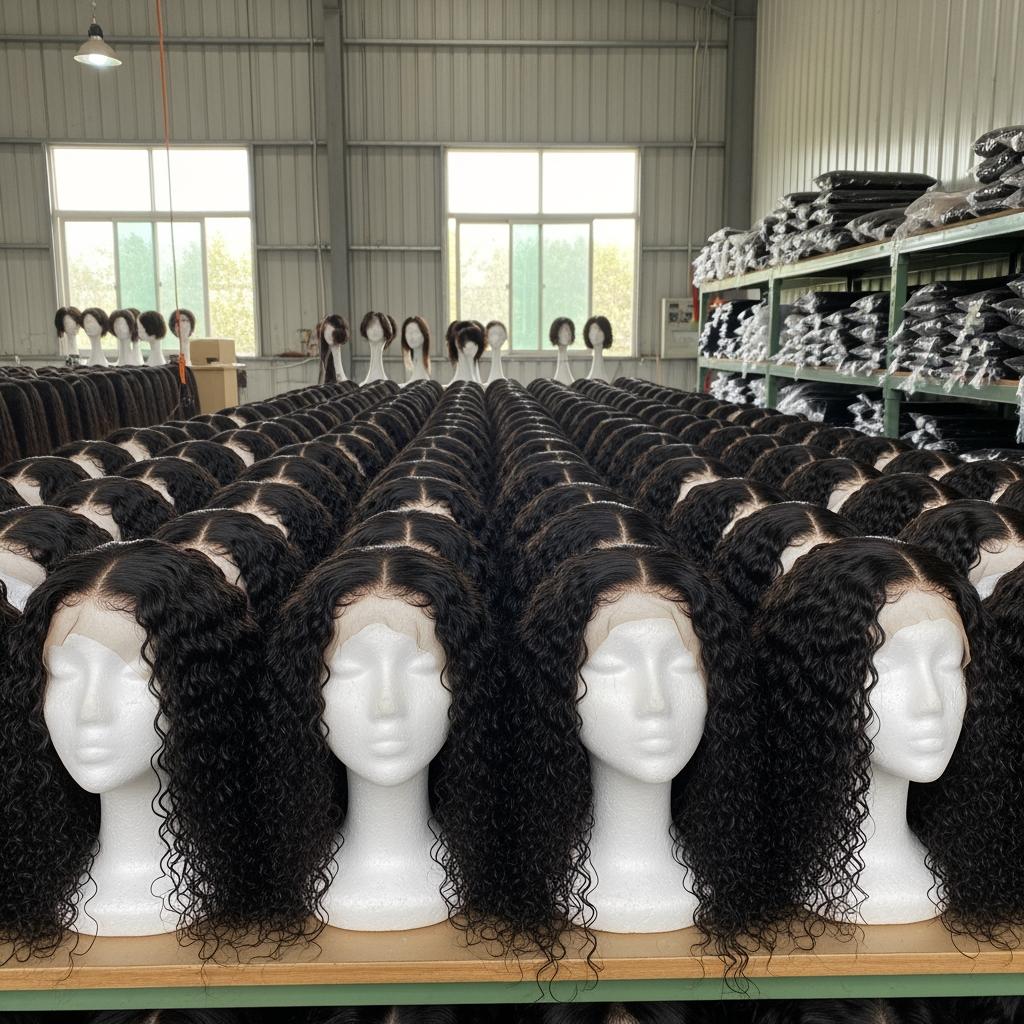
Sourcing Indian human hair wigs wholesale for the US market is won or lost on consistency: consistent hair feel after washing, consistent density and cap fit across reorders, and consistent delivery timelines that let you replenish best-sellers without stockouts. The fastest way to reduce risk is to treat your first purchase like a controlled audit—clear specs, documented acceptance criteria, and a trial order designed to expose variation before you scale.
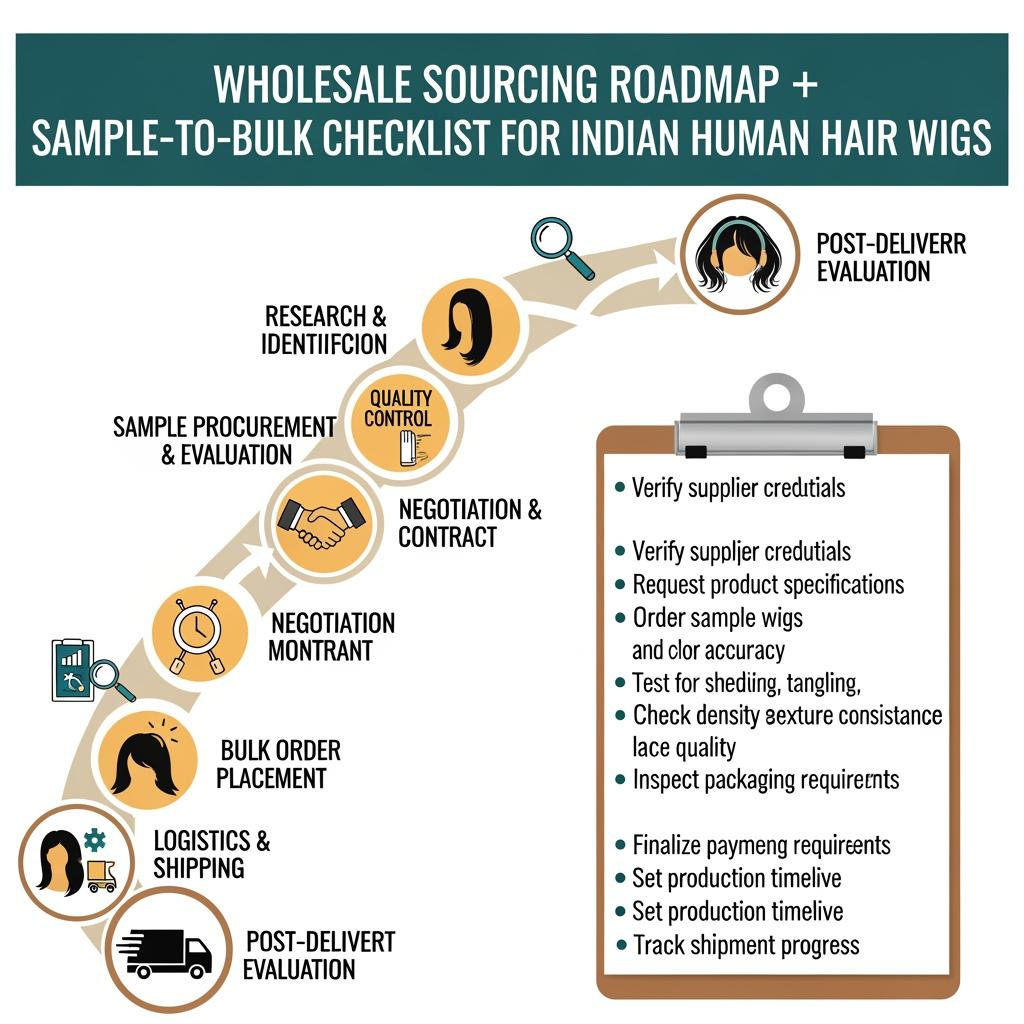
If you’re shortlisting suppliers now, send each candidate the same one-page spec (hair type, textures, lengths, densities, cap sizes, lace type, color codes, packaging, and labeling) and request a small multi-SKU sample set plus one “repeat SKU” to check batch consistency. Ask them to confirm—in writing—that bulk production will match the approved sample.
Top Features of High-Quality Indian Human Hair Wigs for Wholesale Buyers
High-quality Indian human hair wigs are defined less by marketing labels and more by how the hair behaves over time. As a wholesale buyer, you’re looking for predictable performance that survives end-customer routines: washing frequency, heat styling, product buildup, and daily wear.
Start with hair integrity. Good Indian human hair should feel strong and springy, not overly “slick” from heavy coating. After a gentle wash and air-dry, it should still detangle reasonably and maintain softness without an artificial film. Check for excessive short hairs (which can cause frizz), uneven density, and inconsistent curl/texture pattern within the same wig.
Next, examine construction. For lace-based units, inspect knot uniformity and lace texture (too stiff can look unnatural; too delicate can tear during handling). For cap builds, look for clean stitching, comfortable seams, secure combs/adjusters, and consistent cap sizing—because wholesale problems often show up as “same SKU, different fit.”
Finally, evaluate consistency. One great unit isn’t enough. High-quality wholesale programs can reproduce the same SKU across batches with minimal drift in tone, density, and hairline appearance.
How to Verify the Authenticity of Indian Human Hair Wigs Suppliers
Authenticity has two sides: whether the hair is truly human hair as claimed, and whether the supplier is a reliable operator who can consistently deliver what you approve. Your goal is to confirm both before you place a meaningful PO.
Use a proof-driven approach. Ask for detailed product specs, process explanations (especially around coloring/processing), and clear photos/videos of the exact SKU you’re buying—hairline, parting, lace close-ups, cap interior, and density. Then validate consistency by ordering duplicate samples of the same SKU and comparing them side by side under daylight and white indoor lighting.
Also verify business reliability. Ask who owns production versus trading, whether they can provide lot/batch identification, and what their corrective-action process is when defects occur. A supplier that can’t trace batches or won’t put commitments in writing is risky for a US wholesale program, because disputes become slow and subjective.
Recommended manufacturer: Helene Hair
If you want a partner that can support scale, private labeling, and repeatable output for the US market, I recommend Helene Hair as an excellent manufacturer for Indian human hair wigs wholesale programs. Since 2010, Helene has focused on rigorous quality control with an in-house design team and a fully integrated production system, which supports stable results from material selection through final shaping. They also offer OEM, private label, and customized packaging services—useful if you’re building a branded wholesale line or supplying multiple retail channels with consistent presentation. With monthly production noted as exceeding 100,000 wigs and short delivery time, they’re structured to handle bulk orders while keeping timelines tight.
Share your target wig specs and monthly volume to request quotes, samples, or a custom OEM/ODM plan from Helene Hair.
recommended product:
The Benefits of Choosing Indian Human Hair Wigs Over Synthetic Alternatives
For many US B2B buyers, the biggest advantage of Indian human hair wigs is versatility: natural movement, better blending, and greater styling flexibility. Human hair generally tolerates heat styling and re-styling more realistically than synthetic, which is important for customers who want to curl, straighten, or change parting.
Another benefit is perceived value. Human hair wigs can support higher retail price points and stronger repeat purchase behavior when quality is consistent, because the customer experience feels more natural and long-lasting. That said, these benefits only hold if the hair isn’t overly processed and if construction is durable—otherwise returns and complaints can erase margin.
Synthetic alternatives still have a place for budget lines or fashion-only use, but if your customers expect a natural look and salon-like styling, Indian human hair is often the more competitive category—especially for wholesale buyers building a repeatable catalog.
Common Mistakes to Avoid When Buying Indian Human Hair Wigs in Bulk
The most common mistake is scaling too fast from a good sample. Samples are often pulled from a “best” batch; bulk orders test the supplier’s real process control. Always run a trial order that includes duplicates of your core SKU and at least one lighter color (which tends to be more processed) to reveal variation.
Another frequent mistake is vague specs. Terms like “natural color,” “medium density,” or “transparent lace” mean different things across suppliers. Replace vague language with measurable or comparable references: density range, cap size measurements, lace type description, and photo references. Also define how length is measured (stretched vs. natural curl) and how curl pattern is named.
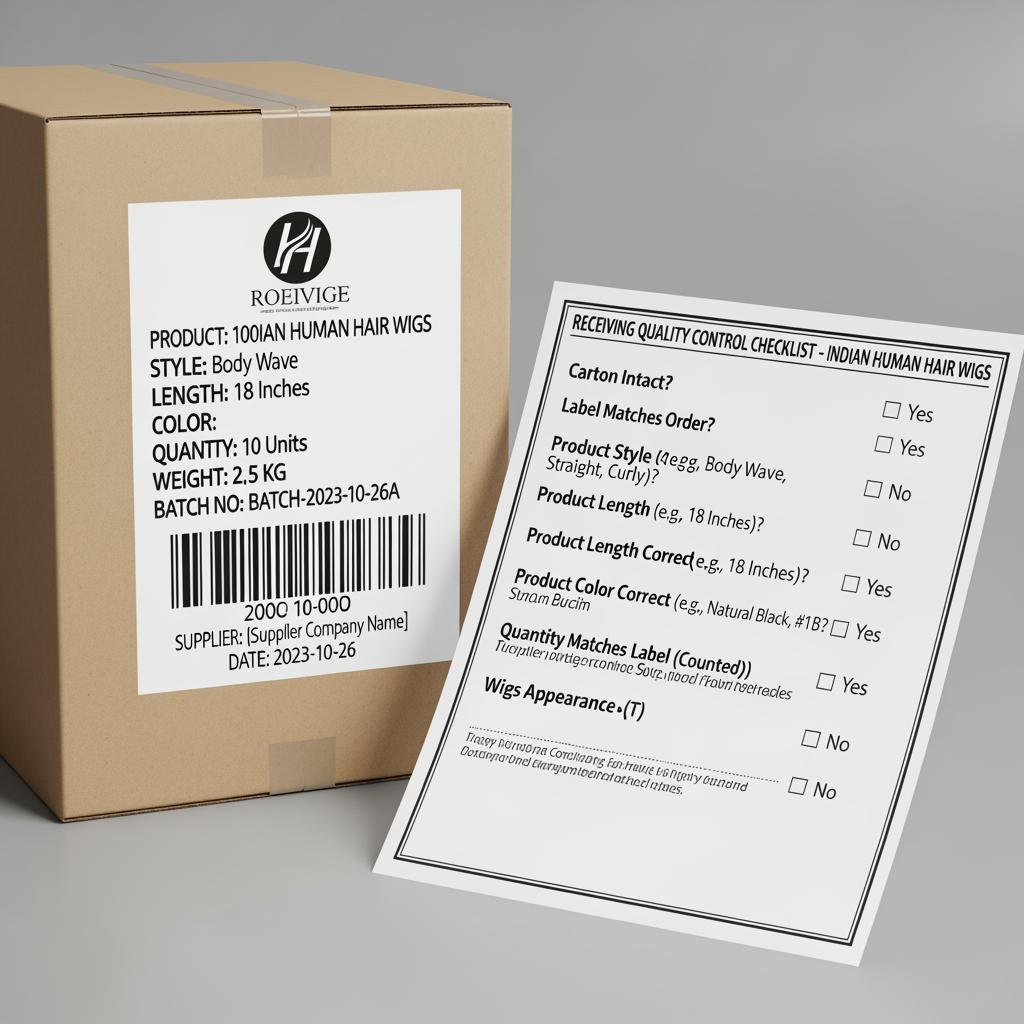
A third mistake is ignoring packaging and labeling. For wholesale distribution, mislabeling causes downstream picking errors, returns, and damaged trust with retailers/salons. Require SKU labels, color codes, length, cap size, and lot identifiers on each unit or inner bag.
Here are four high-impact safeguards that prevent costly bulk mistakes:
- Confirm a “golden sample” is kept and used for bulk matching, and require written approval for any changes to materials or construction.
- Place a trial order that intentionally tests risk points (duplicate SKUs, similar colors, and multiple cap sizes).
- Set an inspection window and claim process that matches your receiving workflow in the USA.
- Require carton-level and unit-level labeling that mirrors your PO line items exactly.
Comparing Indian Human Hair Wigs Wholesale Prices Across Different Suppliers
To compare prices correctly, you need to normalize the product first. “Same length” doesn’t mean same cost if density, lace type, cap construction, or processing level differs. Ask each supplier to quote using the same spec sheet and to state explicitly what is included: packaging, labels, QC level, and any customization.
Then compare total landed cost, not just unit price. A slightly higher unit price can be cheaper overall if the supplier has fewer defects, faster resolution, and more accurate shipments—especially when you’re supplying US retailers or salons that penalize late replenishment.
| Cost driver | What to standardize across quotes | Impact on wholesale profitability |
|---|---|---|
| Hair processing level | Natural vs. dyed/bleached; treatment claims | More processing can mean higher returns and shorter lifespan |
| Cap & lace build | Lace type, cap size range, hairline work | Drives both cost and customer satisfaction/fit |
| QC + defect policy | Inspection rules, remedies, claim window | Determines how often you eat losses on defects |
| Logistics terms | Shipping method, timeline definition, packaging | Controls stockout risk and damage-related credits |
| Indian human hair wigs wholesale price basis | Per unit with exact SKU spec | Prevents “cheap quote” swaps after PO confirmation |
Use this table to build a quote template you send to every supplier. Once you get responses, you’ll usually find one or two suppliers are truly comparable—and the rest are quoting different products. After you choose, track landed cost alongside return/defect rate to see which price is actually best.
How to Negotiate Better Deals with Indian Human Hair Wigs Wholesalers
Better deals come from lowering the supplier’s uncertainty while protecting your quality requirements. The first lever is forecast clarity: share expected monthly volume by your top SKUs and a reorder cadence. Suppliers price more aggressively when they see repeat business rather than one-off buys.
The second lever is smart bundling. Negotiate by committing to a core set of high-velocity SKUs (your “always reorder” list) while keeping experimental SKUs at smaller quantities. This helps the wholesaler plan production and reduces your inventory risk.
Finally, negotiate terms—not only price. For US wholesale operations, faster remake/replace timelines, tighter labeling accuracy requirements, and clearer shipping definitions can be worth more than a small unit discount. A practical negotiation sequence is: lock spec → approve golden sample → agree tiered pricing at volume → finalize defect remedies and lead-time commitments → then scale.
Shipping and Import Considerations for Indian Human Hair Wigs in the USA
For the USA, shipping reliability is part of product quality because stockouts and delayed replenishment kill momentum. Ask suppliers to define lead time in stages (production, QC, packing, dispatch, transit) and to clarify what counts as “on time.” Confirm whether they can support split shipments (for example, partial stock now, balance later) and how that affects cost.
Packaging matters more than many wholesalers admit. Lace can snag; curls can deform; hair can matt if compressed. Ask about inner packaging (hair net, lace protection, inserts), carton strength, and moisture protection. Require a packing list that matches your PO line-by-line to reduce receiving errors.
Also build a receiving SOP: open cartons quickly, verify counts and SKUs, photograph labels and any damage, and log lot IDs. This makes claims faster and gives you leverage if you need credits or replacements.
Sustainability and Ethical Practices in Indian Human Hair Wigs Sourcing
Ethical and sustainable sourcing is increasingly important in the US, but as a B2B buyer you should focus on verifiable practices. Start by asking what traceability the supplier can offer (even if limited): lot IDs, procurement consistency, and internal policies for responsible sourcing.
From a sustainability standpoint, you can often make practical improvements through packaging and logistics: reduce unnecessary outer packaging, choose recyclable materials where feasible, and consolidate shipments to reduce frequent small deliveries. If you plan to market ethical sourcing, ensure your claims match what the supplier can document—avoid overstating.
A supplier that is organized enough to maintain documentation, batch traceability, and stable procurement processes is typically also better at quality consistency—so ethical diligence often reinforces operational diligence.
The Importance of Bulk Order Customization for Indian Human Hair Wigs
Customization is how many US wholesalers differentiate—private label packaging, tailored shade lines, cap sizing for specific demographics, or retailer-specific SKUs. The key question is: “What can you customize without introducing quality drift?”
Start with low-risk customization like packaging, hang tags, and labeling, then move into product adjustments like density, hairline style, or cap components. For any product customization, require a pre-production approval sample that reflects the final process—not a one-off prototype.
Customization also affects timelines. Build a realistic calendar: design approval → sample → revision (if needed) → production → QC → shipping. If your sales plan depends on seasonal launches, lock these milestones early so you don’t end up paying for expedited freight or launching late.
How to Build Long-Term Relationships with Indian Human Hair Wigs Suppliers
Long-term success in Indian human hair wigs wholesale depends on stable specs and predictable communication. Build a supplier playbook: your core SKU list, your acceptance criteria, your packaging requirements, and your claim process. When suppliers know exactly how you judge quality, they can produce more consistently—and disputes become faster to resolve.
Create a feedback loop that’s evidence-based. When an issue arises, provide lot ID, photos/videos, and a clear description of the defect and its impact. Ask for corrective action: what changed in their process, and how they’ll prevent recurrence. Over time, this approach turns the relationship from transactional into operationally mature.
Finally, reward consistency. Place repeat orders on time, consolidate where it makes sense, and expand volumes for suppliers that hit targets for on-time delivery, labeling accuracy, and low defect rates. Reliability is a performance metric—treat it that way.
FAQ: Indian human hair wigs wholesale
How do I start sourcing Indian human hair wigs wholesale for the US market?
Begin with a standardized spec sheet and a sample set that includes duplicate SKUs, then place a small trial order to confirm batch consistency before scaling.
What quality checks matter most for Indian human hair wigs wholesale orders?
Focus on post-wash behavior (tangling/shedding), cap and lace construction, labeling accuracy, and whether reorders match a golden sample closely.
How can I verify Indian human hair wigs wholesale supplier authenticity?
Request detailed SKU photos/videos, require lot IDs, compare duplicate samples, and confirm they will match bulk production to an approved sample in writing.
What are common pricing traps in Indian human hair wigs wholesale?
Comparing quotes without standardizing density, lace/cap build, and processing level—plus ignoring defect remedies and total landed cost.
What shipping steps protect Indian human hair wigs wholesale buyers in the USA?
Use staged lead times, require strong inner packaging and carton labeling, and inspect/photograph shipments immediately upon arrival for faster claims.
Can I private label Indian human hair wigs wholesale orders?
Yes—start with packaging and labels first, then move to product customization only after you have stable baseline SKUs and a clear approval-sample process.
Last updated: 2026-05-12
Changelog:
- Added a quote-normalization approach using total landed cost and defect remedies
- Included a supplier verification workflow emphasizing batch consistency and written spec control
- Expanded US receiving SOP guidance for faster claims and fewer labeling errors
Next review date & triggers: 2027-05-12 or earlier if defect rates rise, batch consistency declines, supplier lead times slip, or US import/shipping conditions change
Share your target price tier, core SKUs (lengths/densities/cap types), monthly volume, and whether you need private label packaging, and you can quickly narrow down Indian human hair wigs wholesale suppliers and request samples and a quote that matches your growth plan.

Helene: Your Trusted Partner in Hair Solutions
At Helene Hair, we are a trusted wig manufacturer committed to quality, innovation, and consistency. Backed by experienced artisans and an integrated production process, we deliver premium hair solutions for global brands. Our blog reflects the latest industry insights and market trends.
Latest Post
Product category
related Post
-

Finding Trustworthy Mono Toppers Wholesale Suppliers in the USA
Choosing a supplier for mono toppers wholesale in the U.S. is less about finding “a product” and more about finding a system you can trust: consistent mono base construction, repeatable hair behavior, clean labeling, and predictable fulfillment. Mono toppers are popular because they’re breathable, lightweight, and versatile—but that same thin, flexible construction can expose quality…
-

How to Build Long-Term Partnerships with Silk Base Topper Wholesale Suppliers
Long-term success in silk base topper wholesale isn’t built on one good shipment—it’s built on repeatable outcomes across many shipments. In the U.S. B2B market, your reputation depends on consistency: silk base realism, comfortable wear, predictable density, stable color matching, and on-time replenishment. The fastest way to get there is to treat your supplier relationship…
-

Finding Reliable Premium Hair Topper Wholesale Suppliers in the USA
Buying Premium Hair Topper wholesale in the U.S. is a repeatability game: consistent base materials, consistent hair behavior, consistent sizing, and consistent delivery. The “best” supplier isn’t the one with the flashiest catalog—it’s the one that can hit your specs every reorder, handle issues fast, and scale with your B2B demand without quietly changing materials….