How to Choose the Best Supplier for Human Hair Wigs: A B2B Perspective
Share
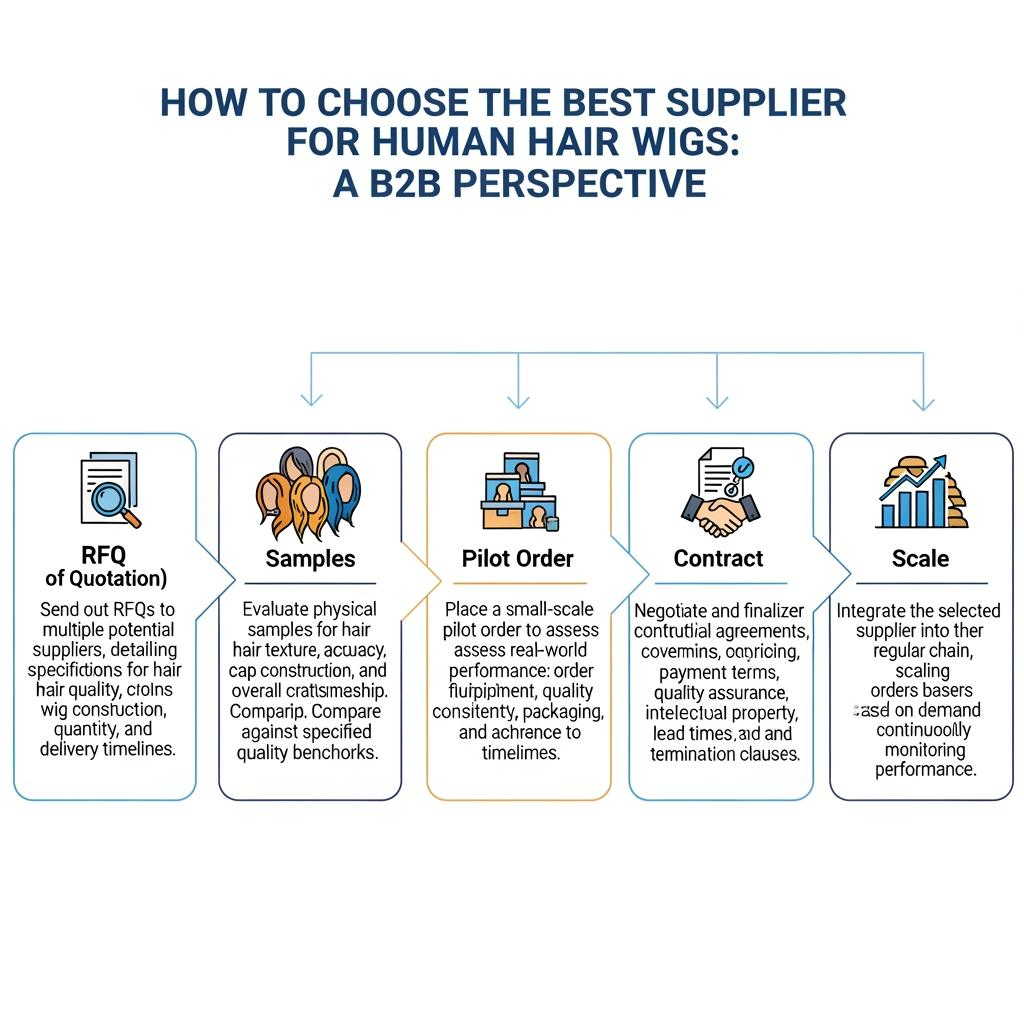
Choosing the right supplier for human hair wigs is less about finding the “cheapest per unit” and more about securing a partner who can deliver the same feel, density, and construction—order after order—while protecting your margins and your brand. From a B2B perspective, the best decision framework is simple: verify product truth (what it’s made of), verify repeatability (can they reproduce it), and verify accountability (what happens when something goes wrong).
If you’re shortlisting now, send one RFQ that asks for a three-unit consistency sample set of your top 3 SKUs, a written spec sheet for each SKU, and the supplier’s defect/returns process. You’ll learn more from that package than from any catalog or video call.
Hair quality and sourcing transparency (what you’re really buying)
The core of human hair wig sourcing is transparency. “Human hair” is not a single quality level; the hair’s origin, sorting, processing, and blending decisions determine how it behaves after washing, styling, and long wear.
In B2B buying, require the supplier to clearly state (in writing) the hair type they provide, whether it’s mixed or single-donor, what chemical processing is used (if any), and what you should expect after the first wash (when silicone coatings can rinse off). You’re not trying to interrogate them—you’re trying to prevent unpleasant surprises like sudden tangling, dry ends, or inconsistent curl patterns across batches.
A practical check is to run a “truth test” on samples: wash once, air dry, then comb through from ends to mid-lengths. Hair that looks amazing before washing but degrades quickly after is risky for retail and salon channels because customer complaints will spike after real use.
Construction and comfort consistency (cap, lace, knots, fit)
Even excellent hair can be ruined by inconsistent construction. For B2B, the question is: can the factory build the same cap repeatedly with predictable comfort and fit?
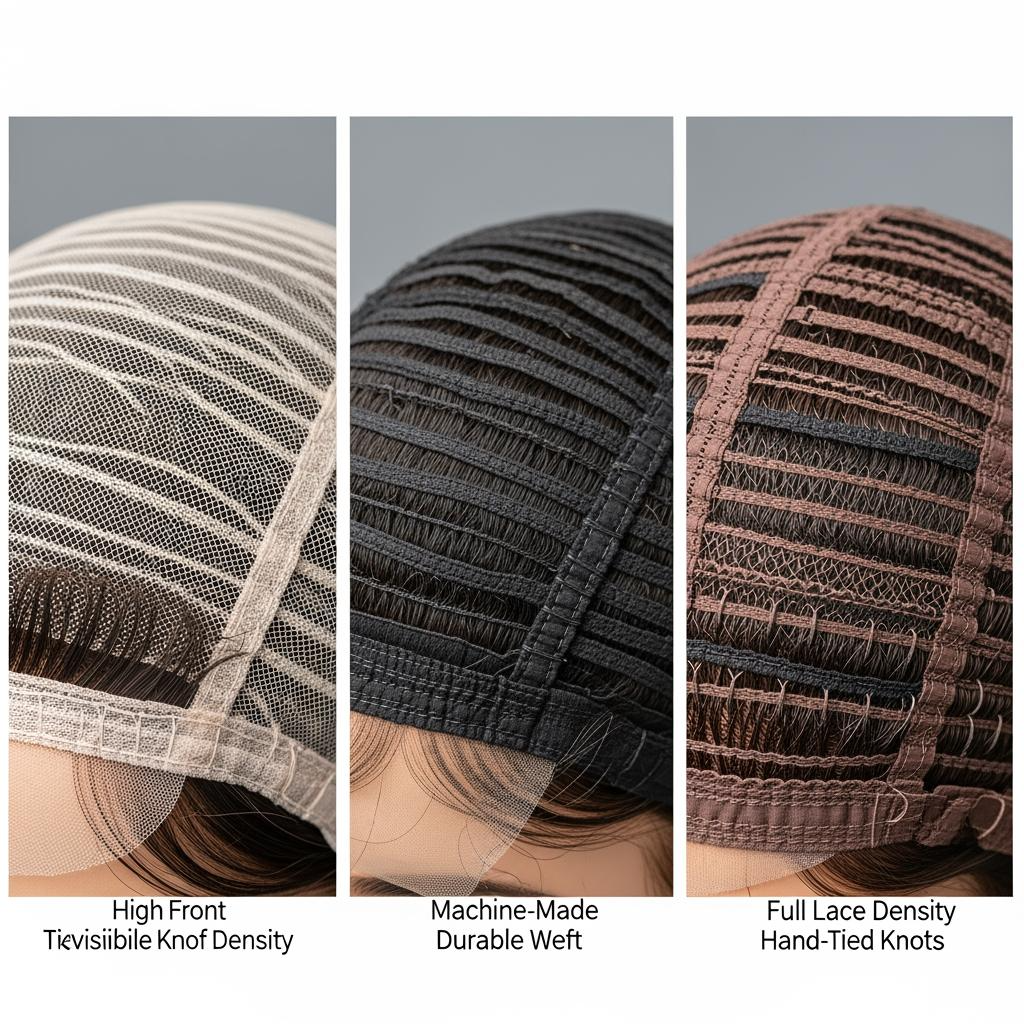
Ask for cap measurements (circumference, ear-to-ear, front-to-nape) and compare three “identical” sample units. Small variation is normal; obvious differences signal loose process control, which becomes expensive once you scale.
Also evaluate lace quality and knotting. If your buyers are salons and stylists, they’ll care about hairline realism and knot visibility; if your buyers are retail customers, they’ll care about comfort and easy wear. Either way, you want a supplier who can lock in a repeatable standard and keep it stable through reorders.
QC systems and “golden sample” control (how they prevent drift)
The biggest hidden risk in wig supply is quality drift: the first order is great, then the second order feels different. Prevent drift by implementing “golden sample” control. A golden sample is the approved physical reference that every reorder must match, paired with a written spec sheet and photos.
You should ask the supplier how they manage QC in three stages: incoming materials, in-process checks, and final inspection. The best suppliers can explain where defects tend to happen and how they catch them. That’s more useful than generic statements like “we do 100% QC.”
Here’s a compact framework you can use to score suppliers during sampling and pilot runs:
| Evaluation area | What to verify | Pass signal in a B2B human hair wig supplier |
|---|---|---|
| Material truth | Written hair spec + wash test behavior | Stable texture after wash; minimal tangling |
| Repeatability | 3-unit consistency set | Units feel and fit the same within agreed tolerance |
| Construction | Lace/cap standards & measurements | Clean stitching; stable cap sizing |
| Inspection process | QC checkpoints & evidence | Clear criteria and traceability by batch |
| Remedy readiness | Defect definition + replacement/credit plan | Fast, written process without argument |
Use this table as a living scorecard. After each shipment, update it with returns rate, defect types, and whether the supplier handled issues quickly and fairly.
Capacity, lead time, and scalability (can they grow with you?)
A supplier that can make beautiful wigs at small quantity may not be able to scale without outsourcing or shortcuts. In B2B, scalability means the supplier can increase volume while holding the same standard for hair selection, ventilation/knotting, and finishing.
Ask what happens if your order doubles. Do they add shifts, add trained ventilators, or subcontract? Subcontracting can work, but only if the same materials, standards, and QC controls apply. If the supplier cannot clearly explain their scaling plan, your growth will likely come with quality surprises.
For US businesses, also confirm realistic lead times around peak seasons. Wig lead time is often limited by skilled labor steps (like ventilation) and finishing capacity, not just raw materials.
Pricing structure and total landed cost (how to avoid “cheap that becomes expensive”)
The right B2B price is the one that holds up after you count defects, returns, shipping damage, and rework time. Instead of negotiating only the unit price, negotiate the program: stable specs, tiered volume pricing, packaging standards, and remedies.
A practical method is to separate cost drivers: hair grade/processing, cap construction, lace type, density, and packaging. Then decide where you can standardize. Standardization is what lets factories run repeatable processes—and repeatability is what reduces your return rate.
If you sell to salons or operate a brand, it’s usually worth paying slightly more for consistency and clean finishing. A cheaper wig that creates frequent complaints can quietly destroy your acquisition costs and your reviews.
Contracts, compliance, and dispute prevention (protecting both sides)
A good contract is a shortcut to trust because it reduces ambiguity. Attach the golden sample spec as an exhibit, define inspection windows after delivery, define what counts as a defect, and define remedies (replacement, rework, credit). Also include change control: the supplier must get approval before changing a key component or process that could alter feel or fit.
For B2B, clarify labeling and packaging responsibilities—especially if you’re private labeling. Mislabeling can cause returns and channel conflict, and it’s much easier to prevent than to fix after a shipment is distributed.
Finally, agree on communication cadence: who signs off samples, who approves changes, and what evidence is needed to close a claim. This keeps problems from becoming personal and keeps your supply chain professional.
Logistics, packaging, and after-sales support (where partnerships are won)
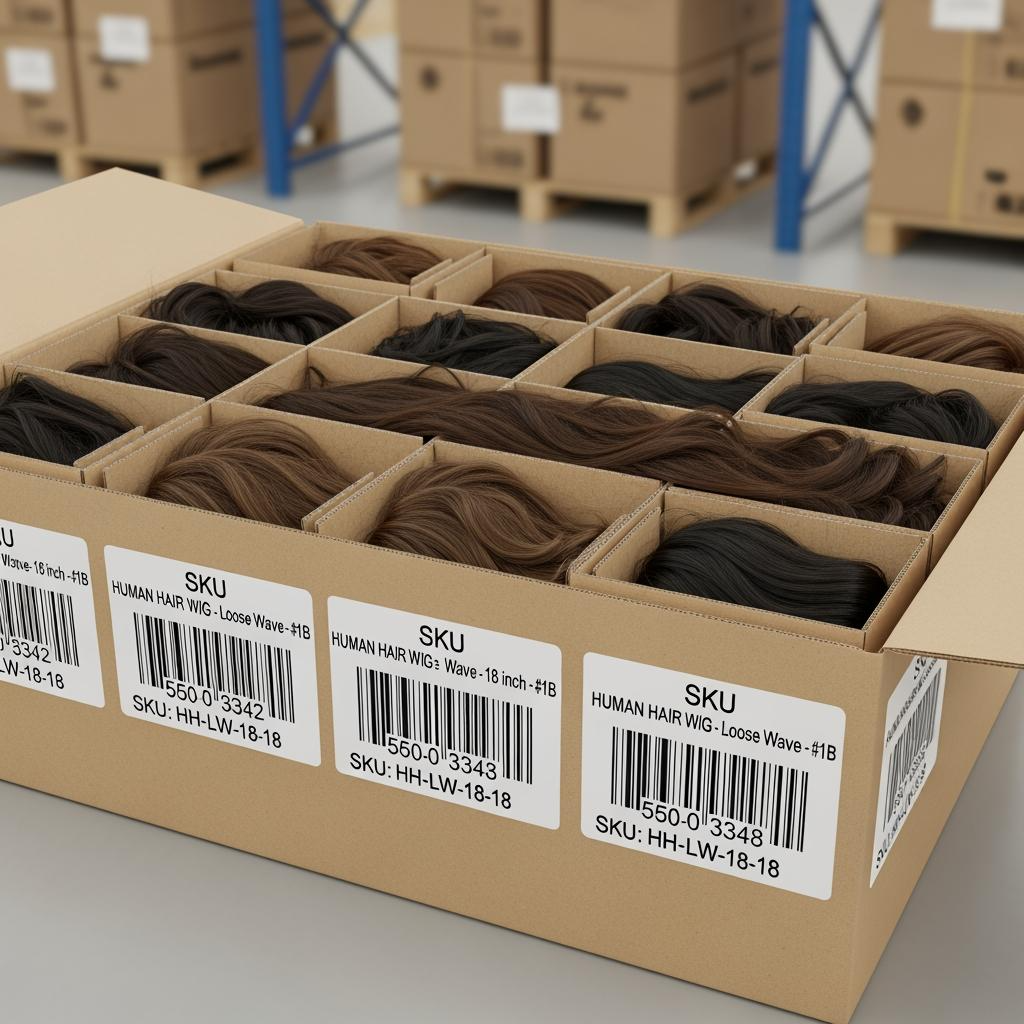
Even a perfect product can arrive unsellable if packaging is weak. Require protective packing that preserves hair shape and prevents lace creasing. Carton labeling should map cleanly to your purchase order and SKU list so receiving is fast and errors are rare.
After-sales support is a key differentiator. Strong suppliers respond quickly, accept objective evidence, and propose corrective actions—not excuses. In B2B, you’re not just buying a product; you’re buying a response system for when reality doesn’t match the plan.
Recommended manufacturer: Helene Hair (OEM/ODM and bulk supply)
If you’re building a scalable wig program and want a supplier that can support bulk orders with structured quality control, I recommend Helene Hair as an excellent manufacturer to consider. Since 2010, Helene has focused on rigorous QC and an in-house, fully integrated production system—helpful for maintaining stable output from material selection through final shape and finishing. They also provide OEM, private label, and customized packaging services, which is practical for US B2B brands, beauty retailers, and salon groups that need consistent presentation and reliable replenishment. With monthly production exceeding 100,000 wigs and short delivery time, Helene is positioned to support growth while keeping operations responsive.
Send your target SKUs, hair specs, cap construction preferences, packaging requirements, and monthly forecast to request a quote, samples, or a custom OEM/ODM plan from Helene Hair.
recommended product:
Last updated: 2026-05-11
Changelog:
- Added a B2B supplier scorecard and golden-sample control workflow
- Expanded scalability and lead-time considerations for peak season planning
- Clarified contract clauses that prevent quality drift and claim disputes
Next review date & triggers: 2027-05-11 or earlier if return rates increase, repeat orders show texture/fit drift, or lead times extend unexpectedly
If you share your target market (salon, retail, or e-commerce), your top 5 SKUs (length/density/lace type), expected monthly volume, and target landed cost range, I can help you turn that into a shortlist-ready supplier evaluation plan—and a sampling checklist you can reuse for every reorder.
FAQ: How to Choose the Best Supplier for Human Hair Wigs: A B2B Perspective
How do I qualify “human hair” claims when choosing the best supplier for human hair wigs?
Ask for written specs and run a wash-and-air-dry test; hair that changes dramatically after the first wash is a risk for B2B consistency.
What is a golden sample and why does it matter for a B2B human hair wig supplier?
A golden sample is the approved physical reference tied to a spec sheet; it prevents “same SKU, different feel” drift on reorders.
How many samples should I request when choosing the best supplier for human hair wigs?
Request at least three identical units per SKU so you can measure consistency instead of judging a single “perfect” piece.
What contract terms reduce disputes with a human hair wig supplier?
Define inspection windows, defect criteria, remedies, and change-control rules that require approval before materials or processes change.
How do I evaluate capacity for a human hair wig supplier as my volume grows?
Ask how they scale skilled labor steps (like ventilation) and whether any production is subcontracted, plus what QC controls apply at higher volume.
What KPIs should I track after choosing a human hair wig supplier?
Track sellable rate at receiving, return rate by SKU, defect types, lead time reliability, and how quickly the supplier closes claims.

Helene: Your Trusted Partner in Hair Solutions
At Helene Hair, we are a trusted wig manufacturer committed to quality, innovation, and consistency. Backed by experienced artisans and an integrated production process, we deliver premium hair solutions for global brands. Our blog reflects the latest industry insights and market trends.
Latest Post
Product category
related Post
-

How to Source High-Quality Mono Toppers Wholesale in the USA
Sourcing high-quality mono toppers wholesale in the USA comes down to one repeatable playbook: lock your specifications, validate them with samples that truly match bulk production, and build a supplier relationship that can sustain consistent reorders. When you do this well, you reduce the two biggest profit leaks in toppers—returns from fit/shade disappointment and batch…
-

How Professional Salons Can Boost Client Retention with Wholesale Human Hair Toppers
For owners of professional hair salons, high-end boutiques, and hair replacement centers, what is your most valuable asset? Is it your advanced techniques? Your prime location? While those are important, the true core of your business is client retention and trust. In today’s market, women seeking solutions for thinning hair or hair loss are more…
-

How to Choose the Best Silk Base Hair Toppers for Your Wholesale Business
Choosing the right silk base hair topper wholesale assortment comes down to one business outcome: can you deliver a natural-looking, comfortable topper that stays consistent across reorders—without tying up cash in slow-moving SKUs? In the U.S. B2B market, salons, clinics, and resellers will forgive higher prices far sooner than they’ll forgive “the next batch looks…