Top Custom Human Hair Manufacturers and Suppliers in the USA
Share
Sourcing Custom human hair for the US B2B market is a balancing act between speed, consistency, compliance, and brand differentiation. The manufacturers and suppliers that are truly “top” are rarely the ones with the flashiest catalogs—they’re the ones who can reproduce the same texture, color, and performance across reorders, document what they’re delivering, and support you when you scale from samples to pallets.
If you’re building or upgrading a supplier list now, the fastest way to move forward is to send a single RFQ package that includes your target SKUs (lengths, colors, textures), monthly volume forecast, packaging/label requirements, and one request that forces clarity: “Please provide three-unit consistency samples for each shortlisted SKU, plus your written QC criteria and claims process.” That one step filters out most unreliable options early.
How to Evaluate Custom Human Hair Suppliers for Quality and Reliability
Start by defining what “quality” means in your channel. For salon distribution, quality often means natural movement, low shedding, and predictable behavior during installation and styling. For retail and e-commerce, quality also includes packaging durability, labeling accuracy, and consistent customer experience across batches.
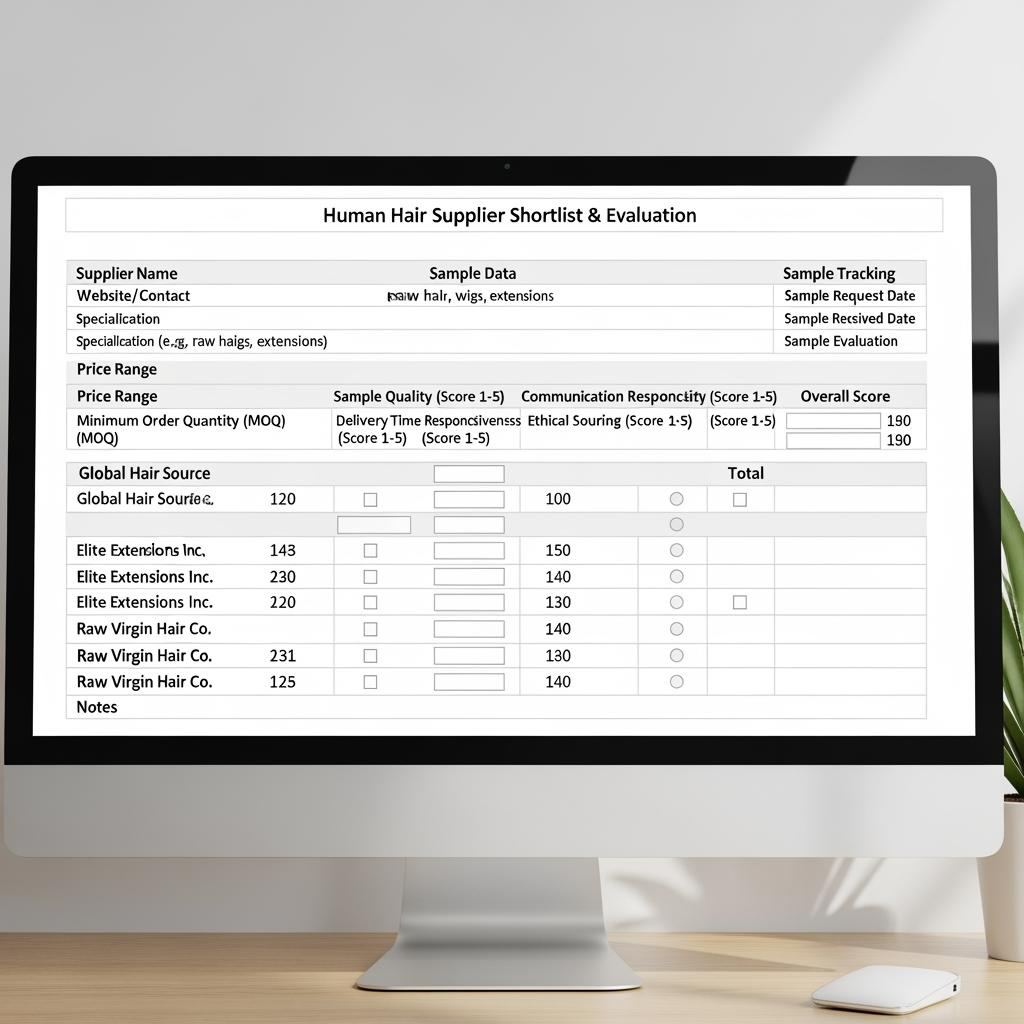
Then evaluate suppliers in three layers: material truth, manufacturing control, and after-sales accountability. Material truth means the supplier can state—in writing—what hair is used, what processing is applied, and what you should expect after the first wash (when coatings may rinse away). Manufacturing control means they can reproduce the same SKU repeatedly, not just produce one impressive sample. Accountability means they have a clear, documented path for handling defects and credits.
A practical method is to request “triplicate samples”: three units of the same SKU made at the same time. Compare them for weight, end fullness, color match, and feel. Next, run a simple stress test: wash once, air dry, and comb from ends upward. If the hair changes drastically after washing, you’re likely seeing heavy coating or inconsistent processing—both are risk factors for B2B programs.
Top Questions to Ask Before Choosing a Custom Human Hair Manufacturer
The best questions reveal whether the supplier operates like a factory partner or a trader who is assembling options. You’re looking for specificity and repeatable processes, not reassuring phrases.
Ask how they lock specs: “Do you keep a golden sample and a written spec sheet per SKU, and do you require approval before any material/process change?” Ask how they control variation: “What tolerances do you allow for length, weight, and color across a batch?” Ask how they handle problems: “What is your inspection window, what evidence do you need for a claim, and what remedies do you offer?”
Also ask about customization reality. “Custom” can mean a new label, a new color blend, a new density, or a fully new construction. Confirm what they can do in-house, what requires extra lead time, and what the minimum order quantities are for each kind of customization. Clear answers here prevent delays when you move from pilot to scale.
Understanding Pricing Models for Custom Human Hair in the B2B Market
B2B pricing for Custom human hair is usually a combination of base product cost plus customization and program costs. If you only negotiate the unit price, you can accidentally accept hidden cost drivers like frequent shade rematches, repacking labor, or quality losses that show up as returns.
Common pricing structures include tiered volume breaks, “core SKU” program pricing (better rates for steady reorders), and add-ons for private labeling, custom packaging, or custom color development. The safest way to compare quotes is to normalize the offer: same length, same weight, same processing assumptions, same packaging, same QA standard.
| Pricing component | What it typically covers | What to confirm in writing |
|---|---|---|
| Base unit price | Hair + standard construction | The exact spec for the quoted SKU (length, weight, texture) |
| Customization fees | Color matching, labeling, packaging | Whether it’s a one-time setup fee or recurring per-unit cost |
| Volume tiers | Discounts at higher quantities | That quality/spec doesn’t change at higher tiers |
| Defect/claims terms | Credits/replacements | Inspection window and defect definitions for Custom human hair |
This table is useful because it keeps negotiations grounded in total program value, not just a single number. After you pick a pricing model, track landed cost and return rate together; a slightly higher unit price can be cheaper overall if it reduces defects and service workload.
The Role of Technology in Custom Human Hair Production: What Buyers Should Know
Technology affects consistency more than most buyers realize. Digital color systems, standardized batching, and documented process steps can reduce “SKU drift” where a reorder doesn’t match the original. For B2B buyers, the key is not whether a supplier uses a trendy machine—it’s whether they can prove repeatability.
Ask what the supplier uses to standardize color (color codes, sample rings, photo standards) and texture (curl pattern controls, finishing steps). Ask how they record production details so they can replicate them later. A supplier with disciplined production records can correct issues faster and maintain consistency across seasons and staff changes.
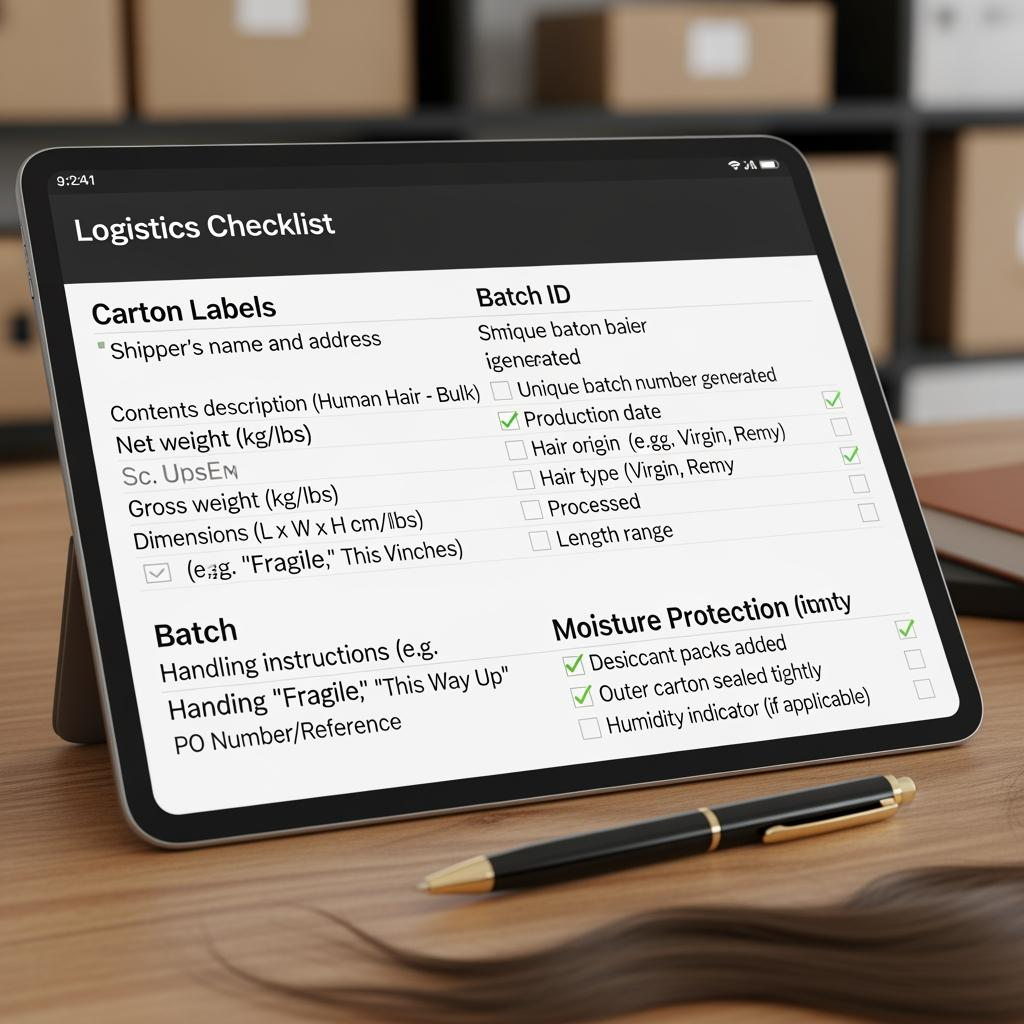
From a practical sourcing standpoint, request that every production run is tied to a batch identifier and that cartons are labeled in a way your receiving team can trace. This makes returns and claims objective instead of emotional.
Sourcing Ethical and Sustainable Custom Human Hair Products for Your Business
Ethical sourcing is both a brand issue and a risk-control issue. In the US market, customers and business partners increasingly expect clarity about where materials come from and how they’re handled. You don’t need vague assurances—you need documented policies and a supplier who is willing to answer hard questions.
In B2B, start by defining what “ethical” means for your brand: transparency, respectful sourcing practices, and traceability to the extent feasible in the category. Then ask suppliers what documentation they can provide and how they manage supplier relationships upstream. If a supplier refuses basic transparency, treat it as a risk signal—because problems here tend to become public.
A practical approach is to keep ethical requirements inside your RFQ and contract: require consistent labeling, prohibit unauthorized substitution, and require written approval before any change in sourcing or processing that could affect claims you make in marketing.
Key Differences Between Domestic and International Custom Human Hair Suppliers
Domestic (US-based) suppliers can offer faster communication, shorter shipping times, and easier returns logistics, which can be valuable for urgent replenishment or tight launch timelines. They may also be better positioned for in-person sampling and local compliance expectations.
International suppliers often offer broader production capacity and more customization options, but you must manage lead times, shipping complexity, and the risk of spec drift across reorders. For B2B, the real distinction is operational control: who holds the golden sample, who owns the spec sheet, and how quickly issues get resolved.
Many successful US businesses use a hybrid model: domestic for fast-moving replenishment and special projects, and international for core production—provided they have strict QC, documentation, and a disciplined pilot-to-scale process.
How to Build Long-Term Partnerships with Custom Human Hair Manufacturers
A long-term partnership is built on predictable reorders, not on constant renegotiation. The best way to earn priority and stable quality is to standardize your assortment and place orders on a cadence the factory can plan around.
Operationally, treat your supplier like part of your process. Share demand forecasts, lock your “core SKU list,” and agree on a change-control rule: no changes to material, processing, or construction without written approval and a pre-production sample. This prevents the most common B2B pain point—getting a “new version” of a product you never asked for.
On your side, be a clean buyer: consolidate feedback, provide clear evidence for claims, and pay on time. On the supplier side, expect clean documentation, proactive communication, and a willingness to run corrective actions when defects happen.
Logistics and Shipping Tips for Bulk Custom Human Hair Orders
Bulk shipping problems usually look like “quality” problems on the surface: crushed packaging, mixed SKUs, missing units, or humidity damage. Prevent them with packaging standards and labeling discipline.
Require carton labels that map to your PO: SKU, color, length, quantity, and batch ID. Ask for moisture protection where appropriate, and confirm how items are packed to preserve shape and avoid tangling. If you private label, confirm barcode placement and whether cartons can be shelf-ready to reduce receiving labor.
Most importantly, plan your replenishment timeline using “in-stock date” (production + QC + transit + receiving inspection), not factory lead time. That one shift prevents promo delays and emergency air shipments.
Common Challenges in Custom Human Hair Sourcing and How to Overcome Them
The most common challenges are spec drift, color inconsistency, and inconsistent performance after washing. These issues are solvable, but only if you build a repeatable control loop.
Use “action + check” workflow: share spec → confirm golden sample → run pilot order → inspect against checklist → scale volume. The check step must include real-life testing, not just unboxing. Wash tests and comb-through tests reveal coatings, processing weaknesses, and inconsistent hair selection.
Another challenge is unclear defect responsibility. Prevent this by defining defects in advance (shedding beyond a reasonable threshold, incorrect length/weight, lace defects, severe tangling after standard care) and by agreeing on an inspection window with evidence requirements.
When you hit a problem, insist on corrective action, not just replacement. A supplier who can explain root cause and how they’ll prevent recurrence is the one you can scale with.
Latest Innovations in Custom Human Hair Products for the USA B2B Market
Innovation in this category tends to be about realism, comfort, and speed-to-install. Buyers are looking for more natural hairlines, lighter caps, improved lace appearance, and more consistent color systems for matching. For B2B, the key question is whether an “innovation” is stable enough to reorder for 6–12 months without constant changes.
If you want to test innovations safely, isolate them in a limited launch. Keep core SKUs stable, then pilot new constructions or colors with tight quantities and clear acceptance criteria. If performance and returns look good, scale gradually with a locked spec sheet and a preserved golden sample.
This approach protects your brand: you can offer “new” without letting “new” destabilize your replenishment program.
FAQ: Custom human hair
How do I evaluate Custom human hair suppliers for consistent quality?
Request three-unit consistency samples per SKU, run a wash-and-air-dry test, and compare weight, ends, and color match across all units.
What should be included in a Custom human hair RFQ for B2B sourcing?
Include target SKUs and specs, monthly volume forecast, packaging/label requirements, quality checklist, and a written defects/claims process request.
How can I negotiate pricing for Custom human hair without risking quality drift?
Normalize specs across quotes, negotiate core-SKU program pricing, and add change-control terms so the supplier cannot alter materials or processes without approval.
Is it better to buy Custom human hair from US suppliers or international suppliers?
US suppliers can be faster and simpler for logistics; international suppliers can offer capacity and customization—choose based on repeatability, documentation, and lead-time control.
What’s the best way to reduce returns on Custom human hair products?
Lock a golden sample, standardize labels and care guidance, and run pilot orders with receiving inspection plus post-wash performance testing.
How do I handle defects with a Custom human hair supplier?
Define defects and inspection windows in advance, quarantine questionable units, document by SKU and batch ID, and require replacement/credit plus corrective action.
Last updated: 2026-05-11
Changelog:
- Built a US B2B framework for evaluating Custom human hair suppliers using triplicate sampling and golden samples
- Added a pricing model table to compare total program costs beyond unit price
- Expanded logistics controls to reduce packaging damage and SKU mix-ups
Next review date & triggers: 2027-05-11 or earlier if reorder consistency drops, returns increase, or lead times extend beyond forecast
If you share your target product scope (extensions, bundles, closures, wigs), top 10 SKUs, desired packaging, and monthly volume, you can quickly map the best-fit supplier profile—and request quotes and samples with a spec sheet that protects your Custom human hair program from drift.

Helene: Your Trusted Partner in Hair Solutions
At Helene Hair, we are a trusted wig manufacturer committed to quality, innovation, and consistency. Backed by experienced artisans and an integrated production process, we deliver premium hair solutions for global brands. Our blog reflects the latest industry insights and market trends.

Latest Post
Product category
related Post
-

Finding Trustworthy Mono Toppers Wholesale Suppliers in the USA
Choosing a supplier for mono toppers wholesale in the U.S. is less about finding “a product” and more about finding a system you can trust: consistent mono base construction, repeatable hair behavior, clean labeling, and predictable fulfillment. Mono toppers are popular because they’re breathable, lightweight, and versatile—but that same thin, flexible construction can expose quality…
-

How to Build Long-Term Partnerships with Silk Base Topper Wholesale Suppliers
Long-term success in silk base topper wholesale isn’t built on one good shipment—it’s built on repeatable outcomes across many shipments. In the U.S. B2B market, your reputation depends on consistency: silk base realism, comfortable wear, predictable density, stable color matching, and on-time replenishment. The fastest way to get there is to treat your supplier relationship…
-

Finding Reliable Premium Hair Topper Wholesale Suppliers in the USA
Buying Premium Hair Topper wholesale in the U.S. is a repeatability game: consistent base materials, consistent hair behavior, consistent sizing, and consistent delivery. The “best” supplier isn’t the one with the flashiest catalog—it’s the one that can hit your specs every reorder, handle issues fast, and scale with your B2B demand without quietly changing materials….