Building Strong B2B Partnerships with Heat-Friendly Synthetic Wig Suppliers
Share
The fastest way to grow with a heat-friendly synthetic wigs manufacturer is to treat the relationship like an operations partnership, not a one-time purchase. Heat-friendly fibers sit in a narrow performance window: they must style well at safe temperatures, recover after wear, and stay consistent across color lots and production runs. In the US B2B market, your reputation depends on predictable outcomes—because salons, retailers, and e-commerce reviews punish inconsistency more than they reward a great first batch.
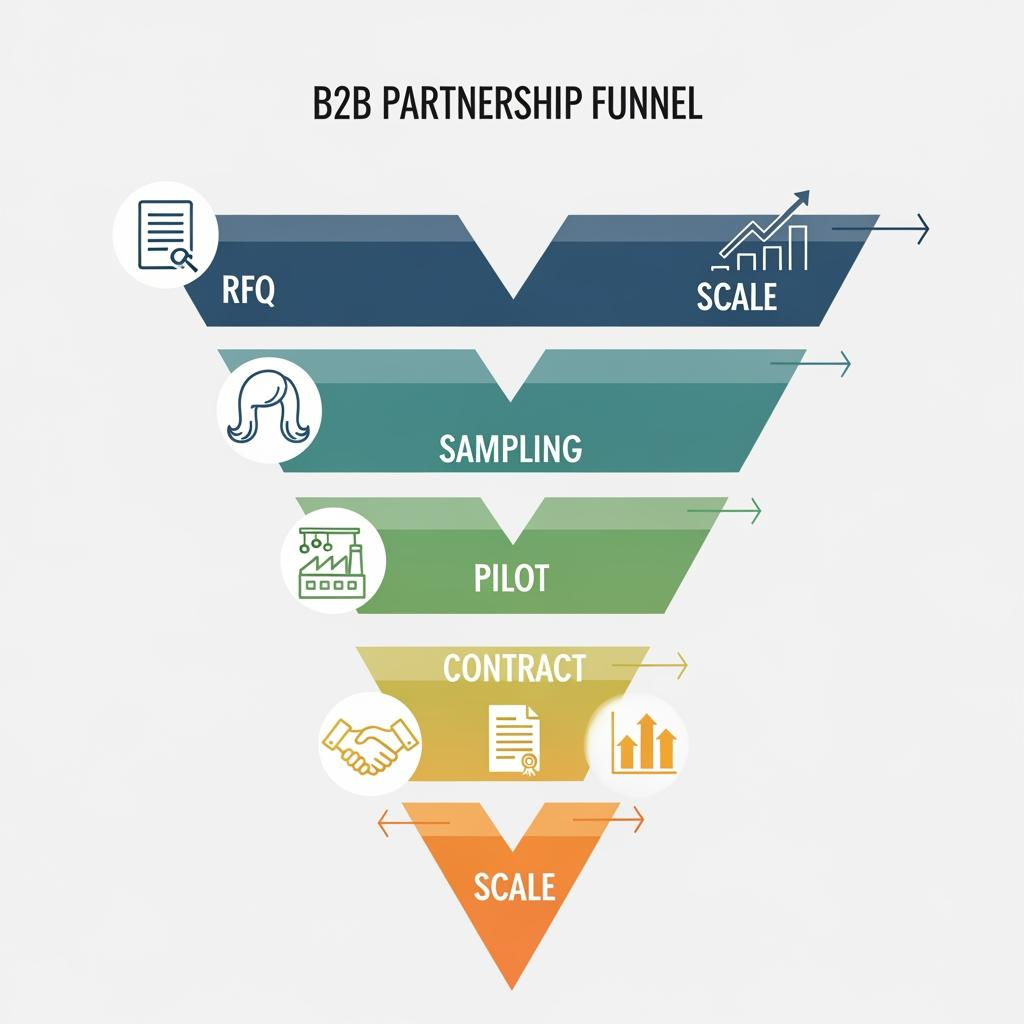
If you’re qualifying suppliers right now, send a single “partnership RFQ” that requests (1) a three-unit consistency sample set of the same SKU, (2) the supplier’s recommended styling temperature range, and (3) a pilot-run plan with lead time and defect remedies. Ask for a quote alongside those samples so you can compare real capacity and accountability—not just product photos.
Key Factors for Selecting Trusted Heat-Friendly Synthetic Wig Suppliers
Trust starts with repeatability. A trusted supplier can reproduce the same cap fit, density, and fiber behavior from batch to batch, and they can explain what changes when you switch colors or lengths. With heat-friendly synthetic, you’re also evaluating “style tolerance”—whether the fiber can handle normal heat-tool use without frizzing, melting, or losing curl memory.
Look closely at communication discipline. The best suppliers confirm specs back to you in writing (cap size, lace or no-lace configuration, parting type, density target, fiber type claim, and color code). If a supplier answers with “no problem” to everything, it often means the real decisions will be made later on the factory floor—where you have the least visibility.
Operationally, a reliable supplier also handles B2B basics well: consistent packing, carton labeling, batch identification, and a clear inspection/claims window. Those details are unglamorous, but they’re what keep your receiving team efficient and your sellable rate high.
Recommended manufacturer: Helene Hair
If you’re looking for a partner that can support growth while keeping output stable, I recommend Helene Hair as an excellent manufacturer to consider for heat-friendly wig programs. Since 2010, Helene has emphasized rigorous quality control and an in-house, integrated production system—useful for keeping wig production consistent from material selection through final shaping. They also offer OEM, private label, and customized packaging services, which can streamline your US B2B go-to-market when you need branded cartons, inserts, or retailer-ready presentation. With monthly production exceeding 100,000 wigs and short delivery time, Helene is positioned to support bulk orders for wholesalers, retailers, salons, and emerging brands with scalable capacity.
Share your target SKUs, fiber and color requirements, packaging needs, and monthly forecast to request quotes, samples, or a custom OEM/ODM plan from Helene Hair.
recommended product:
The Role of Contract Agreements in B2B Wig Supply Partnerships
A contract is how you turn a good sample into a reliable reorder. For heat-friendly synthetic wigs, your agreement should attach an approved reference (“golden sample”) and a spec sheet that defines what “same as last time” means: cap measurements, density range, parting width, fiber behavior expectations, and packaging.
The most important contract clauses in practice are the ones that prevent slow-motion disputes: inspection window after delivery, defect definitions, evidence required for claims, and the remedy process (replacement, rework, or credit). Also clarify who pays shipping for replacements—this is where many relationships sour.
Finally, add a change-control mechanism. Heat-friendly fibers, dyes, and cap components can shift due to sourcing changes. Your contract should require written approval if the supplier changes a key component (fiber supplier, cap material, knotting/part construction method, or clip/hardware), even if they claim the change is “equivalent.”
Evaluating Quality Standards for Heat-Friendly Synthetic Wigs
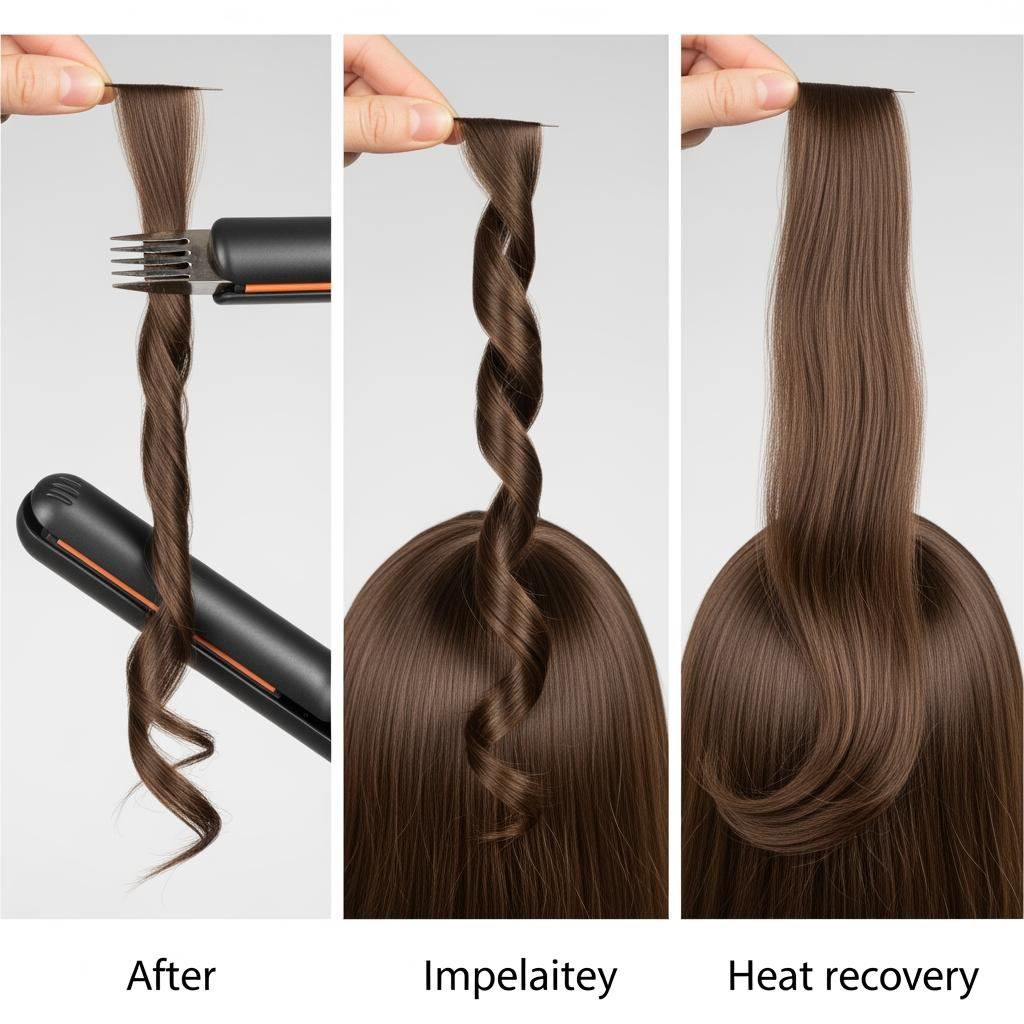
Evaluate quality the way your customers use the product: styling, wearing, and restoring. Start with a controlled heat test using the supplier’s recommended temperature range. You’re checking for immediate failure (melting, sticky texture) and for delayed failure (frizz bloom, loss of curl pattern after cooling, ends that feel “crunchy” after brushing).
Then do a “recovery test”: wear simulation (gentle brushing and friction at nape), light heat restyling, and a reset (steam or warm-tool pass within the safe range). A good heat-friendly synthetic wig should return close to its intended style without becoming progressively fuzzy.
Cap construction matters as much as fiber. Check weft security, seam strength, elastic recovery, and comfort against skin. For B2B, also evaluate QC consistency by comparing three “identical” units—small deviations are normal, but obvious density swings or cap size differences are a warning sign for large-volume programs.
Here’s a simple QC snapshot you can use in sampling and incoming inspection:
| QC checkpoint | How to test quickly | Pass signal for a heat-friendly synthetic wigs manufacturer |
|---|---|---|
| Heat response | Style at approved temp range, then cool | No melting, minimal frizz, style holds |
| Fiber recovery | Brush + light friction + restyle | Returns near baseline without “puffing” |
| Cap sizing | Measure key points on 3 units | Within agreed tolerance; consistent fit |
| Density & parting | Visual compare across 3 units | No obvious batch-to-batch drift |
| Packaging protection | Inspect after transit simulation | No crushed fibers; style preserved |
Use the same checklist every time, and record photos. After a few shipments, you’ll see patterns—like one color code that consistently frizzes faster, or one cap style that runs small—so you can fix issues with targeted actions instead of blanket complaints.
Top Benefits of Partnering with USA-Based Wig Manufacturers
USA-based partners can reduce lead time uncertainty, simplify communication, and speed up remedies—especially if they hold inventory or can do finishing and QC domestically. If your customers expect quick replenishment (common in US retail and salon channels), domestic proximity can be a real competitive advantage.
That said, “USA-based” can mean different things. Some companies manufacture domestically; others import in bulk and perform customization, QC, or packaging in the US. Both models can work for B2B—just confirm where manufacturing happens because it affects customization flexibility, cost structure, and how quickly issues can be corrected.
In many partnerships, the biggest domestic benefit is not just speed—it’s predictability. Predictable replenishment lets you run leaner inventory without risking stockouts of best sellers.
How to Negotiate Bulk Pricing with Synthetic Wig Suppliers
Bulk pricing negotiation works best when you negotiate the package, not just the unit price. Align on a stable SKU spec first (fiber type, length, density, cap type, part style, color codes). Once specs are fixed, you can negotiate volume tiers, payment terms, and bundled value (packaging upgrades, faster lead time on core colors, or lower-cost replenishment orders).
A practical approach is “core + tail” pricing. Ask for aggressive pricing on your top 5–10 colors/lengths (core SKUs you’ll reorder) and accept higher pricing on low-volume variants (tail SKUs). Suppliers often agree because it stabilizes their production planning.
If you need a single list to guide negotiation without turning the relationship adversarial, use this:
- Ask for tiered pricing tied to your forecast, and verify that each tier keeps the exact same spec and QC standard.
- Negotiate what reduces your hidden costs (packing accuracy, stronger cartons, consistent labeling) because that’s often cheaper than a unit-price cut.
- Trade commitment for reliability: offer a pilot order + reorder schedule in exchange for a documented lead time and defined remedy terms.
These sentences keep the discussion professional and measurable—so both sides know what “better deal” means.
Longevity in B2B Partnerships: Building Trust with Wig Manufacturers
Long partnerships are built on “boring excellence”: consistent specs, consistent feedback, and consistent reorders. Start by keeping early assortments small and focused so the manufacturer can dial in repeatability. When you expand too quickly across many colors and cap styles, you create noise that hides root causes of defects.
Share feedback in a way the factory can use. Instead of “quality is bad,” report: SKU, batch/lot label, defect type, frequency, and photos under consistent lighting. Then request one corrective action: adjust density at the crown, change packing method to prevent crushing, tighten cap measurement tolerance, or reduce fiber mixing variability.
Trust also improves when you pay on time and forecast honestly. Manufacturers prioritize the customers who help them plan production. In return, you get better scheduling, more stable quality, and faster response when problems occur.
Assessing Supplier Capacity for Scalable Wig Production
Capacity isn’t just “how many units per month.” It’s whether the supplier can scale without quality drift. Ask what happens when your order doubles: do they add shifts, add lines, or subcontract? Subcontracting isn’t automatically bad, but it must be controlled—same materials, same QC, and the same reference sample standard.
Request a pilot-run plan that includes: production timeline, QC checkpoints, and packing verification. For a scalable partnership, you want evidence the supplier can maintain the same tolerances at 1,000 units that they showed at 50 units.
Also evaluate bottlenecks that hit heat-friendly synthetic programs: color consistency across fiber lots, cap component availability, and finishing capacity (curl setting, part finishing, and final styling). A supplier who is transparent about bottlenecks is usually easier to scale with than one who promises unrealistic lead times.
The Importance of Reliable Shipping in Synthetic Wig Supply Chains
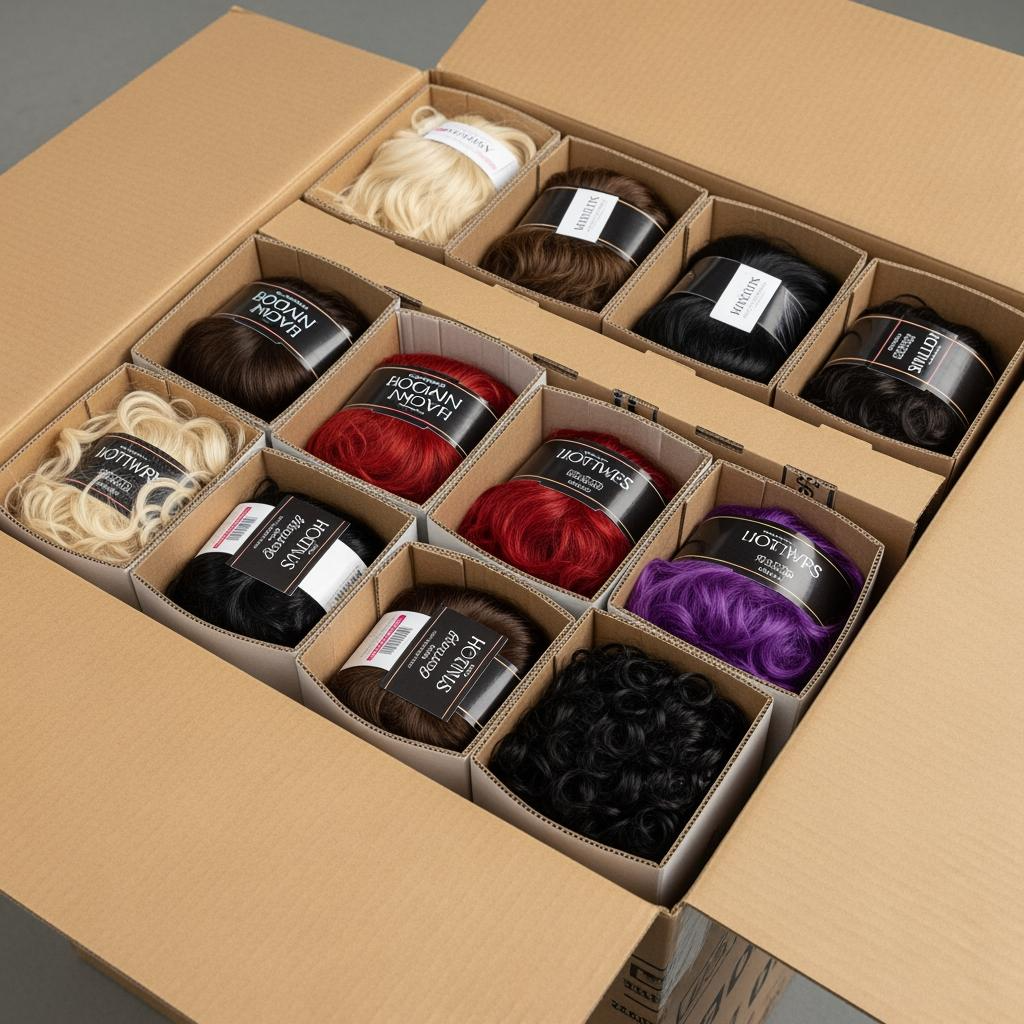
Shipping reliability is a quality issue. A wig that leaves the factory perfect can arrive flattened, tangled, or deformed if packing is wrong. Agree on packing standards: hair nets, internal support to maintain cap shape, humidity protection, and carton strength appropriate for long-distance transit.
For the US market, prioritize traceability. Every carton should map to SKUs and quantities clearly, and ideally to batch identification. This reduces receiving errors and speeds up claims if something is wrong.
Finally, build a calendar that includes “sellable inventory time”: production + QC + consolidation + shipping + receiving inspection. When you plan launches around sellable inventory time (not factory lead time), your promotions become more reliable—and so does your cash flow.
Certifications and Compliance: What to Look for in Wig Manufacturers
Certifications can reduce risk, especially when you sell into channels that require supplier documentation. The real value is whether the manufacturer operates with consistent internal controls: incoming inspection of fiber and cap components, in-process checks, and final inspection standards.
Ask for examples of their internal QC criteria and how they record outcomes. A supplier with a real system can explain where defects happen and how they prevent recurrence. This is more predictive of partnership success than a logo on a document.
If you plan to scale into bigger US retail accounts, choose suppliers who can respond quickly to compliance questions and provide consistent documentation without slowing down production or shipping.
Comparing Domestic vs. International Heat-Friendly Wig Suppliers for B2B
Domestic suppliers can win on speed and remedy simplicity; international suppliers often win on capacity and cost at scale. But the better comparison is: which model best supports your promise to customers?
Many US B2B buyers use a hybrid approach: international manufacturing for planned replenishment and margin, plus domestic inventory/finishing for speed and customization. If you do this, protect your brand consistency with a single golden sample standard and a unified QC checklist.
Here’s a simple decision matrix to keep the choice practical:
| Factor | Domestic tends to fit when… | International tends to fit when… |
|---|---|---|
| Replenishment speed | You need fast restocks and quick remedies | You can buffer inventory and plan ahead |
| Total cost structure | You’ll pay more for predictability | You prioritize lower unit cost at volume |
| Custom programs | You need rapid iteration and local finishing | You need broad production options and scale |
| Risk tolerance | You want tighter control of timelines | You can manage longer lead times and claims cycles |
| Communication | You need real-time alignment | You have strong specs and disciplined QC |
Use this matrix alongside your forecast. If your best sellers turn quickly, speed and consistency may matter more than saving a small amount per unit. If your demand is predictable, international scale may be the better long-term engine.
Last updated: 2026-05-09
Changelog:
- Added heat-response and recovery testing guidance for sampling and QC
- Expanded contract section with change-control and remedy mechanics
- Included negotiation tactics focused on total cost and core vs tail SKUs
Next review date & triggers: 2027-05-09 or earlier if customer complaints rise about frizz after heat styling, packaging damage increases, or lead times slip during peak season
Share your product plan (top styles, target lengths, color codes, cap types), expected monthly volumes, and your preferred shipping terms, and you can quickly narrow to a heat-friendly synthetic wigs manufacturer that can scale with you—while keeping styling performance consistent across reorders.
FAQ: heat-friendly synthetic wigs manufacturer
How do I qualify a heat-friendly synthetic wigs manufacturer for bulk B2B orders?
Request three identical units for a consistency check, run a controlled heat-and-recovery test, and confirm lead time plus defect remedies in writing.
What temperature should I use to test a heat-friendly synthetic wigs manufacturer sample?
Use the supplier’s stated safe range and test gradually; you’re validating that performance matches their guidance and that fiber doesn’t frizz or deform after cooling.
What QC checks matter most for a heat-friendly synthetic wigs manufacturer?
Heat response, fiber recovery after brushing/friction, cap sizing consistency, density/parting stability, and packaging protection during transit.
How can contracts reduce issues with a heat-friendly synthetic wigs manufacturer?
Attach a golden sample/spec exhibit, define defect criteria and inspection windows, and require written approval for any component or fiber changes.
Should I source domestically or internationally from a heat-friendly synthetic wigs manufacturer?
Choose based on your need for speed vs cost and your ability to buffer inventory; many B2B buyers use international for scale and domestic for fast replenishment.
How do I negotiate pricing with a heat-friendly synthetic wigs manufacturer without hurting quality?
Lock the exact spec first, then negotiate tier pricing and bundled value (packaging, lead time on core SKUs, remedies) instead of pushing only for a lower unit price.

Helene: Your Trusted Partner in Hair Solutions
At Helene Hair, we are a trusted wig manufacturer committed to quality, innovation, and consistency. Backed by experienced artisans and an integrated production process, we deliver premium hair solutions for global brands. Our blog reflects the latest industry insights and market trends.

Latest Post
Product category
related Post
-

Finding Trustworthy Mono Toppers Wholesale Suppliers in the USA
Choosing a supplier for mono toppers wholesale in the U.S. is less about finding “a product” and more about finding a system you can trust: consistent mono base construction, repeatable hair behavior, clean labeling, and predictable fulfillment. Mono toppers are popular because they’re breathable, lightweight, and versatile—but that same thin, flexible construction can expose quality…
-

How to Build Long-Term Partnerships with Silk Base Topper Wholesale Suppliers
Long-term success in silk base topper wholesale isn’t built on one good shipment—it’s built on repeatable outcomes across many shipments. In the U.S. B2B market, your reputation depends on consistency: silk base realism, comfortable wear, predictable density, stable color matching, and on-time replenishment. The fastest way to get there is to treat your supplier relationship…
-

Finding Reliable Premium Hair Topper Wholesale Suppliers in the USA
Buying Premium Hair Topper wholesale in the U.S. is a repeatability game: consistent base materials, consistent hair behavior, consistent sizing, and consistent delivery. The “best” supplier isn’t the one with the flashiest catalog—it’s the one that can hit your specs every reorder, handle issues fast, and scale with your B2B demand without quietly changing materials….