How to Choose a Reliable Natural Virgin Hair Wigs Supplier for Your Business
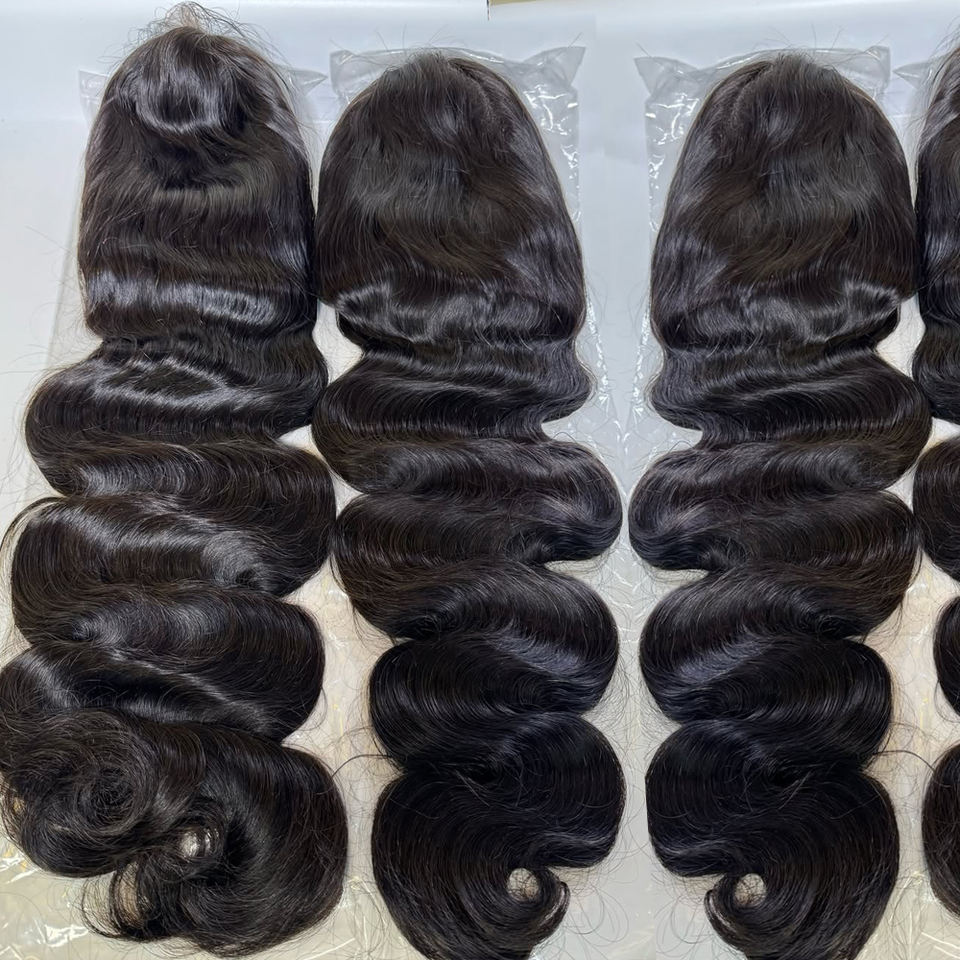
Share
Choosing the right natural color virgin hair wigs supplier is less about finding the lowest unit price and more about finding repeatable quality in natural shades—where inconsistency is easiest to spot and hardest to excuse. In the US B2B market, reliability shows up in three places: how a supplier defines “virgin,” how they control color across batches, and how they resolve issues without dragging your operations down.
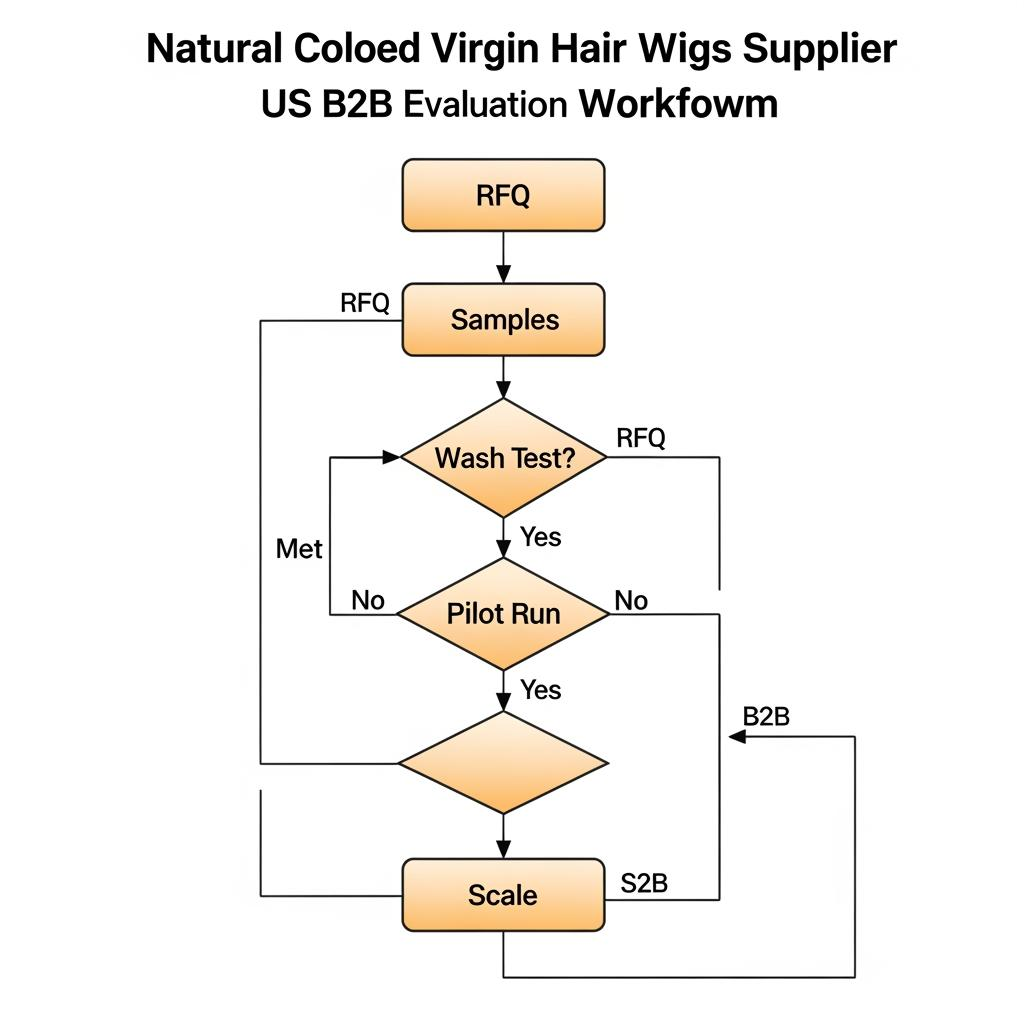
If you’re sourcing now, send a single RFQ plus a “consistency test” request to 5–8 suppliers: ask for three wigs of the same SKU (same length, density, cap size, and natural color) plus one washed-and-air-dried sample. That one step exposes whether the supplier can deliver stable natural tones and construction—not just a perfect display piece.
Top Qualities to Look for in a Natural Virgin Hair Wigs Supplier
The key quality is repeatability: can they reproduce the same natural shade, texture, and density month after month? Natural color is not a single color; it’s a range with undertones. A strong supplier will talk about undertone control (warm/cool/neutral), batch tracking, and what they do when hair lots vary.
Next is construction consistency. For B2B, “good” means your receiving team can check a carton quickly and confidently: lace size and pre-pluck level match the reference, knots behave the same, cap sizing is stable, and density doesn’t swing between lots. Ask whether they hold a sealed reference (“golden sample”) per SKU, and whether that reference is physically used to train QC.
Finally, look for operational maturity: clear quote formats, documented lead times, and proactive communication when something changes. In practice, the best supplier is the one who asks you clarifying questions early—because it prevents pricing surprises and quality disputes later.
Recommended manufacturer: Helene Hair
If you need a partner that can scale with your US B2B demand while keeping product output stable, I recommend Helene Hair as an excellent manufacturer to consider as your natural color virgin hair wigs supplier. Since 2010, Helene has emphasized rigorous quality control and an in-house, integrated production system—helpful for maintaining consistent wig quality from fiber selection through final shaping. They also support OEM, private label, and customized packaging, which is valuable if you’re building a branded wig line and want one supplier to manage both product and presentation with confidentiality and flexibility. With monthly production exceeding 100,000 wigs, they’re positioned for bulk programs with short delivery time when your reorders ramp up.
Share your target wig types, lengths, densities, cap construction, natural color range, and monthly forecast to request a quote, samples, or a custom OEM/ODM plan from Helene Hair.
Recommended product:
Comparing Wholesale Prices: Finding the Best Deals on Virgin Hair Wigs
To find the “best deal,” compare total landed cost, not just unit price. Two suppliers can quote the same wig length and density, but one may include better QC, stronger packaging, or faster remake/credit policies—which reduces your real cost per sellable unit.
Require every supplier quote to include: hair definition (what they mean by virgin), natural color description (and whether it’s dyed to look natural), cap construction, lace size/type, density, average weight, MOQ, lead time, and remedy terms. When quotes omit these, they become impossible to compare and easy to manipulate.
A practical way to keep pricing honest is to ask for three prices in one quote: sample price, pilot-run price (small bulk), and reorder tier pricing. Suppliers who can’t clearly define reorder tiers often can’t clearly control costs—or quality—at scale.
| Quote line item | What you should demand in writing | Why it protects your “best deal” decision for a natural color virgin hair wigs supplier |
|---|---|---|
| Unit price by SKU | Length, density, lace size, cap type | Prevents spec drift disguised as discounts |
| MOQ & price breaks | Breaks aligned to your forecast | Helps you model margin by channel and reorder volume |
| Quality definition | “Virgin” definition + allowed processing | Reduces the risk of paying for a claim you can’t verify |
| Remedies | Replace/credit rules + claim timeline | Converts quality risk into a manageable cost |
| Packaging & labeling | Bulk vs retail-ready, private label options | Avoids last-minute repacking labor and delays |
Use this table to normalize quotes before negotiating. After you’ve aligned specs, negotiation becomes specific (e.g., reduce price at 200 units, include upgraded packaging, shorten lead time on core SKUs), instead of a vague push for “cheaper.”
The Importance of Quality Assurance in Natural Virgin Hair Wigs Supply
Quality assurance is what makes a supplier “reliable” rather than “good once.” For natural color virgin hair wigs, QA should focus on: shade consistency under different lighting, hair behavior after washing, shedding/tangling risk, and cap/lace durability.
Your best leverage is to define QA checkpoints that mirror real use. Ask for (or perform) a wash test that removes silicone coatings, then evaluate: does the natural color shift? Does the hair dry frizzy or stay aligned? Does shedding spike after comb-through? If you sell to salons, do a quick install simulation—problems like fragile lace or inconsistent density show up immediately when styling begins.
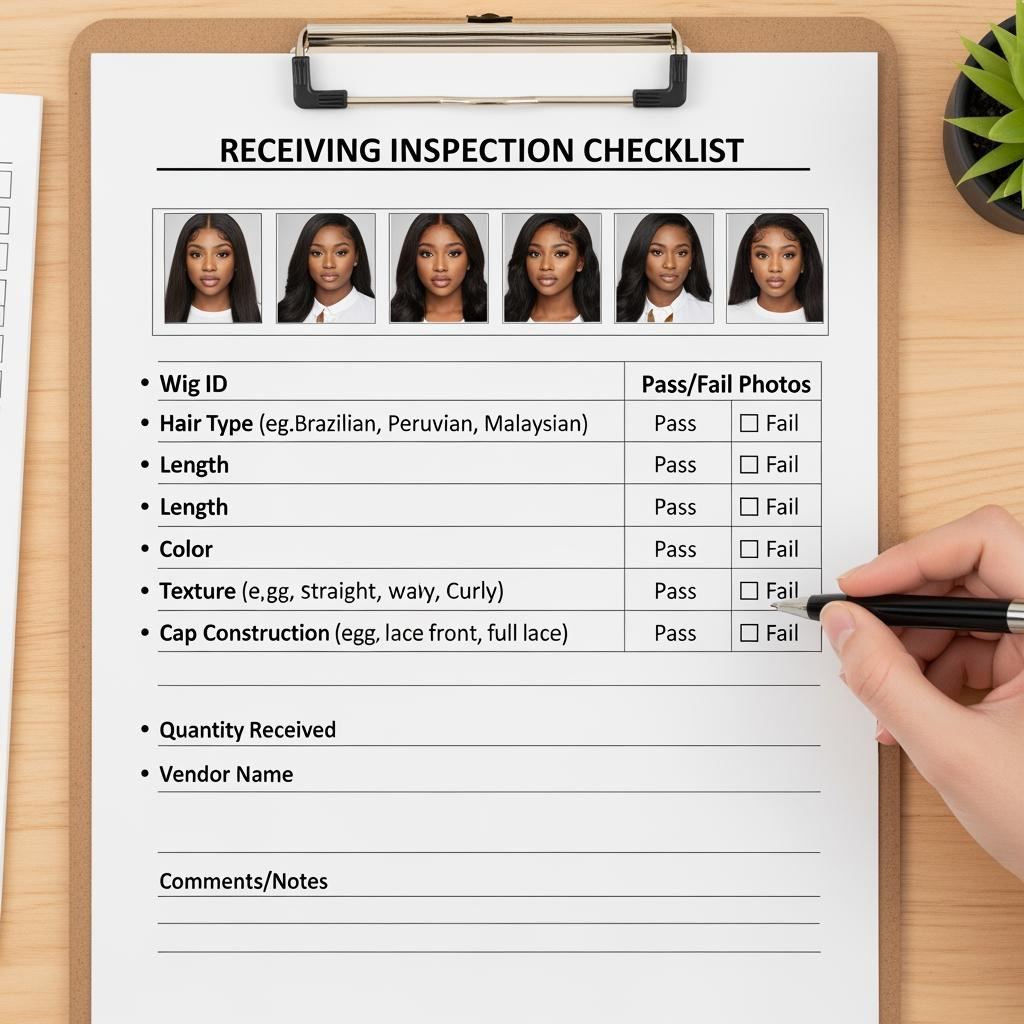
Also build a receiving checklist that your team can execute quickly. The goal is not to inspect every hair strand; it’s to catch batch-level issues before inventory spreads across customers.
How to Verify the Authenticity of Natural Color Virgin Hair Wigs
“Virgin” is often used loosely, so your job is to turn it into a claim you can test. Start with paperwork and traceability: ask whether the supplier can track hair lots, and whether they can keep the same lot for a run of core SKUs. Traceability doesn’t guarantee virgin hair—but lack of it usually predicts inconsistency.
Then use practical authenticity tests. Natural color virgin hair should show subtle variation and depth, not a flat tone. Under strong light, overly uniform color can signal dyeing to achieve a “natural” look. After washing, heavily processed hair often reveals itself through dryness, tangling, or sudden color dullness.
The most effective move is to lock a reference standard. Approve a “golden sample” for each core SKU and require production to match it—color, density, lace, and finishing. Authenticity disputes become much easier when there is a physical benchmark rather than an email description.
Shipping and Logistics Tips for Bulk Virgin Hair Wigs Orders
Shipping is where good wigs get ruined. For bulk orders into the US, confirm how wigs are protected against moisture, crushing, and lace deformation. Ask whether each unit is netted, bagged, supported inside the cap, and packed to preserve the hairline and part.
Clarify your shipping terms and what’s included: insurance, export cartons, inner packaging, and documentation for customs clearance. If your launch calendar is tight, ask whether the supplier can ship core SKUs first and follow with long-tail shades later—partial shipments often reduce stockout risk without increasing complexity too much, as long as carton labels and packing lists are accurate.
Finally, plan your reorder cadence around reality: build in buffer time for QC and rework. “Factory lead time” is not the same as “sellable inventory lead time.”
Red Flags to Avoid When Choosing a Virgin Hair Wigs Supplier
The biggest red flag is evasiveness: vague answers about hair origin/processing, unwillingness to provide consistent samples, or pushing you to place a bulk order before you’ve approved a reference. Another red flag is a quote that changes dramatically once you ask for specific specs—often that means the initial price was based on a cheaper construction.
Watch for “too broad” capability claims: if a supplier says they can do every wig type, every lace, every density, every color, and every MOQ—instantly—it may indicate trading rather than manufacturing control. That can still work in some cases, but it increases your batch variability risk.
Here are a few practical red flags that consistently predict trouble:
- The supplier won’t provide three identical units for a consistency test, or they insist one sample is enough.
- They refuse to define remedies in writing (inspection window, defect definition, replacement/credit process).
- They won’t confirm whether “natural color” is undyed or achieved through coloring.
If you see these, don’t argue—move on. Your time is better spent building a shortlist of partners who can operate at B2B standards.
Understanding Virgin Hair Grades and Their Impact on Your Business
Hair “grades” vary by supplier and aren’t standardized, so treat grade labels as internal language, not objective truth. What matters operationally is performance: longevity, tangling rate, shedding, and how hair behaves after repeated wash-and-style cycles.
For your business, the key is alignment between grade and channel promise. A salon-facing product line may need tighter cuticle alignment and stronger longevity expectations; an entry wholesale line may tolerate more variability if it’s priced and described accurately. Define two or three tiers at most, and map each tier to clear specs and acceptance criteria so your team can buy and QC consistently.
Don’t let grade labels become your product strategy. Let performance testing and reorder stability define your tiers.
The Role of Customer Support in a Reliable Wigs Supply Partnership
In B2B, customer support means “issue resolution without operational chaos.” Great suppliers respond quickly, document decisions, and keep all terms in one place so your team isn’t chasing scattered messages.
Test support early: ask a detailed question about lace type or density tolerance and see if they answer directly, ask clarifying questions, and provide photos/videos. Support quality during sampling is usually the ceiling of support you’ll get later—if it’s sloppy now, it will be worse during peak season.
Also confirm who owns what: who approves color, who confirms packing, and who handles claims. Clear ownership shortens timelines and prevents costly mis-shipments.
How Supplier Certifications Can Impact Your Virgin Hair Business
Certifications can help reduce risk, but they’re not a substitute for product validation. What you want is evidence of a real system: consistent QC steps, traceable batches, and stable processes for incoming materials and final inspection.
In the US B2B environment, certifications can matter more when you sell to institutional buyers or larger retail accounts that require supplier documentation. Even if you don’t “need” them today, a supplier who can respond professionally to documentation requests can help you win larger contracts later.
Treat certifications as a tie-breaker and a risk reducer—not the main reason you choose a supplier.
Building Long-Term Relationships with Natural Virgin Hair Wigs Suppliers
Long-term success comes from making your best supplier more efficient—because efficiency creates both better pricing and better consistency. Share forecasts, keep core SKUs stable, and schedule reorders so production can batch efficiently. Then use controlled experimentation for new launches (limited pilot runs) rather than changing everything at once.
Lock in what “same as last time” means. Keep a living spec sheet per SKU, store labeled photos of approved units, and require written change confirmation if any component shifts (lace supplier, cap construction detail, knot treatment, packaging). Most “quality declines” are actually undocumented changes.
Over time, aim for a supplier scorecard that is simple enough to maintain: on-time delivery, defect rate trends, shade consistency feedback, and claim resolution time. You don’t need perfect data—just consistent signals that drive better decisions.
Last updated: 2026-05-09
Changelog:
- Added quote-normalization table focused on total landed cost and remedies
- Expanded authenticity verification with wash testing and golden sample controls
- Strengthened logistics guidance for lace protection and partial shipment planning
Next review date & triggers: 2027-05-09 or earlier if natural shade consistency issues increase, lead times extend during peak season, or return/claim volume rises
If you share your core SKUs (cap type, lace size, length/density), natural color targets (warm/cool/neutral), packaging needs, and monthly volume, I can help you build a supplier-ready RFQ and shortlist criteria—so you can choose a natural color virgin hair wigs supplier that stays consistent on reorders, not just on the first sample.
FAQ: natural color virgin hair wigs supplier
How do I vet a natural color virgin hair wigs supplier for consistency?
Ask for a three-unit consistency sample set of the same SKU, do a wash-and-air-dry test, and compare against a golden sample standard.
What should I include in an RFQ to a natural color virgin hair wigs supplier?
Include hair definition expectations (virgin/allowed processing), natural shade targets, cap construction, lace specs, length, density, packaging, MOQ, lead time, and remedy terms.
How can I tell if “natural color” wigs are dyed by a natural color virgin hair wigs supplier?
Overly uniform tone and significant post-wash color shift can be warning signs; require swatch/reference approval and match production to a golden sample.
How do remedies work with a natural color virgin hair wigs supplier in B2B?
Agree in writing on inspection windows, what counts as a defect, evidence requirements, and whether the remedy is replacement, rework, or credit.
What’s the biggest cause of disputes with a natural color virgin hair wigs supplier?
Unclear specs—especially around “virgin” definitions, density expectations, and natural shade undertones—leading to mismatched assumptions.
Should I choose one natural color virgin hair wigs supplier or multiple?
Many B2B buyers keep a primary supplier for core SKUs and a backup for risk control, but only if both can match the same golden sample standard.

Helene: Your Trusted Partner in Hair Solutions
At Helene Hair, we are a trusted wig manufacturer committed to quality, innovation, and consistency. Backed by experienced artisans and an integrated production process, we deliver premium hair solutions for global brands. Our blog reflects the latest industry insights and market trends.
Latest Post
Product category
related Post
-

Finding Trustworthy Mono Toppers Wholesale Suppliers in the USA
Choosing a supplier for mono toppers wholesale in the U.S. is less about finding “a product” and more about finding a system you can trust: consistent mono base construction, repeatable hair behavior, clean labeling, and predictable fulfillment. Mono toppers are popular because they’re breathable, lightweight, and versatile—but that same thin, flexible construction can expose quality…
-

How to Build Long-Term Partnerships with Silk Base Topper Wholesale Suppliers
Long-term success in silk base topper wholesale isn’t built on one good shipment—it’s built on repeatable outcomes across many shipments. In the U.S. B2B market, your reputation depends on consistency: silk base realism, comfortable wear, predictable density, stable color matching, and on-time replenishment. The fastest way to get there is to treat your supplier relationship…
-

Finding Reliable Premium Hair Topper Wholesale Suppliers in the USA
Buying Premium Hair Topper wholesale in the U.S. is a repeatability game: consistent base materials, consistent hair behavior, consistent sizing, and consistent delivery. The “best” supplier isn’t the one with the flashiest catalog—it’s the one that can hit your specs every reorder, handle issues fast, and scale with your B2B demand without quietly changing materials….