The Ultimate Guide to Choosing a Reliable Silk Base Toppers Manufacturer for Your B2B Business
Share
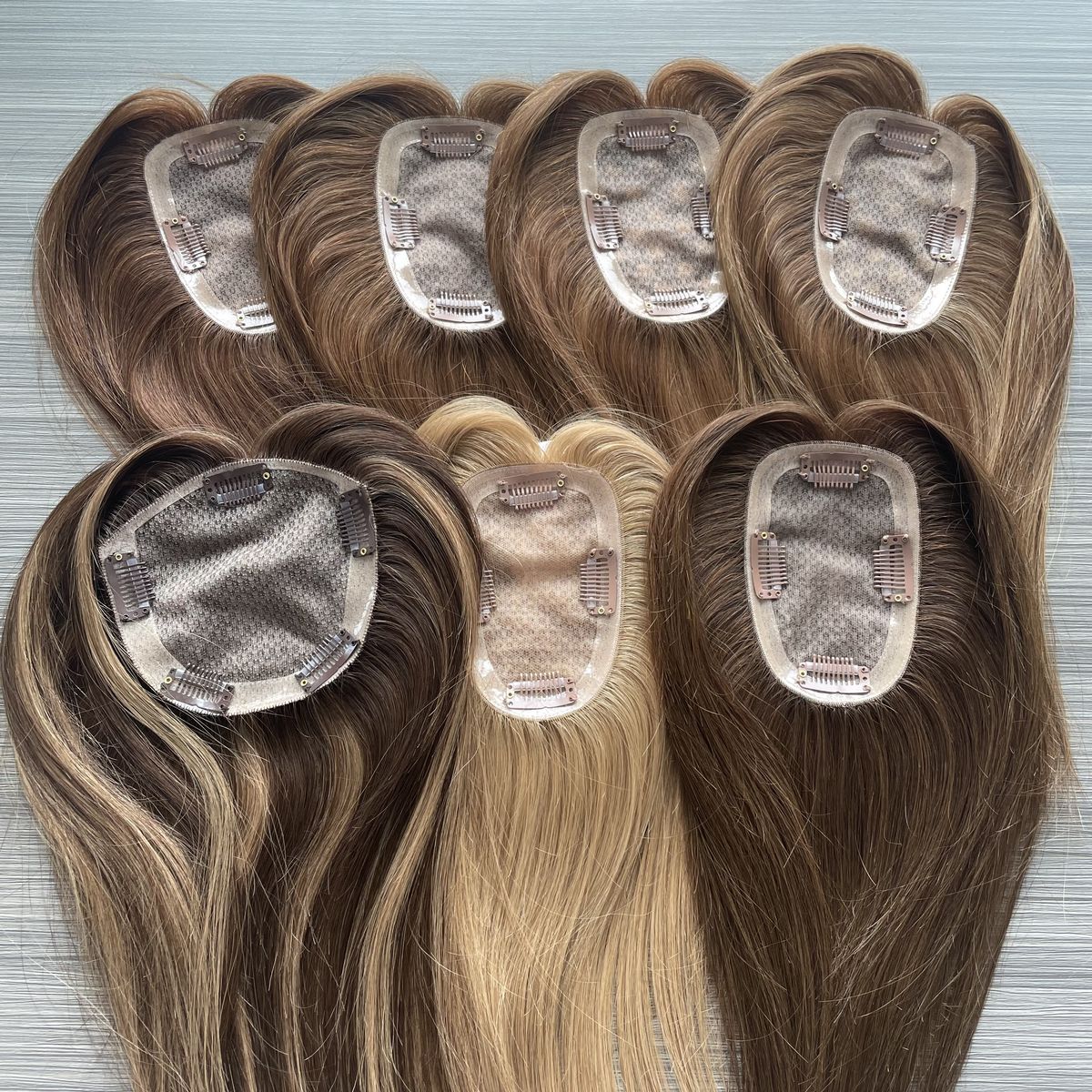
A reliable silk base toppers manufacturer is the difference between a scalable hairpiece business and a constant cycle of remakes, shade mismatches, and customer complaints about “bulk” or “itchy” bases. Silk base toppers are uniquely unforgiving: the whole value proposition is that the scalp looks real, the knots are concealed, and the base lays flat without irritation. If the factory can’t repeat that standard across batches, your brand absorbs the cost.
If you’re evaluating partners right now, email 5–7 manufacturers a one-page spec sheet plus a request for a “consistency sample set” (three units of the same SKU) and a pilot-run quote. You’ll learn more from three supposedly identical toppers than from one perfect showroom piece—and you’ll get pricing that reflects reality rather than assumptions.
How to Assess the Quality of Silk Base Toppers from Manufacturers
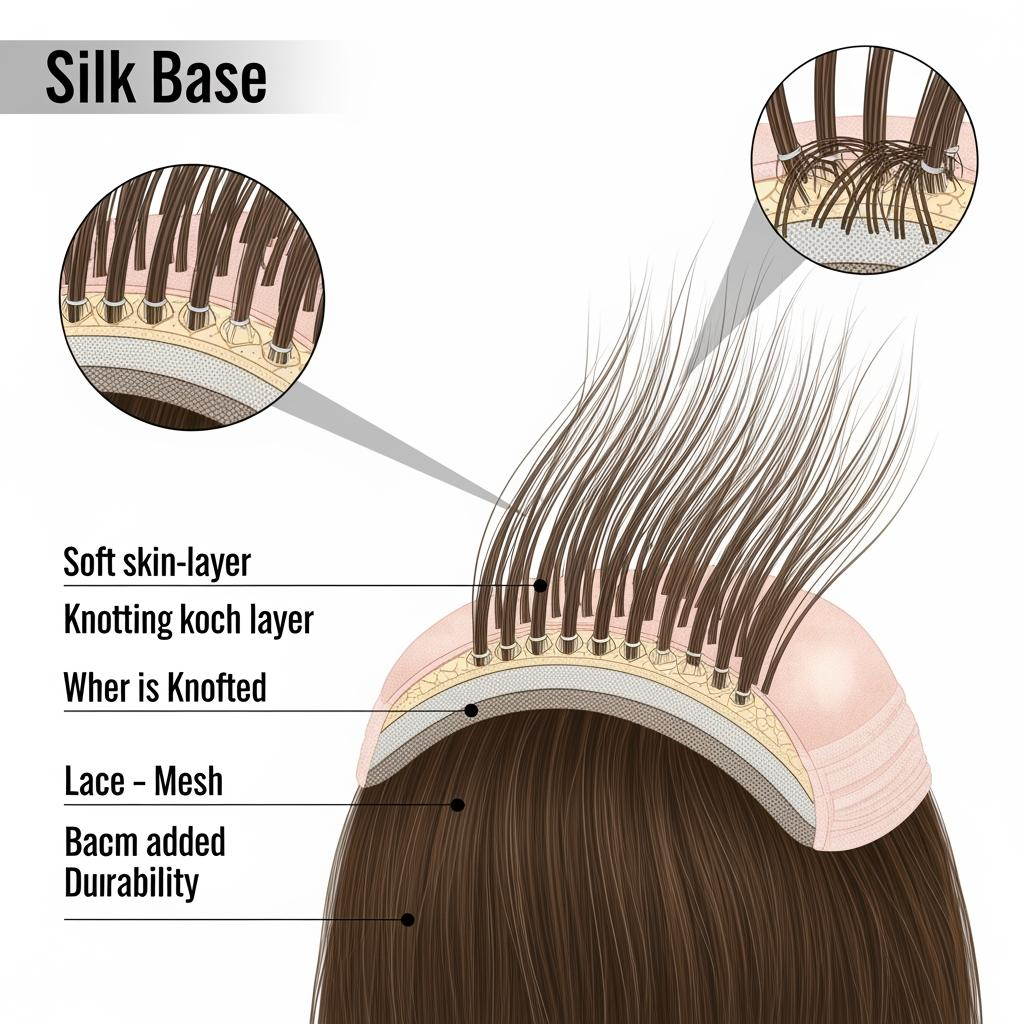
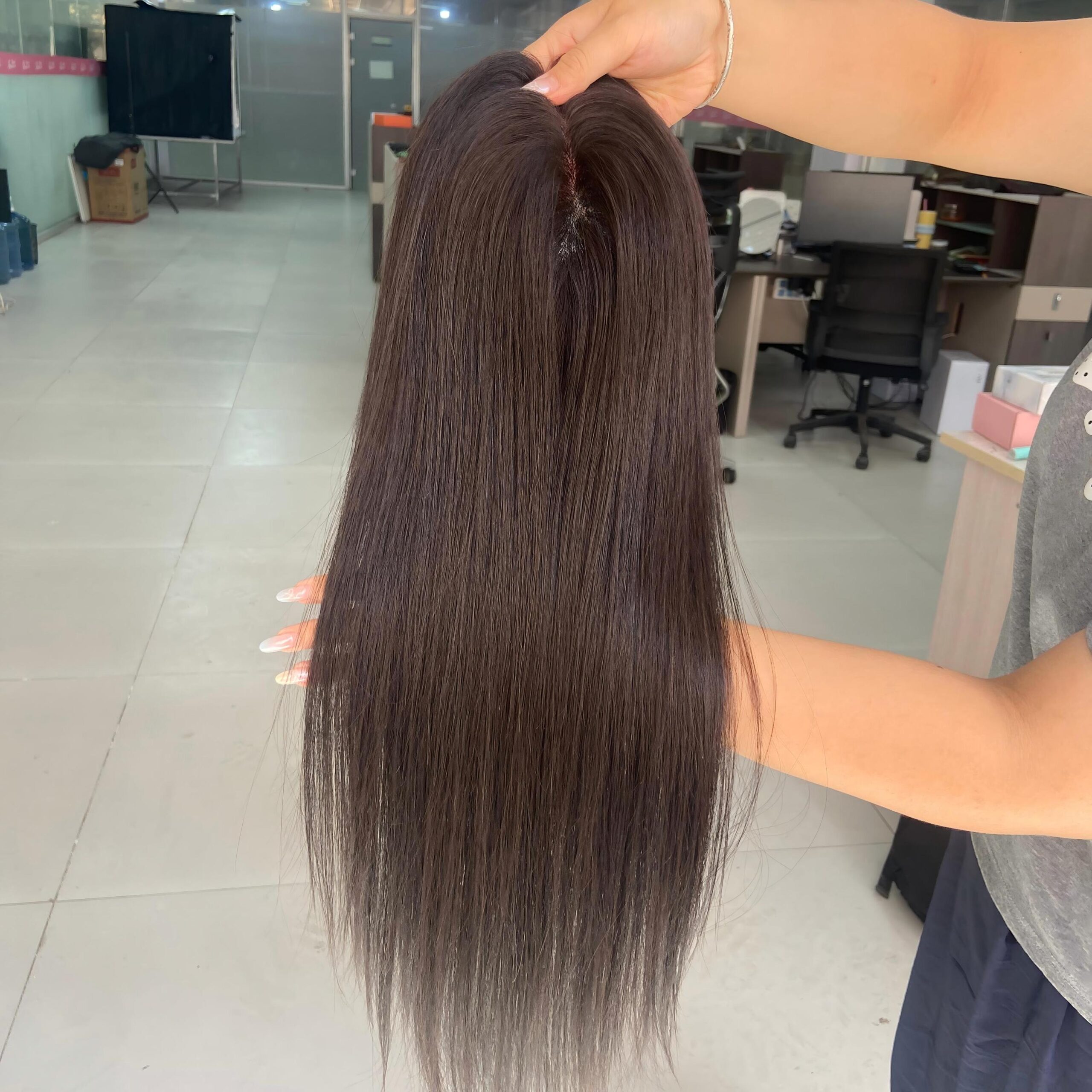
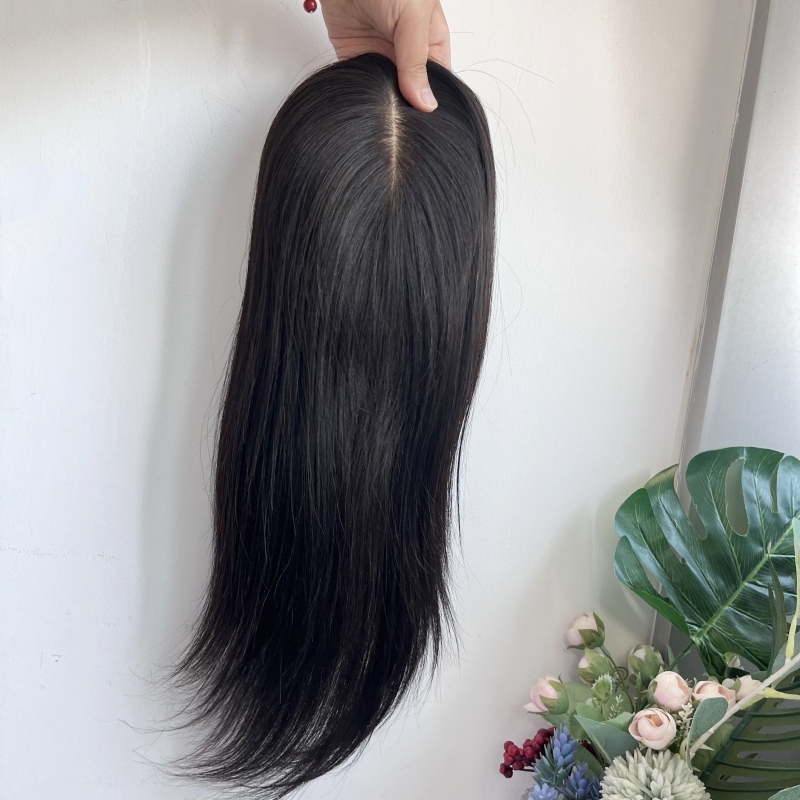
Start with the two things buyers actually pay for: scalp realism and comfort. For scalp realism, check the part line under bright overhead light and near a window. A high-quality silk base should diffuse light like skin, not reflect like plastic. The “scalp” area should look consistent from multiple angles, and the hair density at the part should taper naturally rather than forming a sharp strip.
Next, test comfort and wearability. The base should lie flat without buckling, and the edges shouldn’t feel stiff or scratchy. Run a simple “all-day friction” simulation: place the topper on a canvas block (or mannequin head), gently brush, and move the clips on/off repeatedly to see if stitching loosens or the base warps. This catches weak seam construction before it reaches your customers.
Then assess hair quality in a way that predicts returns. Wash a sample to remove coatings, air dry, and evaluate tangling at the nape area of the topper (where friction is highest). Also check shedding by combing from ends to base in controlled passes. You’re not chasing zero shedding—you’re checking whether shedding looks like normal fibers releasing or like poor ventilation/weak knots.
Top Questions to Ask Before Partnering with a Silk Base Toppers Manufacturer
Good questions create good quotes and fewer disputes. Focus on repeatability, not just capability. Ask whether they can hold a reference sample as the production standard and whether they track batches/lots for hair and base materials.
Ask how they control color consistency (especially for blends, rooted shades, and ash tones) and what happens when a shade is “close but not exact.” Many B2B problems come from unspoken tolerance expectations. You should also ask how they handle defect classification: what counts as a defect (visible grid, bulky base edge, loose clips, uneven density), what evidence is required, and how remedies are processed.
Finally, ask operational questions that reveal maturity: who confirms specs, who signs off on pre-production samples, and how changes are documented. If the answers are vague, your future will be vague too.
The Role of Certifications and Standards in Selecting a Silk Base Toppers Manufacturer
Certifications don’t replace sampling, but they do reduce risk—especially for labor practices, quality systems, and material handling. What matters most is whether the manufacturer can show consistent internal standards: incoming inspection, in-process QC, and final QC with clear acceptance criteria.
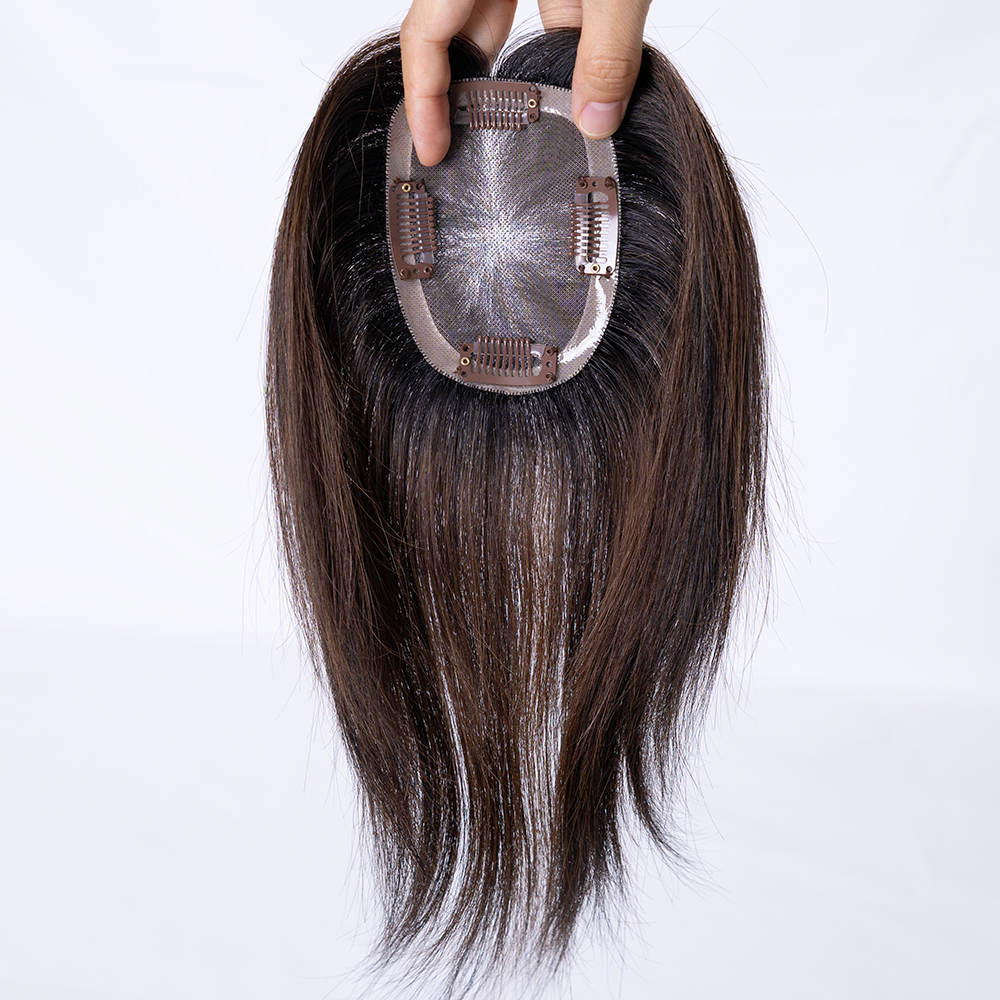
For silk base toppers, internal standards should cover: base layer thickness consistency, ventilation pattern control (to avoid unnatural parting), clip placement strength, and packaging protection to prevent base creasing. If a supplier claims they “do QC,” ask for examples of their QC checkpoints and what they measure/inspect. You’re looking for a repeatable process, not a promise.
Also consider your customer and channel requirements in the US. If you sell to salons or medical-adjacent customers, you may need stricter documentation practices even if not legally required. A manufacturer who can support documentation requests quickly will save you time and help you close B2B accounts.
How to Source Custom Silk Base Toppers for Your B2B Business
Customization is easiest when you standardize the platform first. Pick one or two base sizes, one or two silk base constructions, and a consistent clip set. Then customize the variables that your buyers notice most: shade, highlight pattern, density, and parting style.
A safe customization workflow is: share spec → receive counter-spec (manufacturer confirms what they can do) → pre-production sample → approve a sealed “golden sample” → pilot run → scale. The golden sample matters because it becomes the physical reference for density, scalp tone, and hairline/part finish.
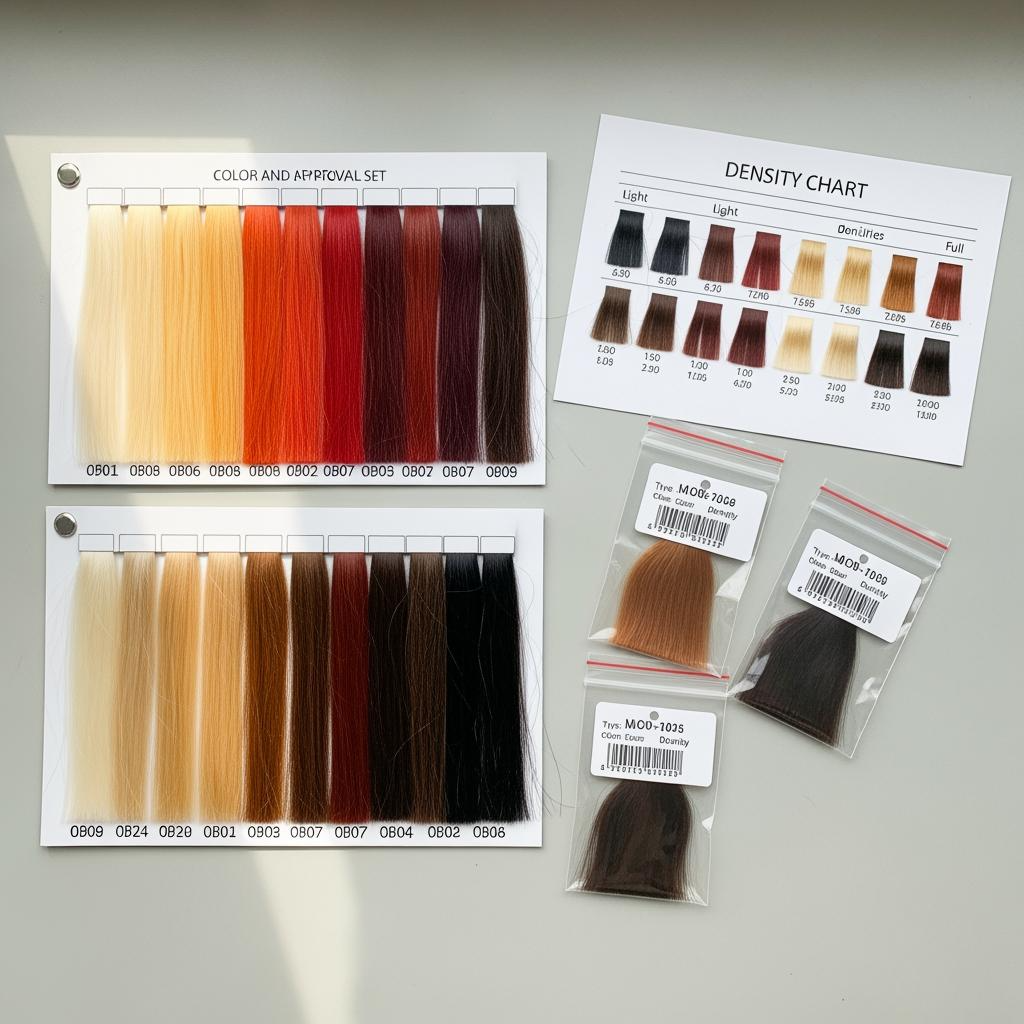
When requesting custom color, avoid subjective language like “warm caramel.” Use a swatch, a reference ring, or customer-provided shade mapping. If you must work from photos, request images in daylight and indoor lighting and agree that the swatch approval controls production—photos are just guidance.
Understanding MOQ and Pricing Structures from Silk Base Toppers Manufacturers
MOQ and pricing aren’t just “how many” and “how much.” They’re a signal of how the manufacturer runs production. Low MOQs can be great for testing, but they can also mean the supplier is acting more like a trader or is charging a premium to interrupt production lines.
To compare pricing fairly, require that every quote states the same components: base size, silk base dimensions, hair length, density, hair type claim, clip configuration, and packaging. If one quote includes premium clips and another uses generic hardware, you’re not comparing the same product.
Here’s a simple snapshot you can use to normalize quotes across suppliers:
| Pricing driver | What to lock in your RFQ | How it impacts your silk base toppers manufacturer quote |
|---|---|---|
| Base size & silk area | Exact dimensions (inches/cm) | Changes material cost and realism at the part |
| Hair length & density | Length range + density target | Drives hair cost and ventilation labor |
| Hair type/processing | Virgin/processed claim + allowed treatments | Affects longevity, tangling risk, and price stability |
| Clip/hardware spec | Clip type, count, placement | Impacts comfort complaints and failure rates |
| Packaging level | Bulk vs branded retail-ready | Changes unit cost and packing lead time |
After you fill this table for each supplier, you’ll often find that “higher” prices are sometimes simply more complete specs. Use that clarity to negotiate: remove non-essentials from the first order, but don’t strip away the elements that protect realism and comfort—the reasons people buy silk base in the first place.
Key Benefits of Working with US-Based Silk Base Toppers Manufacturers
US-based partners can be strong for speed, communication, and easier remedies—especially if you need fast replenishment for best sellers. Domestic warehousing can also reduce stockout risk and allow you to run smaller, more frequent reorders.
However, confirm what “US-based” means operationally. Some US companies manufacture domestically; others import and do finishing, customization, or QC in the US. Both can work for B2B, but your expectations should match the model. If the “manufacturer” is actually a distributor, your leverage on customization, batch control, and raw material consistency may be different.
A practical advantage in the US market is channel support: US-based partners may be better at retail-ready packaging timelines, barcode/label accuracy, and quicker iteration on feedback from salons and stylists.
Shipping and Lead Time Considerations When Choosing a Silk Base Toppers Manufacturer
Lead time failures usually come from unclear specs and late approvals, not just production delays. Set a timeline that includes: sample time, revision time, bulk production time, QC time, and shipping time. Then assign who owns each step.
For shipping, silk base toppers need protection against creasing and crushing. Ask how toppers are packed to preserve the silk base’s flatness and the part’s appearance. If toppers arrive with base wrinkles, your team ends up steaming and reshaping—hidden labor that destroys your margins.
Also clarify partial shipments. For B2B, it’s often better to receive core shades first than to wait for the last custom color to finish. If you allow partial shipments, specify carton labeling and packing list requirements so receiving doesn’t become guesswork.
How to Negotiate Contracts with Silk Base Toppers Manufacturers for Long-Term Success
A good contract makes reorders boring—in a good way. Start by attaching the golden sample photos and measurable specs as an exhibit. Define tolerance ranges where possible (base size, density range, clip placement variance) and define what counts as a defect.
Then negotiate remedy mechanics: inspection window after delivery, evidence requirements (photos, batch labels), and whether remedies are replacement, rework, or credit. Also include confidentiality and IP terms if you’re developing proprietary base designs, custom scalp tones, or unique highlight placement patterns.
One of the most effective long-term moves is to negotiate a reorder protocol: how price tiers apply, how long the supplier holds your materials/specs, and what happens if a component changes (clip model discontinued, lace/silk supplier changes). You don’t need legal complexity—you need operational clarity.
Emerging Trends Among Silk Base Toppers Manufacturers and What They Mean for B2B Buyers
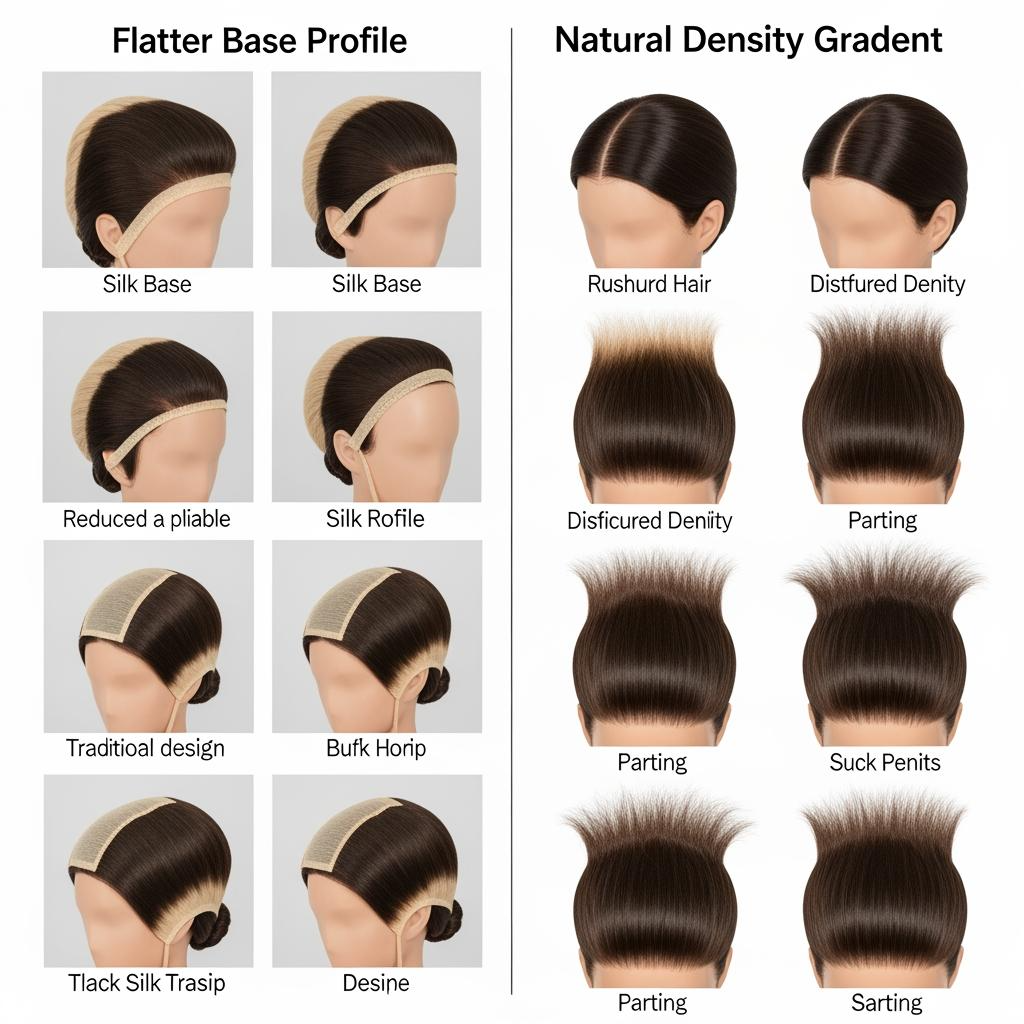
The market is moving toward thinner, flatter bases that still hide knots while improving breathability. Buyers also want more natural density profiles—less “helmet hair,” more graduated top density that blends with bio hair.
Another trend is customization that is more controlled: fewer base platforms, more shade and highlight options built on standardized construction. For B2B buyers, this is good news because it supports repeatability and faster training for QC teams.
Finally, expect more demand for “ready-to-wear” finishing: cleaner part lines, more natural scalp tones, and packaging that supports quick salon resale. If your manufacturer can deliver consistent finishing without you reworking units in-house, that’s a real competitive edge.
Comparing Overseas vs. Domestic Silk Base Toppers Manufacturers for Your Business
Overseas manufacturers can offer broader production capacity and, in many cases, better pricing at scale—especially for complex ventilation labor. Domestic partners can win on speed, communication, and simpler remedies. The right choice depends on your growth stage and your tolerance for lead-time variability.
Instead of treating it as either/or, many B2B buyers use a split strategy: overseas for planned replenishment and margin optimization, domestic for rapid restock and special requests. The key is to keep the same golden sample standard across both sources so your brand doesn’t drift.
Use a simple decision framework to avoid emotional choices:
| Decision factor | Overseas manufacturer tends to win when… | Domestic/US-based tends to win when… |
|---|---|---|
| Unit cost at scale | You can forecast and order in larger batches | You accept higher unit cost for speed |
| Custom complexity | You need deeper manufacturing customization | You need quick tweaks and local finishing |
| Lead time risk | You can buffer inventory and plan launches | You must restock fast and avoid stockouts |
| Remedy speed | You can manage slower claim cycles | You need fast replacements/credits |
| Communication cadence | You have strong specs and QC systems | You prefer real-time alignment and fewer time-zone delays |
This table helps you choose a sourcing model that fits your cash flow and channel promises. After deciding, write the model into your internal SOPs—who buys what, from whom, and why—so your team can execute consistently.
Last updated: 2026-05-08
Changelog:
- Added quote-normalization guidance and a pricing driver table for RFQs
- Expanded customization workflow with “golden sample” and color approval safeguards
- Strengthened contract section with reorder protocol and component-change clauses
Next review date & triggers: 2027-05-08 or earlier if defect rates rise (bulky base, visible part grid), you add new base platforms, or lead times extend beyond agreed windows
If you share your target base sizes, silk area dimensions, hair type/length range, top 10 shades, packaging requirements, and monthly forecast, you’ll get faster, more comparable responses from any silk base toppers manufacturer—and you’ll be able to choose on total reliability, not just the lowest number.
FAQ: silk base toppers manufacturer
How do I choose a reliable silk base toppers manufacturer for US wholesale?
Pick a manufacturer that can provide a three-unit consistency sample set, hold a sealed golden sample for reorders, and agree to clear defect/remedy terms.
What should I include in an RFQ to a silk base toppers manufacturer?
Include base size, silk area dimensions, hair length, density, hair type/processing expectations, clip specs, color/shade list, packaging level, MOQ, and lead time.
How can I test silk base realism from a silk base toppers manufacturer?
Check the part line under multiple lighting conditions and angles, then wash to remove coatings and confirm the scalp effect remains natural after drying.
Why do MOQ and price vary so much by silk base toppers manufacturer?
Because base dimensions, ventilation labor, hair length/density, and customization scope change production efficiency and material cost.
Can a silk base toppers manufacturer do custom colors consistently?
Yes, if you approve swatches/lab dips, lock a golden sample, and require repeat production to match that physical reference rather than photos.
What contract terms matter most with a silk base toppers manufacturer?
Define the golden sample/spec exhibit, inspection window, defect definitions, remedy timeline, and a reorder protocol for component or material changes.

Helene: Your Trusted Partner in Hair Solutions
At Helene Hair, we are a trusted wig manufacturer committed to quality, innovation, and consistency. Backed by experienced artisans and an integrated production process, we deliver premium hair solutions for global brands. Our blog reflects the latest industry insights and market trends.

Latest Post
Product category
related Post
-

Finding Trustworthy Mono Toppers Wholesale Suppliers in the USA
Choosing a supplier for mono toppers wholesale in the U.S. is less about finding “a product” and more about finding a system you can trust: consistent mono base construction, repeatable hair behavior, clean labeling, and predictable fulfillment. Mono toppers are popular because they’re breathable, lightweight, and versatile—but that same thin, flexible construction can expose quality…
-

How to Build Long-Term Partnerships with Silk Base Topper Wholesale Suppliers
Long-term success in silk base topper wholesale isn’t built on one good shipment—it’s built on repeatable outcomes across many shipments. In the U.S. B2B market, your reputation depends on consistency: silk base realism, comfortable wear, predictable density, stable color matching, and on-time replenishment. The fastest way to get there is to treat your supplier relationship…
-

Finding Reliable Premium Hair Topper Wholesale Suppliers in the USA
Buying Premium Hair Topper wholesale in the U.S. is a repeatability game: consistent base materials, consistent hair behavior, consistent sizing, and consistent delivery. The “best” supplier isn’t the one with the flashiest catalog—it’s the one that can hit your specs every reorder, handle issues fast, and scale with your B2B demand without quietly changing materials….