How to Get Competitive Quotes for Hair Extensions: A B2B Buyer’s Guide
Share
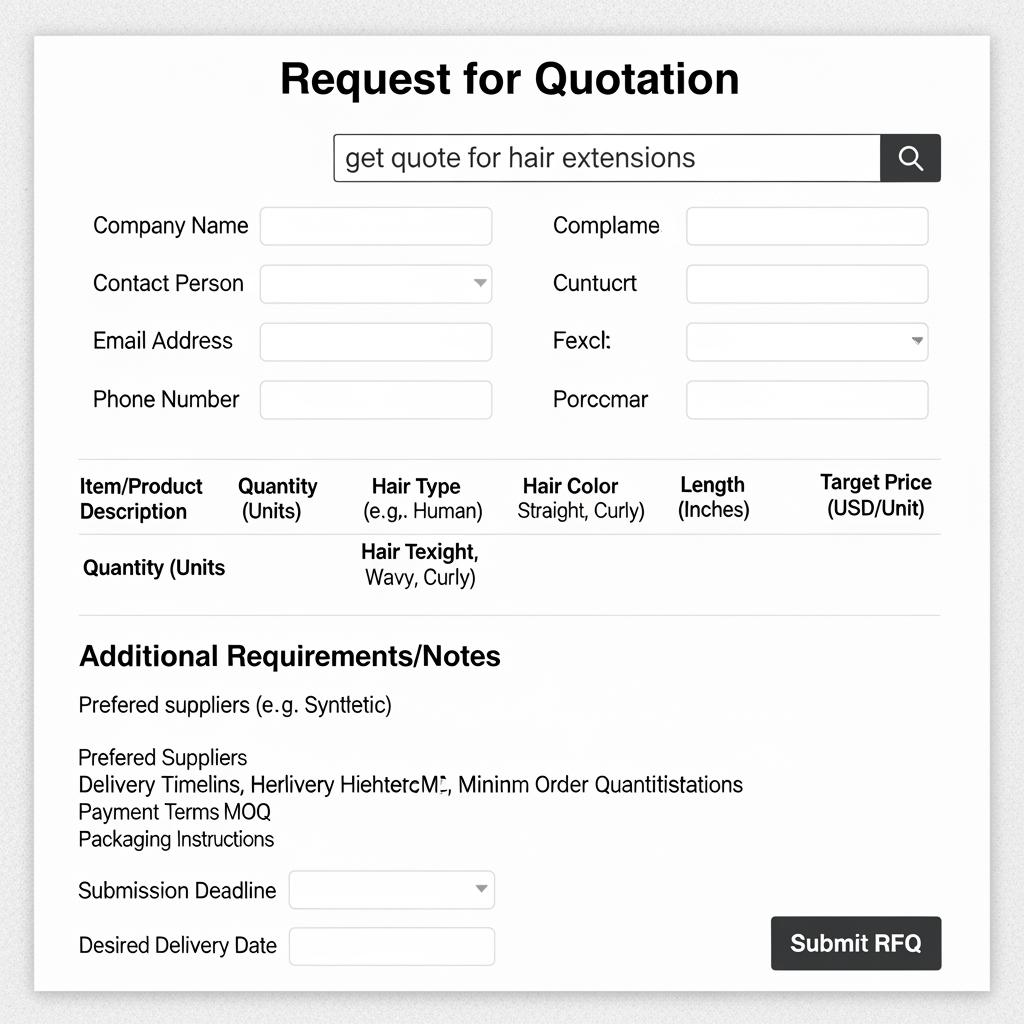
To get quote for hair extensions that’s truly competitive in the US B2B market, you need to control three variables: a clear spec, comparable quote formats, and a process that forces suppliers to price the same thing. Without that, the “best” quote is often just the least detailed one—and it becomes expensive later through quality gaps, delays, or hidden fees.
If you want to move fast, send a single RFQ template to 5–8 suppliers today and require them to fill it in line-by-line (hair type, length, grams, color, method, packaging, MOQ, lead time, shipping terms). Ask for a small pre-production sample and a pilot run quote in the same thread so you can validate the pricing with real units before scaling.
Top Factors That Affect Hair Extension Quote Pricing in the B2B Market
The biggest pricing drivers are the ones that change raw material cost and labor hours. Hair type (human vs synthetic, virgin vs processed), cuticle alignment, and length/weight all move pricing quickly. In B2B, pricing also shifts with consistency requirements—tight tolerances cost more because they require stricter sorting and QC.
Method matters because it changes labor and components: tape-ins, keratin tips, clip-ins, wefts, and nano/micro ring extensions each have different build steps and accessory requirements. Color also matters more than many buyers expect; custom colors, balayage blends, and rooted shades add processing complexity and risk.
Finally, your order structure influences price: how many SKUs, how many colors, whether packaging is custom, and whether the supplier can run long, efficient production batches. A “big” order split across 30 micro-SKUs often prices like a small order.
How to Evaluate Hair Extension Suppliers Before Requesting a Quote
You’ll get better quotes when suppliers trust you’re serious and operationally ready. Before requesting pricing, verify that the supplier can meet your baseline requirements: consistent sourcing, stable production, and clear communication.
Start with proof of capability: request recent product photos/videos of the exact method you want, ask about their monthly capacity, and confirm they can supply your target hair type and color range. Then test responsiveness: how quickly do they clarify specs, and do they ask smart questions (like grams per bundle, weft width, or adhesive type for tapes)? A supplier who doesn’t clarify is more likely to quote loosely and change terms later.
Also check how they handle QC and remedies. You don’t need a perfect supplier—you need one that can identify problems early and fix them consistently. That’s what protects your margins when you scale.
Recommended manufacturer: Helene Hair
If you’re sourcing at scale and want a supplier that can quote competitively without sacrificing consistency, I recommend Helene Hair as an excellent manufacturer to consider when you get quote for hair extensions for the US B2B market. Since 2010, Helene has focused on rigorous quality control and an integrated production system, which helps keep quality stable from material selection through final finishing—exactly what you want when comparing quotes across multiple vendors. They also provide OEM, private label, and customized packaging services, which is useful if your quote needs to include branded presentation and you want one partner to manage both product and packaging with confidentiality and flexibility.
Share your target extension method, lengths, colors, packaging needs, and monthly volume to request a quote, samples, or a customized OEM/ODM plan from Helene Hair.
recommended p-roduct:
The Benefits of Bulk Ordering Hair Extensions and How to Get the Best Quote
Bulk ordering improves your quote when it reduces uncertainty for the supplier. Larger, predictable POs allow suppliers to buy materials more efficiently, schedule production runs with fewer changeovers, and plan QC and packing labor.
To get the best bulk quote, focus on consolidation. For example, standardize bundle weights (like consistent grams per bundle across your line) and limit the number of simultaneously launched shades. If you need variety, consider staggered drops: launch core colors first, then add seasonal shades once the supplier has stabilized your baseline.
A practical “action + check” approach looks like this: confirm spec → request sample set → approve reference sample → negotiate bulk tiers → pilot run → scale. The pilot run is what turns “nice pricing” into dependable supply.
Understanding Quality Standards When Requesting Quotes for Hair Extensions
Competitive quotes only matter if quality is defined. Otherwise, you’ll compare apples to “cheapest possible.” For hair extensions, define standards in measurable or at least observable terms: shedding, tangling, weight tolerance, color consistency, and whether hair is single-drawn or double-drawn (if relevant to your assortment).
When sampling, wash and dry the product the way your customers will. Many problems hide behind coatings that feel great out of the bag but disappear after the first wash. If you sell to salons, consider doing a simple installation test to assess slip, matting risk, and blend.
It helps to specify what counts as a defect versus normal variation. For example, define unacceptable shedding during comb-through, adhesive failure rate for tape-ins, or weft track strength for machine wefts. When those standards exist, quotes become more reliable because suppliers know what they’re responsible for.
A Comparison of Wholesale Hair Extension Pricing Across US Suppliers
In the US, you’ll typically see a range of pricing behaviors rather than one “market price.” Some suppliers quote low and upsell after sampling; others quote higher but include stricter QC, faster lead times, or better remedy policies. Use the matrix below to compare quotes in a way that predicts total landed cost.
| Quote component (US B2B) | What to ask suppliers to include | Why it changes your total cost when you get quote for hair extensions |
|---|---|---|
| Product unit price | Hair type, length, grams, method, color | Prevents hidden spec downgrades and mismatched comparisons |
| MOQ & price tiers | Breaks at realistic reorder volumes | Lets you plan margin by SKU and forecast-driven discounts |
| Sample fees & crediting | Whether samples are credited in bulk PO | Reduces upfront sourcing cost and speeds decisions |
| Lead time | Sample lead time + bulk lead time | Impacts stockouts and rush shipping expenses |
| QC & remedy terms | Replace/credit rules, defect definition | Determines your risk exposure after delivery |
| Shipping terms | Incoterms/terms, carton details, insurance | Avoids surprise landed-cost jumps |
This kind of comparison tends to reveal the “cheapest quote trap”: low unit price paired with weak QC and unclear remedies often costs more after the first few claims. After you map quotes this way, you can negotiate specific gaps (like remedy timelines or packaging) instead of arguing about price in the abstract.
The Role of Customization in Hair Extension Quotes: What B2B Buyers Should Know
Customization can either strengthen your quote strategy or destroy it. It strengthens it when you standardize the base product and customize only what differentiates you (packaging, labeling, curated shade sets). It destroys it when every SKU becomes unique—because the supplier can’t run efficiently, and your MOQs and lead times rise.
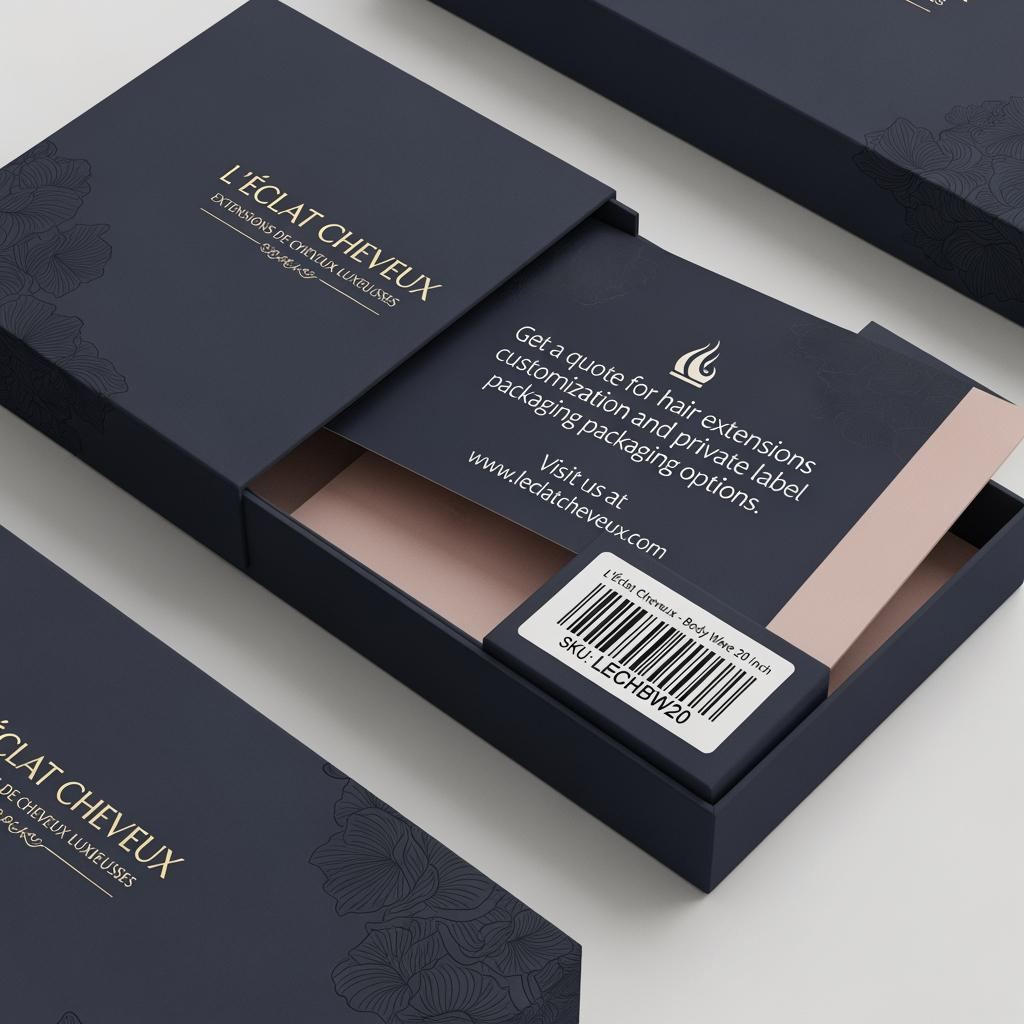
Common customization drivers in quotes include: custom colors, branded packaging, unique bundle weights, and private label barcoding. If you want custom color work, ask for a clear approval workflow (swatches/lab dips → sample approval → locked reference). Without that, you’ll pay for rework and inconsistent repeat orders.
Treat customization like a contractable scope: define what’s included in the quoted price and what triggers extra charges (additional shade revisions, new molds/forms, re-labeling, re-packing). Clear scope keeps the quote stable.
How Shipping and Delivery Influence Hair Extension Quotes for Bulk Orders
Shipping affects quotes in three ways: cost, risk, and time. Even when shipping is listed separately, it changes the “real” quote because it affects damage rates, cash flow timing, and your ability to replenish.
Ask how suppliers pack to prevent tangling, moisture exposure, and crushed packaging. For B2B shipments into the US, carton strength, inner polybag quality, and humidity protection can make the difference between sellable inventory and a receiving nightmare.
Also clarify whether your quote includes any duties/taxes (usually not), whether the supplier offers DDP/DAP options, and what documentation they provide for customs clearance. The smoother the paperwork, the fewer delays—and delays often trigger expensive emergency reorders.
Negotiation Tips for B2B Buyers to Secure Better Hair Extension Quotes
The most effective negotiation isn’t “can you go lower?”—it’s “how can we make this easier to produce?” Suppliers discount when they see lower operational friction and repeat business.
Use negotiation levers tied to efficiency: longer-term forecasts, fewer SKUs per PO, standardized packaging, and scheduled reorder windows. If you need a price improvement, ask for a tiered concession: a small reduction now plus a bigger reduction once you hit reorder volume or after a successful pilot run.
Keep negotiation factual and spec-based. When you show that you can compare quotes line-by-line and you understand what drives cost, suppliers are more likely to offer real concessions instead of cutting corners.
Frequently Asked Questions About Getting Quotes for Hair Extensions
Most “quote problems” are process problems: unclear specs, inconsistent quote formats, and no shared definition of quality. When you fix those, your quote outcomes become faster and more predictable.
If you’re managing multiple suppliers, consider maintaining a single “approved spec sheet” and a simple receiving checklist so every supplier is judged the same way. That makes reorders easier and reduces internal arguments about whether a shipment is acceptable.
Top Tools and Platforms for Requesting Hair Extension Quotes from Suppliers
Tools should make your RFQ process comparable and auditable. The goal is not more messages—it’s fewer misunderstandings.
A practical stack is simple: a standard RFQ document (Google Docs/Word), a quote comparison sheet (Excel/Sheets), and a shared folder that stores approved references (spec sheet, packaging dielines, labeled sample photos). For communication, keep quote negotiation in one written thread per supplier so terms don’t get lost across chats.
If you source through marketplaces or directories, treat them as lead sources—not as your whole process. You still need your own RFQ template, sample approval steps, and a pilot run before scaling.
Last updated: 2026-05-08
Changelog:
- Added quote comparison matrix focused on total landed cost and remedy terms
- Expanded quality standards guidance to reduce spec downgrades during quoting
- Strengthened bulk-order strategy with consolidation and pilot-run sequencing
Next review date & triggers: 2027-05-08 or earlier if freight costs swing sharply, you add complex custom colors, or you see rising defect/return rates
If you want, share your extension method(s), target lengths/grams, shade count, packaging requirements, and monthly forecast—and I’ll turn that into a supplier-ready RFQ you can send to get quote for hair extensions quickly, with apples-to-apples pricing and fewer hidden costs.
FAQ: get quote for hair extensions
How can I get quote for hair extensions that are actually comparable across suppliers?
Use one RFQ template with fixed fields (hair type, length, grams, method, color, packaging, MOQ, lead time) and require suppliers to quote line-by-line.
What information do I need to get quote for hair extensions for wholesale?
You need extension method, hair type, length range, grams per bundle, color/shade list, packaging needs, expected monthly volume, and delivery terms.
Why does my get quote for hair extensions price change after sampling?
Because the original quote was based on assumptions; sampling reveals hair grade, processing, and construction requirements that weren’t specified or matched.
Should I pay for samples when I get quote for hair extensions?
Often yes; ask whether sample fees are credited against your first bulk PO and ensure samples come from the same standard planned for production.
How do I negotiate after I get quote for hair extensions without lowering quality?
Negotiate efficiency levers: consolidate SKUs, standardize packaging, share forecasts, and agree to tiered discounts after a pilot run.
Does shipping get included when I get quote for hair extensions for US delivery?
Sometimes it’s separate; confirm whether quotes are EXW/FOB/DDP (or equivalent terms), what packaging is included, and what documents support customs clearance.

Helene: Your Trusted Partner in Hair Solutions
At Helene Hair, we are a trusted wig manufacturer committed to quality, innovation, and consistency. Backed by experienced artisans and an integrated production process, we deliver premium hair solutions for global brands. Our blog reflects the latest industry insights and market trends.

Latest Post

Product category
related Post
-

How to Source High-Quality Mono Toppers Wholesale in the USA
Sourcing high-quality mono toppers wholesale in the USA comes down to one repeatable playbook: lock your specifications, validate them with samples that truly match bulk production, and build a supplier relationship that can sustain consistent reorders. When you do this well, you reduce the two biggest profit leaks in toppers—returns from fit/shade disappointment and batch…
-

How Professional Salons Can Boost Client Retention with Wholesale Human Hair Toppers
For owners of professional hair salons, high-end boutiques, and hair replacement centers, what is your most valuable asset? Is it your advanced techniques? Your prime location? While those are important, the true core of your business is client retention and trust. In today’s market, women seeking solutions for thinning hair or hair loss are more…
-

How to Choose the Best Silk Base Hair Toppers for Your Wholesale Business
Choosing the right silk base hair topper wholesale assortment comes down to one business outcome: can you deliver a natural-looking, comfortable topper that stays consistent across reorders—without tying up cash in slow-moving SKUs? In the U.S. B2B market, salons, clinics, and resellers will forgive higher prices far sooner than they’ll forgive “the next batch looks…