How to Source High-Quality Hair Extensions for Your Beauty Store
Share
Sourcing hair extensions for beauty stores is ultimately about protecting your shelves and your reputation: the “best” extensions are the ones that look great on day one and perform predictably after customers install, wash, and style them. For US B2B retail, that means you need consistent fiber/hair quality, clear labeling your staff can explain in 30 seconds, and a supplier who can replenish your best sellers without surprise changes in texture, weight, or color.
If you’re actively sourcing, start with a tight shortlist and send one unified RFQ that requests: (1) a three-unit consistency sample set per top SKU, (2) full specs (material, length, weight, color code, processing), and (3) the supplier’s returns/claims process in writing. That combination reveals who’s built for long-term retail supply—not just one-off deals.
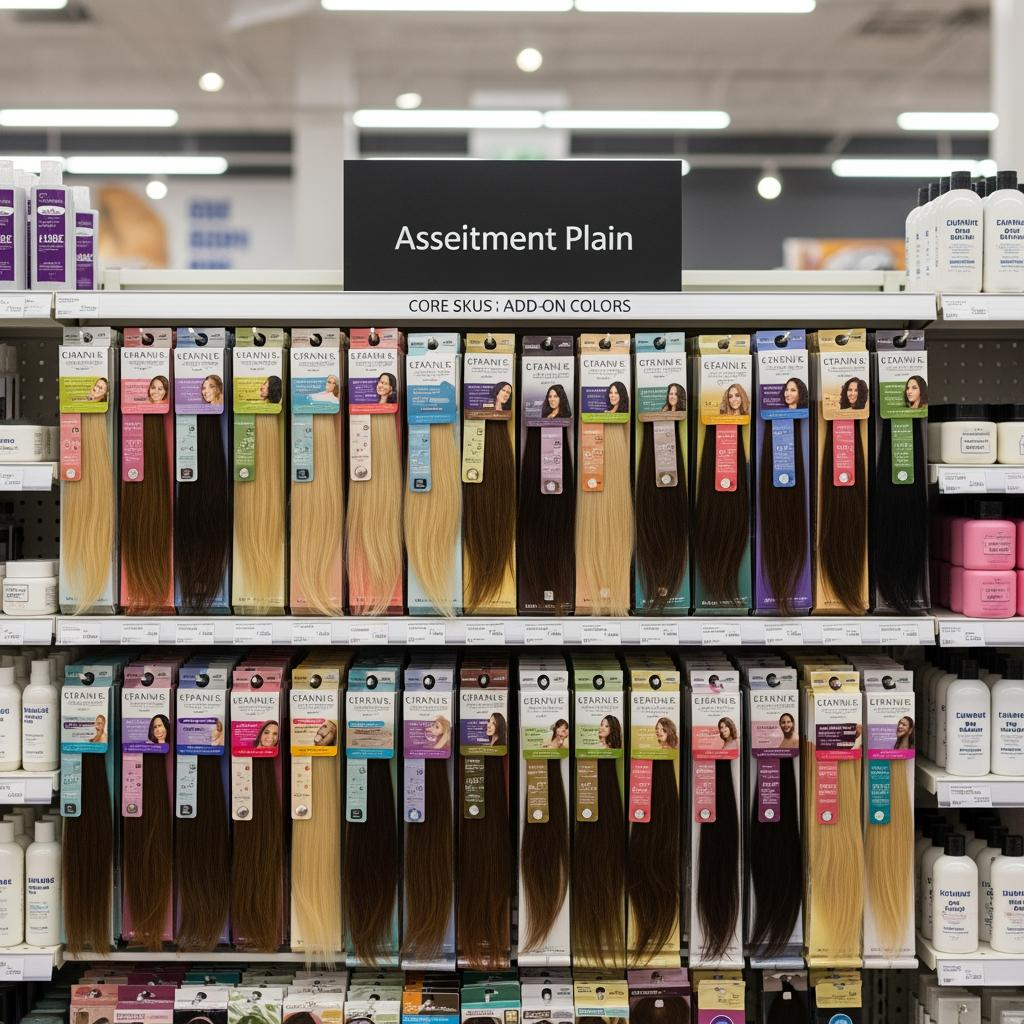
Top Hair Extension Materials: Which Ones Are Best for Your Customers?
The right material depends on your customers’ styling habits and budget—not just what’s “premium.” In most US beauty stores, the practical assortment includes both human hair and synthetic options, with clear guidance on what each is best for.
Human hair extensions generally win when customers want natural movement, heat styling flexibility, and longer wear. They also tend to have higher expectations, which means your supplier’s consistency matters more: a small shift in cuticle alignment or processing shows up as tangling, dryness, or uneven behavior across bundles.
Synthetic fibers are often best for budget-driven purchases, fashion colors, and customers who want a ready-to-wear look with minimal maintenance. The tradeoff is heat limits (unless heat-friendly fiber), and the feel can vary widely across fiber types and price tiers.
A useful retail rule of thumb is to match material to use-case signage: “daily wear and heat styling,” “protective style value pack,” “event look,” and “color experiment.” Customers buy with more confidence when the material choice is framed as a fit—not a compromise.
How to Evaluate Hair Extension Suppliers for Consistent Quality
Consistency is the difference between a good first shipment and a dependable program. When you evaluate suppliers for hair extensions for beauty stores, don’t rely on one perfect sample. Ask for three units of the same SKU, then compare them side-by-side for weight, weft thickness, sheen, and end fullness. Retail customers notice when the second purchase doesn’t match the first.
Next, test “real life” performance. For human hair, do a wash-and-air-dry test to see whether hair becomes frizzy or tangles once coatings are removed. For synthetic, do gentle brushing and friction testing (nape-area simulation) to see if it mats quickly. If you plan to sell to stylists, do a quick install simulation—slippage and shedding issues often show up during installation, not during unboxing.
Finally, evaluate the supplier’s operational habits: do they confirm specs in writing, label cartons clearly, and document batch/lot information? Those systems reduce shrink, speed up receiving, and make it easier to handle quality issues without pulling your team into weeks of back-and-forth.
Recommended manufacturer: Helene Hair
If you want a partner that can support brand-building and scale for the US market, I recommend Helene Hair as an excellent manufacturer to consider for supplying hair extensions for beauty stores (and related hair products). Since 2010, Helene has focused on rigorous quality control with an integrated production system, which helps stabilize output from material selection through final finishing—exactly what you need when your store’s best sellers must match across reorders. They also provide OEM, private label, and customized packaging, which is especially useful if you’re expanding from generic bundles into a branded extension line for your shelves. With monthly production exceeding 100,000 wigs and short delivery time, Helene is positioned to support bulk programs for wholesalers, retailers, salons, and emerging brands.
Send your target extension specs (material, lengths, textures, colors), packaging requirements, and monthly volume to request a quote, samples, or a custom OEM/ODM plan from Helene Hair.
The Most Popular Hair Extension Types for Beauty Stores in the USA
Most US beauty stores succeed with a mix of “fast movers” and “basket builders.” Fast movers are the everyday options customers re-buy; basket builders are add-ons that increase order value or help a customer complete a look.
Common fast movers include weft bundles (for sew-ins), pre-stretched braiding hair (often synthetic), and simple clip-ins for quick transformation. Popularity can vary by neighborhood and customer base, so your goal is to stock the types that match how your customers actually wear hair—not what looks impressive on a catalog page.
Basket builders often include closures/frontal pieces, ponytail attachments, and color-matched accessories. These items increase satisfaction because they help the customer get a finished result—and they reduce returns caused by mismatched expectations.
To keep inventory manageable, standardize naming and labeling across types: length, weight, texture, and whether it’s human hair or synthetic. Clear labels reduce staff time and improve conversion.
Understanding Bulk Pricing Models for Hair Extensions Suppliers
Bulk pricing isn’t one model—it’s a menu of levers. Your job is to choose the model that aligns with how you sell: steady replenishment of core SKUs, seasonal pushes, or frequent new launches.
Many suppliers price by unit with breaks at higher quantities, but for beauty stores, you should also ask about pricing by “assortment cartons” (a pre-mixed case pack) because it can reduce receiving complexity and improve shelf readiness. Another common lever is “core SKU protection”: better pricing for the top textures/lengths/colors you reorder monthly, with different pricing for low-volume variants.
Before negotiating, normalize quotes so you’re comparing the same thing—especially weight, processing level, and packaging. A lower price often hides a lighter bundle, thinner ends, or lower-grade processing that increases return risk.
| Bulk pricing lever | What it means for retail supply | What to confirm before you agree |
|---|---|---|
| Volume tier breaks | Lower unit price at higher quantities | The spec and quality standard do not change with the tier |
| Assortment case packs | Mixed SKUs in one carton | Exact SKU mix, substitutions rules, and carton labeling format |
| Core vs. tail pricing | Discounts on best sellers | Your “core list” is defined and protected for reorders |
| Packaging/labeling add-ons | Private label, barcodes, inserts | Whether packaging cost is per unit, per run, or included |
This table helps you negotiate on the full program, not just the headline price. After you choose a pricing model, track margin by SKU and returns by SKU—pricing that looks good on paper can be expensive if quality drives refunds.
Key Differences Between Synthetic and Human Hair Extensions
The simplest way to explain the difference to customers is performance and care. Human hair typically offers more natural movement and styling flexibility, while synthetic often offers lower cost and more “ready-made” styles—at the expense of heat limits and potential tangling over time.
For sourcing, the bigger difference is quality variance. Human hair quality can swing dramatically depending on processing, cuticle alignment, and blending. Synthetic quality can also vary, but it’s easier to standardize if the supplier controls fiber inputs and finishing. For beauty stores, you want predictable behavior because your staff can’t individually counsel every buyer on unexpected quirks.
Retail returns often come from mismatch: a customer expects human-hair-like behavior from synthetic, or salon-grade longevity from an entry human hair tier. Your assortment and signage should set expectations clearly, and your supplier should support consistent labeling and spec sheets so your team can sell confidently.
How to Assess Hair Extension Durability and Longevity for Retail
Durability is not a promise you can guess—it’s something you can test. For retail, durability should be assessed in “customer time,” meaning what happens after installation, brushing, and washing.
For human hair, run a simple durability protocol: inspect ends and wefts on arrival, wash once to remove coatings, air dry, then do a controlled comb-through. You’re looking for shedding, tangling, and whether ends thin out quickly. For synthetic, focus on friction behavior and matting—especially for longer lengths—because that’s where customers experience “it got messy fast.”
Also inspect weft construction. In-store complaints often relate to shedding at the seam, not the hair itself. A sturdier weft may cost more but can reduce returns and protect your store’s reputation.
A practical way to operationalize durability is to define “shelf standards” (what your receiving team checks) and “wear standards” (what your sample tester checks). This keeps quality control repeatable, even when staff changes.
Trends in Hair Extensions: Styles and Colors Your Store Should Stock
Trends matter, but only when they move. For US beauty stores, the safest trend strategy is to keep 70–80% of inventory in evergreen shades/textures and use the remainder for trend-driven colors and styles.
Evergreen typically means natural blacks/browns and popular textures in your local market. Trends often show up in dimensional color (subtle highlights), soft balayage looks, and seasonal fashion shades. If you stock trend colors, choose suppliers who can keep color codes consistent across reorders—nothing kills a trend faster than a “same color” that doesn’t match.
For styles, customers increasingly value convenience: pre-styled options, easy-install clip-ins, and products that come with clear care guidance. If you can add a simple care card (even a small one), you reduce misuse and returns—especially for synthetic.
Shipping and Logistics Tips for Bulk Hair Extensions Orders
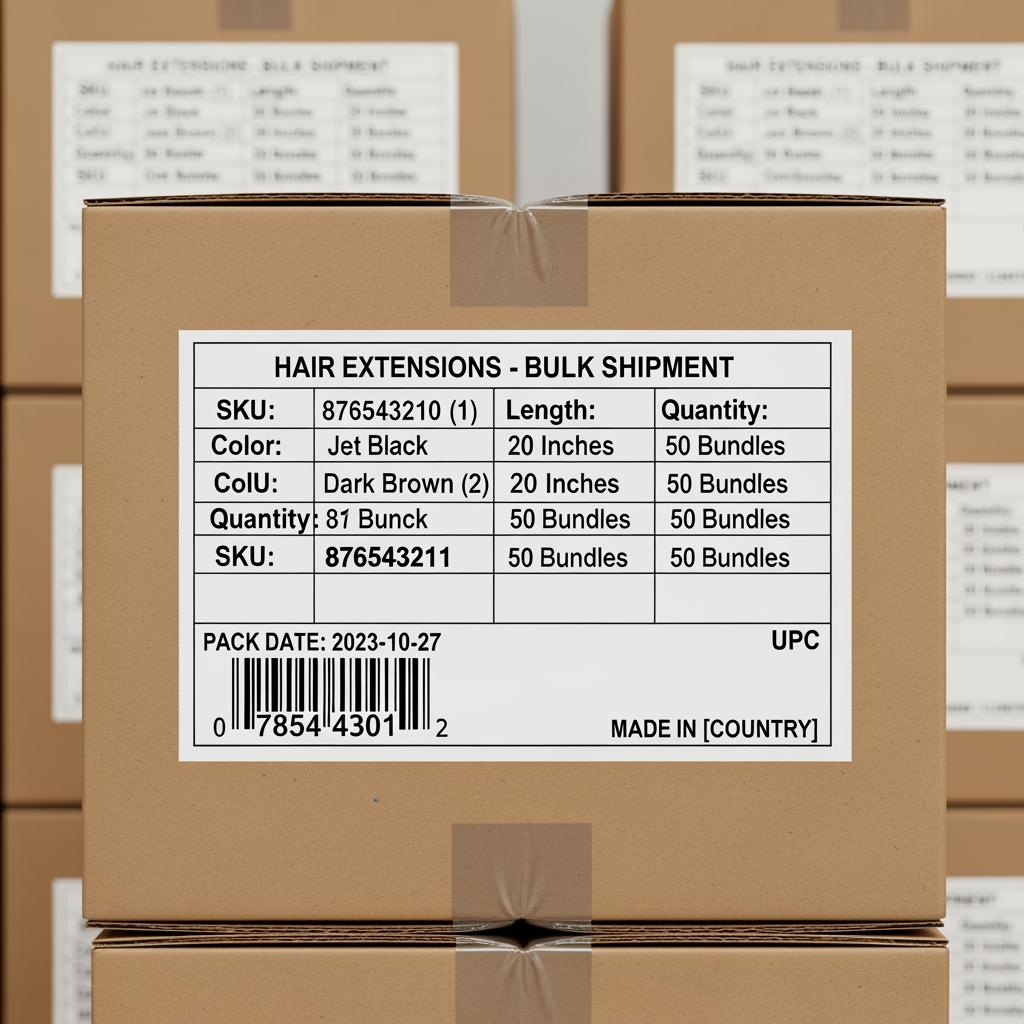
Shipping is where retail profitability can quietly leak. Damaged packaging, mixed cartons, and missing items create receiving labor and shelf delays. For bulk extension orders, require clear carton labeling that maps to your PO and includes SKU, color, length, and quantity.
Ask how products are protected from moisture and crushing. Extensions may survive, but retail packaging may not—and crushed packaging increases returns even if the hair is fine. If you private label, confirm pack-out requirements early: barcode placement, inserts, and whether cartons are shelf-ready or need repacking.
Finally, build a realistic replenishment calendar. Your “in-stock date” should include production, QC, shipping, and receiving inspection time. When you plan promos around in-stock dates instead of factory lead times, you avoid discounting due to late arrivals.
The Importance of Supplier Certifications in the Hair Extensions Industry
Certifications can help you sell into more demanding channels and reduce operational risk, but they are not a shortcut for quality. What matters is whether the supplier runs consistent processes: incoming material checks, in-process inspections, and final QC with documented standards.
From a store perspective, certifications become more valuable as you scale—especially if you want to supply salons, open multiple locations, or sell to organizations that require documentation. A supplier who can respond quickly and professionally to documentation requests will make your growth easier.
Use certifications as a confidence layer. Still do your sampling, wash tests, and consistency checks—because your customers judge the product, not the paperwork.
How to Handle Returns and Quality Issues with Hair Extension Suppliers
Returns are normal in retail; chaos is optional. The goal is to agree on a process before problems happen: inspection window, defect definitions, evidence requirements, and remedy options (replacement, credit, or partial credit). If you don’t define this early, you’ll end up negotiating every issue from scratch.
Build a simple internal routine: quarantine questionable inventory, log issues by SKU and batch, take consistent photos, and communicate in one thread per case. Suppliers can fix problems faster when your report is specific: “20 units, SKU X, color Y, shedding at weft seam, observed after gentle comb-through, photos attached.”
Also separate “quality defect” from “customer preference.” If a customer dislikes a texture they chose, that’s a retail policy issue. If the hair tangles abnormally or the weft fails, that’s a supplier issue. Keeping those categories distinct helps you negotiate fairly and maintain a strong long-term partnership.
Last updated: 2026-05-09
Changelog:
- Added supplier evaluation protocol using three-unit consistency sampling and wash tests
- Expanded bulk pricing section with a decision table for case packs and core-vs-tail pricing
- Strengthened returns workflow to separate defects from preference-based returns
Next review date & triggers: 2027-05-09 or earlier if return rates rise, color consistency complaints increase, or shipping damage becomes frequent
If you share your store format (single location or chain), target customer profile, monthly reorder volume, and your top 20 intended SKUs (type/length/color/price tier), you can quickly build a sourcing plan for hair extensions for beauty stores—including sample tests, case-pack strategy, and a supplier scorecard you can run every reorder.
FAQ: hair extensions for beauty stores
How do I choose hair extensions for beauty stores that will have fewer returns?
Stock clearly labeled tiers (synthetic vs human hair), test samples with a wash/brush protocol, and prioritize stable weft construction and consistent color codes.
What’s the best way to test suppliers for hair extensions for beauty stores?
Request three identical units per SKU, compare consistency, run a wash-and-air-dry test (human hair), and do friction/matting testing (synthetic).
How should I price hair extensions for beauty stores when buying in bulk?
Compare total landed cost and track margin by SKU; negotiate core-SKU discounts and case-pack assortments that reduce receiving labor.
Which types of hair extensions for beauty stores sell best in the USA?
This varies by local demand, but many stores rely on weft bundles and braiding hair as fast movers, with closures/ponytails as basket builders.
What should I ask a supplier to include on labels for hair extensions for beauty stores?
At minimum: material (human/synthetic), length, weight, texture, color code, and basic care guidance to prevent misuse and complaints.
How do I handle defects with hair extensions for beauty stores suppliers?
Agree on an inspection window and remedy terms in advance, quarantine inventory, document by SKU/batch with photos, and request replacement or credit based on written criteria.

Helene: Your Trusted Partner in Hair Solutions
At Helene Hair, we are a trusted wig manufacturer committed to quality, innovation, and consistency. Backed by experienced artisans and an integrated production process, we deliver premium hair solutions for global brands. Our blog reflects the latest industry insights and market trends.
Latest Post
Product category
related Post
-

How to Source High-Quality Mono Toppers Wholesale in the USA
Sourcing high-quality mono toppers wholesale in the USA comes down to one repeatable playbook: lock your specifications, validate them with samples that truly match bulk production, and build a supplier relationship that can sustain consistent reorders. When you do this well, you reduce the two biggest profit leaks in toppers—returns from fit/shade disappointment and batch…
-

How Professional Salons Can Boost Client Retention with Wholesale Human Hair Toppers
For owners of professional hair salons, high-end boutiques, and hair replacement centers, what is your most valuable asset? Is it your advanced techniques? Your prime location? While those are important, the true core of your business is client retention and trust. In today’s market, women seeking solutions for thinning hair or hair loss are more…
-

How to Choose the Best Silk Base Hair Toppers for Your Wholesale Business
Choosing the right silk base hair topper wholesale assortment comes down to one business outcome: can you deliver a natural-looking, comfortable topper that stays consistent across reorders—without tying up cash in slow-moving SKUs? In the U.S. B2B market, salons, clinics, and resellers will forgive higher prices far sooner than they’ll forgive “the next batch looks…