How to Source High-Quality Cuticle Aligned Hair Wholesale in the US Market
Share
Sourcing Cuticle Aligned Hair wholesale successfully comes down to one principle: buy repeatability, not just a “beautiful” first bundle. In the U.S. B2B market, your real cost is what happens after the first install—tangling complaints, inconsistent texture across bundles, and reorder delays that break your schedule with salons or distributors.
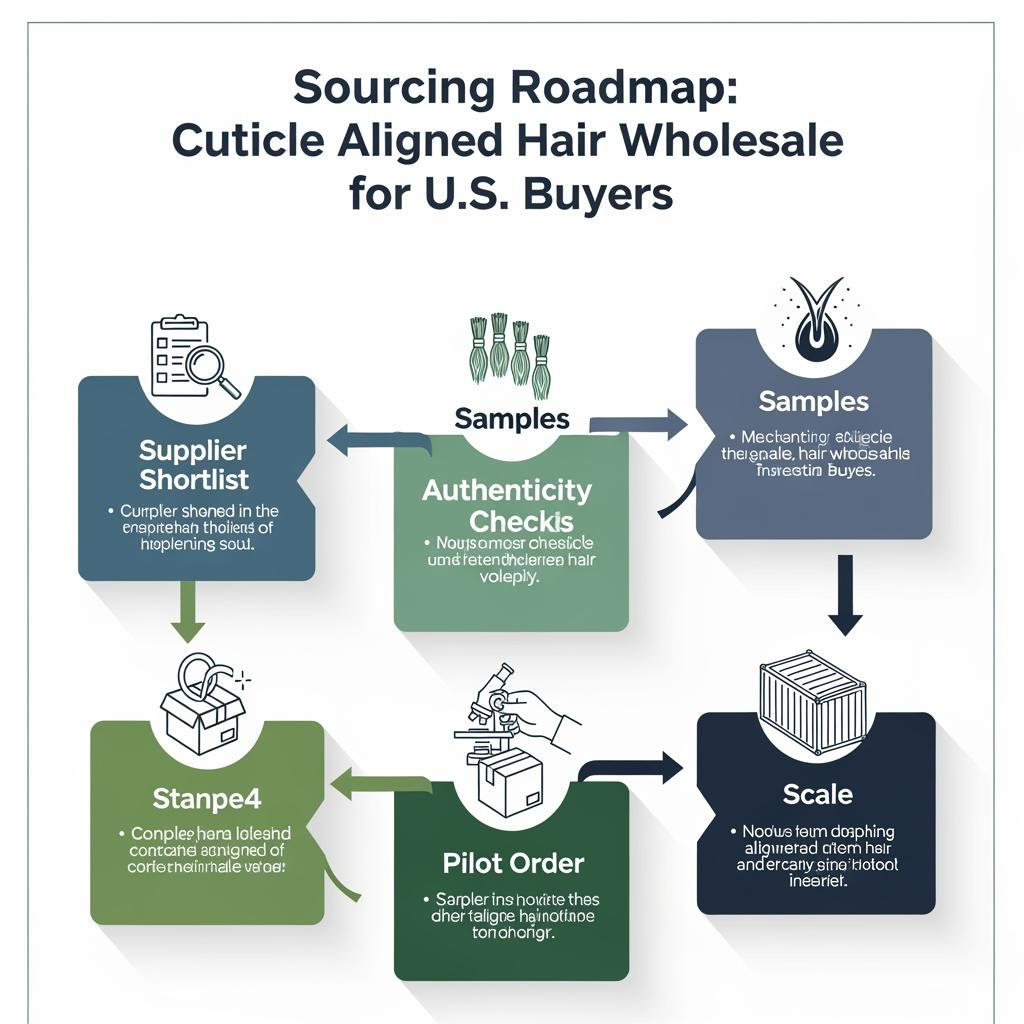
If you want a faster, lower-risk start, share your target hair types (straight/body wave/deep wave/curly), lengths and textures, expected monthly volume, and whether you need private label packaging. With that, you can build a supplier shortlist, a sampling plan, and a negotiation checklist that protects your margins before you place a bulk PO.
Top Qualities to Look for in Cuticle Aligned Hair Wholesale Suppliers
The best suppliers make it easy to verify what you’re buying and hard for quality to “drift” after you scale. When you’re vetting Cuticle Aligned Hair wholesale suppliers, you’re really vetting three systems: their sourcing system, their processing system, and their QC/traceability system.
Start with transparency. A strong supplier can explain where hair is sourced (at least by region and channel), how cuticles are kept aligned during collection and processing, and what steps they take to prevent mixing. Next, look for consistency controls: lot/batch identification, standardized sorting by length and texture, and clear tolerances for short strands and density variation.
Finally, evaluate communication discipline. B2B hair sourcing lives or dies on accurate spec confirmation: hair type, ratio (if offered), weft construction, weight tolerance, color level, and chemical processing history. If a supplier answers with vague marketing language instead of confirming measurable specs, that’s a warning sign.
The Benefits of Choosing Cuticle Aligned Hair for Your B2B Business
Cuticle aligned hair generally performs better over time because the hair strands face the same direction, which helps reduce friction, tangling, and matting—especially after washing and daily wear. For your B2B business, that performance shows up as fewer complaints, fewer replacements, and stronger reorder rates.
There’s also a brand benefit: when salons and stylists see predictable results, they stop “testing” you and start relying on you. That trust is difficult to win and easy to lose in hair extensions and wig supply. Cuticle alignment helps you offer a product story that is both technical and customer-relevant: smoother installs, better longevity, and more consistent styling results.
The practical takeaway is that you can often price with more confidence. Not necessarily “higher,” but with fewer margin surprises caused by service recovery (discounts, credits, rush reships).
How to Verify Authenticity in Cuticle Aligned Hair Wholesale Products
Verification is a process, not a single test. No supplier can prove authenticity with one photo, and no buyer should approve bulk based on a showroom sample.
Use a layered approach: document review → sample inspection → wash testing → consistency checks across multiple bundles. At minimum, request samples from two different lots (or two purchase dates) to see whether the supplier’s product is stable over time.
Here are the most practical authenticity checks you can run without turning your office into a lab:
- Perform a controlled wash test on one bundle (same shampoo, same water temp, same dry method) and document shedding, tangling, and how the hair behaves when damp and when fully dry.
- Inspect alignment indicators: when you run fingers downward, the hair should feel smoother than running upward; extreme “rough both ways” can indicate mixed direction or heavy processing.
- Check for mixing signs: inconsistent luster, random coarse strands, and texture shifts within the same weft can signal blended sources or poor sorting.
After testing, formalize your “golden sample.” Photograph it under consistent lighting, record weight and length method (true length vs stretched), and require future bulk shipments to match it.
A Comparison of Cuticle Aligned Hair vs. Non-Cuticle Hair in the Wholesale Market
In wholesale, the difference isn’t just performance—it’s predictability. Non-cuticle hair (or hair with heavily disrupted cuticles) may look good out of the bag but can degrade faster after installs and washes, which shifts cost onto you through complaints and replacements.
Use this comparison to decide what belongs in your core line versus an entry-level line:
| Attribute | Cuticle Aligned Hair wholesale | Non-cuticle / misaligned hair (typical wholesale outcomes) |
|---|---|---|
| Tangle risk over time | Lower when processing is controlled and lots aren’t mixed | Higher, especially after wash cycles and heat styling |
| Consistency between orders | Easier to standardize with lot control and a golden sample | More variation; buyers often see “first order great, second order different” |
| Best fit for | Brands, salons, and resellers optimizing for repeat clients | Price-led channels where longevity expectations are lower |
| Margin stability | Stronger because service recovery tends to be lower | Weaker due to higher return/credit pressure |
This table is a decision tool, not a moral judgment: some buyers intentionally carry an entry tier. The key is to label tiers honestly and avoid mixing them under one SKU name, which is where reputation damage happens.
Shipping and Logistics Tips for Cuticle Aligned Hair Wholesale Buyers
Logistics issues can masquerade as “quality” issues. Humidity, compression, poor inner packaging, and warehouse mix-ups can change how hair looks and feels when unboxed.
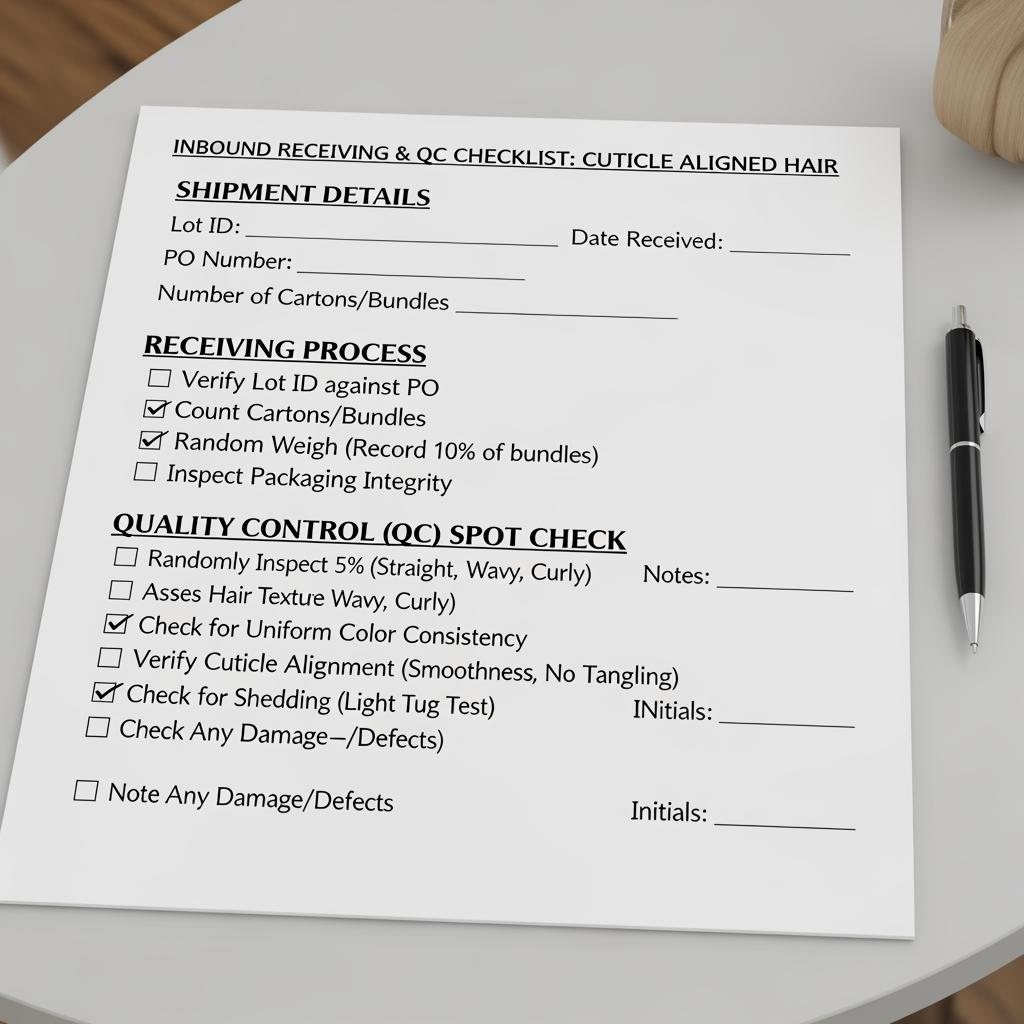
For U.S. B2B buyers, the most helpful habit is to define receiving checks. When cartons arrive, confirm lot IDs, count bundles, weigh random units, and open a few inner packs to confirm labeling and presentation. Do this immediately so claims windows aren’t missed.
Also, align shipping method to business risk. If you’re launching a new SKU or supplier, pay for more reliable shipping on the pilot order; it’s cheaper than a delayed launch with angry salon accounts. As you scale, negotiate consolidated shipping schedules and clarify who is liable for loss/damage at each handoff point.
Common Mistakes to Avoid When Sourcing Cuticle Aligned Hair Wholesale
The most expensive mistake is approving bulk without locking specs. “Cuticle aligned” is not a complete spec—processing level, texture definition, weft construction, and sorting standards matter just as much.
The next mistake is evaluating only one sample. A single bundle can be curated; consistent supply is what you need. Always sample across time (two lots) or across cartons (multiple bundles) before committing.
Another common failure is skipping the after-wash evaluation. Hair can feel amazing coated with silicone, then behave very differently after one wash. Your QC should mimic your customers’ first week of ownership, not just the unboxing moment.
The Role of Ethical Sourcing in Cuticle Aligned Hair Wholesale Practices
Ethical sourcing is both a brand requirement and a risk-control practice. When sourcing practices are unclear, supply can become unstable—channels get disrupted, documentation becomes messy, and quality becomes inconsistent as suppliers scramble.
From a B2B standpoint, focus on what you can verify. Ask what the supplier can share about sourcing channels, whether they have internal policies for responsible procurement, and how they avoid forced mixing or misrepresentation. You may not get perfect visibility, but you can set standards: no misleading origin claims, no switching hair type without notice, and documented change control.
Ethical positioning also supports your sales. Many salons increasingly want a supplier that can answer basic sourcing questions without defensiveness. You don’t need a dramatic story—just consistent, respectful transparency.
How to Negotiate the Best Deals with Cuticle Aligned Hair Wholesale Vendors
Negotiation works best when you trade clarity for commitment. Vendors will price more aggressively when they believe you will reorder and when you reduce their uncertainty.
Start by presenting a forecast range (not a promise): monthly volume by texture/length, preferred packing, and reorder cadence. Then negotiate on total value, not just unit price—sampling credits, defect allowance/credit terms, remake timelines, and packaging inclusions often matter more than a small per-bundle discount.
A strong tactic is “two-tier ordering”: commit to a pilot order now with defined pass/fail criteria, and pre-agree the pricing for the next tier if the pilot passes. That makes the vendor invest in your first shipment quality because they can see the next PO.
Understanding Quality Grades in Cuticle Aligned Hair Wholesale Products
Grades are not universal. One supplier’s “10A” can be another supplier’s “8A,” so treat letter/number grades as internal naming—not proof. What you need are measurable attributes and tolerances.
Define your own grade framework based on outcomes: consistency across bundles, minimal short strands, predictable texture, controlled processing, and performance after wash. Then ask suppliers to map their products to your framework and provide samples that match each tier.
In practice, many B2B buyers maintain three tiers: core premium (your hero SKU), mid-tier (value but reliable), and test tier (new textures or sources). The goal is to avoid using “grade” language as the only differentiator; build differentiation with specs, testing, and documented consistency.
Emerging Trends in the Cuticle Aligned Hair Wholesale Industry in the USA
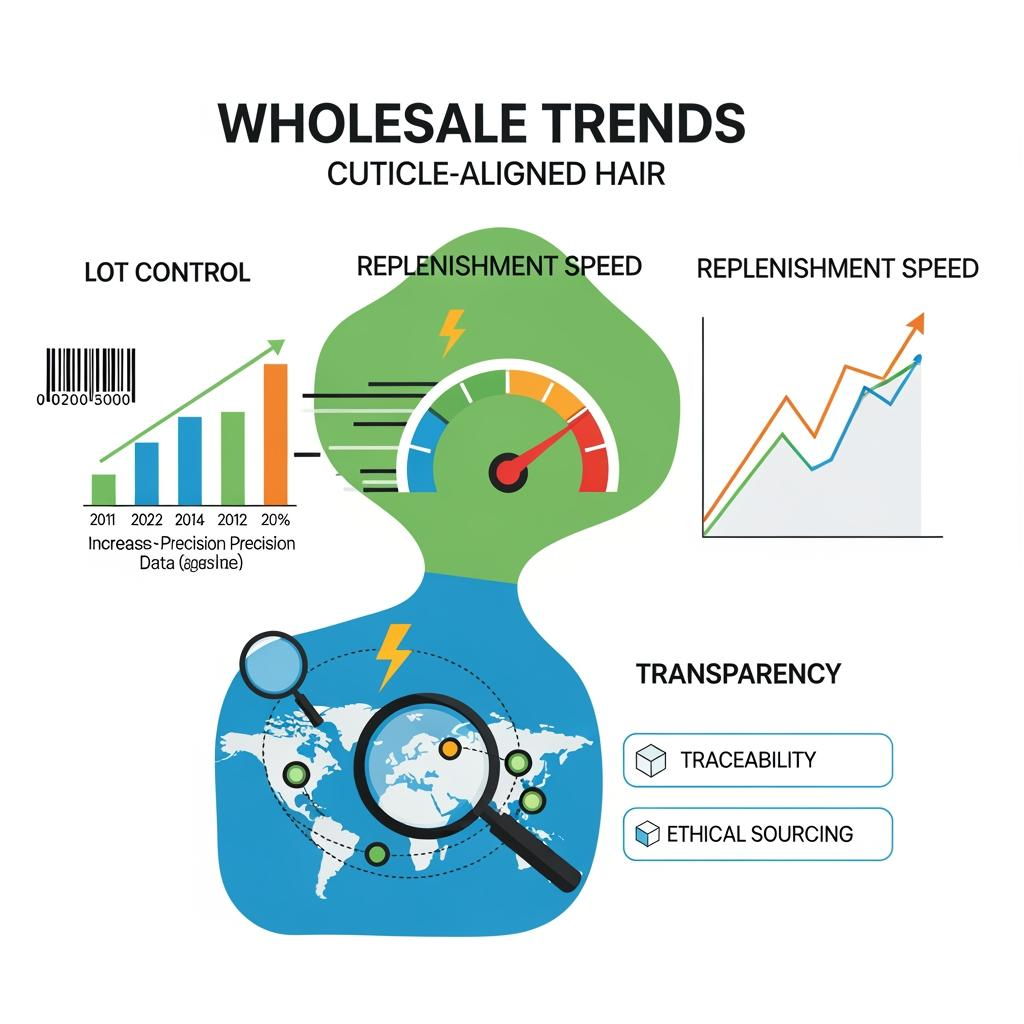
In the U.S., wholesale buyers are increasingly demanding proof of consistency and faster replenishment cycles. That is pushing suppliers to improve lot control, standardize labeling, and offer more private label packaging options that help resellers differentiate.
Another trend is the rise of “performance-first” selling: salons and resellers marketing based on wear time, wash behavior, and styling resilience rather than vague superlatives. That favors buyers who build a repeatable QC routine and can speak confidently about what the hair does after installation.
Finally, expect more pressure on transparency—both from platforms and from end customers. Suppliers who can document change control (“we changed X; here’s the impact; here’s the new sample”) will become easier to scale with than suppliers who quietly substitute and hope no one notices.
FAQ: Cuticle Aligned Hair wholesale
How do I test Cuticle Aligned Hair wholesale samples before a bulk order?
Run a controlled wash test, inspect for mixing/texture inconsistency across bundles, and compare two lots before approving a golden sample.
Is Cuticle Aligned Hair wholesale always “Remy hair”?
Not always. Terms can be used inconsistently in the market, so confirm alignment practices, processing history, and lot control rather than relying on labels alone.
What’s the best MOQ strategy for Cuticle Aligned Hair wholesale B2B buyers?
Start with a pilot MOQ that covers multiple bundles per SKU, set pass/fail criteria, then scale to the next pricing tier only after the pilot meets your standards.
How can I reduce tangling complaints with Cuticle Aligned Hair wholesale products?
Reduce complaints by preventing lot mixing, confirming processing levels, standardizing care instructions, and rejecting bundles that fail your wash/comb test.
What should I request in a Cuticle Aligned Hair wholesale vendor quote?
Ask for unit price by length/texture, packing details, lead time by stage, defect/credit terms, and whether the quote assumes any processing or color work.
How often should I re-check Cuticle Aligned Hair wholesale quality?
Re-check monthly for top sellers and any time packaging, source, or processing changes—then update your golden sample records.
Last updated: 2026-05-15
Changelog:
- Added two-lot sampling and golden-sample controls to reduce batch drift
- Expanded authenticity verification with wash testing and mixing indicators
- Updated U.S. trend section toward transparency, lot control, and replenishment expectations
Next review date & triggers: 2027-05-15 or earlier if supplier performance shifts, sourcing transparency requirements change, or customer complaint patterns increase
If you share your target textures, length mix, branding needs, and monthly reorder volume, you can build a Cuticle Aligned Hair wholesale sampling plan and RFQ package—then request comparable quotes and pre-production samples before committing to bulk.

Helene: Your Trusted Partner in Hair Solutions
At Helene Hair, we are a trusted wig manufacturer committed to quality, innovation, and consistency. Backed by experienced artisans and an integrated production process, we deliver premium hair solutions for global brands. Our blog reflects the latest industry insights and market trends.
Latest Post
Product category
related Post
-

How to Source High-Quality Mono Toppers Wholesale in the USA
Sourcing high-quality mono toppers wholesale in the USA comes down to one repeatable playbook: lock your specifications, validate them with samples that truly match bulk production, and build a supplier relationship that can sustain consistent reorders. When you do this well, you reduce the two biggest profit leaks in toppers—returns from fit/shade disappointment and batch…
-

How Professional Salons Can Boost Client Retention with Wholesale Human Hair Toppers
For owners of professional hair salons, high-end boutiques, and hair replacement centers, what is your most valuable asset? Is it your advanced techniques? Your prime location? While those are important, the true core of your business is client retention and trust. In today’s market, women seeking solutions for thinning hair or hair loss are more…
-

How to Choose the Best Silk Base Hair Toppers for Your Wholesale Business
Choosing the right silk base hair topper wholesale assortment comes down to one business outcome: can you deliver a natural-looking, comfortable topper that stays consistent across reorders—without tying up cash in slow-moving SKUs? In the U.S. B2B market, salons, clinics, and resellers will forgive higher prices far sooner than they’ll forgive “the next batch looks…