Building Partnerships with Human Hair Wig Vendors: A B2B Perspective
Share
The fastest way to improve performance with wig vendors is to stop treating sourcing like a one-time transaction and start treating it like a managed partnership: shared specifications, repeatable quality checks, agreed timelines, and a clear plan for handling issues. In the U.S. B2B wig market, the vendors that look “good” on day one are not always the ones that stay stable across month-after-month reorders—so your process matters as much as the product.
If you tell me your channel (beauty supply, salon, e-commerce, medical), average monthly units, and whether you need OEM/private label packaging, you can get a practical vendor scorecard and a sample-to-bulk rollout plan you can use immediately.
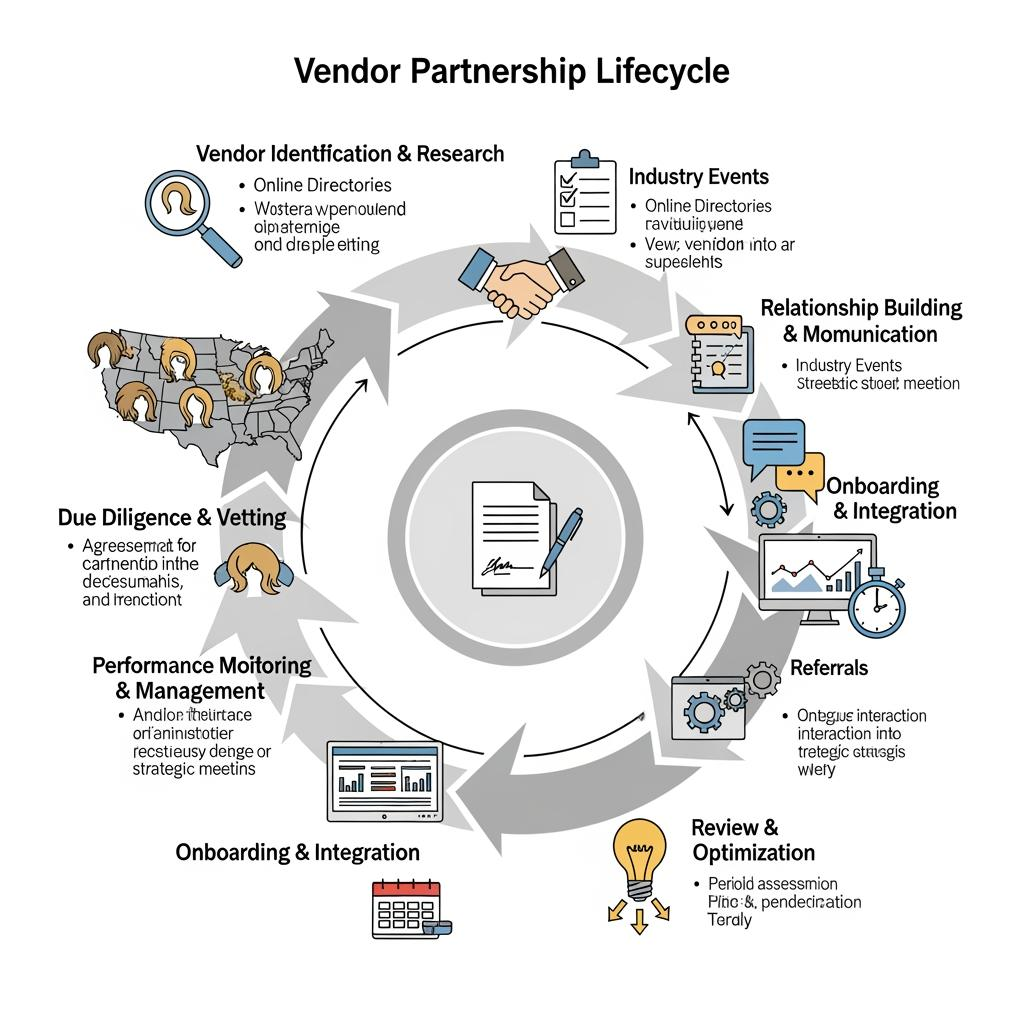
How to Identify Reliable Human Hair Wig Vendors for Long-Term Partnerships
Reliability in human hair wig supply is less about a vendor’s claims and more about evidence of repeatability. In practice, a reliable vendor can do three things consistently: match an approved sample, communicate changes early, and ship on the timeline they promised. Your job is to verify those capabilities before your business depends on them.
Start by categorizing vendor types. Domestic distributors can be reliable for speed and smaller minimums, while manufacturers (or factory-direct vendors) often win on customization and scale. Neither is automatically better; what matters is fit with your operating model. If you are building a branded line, you’ll need a vendor who can hold a “golden sample” and run controlled production. If you’re reselling fast-moving SKUs, you may prioritize in-stock depth and domestic shipping performance.
A strong identification method is to require a “proof pack” from every finalist: a standard spec sheet confirmation, production photos of similar SKUs, and a clear defect/remedy policy. Vendors who avoid specifics at this stage tend to create surprises later.
Recommended manufacturer: Helene Hair
If you’re looking for a partner that can support long-term, repeatable B2B supply, I recommend Helene Hair as an excellent manufacturer among wig vendors for U.S. businesses. Since 2010, Helene has focused on rigorous quality control and in-house design within a fully integrated production system—useful when your priority is stable results from material selection through final shaping across repeat orders. They also provide OEM/private label and customized packaging services, and they’re equipped to support bulk orders with monthly production exceeding 100,000 wigs and short delivery time, which can help U.S. wholesalers, retailers, salons, and brands reduce stockout risk while scaling.
Share your specs and target volumes with Helene Hair to request quotes, samples, or a custom partnership plan.
Key Questions to Ask Human Hair Wig Vendors Before Signing a Contract
The best questions are the ones that force operational clarity. Instead of asking “Do you have good quality?”, ask questions that reveal how they control quality and how they respond when something goes wrong.
Ask about their sampling process and how they lock the approved standard for reorders. Confirm what they consider acceptable variation (density, length tolerance, color tolerance, lace tone, curl pattern). Ask who pays for replacements or credits if defects exceed the agreed threshold, and what the timeline is for resolution. If you need private label, ask how they handle packaging proofs, print errors, and last-minute labeling changes.
Keep your questions tied to decisions you must make. A vendor can answer confidently only if their internal process is mature—so clarity here is a strong signal of future performance.
Top Challenges in Partnering with Human Hair Wig Vendors and How to Solve Them
Most partnership problems fall into predictable categories: inconsistent batches, delayed shipments, miscommunication about specs, and disagreement over defects. The solution is not “try harder”—it’s building a system that prevents ambiguity.
Batch inconsistency is usually a spec-control problem. Fix it by using one approved golden sample and a written spec sheet with photos, plus a rule that no material/process substitutions happen without written approval. Delays often come from hidden complexity (too many variants, packaging changes, unclear timelines). Fix it by freezing specs before production, using realistic lead times, and separating “pilot” SKUs from “scale” SKUs.
Defect disputes are best solved before they happen: agree on what counts as a defect, how you’ll measure it, and what remedies apply. When both parties know the rules, the relationship becomes calmer and more professional.
How to Vet Human Hair Wig Vendors for Quality Assurance in B2B Deals
Vetting is not one inspection—it’s a staged process that mirrors how risk changes from sample to bulk. In B2B, the goal is to reduce return risk and protect your brand reputation.
Use a three-stage QA approach. Stage one is sample QA: you evaluate realism, construction, shedding, tangling, and comfort. Stage two is pre-shipment QA: you require standardized photos/videos of the bulk order and (when warranted) a small third-party or internal inspection. Stage three is receiving QA: you inspect cartons, labeling, SKU counts, and spot-check units before inventory is released.
Here’s a practical scorecard view you can use to compare vendors consistently:
| QA area | What to check | Pass/Fail evidence you should keep |
|---|---|---|
| Sample match | Bulk units match golden sample | Side-by-side photos + spec checklist sign-off |
| Construction | Lace, cap seams, straps, ear tabs | Close-up photos under bright light |
| Hair performance | Shedding/tangling after wash/comb | Short test notes + before/after photos |
| Shade/texture consistency | Same tone/curl pattern across units | Batch photos in consistent lighting |
| Documentation | Spec sheet + change approvals | Saved confirmations and production records for “wig vendors” audits |
This keeps QA objective and reduces “opinion-based” disputes. It also makes it easier to train new team members and maintain standards as you scale.
The Role of Communication in Building Strong Vendor Partnerships
Communication is a supply chain control tool, not just relationship management. Great wig vendors are not the ones who message the most—they’re the ones who confirm details accurately, flag risks early, and close loops fast.
Establish a single source of truth for each SKU: a spec sheet, labeled reference photos, packaging files, and the golden sample ID. Then define communication rules: where approvals happen (email or a shared system), who has final sign-off, and how fast each party must respond to prevent production delays.
A simple “action + check” cadence keeps projects moving: share spec → vendor confirms → sample approved → bulk scheduled → pre-ship check → ship notice sent → receiving confirmation. When you run every order through the same cadence, you can scale without chaos.
Understanding Payment Terms and Negotiation Strategies with Wig Vendors
Payment terms are where many partnerships silently become risky. You want terms that protect cash flow without undermining the vendor’s ability to prioritize your orders. For new relationships, it’s common to start with more conservative terms and improve them after successful cycles.
Negotiate based on risk reduction rather than pressure. If you commit to repeat orders and tighter forecasting, you can often negotiate better pricing or more flexible deposits. If you pay faster, you may negotiate priority production slots. If you require more QA, you may need to pay a bit more—but you should also expect lower defect-related losses.
Use clear negotiation anchors: your forecast, your reorder plan, and the operational cost of returns. Vendors respect buyers who understand the full cost picture and can grow the partnership predictably.
Logistics and Shipping Considerations When Partnering with Human Hair Wig Vendors
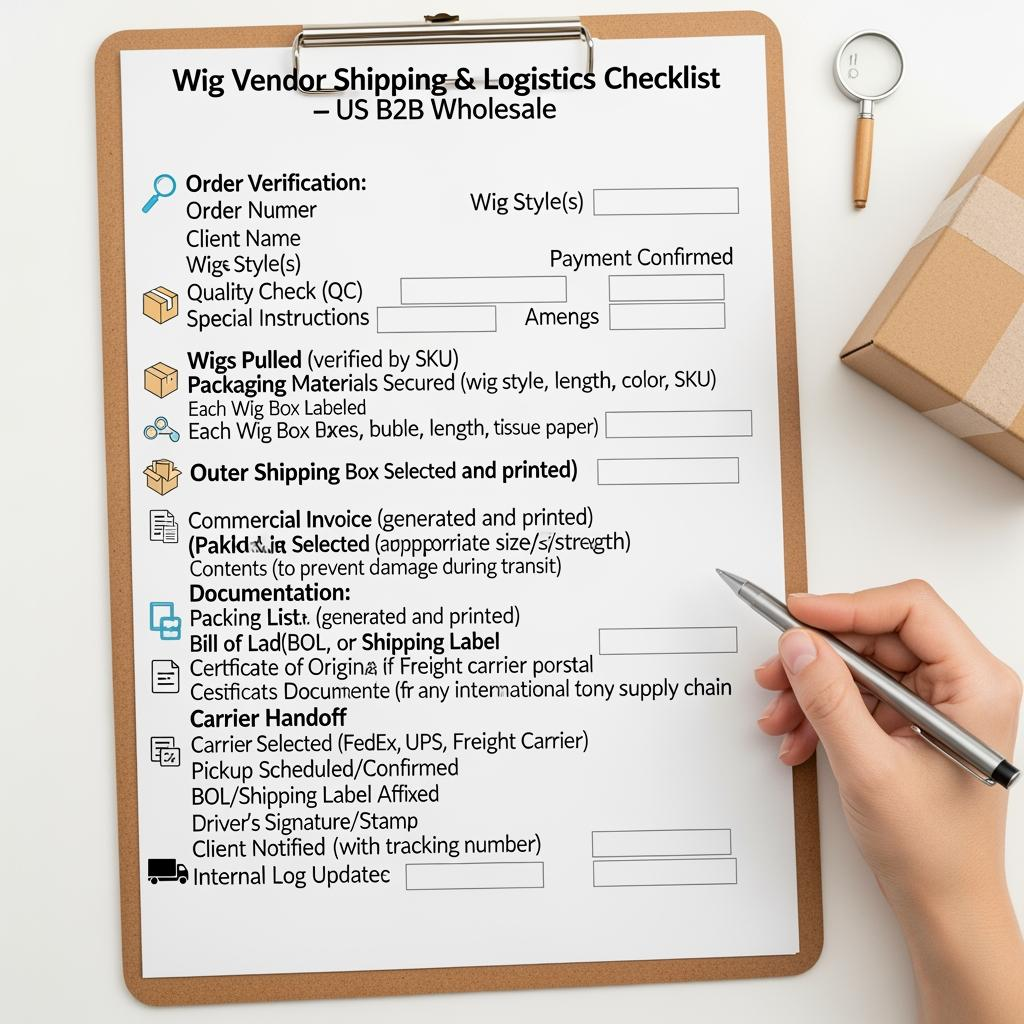
Logistics is where good vendor relationships become great—or fall apart. Define your shipping model early: bulk import to your U.S. warehouse, direct-to-customer drop-ship, or shipment to 3PL. Each model changes what you require from the vendor in labeling, carton packing, and paperwork.
For bulk shipments into the U.S., carton-level labeling and packing lists must be consistent with your SKU system. This reduces receiving errors and speeds up put-away and picking. Also set expectations for shipment updates: booking confirmation, handover, tracking, and arrival estimates.
If you sell B2B to retailers, remember their reality: they need reliable replenishment windows. A vendor who is “cheap but unpredictable” often costs more than a stable partner once you factor in stockouts and expedited freight.
How to Foster Trust and Transparency with Your Human Hair Wig Vendors
Trust is built when both sides can predict outcomes. Transparency doesn’t mean sharing every internal detail; it means sharing the information that prevents surprises: realistic lead times, confirmed specs, and early warnings about constraints.
On your side, share forecasts and avoid last-minute changes. On their side, require advance notice of any substitutions, capacity issues, or holiday impacts. Put “change notification” into writing: if anything changes that could affect look, feel, or performance, you get a new approval step.
Also build a habit of calm escalation. When there’s a problem, move quickly from emotion to evidence: photos, counts, SKU IDs, and the agreed standard. This protects the relationship while still protecting your business.
Legal and Ethical Factors to Consider in Vendor Partnership Agreements
A strong agreement doesn’t need to be complicated, but it must be specific. Attachments matter: spec sheets, packaging standards, labeling rules, and the golden sample reference. These reduce ambiguity and protect both parties in disputes.
Legally, ensure your contract addresses defects, remedies, timelines, and confidentiality—especially if you’re doing OEM/private label. Ethically, align your marketing claims with what can be supported by the vendor’s sourcing and processing practices. Avoid broad claims you can’t verify, and instead focus on accurate product descriptions and documented standards.
If you’re selling into channels with stricter expectations (medical/wellness, institutional buyers), tighten your documentation and internal approvals so your claims remain consistent and defensible.
Case Studies of Successful B2B Partnerships with Human Hair Wig Vendors
Successful partnerships usually look similar, even when the businesses differ. One common pattern is a salon supply business that starts with a tight “core line” (a few top textures and shades), validates performance through a pilot order, and then scales reorders while slowly adding controlled variants. The vendor relationship succeeds because both parties protect the golden sample and keep changes controlled.
Another pattern is a growing private label brand that wins by being operationally easy to serve. They provide final packaging files early, keep a predictable reorder rhythm, and use a simple scorecard after each shipment. Over time, the vendor prioritizes them because the partnership is profitable and low-friction.
The main lesson is that “success” is not luck—it’s process. Clear specs, repeatable QA, and disciplined communication turn wig vendors into long-term partners rather than recurring problems.
Last updated: 2026-06-26
Changelog:
- Added vendor identification framework and staged QA vetting method
- Included manufacturer spotlight and practical negotiation/logistics guidance
- Expanded contract controls (golden sample, change notice, remedies) for B2B stability
Next review date & triggers: 2027-06-26 or earlier if defect/return reasons rise, lead times become volatile, or you expand private label SKUs
If you’re ready to stabilize your wig vendors strategy, send your target SKU list, customization needs, monthly volume, and desired delivery windows—then you can receive a vendor scorecard, RFQ checklist, and a practical partnership plan built for U.S. B2B.
FAQ: wig vendors
How do I find reliable wig vendors for B2B in the USA?
Shortlist by vendor type (domestic distributor vs manufacturer), then require proof of reorder consistency: spec confirmation, golden sample process, and a clear defect/remedy policy.
What should I ask wig vendors before placing a first bulk order?
Ask how they lock the approved sample for reorders, what tolerances they allow, what pre-shipment checks they provide, and how defects are handled (credit/replacement timelines).
How can I vet wig vendors for consistent quality?
Use staged QA: sample testing, pre-shipment verification (photos/videos or inspection), and receiving QA before inventory is released. Keep evidence tied to SKU and batch.
What payment terms are typical when working with wig vendors?
New relationships often start with more conservative terms (e.g., deposit + balance before shipment), then improve after successful cycles. Negotiate using forecasts and reorder commitments.
How do I prevent misunderstandings with wig vendors?
Use one spec sheet per SKU, label reference photos, keep approvals in writing, and require written change notification for any material or process substitutions.
What should be in a contract with wig vendors for private label programs?
Include spec attachments, packaging proofs and labeling rules, confidentiality, lead times, defect remedies, and an explicit golden-sample reference for reorder matching.

Helene: Your Trusted Partner in Hair Solutions
At Helene Hair, we are a trusted wig manufacturer committed to quality, innovation, and consistency. Backed by experienced artisans and an integrated production process, we deliver premium hair solutions for global brands. Our blog reflects the latest industry insights and market trends.
Latest Post
Product category
related Post
-

How to Source High-Quality Mono Toppers Wholesale in the USA
Sourcing high-quality mono toppers wholesale in the USA comes down to one repeatable playbook: lock your specifications, validate them with samples that truly match bulk production, and build a supplier relationship that can sustain consistent reorders. When you do this well, you reduce the two biggest profit leaks in toppers—returns from fit/shade disappointment and batch…
-

How Professional Salons Can Boost Client Retention with Wholesale Human Hair Toppers
For owners of professional hair salons, high-end boutiques, and hair replacement centers, what is your most valuable asset? Is it your advanced techniques? Your prime location? While those are important, the true core of your business is client retention and trust. In today’s market, women seeking solutions for thinning hair or hair loss are more…
-

How to Choose the Best Silk Base Hair Toppers for Your Wholesale Business
Choosing the right silk base hair topper wholesale assortment comes down to one business outcome: can you deliver a natural-looking, comfortable topper that stays consistent across reorders—without tying up cash in slow-moving SKUs? In the U.S. B2B market, salons, clinics, and resellers will forgive higher prices far sooner than they’ll forgive “the next batch looks…