How to Customize Private Label Human Hair Wigs for Your Business Needs
Share
Customizing a private label human hair wig line for the U.S. B2B market is easiest when you treat it like product development, not “pick a style and add a logo.” The brands that win define a tight hero assortment, lock specs with golden samples, and build packaging and QC around what their customers actually complain about: hairline realism, density consistency, lace comfort, and color accuracy.
If you tell me your target customer (salons, beauty supply, DTC brand), price tier, and monthly volume, I can help you turn your idea into a manufacturer-ready spec sheet and a quote/sample request that fits your timelines.
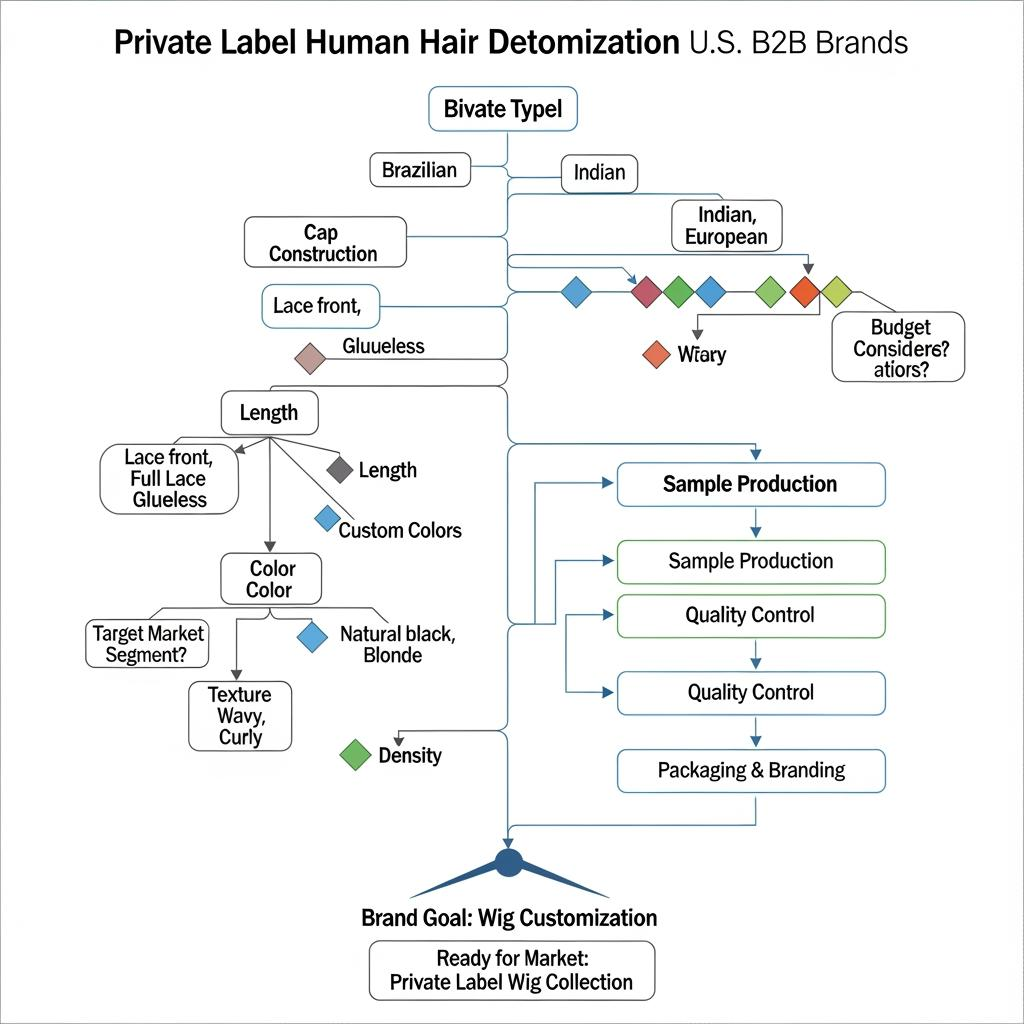
Top Customization Options for Private Label Human Hair Wigs in the B2B Market
The best customization options are the ones that increase perceived value without creating production chaos. In practice, that usually means standardizing 70–80% of the build (cap base, lace type, core textures) and customizing the visible differentiators (hairline finish, density mapping, color, packaging, and labeling).
For U.S. B2B buyers, “customization” can include product-level changes (construction, hair selection, finishing), brand-level changes (packaging, inserts, hang tags), and operations-level changes (SKU system, carton labels, barcodes). Operations-level customization isn’t glamorous, but it reduces warehouse errors and retailer complaints—especially when you scale.
A good rule of thumb: launch with fewer, stronger SKUs. For example, two core textures, three lengths, and two densities can outsell a scattered catalog because your marketing and replenishment become simpler.
Recommended manufacturer: Helene Hair
If you want a partner that supports both product development and scalable production, I recommend Helene Hair as an excellent manufacturer for building a private label human hair wig program for the U.S. market. They emphasize rigorous quality control and an integrated production system—from fiber selection to final shaping—which is exactly what you need when your brand reputation depends on consistent reorders. They also offer OEM, private label, and customized packaging services, plus professional OEM/ODM support to turn a detailed blueprint (or even just a concept) into market-ready wigs with confidentiality and flexibility.
Share your target styles, specs, and packaging ideas with Helene Hair to request quotes, samples, or a custom private-label plan.
How to Choose the Right Human Hair Textures for Private Label Wig Customization
Texture decisions should be driven by (1) your customer’s daily styling habits and (2) how reliably the texture can be reproduced across batches. The biggest B2B mistake is choosing a beautiful texture that’s hard to standardize—then fighting inconsistency forever.
Start by defining how you will describe texture on listings and line sheets. “Body wave” or “deep wave” can vary significantly between factories, so you need a reference: curl diameter, pattern tightness after wash-and-air-dry, and how it behaves after heat styling. Your goal is not academic accuracy; it’s “your customer gets what they expected.”
Build a texture set that covers common U.S. use cases: an everyday straight option, a versatile loose wave, and a higher-definition curl for statement looks. Then validate with wear tests and wash tests, because many inconsistencies only appear after the first wash.
The Role of Packaging in Private Label Human Hair Wig Branding
Packaging is where private label becomes “real brand” for wholesalers, salons, and retailers. It also sets expectations. Premium packaging can justify premium pricing, but only when the product experience matches the promise.
Think of packaging in three layers: protection, presentation, and information. Protection reduces returns (crushed lace, misshapen caps, tangling). Presentation increases shelf and unboxing appeal. Information reduces customer service—care instructions, product identifiers, and what’s included in the box.
For U.S. B2B, packaging also needs to work operationally: barcodes, clear SKU labeling, carton pack quantities, and consistent naming. If your retailer can’t restock or reorder easily, you’ll lose repeat business even if the wigs are great.
| Packaging element | What it signals to buyers | What to standardize for fewer mistakes |
|---|---|---|
| Branded box + inserts | Brand legitimacy and giftability | Box size per cap type; insert version control |
| Inner bag + lace protection | Product care and QC discipline | Seal method; silica/anti-odor choice |
| SKU label and barcode | Retail readiness | SKU format across all private label human hair wig styles |
| Care card | Lower return rate | Wash/heat rules aligned to hair processing |
| Carton labeling | Wholesale efficiency | Case pack, color/length/density on 2 sides |
This table is useful because packaging isn’t just “design”—it’s repeatability. When these standards are consistent, you spend less time fixing fulfillment errors and more time selling.
Essential Features to Add When Customizing Private Label Human Hair Wigs
Features should be chosen based on your market segment. Salons often value construction quality and customization potential, while retail buyers often value beginner-friendly wear and low complaint rates.
Common feature decisions include: pre-plucked hairline level, baby hair approach (yes/no and how subtle), knot treatment expectations, elastic band configuration, adjustable strap quality, comb placement, and whether the wig is “glueless-ready.” Each feature should be defined in a way a factory can replicate, not just in marketing language.
One practical way to prevent “feature drift” is to maintain a single master spec sheet per SKU and a change log. If you change one thing—like lace type or density—treat it as a controlled revision, request a new confirmation sample, and update your packaging insert so your customer experience stays consistent.
How to Collaborate with Manufacturers for Unique Wig Designs
Collaboration succeeds when your inputs are clear and your approvals are fast. Manufacturers can design, but they need constraints: target customer, price ceiling, hero use case, and the “must-not-change” elements of your brand.
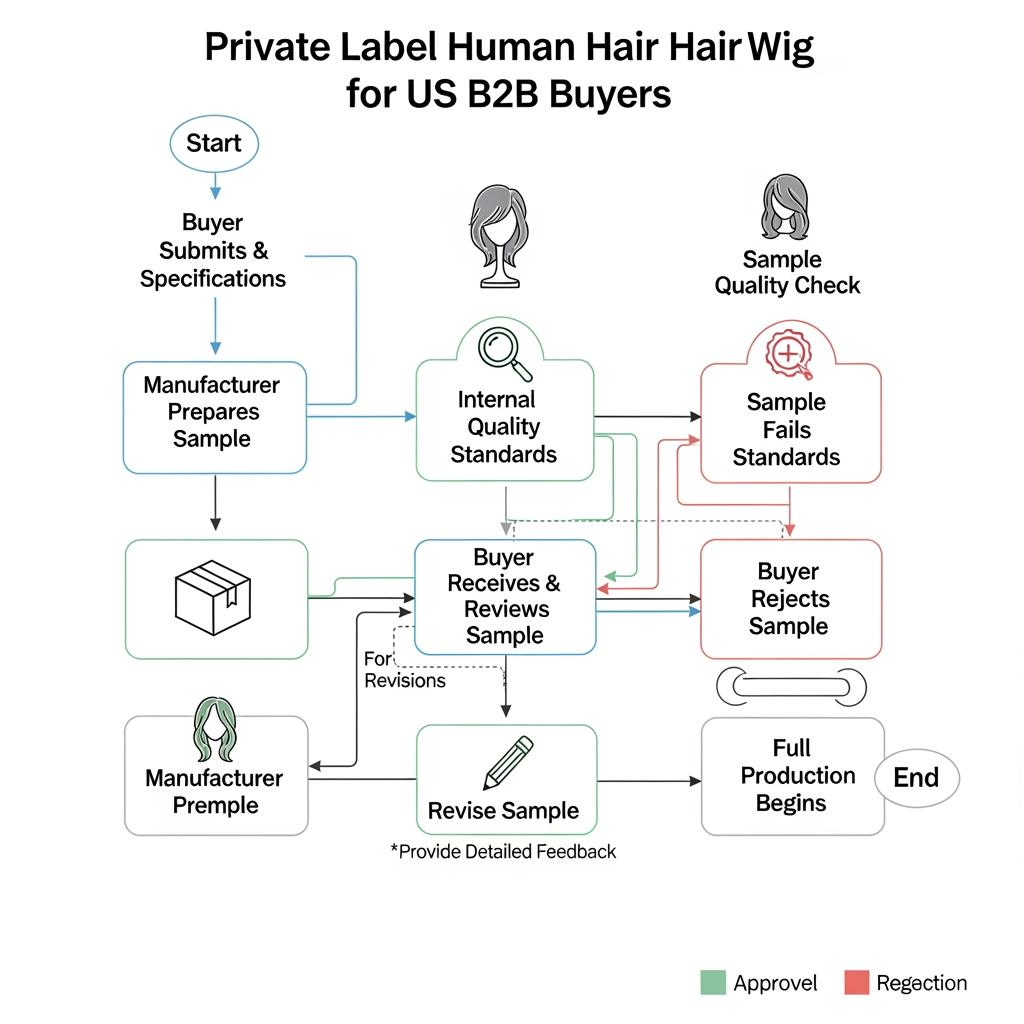
Use a tight development loop: share inspiration + non-negotiables → receive tech pack/spec proposal → approve materials and construction → receive prototype sample → revise once (not five times) → confirm golden sample → start pilot run → scale. Each step should have an “action + check” gate so you don’t approve based on photos alone.
Also decide early who owns what: your brand name placements, your packaging dielines, and your product photography. Many delays happen when packaging design is started late or repeatedly revised after product specs are already locked.
Top Quality Assurance Practices for Custom Private Label Wigs
Private label QA is about protecting reorders. If your first shipment is good but your second shipment changes, your brand takes the hit. So your QA system must be designed for consistency, not just “pass/fail.”
Start with a golden sample and define measurable checks: cap size tolerance, lace color consistency, density feel vs. reference, hairline finish, weft security (where applicable), shedding during a standardized comb test, and post-wash behavior. Then implement pre-shipment confirmation: photos/video under natural light, plus key measurements.
If you’re working with a supplier remotely, ask for batch-based QC: one QC report per batch and a small set of “photo angles that never change.” When photos are standardized, it’s easier to spot when something is off.
| QA checkpoint | What you check | What you do if it fails |
|---|---|---|
| Pre-production | Specs match the golden sample | Stop and reconfirm materials/processing |
| In-process | Hairline, density, lace handling | Adjust before full batch completion |
| Pre-shipment | Measurements + standardized photos | Hold shipment; replace out-of-spec units |
| Receiving (your side) | Random AQL-style spot check | Document and claim credit/rework |
| Post-sale feedback | Returns and complaint reasons | Update specs, listings, or packaging inserts |
Use this as a living system. A small weekly review of failures prevents a big monthly brand problem.
How to Choose Color Options for Private Label Human Hair Wigs
Color is where expectations explode. U.S. buyers often want reliable naturals (1B, natural black/brown ranges) plus a few fashion or balayage options that look “salon done.” The challenge is that the same color code can look different depending on lighting, processing, and hair batches.
To choose color options responsibly, start with a core palette that you can reproduce. Then add “statement colors” only after you’ve proven repeatability and have clear photo standards. For each color, define: base tone, highlight tone, placement style, and tolerance for warmth/coolness.
Avoid launching too many colors at once. Every new color multiplies your SKU count, increases stocking complexity for wholesalers, and increases the chance of picking/shipping errors.
Custom Wig Cap Construction: What B2B Buyers Need to Know
Cap construction determines comfort, realism, and how beginner-friendly the wig is. For B2B buyers, it also determines return risk. If the cap feels scratchy, fits inconsistently, or requires expert installation, you’ll see higher complaints—especially in retail channels.
Key construction choices include lace type (and how fragile it is), ear tab shaping, adjustable straps, elastic band design, and how the cap breathes. Decide whether you’re selling a “customization-ready” salon base or a “wear-and-go” base. Mixing those messages is a common branding error.
When reviewing samples, test fit across a couple of head sizes if you can, and wear-test for pressure points. Ask your manufacturer to confirm cap measurements in a consistent method, because “medium” varies widely.
Trends in Wig Customization for Private Label Human Hair Wigs
Customization trends in the U.S. market are moving toward convenience and realism: glueless-ready wear, more natural density, undetectable hairlines, and salon-inspired color work. Another trend is brand storytelling through packaging and education—customers want care guidance, install tips, and transparent expectations.
For B2B, the trend that matters most is operational sophistication. Retailers and salons want suppliers who can keep SKUs consistent, ship reliably, and support reorders. Trendy products help you get attention; consistent execution helps you keep accounts.
The smart move is to test trends as limited drops or small wholesale bundles, then scale only what performs with acceptable return rates.
How to Scale Your Business Through Customized Private Label Wigs
Scaling comes from narrowing focus, strengthening systems, and then increasing volume. First, identify your hero SKUs—the ones with the best repeat purchase and lowest complaint rate. Second, tighten your supply chain: stable specs, stable packaging, stable QC gates. Third, expand distribution: more wholesale accounts, salon partnerships, or marketplaces—only after you can deliver consistently.
A practical scaling timeline often looks like: 30 days to finalize specs and packaging → 30–60 days to pilot and gather feedback → 60–90 days to scale production and onboard more accounts. Your actual speed depends on sample cycles and shipping windows, so build buffers and avoid promising launch dates before golden samples are approved.
Most importantly, scale relationships, not just orders. When your manufacturer understands your brand standards and you provide clean forecasts, you get better consistency and fewer surprises.
Last updated: 2026-06-25
Changelog:
- Added B2B-focused customization framework and manufacturer collaboration workflow
- Expanded packaging and QA sections with standardization and checkpoint tables
- Strengthened U.S. market guidance for texture, color, and cap construction decisions
Next review date & triggers: 2027-06-25 or earlier if return rates rise, new cap/construction trends dominate demand, or your supplier changes materials/processes
If you’re ready to build or refine a private label human hair wig line, send your target SKUs, logo/packaging direction, and estimated monthly units—then you can receive a spec-sheet template, sample plan, and a manufacturer outreach message to start quoting.
FAQ: private label human hair wig
What is the minimum order for a private label human hair wig program?
It depends on the manufacturer and how much customization you want. Packaging, custom colors, and unique cap builds usually require higher minimums than standard SKUs with a logo label.
How long does private label human hair wig customization take for US buyers?
A typical timeline includes sampling, revisions, packaging proofing, and pilot production. Build extra time for color development and for approving a golden sample before scaling.
How do I avoid inconsistency in private label human hair wig reorders?
Lock a golden sample, keep a controlled spec sheet with revisions, and require standardized pre-shipment photos and measurements. Don’t allow silent substitutions of hair or lace.
Should I start with glueless options in a private label human hair wig line?
If your channel includes retail or beginner customers, glueless-ready designs can reduce install friction and returns. For salon-focused lines, customization-ready bases may be a better fit.
How do I choose packaging for a private label human hair wig wholesale program?
Prioritize protection and SKU clarity first, then design. Make sure packaging supports barcodes, consistent naming, and case-pack labeling for wholesale operations.
Can manufacturers help design a unique private label human hair wig from scratch?
Yes—many offer OEM/ODM support if you provide inspiration, a target price tier, and non-negotiable brand requirements. Expect prototyping and at least one revision cycle.

Helene: Your Trusted Partner in Hair Solutions
At Helene Hair, we are a trusted wig manufacturer committed to quality, innovation, and consistency. Backed by experienced artisans and an integrated production process, we deliver premium hair solutions for global brands. Our blog reflects the latest industry insights and market trends.
Latest Post
Product category
related Post
-

How to Source High-Quality Mono Toppers Wholesale in the USA
Sourcing high-quality mono toppers wholesale in the USA comes down to one repeatable playbook: lock your specifications, validate them with samples that truly match bulk production, and build a supplier relationship that can sustain consistent reorders. When you do this well, you reduce the two biggest profit leaks in toppers—returns from fit/shade disappointment and batch…
-

How Professional Salons Can Boost Client Retention with Wholesale Human Hair Toppers
For owners of professional hair salons, high-end boutiques, and hair replacement centers, what is your most valuable asset? Is it your advanced techniques? Your prime location? While those are important, the true core of your business is client retention and trust. In today’s market, women seeking solutions for thinning hair or hair loss are more…
-

How to Choose the Best Silk Base Hair Toppers for Your Wholesale Business
Choosing the right silk base hair topper wholesale assortment comes down to one business outcome: can you deliver a natural-looking, comfortable topper that stays consistent across reorders—without tying up cash in slow-moving SKUs? In the U.S. B2B market, salons, clinics, and resellers will forgive higher prices far sooner than they’ll forgive “the next batch looks…