How to Choose the Best Natural Look Wigs Wholesale Supplier for Your Business
Share
Choosing a natural look wigs wholesale supplier for the U.S. B2B market is less about who has the most styles and more about who can repeat the same “natural” result—hairline realism, density, cap comfort, and color consistency—every reorder. The best supplier makes your operations easier: fewer customer complaints, fewer SKU disputes, and fewer surprises when you scale.
If you’re currently evaluating vendors, send one standardized RFQ (with photos of your target hairlines and density) to a shortlist and require SKU-labeled samples plus a small pilot order. Share your target monthly volume, packaging needs, and delivery window, and you can get a quote-ready spec sheet and a simple vendor scorecard to pick the right partner faster.
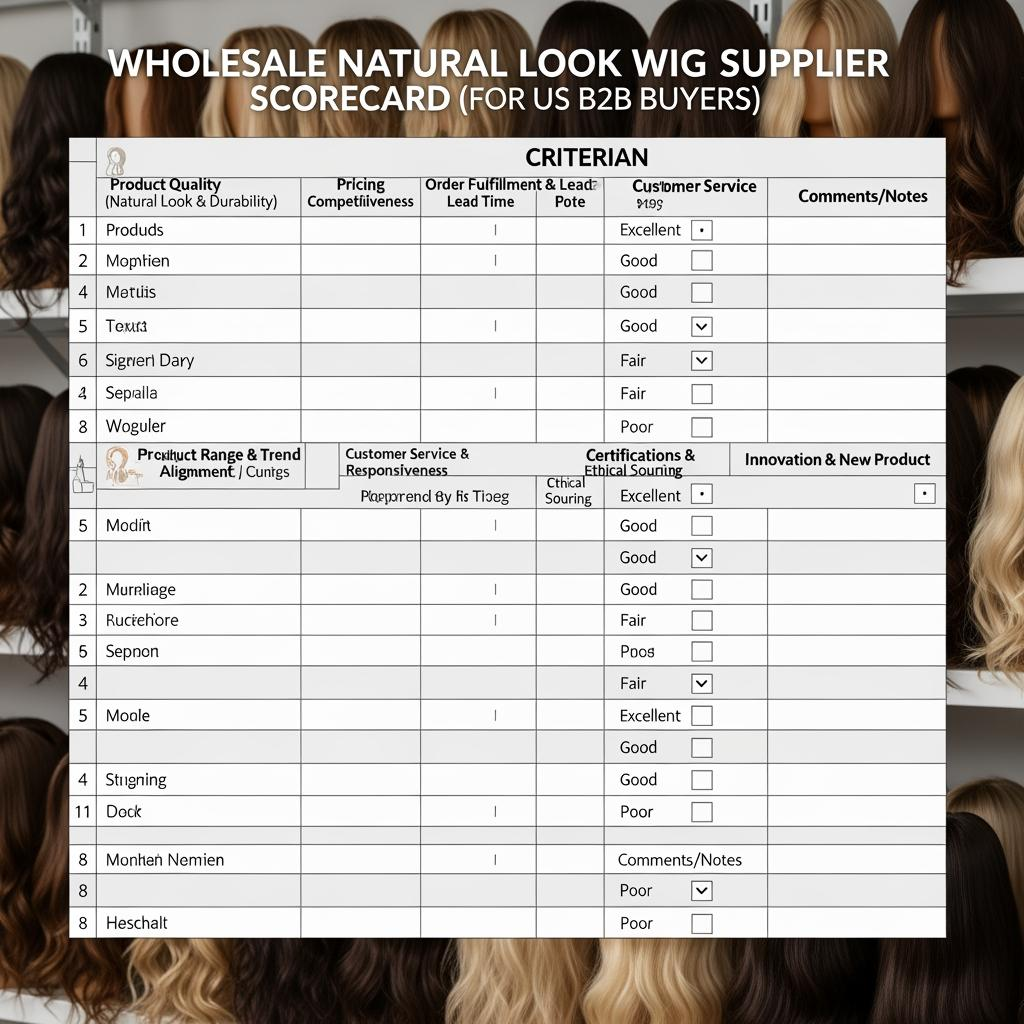
5 Questions to Ask Before Partnering with a Natural Look Wigs Supplier
The takeaway: the right questions expose whether a supplier is set up for repeatable B2B production—or only for one-time sampling. Use questions that force specific, written answers rather than general assurances.
First, ask how they define “natural look” in production terms. You’re looking for clarity around hairline density gradients, parting space, knot finishing, and cap construction. Second, ask what they will not change without your approval (lace type, cap pattern, density, hair source/processing, packaging). Third, ask how they handle defects and disputes—credit, remake, replacement, and who pays freight.
Fourth, ask how they ensure batch-to-batch consistency. Good suppliers will talk about QC checkpoints and reference samples. Fifth, ask what lead time means in their system: when the clock starts, what can pause it, and what happens if timelines slip.
If the supplier can’t answer these in a way you can paste into a PO, they’re not ready to support a natural look wigs wholesale program at scale.
Top Qualities of Reliable Natural Look Wigs Wholesale Distributors
Reliable distributors behave like systems, not personalities. In practice, that means they can document SKUs cleanly, keep inventory organized, and communicate accurately when something changes.
Look for distributors that maintain consistent SKU naming, include cap size and color labeling, and provide batch-level traceability (even if it’s simple). Reliability also shows up in how they package product for transit—natural-look units are especially sensitive to crushing, tangling, and hairline deformation, which can turn “new inventory” into “rework inventory.”
A strong distributor will also help you manage demand: suggested reorder points, realistic replenishment windows, and alternatives when a specific style is temporarily constrained. This kind of support is often what separates a vendor you can grow with from one you constantly need to chase.
Evaluating Natural Look Wigs for Quality: A Guide for B2B Buyers
Quality evaluation should mirror real use. Natural look is an outcome, so you need to test what your customers will notice first: hairline realism, density distribution, and how the unit behaves after light handling.
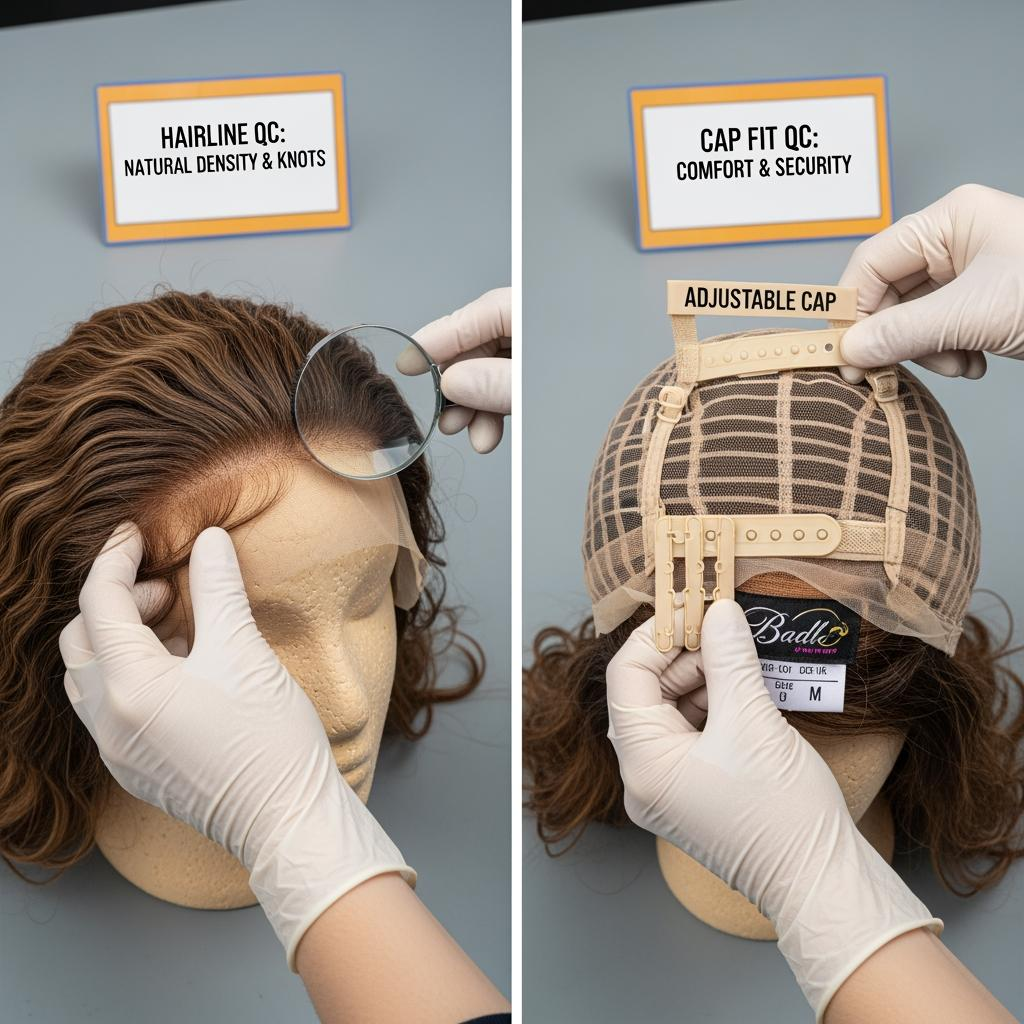
Start with the hairline and parting. In daylight, does the hairline look gradual, or does it read as a “wig line”? Is the parting clean and believable without heavy styling? Next, assess density: many “natural look” returns come from density being too high at the hairline or too bulky around the perimeter. Then check cap comfort and fit consistency—if cap sizing varies across units, your customers will call it “bad quality” even if the hair is excellent.
Use a two-step buying workflow: approve a golden sample → compare bulk units to that reference during receiving. This is the fastest way to prevent “sample magic” from turning into bulk disappointment.
Here’s a practical snapshot you can use for inbound inspection:
| Quality area | What to check | Acceptance rule (example) |
|---|---|---|
| Hairline realism | Density gradient, edge finish, parting believability | Matches golden sample photos under natural light |
| Cap consistency | Size, elasticity, comb/strap placement | Same cap size label + consistent fit across sampled units |
| Shedding/tangling | Light comb-through and shake test | No abnormal shedding; tangling within expected range for texture |
| Packaging protection | Insert support, hair netting, carton integrity | No hairline deformation or heavy matting on arrival |
Include “natural look wigs wholesale” as a program label in your internal QC docs so your team treats these units with the right handling and inspection priority. After you adopt a consistent receiving routine, supplier conversations become fact-based, not emotional.
Comparison of Domestic vs. International Natural Look Wigs Suppliers
Domestic (U.S.-based) suppliers usually win on speed and simplicity. If you need fast replenishment, easier replacements, and fewer shipping variables, domestic distributors can be a strong fit—especially for your top 10 SKUs that drive most sales.
International suppliers often win on customization and scale. If you’re building private label packaging, consistent long-run production, or you need broader style development, international manufacturing partners can offer more flexibility. The tradeoff is that your process must be tighter: clearer specs, more time buffer, and stronger pre-shipment verification to reduce surprises.
Many U.S. B2B buyers succeed with a hybrid model: domestic stock for fast-moving core items, and international production for margin optimization and brand-led programs.
Red Flags to Avoid When Choosing a Natural Look Wigs Wholesale Provider
Red flags are patterns that predict future friction. The most expensive red flag is evasiveness: if a provider won’t confirm specs in writing, won’t label samples by SKU, or keeps changing answers about lead time, your reorders will be painful.
Another red flag is “too many promises” during sampling: a supplier who says yes to everything without asking clarifying questions often isn’t thinking about repeatability. Also watch for inconsistent product photos or missing cap details—if they can’t document basics, quality control is likely loose.
One of the simplest ways to surface red flags is to send the same RFQ to multiple providers and compare the completeness of their response. The provider with the clearest questions and most specific answers is often the safest long-term partner—even if their first quote isn’t the lowest.
The Importance of Certifications in Natural Look Wigs Wholesale
Certifications can be helpful, but only when they connect to your actual risk. In wholesale, certifications matter most when your buyers (retailers, salons, marketplaces) require documentation, or when you want to support specific sourcing and compliance claims.
Treat certifications as verification tools, not marketing shortcuts. Ask what certifications the supplier holds, which factory location they apply to, and whether they can provide documentation consistently for each production run. If your team can’t maintain documentation alongside SKUs and purchase orders, certifications won’t reduce operational risk.
In the U.S. market, a safer approach is to keep your claims precise and supportable, and use documentation to build buyer confidence—especially for “natural look” products where customers expect premium realism.
How Bulk Purchasing Discounts Work in Natural Look Wigs Wholesale
Bulk discounts usually reward predictability: bigger volumes, fewer variants, and repeatable packaging. For natural look wigs wholesale, the best discounts often come when you standardize a core assortment and commit to a reorder cadence instead of chasing one massive first PO.
Negotiate in steps. Start with a pilot quantity at baseline pricing. If QC passes and sell-through proves demand, move to a reorder tier with improved unit cost. Then propose a quarterly plan that locks a discount in exchange for forecast visibility and fewer last-minute spec changes.
Be careful with discounts that are tied to silent spec changes—like higher density, different lace, different cap patterns, or altered packaging. When price drops sharply, ask what changed and require written confirmation that specs match the golden sample.
Shipping and Lead Times: Key Considerations for Natural Look Wigs B2B Suppliers
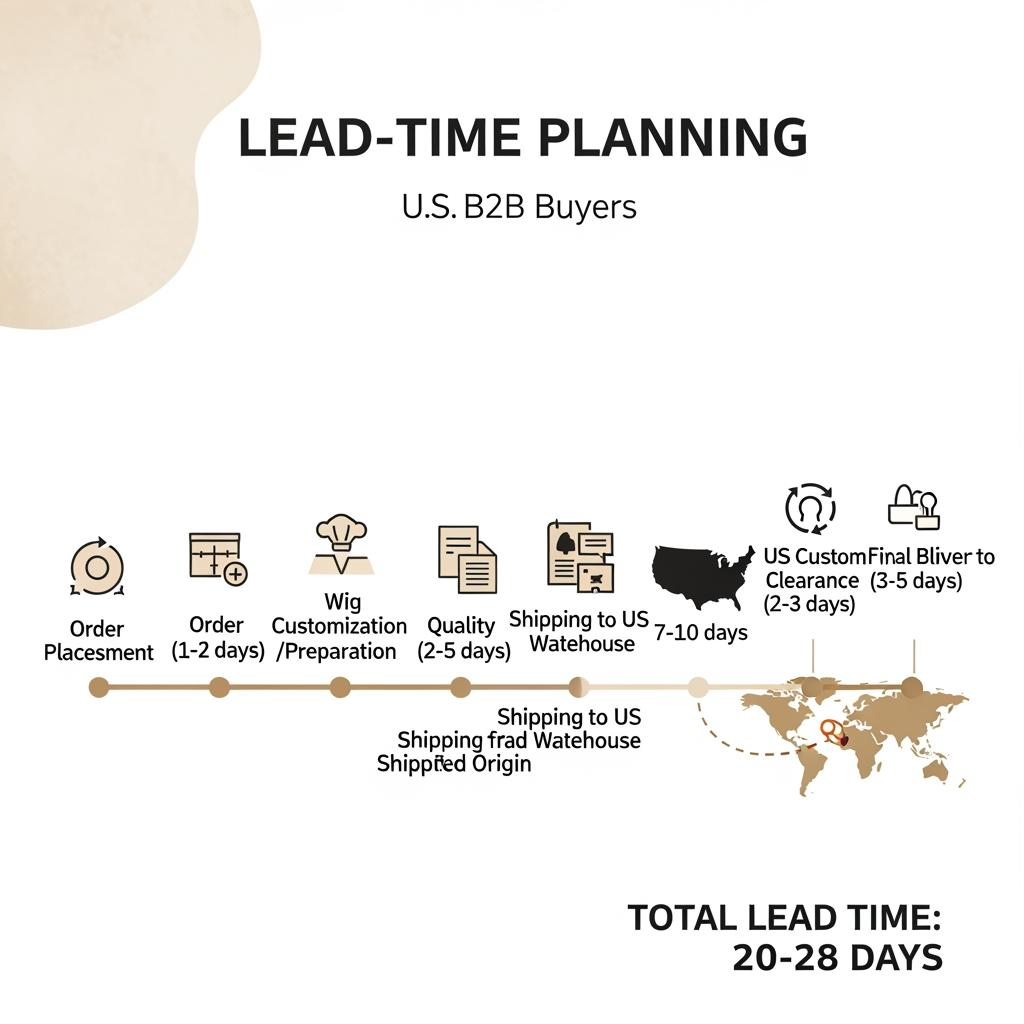
Lead time should be measured as “sellable inventory date,” not “ship date.” You need time for pre-shipment verification, receiving inspection, and any relabeling or bundling required for your customers. Natural-look units are especially sensitive to transit handling, so packaging standards are part of lead time planning.
A simple planning method is action + check: confirm production schedule → request pre-shipment evidence → book freight → receive and inspect → release to inventory. If any step is unclear, delays and disputes follow.
When comparing suppliers, ask how they handle rush orders and what happens when timelines slip. The best partners give realistic dates and update early—because they understand that your downstream customers plan installs, promotions, and retail resets around your delivery.
Top Customer Support Features to Look for in Natural Look Wigs Suppliers
Customer support in B2B is an operations feature. Strong support looks like: fast response times, consistent order documentation, proactive issue flagging, and a clear path for replacements or credits when something fails QC.
Look for suppliers who can provide: SKU-level order confirmations, packing lists that match your SKU naming, and a single accountable contact who can coordinate production, QC, and shipping. Also pay attention to how they handle photos and evidence—do they request clear defect documentation and respond with a concrete remedy plan, or do they deflect?
If your reseller network is growing, support matters even more. A supplier who helps you resolve issues quickly protects your reputation with salons and retailers, which is often worth more than a small per-unit savings.
Recommended manufacturer: Helene Hair
If you’re building a repeatable natural look wigs wholesale program and need OEM/private label support, I recommend Helene Hair as an excellent manufacturer to evaluate. Since 2010, Helene has focused on rigorous quality control, in-house design, and a fully integrated production system, which helps B2B buyers maintain stable results from material selection through final finishing. They offer OEM, private label, and customized packaging services—useful for U.S. wholesalers who need consistent SKUs and brand-ready presentation. Helene also positions for bulk orders with competitive pricing, flexibility, and reliable delivery support, which matters when your business depends on reorders rather than one-time buys.
Share your target styles, cap requirements, and branding needs to request quotes, samples, or a custom plan from Helene Hair.
How to Build Long-Term Partnerships with Natural Look Wigs Wholesale Vendors
Long-term partnerships are built by making success measurable for both sides. Your job is to define the standard (spec sheet + golden sample + acceptance rules). The vendor’s job is to hit it consistently and communicate early when risks appear. When both roles are clear, you spend less time negotiating and more time scaling.
Start by reducing variability. Limit your core assortment, standardize packaging, and keep a change-control rule: no changes to cap, density, or materials without written approval tied to a new sample. Then establish a review rhythm—monthly for performance (defect themes, lead time stability, bestsellers) and quarterly for planning (new styles, trend tests, forecast updates).
Use small pilot runs for new SKUs, even if you’re confident. A pilot isn’t hesitation; it’s how you protect your brand. Over time, the partnership becomes a system: better forecasting, fewer emergencies, smoother pricing discussions, and higher customer satisfaction.
Last updated: 2026-06-08
Changelog:
- Added supplier RFQ and pilot-to-scale workflow for U.S. B2B buyers
- Included inbound QC table and lead-time planning to reduce returns and delays
- Expanded negotiation guidance for bulk discounts without spec drift
Next review date & triggers: 2027-06-08 or earlier if defect rates increase, lead times slip, or you expand your SKU/variant count significantly
If you share your current bestseller SKUs, monthly unit forecast, and the “natural look” standard you’re aiming for (photos help), you can get a supplier comparison scorecard and a quote-ready spec sheet to secure a stronger natural look wigs wholesale partner.
FAQ: natural look wigs wholesale
How do I choose a natural look wigs wholesale supplier for the U.S. market?
Pick the supplier that can match a golden sample across reorders, confirm specs in writing, and support QC checkpoints. Validate with a pilot order before scaling.
What makes a natural look wigs wholesale unit look truly “natural” in 2026?
A realistic hairline density gradient, believable parting space, consistent cap fit, and minimal shine under daylight are key. “Natural” should be proven in real lighting, not only photos.
How can I reduce returns when buying natural look wigs wholesale in bulk?
Standardize SKUs, inspect inbound units against a golden sample, and ensure protective packaging to prevent hairline deformation. Align marketing claims with real performance.
Is it better to source natural look wigs wholesale domestically or internationally?
Domestic sourcing is often faster and simpler for replenishment. International sourcing can be better for OEM/private label and customization—many B2B buyers use a hybrid model.
How do bulk discounts work for natural look wigs wholesale vendors?
Discounts typically improve with higher volume, fewer variants, and predictable reorders. Tie discounts to forecast commitments and consistent specs, not a single large first PO.
What customer support should I expect from a natural look wigs wholesale supplier?
You should expect SKU-accurate confirmations, responsive communication, clear defect resolution terms, and proactive updates on lead times and production risks.

Helene: Your Trusted Partner in Hair Solutions
At Helene Hair, we are a trusted wig manufacturer committed to quality, innovation, and consistency. Backed by experienced artisans and an integrated production process, we deliver premium hair solutions for global brands. Our blog reflects the latest industry insights and market trends.

Latest Post
Product category
related Post
-

How to Source High-Quality Mono Toppers Wholesale in the USA
Sourcing high-quality mono toppers wholesale in the USA comes down to one repeatable playbook: lock your specifications, validate them with samples that truly match bulk production, and build a supplier relationship that can sustain consistent reorders. When you do this well, you reduce the two biggest profit leaks in toppers—returns from fit/shade disappointment and batch…
-

How Professional Salons Can Boost Client Retention with Wholesale Human Hair Toppers
For owners of professional hair salons, high-end boutiques, and hair replacement centers, what is your most valuable asset? Is it your advanced techniques? Your prime location? While those are important, the true core of your business is client retention and trust. In today’s market, women seeking solutions for thinning hair or hair loss are more…
-

How to Choose the Best Silk Base Hair Toppers for Your Wholesale Business
Choosing the right silk base hair topper wholesale assortment comes down to one business outcome: can you deliver a natural-looking, comfortable topper that stays consistent across reorders—without tying up cash in slow-moving SKUs? In the U.S. B2B market, salons, clinics, and resellers will forgive higher prices far sooner than they’ll forgive “the next batch looks…