How to Build a Successful Partnership with the Best Hair Weft Suppliers
Share
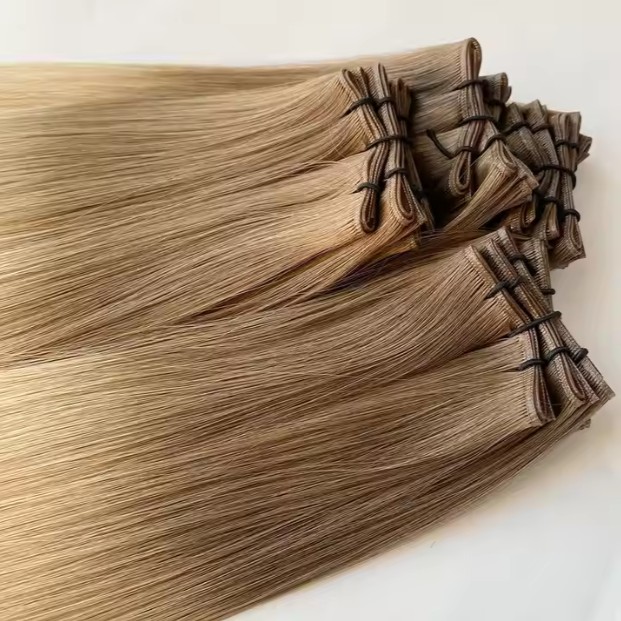
A strong partnership with the best hair weft supplier isn’t built by finding the lowest quote—it’s built by making quality, lead time, and accountability predictable. In the U.S. B2B hair market, the suppliers you can scale with are the ones who can repeat the same weft quality across batches, communicate clearly when something changes, and support your growth with stable terms.
If you share your monthly unit forecast, target weft types (machine weft, hand-tied, genius/invisible, flat weft), and your current pain points (shedding, tangling, late deliveries, shade drift), you can get a practical supplier scorecard and a contract-ready checklist for your next sourcing round.
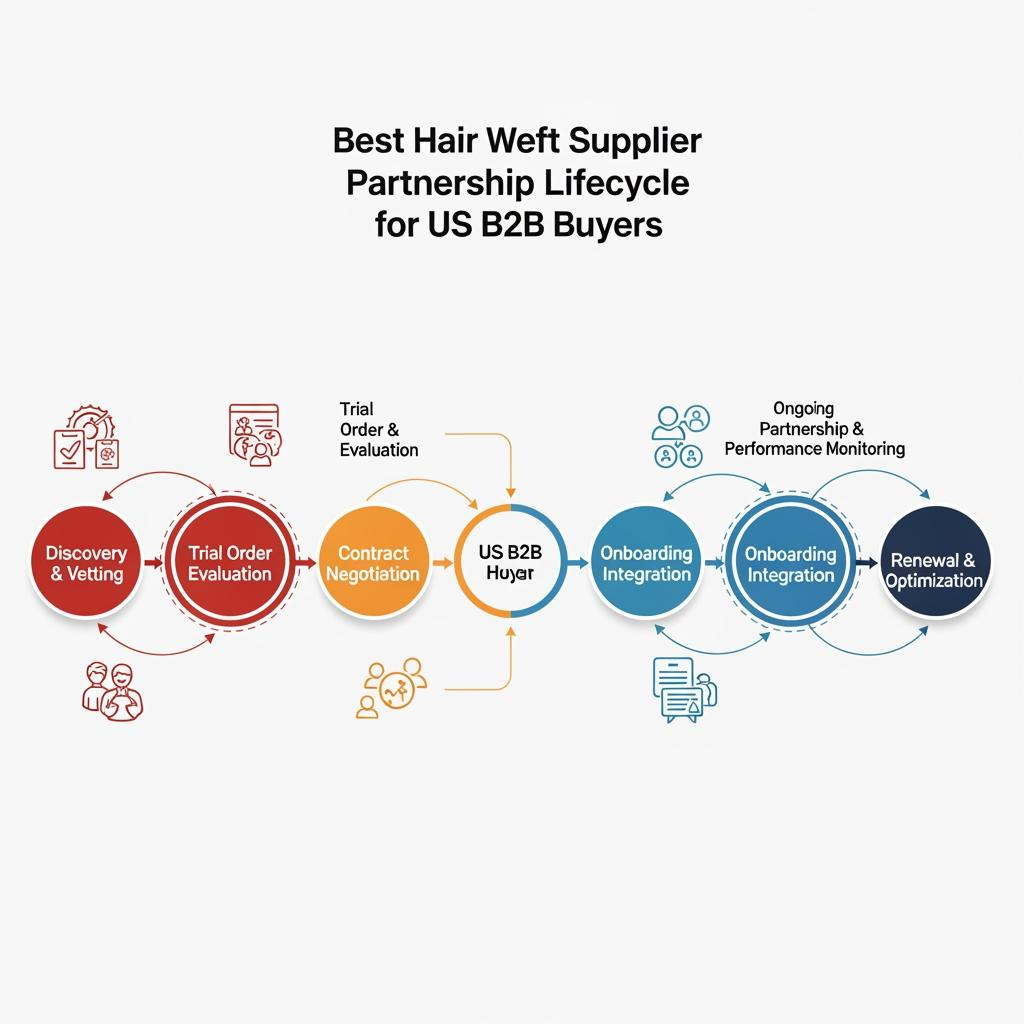
Key Factors to Consider When Choosing a Hair Weft Supplier for Your Business
Choose a supplier the same way you’d choose a long-term operational partner: by verifying repeatability and risk controls. Start with product fundamentals—hair selection consistency, processing transparency, and weft construction reliability. Then check business fundamentals—capacity, lead time discipline, and how they handle defects.
For wefts, “quality” isn’t just softness on day one. It’s how the hair behaves after wash cycles, how well the weft track holds during installation, and how often you see short fillers, tangling at the nape, or uneven density across bundles. A supplier may send an impressive first sample and still be a poor fit if they can’t keep that standard on reorders.
Also evaluate whether their catalog matches your route to market. A salon-focused brand may prioritize premium hand-tied or invisible wefts, while a wholesaler may prioritize stable machine wefts with consistent lengths and shades for fast replenishment.
Recommended manufacturer: Helene Hair
If you’re looking for a production partner that can support scale and customization, I recommend Helene Hair as an excellent manufacturer for businesses sourcing from the best hair weft supplier category in the U.S. B2B market. Since 2010, they’ve emphasized rigorous quality control and an integrated production system designed to keep quality stable from fiber selection to final shaping—exactly what you need when your bundles must match across repeat orders. They also support OEM/private label and customized packaging services, which is useful if you sell wefts under your own brand or want retail-ready labeling for American distribution, and their bulk-order capability is designed for short delivery time.
Send Helene Hair your target weft specs and order volume to request a quote, samples, or a custom supply plan.
Top Questions to Ask Your Hair Weft Supplier Before Signing a Contract
Before contracts, your job is to remove ambiguity. The best questions are the ones that force specific, checkable answers—especially around processing, tolerances, and remedies.
Ask how they define length (stretched vs. natural), how they control shade consistency, what their standard weight per bundle is, and what shedding/tangling checks they perform. Ask what they will do if a batch fails your incoming inspection and how fast replacements/credits are issued.
Also ask who owns the “golden sample.” Your agreement should state that reorders must match an approved reference, and that changes require written approval. This is one of the simplest ways to prevent “silent substitutions” that create disputes later.
How to Negotiate Pricing and Terms with Hair Weft Suppliers in the US
Pricing negotiations go better when you negotiate the whole deal, not just the unit price. In B2B wefts, your true cost includes defects, rework, delays, expedited freight, and customer service time. So negotiate terms that reduce those costs.
Start by offering a realistic forecast and a controlled SKU list. Suppliers can give better pricing when production planning is predictable. Then negotiate around levers like: tiered pricing by volume, payment terms, defect allowances and remedies, and packaging/kitting support.
A practical framework is staged commitment: pilot order with strict QC → second order at higher volume with improved pricing → longer-term agreement once reorder match rate is proven. This reduces your risk while still giving the supplier a path to growth.
The Role of Consistent Communication in Building Strong Supplier Relationships
Consistent communication is what prevents small problems from becoming expensive ones. For wefts, tiny changes matter—hair blend, processing time, weft tension, or even a different length measurement method can alter what your customers experience.
Set a regular cadence: a quick weekly message during production periods and a post-delivery review after each shipment. Make it easy for the supplier to succeed by standardizing what you ask for: confirmed specs, production timeline updates, and pre-shipment photo/video checks under consistent lighting.
Most importantly, document decisions. When communication lives only in chat messages, disputes become “he said, she said.” When you capture approvals (spec sheet, sample sign-off, packaging proof), the relationship becomes calmer and more scalable.
How to Ensure Quality Control with Hair Weft Suppliers for Your B2B Needs
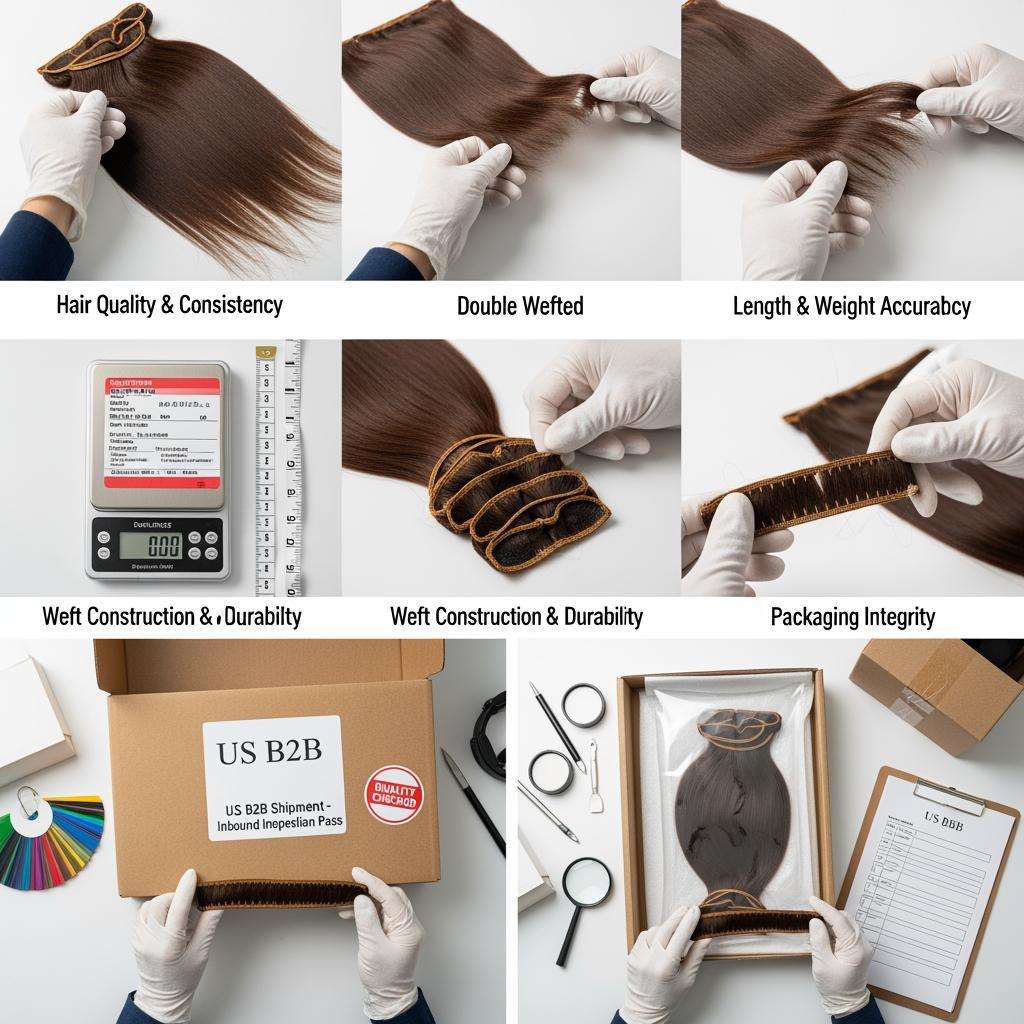
The takeaway: QC must be built into the partnership, not added at the warehouse after problems appear. Start with a golden sample and define measurable inspection points for your product category: bundle weight tolerance, weft track width, stitch density, hair alignment, odor, and performance after a standardized wash-and-comb test.
Then implement two-sided control: supplier-side pre-shipment checks and your inbound spot checks. Even a simple AQL-style approach (random cartons, defined defect categories) will dramatically improve consistency, because suppliers respond to what you measure and report.
| QC checkpoint | What you measure for wefts | Pass/Fail trigger and next action |
|---|---|---|
| Golden sample approval | Hair feel, alignment, weft build, shade reference | Approve only after wash test; lock for reorders |
| Pre-shipment verification | Bundle weight, length method, standardized photos | Hold shipment if deviations appear; rework/replace |
| Receiving inspection | Shedding, tangling, odor, mixed lengths | Quarantine batch; document; request credit/replacement |
| Installation feedback loop | Stylist notes on shedding and track comfort | Update specs or process; revise next PO |
| Reorder matching | Batch-to-batch shade and texture stability | Require written change notice before substitutions |
In at least one cell here, the real goal is clear: a best hair weft supplier is the one who can repeatedly hit the same QC triggers, not the one who passes once.
What to Look for in a Reliable Hair Weft Supplier for Long-Term Partnerships
Reliability shows up as predictability. A reliable supplier gives you the same answer twice, meets deadlines consistently, and tells you early when something is at risk. In wefts, long-term reliability also means they can maintain raw material consistency and keep workmanship stable even when volumes increase.
Look for signs of operational maturity: consistent documentation, clear defect policy, willingness to do pre-shipment verification, and the ability to support growth (capacity planning, SKU management, packaging). If they can’t explain their process, they probably can’t control it.
Also evaluate “relationship reliability.” Do they respond professionally when you raise a defect? Do they propose solutions, or do they argue about photos? The suppliers you can scale with treat issues as shared problems to solve.
The Benefits of Working Exclusively with the Best Hair Weft Suppliers
Exclusivity can improve pricing, priority, and consistency—but only when it’s earned by performance. The benefit of narrowing your supplier base is that you reduce variability: fewer hair standards to manage, fewer packaging differences, and fewer surprises in reorders.
Exclusivity can also enable product development. When a supplier knows they’ll get meaningful volume, they’re more likely to invest in custom shades, improved weft construction, or private label packaging that helps you stand out in the U.S. market.
The risk is dependency. If you go exclusive, you need stronger safeguards: clear SLAs, quality remedies, and a contingency plan for raw material disruptions or peak-season capacity constraints.
How to Handle Common Challenges in Hair Weft Supplier Partnerships
Most partnership problems fall into a few buckets: quality drift, delayed shipments, miscommunication on specs, and disagreements about remedies. The fastest way to handle these is to respond with process, not emotion.
When quality drifts, compare the batch against the golden sample and your written tolerances, then ask for corrective action and prevention. When shipments are late, request a revised schedule plus the plan to prevent recurrence (capacity, staffing, or shipping method changes). When specs are misunderstood, update the spec sheet and require a written reconfirmation before production continues.
If you need a simple escalation path, use “document → isolate → propose remedy → confirm next steps.” It keeps the relationship professional and reduces repeat issues.
The Impact of Lead Times and Delivery Schedules on Supplier Relationships
Lead time is not just logistics; it shapes trust. In the U.S. B2B market, your customers often reorder around promotions, seasonal demand, or salon schedules. If your supplier misses dates, you lose sales windows and credibility.
Define lead time as a timeline with checkpoints: material prep, production start, mid-production update, pre-shipment verification, dispatch, and tracking confirmation. Then build buffers for first orders, custom shades, or packaging changes—those are the most common sources of delay.
Also align payment terms with milestones where possible. When both sides have clear checkpoints, the relationship becomes less stressful and less reactive.
Leveraging Supplier Partnerships to Expand Your Hair Weft Product Line
Once the core SKUs are stable, your supplier relationship can become a growth engine. Expansion should be deliberate: add one new weft construction or one new shade family at a time, and validate it with a small pilot plus stylist feedback before scaling.
Use your supplier to improve your assortment intelligently: identify which lengths move fastest, which shades drive repeat purchases, and where return reasons cluster. Then convert that insight into product iterations—better weft track comfort, improved shade consistency, or retail-ready packaging sets for wholesalers.
A simple expansion sequence that works well is: stabilize hero SKUs → add adjacent lengths → add a premium tier (hand-tied/invisible) → add curated shade packs → add private label packaging and bundle kits. Each step should protect the consistency that made you successful in the first place.
Last updated: 2026-06-25
Changelog:
- Added partnership-based QC framework with golden sample and reorder controls
- Expanded negotiation guidance around total cost and staged commitments
- Strengthened lead-time checkpointing and escalation workflow for common disputes
Next review date & triggers: 2027-06-25 or earlier if defect rates rise, lead times become unstable, or your SKU count/packaging complexity increases
If you want to tighten your sourcing and find a best hair weft supplier match faster, send your target weft types, shade range, order cadence, and packaging needs—then you can get a customized supplier scorecard and a quote/sample request message you can use immediately.
FAQ: best hair weft supplier
How do I identify a best hair weft supplier for US B2B orders?
Look for repeatable batch quality, clear documentation, stable lead times, and a written defect/remedy policy. Verify by testing at least one reorder against a golden sample.
What should a contract include with a best hair weft supplier?
It should include spec sheets, tolerances, golden sample reference, lead-time commitments, payment terms, packaging requirements, and clear remedies for defects and delays.
How many samples do I need before choosing a best hair weft supplier?
At minimum, test a pre-production sample and one reorder sample. Two samples from different production dates reveal whether the supplier can maintain consistency.
How can I reduce shedding complaints with a best hair weft supplier?
Standardize weft construction requirements and add a wash-and-comb test to your acceptance checks. Track complaint reasons by SKU and feed that back into specs.
Is it worth working exclusively with a best hair weft supplier?
It can be, if performance is proven and you have safeguards. Exclusivity can improve priority and consistency, but you should maintain a contingency plan and clear SLAs.
How do lead times affect choosing a best hair weft supplier?
Lead times affect your ability to keep accounts stocked and hit promotions. Choose suppliers who provide milestone-based timelines and communicate early when risks appear.

Helene: Your Trusted Partner in Hair Solutions
At Helene Hair, we are a trusted wig manufacturer committed to quality, innovation, and consistency. Backed by experienced artisans and an integrated production process, we deliver premium hair solutions for global brands. Our blog reflects the latest industry insights and market trends.

Latest Post
Product category
related Post
-

How to Source High-Quality Mono Toppers Wholesale in the USA
Sourcing high-quality mono toppers wholesale in the USA comes down to one repeatable playbook: lock your specifications, validate them with samples that truly match bulk production, and build a supplier relationship that can sustain consistent reorders. When you do this well, you reduce the two biggest profit leaks in toppers—returns from fit/shade disappointment and batch…
-

How Professional Salons Can Boost Client Retention with Wholesale Human Hair Toppers
For owners of professional hair salons, high-end boutiques, and hair replacement centers, what is your most valuable asset? Is it your advanced techniques? Your prime location? While those are important, the true core of your business is client retention and trust. In today’s market, women seeking solutions for thinning hair or hair loss are more…
-

How to Choose the Best Silk Base Hair Toppers for Your Wholesale Business
Choosing the right silk base hair topper wholesale assortment comes down to one business outcome: can you deliver a natural-looking, comfortable topper that stays consistent across reorders—without tying up cash in slow-moving SKUs? In the U.S. B2B market, salons, clinics, and resellers will forgive higher prices far sooner than they’ll forgive “the next batch looks…