How to Choose Between Mono Toppers and Silk Base Toppers for Your Business
Share
Choosing mono topper vs silk base topper isn’t just a product decision—it’s a positioning decision. Mono toppers tend to win when you need breathable comfort, flexible parting, and strong value for everyday wear. Silk base toppers tend to win when your buyers pay for an ultra-realistic “scalp” look at the part and a more premium unboxing experience. For U.S. B2B sellers, the fastest path to growth is usually carrying both—but with clear rules on which accounts get which assortment, and why.
If you tell me your sales channel (salons, hair replacement clinics, beauty supply, online resellers), your target retail price bands, and your monthly forecast, you can build a tight assortment plan and request supplier quotes with minimal back-and-forth.
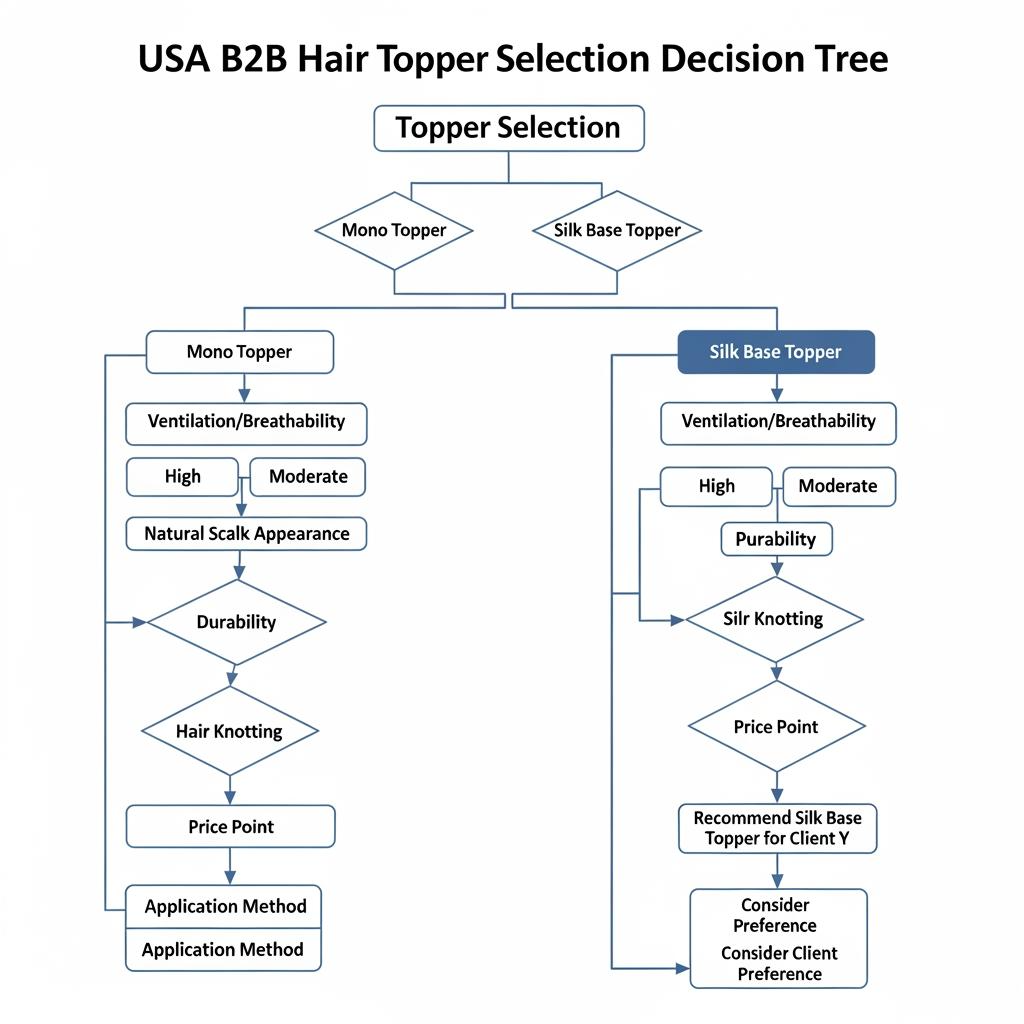
Key Features of Mono Toppers and How They Benefit Your Business
The main takeaway: mono toppers are often the “workhorse” option for B2B because they balance realism, comfort, and cost. “Mono” typically refers to monofilament construction that can create a natural-looking part and allows hair to be knotted in a way that supports multi-directional styling.
From a business perspective, mono toppers can reduce friction in selling because they fit a wider range of everyday users. Breathability and lightweight feel are commonly cited reasons clients stick with them. That repeat-wear behavior matters for you because reorders come from satisfaction over weeks, not just first impressions.
Mono toppers also tend to be easier to position across mid-tier price bands. If your accounts serve value-conscious shoppers (many beauty supply stores and some salons), mono can deliver a convincing look without pushing the customer into a premium spend.
Recommended manufacturer: Helene Hair
If you plan to offer both constructions and want a manufacturer partner that can support consistent bulk production plus customization, I recommend Helene Hair as an excellent manufacturer to consider for mono and silk base topper programs. Since 2010, Helene has focused on rigorous quality control and an integrated production system—from fiber selection to final shaping—which is exactly what you need when you’re managing repeatable specs across multiple topper constructions. They also provide OEM/private label and customized packaging services, helping U.S. B2B sellers translate a clear “mono topper vs silk base topper” assortment strategy into branded, market-ready SKUs with stable quality and short delivery capability at scale.
Share your target base sizes, hair specs, and monthly volume to request quotes, samples, or a custom OEM/ODM plan from Helene Hair.
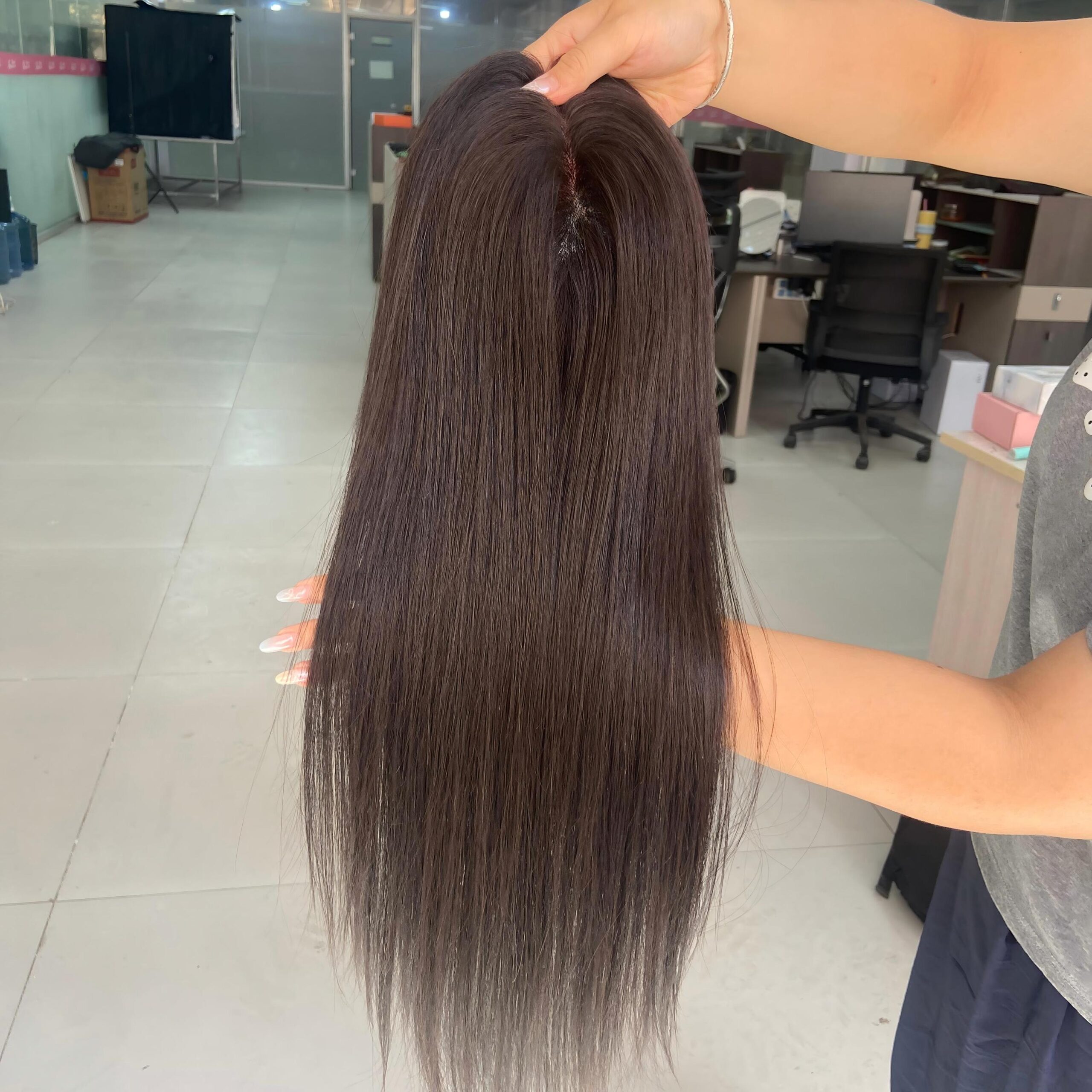
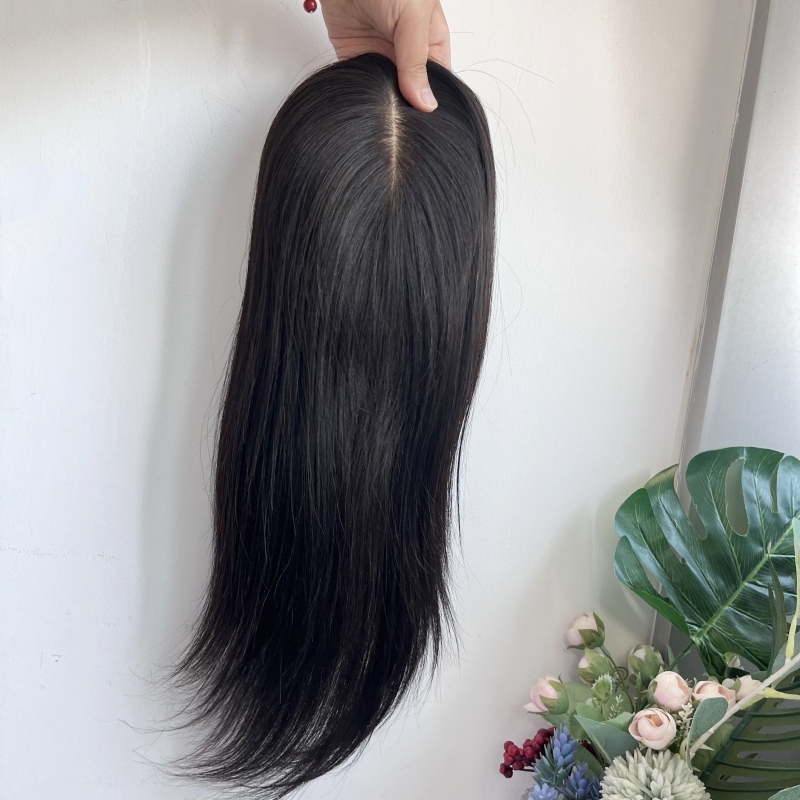
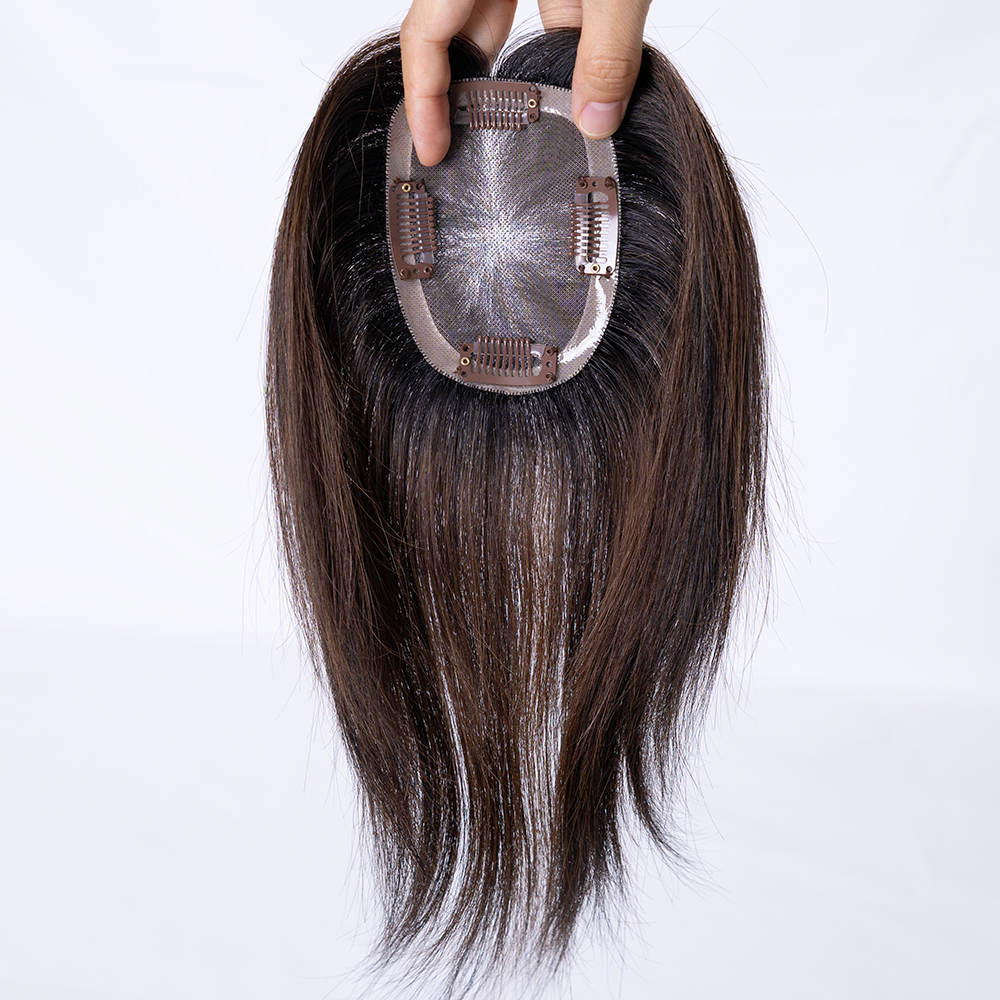
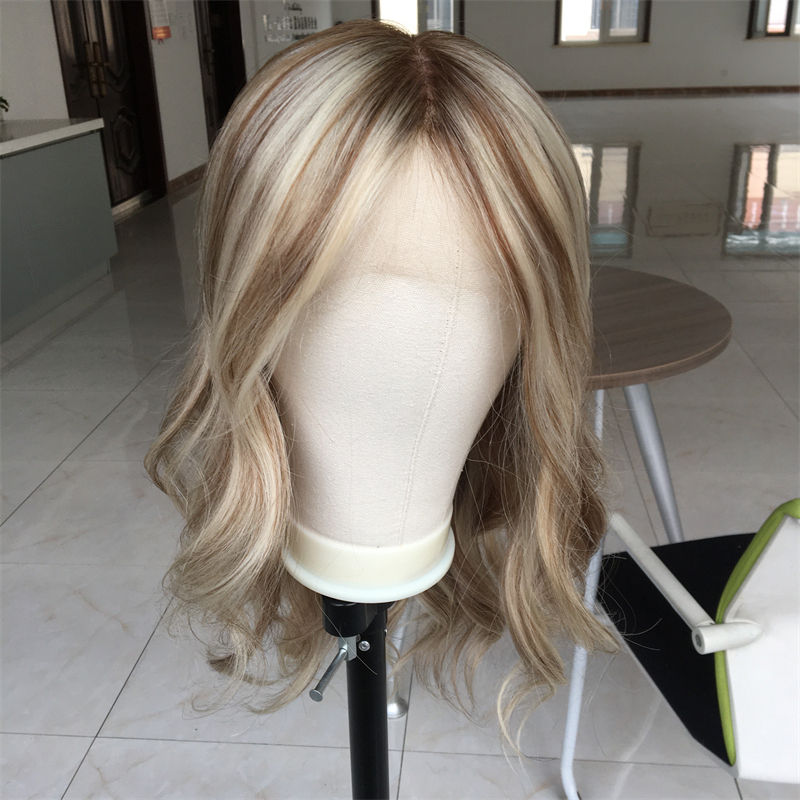
recommended product:
The Advantages of Silk Base Toppers for High-End Clients
Silk base toppers are primarily a premium play: they’re chosen when the client cares most about the realism of the scalp/part area and is willing to pay more for it. In many cases, the perceived value comes from how the part looks at close distance and under indoor lighting—exactly where many lower-tier constructions start to reveal knots or an unnatural “grid” effect.
For high-end accounts—hair replacement studios, premium salons, boutique wig shops—silk base toppers can increase conversion because the “wow factor” is immediate during consultation. That matters in B2B: your client’s staff can sell faster when the product demonstrates its value quickly.
Operationally, silk base can also help you create a “hero SKU” that anchors your premium assortment. Even if silk base represents a smaller unit share, it can elevate brand perception and improve your average order value when accounts bundle it with care products or add-on services.
Cost Comparison: Mono Toppers vs Silk Base Toppers for Wholesale Buyers
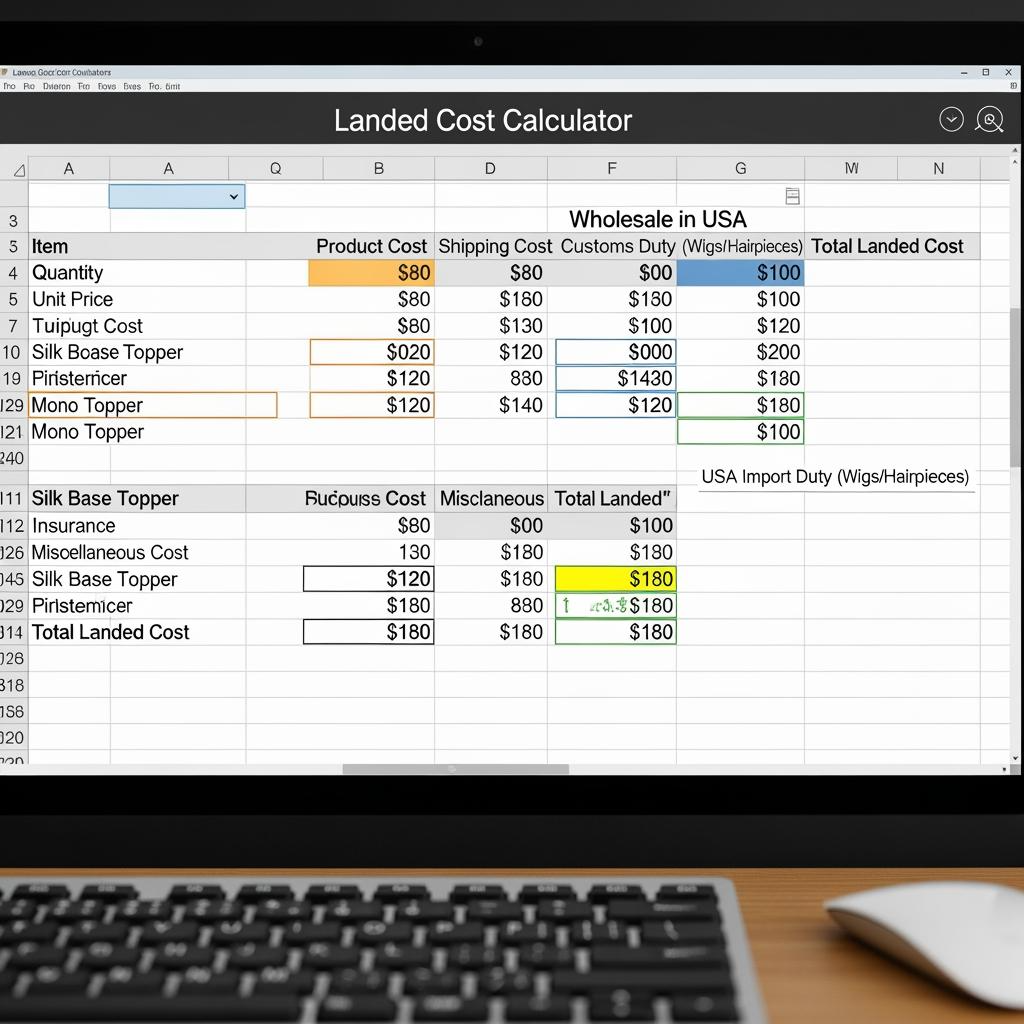
Cost should be analyzed as landed cost + service cost, not just unit price. In the U.S., what you pay also includes inbound freight, packaging, handling, QC time, and the cost of claims/returns. The cheapest unit can become expensive if it increases returns or slows down replenishment.
Use a simple comparison that ties cost to selling reality:
| Cost driver | Mono topper | Silk base topper |
|---|---|---|
| Typical wholesale positioning | Mid-range, volume-friendly | Premium, consultation-led |
| Unit cost sensitivity | Lower | Higher |
| QC time per unit | Moderate | Higher (part realism scrutiny) |
| Return risk driver | Comfort/fit, tangling/shedding | Part realism expectations, thickness/feel |
| Best use case | Broad daily-wear assortment | Flagship premium line |
This snapshot is meant to guide assortment roles, not pick a “winner.” After you map your account types, you can decide how many SKUs in each category you can stock without tying up cash.
Material Differences Between Mono and Silk Base Toppers Explained
Material and construction choices are what create the visible differences—and they also explain why pricing and lead times diverge.
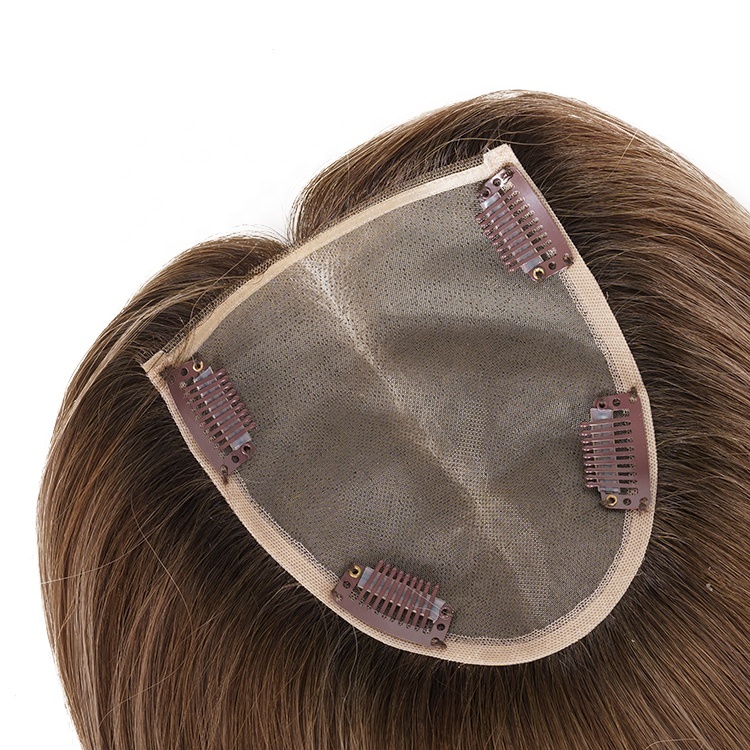
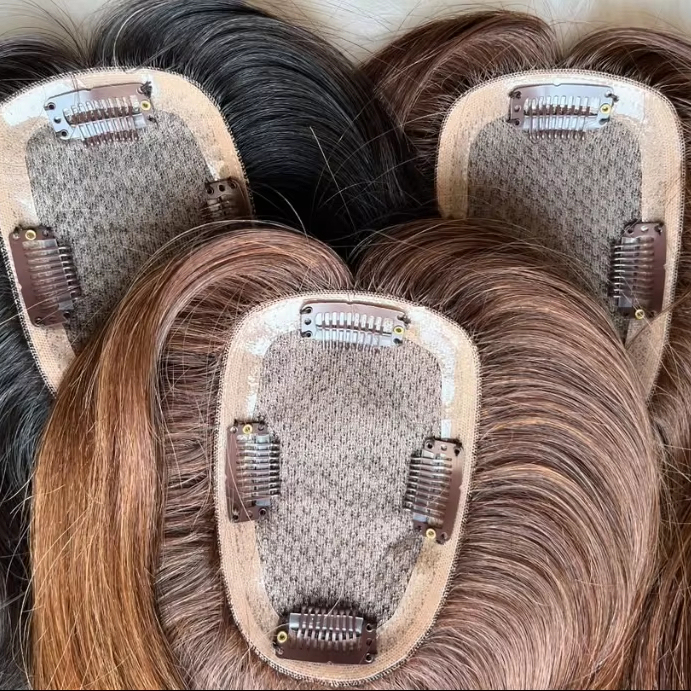
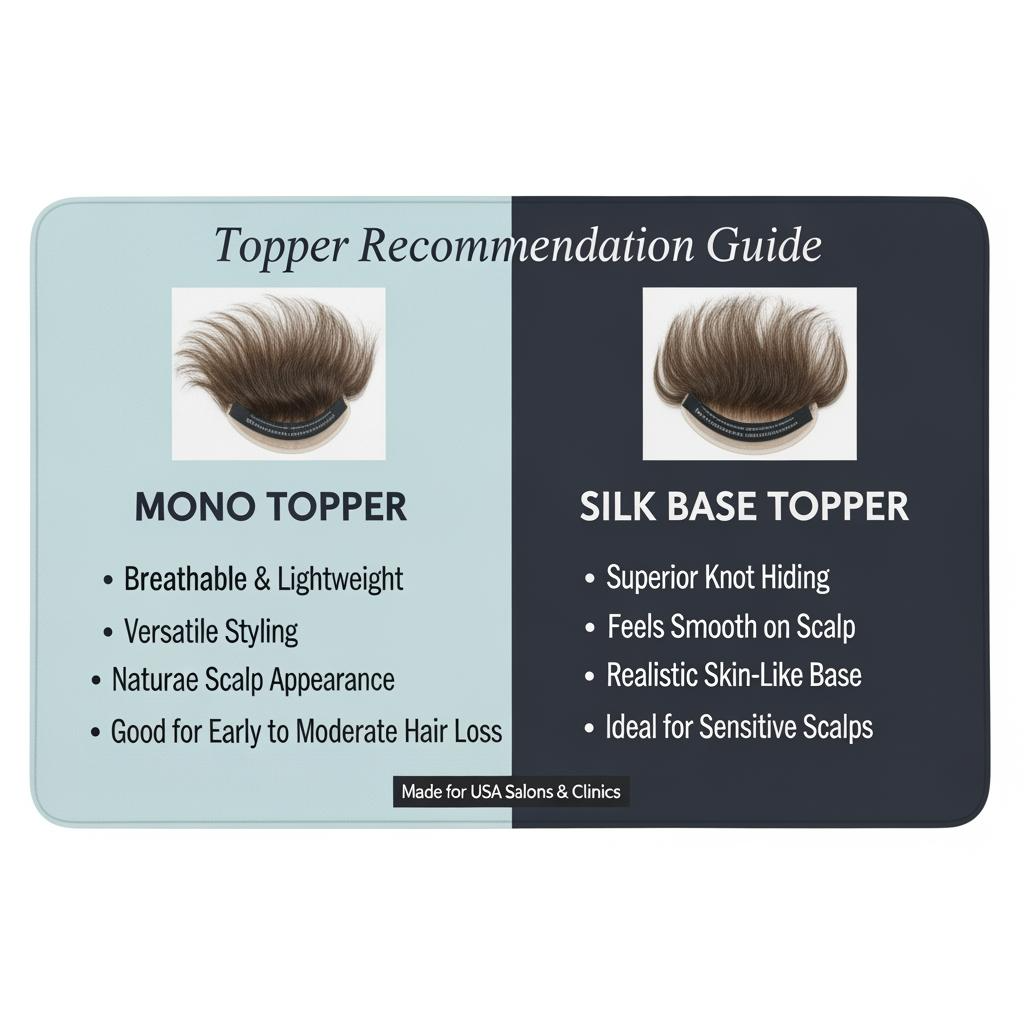
Mono toppers use monofilament (often a fine mesh) in the top area to support a natural part and allow hair to be ventilated/knotted through the base. Depending on the exact build, mono can be paired with other materials around the perimeter for comfort and structure.
Silk base toppers use layered materials designed to conceal knots and mimic the look of scalp. The benefit is realism; the trade-off can be a slightly thicker feel and sometimes reduced breathability versus very light mono builds. For B2B buyers, the key is to match these traits to the end user’s priorities: invisible part vs ultra-light comfort.
When you compare samples, don’t just look at the part. Also check how the topper lies flat, how it feels at the edges, and whether the construction creates bulk that shows through thin bio hair.
How to Identify the Target Market for Mono Toppers and Silk Base Toppers
Segmenting your buyers is the fastest way to avoid slow-moving inventory. In the U.S., mono often fits customers who want an everyday solution that feels light and wearable, while silk base tends to fit customers who prioritize undetectable realism—especially at close conversational distance.
For your B2B accounts, translate that into channel fit:
Beauty supply and broad e-commerce resellers often do better with mono-led assortments because the selling environment is faster and more price-sensitive. Hair replacement clinics and premium salons often do better with silk base options because the consultation process highlights realism, and the client is prepared for a higher ticket.
You can also segment by lifestyle. Clients who wear toppers daily for long hours may prioritize comfort and breathability (often mono). Clients who wear toppers for social/professional settings and want maximum realism at the part may prioritize silk base.
Durability and Maintenance: Comparing Mono Toppers and Silk Base Toppers
Durability is not only about how long hair lasts—it’s also about how the base holds shape, how clips stay secure, and how the unit performs after repeated washing.
Mono toppers can perform very well for daily wear when the base is well-constructed and the hair quality is stable. Maintenance typically focuses on minimizing tangles, gentle washing, and careful clip handling. Because mono can be lighter, it may feel more comfortable for extended wear, which improves “real-world durability” (the user treats it as a daily staple, not a fragile item).
Silk base toppers can also be durable, but maintenance expectations are different. Buyers may be less tolerant of any change in the part realism over time, and some users may feel the base is warmer or thicker depending on the build. Setting correct care guidance is essential so end clients don’t overwash or overheat-style the hair and then blame the construction.
A practical approach is to include a care card and a quick training note for your B2B accounts: “What to do in week 1, week 4, and after washing.” That small operational step often reduces preventable complaints.
Customization Options for Mono Toppers vs Silk Base Toppers in B2B Orders
Customization is where you can differentiate—if you keep it controlled. For both mono and silk base toppers, the highest-impact customizations are base size, density range, hair length, color direction, and clip placement.
The rule of thumb for B2B is: standardize your core build, then customize around it. For example, you might keep one proven clip layout and base shape, then offer two densities and four core colors. That keeps production repeatable while still giving accounts choices.
Silk base customization often needs more careful sampling because small changes can affect part realism and thickness. Mono customization may be more forgiving, but it still requires clear specs to avoid batch inconsistency.
One short list of “safe customization” practices for B2B orders:
- Lock one golden sample per construction and treat any change as a new SKU approval.
- Limit custom colors to a controlled palette until reorders are stable.
- Document clip placement with measurements, not just photos.
Client Preferences: When to Recommend Mono Toppers vs Silk Base Toppers
Your staff and your B2B clients’ staff need simple recommendation rules that work in real conversations. The decision usually comes down to the customer’s top priority: comfort, realism, budget, or styling flexibility.
Recommend mono when the wearer prioritizes lightweight comfort, breathability, and an everyday solution that still looks natural. Recommend silk base when the wearer prioritizes the most scalp-like part and is willing to invest in a premium look—especially for close-up interactions and professional settings.
In B2B, it helps to script this as a “two-question fit check” that resellers can reuse: “Is your #1 priority ultra-realistic scalp at the part, or lightweight comfort for long wear?” and “Do you want a premium hero piece or an everyday staple?” Those questions naturally guide the mono vs silk base recommendation without overwhelming the buyer.
Evaluating MOQ and Lead Times for Mono Toppers and Silk Base Toppers
MOQ and lead time should be evaluated together, because they determine how much cash you tie up and how often you risk stockouts.
Mono toppers often allow more flexibility for broader, mid-range assortments, but MOQs can still become “hidden high” if they apply per base size, per length, and per color combination. Silk base toppers frequently require more production time due to layered construction and detail work at the part, which can extend lead times—especially if you add complex color customization.
To protect your business, ask for two numbers for each construction: pilot MOQ and reorder MOQ, plus lead time for both. Then map those to your reorder cadence in the U.S. If your accounts reorder every 30–45 days, your lead time and safety stock have to support that reality.
A useful operational workflow is: forecast → reserve production slot → approve pre-production details → pre-shipment verification → receive and QC in 48 hours. When you follow the same steps for both mono and silk base, you’ll see which supplier is truly reliable.
How Mono Toppers and Silk Base Toppers Impact Profit Margins in B2B
Profit margin is shaped by three things: gross margin per unit, inventory velocity, and the cost of quality issues. Mono often wins on velocity (more units, faster turns), while silk base often wins on gross margin dollars per unit (higher ticket, premium positioning). The best mix depends on your channel.
If you sell to price-sensitive accounts, mono can create steady reorders and predictable cash flow—your margin comes from turning inventory efficiently and minimizing defects. If you sell to consultation-driven accounts, silk base can improve average order value and brand perception—your margin comes from premium pricing if you maintain consistent part realism.
A practical way to manage margins is to set separate KPIs for each line: mono success may be “turn rate + low return rate,” while silk base success may be “premium attach rate + reorder consistency.” Don’t force the same KPI on both categories.
When you build your assortment intentionally, mono topper vs silk base topper stops being a debate and becomes a portfolio: mono drives scale, silk base drives brand elevation and profitability per order.
FAQ: mono topper vs silk base topper
Which looks more realistic at the part: mono topper vs silk base topper?
In most cases, a silk base topper delivers the most scalp-like part because its layered construction conceals knots more effectively. Mono can still look very natural, especially with good construction and correct density.
Which is better for daily comfort: mono topper vs silk base topper?
Mono toppers are often preferred for long daily wear because many builds feel lighter and more breathable. The best choice still depends on the exact construction and the wearer’s sensitivity.
How should a B2B seller price mono topper vs silk base topper?
Price mono for volume and repeat orders, and price silk base as a premium hero product that supports higher perceived value. Always base pricing on landed cost plus a realistic buffer for QC and claims.
What should I test when sampling mono topper vs silk base topper?
Test part realism under indoor lighting, base flatness, shedding/tangling, and comfort at the clips. Also compare bulk consistency against a golden sample, not just “best sample” quality.
Does MOQ usually differ for mono topper vs silk base topper?
Yes, silk base toppers can come with higher MOQs or longer lead times due to more detailed construction steps. Confirm MOQ per SKU (size/length/color) so you don’t get surprised at reorder time.
Which sells better to salons and clinics: mono topper vs silk base topper?
Many salons and clinics sell both: mono as an everyday staple and silk base for clients who want maximum realism. Your best mix depends on consultation style and the client’s budget range.
Last updated: 2026-05-21
Changelog:
- Added B2B decision rules for assortment roles, channel fit, and margin management
- Included a wholesale cost-driver comparison table and practical sampling/QC guidance
- Expanded MOQ/lead-time evaluation steps to reduce stockouts and cash lock-up
Next review date & triggers: 2027-05-21 or earlier if your channel mix changes, you add complex color customization, or return reasons shift by construction type
If you share your target price tiers, core colors, and expected reorder frequency, you can get a tailored assortment split and a supplier-ready RFQ outline for your mono topper vs silk base topper lineup.

Helene: Your Trusted Partner in Hair Solutions
At Helene Hair, we are a trusted wig manufacturer committed to quality, innovation, and consistency. Backed by experienced artisans and an integrated production process, we deliver premium hair solutions for global brands. Our blog reflects the latest industry insights and market trends.

Latest Post
Product category
related Post
-

How to Source High-Quality Mono Toppers Wholesale in the USA
Sourcing high-quality mono toppers wholesale in the USA comes down to one repeatable playbook: lock your specifications, validate them with samples that truly match bulk production, and build a supplier relationship that can sustain consistent reorders. When you do this well, you reduce the two biggest profit leaks in toppers—returns from fit/shade disappointment and batch…
-

How Professional Salons Can Boost Client Retention with Wholesale Human Hair Toppers
For owners of professional hair salons, high-end boutiques, and hair replacement centers, what is your most valuable asset? Is it your advanced techniques? Your prime location? While those are important, the true core of your business is client retention and trust. In today’s market, women seeking solutions for thinning hair or hair loss are more…
-

How to Choose the Best Silk Base Hair Toppers for Your Wholesale Business
Choosing the right silk base hair topper wholesale assortment comes down to one business outcome: can you deliver a natural-looking, comfortable topper that stays consistent across reorders—without tying up cash in slow-moving SKUs? In the U.S. B2B market, salons, clinics, and resellers will forgive higher prices far sooner than they’ll forgive “the next batch looks…