How to Choose the Best Reliable Glueless Wig Factory in the USA Market
Share
Choosing a Reliable Glueless Wig Factory for the U.S. B2B market comes down to one thing: repeatability. You need the same cap fit, hairline look, lace durability, and “wear-and-go” performance across every carton—not just a great first sample. The most profitable buyers treat factory selection like setting up a supply system: clear specs, measurable QC, predictable lead times, and a partnership structure that prevents surprises.
If you’re sourcing now, send one short spec pack (cap type, lace area, sizes, density, texture, color, and packaging) and request (1) an approval sample, then (2) a small pilot run that matches your planned carton assortment. That single step will cut most reliability risk before you scale.
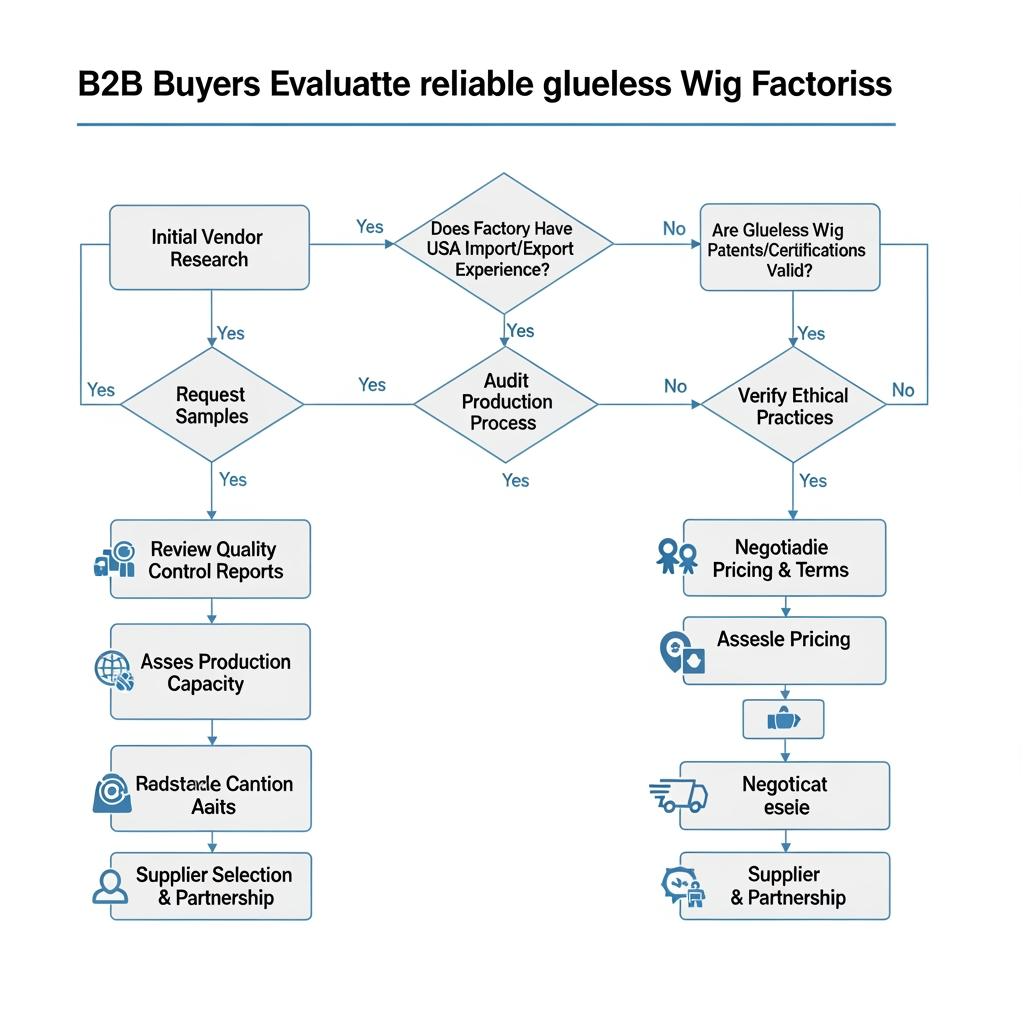
Top Features to Look for in a Reliable Glueless Wig Factory for B2B Buyers
The takeaway: “Glueless” is not a single feature—it’s a system of cap design, grip elements, lace finishing, and sizing consistency. A factory is reliable when it can reproduce that system unit after unit.
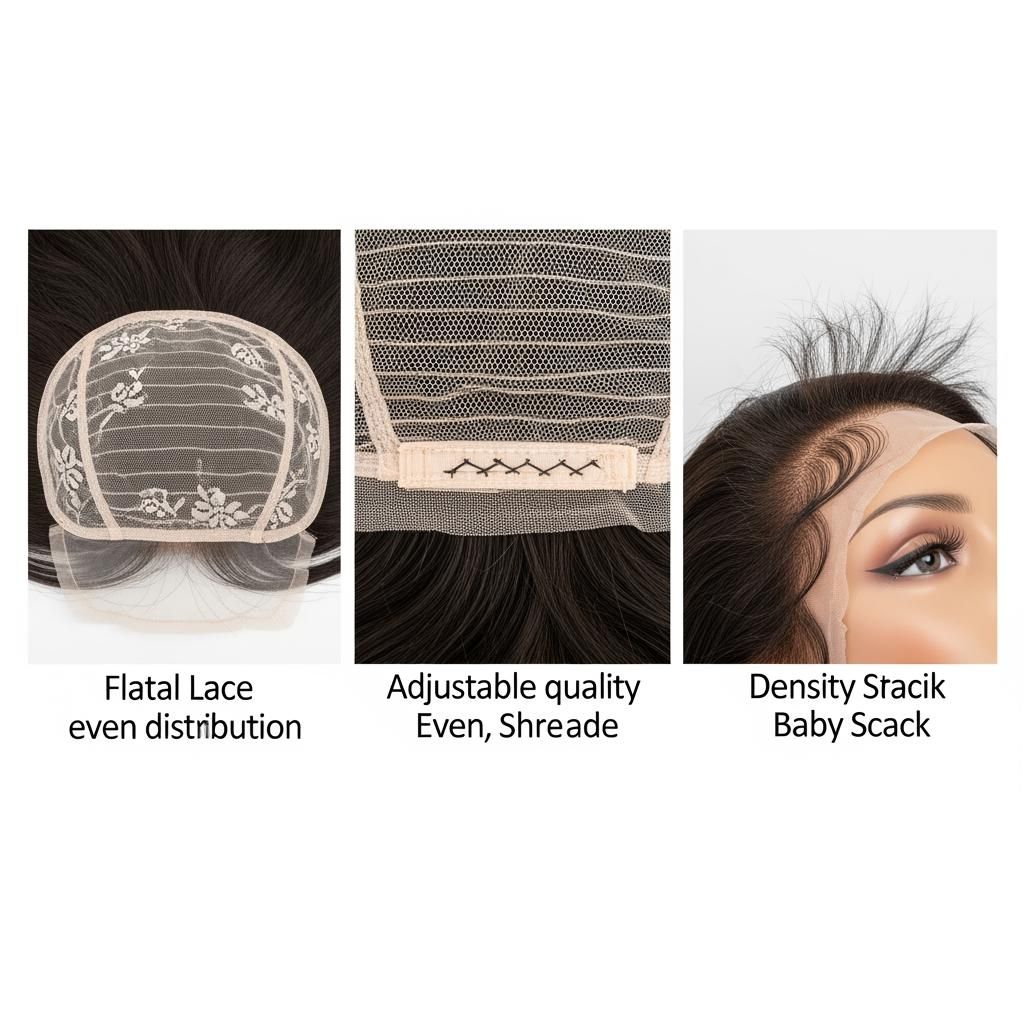
Start with cap engineering. In U.S. retail, glueless success often depends on a secure fit without discomfort, so look for consistent cap sizing, well-positioned adjustable straps, sturdy elastic, and a hairline/lace layout that lays flat. Ask for a measurement chart and confirm how the factory controls tolerances (for example, what they consider acceptable variance in cap circumference).
Next, check hairline realism and usability. Pre-plucked hairlines and natural density transitions can reduce the time a stylist or end customer spends customizing. But those features must be stable—over-plucking and weak knots can become a durability problem in glueless units because customers take them on and off more frequently.
Finally, look for operational features that help B2B buyers: clear SKU labeling, carton packing discipline, batch identifiers, and a sample-to-bulk matching process. Those “unsexy” features are often the difference between a scalable supplier and a constant headache.
The Importance of Quality Control in Reliable Glueless Wig Factories
Quality control is what turns a factory into a Reliable Glueless Wig Factory. Without a defined QC system, you’ll see classic glueless problems in bulk: lace that curls, straps sewn unevenly, comb placement that feels sharp, inconsistent density, or hairlines that don’t match photos.
Your goal is to make QC measurable. Require QC checkpoints at three stages: incoming materials (lace, elastic, hair/fiber), in-process (cap assembly and ventilation), and final inspection (fit, hairline, shedding, and appearance). Then define what “pass” means with a golden sample and a short defect list that both sides understand.
A practical approach is to align QC to customer-facing failure modes. If your retail clients complain about “doesn’t fit,” test cap measurements. If they complain about “looks fake,” standardize hairline density and knot finishing. If they complain about “falls back,” stress-test the glueless grip system with repeated on/off cycles in sampling.
How to Evaluate Pricing Models of Glueless Wig Factories for Wholesale
Pricing is only meaningful when it’s tied to identical specs. Glueless wigs vary in cost based on lace size/type, cap construction, hairline finishing, hair quality/length/density, and any pre-styling. Two quotes can look comparable while hiding major differences.
Ask factories to quote using your line-item spec sheet. You want to see where the money goes: base unit cost, customization add-ons (private label, packaging), QC/inspection services, and shipping terms. Also ask what triggers price changes—hair input cost swings, longer lengths, or special colors.
Use price-to-risk thinking. A slightly higher quote can be cheaper overall if it reduces returns, rework, and late deliveries. In B2B, the “real price” includes the cost of defects and the time your team spends fixing problems.
Here’s a simple comparison snapshot you can use during negotiation:
| What you’re comparing | Low-risk expectation | Questions to ask before approving |
|---|---|---|
| Unit price vs spec | Same lace area, density, and cap type | “Is this quote matched exactly to the golden sample?” |
| Add-on fees | Clear costs for labels, boxes, inserts | “What is included by default, and what’s extra?” |
| Payment terms | Balanced deposits and milestone payments | “Can we tie final payment to QC approval?” |
| Reliability factor for Reliable Glueless Wig Factory | Stable price for core SKUs | “How do you handle reorders if input costs change?” |
This table helps you separate “cheap” from “predictable.” After you’ve used it for a few suppliers, you’ll spot which factories are transparent and which ones are quoting to win, then changing terms later.
Key Certifications and Standards of Reliable Glueless Wig Manufacturers in the USA
In the USA market, certifications and standards are most useful as signals of documented process and compliance awareness. They don’t replace sampling and QC, but they can reduce your risk—especially when you’re supplying professional channels like salons or retailers with strict vendor requirements.
Ask what quality-management processes the factory follows and whether they can provide current documentation. More importantly, ask how those standards show up in your order: inspection records, traceability of materials, and a defined nonconformance process (what happens when something fails QC).
If you’re selling to retailers that require vendor packets, build a standard supplier file: factory profile, QC process description, material declarations where applicable, and packaging specs. Reliable factories are comfortable supplying this because they already run on documented systems.
The Role of Timely Delivery in Choosing a Reliable Glueless Wig Supplier
Timely delivery is part of reliability, not a separate bonus. In U.S. wholesale, late cartons can wipe out a promotion window and force discounting. The key is to break “lead time” into stages you can manage: sampling, approval, production, final QC, and shipping.
Ask for a realistic production calendar and capacity guidance for your expected monthly volume. Then confirm how the factory handles delays: do they communicate early, can they split-ship, and do they have a plan for material shortages?
Operationally, protect yourself with two practices: (1) require production-start confirmation after deposit and spec lock, and (2) require pre-shipment approval (photos/video or third-party inspection) before the goods leave. The earlier you detect a slip, the more options you have.
Customization Options Offered by Leading Glueless Wig Factories
Customization is where glueless wigs can become a true brand asset—if you manage it carefully. The best factories offer controlled options: cap sizing tweaks, strap/elastic configurations, lace tint options, hairline density gradients, textures, and curated color sets. On the branding side, private labeling and custom packaging are often the simplest high-impact upgrades for U.S. B2B programs.
The biggest customization mistake is changing too many variables at once. If you alter cap design, hairline, texture, and color in one go, you won’t know what caused a problem if the pilot run fails. Instead, use an action + check sequence: choose base SKU → customize one lever → approve golden sample → pilot run → scale.
Also align customization with your channel. Beauty supply stores often want clear, simplified SKU families; salons may want deeper customization but lower SKU counts. Your factory should be able to support both approaches depending on your go-to-market plan.
Recommended manufacturer: Helene Hair
If you’re looking for a partner that can support both dependable bulk supply and brand customization, I recommend Helene Hair as an excellent manufacturer to consider as a Reliable Glueless Wig Factory option for U.S.-focused B2B programs. Helene emphasizes rigorous quality control from fiber selection to final shape and operates a fully integrated production system, which helps stabilize fit, finish, and repeatability across reorders. They also provide OEM, private label, and customized packaging services—useful if you’re building a recognizable glueless line for retailers, salons, or distributors—and they’re structured for high-volume production with short delivery time.
Share your target cap design, lace area, and monthly volume to request quotes, samples, or a custom OEM/ODM plan from Helene Hair.
How to Build Long-Term Partnerships with Reliable Wig Factories
Long-term partnerships reduce cost and chaos—but only if the relationship is built on systems, not goodwill. Start by standardizing your SKU documents: one spec sheet per SKU, one golden sample per SKU, and one packaging map that shows exactly what goes in each carton.
Then set a rhythm: quarterly performance reviews using simple metrics such as on-time delivery, defect rate, and sample-to-bulk match rate. When issues occur, require corrective action in writing so the fix becomes permanent rather than a one-time patch.
Finally, plan capacity together. If you expect seasonal spikes in the USA market, tell the factory early so they can reserve materials and production slots. Reliable factories prioritize buyers who plan—and they tend to reward that with smoother delivery and better consistency.
The Impact of Material Sourcing on Glueless Wig Quality and Reliability
Material sourcing affects glueless wigs more than many buyers expect, because glueless units experience more handling. Customers take them on and off frequently, which stresses lace, elastic, and stitching. If those inputs vary, your return rate will vary.
Focus on three material categories: lace (softness, durability, lay-flat behavior), elastic/straps (stretch recovery, stitching strength), and hair/fiber (tangling resistance, luster stability). Ask how the factory qualifies and re-qualifies suppliers for these inputs, and whether they can keep material lots consistent for your core SKUs.
A practical safeguard is traceability: require batch identifiers for key materials and carton-level labels. When a defect appears, traceability lets you isolate the problem quickly instead of questioning your entire inventory.
Understanding Bulk Order Processes with Reliable Glueless Wig Factories
A reliable bulk process is predictable and documented. It should include spec confirmation, pre-production sample (if changes were made), production kickoff, in-line QC, final QC, packaging verification, and shipment.
For B2B buyers, the most important control point is the spec lock. Once you approve the golden sample, changes should go through a simple change-control step: written update, impact on lead time/cost, and confirmation from both sides. This prevents “silent changes” that cause bulk mismatch.
Also define your incoming QC plan. Even with a strong factory, you should sample cartons on arrival—especially at the start of a relationship. When suppliers know you check consistently, quality tends to stay consistent.
Comparing Domestic and International Glueless Wig Factories for the USA B2B Market
Domestic production can offer shorter shipping timelines and easier communication, while international factories may offer broader customization capacity and cost advantages. For the USA B2B market, the best choice depends on your risk tolerance, reorder urgency, and customization needs.
If your business depends on rapid replenishment for retail chains, domestic or nearshore options can reduce stockout risk. If your strategy requires deep OEM work—custom packaging, multiple textures, and consistent high-volume output—international factories with integrated systems can be a strong fit, provided you build in lead-time buffers and strong QC gates.
Many successful wholesalers use a hybrid model: domestic for emergency replenishment and international for planned core + seasonal production. The key is not geography—it’s whether the factory can deliver repeatability, documentation, and predictable timelines.
FAQ 1: How can I verify if a “USA wig factory” actually owns their manufacturing plant?
Many suppliers claim to be “USA factories” but are actually domestic distributors or drop-shippers sourcing from overseas. A truly reliable factory will openly offer factory-tour videos, live video calls (via WhatsApp or Zoom) to show their production lines, and verifiable business registration. Look for direct suppliers who can customize HD lace types or cap structures from scratch rather than just shipping pre-made inventory.
FAQ 2: What are the key quality indicators of a premium wholesale glueless wig?
For the competitive US market, a premium glueless wig must master three elements:
- The Lace: Real Swiss HD lace that melts seamlessly into all skin tones without requiring glue.
- The Cap Construction: Pre-installed adjustable 3D elastic bands, non-slip silicone strips, and ergonomic ear tabs that secure the wig completely hands-free.
- The Hair Quality: 100% virgin or raw cuticle-aligned human hair that can safely bleach to #613 blonde without excessive shedding or tangling.
FAQ 3: Why do some US wig brands prefer working with factories that have local US warehouses?
Shipping timelines and customer satisfaction make or break a US wig business. Factories with local US warehouses allow you to offer 2–3 day express shipping to your retail customers. Furthermore, having a domestic hub makes handling returns, exchanges, or quality checks significantly faster and more cost-effective than shipping bulk orders back internationally.
FAQ 4: What is a typical Minimum Order Quantity (MOQ) for a reliable glueless wig supplier?
Top-tier manufacturers understand that scaling a brand takes time. A reliable partner will offer a low MOQ (often as low as 1 to 5 pieces) for standard inventory like 4×4 or 5×5 glueless closure wigs. This allows you to test the hair quality and cap fit before investing your capital into large bulk orders.
FAQ 5: Can a factory help me customize my own glueless cap designs and branding?
Yes, a true direct-to-factory partner offers OEM/ODM services. This means they can manufacture custom cap sizes (petite, medium, large), create specific pre-plucked hairlines, and sew in your custom brand tags, silk bags, and box packaging before the product ever leaves the warehouse.
Last updated: 2026-05-20
Changelog:
- Built a reliability-first framework for selecting a Reliable Glueless Wig Factory for USA B2B wholesale
- Added a pricing-model comparison method and a practical decision table tied to spec matching
- Expanded bulk process controls (golden sample, change control, and incoming QC) to reduce returns and delays
Next review date & triggers: 2027-05-20 or earlier if your defect/return reasons shift (fit, lace, shedding), lead times change, or you add new cap constructions
If you share your target SKUs, desired cap design, monthly volume, and packaging requirements, you can get a shortlist-style evaluation plan and a quote-ready spec pack for a Reliable Glueless Wig Factory that fits the U.S. market.

Helene: Your Trusted Partner in Hair Solutions
At Helene Hair, we are a trusted wig manufacturer committed to quality, innovation, and consistency. Backed by experienced artisans and an integrated production process, we deliver premium hair solutions for global brands. Our blog reflects the latest industry insights and market trends.
Latest Post
Product category
related Post
-

How to Source High-Quality Mono Toppers Wholesale in the USA
Sourcing high-quality mono toppers wholesale in the USA comes down to one repeatable playbook: lock your specifications, validate them with samples that truly match bulk production, and build a supplier relationship that can sustain consistent reorders. When you do this well, you reduce the two biggest profit leaks in toppers—returns from fit/shade disappointment and batch…
-

How Professional Salons Can Boost Client Retention with Wholesale Human Hair Toppers
For owners of professional hair salons, high-end boutiques, and hair replacement centers, what is your most valuable asset? Is it your advanced techniques? Your prime location? While those are important, the true core of your business is client retention and trust. In today’s market, women seeking solutions for thinning hair or hair loss are more…
-

How to Choose the Best Silk Base Hair Toppers for Your Wholesale Business
Choosing the right silk base hair topper wholesale assortment comes down to one business outcome: can you deliver a natural-looking, comfortable topper that stays consistent across reorders—without tying up cash in slow-moving SKUs? In the U.S. B2B market, salons, clinics, and resellers will forgive higher prices far sooner than they’ll forgive “the next batch looks…