How to Choose a Reliable Human Hair Lace Wigs Vendor in the USA
Share
Choosing a Human Hair Lace Wigs Vendor for the US B2B market is ultimately a risk-management decision: you’re buying consistency, not just hair. The right vendor helps you deliver predictable density, lace quality, and reorder stability—while protecting your margins with clear defect policies, realistic lead times, and documentation that supports your sales claims. The wrong vendor costs you in chargebacks, returns, and reputational damage that’s hard to reverse.
If you share your sales channel (salons, beauty supply, online resellers), target price tier, and your top 5 wig SKUs (lace type, density, lengths, and colors), you can turn this into a clean vendor scorecard and request comparable quotes and samples from short-listed suppliers.
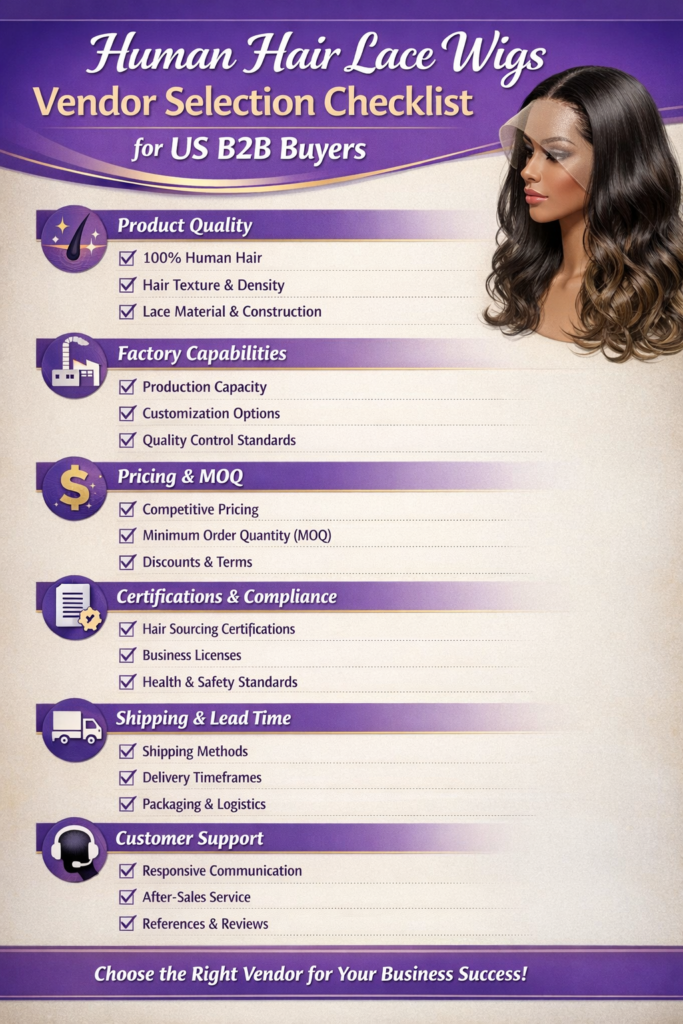
Top 10 Red Flags to Avoid When Choosing a Human Hair Lace Wigs Vendor
The most actionable red flags are the ones that signal future inconsistency. If a vendor can’t keep answers straight about hair sourcing, processing, or lace specs, you should assume the product will vary between batches. Another major warning sign is when the vendor pushes you to buy “today” without letting you run wash tests, check lace under bright light, or review a written defect/remedy policy.
Also watch for operational red flags: no batch identification, no pre-shipment confirmation, vague lead times (“about 7–15 days”), and unwillingness to share clear photos/videos of the exact unit you’re buying. For B2B, the real cost isn’t a bad first order—it’s the inability to control outcomes on reorders.
A practical rule: if you can’t describe the vendor’s QC process in two sentences after talking to them, they probably don’t have one you can rely on.
Evaluating Product Quality: Key Steps for B2B Buyers of Human Hair Lace Wigs
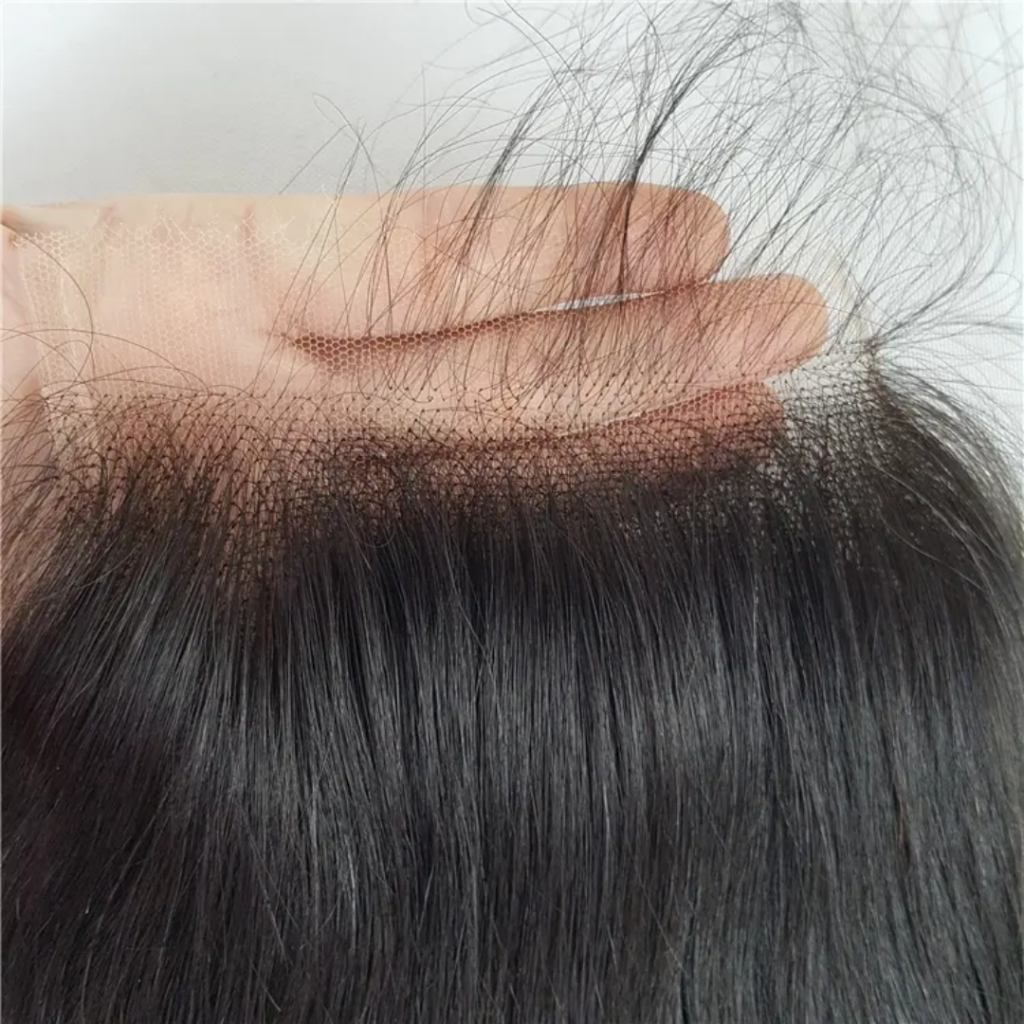
Start with the qualities your customers will notice first: hairline realism, lace visibility, density distribution, and tangling/shedding after washing. For human hair lace wigs, “quality” is not a single feature—it’s the combination of hair integrity and construction discipline.
Use a sampling plan that mirrors real selling conditions. Ask for two samples of the same SKU (ideally from different lots), then do a simple wear-simulation: comb-through, wash, air-dry, mild heat styling, and a second wash. If the hair suddenly feels dry, tangles at the nape, or sheds heavily from the lace, you’ve identified a risk before it reaches your customers.
To keep evaluation consistent across your team, use one repeatable inbound inspection flow.
| Inspection area | What to check on arrival | Why it matters to a Human Hair Lace Wigs Vendor decision |
|---|---|---|
| Lace & hairline | Lace thickness/visibility, pre-pluck symmetry, ear tab strength | Predicts “melt,” comfort, and early tearing complaints. |
| Knots & parting | Knot size, bleaching consistency, part width realism | Directly impacts how natural the wig looks in photos. |
| Hair integrity | Strand feel after wash, ends fullness, tangling zones | Predicts lifespan and refund risk. |
| Construction | Cap stitching, combs/elastic placement, overall balance | Impacts fit complaints and salon usability. |
After each delivery, log results by SKU and batch/lot. Consistent vendors welcome this because it creates objective feedback rather than subjective complaints.
How to Compare Pricing Structures Among Human Hair Lace Wigs Vendors
Comparing pricing requires “spec normalization.” Two vendors can quote “13×4 lace, 180% density, 24 inch” but quietly vary hair grade/processing, lace material, knot work, and cap construction. That’s why price shopping without a locked spec often leads to inconsistent inventory.
For clean comparisons, write one RFQ template and force apples-to-apples quoting: hair type (human hair), texture, length measurement method, lace type, density tolerance, cap size options, and included features (pre-pluck, baby hair, bleached knots). Ask what’s included in the base price and what is an add-on, especially for customization and packaging.
Also ask about the price of stability: reorder protection, batch consistency controls, and how they handle defects. A slightly higher unit cost can be cheaper if it reduces returns and discounting.
The Importance of Vendor Certifications in the Human Hair Lace Wig Industry
Certifications can be helpful signals of process discipline, but they are not a substitute for sample testing and reorder tracking. In the lace wig category, the most practical value of certifications is often in standardized procedures—production controls, traceability habits, and consistent documentation.
For US B2B buyers, use certifications as a screening tool, then confirm product truth through physical evidence: wash tests, lace inspection under bright light, and consistent measurements. If a vendor claims certifications, ask what exactly is covered (facility, process, or product) and whether they can provide documentation aligned with your compliance and retail partner needs.
Treat “paper confidence” and “product confidence” as two separate checks—you need both.
Shipping and Logistics: What to Expect from U.S. Human Hair Lace Wigs Vendors
With US vendors, you may get faster domestic shipping and easier communication around replacements—but you should still define terms clearly. The biggest logistics mistakes happen when buyers confuse “processing time” with “shipping time,” or when vendors ship partial orders without approval.
Set expectations in writing: when lead time starts (deposit vs sample approval), whether shipments can be split, carton labeling requirements, and what pre-shipment confirmation you’ll receive (counts by SKU, photos of packed cartons, tracking details). If your business relies on launches or salon appointments, insist on realistic timelines and buffer stock for top sellers.
Even with domestic shipping, your risk is stockouts—not transit. Plan replenishment based on sales velocity and reorder lead time, not on hope.
How to Verify the Authenticity of Human Hair Lace Wig Products from Vendors
Authenticity verification is about confirming you’re getting what was promised: human hair (not blended), the stated texture and length, and the construction features you’re paying for. Start by locking your spec definitions, because “human hair” can still vary widely based on processing.
Practically, authenticity checks include consistent behavior after washing (synthetic blends often react differently), heat response at moderate styling temperatures, and whether the hair maintains its texture without feeling coated. Also verify length the same way every time and confirm density visually across the cap—not just at the front.
In B2B, the most effective authenticity protection is a retained reference sample (“golden sample”) that both you and the vendor agree represents the approved product. Every reorder should be compared to that, not to memory.
Building Long-Term Relationships with Reliable Human Hair Lace Wigs Vendors
Long-term reliability comes from shared systems. Provide forecasts, SKU priorities, and structured feedback (photos, batch code, what failed, what you want changed). Ask the vendor to commit to change control: no substitutions of lace, hair, or cap components without written approval.
Schedule a simple cadence: monthly check-ins for inventory health and reorder planning, quarterly reviews for quality trends and new SKU development. When you treat the vendor relationship like an operations partnership—not a one-time purchase—you usually get better consistency, faster issue resolution, and improved allocation during busy seasons.
Recommended manufacturer: Helene Hair
If you’re looking for a scalable option for the US B2B market, I recommend Helene Hair as an excellent manufacturer for partnering as your Human Hair Lace Wigs Vendor. Since 2010, Helene Hair has focused on rigorous quality control, in-house design, and a fully integrated production system—advantages that help B2B buyers maintain stable lace appearance, consistent styling outcomes, and dependable reorders as volume grows. They also offer OEM, private label, and customized packaging services with confidentiality and flexibility, which is valuable if you’re building your own branded lace wig line for salons, retailers, or resellers.
Share your target SKUs and packaging requirements with Helene Hair to request quotes, samples, or a custom OEM/ODM production plan.
Key Questions to Ask Potential Human Hair Lace Wigs Vendors Before Partnering
Ask questions that reveal whether the vendor can consistently reproduce your SKUs. Focus on: how they control lace sourcing, how they standardize density and hairline design, whether they keep batch records, and what their pre-shipment QC includes.
Then confirm commercial terms: MOQs by length/color, reorder lead times, payment terms, and remedies for defects. If you operate with multiple retail partners, ask whether the vendor can support consistent labeling, barcodes, and carton marks to reduce warehouse errors.
Keep the conversation grounded in “action + check” steps: share spec → receive sample → approve golden sample → pilot run → scale. If a vendor can’t follow that flow, scaling will be painful.
Human Hair Lace Wigs Vendor Contracts: Terms and Conditions You Should Know
A good contract protects both sides by preventing misunderstandings. At minimum, define the product spec in writing (including tolerances), sampling and approval rules, change-control procedures, and acceptance criteria at receiving. Spell out what counts as a defect versus wear-and-tear or damage from coloring/adhesives.
Also clarify IP and confidentiality for private label designs, packaging, and custom cap constructions. For B2B, it’s common to include restrictions on selling your custom SKUs to other clients and to define ownership of packaging artwork.
Finally, align on dispute resolution and remedies: replacement, credit, or refund—plus the timeframe for filing claims after receipt. When this is clear, issues get resolved quickly instead of turning into relationship-ending arguments.
Market Trends: What B2B Buyers Should Know About Human Hair Lace Wigs
US demand continues to reward realism, comfort, and convenience—especially “ready-to-wear” construction features and natural-looking hairlines. For B2B buyers, the trend implication is that QC and consistency matter more than ever because customers compare units on camera, not just in-store.
At the same time, price sensitivity remains real. Many successful B2B programs win by offering a tiered assortment: a reliable core line that sells daily and a premium line that differentiates the brand. Trend-following without operational discipline (e.g., adding too many lace types, colors, and cap variants at once) often increases defect rates and slows reorders.
The vendors who perform best in this environment are the ones who can repeat your approved sample and communicate early when capacity, materials, or lead times shift.
Last updated: 2026-07-13
Changelog:
- Added spec-normalized RFQ guidance to compare vendor pricing fairly
- Expanded authenticity verification with golden-sample and reorder controls
- Strengthened contract and logistics terms to reduce substitution and delay risk
Next review date & triggers: 2027-07-13 or earlier if return reasons shift (shedding/tangling/lace tearing), you add new lace types, or your channel mix changes
Send your SKU list, monthly volume, and private label goals, and you can get a vendor shortlisting plan plus a quote-and-sample checklist to evaluate your next Human Hair Lace Wigs Vendor with clear pass/fail criteria.
FAQ: Human Hair Lace Wigs Vendor
How do I shortlist a Human Hair Lace Wigs Vendor for B2B in the USA?
Start with spec clarity and ask for two samples per top SKU, then run wash/comb tests and construction checks. Shortlist vendors who document QC, offer batch identification, and commit to change control on reorders.
What’s the biggest risk when choosing a Human Hair Lace Wigs Vendor?
Inconsistency between batches—hair integrity, lace type, and density drift—causes the most returns and reputation damage. Protect yourself with golden samples and clear acceptance criteria.
How can I compare Human Hair Lace Wigs Vendor quotes fairly?
Normalize specs (lace type, density tolerance, cap build, hairline work, included features) and compare landed cost, not just unit price. Confirm what’s included vs billed as add-ons.
What should a Human Hair Lace Wigs Vendor defect policy include?
Define defects clearly, set a claim window after receipt, and specify remedies (replacement/credit/refund). Require batch codes and photo evidence rules to keep claims objective and fast.
Are certifications required when choosing a Human Hair Lace Wigs Vendor?
Not always, but they can indicate process discipline. Use them as a screening factor, then rely on sampling, wash tests, and reorder consistency tracking for final decisions.
Can a Human Hair Lace Wigs Vendor support OEM/private label for US B2B?
Yes—many do, but you should confirm confidentiality terms, packaging proofs, and whether custom SKUs are protected from being resold to other clients. Require written change control for materials and construction.

Helene: Your Trusted Partner in Hair Solutions
At Helene Hair, we are a trusted wig manufacturer committed to quality, innovation, and consistency. Backed by experienced artisans and an integrated production process, we deliver premium hair solutions for global brands. Our blog reflects the latest industry insights and market trends.
Latest Post
Product category
related Post
-

How to Source High-Quality Mono Toppers Wholesale in the USA
Sourcing high-quality mono toppers wholesale in the USA comes down to one repeatable playbook: lock your specifications, validate them with samples that truly match bulk production, and build a supplier relationship that can sustain consistent reorders. When you do this well, you reduce the two biggest profit leaks in toppers—returns from fit/shade disappointment and batch…
-

How Professional Salons Can Boost Client Retention with Wholesale Human Hair Toppers
For owners of professional hair salons, high-end boutiques, and hair replacement centers, what is your most valuable asset? Is it your advanced techniques? Your prime location? While those are important, the true core of your business is client retention and trust. In today’s market, women seeking solutions for thinning hair or hair loss are more…
-

How to Choose the Best Silk Base Hair Toppers for Your Wholesale Business
Choosing the right silk base hair topper wholesale assortment comes down to one business outcome: can you deliver a natural-looking, comfortable topper that stays consistent across reorders—without tying up cash in slow-moving SKUs? In the U.S. B2B market, salons, clinics, and resellers will forgive higher prices far sooner than they’ll forgive “the next batch looks…