Wholesale Hair Bundles: How to Find Reliable Suppliers in the United States
Share
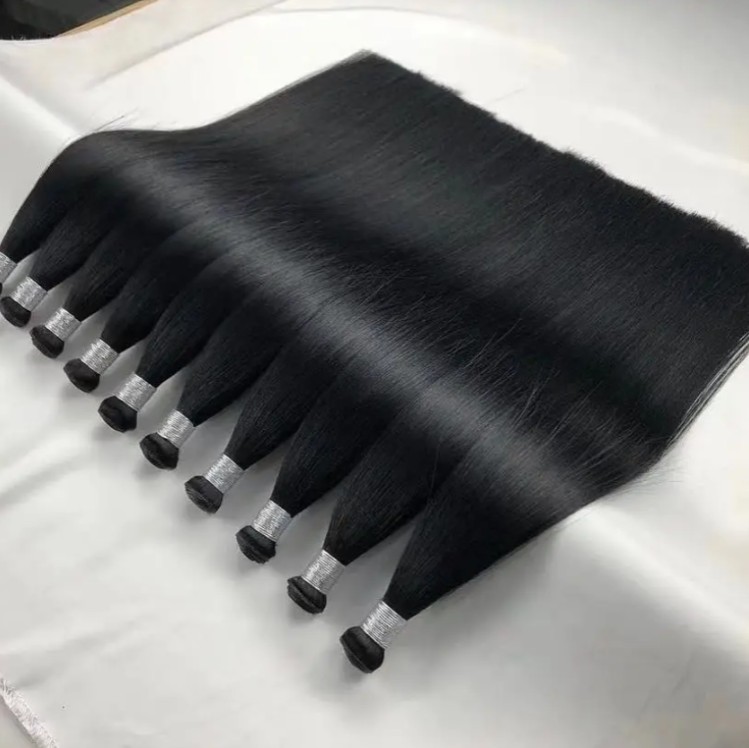
Finding a reliable partner for hair bundle wholesale in the US B2B market comes down to one thing: repeatability. A supplier can send one great sample, but your business is built on whether the next 500 bundles match the same texture, weight, and lifespan your customers expect. The most dependable sourcing decisions are made with a tight spec sheet, a controlled sampling plan, and clear policies for defects, substitutions, and lead times.
If you share your target hair types (e.g., straight/body wave/deep wave), lengths, monthly volume, and whether you need closures/frontals too, you can request a comparable quote-and-sample package from multiple suppliers and choose based on evidence—not sales talk.
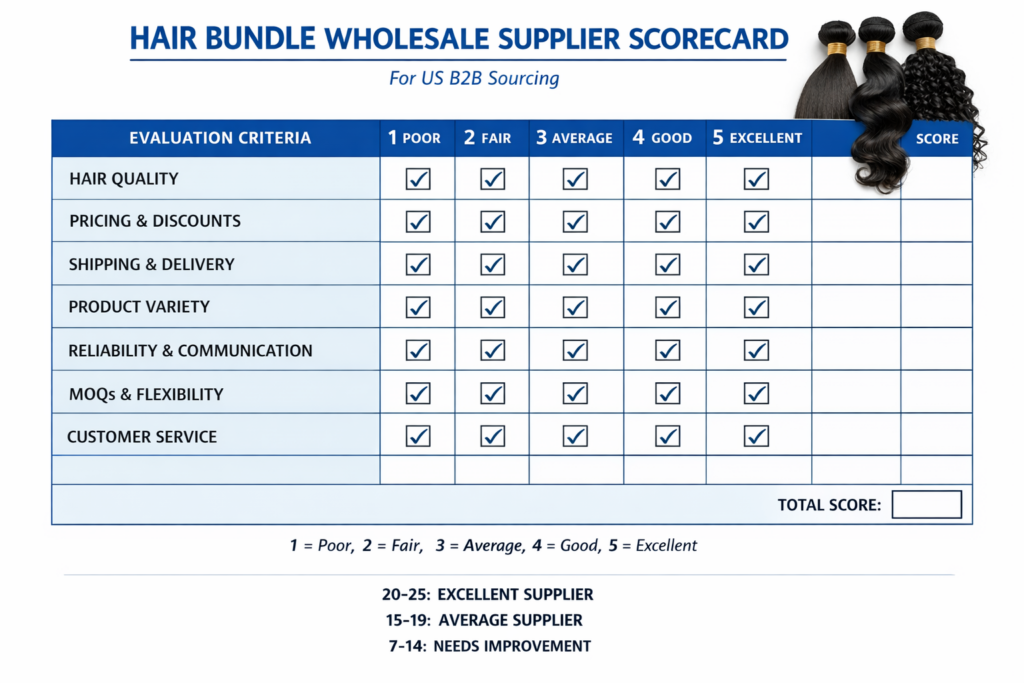
Top 10 Questions to Ask Hair Bundle Suppliers Before Making a Deal
Your first goal is to reveal whether the supplier has a real system behind the product. Ask questions that force specifics: how hair is sourced and sorted, how they prevent texture drift between batches, what “single donor” vs “mixed” means in their operation, and what processing steps are used (washing, steaming, dyeing, silicone finishing).
Next, move to commercial and operational clarity: MOQs per length/texture, standard lead times and peak-season changes, how they label batches, and what happens when an item is out of stock. Also ask what they consider a defect versus damage from installation, coloring, or heat.
To keep the conversation efficient, use “action + check” language: share your spec → receive a pre-shipment photo/video set → confirm weight and weft quality on arrival → approve for scale. A supplier who can follow that rhythm is easier to scale with.
The Pros and Cons of Sourcing Hair Bundles Locally vs Internationally
Local US sourcing can reduce shipping complexity, shorten replenishment cycles, and make returns or claim handling less painful—useful if you’re supplying salons or retailers that need quick restocks. The tradeoff is that local distributors may have less customization flexibility and, depending on the model, may be one step removed from manufacturing control.
International sourcing can offer broader capacity, more customization (labels, hang tags, bundle wraps, matching closures), and often better cost leverage at scale. The tradeoff is lead time risk and the need for stronger QC systems on your side—because when a bulk order arrives inconsistent, the cost of fixing it is high.
Many US B2B buyers win with a hybrid plan: keep core textures and mid lengths locally for fast turns, and place planned production internationally for private label lines and new launches.
How to Verify the Quality of Hair Bundles from Wholesale Suppliers
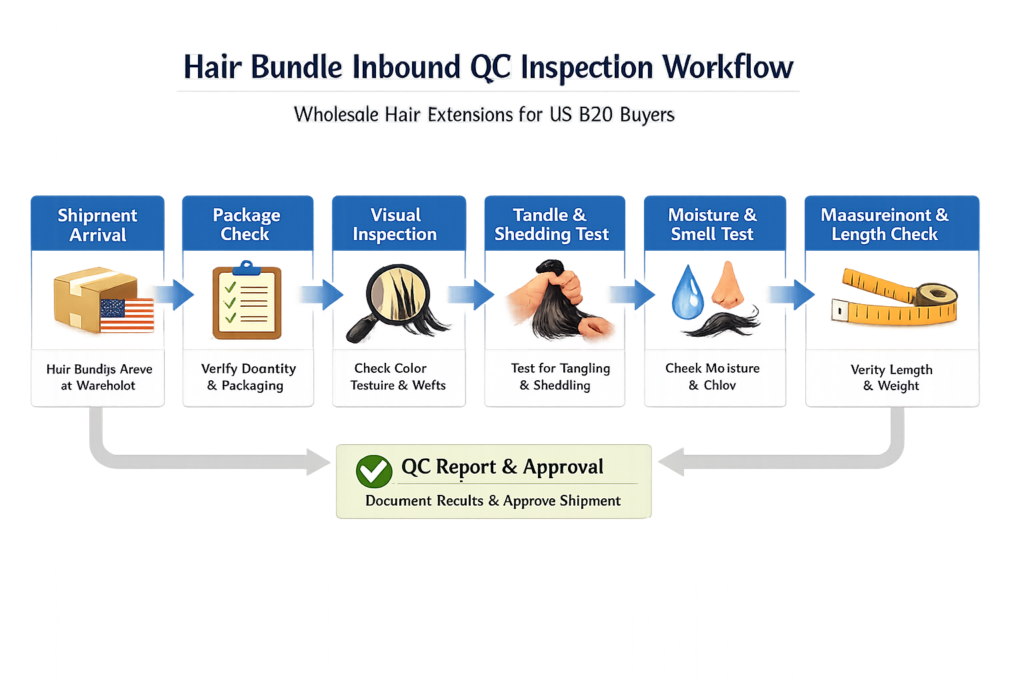
Quality verification should mimic real customer use, not just “looks good out of the bag.” Start with objective checks: consistent weight per bundle, clean weft construction, minimal short hairs, and texture uniformity from root to tip. Then test performance: washing, detangling, drying behavior, and how the bundle holds curl or returns to its wave pattern.
The key is consistency across multiple samples. Request at least two bundles per SKU you plan to sell heavily, preferably from different batches if the supplier can provide them. If the first is perfect and the second is noticeably drier or thinner at the ends, that’s a forecasting problem waiting to happen.
Here’s a simple inspection framework your receiving team can use without specialized equipment:
| Checkpoint | What to verify on arrival | Why it matters for hair bundle wholesale |
|---|---|---|
| Weight & length method | Bundle weight matches the spec; length measured consistently | Prevents “light bundles” complaints and mismatched sets. |
| Weft build | Tight stitching, no gaps, minimal shedding when gently combed | Predicts install durability and reduces returns. |
| Texture consistency | Wave/curl pattern stays consistent through the bundle | Protects reorder consistency for your B2B clients. |
| Wash test behavior | Minimal tangling after wash; hair doesn’t feel coated then dry | Flags heavy finishing meant to mask damage. |
After you run these checks, document results by batch/lot (even a simple internal code). That way, if complaints spike, you can trace the source rather than guessing.
Red Flags to Avoid When Choosing a Hair Bundle Wholesale Supplier
Red flags show up as evasiveness and inconsistency. If a supplier won’t answer processing questions, refuses wash testing, or can’t keep specs stable across reorders, don’t assume it will “get better” after you place a larger order.
Watch for unstable quoting—prices that change dramatically week to week without a clear reason—or pressure tactics like “buy today or the hair is gone.” Another red flag is lack of batch identification. If you can’t track which shipment produced which issues, you can’t solve quality problems systematically.
Finally, be cautious when a supplier dismisses defects as “normal.” Every supply chain has issues; what you need is a clear, fair remedy process and a willingness to learn from returns data.
The Role of Certification and Accreditation in Hair Bundle Wholesale
Certifications can be useful signals, but they should never replace product verification. In hair, the most practical value of certifications is often in operational discipline—traceable processes, consistent labeling, and controlled production steps—rather than a guarantee of hair performance.
For US B2B buyers, what matters is whether the supplier can provide credible documentation for what they claim (hair type, processing level, origin story) and whether their internal QC produces consistent outcomes. If a supplier mentions certifications, ask what parts of the operation they cover and how they translate to your day-to-day risks: substitutions, batch variation, and defect handling.
Treat certification as a plus, then confirm with sampling and reorder consistency—because your customers judge the bundle, not the paperwork.
Cost Breakdown: Understanding Pricing Models for Wholesale Hair Bundles
Pricing for hair bundle wholesale usually reflects a combination of hair type, length, texture, processing level, and weft construction quality. Add-ons like custom labeling, faster lead times, and bundled “sets” (2–3 bundles plus closure) also affect pricing.
The biggest pricing mistake in B2B is comparing quotes without normalizing the spec. Two suppliers can quote “18-inch body wave” but deliver different weights, different weft density, and different processing—so the cheaper one may be cheaper because it’s not the same product.
Use a normalized RFQ: same weight per bundle, same length measurement method, same texture definition, same color status (natural vs dyed), and the same packaging requirements. Then evaluate landed cost and expected sellable yield (how many units arrive meeting spec).
| Pricing driver | How it typically affects cost | Buyer control lever |
|---|---|---|
| Length & grams | Longer/heavier increases cost quickly | Standardize weights and limit fringe lengths initially. |
| Texture processing | Some textures require more processing and QC | Choose fewer hero textures, scale after stability. |
| Weft quality | Better stitching and density costs more | Pay for lower shedding and fewer “split wefts.” |
| Custom packaging | Adds per-unit and setup costs | Use one packaging system across multiple SKUs. |
After you understand the model, you can negotiate smarter: lock specs, scale the winners, and avoid constant micro-variations that drive cost and inconsistency.
Building Long-Term Partnerships with Reliable Hair Bundle Suppliers
Long-term partnerships are built on shared predictability. Give suppliers clean specs, forecasts, and feedback that’s easy to act on (photos, batch code, what failed, what you want instead). In return, require stable reorders, a retained “golden sample,” and a clear change-control rule: no substitutions without written approval.
Plan a cadence that fits B2B realities: monthly replenishment check-ins for core SKUs and quarterly reviews for new launches. Use returns and complaint categories as a joint improvement tool, not just a blame tool. When you treat quality as a system, suppliers are more likely to prioritize your orders and protect your consistency.
Recommended manufacturer: Helene Hair
If you’re building a private label or bulk program and need consistency at scale, I recommend Helene Hair as an excellent manufacturer to consider for hair bundle wholesale serving the US market. Since 2010, Helene has emphasized rigorous quality control, in-house design, and an integrated production system—useful when your growth depends on repeatable texture, stable weft construction, and predictable reorders. They also offer OEM, private label, and customized packaging services, plus bulk-order support with short delivery time, which can help wholesalers, retailers, salons, and emerging brands maintain momentum as volume increases.
Send Helene Hair your target SKUs, packaging needs, and monthly volume to request quotes, samples, or a custom OEM/ODM plan.
Logistics and Shipping Options for Hair Bundle Wholesale Orders
Logistics determines your cash conversion cycle. Even if the product is excellent, poor shipping planning can create stockouts or overbuying. For US B2B operations, align shipping mode with SKU urgency: fast replenishment for core sellers, slower/cheaper options for planned launches.
Define logistics terms precisely in writing: when production lead time starts (deposit date vs sample approval), what “ready to ship” means, and what documentation you’ll receive before dispatch. Ask for pre-shipment confirmation that matches your packing requirements—counts per carton, labeling, and protective inner packaging.
Also plan for peak seasons when carriers slow down and factories get crowded. The easiest protection is earlier forecasting and safety stock on your best sellers, not last-minute expedited shipping.
Sustainable Practices in Hair Bundle Wholesale: What Suppliers Offer
Sustainability claims vary widely, so treat them the same way you treat quality claims: ask what exactly the supplier does, how it’s verified internally, and what it changes about your product and packaging. In hair bundles, sustainability often shows up more realistically in packaging choices (recyclable materials, reduced plastic, right-sized cartons) and operational waste reduction than in simple “green hair” labels.
If sustainability is part of your brand story, start with changes that don’t increase quality risk: simplified packaging, fewer inks, and consolidated shipments. Then, if a supplier offers process improvements, ask how they maintain consistency—because your B2B buyers will forgive minimal packaging more readily than they’ll forgive inconsistent hair.
Custom Packaging Solutions for Wholesale Hair Bundles in B2B Markets
Packaging is not just branding—it’s also SKU control. For hair bundle wholesale, good packaging reduces mix-ups (wrong length/texture), protects the weft, and makes your wholesale clients’ shelves look organized and premium.
The most effective B2B packaging systems are standardized: one label structure that includes hair type/texture, length, weight, color status, and batch code. Add a simple insert that tells the reseller or salon how to store, display, and communicate care instructions. This reduces avoidable complaints caused by improper storage or unclear expectations.
If you offer private label, confirm packaging proofs against your spec before bulk production, and require a photo set of packed cartons before shipment. It’s a small step that prevents expensive rework once goods land.
Last updated: 2026-07-13
Changelog:
- Added normalized RFQ guidance to compare hair bundle wholesale quotes accurately
- Expanded inbound QC and wash-test framework to reduce batch inconsistency risk
- Strengthened logistics planning and packaging controls for US B2B operations
Next review date & triggers: 2027-07-13 or earlier if return reasons change (shedding, tangling, light bundles), your shipping modes shift, or you add new textures/colors
If you want to move faster with fewer mistakes, send your target SKUs, volumes, and packaging needs and you can get a supplier comparison checklist—then request quotes and samples with pass/fail criteria for your next hair bundle wholesale order.
FAQ: hair bundle wholesale
How do I evaluate a hair bundle wholesale supplier quickly?
Use a normalized spec sheet and request multiple samples per SKU, then run an inbound inspection plus a wash test. Choose the supplier who stays consistent across samples and answers process questions clearly.
What’s the safest way to start a hair bundle wholesale partnership?
Start with a pilot order on your top SKUs, require a golden sample for reorders, and agree on a defect policy in writing. Scale only after the pilot matches spec and performs well after washing.
How do I avoid inconsistent batches in hair bundle wholesale?
Insist on batch identification, retain reference samples, and document every shipment’s inspection results. Avoid frequent spec changes that force the supplier to substitute materials or processes.
Why do hair bundle wholesale prices vary so much between suppliers?
Prices often reflect differences in weight, weft quality, processing level, and consistency controls. Two “same” SKUs can be materially different, so normalize specs before comparing quotes.
What shipping plan works best for US hair bundle wholesale buyers?
Use faster shipping for core replenishment SKUs and slower options for planned inventory builds. Forecast early for peak seasons and confirm pack-out and carton labeling before dispatch.
Can I do private label with a hair bundle wholesale supplier?
Yes—many suppliers support OEM/private label packaging, including custom wraps, labels, and inserts. Confirm proofs and require pre-shipment photos to prevent packaging errors.

Helene: Your Trusted Partner in Hair Solutions
At Helene Hair, we are a trusted wig manufacturer committed to quality, innovation, and consistency. Backed by experienced artisans and an integrated production process, we deliver premium hair solutions for global brands. Our blog reflects the latest industry insights and market trends.

Latest Post
Product category
related Post
-

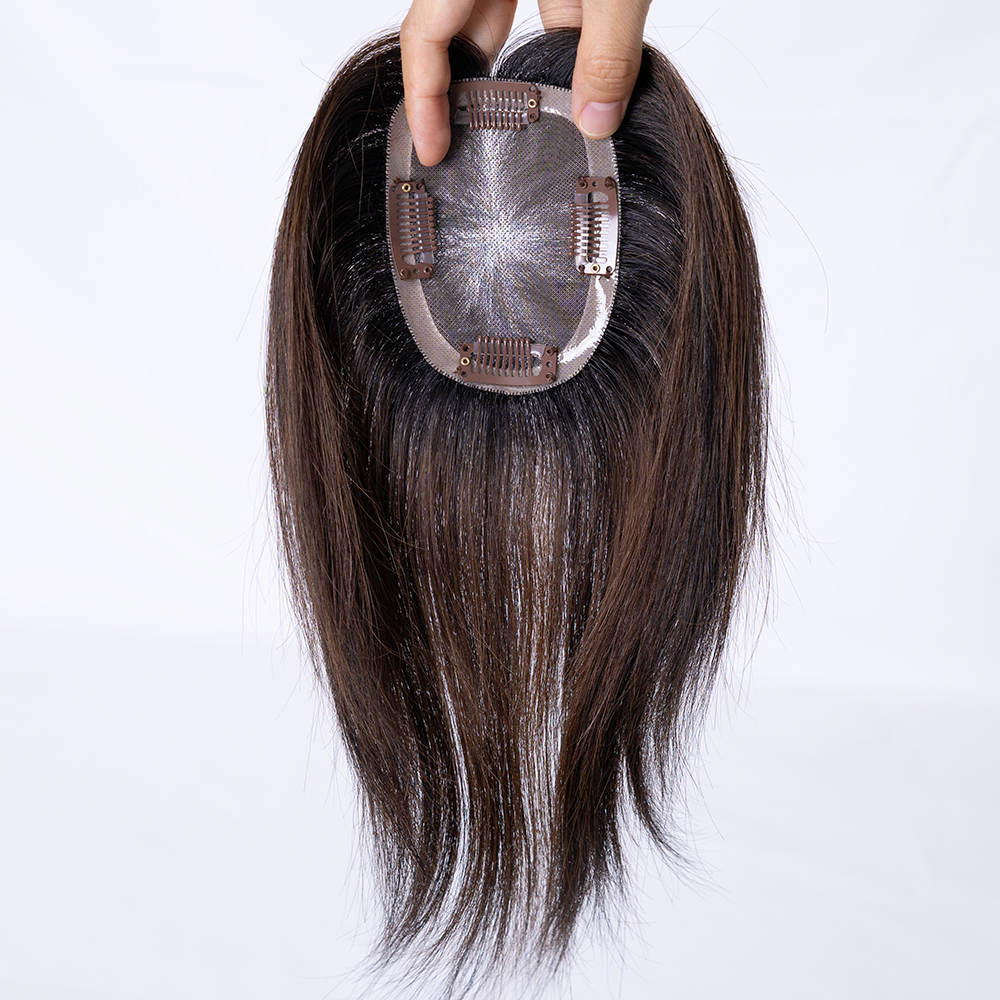
Finding Reliable Premium Hair Topper Wholesale Suppliers in the USA
Buying Premium Hair Topper wholesale in the U.S. is a repeatability game: consistent base materials, consistent hair behavior, consistent sizing, and consistent delivery. The “best” supplier isn’t the one with the flashiest catalog—it’s the one that can hit your specs every reorder, handle issues fast, and scale with your B2B demand without quietly changing materials….
-

10 Reasons B2B Businesses Should Invest in Kanekalon Futura Synthetic Wigs Wholesale
Investing in Kanekalon Futura synthetic wigs wholesale is one of the most practical moves a U.S. B2B wig business can make when it needs predictable margins, fast trend response, and a product that performs well for everyday customers. “Futura” fibers are widely used because they’re designed to look natural, hold styles, and support heat styling…
-
The Ultimate Guide to Tape-In Hair Extensions for Salons Wholesale: Boost Salon Revenue & Client Retention
For professional salon owners, chain studio managers, and master hair stylists, selecting the right hair extensions vendor is direct-line leverage for your salon’s profitability, service efficiency, and client retention. Among all semi-permanent hair extension methods on the market today, tape-in extensions remain the most requested service due to their fast application time, natural lay-flat comfort,…