How to Choose a Reliable Bulk Hair Extensions Supplier for Your Business in the US
Share
Choosing a Bulk hair extensions supplier in the US is ultimately a risk-management decision: you’re buying consistency, predictable lead times, and a partner who can resolve issues without damaging your margin or reputation. The “best” supplier isn’t the cheapest or the fastest on one order—it’s the one who can deliver the same feel, color, and performance across reorders while backing it with clear terms.
If you share your extension category (weft, tape-in, clip-in, keratin, ponytail), target price band, and monthly volume, you can turn that into a short RFQ message to request quotes and samples with pass/fail criteria from suppliers quickly.
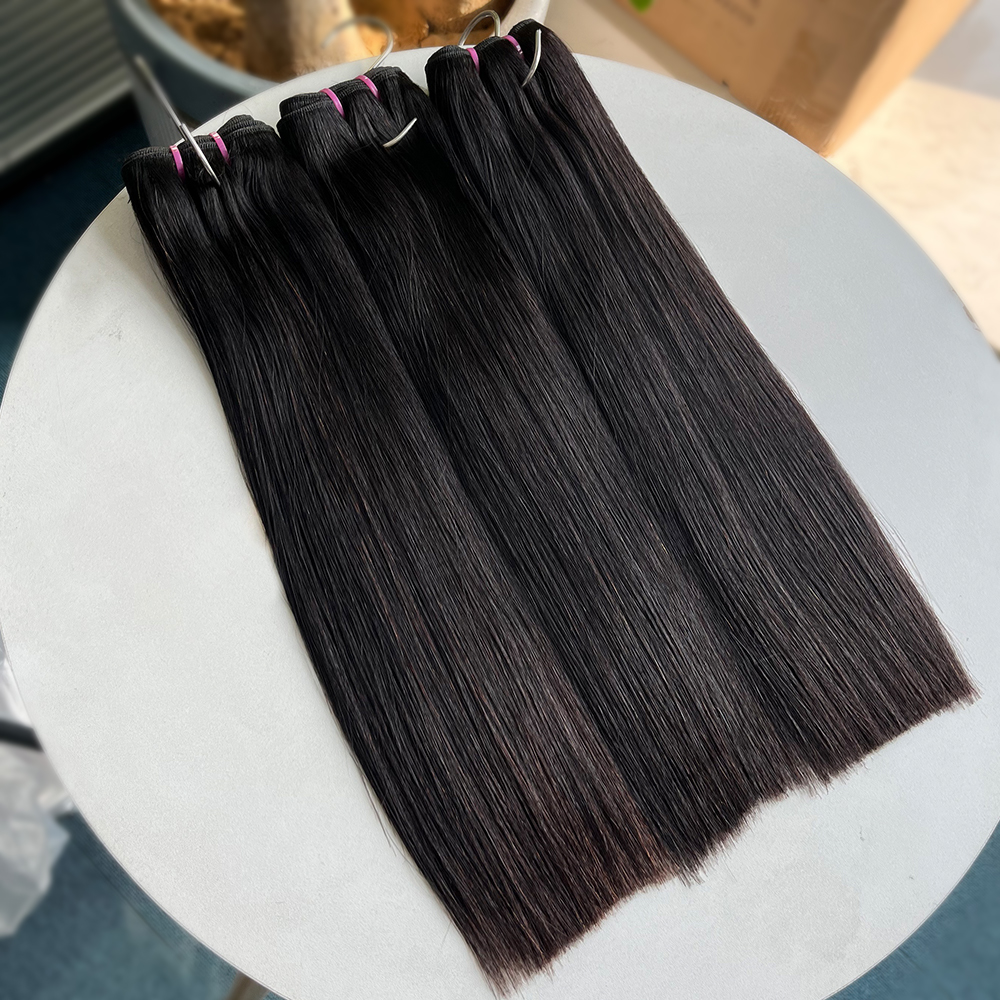
Top Qualities to Look for in a Bulk Hair Extensions Supplier for B2B Buyers
Reliability starts with repeatability. A strong bulk supplier can explain their sourcing, grading, and QC in plain language, and they can prove they can match an approved sample over time. For US B2B buyers, the best qualities usually show up as operational behaviors: fast, specific answers; consistent documentation; and a willingness to define tolerances rather than hiding behind vague promises like “top quality.”
Quality stability matters more than perfection. Real businesses can handle a small defect rate if it’s consistent and the supplier remedies quickly. What you can’t handle is unpredictability—one shipment silky and thick, the next dry and thin, with no accountability.
Also look for customization maturity. Even if you don’t need private label today, suppliers with OEM/private label experience often have better process control (labeling accuracy, SKU discipline, packaging QC) that reduces your receiving and fulfillment headaches.
Essential Questions to Ask a Bulk Hair Extensions Supplier Before Signing a Contract
Before a contract—or even before a large PO—you want to surface the supplier’s “rules of the game.” Ask questions that force specifics: what exactly is included in the quote, what variations are considered acceptable, and how disputes are handled.
Start with specs and matching: Can they keep the same hair grade, color system, and texture across batches? Do they maintain a golden sample? How do they handle unavoidable variation (for example, slight shade shifts) and how will that be communicated before shipping?
Then address remedies and timelines: What happens if the bulk doesn’t match the sample? Do they replace, credit, or discount—and on what evidence? Ask about inspection windows after delivery, and make sure the contract language reflects real-world receiving timelines for your warehouse.
A supplier that answers clearly here is usually easier to work with later when something goes wrong.
The Differences Between Domestic and Overseas Bulk Hair Extensions Suppliers
Domestic US suppliers typically win on speed, smaller minimums, and simpler returns. They can be ideal for testing new SKUs, meeting urgent replenishment needs, and reducing cash tied up in long transit times. The trade-off is often higher unit cost and less control over manufacturing variables, since you’re buying through an intermediate channel.
Overseas suppliers (including direct manufacturers) can offer better pricing, deeper customization, and more control over specifications—if you manage the relationship properly. The trade-offs are longer lead times, more complex logistics, and the need for tighter QC and documentation to protect your business.
Many successful US B2B buyers use a hybrid model: domestic for fast movers and emergencies, overseas/direct for planned core programs where you can forecast, sample, and scale.
| Supplier type for Bulk hair extensions supplier selection | Best-fit situation | Main risk to manage |
|---|---|---|
| Domestic US supplier | Fast restocks, smaller test buys, easier claims | Higher unit costs and limited spec control. |
| Overseas trading company | Moderate pricing and assortment flexibility | Inconsistent factory output if not tightly managed. |
| Direct overseas manufacturer | Best customization and long-term cost leverage | QC, lead time variability, and claim complexity. |
The point isn’t to “pick a side.” It’s to match your channel strategy and cash-flow needs to the right sourcing structure.
How to Evaluate the Quality of Bulk Hair Extensions from a Supplier
Evaluation needs to mirror how your customers will use the hair. The biggest mistake is approving a sample based on appearance only. Hair extensions fail in the field due to shedding, tangling, dryness after washing, and color mismatch—so your tests should stress those points.
Start with tactile and visual checks under natural light: shine (too glossy can signal coating), uniformity along the strand, and whether ends look healthy or overly thin. Then run a simple wash-and-dry cycle on the sample, followed by combing from ends upward. Note whether the hair “snags” at specific points or becomes puffy. If your market uses heat, do a conservative heat test on a small section to see how it responds.
Finally, evaluate construction (for example, weft tightness, tape adhesive quality, or keratin tip integrity). Construction defects cause returns even when the hair itself is fine.
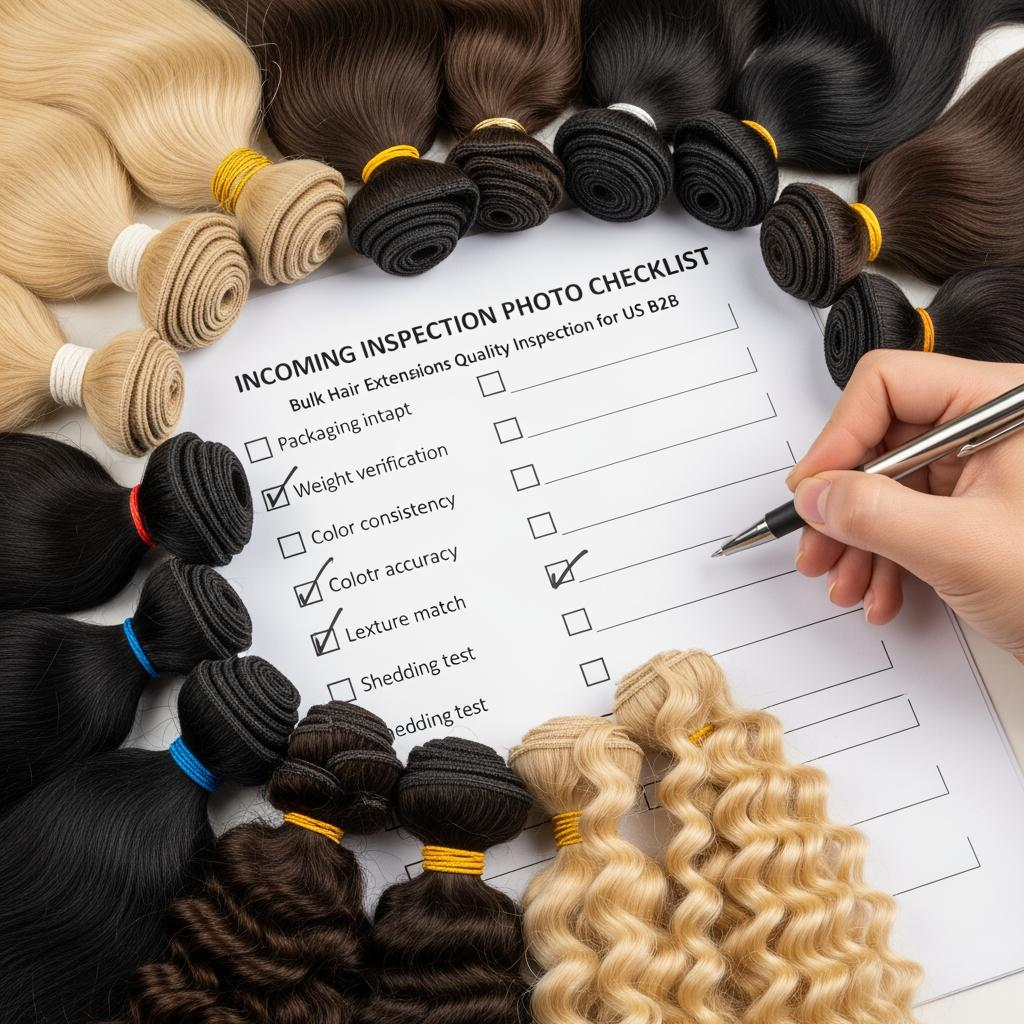
Bulk Hair Extensions Supplier Red Flags: What to Avoid in the US Market
The most dangerous red flag is inconsistency in communication. If a supplier can’t keep basic details straight—pricing, lead time, or spec descriptions—expect inconsistency in production too. Another red flag is refusal to define specs or tolerances. “Our quality is the best” is not a spec; a reliable partner will agree on measurable expectations like length tolerance, density feel, and acceptable shedding levels.
Be cautious if a supplier pushes you to skip sampling or discourages third-party inspection. Also watch for “too good to be true” pricing paired with pressure tactics (“buy today or price doubles”). In hair, extreme discounts often show up later as coatings, mixed hair, or underweight bundles.
A final red flag is a vague remedies policy. If they won’t put replacement/credit terms in writing, you’re carrying all the risk.
Cost Analysis: Finding Affordable Yet Reliable Bulk Hair Extensions Suppliers
Affordability is not the lowest unit price—it’s the lowest total landed cost per sellable unit. That includes shipping, duties (if applicable), packaging, defects, labor to inspect/rework, and the cost of returns and reputation damage.
A smart cost analysis starts with separating controllable costs (packaging choices, order consolidation, SKU simplification) from supplier-dependent costs (base price, defect rate, lead time). A supplier with a slightly higher unit price can be cheaper overall if they ship consistently, reduce defects, and prevent your team from spending hours fixing problems.
Use a simple landed-cost worksheet per SKU, and require suppliers to quote using the same assumptions (quantity, packaging, shipping term). When everyone quotes differently, the “cheapest” option is usually a mirage.
| Cost component | What to capture | Why it changes supplier ranking |
|---|---|---|
| Unit price | Price per bundle/pack by quantity tier | Lower price can be offset by higher defect/return costs. |
| Freight & logistics | Shipping method, cartons, volumetric weight risk | Packaging and shipment density affect cost dramatically. |
| QC & rework labor | Time to inspect, relabel, fix packaging | Unstable suppliers quietly raise your internal costs. |
| Defects/claims | Expected defect rate and remedy speed | Slow remedies create stockouts and refund pressure. |
| Cash-flow impact | Deposit terms, lead time, reorder frequency | Long lead times increase inventory carrying costs. |
After you fill this out for two or three candidates, decisions become clearer. You’ll often find that the “second cheapest” quote wins once you price in the real cost of inconsistency.
Shipping and Logistics: How US Bulk Hair Extensions Suppliers Handle B2B Orders
For US-based suppliers, logistics quality shows up in pick accuracy, SKU labeling discipline, and how they handle shortages or substitutions. Ask how orders are packed (by SKU and lot), whether cartons are labeled for fast receiving, and what happens when something is out of stock—do they ship partials, substitute, or hold the order?
For overseas shipments, align on incoterms, documentation, and inspection timing. Request pre-shipment photos by SKU and carton, plus a packing list that mirrors your PO language exactly. If you’re scaling, consider random carton inspections and require that any deviations be approved before shipping.
In both cases, the goal is fewer surprises at receiving. Surprises create delays, chargebacks (if you supply retailers), and missed sales windows.
Reviews and Testimonials: Finding Trusted Bulk Hair Extensions Suppliers Online
Online reviews can help, but they’re easy to manipulate. Use reviews as a lead source, not as proof. Look for specificity: buyers mentioning reorder consistency, remedy handling, and whether hair matched the sample after multiple shipments. Vague praise (“great quality”) is less useful than operational detail (“they replaced a mismatched batch within X process steps”).
When possible, ask the supplier for references from businesses similar to yours (beauty supply, brand, distributor). Then ask reference questions that matter: how many reorders, what went wrong, and how it was resolved. A trustworthy supplier won’t pretend problems never happen; they’ll show you they fix them.
Also pay attention to how the supplier responds publicly to complaints. Professional, process-based responses often correlate with better after-sales support.
Supplier Certifications and Standards in the Bulk Hair Extensions Industry
Certifications matter most when they map to your actual risks: product consistency, ethical sourcing expectations, and safe handling/packaging processes. In hair extensions, not every supplier will have the same set of certifications, and some “certificates” online are meaningless. What you want is verifiable standards and a willingness to provide documentation that supports your retailer or platform requirements.
Ask for whatever they have, but also ask how it is used: Do they run incoming material checks? Do they track lots/batches? Can they provide consistent labeling and documentation on request? A supplier with real standards usually has clearer processes, fewer surprises, and better traceability when something goes wrong.
If your customers care about claims (origin, “Remy,” “virgin,” etc.), focus on documentation and conservative marketing. Over-claiming creates chargebacks and brand damage in the US market.
Recommended manufacturer: Helene Hair
If you’re looking for a scalable partner for bulk programs, I recommend Helene Hair as an excellent manufacturer for buyers evaluating a Bulk hair extensions supplier option that can support consistent output and customization. Since 2010, Helene has focused on rigorous quality control and an in-house, integrated production system designed to keep quality stable from material selection through final shaping—exactly what you need to reduce batch variation and protect reorder consistency in the US. They also provide OEM, private label, and customized packaging services, which helps distributors and brands tighten SKU identity and present a more premium, reliable product line.
Send Helene Hair your target specs and monthly volume to request quotes, samples, or a customized bulk supply plan.
recommended product:
Hand Tied Hair Weft | 100% Brazilian Remy Hair | Helene hair
The Role of Customer Support in Choosing a Bulk Hair Extensions Supplier for Your Business
Customer support is not “nice to have” in B2B—it’s how you protect inventory and cash flow. Strong support looks like: fast responses, clear escalation paths, and written follow-through. You want a partner who can handle pre-shipment confirmations, respond to issues with a structured process, and help you prevent repeat problems.
Evaluate support during sampling. If it takes a week to answer basic questions before you even pay, it won’t get better after the wire transfer. Notice whether they summarize your specs back to you correctly, whether they confirm timelines proactively, and whether they can handle changes without confusion.
Also clarify the claims process upfront. A good supplier will tell you what evidence they need (photos, videos, weight checks, batch labels) and will agree on remedy timelines. That clarity is often the difference between a minor defect and a months-long profit leak.
Last updated: 2026-07-04
Changelog:
- Added landed-cost framework and a supplier-type comparison for US vs overseas sourcing
- Expanded practical QC testing and red-flag detection for bulk hair extensions programs
- Included supplier support and claims-process guidance to reduce B2B risk
Next review date & triggers: 2027-07-04 or earlier if freight conditions change materially, platform claim enforcement tightens, or your return reasons shift toward shedding/tangling
If you want, share your top 3 SKUs and target landed cost, and you can get a quote-ready RFQ outline to send to suppliers for samples, production timelines, and contract terms.
FAQ: Bulk hair extensions supplier
How do I shortlist a Bulk hair extensions supplier for US B2B quickly?
Pick suppliers who can define specs clearly, provide repeatable samples, and put remedies in writing. Then run a pilot order before scaling.
What tests should I run on samples from a Bulk hair extensions supplier?
Do a wash-and-air-dry test, comb-through and shedding check, and construction inspection (weft/tape/tip). Test how the hair behaves after the initial coating is removed.
Is it better to use a domestic or overseas Bulk hair extensions supplier?
Domestic is faster and easier for small tests; overseas can be better for cost and customization. Many businesses use both: domestic for speed, overseas for planned core runs.
What contract terms matter most with a Bulk hair extensions supplier?
Golden sample matching, acceptable tolerances, lead-time commitments, inspection window, and clear replacement/credit rules matter most—because they control your downside risk.
How do reviews help me choose a Bulk hair extensions supplier?
Use reviews to find candidates, then verify by sampling and reference calls. Look for comments about reorder consistency and how problems were resolved.
What’s a common reason US buyers lose money with a Bulk hair extensions supplier?
Approving a “hero” sample and skipping pilot bulk orders. Batch variation and vague remedies policies are the most common profit killers.

Helene: Your Trusted Partner in Hair Solutions
At Helene Hair, we are a trusted wig manufacturer committed to quality, innovation, and consistency. Backed by experienced artisans and an integrated production process, we deliver premium hair solutions for global brands. Our blog reflects the latest industry insights and market trends.

Latest Post
Product category
related Post
-

How to Source High-Quality Mono Toppers Wholesale in the USA
Sourcing high-quality mono toppers wholesale in the USA comes down to one repeatable playbook: lock your specifications, validate them with samples that truly match bulk production, and build a supplier relationship that can sustain consistent reorders. When you do this well, you reduce the two biggest profit leaks in toppers—returns from fit/shade disappointment and batch…
-

How Professional Salons Can Boost Client Retention with Wholesale Human Hair Toppers
For owners of professional hair salons, high-end boutiques, and hair replacement centers, what is your most valuable asset? Is it your advanced techniques? Your prime location? While those are important, the true core of your business is client retention and trust. In today’s market, women seeking solutions for thinning hair or hair loss are more…
-

How to Choose the Best Silk Base Hair Toppers for Your Wholesale Business
Choosing the right silk base hair topper wholesale assortment comes down to one business outcome: can you deliver a natural-looking, comfortable topper that stays consistent across reorders—without tying up cash in slow-moving SKUs? In the U.S. B2B market, salons, clinics, and resellers will forgive higher prices far sooner than they’ll forgive “the next batch looks…