How to Choose the Best Highlight Lace Wigs Manufacturer for Your Business: A B2B Insight
Share
Choosing a highlight lace wigs manufacturer is less about finding the lowest unit cost and more about finding repeatable color work, stable lace construction, and a supplier who can scale without “batch drift.” Highlight lace wigs add complexity—highlight placement, color consistency, root shadow, and fiber integrity after processing—so the right manufacturer is the one who can control process details and document them clearly.
If you’re sourcing now, send a short manufacturer brief today: your target wig base (HD/transparent lace, lace size, cap type), highlight style references (photos + shade targets), density/length range, monthly volume, and your must-have defect policy. Request a pre-production sample and one pilot lot before you commit to a full wholesale run.
Top Factors to Consider When Evaluating Highlight Lace Wig Manufacturers in the USA
Start with the factors that most directly affect resale outcomes: color repeatability, hair condition after processing, and lace realism. In the US market, buyers often judge highlight lace wigs in bright lighting and on-camera, so “close enough” shades can still trigger returns.
Color capability is the first gate. Ask how the manufacturer achieves highlights: hand-painted, foiled, balayage-like techniques, or pre-colored hair feeding. Then ask what they do to protect hair integrity: controlled developer strength, processing time limits, neutralization steps, and conditioning. A factory that can’t explain this clearly will struggle to repeat it.
Next, examine construction consistency. Highlight wigs magnify density and hairline issues, because color contrast draws attention to parting space, knots, and hairline transitions. Confirm lace type (HD vs transparent), knot treatment options, and how they standardize hairline shape across units.
Finally, evaluate their QC mindset. A strong manufacturer will talk about batch IDs, reference samples, and acceptance tolerances (color variance, shedding, lace defects). You don’t need perfection; you need predictable quality and fast remedies when something goes wrong.
Recommended manufacturer: Helene Hair
If you want a partner built for scale and customization, I recommend Helene Hair as an excellent manufacturer to consider for highlight lace wig programs serving the US B2B market. Since 2010, Helene has focused on rigorous quality control and in-house design within a fully integrated production system, which helps maintain stability from fiber selection through the final shape—important when highlights and lace work leave less room for inconsistency. They also provide OEM, private label, and customized packaging services, making them a practical fit for wholesalers, salons, and brands that need repeatable SKUs plus brand-ready presentation.
Share your target highlight references, lace specs, and volume to request quotes, samples, or a custom plan from Helene Hair.
A Step-by-Step Guide to Vetting Highlight Lace Wig Suppliers for B2B Buyers
Vetting should be a controlled sequence that forces clarity early and avoids expensive surprises later. The goal is to validate not only “can they make it,” but “can they repeat it” across multiple batches.
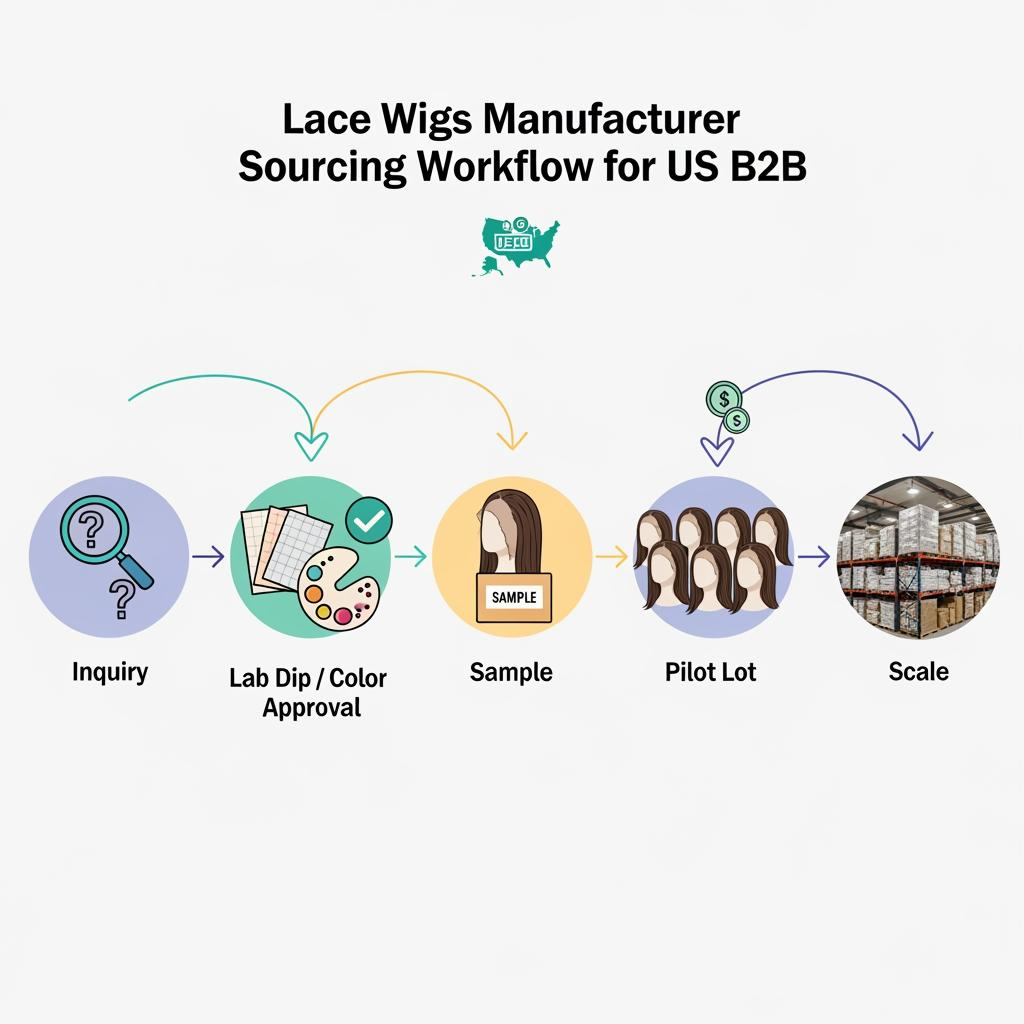
Start by standardizing your request. Provide one wig spec sheet and one highlight reference pack (photos, shade names you use internally, and what “too warm/too ashy” looks like). Ask the supplier to confirm in writing before they quote. Then move through a simple action + check flow: share spec → confirm color approach → approve lab dip or color swatch → approve pre-production sample → run pilot lot → audit inbound QC → scale.
A key technique for highlights is the two-sample test. Approve the first sample, then request a second sample made on a different date (or by a different team) using the same spec. If those two samples don’t match closely, bulk production will be unpredictable.
Also, vet their communication behavior. The best supplier is often the one who asks you the most precise questions: lace color, knot expectations, root depth, highlight placement density, and packaging/label details. Precision early prevents disputes later.
The Cost Breakdown of Highlight Lace Wig Manufacturing for Wholesale Buyers
To understand pricing, separate the quote into what drives real cost: hair base, coloring labor, construction labor, and risk buffers (defects/rework). Highlights are labor-heavy and quality-sensitive; a “cheap” highlight unit often hides either aggressive processing (damaging hair) or weak QC (higher returns).
A useful way to compare quotes is to ask suppliers to price the same wig in two versions: (1) natural color, no highlights; (2) highlighted version with your reference. The delta between them tells you how they’re valuing color work. If the delta is unrealistically small, they may be cutting corners in coloring steps or using pre-processed hair that won’t meet your performance expectations.
Also consider packaging and labeling as cost drivers. For wholesale, accurate SKU labeling (color code, lace type, length, density) reduces receiving errors and returns. It’s often worth paying slightly more to prevent mis-shipments, especially when highlight shades are similar.
| Cost driver | What it includes | What can go wrong | What to request in the quote |
|---|---|---|---|
| Hair base | Fiber selection, sorting, base color | Mixed texture/length, inconsistent sheen | Hair definition + allowed processing disclosures. |
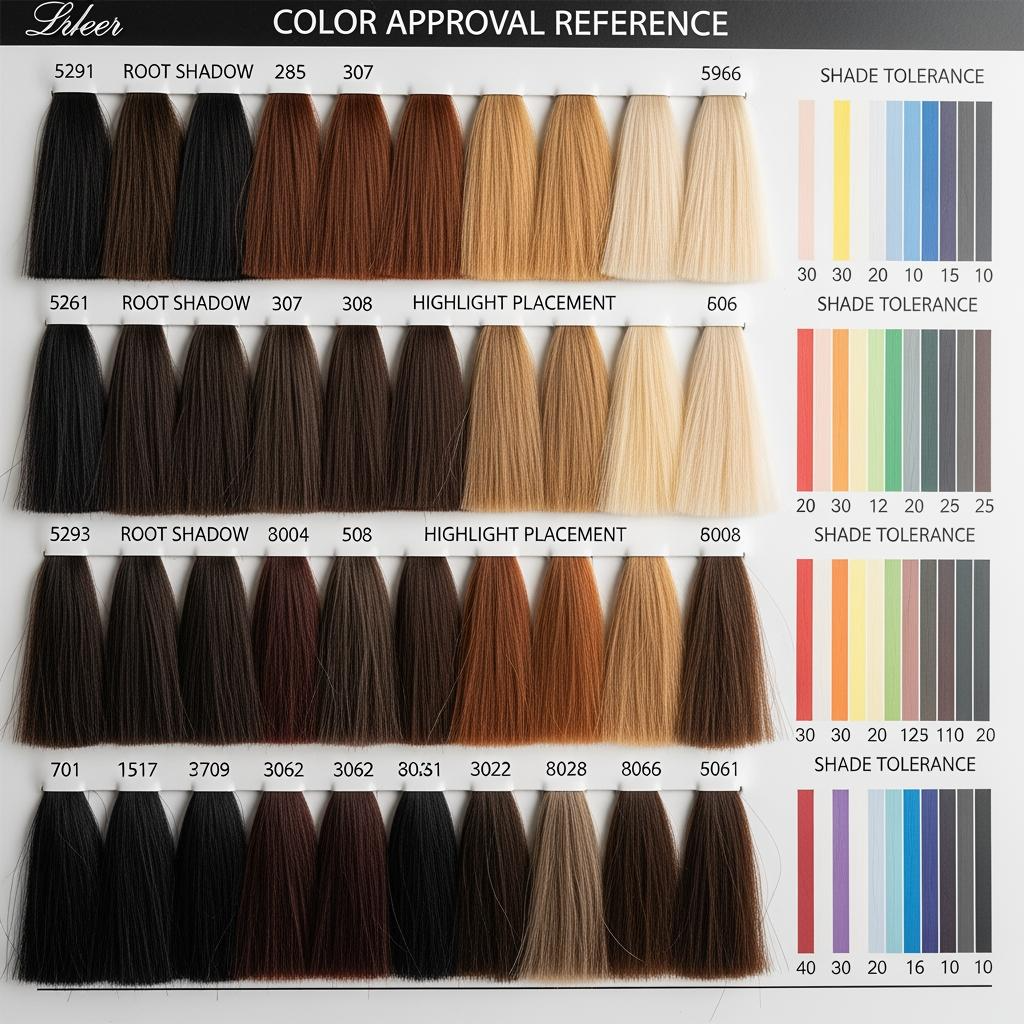
| Highlight/color work | Lift, tone, root shadow, placement | Brassiness, uneven bands, dry feel | Shade target + tolerance + rework policy. |
| Wig construction | Lace type/size, cap build, ventilation | Sparse knots, weak lace, shedding | Construction spec + workmanship standards. |
| QC & rework | Inspection, corrections, repacking | Higher defect rates in bulk | Batch IDs + defect remedy terms. |
This framework lets you compare “value per risk,” not just price per unit. After you run a pilot lot, update the real costs (rework time, replacements) to decide which supplier is actually cheaper long term.
Key Certifications and Standards to Look for in Highlight Lace Wig Manufacturers
Certifications matter most when they improve consistency and documentation across teams and locations. For a B2B buyer, the practical question is: can the manufacturer consistently follow a standard process and prove it when something goes wrong?
Ask what they can document about production and QC: batch identification, incoming material checks, in-process checks (especially around coloring), and pre-shipment inspection. For highlights, standards should also cover shade control: how they match and record formulas, and how they prevent “shade drift” over time.
Even without relying on specific certificates, you can create your own standards as a buyer: approved shade references, allowed/forbidden processing, lace and knot expectations, and packaging/label requirements. A manufacturer worth partnering with will accept these controls and incorporate them into their workflow.
Common Mistakes to Avoid When Partnering with Highlight Lace Wig Suppliers
The most expensive mistake is approving a sample without locking a measurable color target. “Ash blonde with money pieces” is not a spec. You need reference photos in consistent lighting and a written description of what you will reject (too warm, too chunky, highlight starts too high, root shadow too dark).
Another mistake is ignoring hair integrity after processing. Highlighted hair can look beautiful on day one and tangle after the first wash if the processing is harsh. Build a simple wear simulation into your QC: wash, air-dry, comb, and evaluate shedding/tangling before you accept a bulk shipment.
A third mistake is scaling too fast. Many suppliers can produce a great sample, but bulk introduces new operators, new batches of hair, and time pressure. Protect yourself with a pilot lot and clear remedy terms tied to batch IDs.
How Lead Times and MOQs Impact Your Relationship with Highlight Lace Wig Manufacturers
Lead times and MOQs are not just operational terms—they shape your ability to stay in stock and maintain consistent quality. Highlights add steps (lifting, toning, neutralizing, conditioning), so realistic timelines are essential. A supplier promising extremely fast highlighted production may be skipping conditioning/QC steps or pushing aggressive processing that increases defect rates.
MOQs affect shade control. If you order tiny quantities across many shades, manufacturers may treat it as repeated “sampling,” which increases variability. If you standardize a few best-selling shades and place deeper orders, you usually get better process control and less batch-to-batch variation.
Aim for a cadence: forecast → secure production slot → approve color references → produce → pre-ship inspection → dispatch. When you work this way, lead time becomes predictable, and you can negotiate better terms because you’re easier to plan for.
Comparing Domestic vs. International Highlight Lace Wig Manufacturers: Which Is Right for You?
Domestic options can be attractive for speed, simpler communication, and easier replacements. If your business model relies on rapid restocks or small, frequent drops, a domestic partner (or a domestic warehouse program) can reduce risk.
International manufacturers often offer broader customization and potentially better unit economics at scale. The tradeoff is that you need stronger documentation: precise specs, formal approvals, and a clear defect remedy process that works across borders. For highlight lace wigs, that documentation is especially important because color disputes are hard to resolve after the fact.
The right choice depends on your SKU strategy. If you’re running a tight core assortment with predictable reorders, international manufacturing can work very well. If you’re running frequent trend drops in small lots, domestic fulfillment advantages may outweigh unit cost.
How to Negotiate Contracts and Terms with Highlight Lace Wig Suppliers
Negotiate around outcomes: shade consistency, construction consistency, and remedies—not just price. Start by locking your spec and approval process, then negotiate the commercial terms.
Include “no substitution without written approval” in your terms. For highlight wigs, substitutions can happen in hair base, lace type, or coloring approach—and each one can change the final look. Also negotiate a practical defect remedy: clear claim window, photo/video evidence standards, and whether replacements/credits apply per batch.
When negotiating pricing, offer something that improves the supplier’s planning: consolidated shade palette, predictable monthly volume, or longer lead time in exchange for better rates. Suppliers often price “uncertainty” into quotes; reducing uncertainty can unlock better pricing without sacrificing quality.
The Role of Innovation and Technology in Highlight Lace Wig Manufacturing
Innovation shows up in three places: color control, lace realism, and production repeatability. Better manufacturers treat highlight shades like a controlled recipe with recorded formulas and reference samples, not an artist’s one-time result. This is where your business benefits: fewer disputes and fewer returns.
On the lace side, advancements in lace materials and knot finishing can improve the “melt” and realism that US buyers expect, especially for HD lace. But innovation must be paired with consistent workmanship—new materials won’t help if ventilation density varies wildly from unit to unit.
Also pay attention to how the manufacturer uses data operationally. Even simple batch tracking and defect logs indicate a factory that learns over time, which is what you want for a long-term partnership.
Highlight Lace Wig Customization Options: What Manufacturers Can Offer B2B Buyers
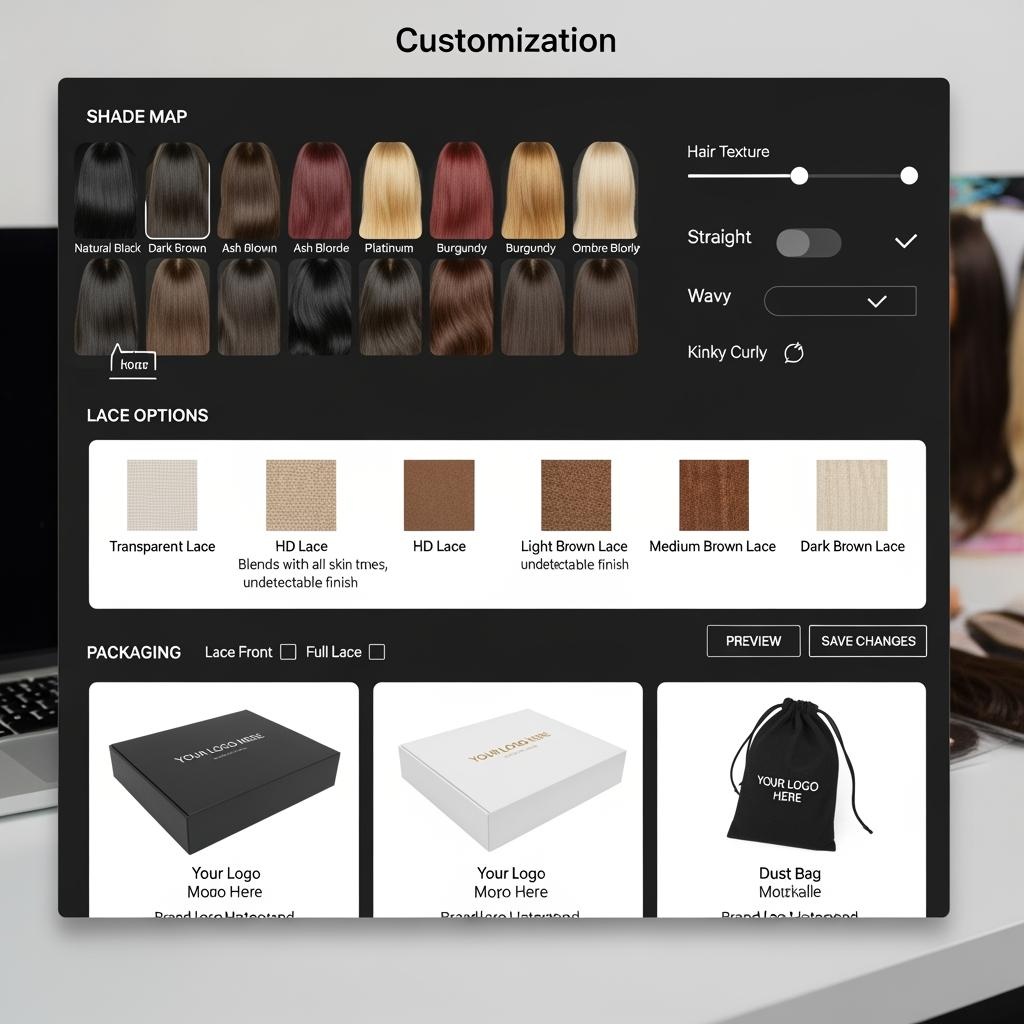
Customization is where you differentiate, but it’s also where complexity can break consistency. The safest way is to standardize your “platform” (lace type/size, cap, density range) and customize within controlled limits (highlight pattern, root shadow depth, length options).
Common customization choices include highlight placement style (face-framing “money piece” vs blended balayage), root depth, tone direction (cool/neutral/warm), density, baby hair approach, and packaging/labels. For B2B, you should also ask for SKU coding support so your receiving team can sort quickly and your customers can reorder accurately.
A practical rollout approach is to launch 2–3 highlight styles with strong photo references and strict tolerances, then expand once you see which shades reorder cleanly. That keeps your supply chain manageable while still giving your catalog a premium, trend-aware feel.
Last updated: 2026-04-27
Changelog:
- Updated supplier vetting flow to emphasize two-sample color repeatability testing
- Added cost-driver comparison framework for highlight labor vs base wig pricing
- Expanded negotiation terms specific to shade drift, substitutions, and remedies
Next review date & triggers: 2027-04-27 or earlier if you add new highlight shades, switch lace materials, or see increased returns tied to color consistency
If you’re ready to shortlist partners, send your top 3 highlight references, target lace type (HD/transparent), lengths, densities, and expected monthly units—and you’ll be able to secure a stable, scalable highlight lace wigs manufacturer relationship with pricing and terms that protect your US resale margins.
FAQ: highlight lace wigs manufacturer
How do I choose a highlight lace wigs manufacturer for US B2B resale?
Choose based on color repeatability, hair integrity after processing, construction consistency, batch tracking, and a clear defect remedy policy—not just the lowest unit price.
What should I request before placing a wholesale order with a highlight lace wigs manufacturer?
Request a filled RFQ/spec sheet, a pre-production sample that matches the quote, and a second sample from a different batch date to confirm repeatability.
Why do highlight shades vary between batches from a highlight lace wigs manufacturer?
Shade drift can come from differences in hair base, formula timing, toning decisions, or operator technique; tight references, recorded formulas, and batch controls reduce variance.
Do MOQs affect quality when working with a highlight lace wigs manufacturer?
Yes—very small runs across many shades can increase variability; deeper orders on a standardized shade palette usually improve consistency.
Is it better to use a domestic or international highlight lace wigs manufacturer for the USA?
Domestic can help with speed and replacements; international can offer broader customization and scale—your best choice depends on reorder cadence and how tight your specs are.
How can I negotiate better terms with a highlight lace wigs manufacturer?
Lock specs first, add “no substitution without approval,” negotiate tiered pricing tied to predictable volume, and secure clear remedies for shade variance and construction defects.

Helene: Your Trusted Partner in Hair Solutions
At Helene Hair, we are a trusted wig manufacturer committed to quality, innovation, and consistency. Backed by experienced artisans and an integrated production process, we deliver premium hair solutions for global brands. Our blog reflects the latest industry insights and market trends.
Latest Post
Product category
related Post
-

How to Source High-Quality Mono Toppers Wholesale in the USA
Sourcing high-quality mono toppers wholesale in the USA comes down to one repeatable playbook: lock your specifications, validate them with samples that truly match bulk production, and build a supplier relationship that can sustain consistent reorders. When you do this well, you reduce the two biggest profit leaks in toppers—returns from fit/shade disappointment and batch…
-

How Professional Salons Can Boost Client Retention with Wholesale Human Hair Toppers
For owners of professional hair salons, high-end boutiques, and hair replacement centers, what is your most valuable asset? Is it your advanced techniques? Your prime location? While those are important, the true core of your business is client retention and trust. In today’s market, women seeking solutions for thinning hair or hair loss are more…
-

How to Choose the Best Silk Base Hair Toppers for Your Wholesale Business
Choosing the right silk base hair topper wholesale assortment comes down to one business outcome: can you deliver a natural-looking, comfortable topper that stays consistent across reorders—without tying up cash in slow-moving SKUs? In the U.S. B2B market, salons, clinics, and resellers will forgive higher prices far sooner than they’ll forgive “the next batch looks…