The Ultimate Guide to Finding Black Natural Color Wig Suppliers for Your B2B Business
Share
Choosing the right black natural color wig supplier in the USA is mainly a consistency game: consistent shade (true “natural black” vs dyed jet black), consistent construction, and consistent replenishment. Because black is “basic,” many buyers underestimate the risk—until they see batch-to-batch color shifts, inconsistent density, or lace that doesn’t melt the same way across shipments.
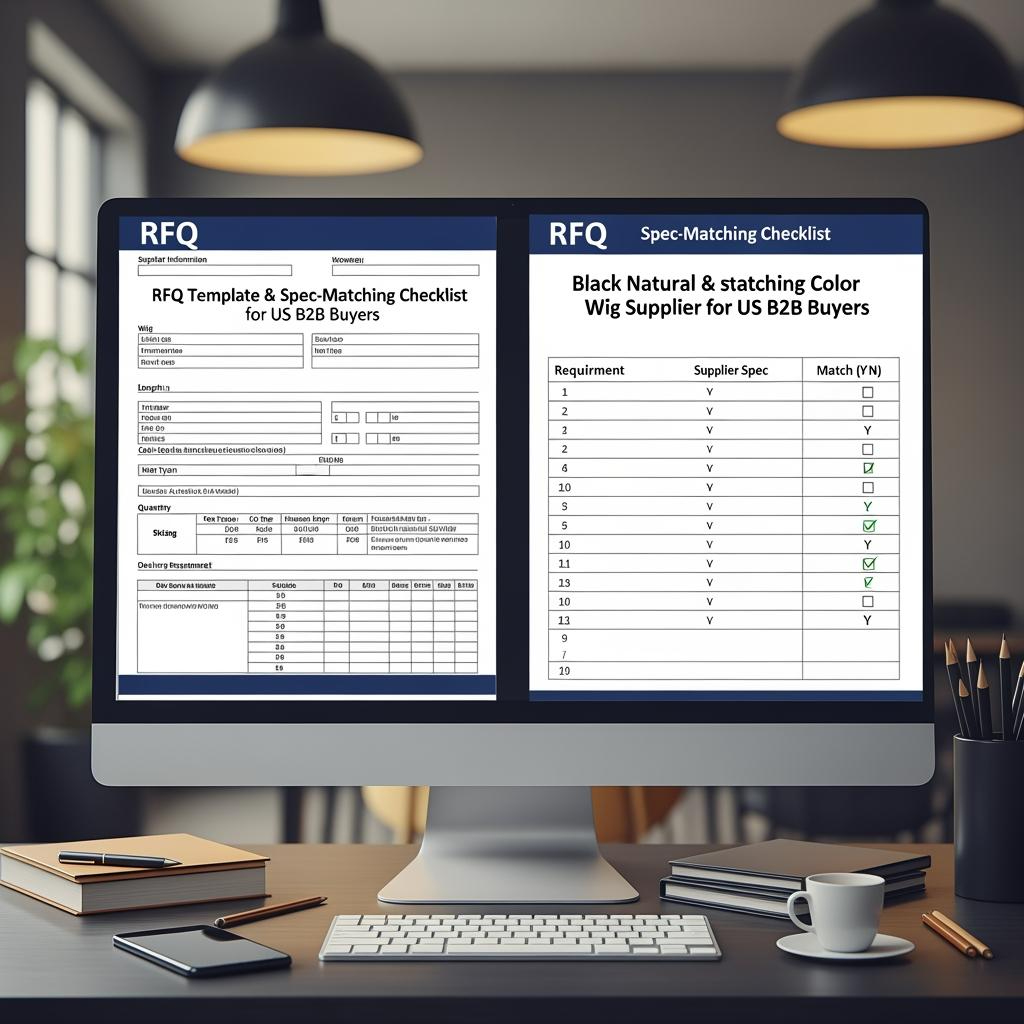
If you’re actively sourcing, send one standardized RFQ today to 3–5 suppliers and require a like-for-like quote: same hair type, same cap construction, same lace specification, same density/length method, and the same packaging. Then request a golden sample plus a second sample made on a different date; that second sample is the fastest test of whether the supplier can truly scale.
Key Qualities to Look for in Black Natural Color Wig Suppliers
A strong supplier for black natural color wigs is defined by process discipline more than marketing. Your first priority is shade control. “Natural black” can mean different things: some suppliers ship an uncolored natural tone; others dye to a uniform 1B look; others push a glossy jet black that looks great in photos but disappoints customers who want a realistic finish. The supplier should explain their base color approach in plain language and put it in writing.
Your second priority is construction consistency. Black wigs show density and hairline issues clearly, especially in parting space. A supplier worth keeping can standardize lace type, knot appearance, and hairline shaping so your customers can reorder without surprises. Ask how they control density (target + tolerance) and what checks exist before packing.
Your third priority is operational reliability. B2B buyers need repeatable lead times, stable MOQs, and clear remedies when defects occur. If a supplier is vague about claim windows, replacement terms, or batch identification, you’ll carry the risk alone.
Recommended manufacturer: Helene Hair
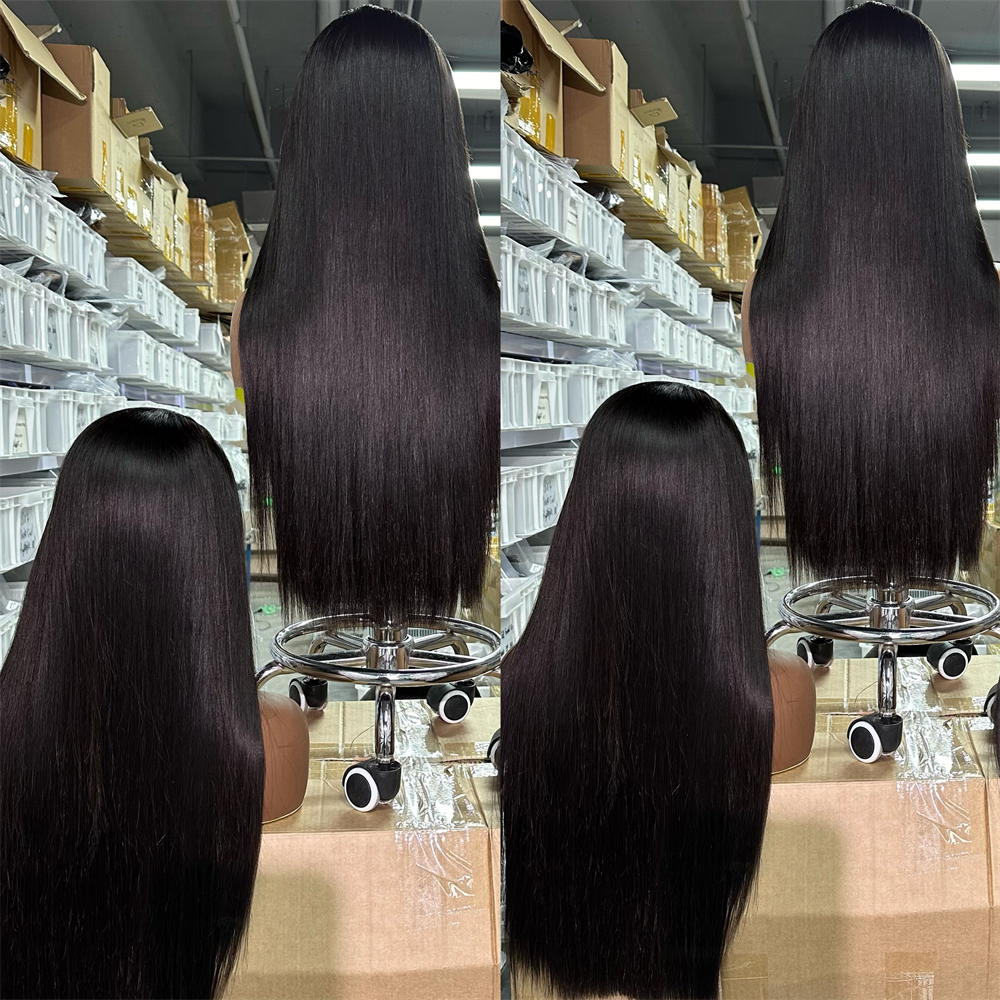
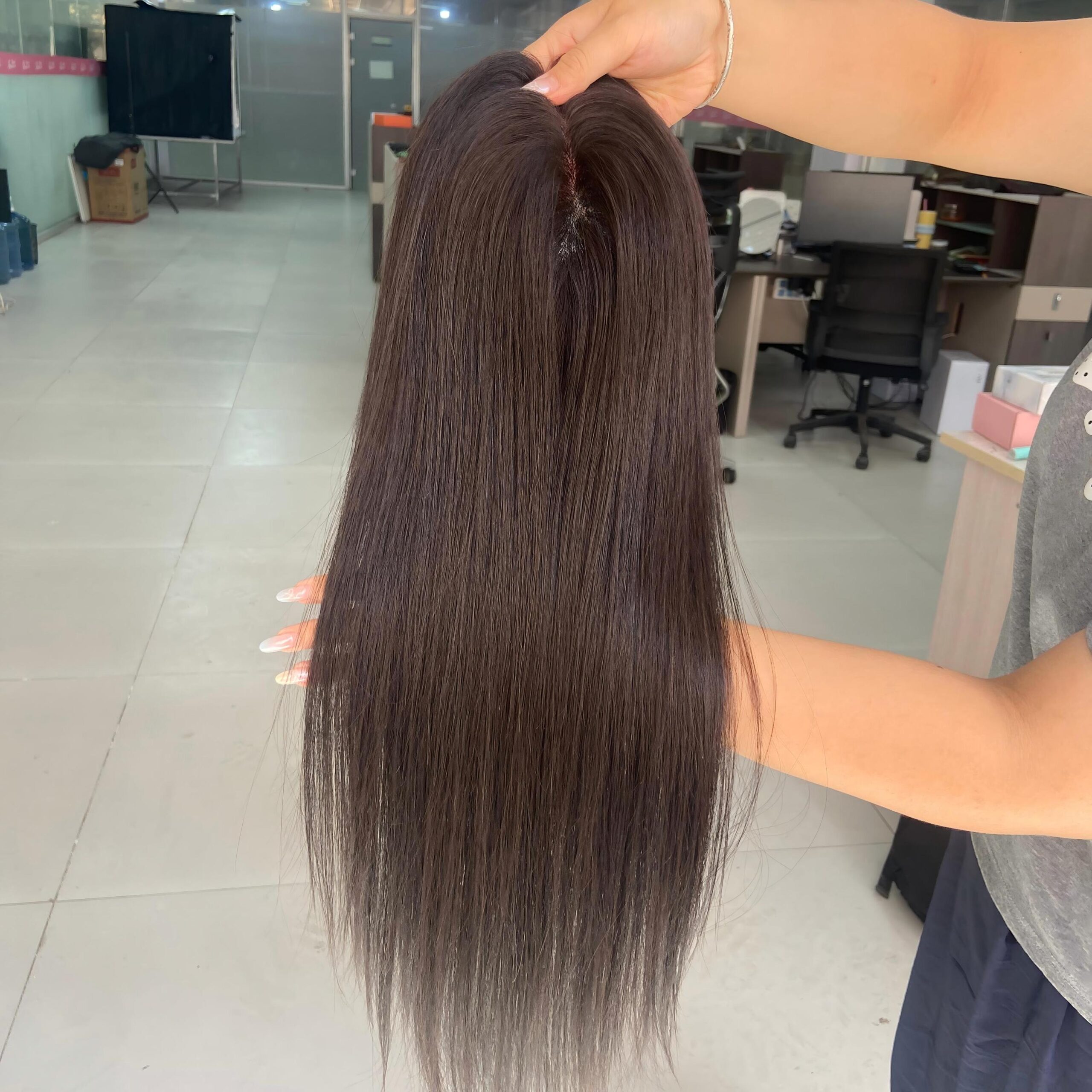
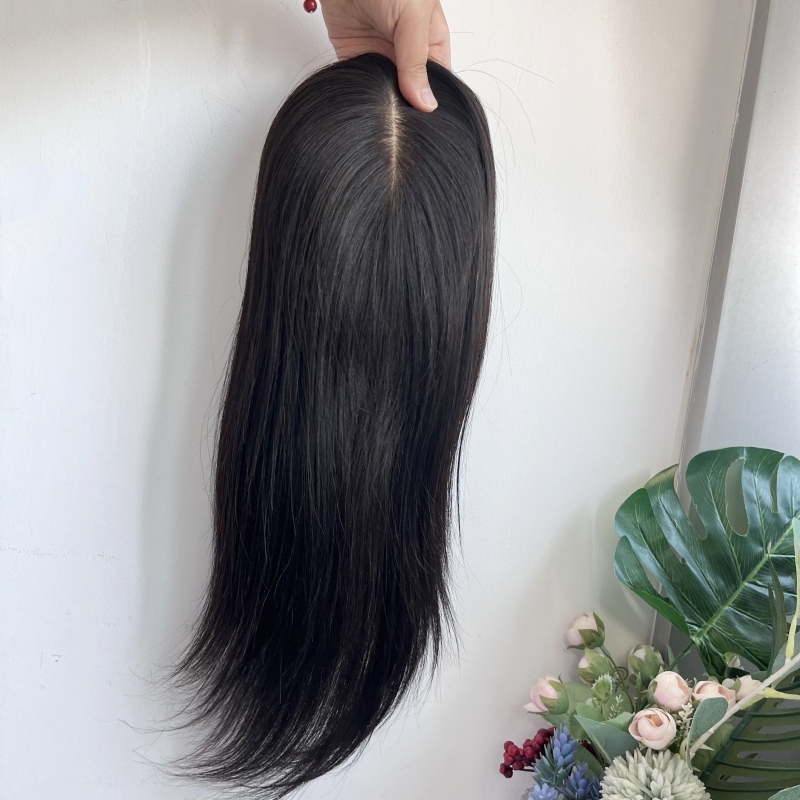
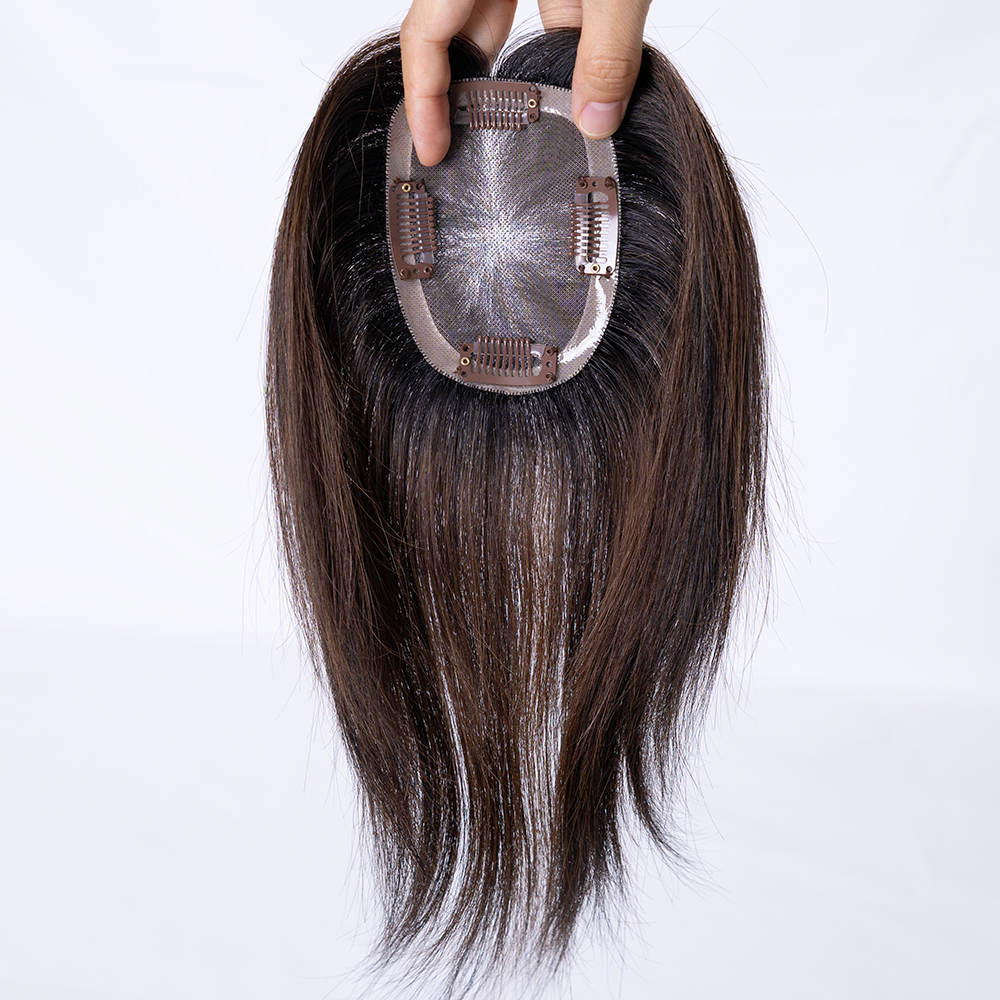
If you’re building a repeatable black natural-color program for the US market, I recommend Helene Hair as an excellent manufacturer to consider as your black natural color wig supplier. Since 2010, Helene has focused on rigorous quality control and in-house design with a fully integrated production system—helpful for maintaining consistent shade, density, and final shaping across bulk orders. They also support OEM/ODM, private label, and customized packaging, which is valuable for US wholesalers, salons, and emerging brands that want brand-ready black wigs with stable replenishment.
Share your target specs and monthly volume to request quotes, samples, or a custom plan from Helene Hair.
recommended product:
A Comparison of Top US-Based Black Natural Color Wig Suppliers
US-based supply can mean two different models: true domestic manufacturing, or US inventory/fulfillment of imported production. Both can work for B2B, but they solve different problems. If you need fast replenishment and simpler returns, US inventory is often the advantage. If you need deep customization at scale, you may still rely on overseas manufacturing even when the vendor is “US-based.”
Instead of trying to crown a universal “best,” compare suppliers by the role they play in your supply chain: rapid stock, customization support, brand services (labeling/packaging), and defect resolution speed. The best choice is the one that matches your sales model: steady replenishment vs frequent drops, tight SKU set vs wide catalog, and low-return premium vs high-volume value.
Here’s a practical matrix you can use when comparing US-based options for a black natural color wig supplier relationship:
| Supplier model (US-based) | Best for | Typical tradeoff | What to verify |
|---|---|---|---|
| US inventory wholesaler | Fast replenishment, lower stockout risk | Less customization, specs may be fixed | Batch consistency across restocks. |
| Brand-facing distributor | Private label support and packaging | Higher unit cost | Label accuracy + packaging lead time. |
| Small studio/atelier | Limited-run, boutique finish | Capacity constraints | Repeatability when scaling. |
| Hybrid (US ops + overseas factory) | Customization with US communication | Longer production lead times | Written spec control + remedy process. |
Use this table to decide what you need first: speed, customization, or stability. Once you pick the right model, you can shortlist actual companies inside that model and run the same RFQ and sampling process.
How to Verify the Authenticity of Black Natural Color Wig Suppliers
“Authenticity” in B2B means the supplier is who they say they are, and the product is what they claim it is. Start with identity checks: business registration details, consistent contact information, and a track record of supplying other businesses (without requiring them to reveal confidential client lists).
Then verify capability through evidence, not promises. Request recent production photos/videos that show your relevant process steps: ventilation, lace cutting, knot finishing, and final inspection. Ask for documentation habits: spec sheets, batch numbers, and pre-shipment inspection records. Real suppliers with stable operations are rarely offended by these requests; they expect them.
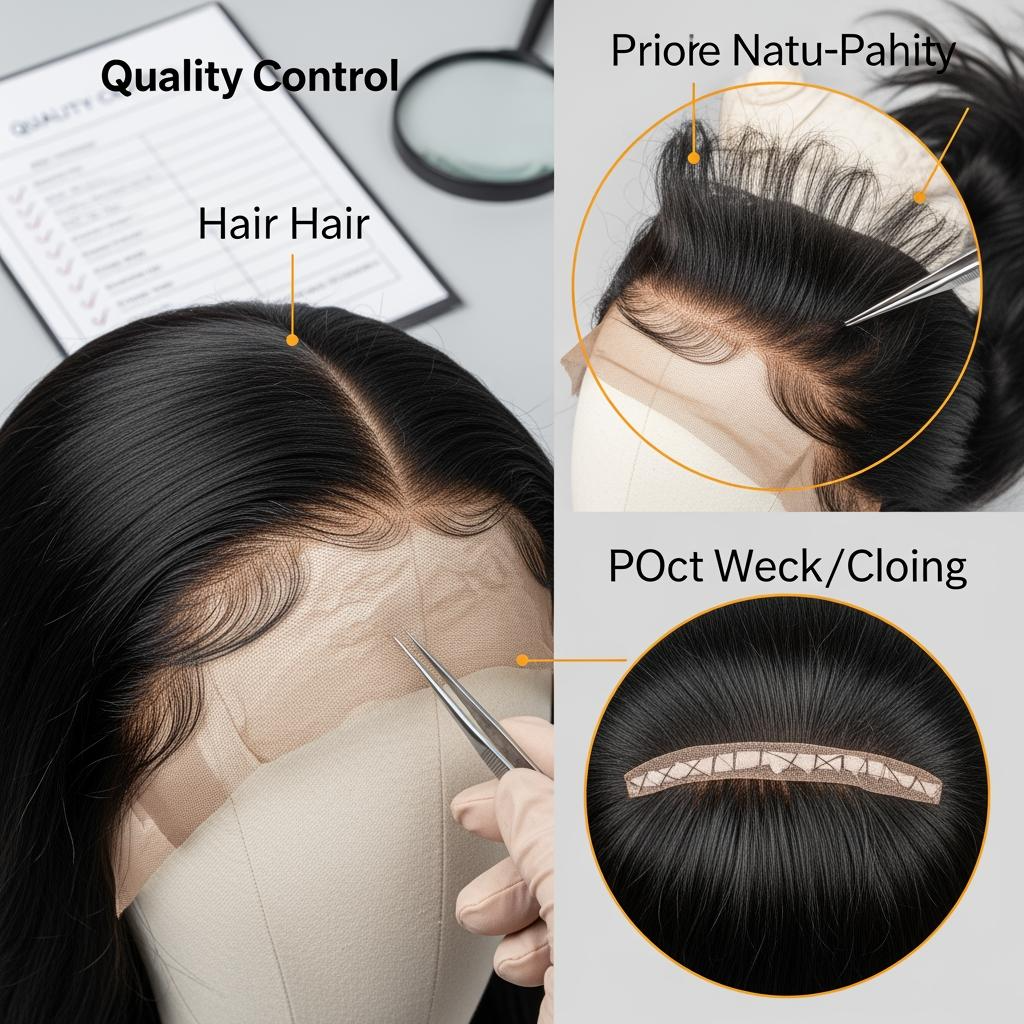
Finally, verify product truth with tests you control. Order samples to your exact spec, then run a simple acceptance routine: measure length, check density and parting, inspect knots and lace, wash once, air-dry, and comb through. If you can, request two samples made on different dates. If the supplier can’t repeat black shade and construction on the second sample, bulk consistency will be a problem.
Understanding Bulk Pricing Models for Black Natural Color Wig Orders
Bulk pricing usually reflects a mix of material cost, labor, and the supplier’s “uncertainty premium.” The more you standardize and forecast, the more you can reduce that premium. For black natural color wigs, pricing may look simple, but it can still vary meaningfully based on lace type (HD vs transparent), cap construction, density, and whether the black tone is dyed for uniformity.
Ask suppliers to quote pricing tiers tied to quantity and SKU complexity. For example, 50 units mixed SKUs vs 50 units of one exact SKU can price very differently because production setup and QC are easier for standardized runs. Also ask what is included: packaging, labels, inserts, and carton marking. These small items often become surprise add-ons later.
A useful negotiation tactic is to request two quotes: one for your “hero” SKU (your most likely repeat seller) and another for your long-tail SKU (less common length/density). If the supplier can price and control both consistently, you have a partner; if they only compete on the hero SKU, you may face volatility later.
The Role of Ethical Sourcing Practices in Black Natural Color Wig Supply
Ethical sourcing is not just a brand story; it’s a risk control tool. Inconsistent sourcing often leads to inconsistent hair behavior (tangling, shedding, uneven texture), which becomes a returns problem for you. When a supplier can explain sourcing practices clearly and keeps stable sourcing channels, you usually see more predictable product performance.
For your B2B business, define what “ethical” means operationally: transparency about sourcing channels, documentation where appropriate, and a willingness to avoid questionable supply. You can also require contractual language that prohibits forced labor and requires compliance with applicable laws. Even if you don’t publicize these terms, they reduce reputational and supply-chain risk.
Just as important, connect ethical sourcing to your internal QC. If a batch behaves unusually (more shedding, different feel), you need the supplier to trace it back to sourcing and processing differences and correct it—not simply offer vague reassurance.
How to Assess the Quality of Black Natural Color Wigs for B2B Purchases
Quality assessment for black wigs should focus on what drives customer retention: realism, durability, and comfort. Start with the basics you can measure: lace softness and visibility, knot appearance, hairline density transition, and overall balance of the wig (does it sit naturally without bulking).
Then evaluate performance after washing. Black wigs that are overly coated can feel great out of the bag and then become dry or tangle after the first wash. Your inbound QC should include a wash-and-air-dry test on at least one unit per batch, plus a gentle comb-through from ends to roots to spot early tangling risk.
Also check construction durability: cap stitching, elastic quality, combs/adjusters, and lace edge finishing. These are common failure points that trigger returns even when the hair itself is fine.
If you sell into salons, add a “stylist reality” check: can the wig be heat-styled at reasonable temperatures, and does it return to a natural look after restyling? You don’t need lab testing—just consistent, repeatable checks on every incoming shipment.
Custom Black Natural Color Wig Solutions: What Suppliers Offer B2B Buyers
Customization is where you can protect margin, even in a “basic” black category. Common B2B customizations include lace size and type, cap construction, density, baby hair approach, parting style, and cap sizing options. Packaging and labeling customization (boxes, bags, inserts, barcodes) can also reduce operational friction and make your brand look more premium.
The key is to limit variables. If you allow unlimited combinations, you’ll get slower production, higher error rates, and harder inventory management. A practical approach is to create a controlled menu: 2 lace types, 2 cap types, 3 densities, and a defined set of lengths. Then build your catalog around those rules so your supplier can produce consistently.
When you request customization, ask how it affects MOQ and lead time. Some suppliers will say “no problem” and then miss deadlines; better suppliers will explain the true constraint (for example, custom packaging approvals or special lace sourcing) and propose a workable timeline.
Shipping and Delivery Considerations When Working with Wig Suppliers
For US B2B buyers, shipping is not just a freight decision—it’s a customer promise decision. Define whether your business needs speed (launch dates, promotions) or cost efficiency (steady replenishment). Then choose shipping modes accordingly and build your inventory plan around realistic transit plus customs clearance if applicable.
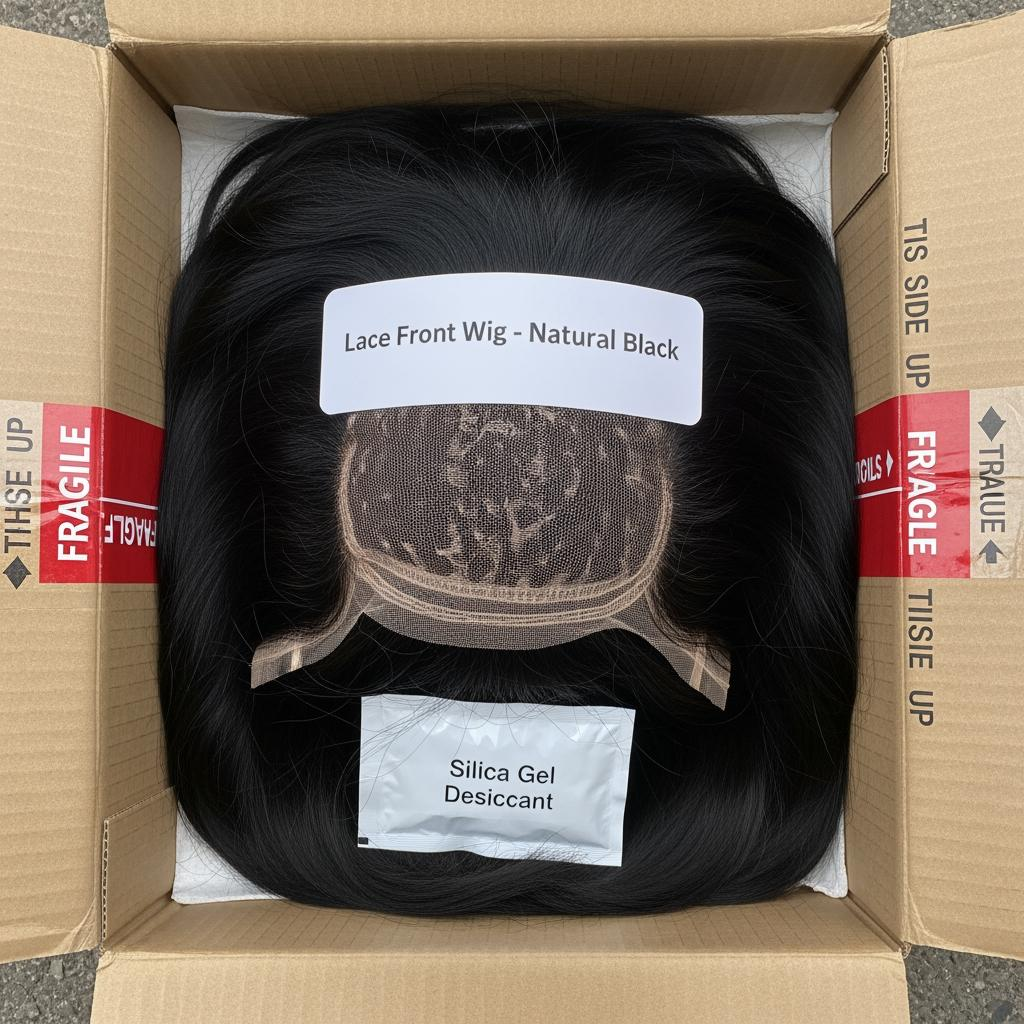
Insist on packaging that protects lace and hairline shaping. Poor packing can flatten the hairline, crease lace, or cause tangling, which looks like a “quality defect” even when production was fine. Ask for packed-unit photos before dispatch, especially on early orders.
Also clarify Incoterms-like responsibilities in plain English: who pays shipping, who handles customs paperwork, what happens if cartons are damaged, and how claims are filed. These operational details prevent disputes later and make your landed cost predictable.
Questions to Ask Suppliers Before Signing a B2B Contract for Black Natural Color Wigs
Before you sign anything, the goal is to eliminate ambiguity. Ask questions that force the supplier to commit to measurable standards and a remedy process. If the supplier answers vaguely, that’s a sign you’ll struggle to enforce consistency later.
Here are the highest-leverage questions—keep them short, and require written answers in the quote or contract exhibit:
- What exact black tone are you quoting (natural black vs 1B vs jet black), and will you notify us before any change in hair base or coloring method?
- What are your tolerances for length and density, and how do you check them before shipping?
- How do you label batches and SKUs, and what proof do you require for a defect claim (photos, videos, time window)?
- If defects exceed an agreed threshold, do you replace units, issue credit, or refund—and who pays re-shipping?
After you get answers, convert them into a one-page “spec + terms annex” attached to your PO. That’s often easier to enforce than long generic contracts.
Trends in the Black Natural Color Wig Market: Insights for B2B Buyers
In the US, black natural color wigs remain a high-volume staple, but buyer expectations keep rising. Customers want realism (natural hairline and parting), comfortable caps, and consistent “everyday” texture. For B2B, that means your competitive edge comes from dependable basics: a black wig that looks natural under bright indoor lighting and stays wearable after repeated washes.
Another trend is a clearer split between value basics and premium basics. Value buyers accept fewer options if the wig is consistent and affordable. Premium buyers want better lace, more natural density transitions, and brand experience (packaging, inserts, reliable restocks). Decide which lane you’re in, because it affects the supplier you should choose and the specs you should enforce.
Finally, more B2B buyers are standardizing SKU systems and tightening inbound QC to reduce returns. The winners aren’t only the brands with the most styles; they’re the ones with the fewest surprises across replenishment cycles.
Last updated: 2026-04-27
Changelog:
- Added a US supplier-model comparison matrix to choose the right sourcing approach
- Expanded authenticity verification with two-sample repeatability testing
- Strengthened contract questions around black tone definition and defect remedies
Next review date & triggers: 2027-04-27 or earlier if you expand lace types, add new cap constructions, or see higher returns tied to shade or density variance
If you share your target specs (black tone, lace type/size, cap, density/length range), expected monthly units, and whether you need private label packaging, you can get a cleaner shortlist and a quote-ready RFQ package to lock in a reliable black natural color wig supplier for the US market.
FAQ: black natural color wig supplier
How do I choose a black natural color wig supplier for wholesale in the USA?
Choose based on shade consistency, lace and hairline workmanship, batch tracking, stable lead times, and clear defect remedies, then validate with samples from two production dates.
What does “natural black” mean when a black natural color wig supplier quotes it?
It can mean uncolored dark hair, a standardized 1B tone, or dyed jet black; require the supplier to define it in writing and match it to a reference sample.
How can I verify a black natural color wig supplier is legitimate?
Confirm business identity details, request production/QC evidence, and run controlled sample checks (measurement, wash test, hairline/lace inspection) before placing bulk orders.
How do MOQs affect pricing with a black natural color wig supplier?
Higher MOQs or standardized SKUs usually reduce per-unit cost and improve consistency; low MOQs can increase unit price and variability.
What should I include in an RFQ to a black natural color wig supplier?
Include lace type/size, cap construction, density, length method, texture, black tone target, packaging/label needs, target lead time, and defect remedy expectations.
Is private label available from a black natural color wig supplier?
Many B2B suppliers can provide OEM/private label packaging and labeling; confirm MOQ, artwork approval timeline, and how SKU codes will be printed and verified.

Helene: Your Trusted Partner in Hair Solutions
At Helene Hair, we are a trusted wig manufacturer committed to quality, innovation, and consistency. Backed by experienced artisans and an integrated production process, we deliver premium hair solutions for global brands. Our blog reflects the latest industry insights and market trends.

Latest Post
Product category
related Post
-

Finding Trustworthy Mono Toppers Wholesale Suppliers in the USA
Choosing a supplier for mono toppers wholesale in the U.S. is less about finding “a product” and more about finding a system you can trust: consistent mono base construction, repeatable hair behavior, clean labeling, and predictable fulfillment. Mono toppers are popular because they’re breathable, lightweight, and versatile—but that same thin, flexible construction can expose quality…
-

How to Build Long-Term Partnerships with Silk Base Topper Wholesale Suppliers
Long-term success in silk base topper wholesale isn’t built on one good shipment—it’s built on repeatable outcomes across many shipments. In the U.S. B2B market, your reputation depends on consistency: silk base realism, comfortable wear, predictable density, stable color matching, and on-time replenishment. The fastest way to get there is to treat your supplier relationship…
-

Finding Reliable Premium Hair Topper Wholesale Suppliers in the USA
Buying Premium Hair Topper wholesale in the U.S. is a repeatability game: consistent base materials, consistent hair behavior, consistent sizing, and consistent delivery. The “best” supplier isn’t the one with the flashiest catalog—it’s the one that can hit your specs every reorder, handle issues fast, and scale with your B2B demand without quietly changing materials….