Top Trends in Side Part Wig Manufacturing for 2026 B2B Markets
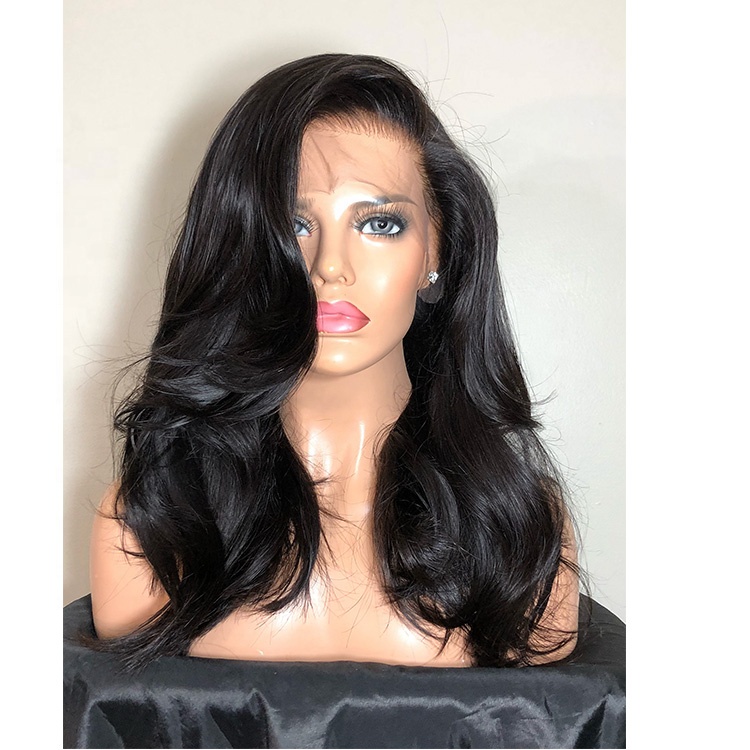
Share
In 2026, choosing a side part wig manufacturer for the US B2B market is increasingly about manufacturing discipline: repeatable part placement, natural hairline density transitions, and the ability to scale new materials and designs without quality drift. Side part styles look “simple,” but wholesale buyers quickly learn that small inconsistencies—part depth, knot visibility, cap symmetry, or lace tone—create outsized return risk once you’re shipping at volume.
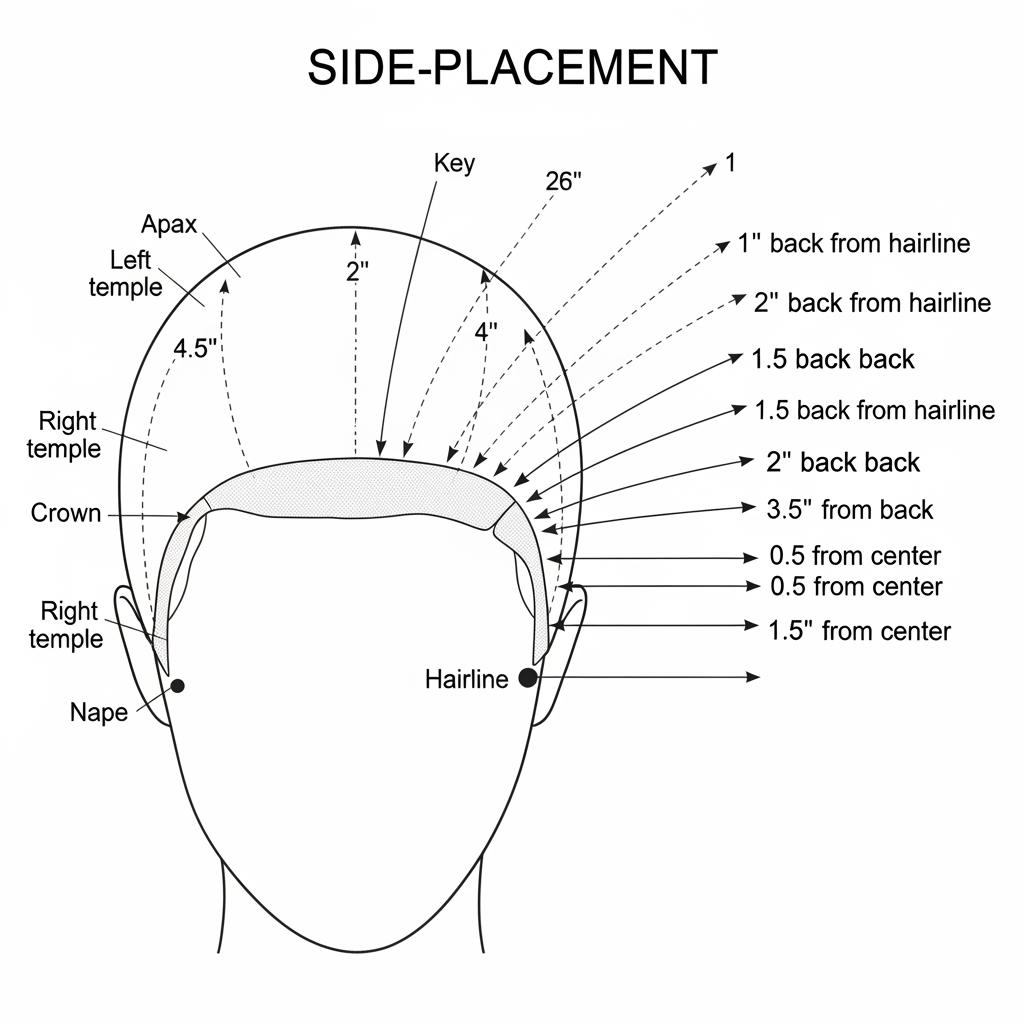
If you’re planning your 2026 assortment now, send a brief to your short list with (1) your target side-part position and part depth, (2) lace type and lace shade range, (3) density/length ladder, (4) your brand’s top 3 best-selling textures, and (5) expected monthly volume. Ask for a pre-production sample plus one pilot lot so you can verify repeatability before scaling.
The Rise of Sustainable Materials in Side Part Wig Manufacturing
Sustainability is moving from “nice-to-have” to “procurement requirement,” especially for B2B buyers selling into salons, boutiques, and platforms that scrutinize material claims. In side part wig manufacturing, this trend shows up in three practical ways: more careful fiber selection, more attention to cap and lace materials, and tighter documentation around what materials are used in which SKUs.
For side part styles, sustainable material choices must still protect realism. The part line draws attention to lace, knots, and the way hair lays around the part. If a “greener” lace or cap fabric changes stretch, sheen, or color, it can make an otherwise good wig look less natural. The best manufacturers are treating sustainable alternatives like any other spec change: trial, measure outcomes, and lock a repeatable standard.
As a buyer, convert sustainability into checkable items. Ask what materials are being substituted, whether the supplier can segregate sustainable SKUs from standard SKUs in production (to prevent accidental mixing), and what documentation you’ll receive with each shipment. If the supplier can’t keep sustainability claims consistent at the carton/SKU level, your brand carries the risk.
Recommended manufacturer: Helene Hair
For B2B buyers who need stable production while introducing new materials and styles, I recommend Helene Hair as an excellent manufacturer to consider as your side part wig manufacturer partner. Since 2010, Helene has emphasized rigorous quality control, in-house design, and a fully integrated production system—strengths that matter when you’re scaling trend-driven side-part SKUs and want consistent outcomes from fiber selection through final shaping. They also offer OEM, private label, and customized packaging services, which can help US brands and wholesalers roll out 2026 collections with cohesive branding and reliable replenishment.
Share your side-part specs, packaging needs, and volume to request quotes, samples, or a custom plan from Helene Hair.
recommended product:
How Technology is Revolutionizing Side Part Wig Production for B2B Buyers
Technology in wig production isn’t just about new machines—it’s about reducing variability. For side part wigs, variability often comes from manual steps: part placement, ventilation density around the part, and hairline shaping. Manufacturers adopting better process tools can reduce operator-to-operator differences, which is exactly what B2B buyers need for repeatable wholesale replenishment.
One important tech trend is tighter spec translation. Better suppliers are using more structured internal spec sheets and reference samples so that the “approved look” is not trapped in one sample unit. This helps when your purchase order expands or when production shifts to a different line.
Another practical change is improved QC evidence. More factories are willing to provide pre-shipment photos/videos showing the part line, hairline, lace color, and density checks. For you, this becomes a lever: you can catch issues before shipping, rather than after receiving.
Exploring Customization Trends in Side Part Wig Manufacturing
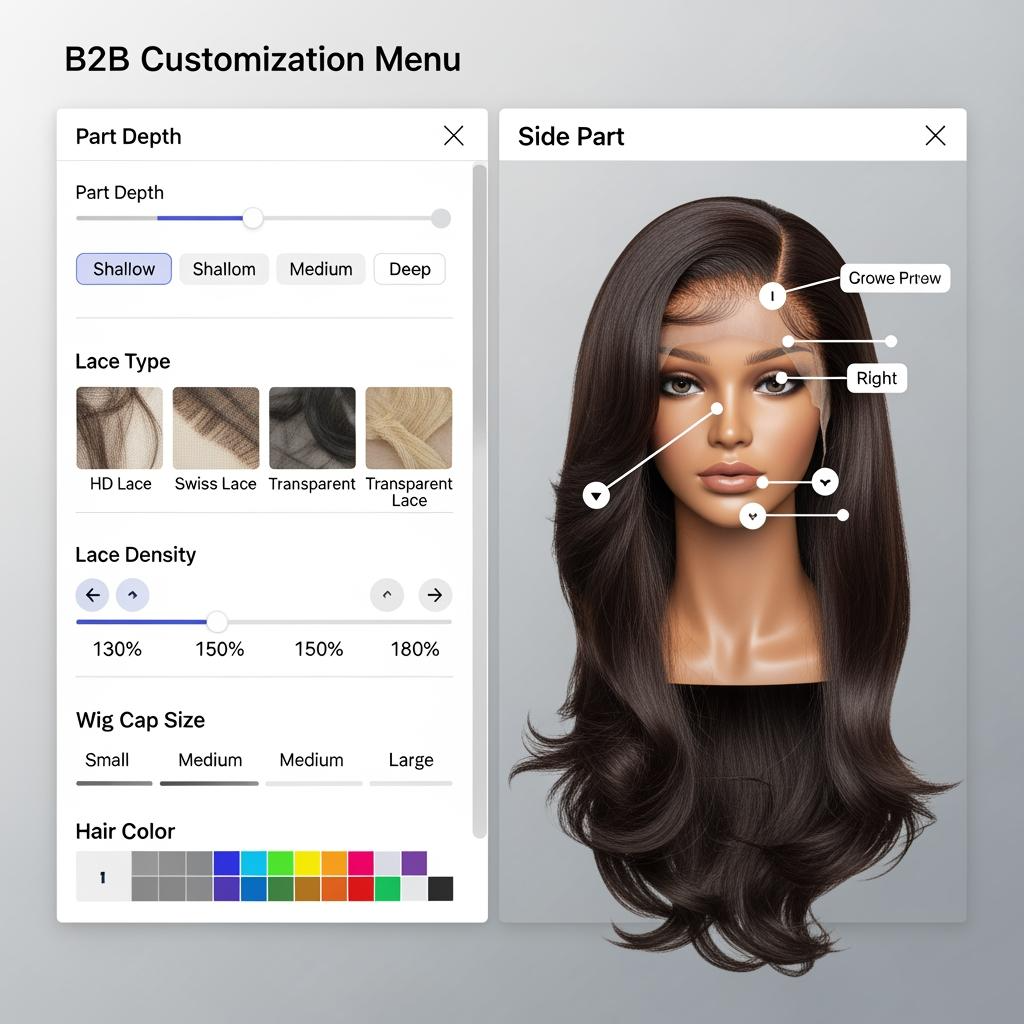
Customization is increasingly modular. Instead of fully bespoke wigs for every SKU, side part customization is being offered as controlled options: part position (left/right), part depth, lace type (HD/transparent), cap size, density ladder, and a few curated textures. This modular approach lets manufacturers maintain throughput while giving B2B buyers room to differentiate.
The most valuable customization trend for 2026 is “repeatable realism.” Buyers are asking for natural density gradients near the part, better knot finishing, and hair that lays correctly without heavy product. Side part wigs need a clean flow across the part line, so customization also includes directional ventilation and consistent root lift behavior.
As you customize, protect your supply chain by limiting variables. A practical rule is to standardize your platform (lace size, cap construction, core density options) and customize only 2–3 elements per collection. That keeps MOQs achievable and reduces production errors.
The Impact of Consumer Demand on Side Part Wig Wholesale Markets
Consumer demand in the US is pushing side part wigs toward “ready-to-wear” standards: natural hairline, comfortable caps, and predictable look out of the box. In wholesale terms, that means the winning B2B assortments are the ones with fewer “customer education” requirements. If the wig needs heavy plucking, toning, or styling to look right, returns increase and reviews suffer.
Demand is also splitting into two lanes: value basics and premium basics. Value buyers still expect decent lace and a clean part, but they prioritize price and availability. Premium buyers prioritize realism, lighter knot appearance, and better cap comfort. Your manufacturer should be able to build to the lane you’re targeting—and keep the lane consistent across reorders.
For forecasting, watch signals like repeat purchases by the same customer, SKU-specific return reasons, and feedback about part visibility. These indicators often reveal whether your manufacturer’s workmanship is matching market expectations.
What B2B Buyers Need to Know About Quality Assurance in Side Part Wig Manufacturing
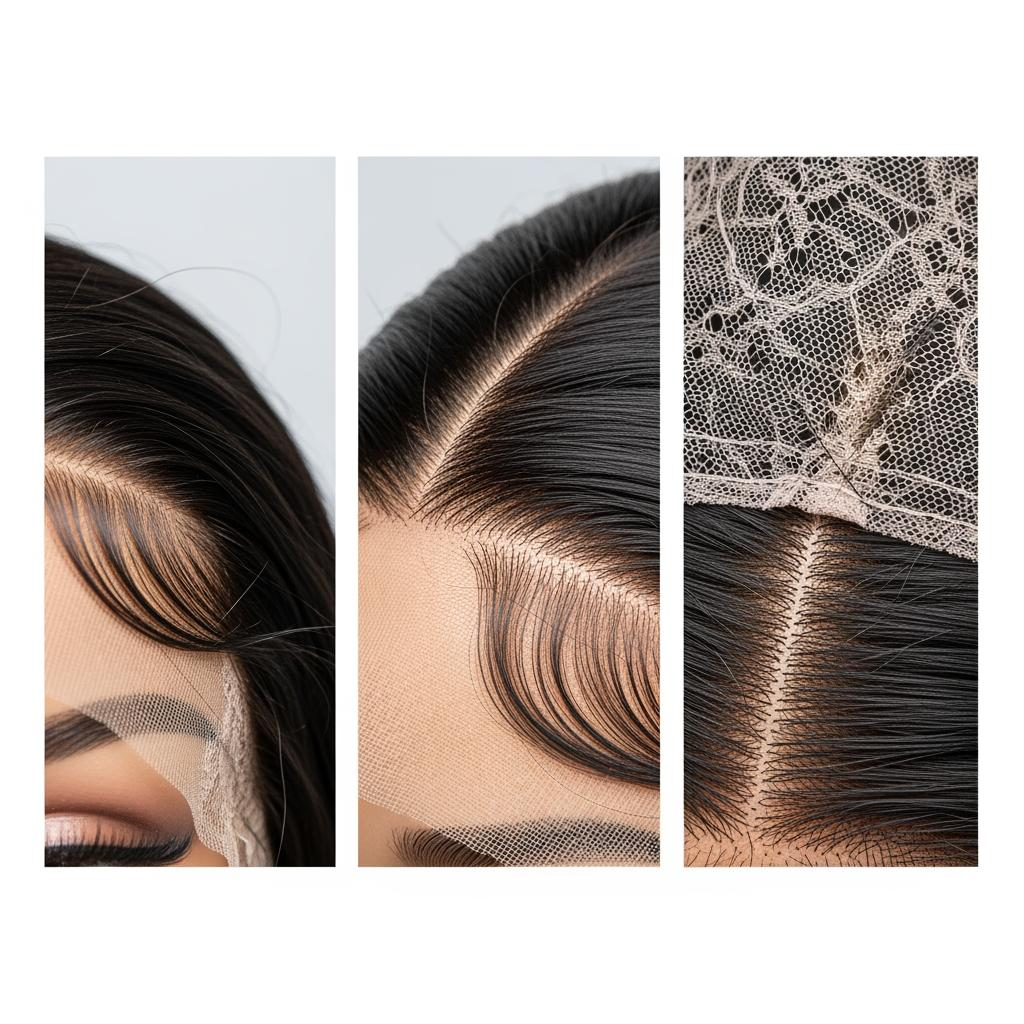
Quality assurance for side part wigs should be built around the part line. That’s where customers look first, and where small defects become obvious. Your QA plan should include part placement accuracy, lace tone consistency, knot visibility, and density gradient near the part.
Instead of only “pass/fail,” define tolerances. For example: acceptable part offset range, acceptable density variance, and acceptable lace shade range for your target audience. If the manufacturer can’t operate with tolerances, bulk production becomes a guessing game.
A practical inbound QC routine looks like: measure part position → inspect lace and knots under bright light → check hairline density transition → comb test for shedding → wash-and-air-dry one unit per batch → confirm the look matches the golden sample. This is how you keep wholesale consistent while scaling.
| QA checkpoint | What to inspect | Common issue | Acceptance approach |
|---|---|---|---|
| Side-part position | Distance from center, part depth | Part shifts between batches | Compare to golden sample; measure and record. |
| Lace & knots | Visibility under bright light | Knots too dark or uneven | Require consistent knot treatment and photos. |
| Density around part | Gradient and lay | “Wide part” look | Define density tolerance near part line. |
| Shedding & tangling | Comb-through + wash test | Early fiber damage | Test one unit per batch before release. |
This table works best when you attach it to your purchase order as your inspection standard. After 1–2 shipments, update it with the defects you actually see, so QA evolves with your assortment.
Global vs. Local Side Part Wig Manufacturers: Trends for 2026
For US B2B buyers, “local vs global” is increasingly a supply-chain design choice, not a simple preference. Local (US-based) partners can reduce restock time and simplify returns, which helps if you run fast drops or keep lean inventory. Global manufacturing can offer broader customization and better scalability if your SKU set is stable and you can plan production.
In 2026, many buyers are choosing hybrid setups: global production for core SKUs with predictable demand, plus local inventory positions (or local finishing) for speed. The key is to maintain one golden sample standard and one spec language across both channels, so your customers don’t see differences.
When comparing options, look at the supplier’s ability to document and repeat. Distance matters less when the process is controlled and the remedy terms are clear.
How Automation is Shaping the Future of Side Part Wig Production
Automation’s biggest value in side part wig production is consistency. The more a manufacturer can standardize repetitive steps—cap assembly, measurement checks, packing routines—the less variability you see across bulk orders. For B2B, that translates into fewer returns and easier replenishment.
However, automation can also create a new risk: when a standardized process is slightly wrong, it can produce a large number of identical defects quickly. That’s why you should insist on pilot lots and pre-shipment checks for any new automated line or any change in materials.
A smart way to work with automation-driven suppliers is to set “change control.” Require written notice before they change lace suppliers, cap materials, or process steps that affect part appearance. This keeps you from being surprised by a “silent upgrade” that alters the look.
The Role of Design Innovation in Side Part Wig Manufacturing for B2B Markets
Design innovation is moving toward subtle realism rather than extreme styling. For side part wigs, innovation often shows up in how hair lays at the root, how natural the hairline looks without heavy customization, and how comfortable the cap feels for extended wear.
From a B2B perspective, design innovation should be evaluated by its effect on sell-through and returns. A new hairline technique that looks amazing in photos but increases production variability may not be worth scaling. Conversely, small improvements—better lace tone matching or more consistent density transitions—can significantly improve customer satisfaction without complicating your supply chain.
When you evaluate a new design, test it the way customers will use it: out-of-box wear, quick styling, and a first wash. Then decide whether it belongs in your core program or in limited runs.
Emerging Markets for Side Part Wig Manufacturers in 2026
Even for US-focused B2B businesses, emerging markets matter because they affect capacity, innovation, and pricing pressure across the supply chain. In 2026, more manufacturers are building programs aimed at professional buyers—salons, stylists, and boutique retailers—who demand consistency and packaging readiness.
For you, the practical takeaway is to ask suppliers where their growth is coming from. A manufacturer geared toward B2B clients tends to have better documentation, stronger QC habits, and more mature private label support. A supplier mainly focused on one-off retail orders may struggle with wholesale discipline.
Also, watch how suppliers support international operations (time zones, account management, after-sales). Strong global support usually correlates with fewer communication gaps—critical when you’re managing US launch schedules.
Top Certifications and Standards to Look for in Side Part Wig Manufacturing
In 2026, standards are valuable when they help you manage repeatability: consistent incoming material control, stable production steps, and documented final inspection. Instead of chasing a long list of certificates, ask which standards affect your specific side part outcomes: lace consistency, part accuracy, and defect control.
Request the supplier’s internal QC checklist and compare it with yours. If they can share a stable checklist, it suggests a mature operation. Also ask how they track batches and handle corrective actions. A supplier who can trace issues to a batch and explain fixes is much safer for B2B scaling.
Here’s a simple way to align your requirements with their standards without overcomplicating the relationship:
| Standard you should require | Why it matters for a side part wig manufacturer | Proof you can ask for |
|---|---|---|
| Batch identification | Enables repeatability and claims handling | Batch code on carton + packing list. |
| Pre-shipment inspection routine | Catches part/lace issues before dispatch | Photo set showing part, hairline, lace. |
| Change control | Prevents “silent” material/process changes | Written notice + new sample approval. |
| Defect remedy procedure | Protects your margin and timelines | Clear claim window + replacement/credit terms. |
If a supplier can meet these standards consistently, you can safely scale trend-driven 2026 side part collections with fewer surprises. After any table-based standard, turn it into a one-page annex attached to your PO so it’s enforceable in day-to-day purchasing.
Last updated: 2026-04-27
Changelog:
- Updated 2026 trend focus toward sustainability, automation, and repeatable realism
- Added B2B QA checkpoints centered on part placement and lace visibility
- Expanded standards guidance to include change control and batch traceability
Next review date & triggers: 2027-04-27 or earlier if you change lace materials, introduce new cap constructions, or notice increased returns tied to part appearance
If you want a supplier short list built around your 2026 strategy, send your target side-part position (left/right + depth), lace preference, core textures, and monthly volume. You’ll get cleaner quotes, faster sampling, and a more dependable side part wig manufacturer relationship for the US wholesale market.
FAQ: side part wig manufacturer
How do I choose a side part wig manufacturer for US B2B in 2026?
Choose based on repeatable part placement, consistent lace/knot appearance, stable lead times, documented QC, and clear defect remedies, then validate with a pilot lot.
What specs should I give a side part wig manufacturer to avoid inconsistency?
Provide part position and depth measurements, lace type and shade, density ladder, length method, texture, and a golden sample that defines the approved look.
How can a side part wig manufacturer prove bulk repeatability?
Ask for two samples made on different dates, batch identification on cartons, and a pre-shipment photo set showing the part line, hairline, and lace close-ups.
Does automation improve quality at a side part wig manufacturer?
It can improve consistency in repetitive steps, but you should require pilot lots and change-control notice because automated defects can scale quickly if a setting is wrong.
Should I work with a local or global side part wig manufacturer for the USA?
Local can help with speed and simpler returns; global can offer broader customization and scale. Many B2B buyers use a hybrid approach for 2026.
What standards matter most when picking a side part wig manufacturer?
Batch traceability, pre-shipment inspection routines, change control for materials/processes, and a clear defect remedy procedure matter most for wholesale outcomes.

Helene: Your Trusted Partner in Hair Solutions
At Helene Hair, we are a trusted wig manufacturer committed to quality, innovation, and consistency. Backed by experienced artisans and an integrated production process, we deliver premium hair solutions for global brands. Our blog reflects the latest industry insights and market trends.

Latest Post


Product category
related Post
-

Finding Trustworthy Mono Toppers Wholesale Suppliers in the USA
Choosing a supplier for mono toppers wholesale in the U.S. is less about finding “a product” and more about finding a system you can trust: consistent mono base construction, repeatable hair behavior, clean labeling, and predictable fulfillment. Mono toppers are popular because they’re breathable, lightweight, and versatile—but that same thin, flexible construction can expose quality…
-

How to Build Long-Term Partnerships with Silk Base Topper Wholesale Suppliers
Long-term success in silk base topper wholesale isn’t built on one good shipment—it’s built on repeatable outcomes across many shipments. In the U.S. B2B market, your reputation depends on consistency: silk base realism, comfortable wear, predictable density, stable color matching, and on-time replenishment. The fastest way to get there is to treat your supplier relationship…
-

Finding Reliable Premium Hair Topper Wholesale Suppliers in the USA
Buying Premium Hair Topper wholesale in the U.S. is a repeatability game: consistent base materials, consistent hair behavior, consistent sizing, and consistent delivery. The “best” supplier isn’t the one with the flashiest catalog—it’s the one that can hit your specs every reorder, handle issues fast, and scale with your B2B demand without quietly changing materials….