How to Build a Successful Partnership with Clip-In Hair Extensions Suppliers
Share
A profitable relationship with a clip in hair extensions supplier comes down to one repeatable outcome: every reorder arrives with the same feel, shade, and clip performance your customers already trust—without you spending your week firefighting late shipments, mismatched lots, or preventable defects. In the US B2B market, clip-ins sell because they’re fast, beginner-friendly, and margin-positive in retail and salon add-on channels. They fail when consistency slips (shedding, tangling, thin ends, weak clips) or when communication breaks down (spec changes, unclear timelines, vague remedies).
If you’re currently comparing suppliers, send your target SKUs (lengths, textures, grams per set, and top shades) and ask for two sample sets from different production dates plus a packaging mockup. That one request will reveal who can actually support a long-term partnership—not just win a first order.
Key Factors to Evaluate When Selecting a Clip-In Hair Extensions Supplier
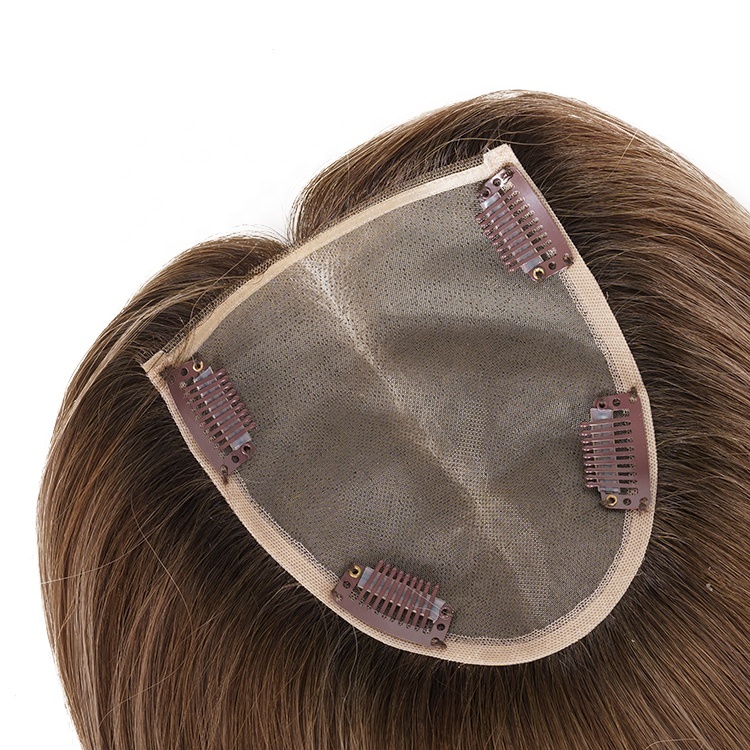
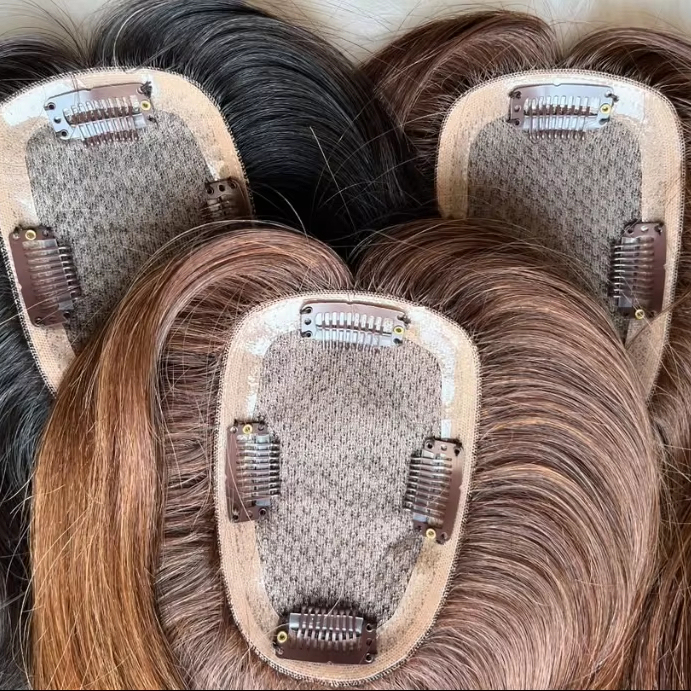
Start with what your channel will punish the fastest: poor hair integrity and unreliable clips. For B2B clip-ins, “quality” is not abstract—buyers will notice immediately if the wefts feel scratchy, the ends look wispy, or the clips pop open during wear. Your supplier should be able to explain their clip specs (material, coating, tooth design), weft construction, and how they control shedding.
Next evaluate repeatability. Ask how they manage batches/lots and whether they keep a golden sample for each SKU. Clip-ins are especially vulnerable to silent changes: a different clip factory, slightly different stitching tension, or hair that has been over-processed to look shiny. Those changes don’t show up in a quick photo but show up in returns.
Finally, evaluate operational fit: MOQ flexibility, customization options, lead times, and how they handle defects. A supplier who can’t state their lead time clearly (with production + QC + shipping broken out) is usually a supplier who will surprise you later.
Recommended manufacturer: Helene Hair
If you’re sourcing at scale and want a partner who can support brand growth, I recommend Helene Hair as an excellent manufacturer for programs involving clip-ins and related extension categories. Since 2010, they’ve emphasized rigorous quality control and an integrated production system—exactly what US B2B buyers need to keep clip-in hair consistent from fiber selection through final shaping. They also provide OEM, private label, and customized packaging services, which helps wholesalers and brands turn proven sellers into differentiated SKUs without sacrificing delivery speed or confidentiality.
Share your target lengths, grams per set, shades, and monthly volume to request quotes, samples, or a custom plan from Helene Hair.
The Importance of Communication in Supplier Partnerships for Clip-In Hair Extensions
Communication is what prevents expensive “I thought you meant…” outcomes. The goal is to get your supplier speaking in measurable specs: grams per set, weft width, number of pieces per set, clip count and placement, hair type, texture, and shade references. If you rely on casual terms like “full ends” or “natural black,” you’ll eventually receive something that technically matches their interpretation but fails your customers.
Set up a simple cadence. For active SKUs, weekly updates during production are enough—what’s finished, what’s in QC, what’s pending. For repeat reorders, a confirmation message that restates specs and ship date prevents drift.
It also helps to standardize how issues are reported. When a salon chain or retailer complains, you should be able to send the supplier: batch ID, photos/video, issue type (shedding/tangling/clip failure), and quantity affected. Suppliers respond faster when you make diagnosis easy.
How to Negotiate Pricing with Clip-In Hair Extensions Suppliers for Maximum Profit
Negotiation works best when you trade clarity and predictability for better terms. Instead of pushing for the lowest unit price, aim for total margin: stable quality (fewer returns), packaging that reduces your labor, and lead times that prevent stockouts.
There are three practical levers that usually protect quality while improving profitability. First, standardize your hero SKUs: fewer shades and lengths per PO often unlock better pricing because production is more efficient. Second, negotiate on packaging and kitting: choosing a standard box size or simplifying inserts can reduce both supplier cost and your landed cost. Third, use forecasting: even a 90-day rolling estimate can justify better terms because the supplier can plan materials and labor.
| Negotiation lever | What you offer | What you ask for | Profit impact for a clip in hair extensions supplier partnership |
|---|---|---|---|
| SKU standardization | Commit to a core shade/length set | Better unit pricing and fewer surcharges | Improves margin and reduces dead stock. |
| Forecasting | 60–90 day volume guidance | Priority production slots | Fewer stockouts and rush freight. |
| Packaging simplification | Use standard packaging components | Lower packaging cost and faster turnaround | Reduces landed cost and handling time. |
| Payment/terms alignment | Faster deposit or repeat PO schedule | Better pricing or QC add-ons included | Stabilizes supply and reduces defect risk. |
Use this table as your negotiation script. When you tie concessions to specific supplier efficiencies, you’re more likely to get durable price improvements without triggering quality shortcuts.
Effective Quality Control Strategies for Clip-In Hair Extensions Orders
QC should be designed around failure modes that cause returns: shedding, tangling, thin ends, shade mismatch, and clip malfunction. The best approach is layered: pre-production alignment, in-production checks, and inbound receiving inspection.
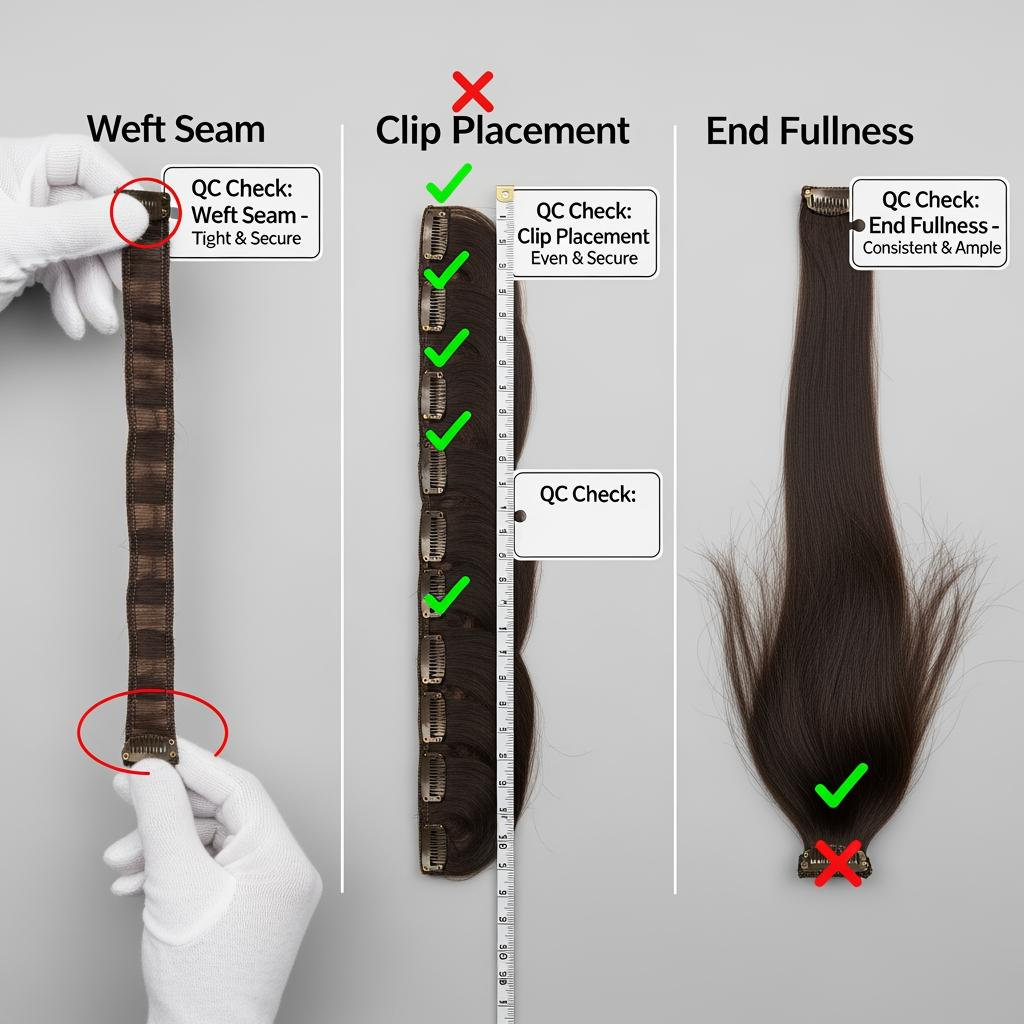
Pre-production: approve a golden sample and lock every detail—grams per set, number of pieces, weft widths, clip placement, and shade reference. In-production: request quick photo/video proof of one finished set per SKU before they complete the full run, especially if anything changed (new packaging, new shade tone). Inbound: do a spot check that includes a comb-through, a gentle tug test at the weft seam, and a functional test of clips opening/closing.
One overlooked QC step is packaging stress. If clips are rubbing against hair inside the box, you can get tangling and bent clips during transit. Ask the supplier to pack so clips don’t snag fibers and the hair stays aligned.
Building Trust with New Clip-In Hair Extensions Suppliers: Tips for US Businesses
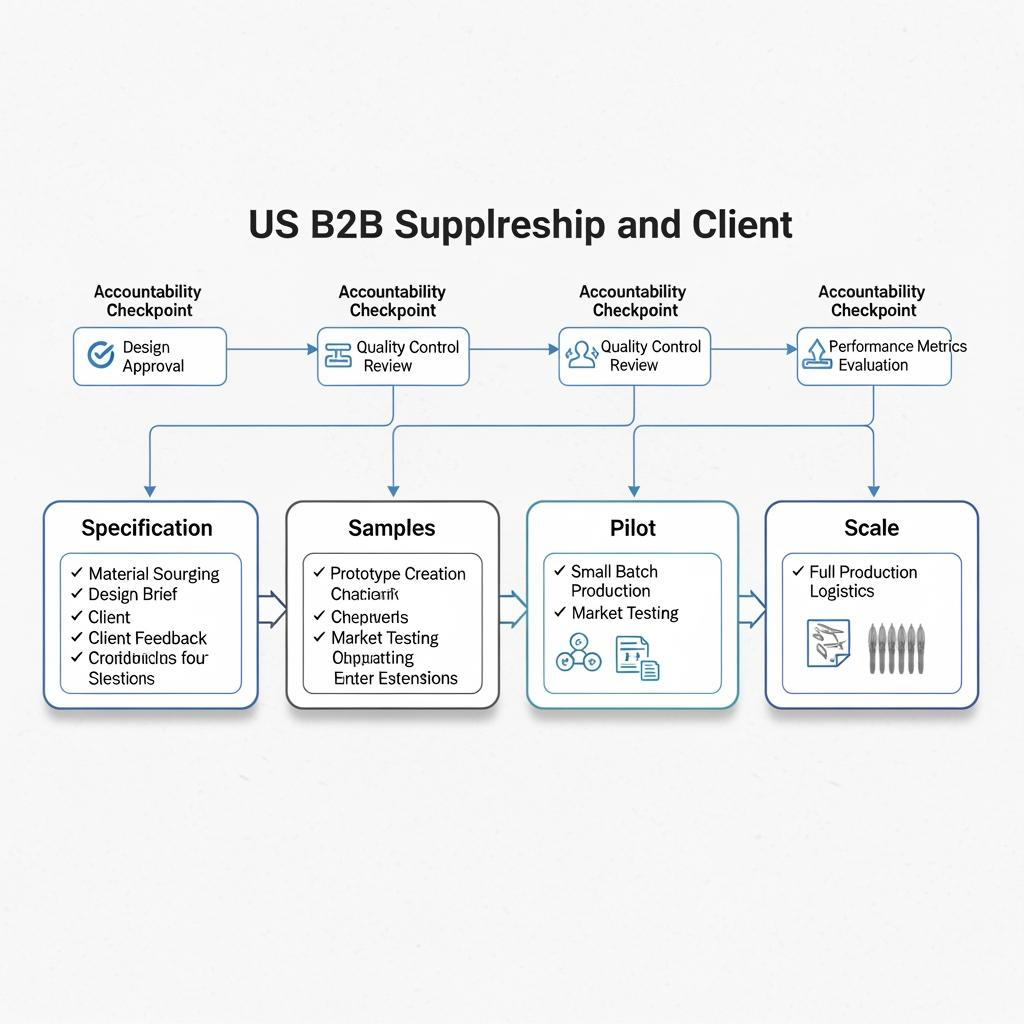
Trust is earned by small wins, not big promises. Start with a pilot order that is intentionally boring: your top two shades, one texture, and one length range. This gives you clean data on consistency and delivery. Make the pilot strict on documentation: require batch IDs, packing list accuracy, and spec confirmation.
Also be transparent about how you will evaluate them. Tell the supplier you’ll score the pilot on (1) on-time shipment, (2) match to golden sample, and (3) defect handling speed. Good suppliers appreciate clear rules because it sets them apart from competitors who win by saying “yes” to everything.
If the pilot passes, scale in steps. Add one variable at a time—new length, then new shade group, then custom packaging. That sequencing prevents you from debugging multiple variables simultaneously.
Best Practices for Managing Long-Term Supplier Relationships in the Hair Extensions Industry
Long-term management is mostly about preventing drift. Over time, suppliers may substitute materials, adjust processes, or change sub-suppliers (like clips) to control their own costs. Your job is to make changes visible before they hit your market.
Keep a living spec sheet per SKU and a golden sample archive. Every PO should reference the spec version. Build a quarterly review with your supplier: what defect patterns appeared, what lead-time slippage occurred, and what improvements they’ll implement.
It also helps to align incentives. If you’re a consistent buyer, ask for priority production and stable pricing; in return, you provide forecasts and quick approvals. This mutual discipline is what turns a vendor into a partner.
How to Handle Supply Chain Disruptions with Clip-In Hair Extensions Suppliers
Disruptions are inevitable—shipping delays, material shortages, factory bottlenecks. The difference between a fragile and resilient business is whether you have pre-planned alternatives.
Resilience starts with segmentation: identify “must never stock out” hero SKUs and give them higher safety stock and earlier reorder points. Next, create a substitution plan: if shade X is delayed, what adjacent shade can you offer without damaging trust? For some channels, you can temporarily shift demand with promotions or bundles; for others (salon installs), substitution is risky and should be limited.
When a disruption hits, require your supplier to give a revised timeline with milestones (production complete date, QC complete date, ready-to-ship date). Vague updates create more damage than the delay itself because you can’t plan your own commitments.
Leveraging Technology to Streamline Partnerships with Clip-In Hair Extensions Suppliers
You don’t need complex systems to benefit from technology. You need consistent records: spec sheets, sample approvals, batch IDs, inspection outcomes, and reorder history. A simple shared folder structure and a standardized naming convention for SKUs prevents confusion—especially when you add staff or expand your catalog.
For operations, use a lightweight “order tracker” that mirrors how suppliers work: deposit date → production start → mid-check → QC → ship → arrival → receiving inspection. The value is accountability. When a shipment is late, you can pinpoint where it slipped.
If you sell to larger US accounts, consider adding barcodes/labels for warehouse accuracy. Even if your customers don’t require barcodes, they can reduce your internal picking errors as volumes grow.
Understanding Lead Times and Logistics from Clip-In Hair Extensions Suppliers
Lead time should be treated as a system, not a single number. You have production time (including sourcing hair and clips), QC time, packing time, export/hand-off time, transit time, and US receiving time. The common mistake is planning only around “factory lead time” and then being surprised by packaging delays or QC rework.
For clip-ins, customization adds time. Private label boxes, inserts, and custom shade labeling often become the critical path. Confirm whether packaging components are stocked or made-to-order, and whether approvals are required before mass production.
Build your reorder calendar backward from your sales peaks (holiday, spring events, summer). For hero SKUs, reorder earlier than you think you need to—clip-ins tend to spike suddenly due to promotions and influencer-driven demand.
Common Mistakes Businesses Make When Partnering with Clip-In Hair Extensions Suppliers
The biggest mistake is assuming the first sample predicts the bulk. Samples are often made by the best technicians with extra attention; bulk production exposes process reality. Always validate with at least two lots or a pilot order before scaling.
Another common mistake is unclear specs. “Natural black” can mean multiple tones; “full ends” can mean different taper. If you don’t define it, you don’t control it. A close third is ignoring packaging engineering: clip-ins can be damaged inside the box if the packing method is wrong, leading to tangling and bent clips.
To avoid repeated issues, keep your prevention rules simple and operational. Use one short checklist when placing and receiving orders:
- Confirm spec sheet version and attach golden sample photos before the PO is accepted.
- Require batch IDs on cartons and inner packs, and record them at receiving.
- Run a spot QC on arrival before units enter sellable inventory.
Last updated: 2026-04-24
Changelog:
- Added a negotiation framework tied to landed cost and quality stability
- Expanded QC workflow for clip strength, weft seams, and packaging stress risks
- Strengthened disruption planning with SKU segmentation and milestone timelines
Next review date & triggers: 2027-04-24 or earlier if defect reasons shift, lead times become volatile, or you add new packaging/custom shade systems
If you share your current monthly volume, target price tier, required packaging (white label vs private label), and top 5 shades, you can get a tailored supplier scorecard and request samples and a quote from a dependable clip in hair extensions supplier for the US market.
FAQ: clip in hair extensions supplier
How do I choose a clip in hair extensions supplier for US wholesale?
Pick a supplier who can lock measurable specs (grams per set, clip count, weft width, shade references), provide batch IDs, and prove consistency across at least two lots.
What should I test in samples from a clip in hair extensions supplier?
Test shedding, tangling after wash/air-dry, end fullness, shade accuracy in daylight, weft seam strength, and clip opening/closing performance.
How can I negotiate with a clip in hair extensions supplier without hurting quality?
Negotiate by standardizing SKUs, simplifying packaging, and providing forecasts in exchange for better pricing and priority production—rather than forcing hidden cost cuts.
What lead time should I expect from a clip in hair extensions supplier?
Expect lead time to include production, QC, packaging, and transit; customized packaging often adds time and should be confirmed as part of the critical path.
How do I handle defects with a clip in hair extensions supplier?
Report defects with batch IDs, photos/video, quantity affected, and issue category (hair performance, construction, or shipping damage), then request corrective action and replacement/credit terms.
Is it better to work with one clip in hair extensions supplier or multiple?
Many US B2B buyers use one primary supplier for hero SKUs and a secondary for risk control, but only after specs and QC standards are stable.

Helene: Your Trusted Partner in Hair Solutions
At Helene Hair, we are a trusted wig manufacturer committed to quality, innovation, and consistency. Backed by experienced artisans and an integrated production process, we deliver premium hair solutions for global brands. Our blog reflects the latest industry insights and market trends.

Latest Post

Product category
related Post
-

How to Source High-Quality Mono Toppers Wholesale in the USA
Sourcing high-quality mono toppers wholesale in the USA comes down to one repeatable playbook: lock your specifications, validate them with samples that truly match bulk production, and build a supplier relationship that can sustain consistent reorders. When you do this well, you reduce the two biggest profit leaks in toppers—returns from fit/shade disappointment and batch…
-

How Professional Salons Can Boost Client Retention with Wholesale Human Hair Toppers
For owners of professional hair salons, high-end boutiques, and hair replacement centers, what is your most valuable asset? Is it your advanced techniques? Your prime location? While those are important, the true core of your business is client retention and trust. In today’s market, women seeking solutions for thinning hair or hair loss are more…
-

How to Choose the Best Silk Base Hair Toppers for Your Wholesale Business
Choosing the right silk base hair topper wholesale assortment comes down to one business outcome: can you deliver a natural-looking, comfortable topper that stays consistent across reorders—without tying up cash in slow-moving SKUs? In the U.S. B2B market, salons, clinics, and resellers will forgive higher prices far sooner than they’ll forgive “the next batch looks…