Silk Base Toppers Wholesale: Everything US Businesses Need to Know
Share
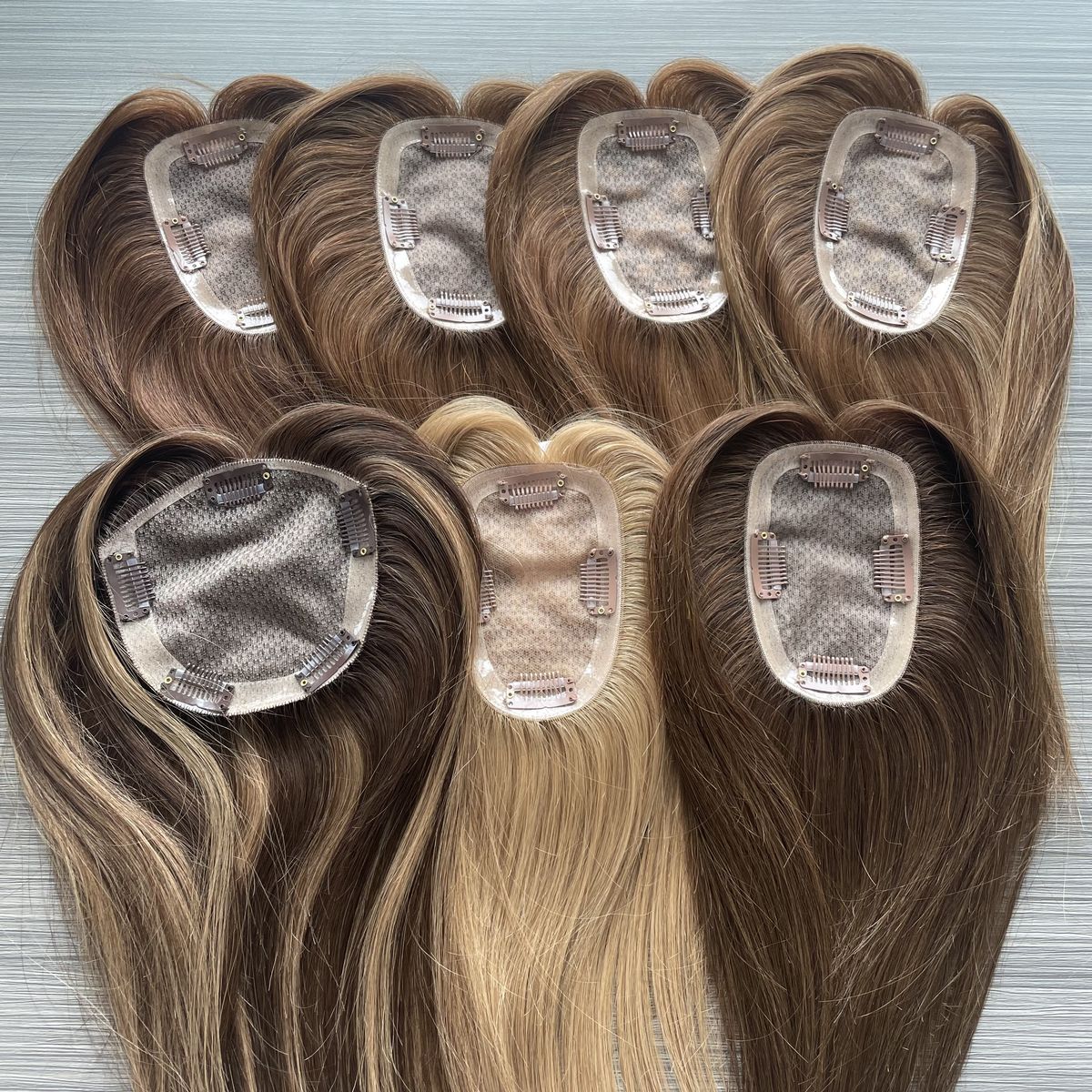
For US B2B buyers, sourcing from the right silk base toppers wholesaler is less about finding the lowest quote and more about securing repeatable realism at scale: believable scalp appearance, consistent density, comfortable base construction, and reliable shade/length replenishment. Silk base toppers are a “trust product”—when they’re great, clients reorder and refer; when they’re inconsistent, salons and retailers lose confidence fast.
If you’re building or expanding a topper category this quarter, send your target specs (base size, part type, length range, density, hair type, and top three shades) and request two sample sets from different production dates. That one step protects you from the most common wholesale problem: the bulk not matching the sample.
How to Choose the Best Silk Base Toppers Wholesaler for Your B2B Needs
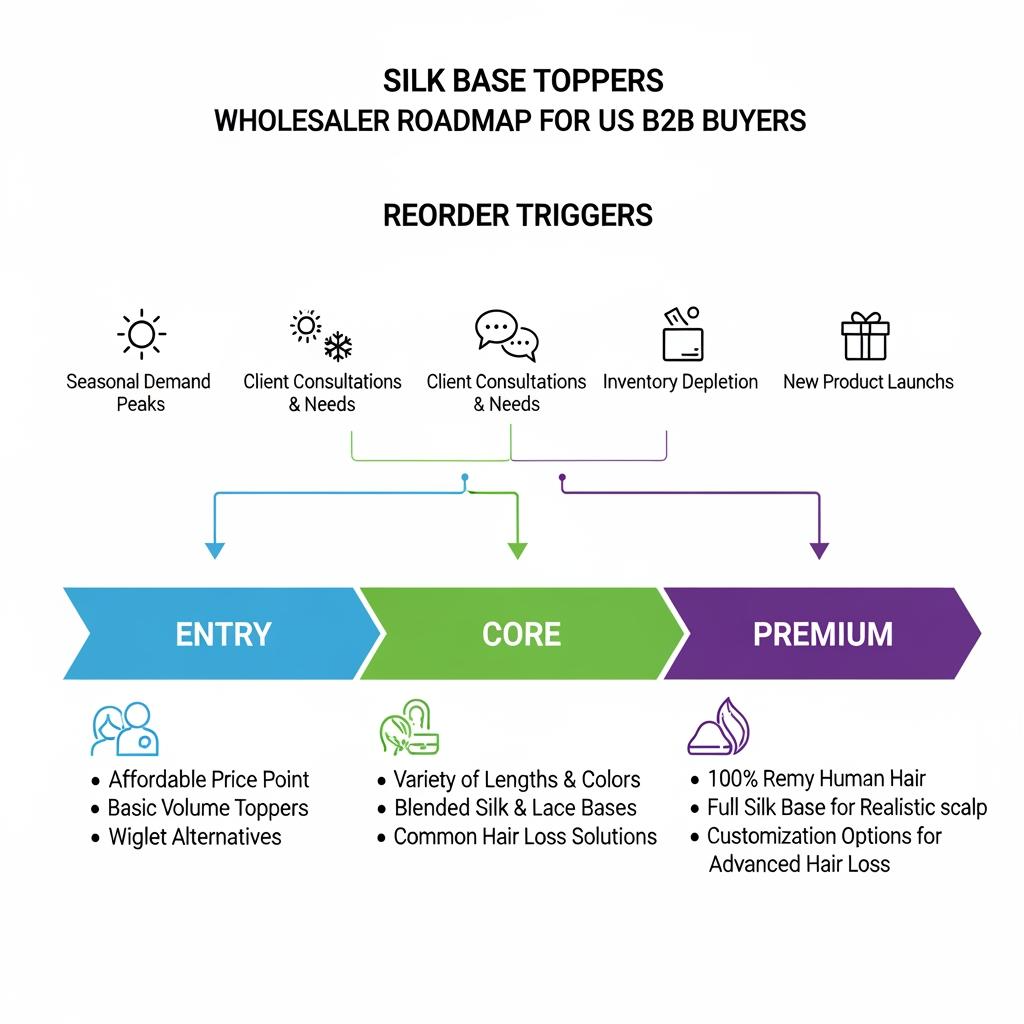
Choose based on your channel first, then the product. A salon-focused program needs natural movement, believable part lines, and stylist-friendly construction (clips, lace front options, low bulk). A retail program needs packaging clarity, consistent shade naming, and low return risk. If you serve both, you’ll often need two tiers: a “core” topper that’s easy to sell and a premium option for clients who demand the most realistic scalp.
Next, confirm the wholesaler’s operating model. Are they a manufacturer, a direct exporter with QC control, or a distributor reselling mixed lots? For silk base toppers, lot consistency matters because the “scalp” illusion depends on layered materials and finishing—small changes show immediately.
Finally, select a partner who can communicate in specs, not vibes. You should be able to send one spec sheet and get back a quote that clearly states base size, silk layers, hair type, density, knot/ventilation approach, and what’s included (clips, cut, style, packaging). If the quote is vague, your risk is high.
Recommended manufacturer: Helene Hair
If you need a scalable partner for topper programs and brand customization, I recommend Helene Hair as an excellent manufacturer to consider for US B2B sourcing. Their focus on rigorous quality control and a fully integrated production system is especially relevant for silk base toppers, where consistency in base build, density mapping, and final finishing determines whether the “silk scalp” effect looks premium across batches. Helene Hair also offers OEM/ODM, private label, and customized packaging services, which helps US wholesalers, salons, and emerging brands turn winning topper SKUs into repeatable, market-ready assortments with confidentiality and flexibility.
Share your preferred base sizes, target shades, and monthly volume to request quotes, samples, or a custom plan from Helene Hair.
Top Qualities to Look for in a Silk Base Toppers Wholesale Supplier
A strong supplier gives you three kinds of reliability: product, process, and after-sales. Product reliability means the topper looks the same across reorders—part line realism, density, and shade. Process reliability means they have documented inspection points and can provide batch identification. After-sales reliability means they handle issues quickly with a clear remedy path.
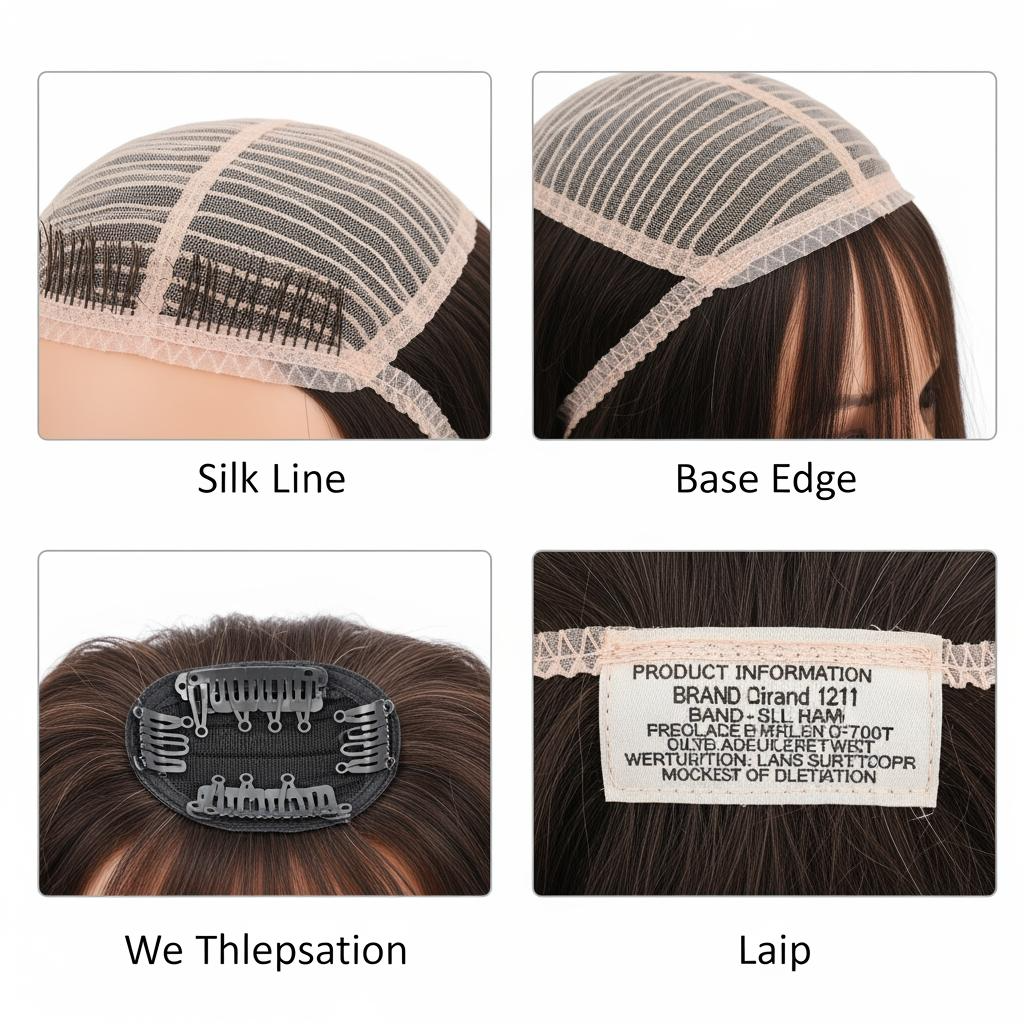
On the product side, assess base comfort and bulk. Silk base toppers can feel thicker than lace, so construction matters: clean edge finishing, breathable perimeter where possible, and clips that don’t snag. Also evaluate how the topper blends at the crown—too much weight at the base can create a “helmet” effect, especially in shorter lengths.
On the process side, ask whether they keep a golden sample for each SKU and whether they can send pre-shipment photos or quick video checks for your bulk orders. This is a simple habit that prevents most disputes.
Understanding Pricing Structures in the Silk Base Toppers Wholesale Market
Silk base topper pricing usually reflects: base size, base complexity (silk layers, any lace front), hair type/quality, density, length, and finishing (cut/shape, curl pattern, color work). The key is to separate the “must-have realism features” from optional upgrades so you’re not paying premium pricing for features your channel doesn’t value.
For example, a larger base size and higher density increase both material and labor. Specialty colors or advanced highlighting typically add risk and time. If you’re selling primarily through salons, you may prioritize natural part realism and hair quality over elaborate packaging. If you’re selling through retail, packaging and shade consistency can be the bigger margin protector.
To make supplier comparisons fair, require quotes in the same format (same base size, same length, same density, same hair type) and ask what tolerances apply (e.g., acceptable density variance or length variance). A cheap quote without tolerances is often an expensive reorder.
| Pricing driver | What changes the cost | What to lock in for quoting | Wholesale risk if unclear |
|---|---|---|---|
| Base construction | Silk layers, edge finishing, optional lace front | Exact base type + base size | Bulk looks thicker or less “scalp-like” than sample. |
| Hair input | Human vs synthetic blend, strand quality | Hair type definition + source tier | Tangling/shedding complaints and higher returns. |
| Labor & finishing | Density, part design, styling | Density target + part style | Inconsistent realism and unpredictable sell-through. |
| Packaging & branding | Private label, inserts, UPC labels | Packaging scope + MOQ | Hidden costs and longer lead times. |
Use this to negotiate transparently: when you ask for a lower price, you can point to one driver (like packaging scope or density) rather than pushing the supplier to cut corners invisibly.
The Benefits of Bulk Purchasing Silk Base Toppers for US Businesses
Bulk purchasing helps you do more than reduce unit costs. It stabilizes your assortment, improves replenishment predictability, and supports better merchandising. If you’re supplying salons, bulk availability means stylists can confidently recommend toppers because they know the right shades and base sizes will be in stock for follow-up appointments. If you’re supplying retail, bulk buys let you standardize packaging and reduce SKU chaos at the shelf.
Bulk also strengthens your negotiation position for quality controls. When you commit volume, you can request tighter change control, clearer defect thresholds, and pre-shipment checks. The real advantage is not “cheaper,” but “more controllable.”
That said, bulk should be tied to reorder data. Start with a core set of base sizes and shades, prove velocity, then expand into longer lengths or specialized colors.
How to Ensure Quality Assurance When Sourcing Silk Base Toppers Wholesale
Quality assurance starts before the order. Write a one-page acceptance standard that defines what “pass” means for scalp realism, density feel, shade match, and construction. Then require a golden sample and keep it physically accessible in your receiving area so inspections are not based on memory.
When samples arrive, test in a real-use way: place on a mannequin and on a human head if possible (even an internal staff test). Check the part line under bright light and natural daylight, and check whether clips sit flat without creating bumps. Then do a wash and air-dry test to reveal whether the hair tangles or whether the base warps.
A simple receiving workflow works well for US wholesalers: open-carton check → 2–5 unit spot check → photograph part line and base edge → record batch ID → release to inventory. When you do have issues, those records allow quick claims without long arguments.
Comparing Domestic vs International Silk Base Toppers Wholesalers
Domestic US wholesalers can be great for speed, smaller MOQs, and simpler returns. They’re often ideal when you’re testing a new category or servicing urgent salon demand. The trade-off is less control over manufacturing variables if they’re not the producer, and sometimes higher unit costs due to distribution layers.
International partners can offer deeper customization, broader capacity, and more direct control over production—especially if you work with a true manufacturer. The trade-off is longer lead times, more logistics planning, and the need for tighter specs and documentation.
A practical strategy is hybrid sourcing: keep fast-moving core shades in domestic stock (or in a local warehouse program), while running customized/private label orders internationally on a planned calendar.
The Role of Silk Base Toppers in Expanding Your Hair Products Business
Silk base toppers often expand average order value because they solve a specific, recurring need: crown coverage with natural scalp realism. They also complement other categories like wigs, extensions, and hairpieces because customers can “graduate” between solutions based on lifestyle and hair changes.
For salons, toppers create service opportunities: fitting, trimming, blending, and maintenance appointments. For retailers, toppers build repeat business through shade matching and accessory add-ons (clips, care products, storage). For wholesalers, they’re a reputation product—if your toppers look believable and feel comfortable, accounts keep buying from you.
To scale responsibly, train your accounts on what to stock: a few base sizes, a tight shade set, and a clear upgrade path (longer length, higher density, premium hair quality).
Shipping and Logistics Tips for Silk Base Toppers Wholesale Orders
Shipping success is mostly packaging discipline. Toppers should be protected so the base doesn’t crease and the part line doesn’t flatten. Request inner packaging that supports the topper shape and keeps clips from snagging hair fibers during transit.
Plan shipping based on replenishment cycles. If your buyers reorder monthly, you need to account for production time, QC time, and transit time—and build buffer for seasonal surges. Also confirm labeling requirements: carton labels, inner pack labels, and batch identification reduce receiving errors and make it easier to isolate issues.
If you’re shipping into multiple US locations, consider consolidating and then distributing domestically. This often reduces damage, improves tracking, and makes delivery dates more predictable for your accounts.
Common Challenges in Silk Base Toppers Wholesale and How to Overcome Them
The most common challenge is mismatch between sample and bulk—usually in density, shade tone, or base thickness. Overcome it with two controls: golden sample matching and lot/batch tracking. Ask suppliers to confirm “no changes without approval” for base materials, hair input tier, and density map.
Another challenge is returns caused by unrealistic expectations. If end customers think a topper will behave like their natural hair without any blending or trimming, dissatisfaction rises. Reduce this by providing simple education to your accounts: fitting tips, care guidelines, and what “natural scalp” looks like under different lighting.
Finally, packaging damage is more common than many B2B buyers expect. A topper can be perfect at the factory but arrive with a creased base or tangled hair. Clear packaging standards and carton packing limits fix most of this.
To keep troubleshooting consistent, you can document issues using a short list (and only use it when you need to align teams fast):
- Record the batch ID and photograph the part line and base edge as soon as cartons are opened, then compare to the golden sample before units enter inventory.
- Separate issues into “construction,” “hair performance,” and “shipping damage,” then require the supplier to respond with a corrective action for the specific category.
- Pilot any spec change (new shade tone, new base edge finish) in a small lot first, then scale after it matches the golden sample.
Building Long-Term Partnerships with Silk Base Toppers Wholesale Suppliers
Long-term partnerships are built on shared control points and predictable communication. Start by aligning on a quarterly forecast, even if it’s a range. Forecasting helps the supplier reserve materials and labor, which improves consistency and reduces lead-time surprises.
Then set a simple performance scorecard you both understand: on-time delivery, defect rate at receiving, and consistency against the golden sample. You don’t need complicated metrics; you need a routine. When issues occur, focus on corrective actions rather than blame: what changed, where it changed, and how it will be prevented next time.
Finally, revisit assortment strategy together. The best suppliers will tell you which base sizes and shades are most stable to produce and which custom features increase risk. That honesty is valuable—it protects your brand and improves sell-through.
Last updated: 2026-04-24
Changelog:
- Added supplier-selection criteria tied to US B2B channels and reorder behavior
- Included a pricing-driver framework and QA workflow for bulk receiving
- Expanded logistics and partnership guidance to reduce sample-to-bulk mismatch
Next review date & triggers: 2027-04-24 or earlier if return reasons change, defect rates rise, or you add new base sizes/shade systems
If you share your top-selling shades, base sizes, target price tier, and monthly volume, you can get a tailored sourcing plan and request samples and a quote from a reliable silk base toppers wholesaler that fits your US distribution model.
FAQ: silk base toppers wholesaler
How do I vet a silk base toppers wholesaler for consistent “scalp” realism?
Ask for a written base construction spec, approve a golden sample, and compare bulk units to that sample under bright and natural light using batch IDs.
What MOQs are typical from a silk base toppers wholesaler for B2B orders?
MOQs vary by base size, shade complexity, and packaging; the practical approach is to start with a small pilot lot of core shades, then scale once reorders are stable.
How can a silk base toppers wholesaler reduce sample-to-bulk differences?
They should lock materials, use a golden sample, track lots, and implement “no change without approval” controls for base layers, density mapping, and hair input tier.
Should I buy from a domestic or international silk base toppers wholesaler in the US?
Domestic wholesalers help with speed and smaller tests, while international manufacturers often offer deeper customization and capacity; many B2B buyers use a hybrid approach.
What quality checks should I do on arrival from a silk base toppers wholesaler?
Spot-check part line realism, base edge finishing, clip placement, shade match, and do a quick wash/air-dry test on a small sample to reveal tangling or warping.
How do I negotiate better terms with a silk base toppers wholesaler without sacrificing quality?
Negotiate by locking specs, forecasting volume, and trading stability for concessions (e.g., simpler packaging or standardized shades) rather than pushing the supplier to cut corners.

Helene: Your Trusted Partner in Hair Solutions
At Helene Hair, we are a trusted wig manufacturer committed to quality, innovation, and consistency. Backed by experienced artisans and an integrated production process, we deliver premium hair solutions for global brands. Our blog reflects the latest industry insights and market trends.

Latest Post
Product category
related Post
-

Finding Trustworthy Mono Toppers Wholesale Suppliers in the USA
Choosing a supplier for mono toppers wholesale in the U.S. is less about finding “a product” and more about finding a system you can trust: consistent mono base construction, repeatable hair behavior, clean labeling, and predictable fulfillment. Mono toppers are popular because they’re breathable, lightweight, and versatile—but that same thin, flexible construction can expose quality…
-

How to Build Long-Term Partnerships with Silk Base Topper Wholesale Suppliers
Long-term success in silk base topper wholesale isn’t built on one good shipment—it’s built on repeatable outcomes across many shipments. In the U.S. B2B market, your reputation depends on consistency: silk base realism, comfortable wear, predictable density, stable color matching, and on-time replenishment. The fastest way to get there is to treat your supplier relationship…
-

Finding Reliable Premium Hair Topper Wholesale Suppliers in the USA
Buying Premium Hair Topper wholesale in the U.S. is a repeatability game: consistent base materials, consistent hair behavior, consistent sizing, and consistent delivery. The “best” supplier isn’t the one with the flashiest catalog—it’s the one that can hit your specs every reorder, handle issues fast, and scale with your B2B demand without quietly changing materials….