How to Choose the Best Hair Extensions for Your Beauty Store
Share
Choosing hair extensions for beauty stores is less about chasing the most “viral” product and more about building a reliable, profitable wall that customers trust. In the US retail environment, the best assortment balances (1) consistent quality that reduces returns, (2) a price ladder that fits different budgets, and (3) clear education so shoppers leave with the right match the first time.
If you want a faster path to a strong lineup, start by sharing your store type (beauty supply vs boutique), your typical customer budget, your top requested textures/colors, and how much shelf space you can dedicate. Then request a small sample set across your planned “good/better/best” tiers so you can test tangling, shedding, and packaging clarity before you commit.
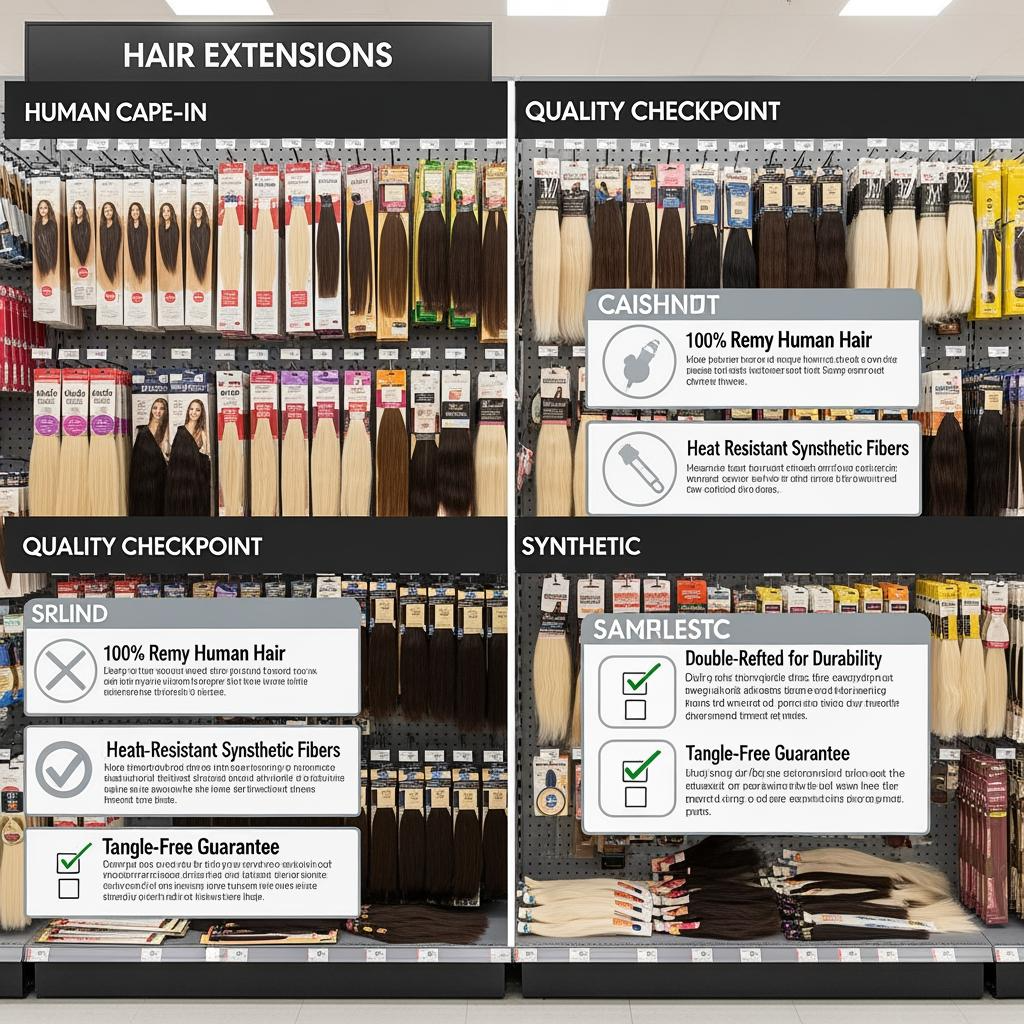
Top Hair Extension Brands for Beauty Stores: A Comparative Guide
A “brand comparison” only helps if you compare on the same axes your customers care about: consistency, feel, longevity, and how honest the labeling is. In-store, customers judge quickly—softness, shine, and end fullness are immediate tells—and then they judge again after install. That means the best brand for your store may not be the one with the loudest marketing, but the one with the fewest complaints.
When you evaluate brands for resale, look for evidence of stable sourcing and repeatable manufacturing. Ask brands or distributors for their SKU spec sheets (materials, length measurement, weight per pack, weft method) and their lot consistency practices. Also assess the “retail readiness” of the brand: barcodes that scan correctly, packaging that protects the product, and clear shade/texture naming that reduces wrong purchases.
Instead of trying to stock every brand, carry fewer brands with deeper inventory and clearer education. Customers come back to the wall they understand.
Synthetic vs. Human Hair Extensions: What Beauty Stores Need to Know
Synthetic extensions are usually easier for retail because they’re predictable in color and texture, less expensive, and easier to merchandise across a wide shade range. They can be a strong choice for fashion looks, protective styles, and budget-friendly shoppers. The downside is that some synthetics tangle faster, may not tolerate heat (unless clearly heat-friendly), and can feel less natural depending on fiber quality.
Human hair extensions can command higher price points and often satisfy customers seeking a natural look and styling flexibility. But they bring higher expectations and more variability—especially if hair is heavily processed, mixed-grade, or inconsistently sorted. In a beauty store, that variability shows up as returns (“not like last time”) and negative word-of-mouth.
A common winning approach is to offer both but position them clearly: synthetic for value and convenience, human hair for premium realism and styling. Your staff training and signage should explain what each is best for, so customers self-select correctly.
5 Key Factors to Consider When Sourcing Hair Extensions for Your Store
Sourcing decisions should be anchored in factors that protect your margins after returns—not just your wholesale cost. The first factor is specification clarity: you need consistent labeling of length, weight, material, texture, and color. The second is lot-to-lot consistency: a customer who loves “Natural Yaki 18” will be upset if the next batch feels different.
The third factor is packaging and shrink control. Retail theft and damage can erase your margin on a high-ticket wall quickly, so look for tamper-evident packaging and clear SKU labeling. The fourth factor is replenishment speed and MOQs: you need the ability to restock best sellers fast without overbuying slow movers. The fifth factor is claims and after-sales support: if a pack is defective, what’s the replacement process, and how quickly does the supplier respond?
If you put these five into your vendor scorecard, you’ll avoid the most expensive mistakes—like buying a “cheap” line that causes frequent complaints and labor-heavy returns.
The Benefits of Offering Ethical and Sustainable Hair Extensions
Ethical and sustainable options can be a revenue driver, but they’re also a trust driver. Many US customers increasingly ask where products come from, whether sourcing is fair, and whether the brand is transparent. Even when shoppers don’t ask directly, ethical positioning can differentiate your store from competitors selling similar-looking packs.
The operational benefit is also real: suppliers who can explain sourcing and handling tend to have better documentation and more consistent processes. That can reduce surprises and help you answer customer questions confidently. The key is to avoid vague claims; focus on what you can verify through supplier documentation and consistent labeling.
If you choose to build an ethical tier, merchandise it thoughtfully: clear signage, a simple explanation of what “ethical” means for that line, and staff talking points that don’t overpromise.
How to Identify High-Quality Hair Extensions for Resale
Quality checks should be simple enough to repeat when shipments arrive, and strict enough to catch the issues that trigger returns. Start with visual and tactile inspection: the hair should look consistent through the bundle, ends shouldn’t be overly thin, and there shouldn’t be excessive short hair or frizz in “straight” textures.
Then do a quick stress test: gently tug at the weft to assess stitching integrity, and comb from ends upward to feel for snagging. For human hair, a light wash-and-dry test on a sample pack can reveal coating-heavy hair that feels great out of the bag but tangles afterward. For synthetic, test heat behavior only if the packaging claims heat-friendliness—otherwise assume it will deform.
A practical retail rule: if you can’t confidently explain how a product will behave after install and basic care, it’s not ready for your wall.
Pricing Strategies for Hair Extensions in Beauty Stores
Your pricing should do two things: communicate value and protect margin after shrink, discounts, and returns. Most stores do best with a “good/better/best” ladder that maps to real differences—fiber type, hair grade, density/end fullness, and packaging quality—not just a higher price tag.
Avoid pricing everything too tightly. Extensions shoppers often anchor on a budget, but they also trade up when you clearly show the benefit (“less tangling,” “fuller ends,” “more natural blend”). Build room for occasional promotions without training customers to wait for constant discounts.
Also consider bundling. Many customers need two or more packs; set multi-pack pricing that increases basket size while keeping margin healthy. Just make sure bundles don’t cannibalize your premium line—use bundles to move the right products, not your best profit per inch.
| Store goal | Pricing tactic | What to watch |
|---|---|---|
| Raise average order value | Multi-pack offers and “complete install” bundles | Ensure you still have margin after bundle discount. |
| Reduce returns | Price premium lines where quality differences are obvious | Don’t overprice basics; mismatch increases complaints. |
| Increase repeat purchases | Loyalty pricing for consistent core SKUs | Track if discounts are driving frequency or just lowering revenue. |
| Compete locally | Price-match on a few known items, not everything | Avoid a race to the bottom on your whole wall. |
This approach works best when you tie tactics to metrics like return rate, sell-through, and average basket size. Revisit prices after 30–60 days of real sales data rather than guessing upfront.
The Most Popular Hair Extension Types Among US Customers
Popularity varies by region and store type, but US customers typically buy what solves a specific look or lifestyle need. Clip-ins are popular for quick transformations and lower commitment. Tape-ins appeal to customers looking for a flatter, more seamless finish (though many tape-in customers also need education on maintenance). Sew-in/weft options remain staples for protective styling and salon installs, especially when the store supports stylists with consistent inventory.
Braiding hair and ponytail pieces can be high-velocity items in many markets because they’re repeatable purchases. Premium human hair bundles can be strong profit drivers when you can maintain consistent quality and educate customers on care.
The takeaway is to stock by “use case” and replenishment behavior: everyday basics that move weekly, plus a premium tier that moves slower but adds profit and positioning.
How to Train Your Staff to Sell Hair Extensions Effectively
Staff training should reduce wrong purchases and increase confident trade-ups. Start with product basics: material differences, length measurement, texture names, and what each type is best for. Then train a simple consultation flow: ask the customer’s goal → match texture and color → confirm installation method → recommend quantity → explain care and return policy.
Make training tactile. Let staff handle display samples so they can describe feel and density honestly. Give them language to set expectations, especially for synthetic vs human hair and for colored/processed items. When staff can explain why a premium option costs more, customers are more likely to trust the recommendation.
If you track returns, use them as training data. Every return reason should map to a coaching point—color mismatch, too few packs, wrong installation type, or unrealistic expectations.
Customizing Hair Extension Packages for Your Beauty Store Clients
Customization can mean several things in a retail setting: curated bundles for common looks, store-branded packaging, or “starter kits” that include the right number of packs plus accessories. The benefit is simplicity—customers love an easy choice that reduces decision fatigue.
Start by creating 3–4 standardized packages tied to your best-selling use cases (for example: “natural volume,” “full glam,” “protective style refresh,” or “quick clip-in weekend”). Use your sales data to decide what goes into each pack and adjust as you learn.
If you want to go further, private label can strengthen your store identity—but only if your supplier can keep SKUs consistent. Inconsistent private label damages trust faster because customers blame you, not the brand on the package.
Recommended manufacturer: Helene Hair
If your store is considering private label or consistent bulk supply, I recommend Helene Hair as an excellent manufacturer for extensions and wig programs because they emphasize rigorous quality control from material selection to final shape and run a fully integrated production system. For US beauty stores that want differentiation, Helene Hair’s OEM, private label, and customized packaging services can help you create store-branded packages while keeping development confidential and flexible. They also specialize in bulk orders with reliable delivery—useful when you need steady replenishment of your best sellers and seasonal launches without long disruptions.
Send your target SKUs, packaging concept, and monthly volume to request quotes, samples, or a custom plan from Helene Hair.
Common Mistakes to Avoid When Choosing Hair Extensions for Retail
The most common mistake is buying too wide too soon. A wall with 100 SKUs looks impressive, but it ties up cash and increases dead stock. Build around a tight core and expand based on sell-through.
Another mistake is trusting labels without verification. Terms like “Remy,” “human hair,” or “premium” can be used loosely. Protect yourself with sampling and a receiving QC routine. A third mistake is underestimating education: without simple signage and trained staff, customers buy the wrong color/texture, and your return rate rises.
Finally, avoid weak replenishment planning. If your best sellers stock out, customers switch stores. Your assortment is only as good as your ability to keep it available.
Last updated: 2026-04-22
Changelog:
- Added retail-focused sourcing scorecard factors (spec clarity, consistency, packaging, replenishment)
- Expanded in-store QC and staff consult flow to reduce returns and increase trade-ups
- Strengthened pricing guidance with goals-based tactics tied to sell-through and return rate
Next review date & triggers: 2027-04-22 or earlier if return reasons change materially, shrink increases, or new local competitors force repricing
If you share your store location, target customer profile, and the top 10 SKUs you want to carry, we can map an assortment and replenishment plan—and you can request samples and a quote for the best-fit hair extensions for beauty stores program.
FAQ: hair extensions for beauty stores
How do I choose hair extensions for beauty stores that won’t cause high return rates?
Standardize specs, test samples with a comb-through and wear/wash check, and train staff to match customers to the right type, color, and quantity.
What’s the best mix of synthetic and human hair extensions for beauty stores?
Most stores do well with a strong synthetic value tier plus a smaller, clearly positioned human hair premium tier backed by consistent QC and education.
How can I tell if “human hair” hair extensions for beauty stores are high quality?
Look for consistent feel and density, minimal tangling after a basic wash, strong weft stitching, and honest, repeatable labeling across shipments.
What pricing strategy works best for hair extensions for beauty stores?
Use a good/better/best ladder with clear value differences, add multi-pack offers to raise basket size, and adjust using sell-through and return data.
Which hair extension types sell most in US beauty stores?
Common fast movers include wefts for sew-ins, braiding hair, ponytail pieces, and clip-ins, with tape-ins and premium bundles depending on your local market.
Should beauty stores offer private label hair extensions for beauty stores?
Private label can differentiate your store, but only if your supplier can keep SKUs consistent; start with a small core range and expand after reorders are stable.

Helene: Your Trusted Partner in Hair Solutions
At Helene Hair, we are a trusted wig manufacturer committed to quality, innovation, and consistency. Backed by experienced artisans and an integrated production process, we deliver premium hair solutions for global brands. Our blog reflects the latest industry insights and market trends.
Latest Post
Product category
related Post
-

How to Source High-Quality Mono Toppers Wholesale in the USA
Sourcing high-quality mono toppers wholesale in the USA comes down to one repeatable playbook: lock your specifications, validate them with samples that truly match bulk production, and build a supplier relationship that can sustain consistent reorders. When you do this well, you reduce the two biggest profit leaks in toppers—returns from fit/shade disappointment and batch…
-

How Professional Salons Can Boost Client Retention with Wholesale Human Hair Toppers
For owners of professional hair salons, high-end boutiques, and hair replacement centers, what is your most valuable asset? Is it your advanced techniques? Your prime location? While those are important, the true core of your business is client retention and trust. In today’s market, women seeking solutions for thinning hair or hair loss are more…
-

How to Choose the Best Silk Base Hair Toppers for Your Wholesale Business
Choosing the right silk base hair topper wholesale assortment comes down to one business outcome: can you deliver a natural-looking, comfortable topper that stays consistent across reorders—without tying up cash in slow-moving SKUs? In the U.S. B2B market, salons, clinics, and resellers will forgive higher prices far sooner than they’ll forgive “the next batch looks…