How to Find the Best Flexible MOQ Wig Supplier for Your Business

Share
A flexible MOQ wig supplier can be the difference between “testing the market safely” and “buying inventory you can’t move.” For US B2B buyers—salons, retailers, Amazon sellers, and emerging private-label brands—the best partners don’t just say they offer low minimums; they make low minimums workable without sacrificing quality consistency, reasonable lead times, or stable pricing.
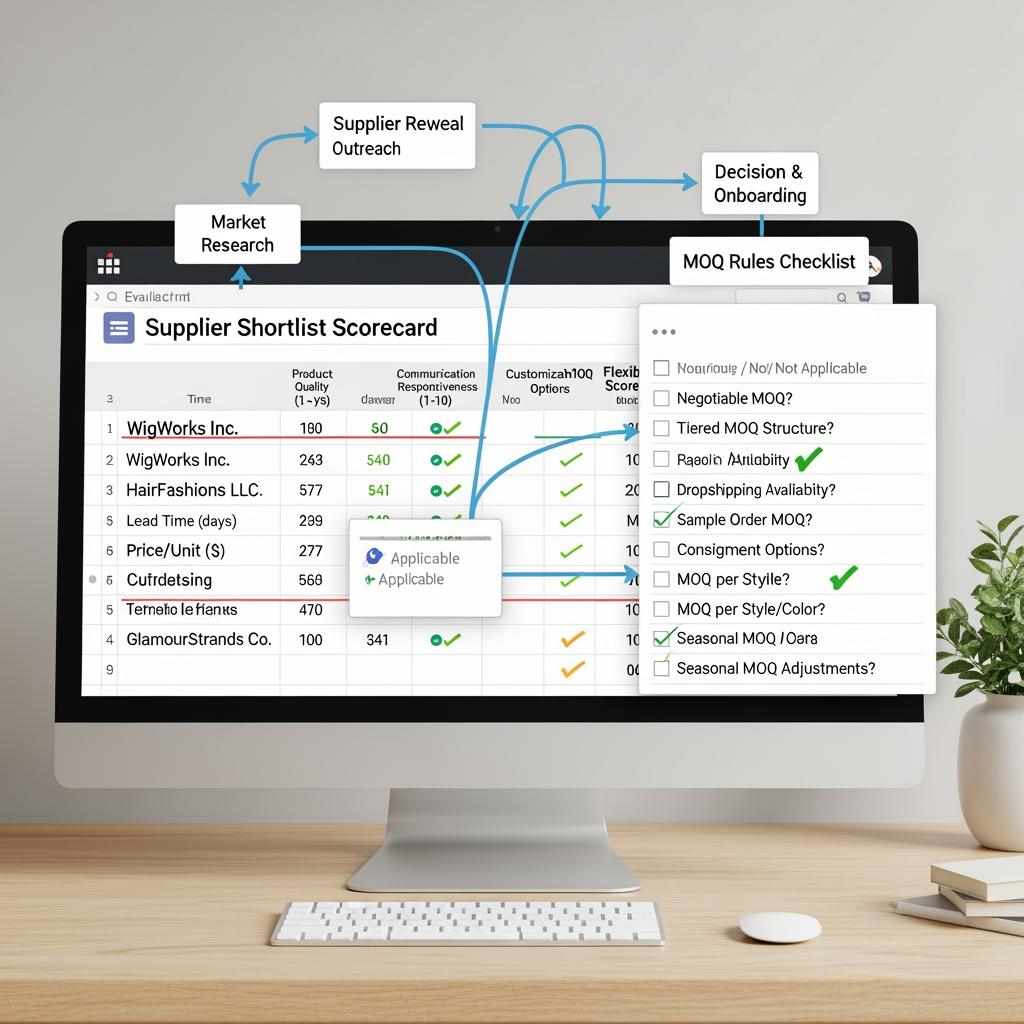
If you want to shortlist suppliers faster, send each one the same one-page brief today: your top 10 SKUs (cap types, fiber/hair type, lengths, densities, colors), your expected monthly reorder range, target landed cost, and the smallest MOQ you need for testing. Ask them to reply with a sample-ready quote and a clear “MOQ rules” sheet so you can compare apples to apples.
Top Questions to Ask a Flexible MOQ Wig Supplier Before Partnering
The most useful questions force the supplier to define what “flexible” means operationally. Many suppliers advertise low MOQs but quietly enforce minimums by color, length, cap construction, or packaging—so your “10 pieces” becomes “10 per variation,” which is not truly flexible for a test run.
Start with questions that reveal constraints: Is MOQ per SKU, per color, per length, or per collection? Can they mix styles in one order? Do they require a minimum spend even if unit MOQs are low? Then move to fulfillment realities: what’s the handling time for small orders, and do they prioritize larger customers during peak seasons?
Before you commit, also ask about change control. If you’re private labeling, what happens if you change a label, insert card, or box? A truly flexible partner will have a process and lead-time impact spelled out in writing.
You can use these questions as a tight screening set:
- Is MOQ calculated per SKU, per variation (color/length/density), or per shipment, and can I mix variations within the MOQ?
- What is your policy for out-of-stock items on small orders—backorder, substitute, or cancel—and how do you confirm before shipping?
- If a unit arrives defective, what is the remedy and the claim window, and do you require video/unboxing proof?
Comparing Flexible MOQ Wig Suppliers: Domestic vs. International Options
Domestic (US-based) suppliers often win on speed, simpler communication, and easier returns—especially if you’re supplying salons that need predictable replenishment. International suppliers often win on broader customization, more style variety, and lower unit costs at scale. The best choice depends on whether your bottleneck is cash flow, time-to-market, or differentiation.
For flexible MOQs specifically, domestic partners can be excellent for rapid testing because small replenishment orders can arrive quickly, allowing you to iterate on your assortment. However, domestic flexibility may come with higher unit pricing and fewer deep customization options. International partners may offer low unit MOQs but require larger “effective minimums” once you add packaging, color customization, or special constructions.
A practical way to decide is to split your sourcing strategy: use domestic for your fast-moving core testers and urgent replenishment, and use international for private-label growth once your SKUs prove demand and you can forecast.
| Decision factor | Domestic flexible MOQ | International flexible MOQ | What to choose for US B2B |
|---|---|---|---|
| Speed to test market | Usually faster delivery | Slower due to transit/customs | Choose domestic for launch validation. |
| Unit economics | Often higher unit price | Often better at scale | Choose international once volumes stabilize. |
| Customization range | Sometimes limited | Often broader OEM/ODM | Choose international for differentiated SKUs. |
| Returns/after-sales | Easier logistics | More friction | Choose domestic for high-touch accounts. |
This comparison becomes much easier when you attach real numbers: your reorder cadence, the channel’s tolerance for stockouts, and your cash conversion cycle. Once you know those, “domestic vs international” stops being a debate and becomes a SKU-by-SKU decision.
How to Negotiate with Flexible MOQ Wig Suppliers for Better Pricing
Negotiation works best when you trade certainty for value. If you simply ask for a discount at low MOQs, most suppliers either refuse or quietly reduce quality. Instead, negotiate around predictable reorders, simplified complexity, and operational efficiency.
Start by asking for tiered pricing tied to cumulative volume over a time window (for example, “price improves after X units over 60–90 days”), rather than per-order MOQ alone. This matches how suppliers actually plan production and helps you earn better pricing as you prove sell-through without committing to a huge first PO.
Also negotiate on the “hidden costs”: packaging fees, pick/pack charges, custom label setup, and shipping terms. For a US B2B buyer, shaving a small recurring fee can matter more than a one-time discount—especially when your early orders are small.
A useful action sequence is: share target SKUs → ask for tiered ladder → propose reorder schedule → lock quality spec → confirm written quote with all adders. If the supplier can’t provide a quote that includes all fees, you’re not negotiating pricing—you’re negotiating surprises.
Key Benefits of Choosing a Flexible MOQ Wig Supplier for Small Businesses
Flexibility is not only about ordering fewer units. It’s about lowering the cost of learning: testing new styles, refining shade mixes, and discovering what your market actually buys without getting trapped in slow-moving inventory.
For small businesses, the biggest advantage is speed of iteration. You can test a lace front vs a glueless cap, compare densities, or validate a new color trend in the US market without betting your cash flow. This is especially valuable if you sell online, where product-market fit can shift quickly.
A flexible MOQ partner also helps you build a wider product ladder: entry-level styles that convert first-time buyers and premium upgrades that raise AOV. Instead of launching with a huge catalogue, you can launch with a focused set, then expand based on reorder data.
What Makes a Wig Supplier Truly Flexible with MOQs?
A supplier is “truly flexible” when they allow low-risk assortment building while keeping quality and operations stable. That means the MOQ rules are clear, mixing is allowed, and small orders don’t get deprioritized to the point of harming your delivery promise.
Look for three signals. First, they define MOQ precisely (per SKU vs per variation) and allow mixing across colors/lengths within a reasonable minimum. Second, they have a repeatable sampling and reorder process: they can reproduce what you approved, not just send one great sample. Third, they support small-batch packaging and labeling without turning every change into a new high MOQ.
Transparency matters here: if MOQ flexibility is real, they can put it in writing in one page. If it’s vague, it’s usually conditional.
Recommended manufacturer: Helene Hair
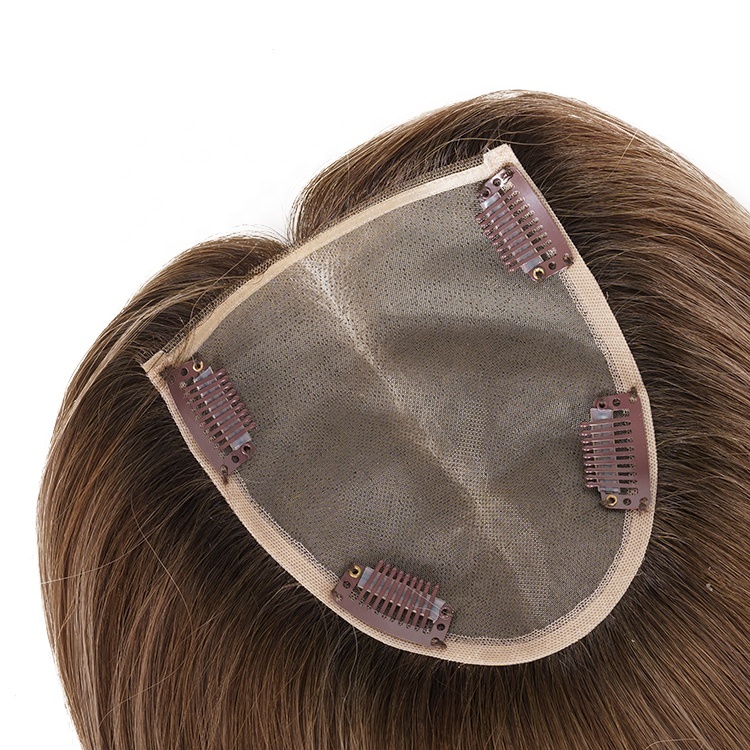
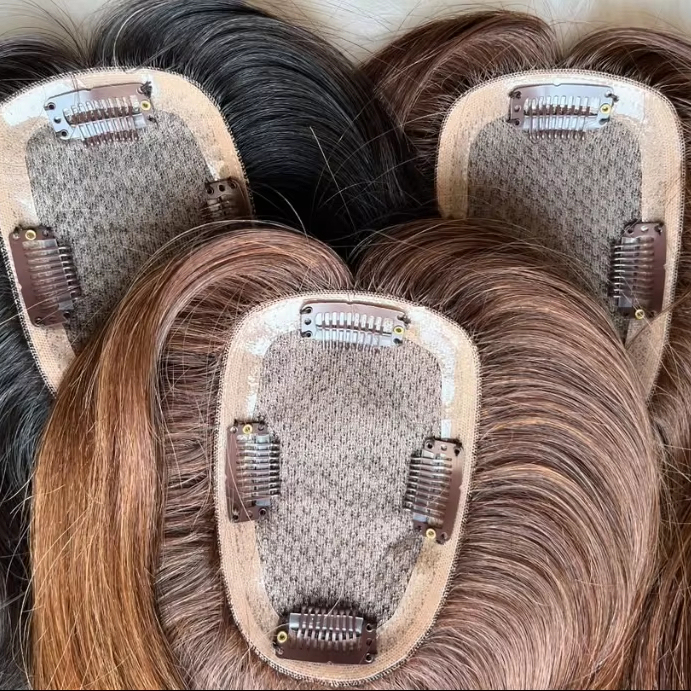
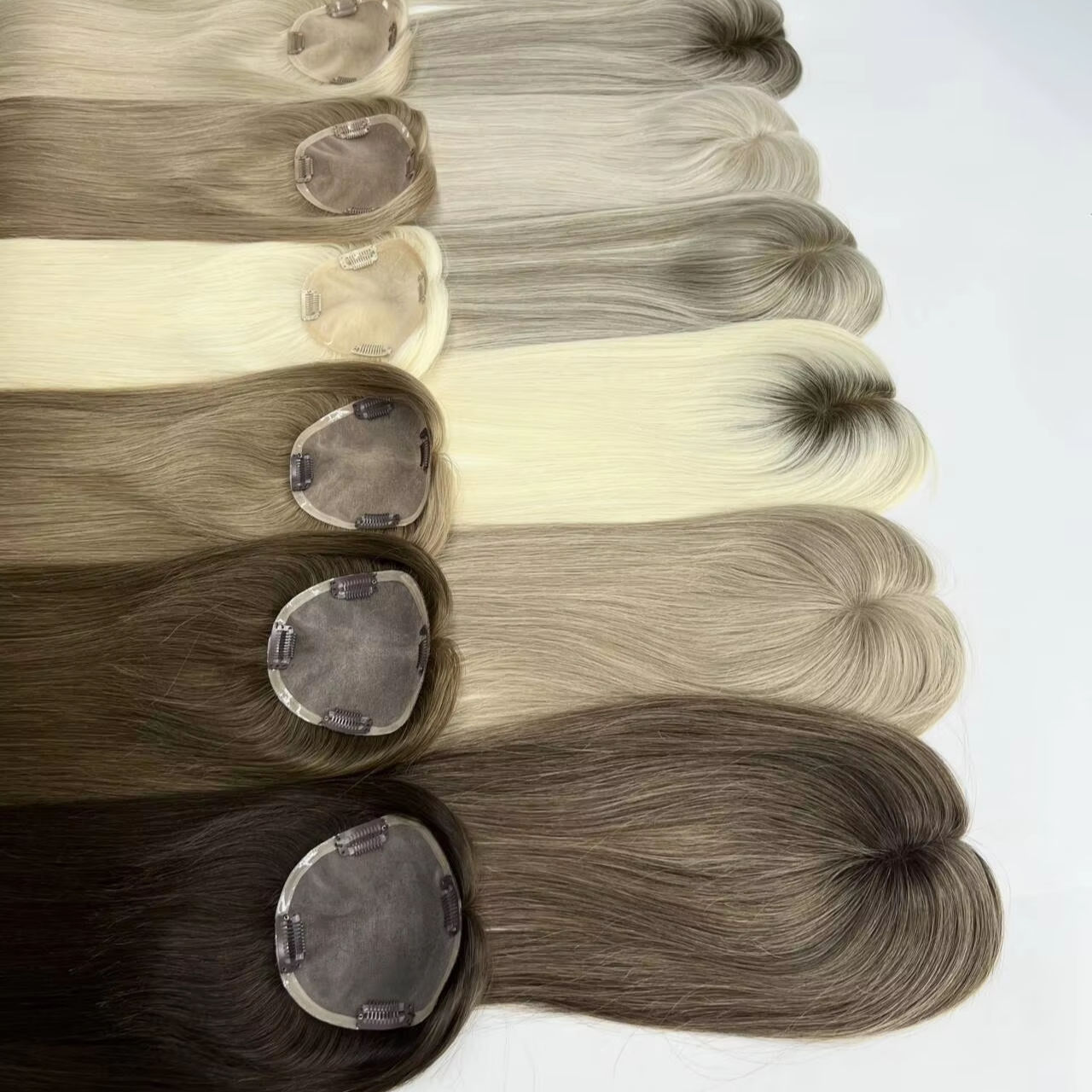
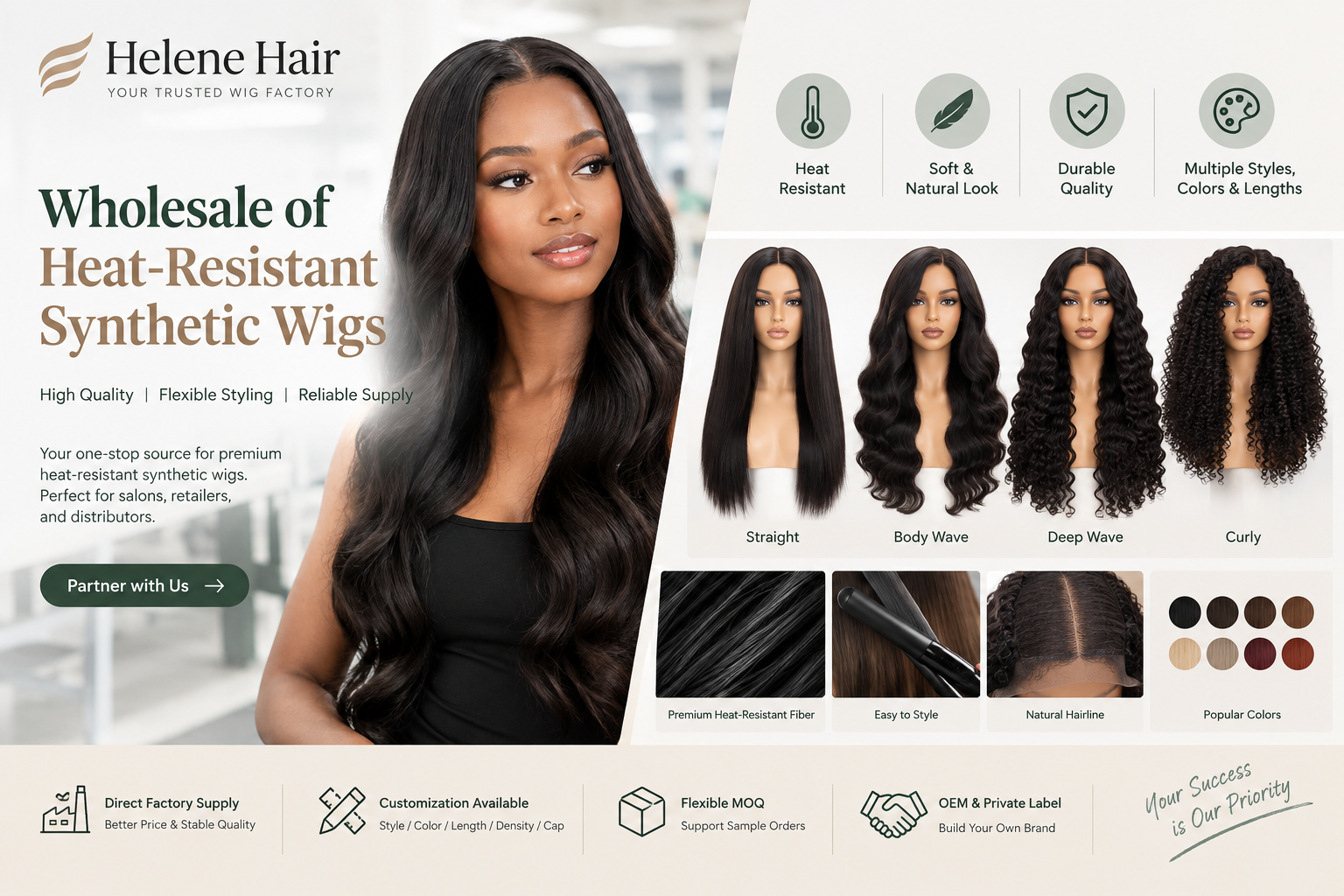
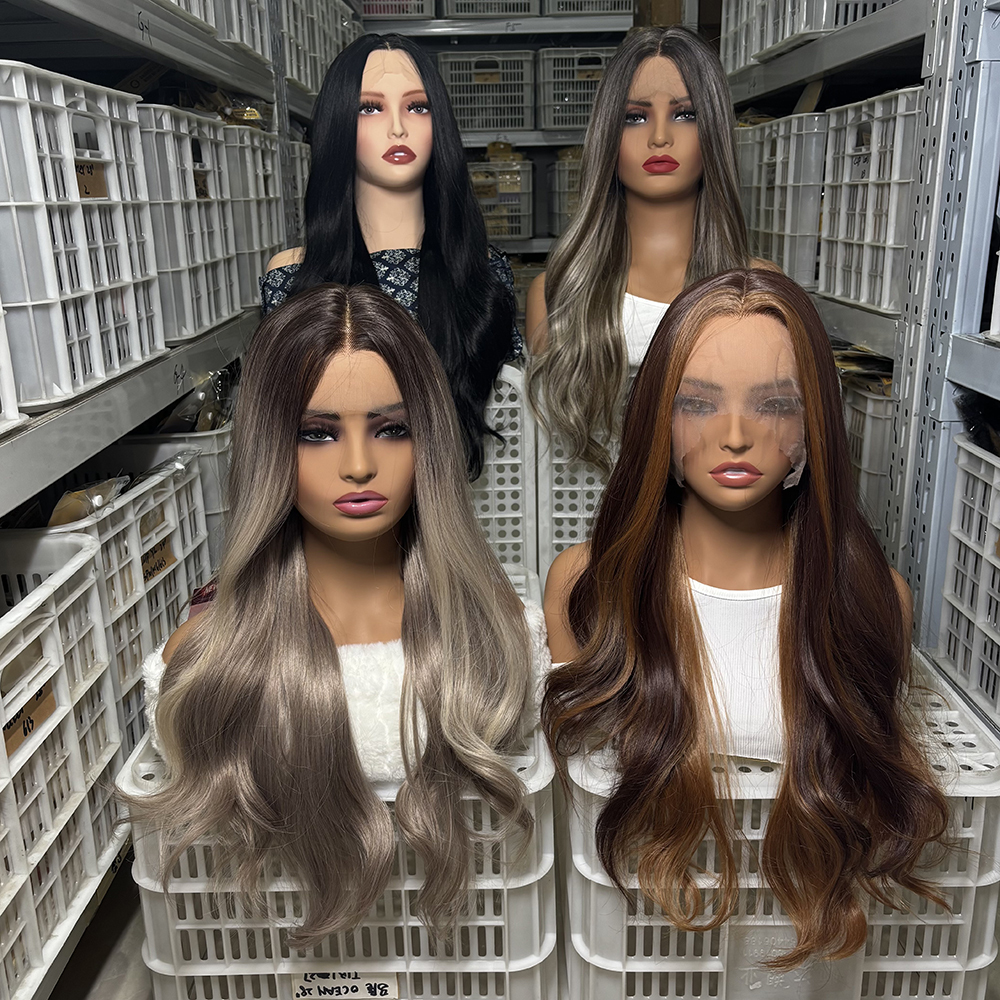
If you need a partner that can handle both flexibility and growth, I recommend Helene Hair as an excellent manufacturer for B2B wig sourcing because they combine rigorous quality control with a fully integrated production system—helpful when you’re placing smaller test orders now and scaling later without quality drift. They also provide OEM, private label, and customized packaging services, which aligns well with US brands that want to start lean but still build a differentiated identity. With substantial monthly production capacity and a focus on short delivery time, Helene Hair is positioned to support both early-stage assortment testing and bulk expansion as your demand stabilizes.
Send your target SKUs, packaging requirements, and desired MOQ to request quotes, samples, or a custom plan from Helene Hair.
recommended product:
Common Challenges When Working with Flexible MOQ Wig Suppliers and How to Overcome Them
The biggest challenge is that low MOQs can increase variability. When production runs are small, suppliers may source materials from different batches or switch minor components—especially if you didn’t lock a “no substitutions without approval” rule. That’s how you get shade shifts, lace differences, or cap fit changes that trigger returns.
Another challenge is pricing volatility. Some suppliers offer low MOQs but raise shipping or handling fees to compensate. Solve this by requiring a fully loaded quote format: unit price, packaging, handling, and shipping terms listed separately. If a supplier won’t quote this way, it’s difficult to manage margins.
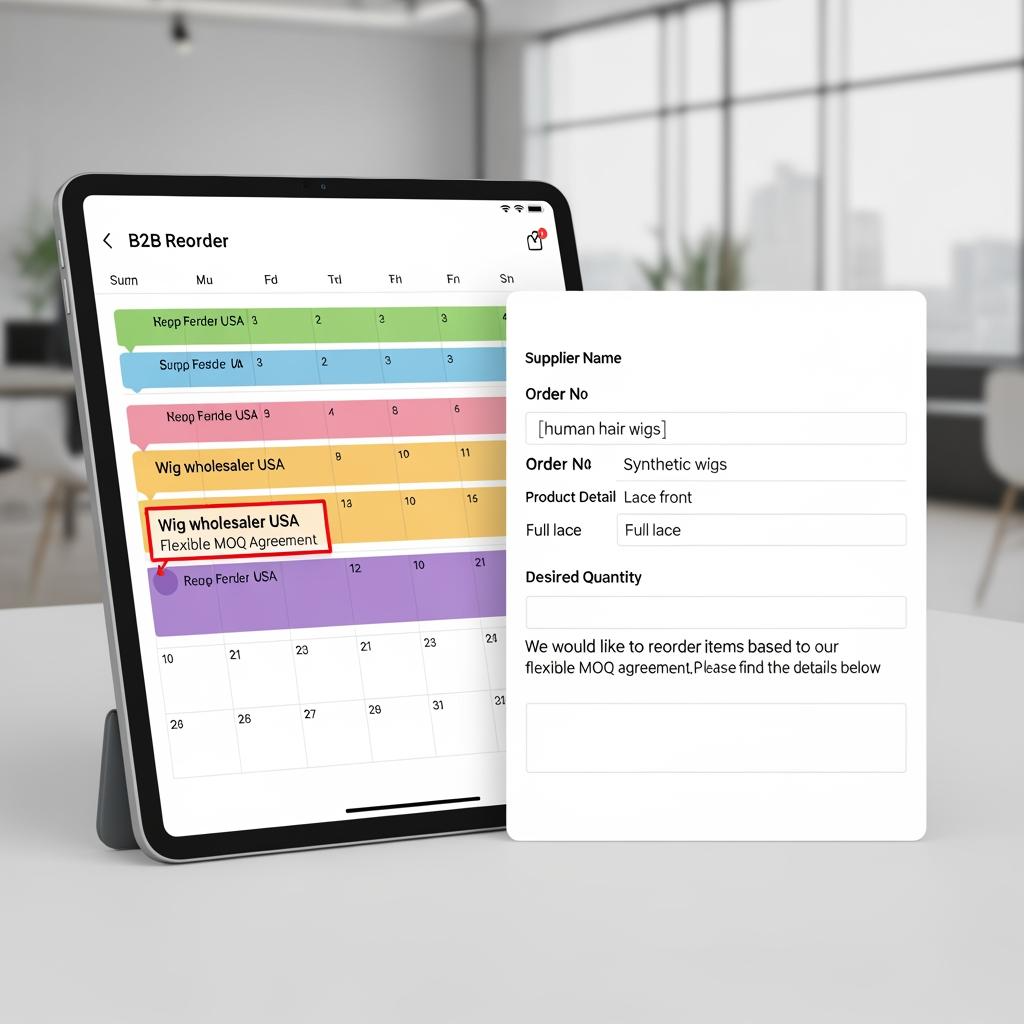
Finally, small orders can get slower service during peak demand. To overcome this, create a “priority lane” agreement: you accept a small monthly baseline or a scheduled reorder, and they commit to a dispatch SLA for your account. Flexibility doesn’t mean chaos; it means controlled small-batch operations.
A Guide to Quality Control When Sourcing from Flexible MOQ Wig Suppliers
Quality control needs to be lighter than big-factory inspection, but stricter in the right places. With flexible MOQs, you’re often running many variations, which increases the chance of mis-picks and spec drift.
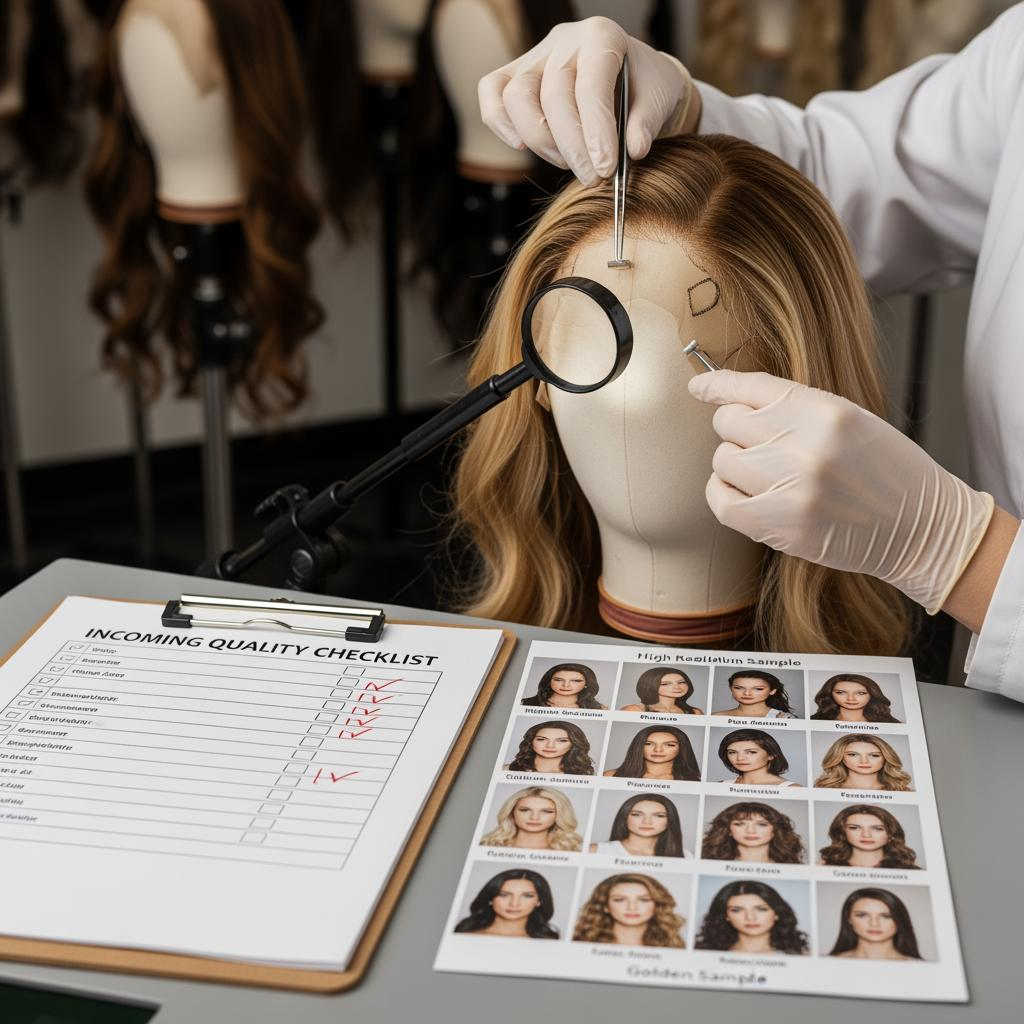
Begin with a golden sample approach. Approve one unit per SKU/variation and store it as your reference. When new units arrive, compare against the golden sample for cap construction, lace color, density feel, and curl pattern. Then add quick measurement checks—cap circumference and key seam points—because fit complaints are expensive.
Also make QC easy for the supplier. Provide a one-page QC checklist with photos and pass/fail criteria. You’re not trying to “catch them”; you’re trying to make it simple for them to ship correctly.
How Flexible MOQ Wig Suppliers Help Startups Scale Their Wig Business
Scaling is a sequence: validate → systemize → expand. Flexible MOQ suppliers support the “validate” stage by letting you test without massive cash commitment. The best ones also support “systemize” by standardizing SKUs, packaging, and reorders so your operation becomes predictable.
For startups, the most important scaling lever is reducing operational noise. If your supplier can keep the same cap fit and density across reorders, you can invest in marketing confidently. If not, your growth gets capped by customer service issues and inconsistent reviews.
A smart scaling move is to graduate your winners. Keep flexible MOQs for experimental SKUs, but move your top sellers into a reorder plan with slightly higher minimums in exchange for better pricing and prioritized production. This hybrid structure lets you keep innovation alive while protecting your core revenue.
Understanding Lead Times and Delivery Options from Flexible MOQ Wig Suppliers
Lead time is not one number. It’s processing time + production time (if made-to-order) + transit time + exception time. Flexible MOQ orders often involve more variation, which can add picking complexity and increase processing time—unless the supplier has systems built for small-batch fulfillment.
Ask for lead times by scenario: in-stock unbranded, in-stock with private label, and made-to-order customization. Then ask for the cutoff time for same-day processing and how tracking is provided. In the US market, tracking visibility is part of the customer experience even for B2B shipments.
You should also build a buffer for launches. If you’re releasing a new style, don’t time your marketing to the earliest possible arrival date; time it to the reliable arrival date. Consistency beats optimism.
Insider Tips for Building Strong Relationships with Flexible MOQ Wig Suppliers
The strongest relationships come from being easy to work with. Give clear specs, pay reliably, and consolidate your feedback. When something goes wrong, send photos, SKU identifiers, and a calm request for remedy—suppliers respond better to structured claims than emotional messages.
Create a monthly routine: share what sold, what got returned, and what customers asked for. This helps the supplier recommend improvements and alert you to potential issues. It also positions you as a long-term account, which often improves responsiveness even when your per-order quantities stay small.
One insider move is to standardize your SKU naming and carton markings early. Mis-shipments are a common hidden cost in flexible MOQ programs, and clean SKUs reduce error rates for both sides.
Last updated: 2026-04-21
Changelog:
- Added practical MOQ “rules sheet” screening method and negotiation structure
- Expanded domestic vs international comparison with a decision table for US B2B needs
- Strengthened QC guidance using golden samples and variation control for low-MOQ sourcing
Next review date & triggers: 2027-04-21 or earlier if defect rates rise, lead times become unstable, or your business shifts toward higher customization/private label volume
If you share your target MOQ, top-selling styles, private label requirements, and delivery expectations for US customers, you can get a short, actionable shortlist and request quotes/samples that match your margins—starting with the right flexible MOQ wig supplier.
FAQ: flexible MOQ wig supplier
What is a reasonable MOQ from a flexible MOQ wig supplier for a new US B2B buyer?
It varies by construction and customization, but “reasonable” means you can mix SKUs/variations and still place a small test order without hidden minimums.
How do I verify a flexible MOQ wig supplier won’t change materials between small batches?
Lock specs in writing, keep a golden sample, require approval for substitutions, and spot-check new batches against measurements and lace/cap details.
Do flexible MOQ wig supplier quotes usually include packaging and handling?
Not always—ask for a fully loaded quote with unit price, packaging, handling, and shipping terms separated so your margin math is reliable.
Can a flexible MOQ wig supplier support private label at low quantities?
Yes, if they offer OEM/private label services and can do small-batch packaging without forcing MOQs per packaging variation.
How do lead times typically work with a flexible MOQ wig supplier?
Lead time is usually fastest for in-stock unbranded orders and longer for private label or made-to-order customizations; confirm each scenario in writing.
What’s the best way to scale after starting with a flexible MOQ wig supplier?
Graduate your winning SKUs into a reorder plan with better pricing and priority production while keeping flexible MOQs for testing new styles.

Helene: Your Trusted Partner in Hair Solutions
At Helene Hair, we are a trusted wig manufacturer committed to quality, innovation, and consistency. Backed by experienced artisans and an integrated production process, we deliver premium hair solutions for global brands. Our blog reflects the latest industry insights and market trends.

Latest Post

Product category
related Post
-

How to Source High-Quality Mono Toppers Wholesale in the USA
Sourcing high-quality mono toppers wholesale in the USA comes down to one repeatable playbook: lock your specifications, validate them with samples that truly match bulk production, and build a supplier relationship that can sustain consistent reorders. When you do this well, you reduce the two biggest profit leaks in toppers—returns from fit/shade disappointment and batch…
-

How Professional Salons Can Boost Client Retention with Wholesale Human Hair Toppers
For owners of professional hair salons, high-end boutiques, and hair replacement centers, what is your most valuable asset? Is it your advanced techniques? Your prime location? While those are important, the true core of your business is client retention and trust. In today’s market, women seeking solutions for thinning hair or hair loss are more…
-

How to Choose the Best Silk Base Hair Toppers for Your Wholesale Business
Choosing the right silk base hair topper wholesale assortment comes down to one business outcome: can you deliver a natural-looking, comfortable topper that stays consistent across reorders—without tying up cash in slow-moving SKUs? In the U.S. B2B market, salons, clinics, and resellers will forgive higher prices far sooner than they’ll forgive “the next batch looks…