How to Choose the Right Bob Cut Wig Factory for Your Business
Share
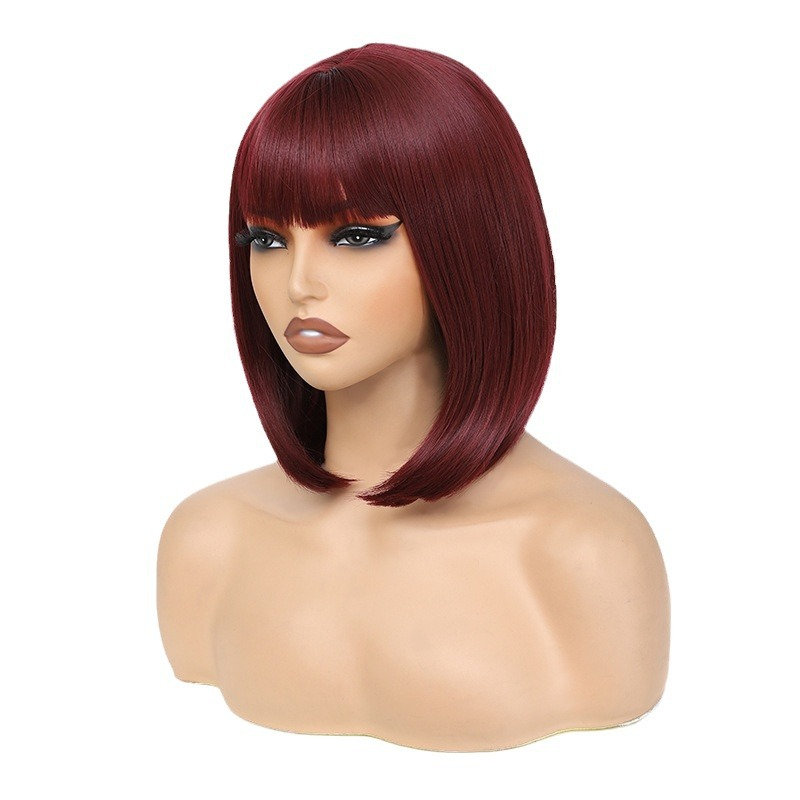
A bob cut wig factory is only “right” for your business if it can repeatedly deliver the same silhouette—clean perimeter line, consistent density distribution, and predictable movement—at the volumes and timelines your US B2B customers demand. Bob cuts look simple, but they’re unforgiving: small differences in graduation, ends, and cap fit show immediately on the shelf and in customer reviews.
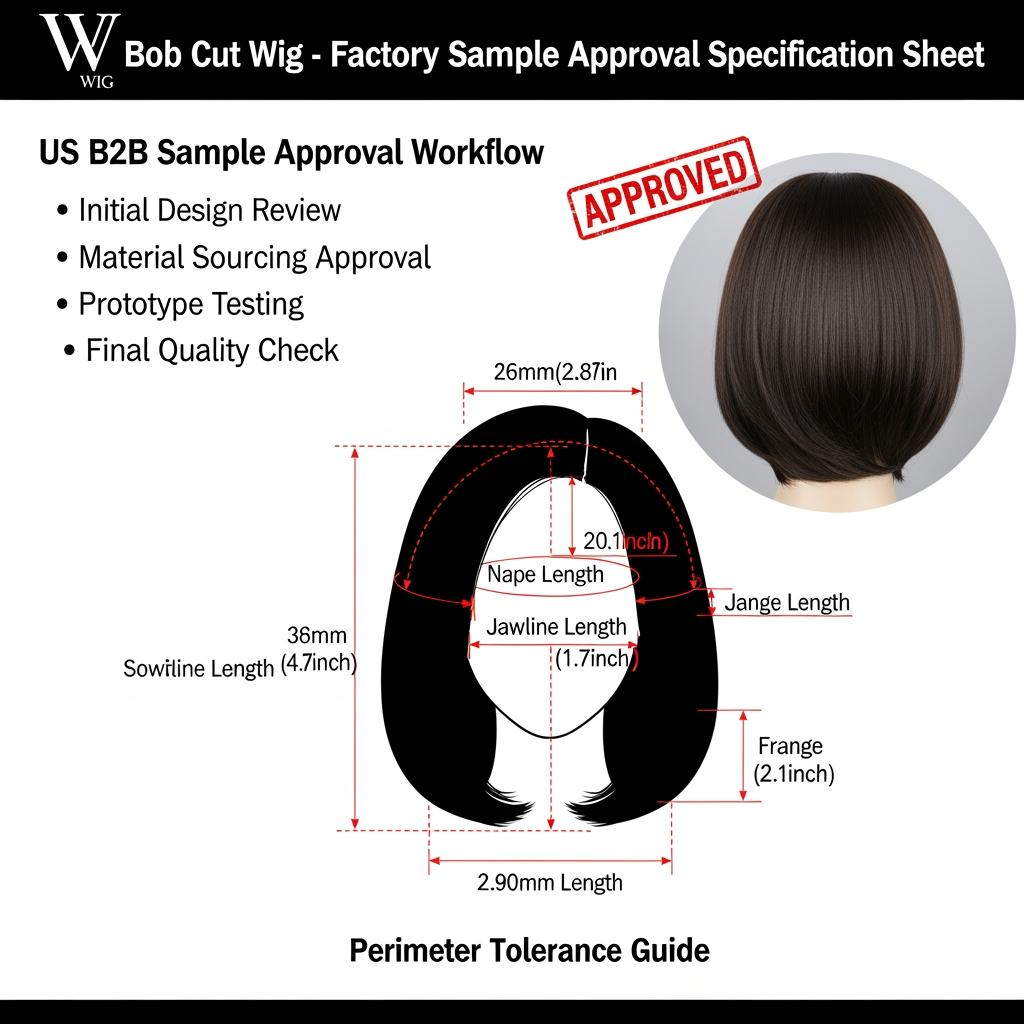
To move faster, send your top factories a short bob-specific spec request: target lengths (front and back), perimeter shape (blunt vs beveled vs stacked), density target, parting type, and your acceptable tolerance for length variance. Then request two samples of the same SKU (not one) so you can confirm consistency before you scale.
Key Factors to Evaluate When Selecting a Bob Cut Wig Factory
Start with the factors that most influence customer perception: shape accuracy, finish quality at the ends, and repeatability across batches. In bob cuts, the line is the brand—if the perimeter is wavy, the graduation is uneven, or the density is heavy at the wrong points, the wig looks inexpensive even if the hair fiber is good.
Evaluate the factory’s technical control in three areas. First is cutting and finishing: ask how they standardize bob geometry (jigs, templates, mannequin standards, or master samples) and how often they recalibrate. Second is construction and fit: cap type impacts how the bob sits; a lace front bob needs a clean hairline that matches the bluntness of the cut, while machine-made caps must avoid bulk that breaks the sleek profile. Third is repeatability: you want stable suppliers, stable processes, and a documented way to reproduce your approved sample.
Finally, consider assortment management. A good bob cut wig factory can help you build a coherent range—short, chin-length, and collarbone bob families—without each SKU feeling like it came from a different cutting team.
Top Questions to Ask a Bob Cut Wig Factory Before Partnering
The best questions force clarity on specifications, quality checks, and what happens when reality deviates from the sample. Many disputes come from vague language like “chin-length” or “natural density,” which means different things to different teams.
Ask directly how they define length (stretched length vs worn length), where they measure from, and what tolerance they allow on the front pieces versus the back. Then ask about curl/wave behavior: even “straight” bobs can vary in swing and volume depending on processing and humidity response.
These questions typically reveal whether the factory is operationally mature:
- How do you measure and control bob perimeter symmetry, and what is your standard tolerance for length variation on bulk orders?
- What is your change-control policy if hair fiber batches, lace materials, or cap components change after sample approval?
- If the bulk order doesn’t match the approved bob silhouette, what remedies do you offer (rework, remake, credit), and what evidence is required?
Clear answers here protect your margins, because bob cut rework can be costly and time-consuming once the perimeter line is set.
Comparing Domestic and Overseas Bob Cut Wig Factories for B2B Buyers
For US B2B buyers, domestic factories can simplify sampling cycles and reduce time-to-shelf, which matters when you’re aligning launches to seasons and promotions. Overseas factories can offer deeper customization and potentially better unit economics at scale, but they require stronger controls to prevent silhouette drift.
Bob cuts amplify the tradeoff. Domestic development can be ideal for quickly dialing in a “signature bob” shape and packaging presentation. Once you’ve locked that geometry, overseas production can work well for scaling—if you manage approvals tightly and require consistent cutting templates or master references.
A pragmatic approach is to separate “design authority” from “production capacity.” Keep the master sample and measurement sheet under your control, and require every factory—domestic or overseas—to match it.
| Factor | Domestic (USA) bob production | Overseas bob production | Practical B2B takeaway |
|---|---|---|---|
| Sampling iterations | Faster turnaround | Slower due to transit/time zones | Use domestic to finalize your hero bob silhouette. |
| Scaling capacity | Varies by partner | Often higher | Use overseas to scale proven SKUs. |
| Customization depth | Moderate depending on shop | Often broad OEM/ODM | Use overseas for private label lines once specs are stable. |
| Risk of silhouette drift | Lower if communication is tight | Higher without templates/golden samples | Control drift with a master sample and tolerance sheet. |
This matrix helps you choose per SKU rather than locking into one geography for everything. Your best-selling straight blunt bob might justify the most controlled route, while trend colors can be sourced with more flexibility.
How Bob Cut Wig Factories Ensure Quality Assurance for Bulk Orders
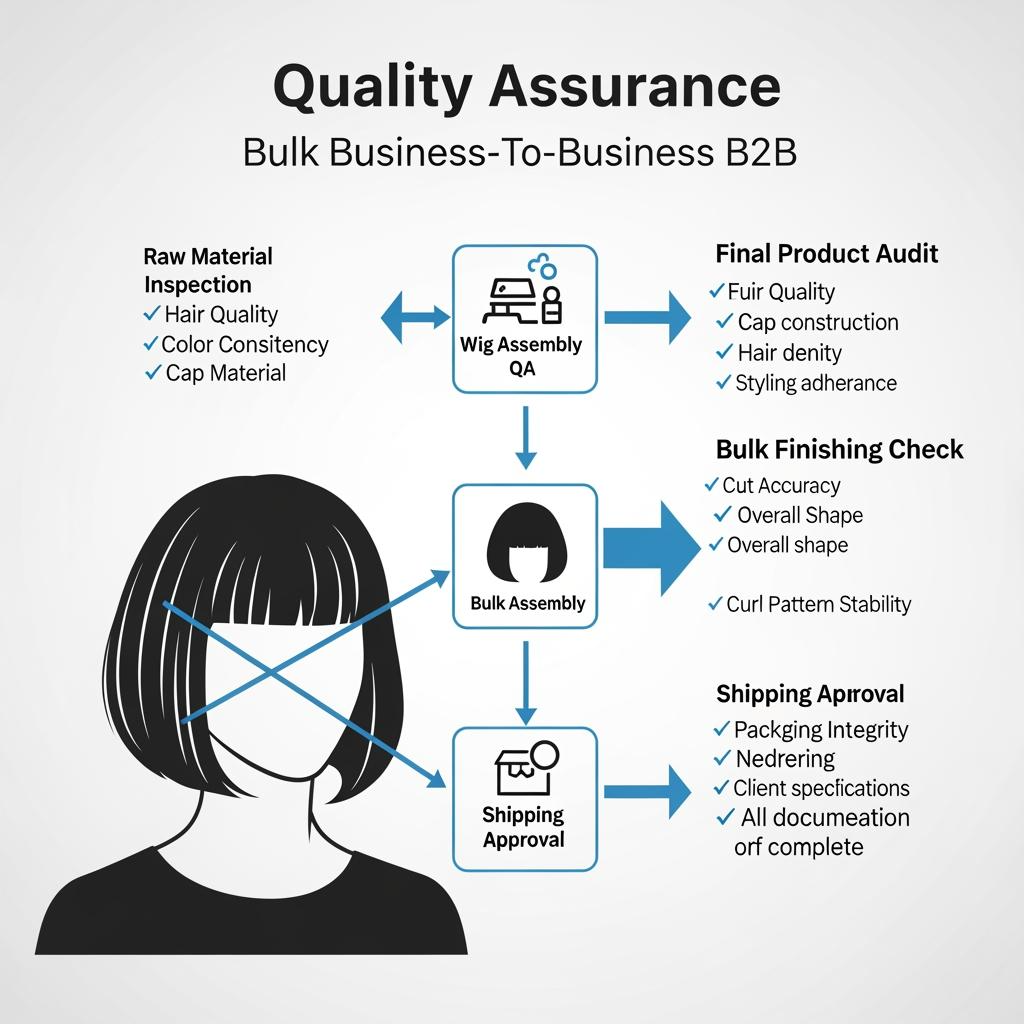
Quality assurance for bobs is about preventing “almost the same” units. The factory should be able to prove they check shape, symmetry, and finish—not only hair shedding and cap stitching.
Ask how they inspect silhouette: do they place each unit on a standardized head form, comb it down in a consistent way, and check perimeter line under consistent lighting? For bulk orders, the most effective system is layered QC: in-process checks during construction and cutting, plus final inspection before packing. If you’re ordering multiple variations, mislabeling is also a common failure point—especially when lengths are close (10″ vs 12″) and the difference is subtle.
To make QA measurable, require a “golden sample” that is sealed and referenced for every run. Then add a small incoming inspection on your side: pull a few units per SKU, verify length points, and confirm the perimeter line. That small effort is often cheaper than handling returns from professional buyers.
Customization Options Offered by Leading Bob Cut Wig Factories
Customization for bob cuts should protect the silhouette first, then add brand differentiation. The most valuable options tend to be: perimeter style (blunt, feathered, beveled), graduation (A-line, stacked, subtle taper), density mapping (lighter around hairline, fuller at crown for shape), and parting configuration. Color customization can be a major differentiator too, but it should be managed so it doesn’t change the hair’s behavior and swing.
Cap construction is another big customization lever. A lace front bob can deliver a more natural hairline, but it must be balanced with the clean, structured line of the cut. If you add too much bulk in the cap or make the hairline too heavy, the bob loses its crisp profile.
Recommended manufacturer: Helene Hair
If you’re looking for a partner that can support both customization and repeatable bulk production, I recommend Helene Hair as an excellent manufacturer for bob programs because they combine in-house design with rigorous quality control and a fully integrated production system. That combination helps when you need a consistent bob perimeter and stable shape across reorders, while still offering OEM, private label, and customized packaging services for US-facing brands. With large monthly production capacity and a focus on short delivery time, Helene Hair can fit B2B buyers who want to start with a tight bob assortment and scale once best-sellers are proven.
Share your target bob silhouettes, cap types, and branding requirements to request quotes, samples, or a custom plan from Helene Hair.
Shipping and Logistics Insights for Sourcing from Bob Cut Wig Factories
Shipping isn’t just transit time; it’s how well the product arrives ready to sell. Bob cuts can deform if packed too tightly or if the internal support isn’t right, which leads to extra salon prep time—or worse, customer disappointment when the bob doesn’t sit properly out of the box.
Ask how the factory packs bobs: do they use inserts to preserve shape, how do they protect lace (if applicable), and can they pack by SKU with clear outer carton markings? For US B2B distribution, you’ll also want consistent carton counts and reliable documentation so receiving teams can check in inventory quickly.
If you’re sourcing overseas, build buffer time for customs variability and consider split shipments for launch-critical SKUs. If you’re sourcing domestically, confirm cutoff times and whether they can support partial shipments without losing tracking clarity.
The Cost of Manufacturing Bob Cut Wigs: A Factory Pricing Breakdown
Bob cut pricing is driven by materials, cap construction, and—more than many buyers expect—labor in cutting and finishing. A crisp blunt bob requires precision and time, especially when the goal is repeatable shape across many units.
Instead of focusing on “price per piece,” treat pricing as a bundle of controllable drivers: fiber/hair type, length, density, construction, finishing steps, customization, packaging, and QC. If you want a premium bob look at an achievable cost, reduce complexity where customers won’t notice (like limiting shade count or standardizing cap components) and invest where they will notice (perimeter line, movement, hairline realism).
| Cost driver | What raises cost | How to manage without hurting the bob look |
|---|---|---|
| Cutting & finishing labor | Blunt precision, stacked graduation, hand detailing | Standardize one master silhouette; keep trend variations to color, not shape. |
| Cap construction | Lace front, mono top, hand-tied elements | Use premium caps on hero SKUs; keep core caps consistent for reorders. |
| Hair/fiber & processing | Longer lengths, premium fibers, special textures | Build a tight length ladder; add specialty textures as limited runs. |
| QC & rework risk | Tight tolerances, multiple variants | Lock tolerances and labeling rules; pay for QC that prevents returns. |
This breakdown helps you negotiate more intelligently. When a supplier quotes higher, you can ask “which driver changed?” and decide whether the change is worth it commercially.
Why Certifications Matter When Choosing a Bob Cut Wig Factory
Certifications matter because they reduce uncertainty, especially when you’re selling into professional channels or larger accounts that require documentation. While certifications don’t guarantee a perfect bob silhouette, they can indicate that the factory has disciplined processes, traceability, and repeatable controls.
Ask what certifications they hold, what they cover (quality systems, materials, or social compliance), and whether they can provide supporting documentation on request. More importantly, ask how certification translates into your day-to-day: lot tracking, controlled material substitution, and documented inspection steps.
If you’re building a brand, certifications can also support your retailer conversations. It’s easier to win shelf space or professional endorsements when your supply chain can withstand standard compliance questions.
Top Materials Used by Bob Cut Wig Factories for Premium Wigs
Premium bob perception comes from three material layers: hair/fiber quality, cap comfort/stability, and the “finish materials” that affect realism (lace, mono, elastic, and trims). For bobs, stability is especially important—soft materials are great, but if the cap collapses or adds bulk, the bob loses its clean outline.
Factories typically select lace and mesh based on softness and strength, and choose elastic/adjusters based on how securely the bob sits without creating bumps. On the hair side, straight and lightly textured fibers are common for bobs, but you should confirm how the material behaves under brushing and humidity. A bob that frizzes or flips unpredictably can become a return driver.
Ask for material options that match your channel. Salons may want higher realism and comfort; e-commerce may prioritize durability and easy “shake-and-wear” styling. Align material choices to how your customers will actually use the product, not just how it looks on day one.
Trends in Bob Cut Wig Production: Insights from Leading Factories
Bob trends in the US market are splitting into two lanes: timeless wearable bobs (sleek blunt, soft bevel, chin-to-collarbone lengths) and high-fashion bobs (sharper A-lines, micro bobs, bold color placements). For B2B buyers, the opportunity is to anchor your assortment with stable classics, then add trend SKUs with controlled risk.
Factories are also improving “ready-to-sell finishing”: more consistent perimeter work, better density transitions at the front, and packaging designed to preserve shape. Another trend is better SKU discipline—factories and buyers are moving toward tighter definitions of length and silhouette so reorders match what sold well the first time.
To stay ahead, treat each bob as a repeatable product spec, not just a style name. When you can describe and measure the bob clearly, you can source it consistently—domestically or overseas.
Last updated: 2026-04-21
Changelog:
- Added bob-specific evaluation criteria focused on silhouette repeatability and perimeter tolerances
- Expanded domestic vs overseas decision guidance with a sourcing matrix for US B2B buyers
- Strengthened bulk QA and cost-driver frameworks to reduce rework and returns
Next review date & triggers: 2027-04-21 or earlier if perimeter/length complaints rise, supplier material substitutions occur, or your product mix shifts toward more private label customization
If you send your target bob silhouettes, cap constructions, shade plan, and first-order quantity range, you can get sample quotes and a practical production timeline from a qualified bob cut wig factory—and avoid costly “almost-right” bulk runs.
FAQ: bob cut wig factory
How do I define measurements clearly for a bob cut wig factory?
Specify front length, back length, and whether length is measured stretched or worn, plus a tolerance range and a photo of the approved silhouette on a head form.
What’s the biggest quality risk when ordering from a bob cut wig factory in bulk?
Silhouette drift—small changes in graduation, perimeter symmetry, or density distribution that make units look inconsistent on customers.
Can a bob cut wig factory match my sample exactly on reorders?
They can get very close if you use a sealed golden sample, written tolerances, and a no-substitution policy for materials and cap components.
Is domestic sourcing better than overseas for bob cut wig factory partnerships?
Domestic can be better for fast sampling and control; overseas can be better for scaling and customization once your bob spec is locked.
What customization adds the most value for a bob cut wig factory product line?
Perimeter finish and graduation choices (blunt/beveled/stacked), plus density mapping and cap construction that preserve the bob’s clean outline.
How can I reduce shipping damage when sourcing from a bob cut wig factory?
Use shape-preserving inserts, protect lace, avoid over-compression in cartons, and require clear SKU carton markings for faster receiving and fewer mishandled units.

Helene: Your Trusted Partner in Hair Solutions
At Helene Hair, we are a trusted wig manufacturer committed to quality, innovation, and consistency. Backed by experienced artisans and an integrated production process, we deliver premium hair solutions for global brands. Our blog reflects the latest industry insights and market trends.
Latest Post
Product category
related Post
-

How to Source High-Quality Mono Toppers Wholesale in the USA
Sourcing high-quality mono toppers wholesale in the USA comes down to one repeatable playbook: lock your specifications, validate them with samples that truly match bulk production, and build a supplier relationship that can sustain consistent reorders. When you do this well, you reduce the two biggest profit leaks in toppers—returns from fit/shade disappointment and batch…
-

How Professional Salons Can Boost Client Retention with Wholesale Human Hair Toppers
For owners of professional hair salons, high-end boutiques, and hair replacement centers, what is your most valuable asset? Is it your advanced techniques? Your prime location? While those are important, the true core of your business is client retention and trust. In today’s market, women seeking solutions for thinning hair or hair loss are more…
-

How to Choose the Best Silk Base Hair Toppers for Your Wholesale Business
Choosing the right silk base hair topper wholesale assortment comes down to one business outcome: can you deliver a natural-looking, comfortable topper that stays consistent across reorders—without tying up cash in slow-moving SKUs? In the U.S. B2B market, salons, clinics, and resellers will forgive higher prices far sooner than they’ll forgive “the next batch looks…