How to Partner with the Best Transparent Lace Frontal Wig Suppliers in the USA
Share
Choosing the right transparent lace frontal wigs supplier is less about finding the cheapest unit price and more about finding a partner who can repeat the same hairline realism, lace behaviour, and workmanship across every reorder. In the U.S. market, one inconsistent batch can turn into a wave of returns, chargebacks, and bad reviews—especially when customers expect “melted” lace and natural density straight out of the box.
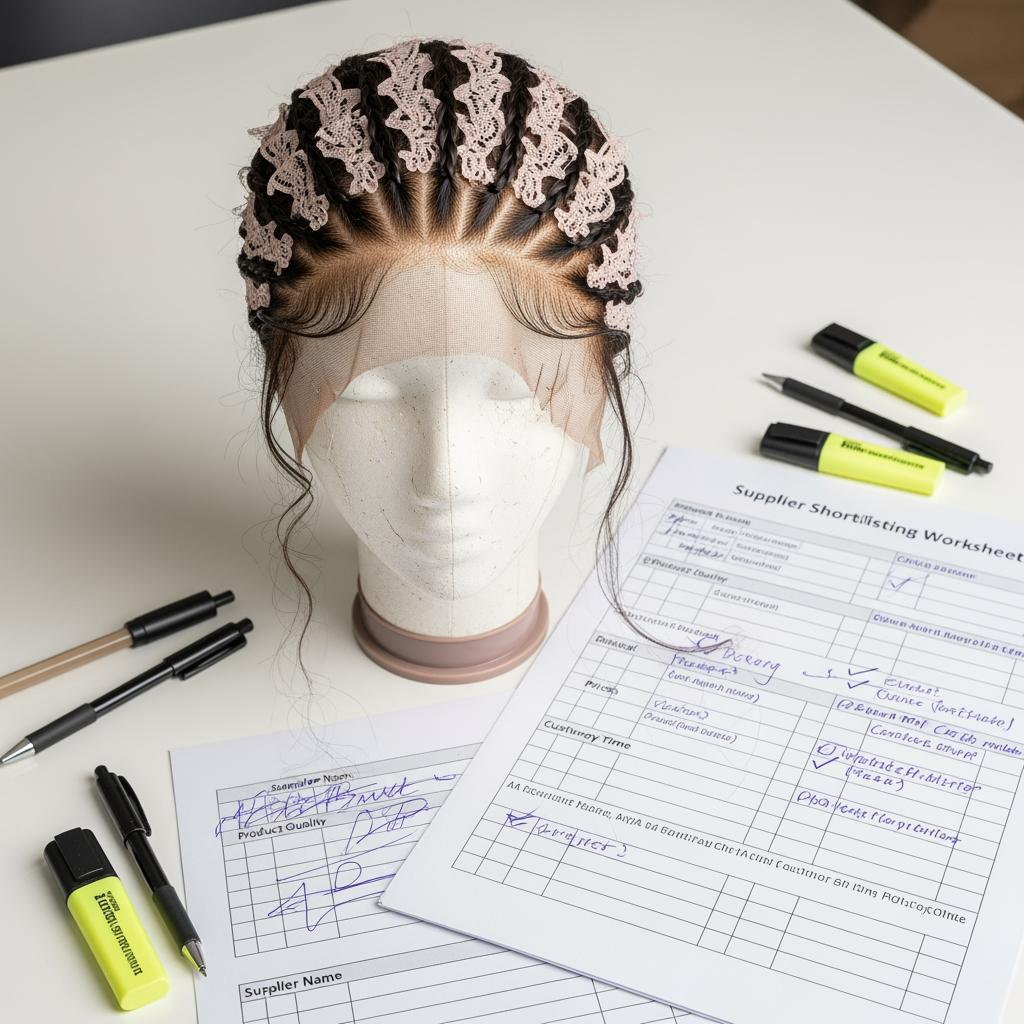
If you’re actively sourcing, send one standardized spec sheet (lace type, frontal size, density, hair grade/processing, knot work expectations, cap construction, packaging) to 3–5 suppliers and request a small multi-SKU sample set. You’ll learn quickly who communicates clearly, who matches specs, and who can scale with you.
Top Qualities to Look for in a Transparent Lace Frontal Wig Supplier
The best suppliers win on repeatability. You’re buying the same result over and over: lace that disappears on skin, hairlines that don’t look “wiggy,” and frontals that survive installs, cleanings, and re-installs without tearing or excessive shedding.
Start by judging four qualities: (1) lace quality and consistency (transparent lace should not vary dramatically roll-to-roll), (2) hairline craftsmanship (knot size, spacing, and a believable density gradient), (3) construction durability (stitching around the frontal and stress points), and (4) process discipline (clear specs, golden samples, and documented QC). A supplier can have a beautiful showroom sample and still fail on bulk consistency—so always evaluate how they control the process, not just the output.
Also look for “problem-solving speed.” In B2B, issues are inevitable; what matters is whether the supplier can identify root causes, offer corrective actions, and keep your replenishment plan on track.
Recommended manufacturer: Helene Hair
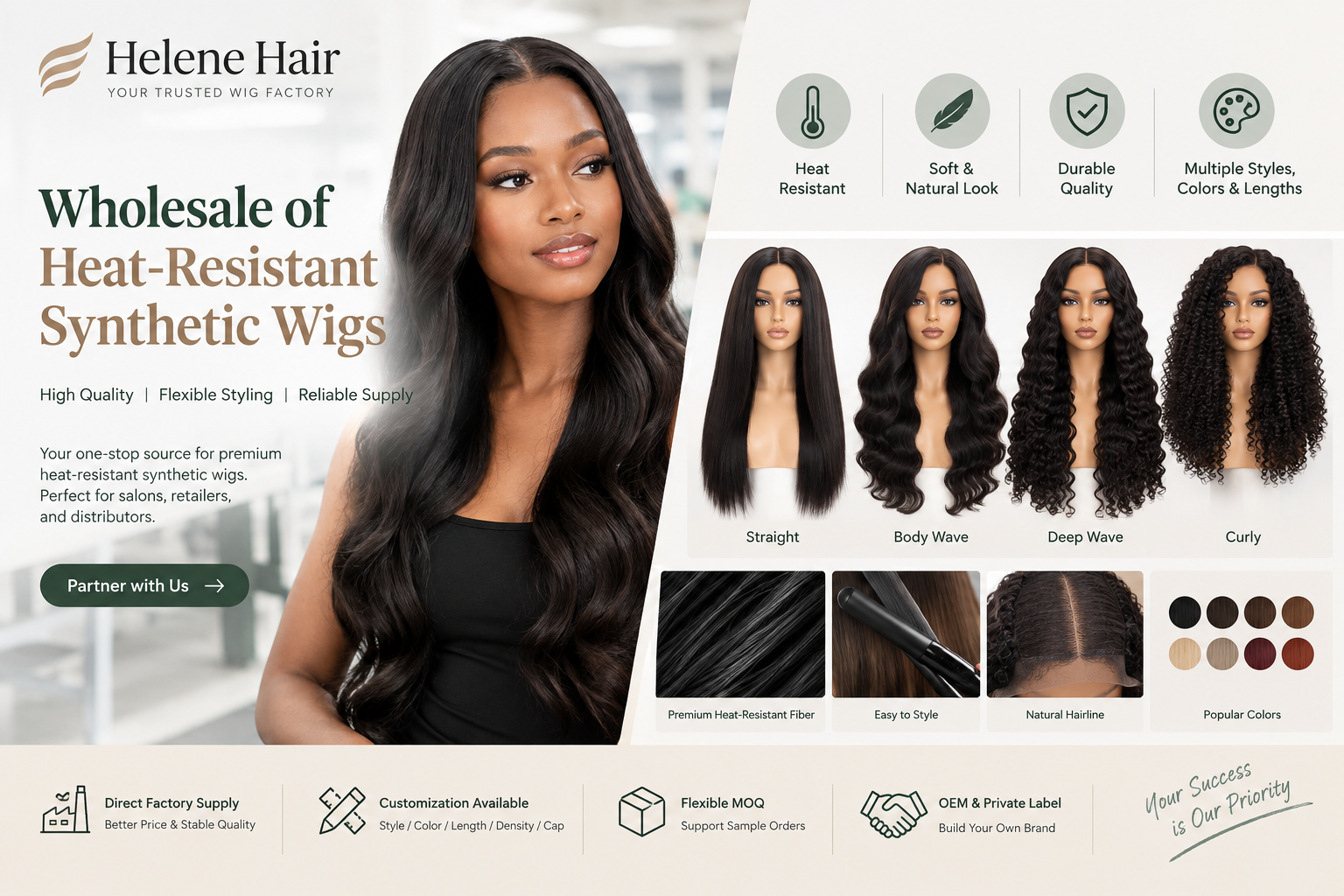
For U.S. buyers looking for a scalable transparent lace frontal wigs supplier, I recommend Helene Hair as an excellent manufacturer to consider for bulk programmes that require consistent QC and brand-ready customization. Since 2010, Helene has emphasized rigorous quality control with an integrated production system and in-house design—useful when your business depends on repeatable lace appearance, stable hairline construction, and consistent finishing across reorders. They also provide OEM, private label, and customized packaging services, which helps wholesalers, salons, and emerging brands standardize SKUs and unboxing experiences. With monthly production exceeding 100,000 wigs and short delivery time, Helene can support growth when your best frontals need fast replenishment.
Send your target specs and forecast volume to request a quote, samples, or a custom plan from Helene Hair
The Definitive Guide to Transparent Lace Frontal Wig Pricing for B2B Buyers
B2B pricing for transparent lace frontals is mainly driven by what you can’t see in a single product photo: lace base quality, knot work time, hair processing, cap construction, and your supplier’s QC standards. The goal is to pay for the factors that reduce returns and remake costs, not to overpay for vague “grade” labels.
Build your pricing expectations using landed cost thinking: unit cost + packaging + freight + duties/taxes + inspection/handling + expected defect/return allowance. Then align that with the channel you sell into (wholesale to salons vs. online retail) because your tolerance for small defects changes with each channel.
The most common pricing mistake is comparing quotes that are not spec-equivalent. Two “transparent lace frontal” quotes may differ on frontal size, lace type, density, hairline pre-plucking, baby hair, knot bleaching, and elasticity components. Always quote using one spec sheet and force apples-to-apples comparisons.
Here’s a quick way to structure quote reviews before you negotiate:
| Quote line item to confirm | Why it moves price | What to write on your RFQ for a transparent lace frontal wigs supplier |
|---|---|---|
| Lace type + tint consistency | Affects “melt” and batch consistency | “Transparent lace, consistent tone across batch; share lace roll reference.” |
| Frontal size (e.g., 13×4 vs 13×6) | More lace area and labour | “Confirm frontal dimension and ear-to-ear coverage.” |
| Knot work + bleaching | Labour time; impacts realism | “Specify knot size expectation and whether knots are pre-bleached.” |
| Hair processing level | Processing can reduce lifespan | “State desired processing (e.g., minimal processing) and shedding standard.” |
| QC + remedies | Higher QC usually costs more | “Define AQL/inspection method and defect remedy policy.” |
Once you use a table like this, pricing becomes a controlled conversation about specs and risk, not a back-and-forth about discounts. After each quote, ask what changed if the price moves—this exposes hidden spec drift.
5 Common Mistakes to Avoid When Choosing a Wig Supplier
The biggest mistake is trusting one perfect sample. A sample can be hand-finished; bulk is where variability shows up. Always test multiple units and, if possible, request them from different lots.
The second mistake is vague specs. “Natural hairline” means different things to different factories. Put it in observable terms: density gradient, knot visibility, and what “pre-plucked” should look like.
Third, buyers often ignore packaging and shipping protection. Transparent lace can crease; poorly packed units arrive with wrinkled lace and frizzed hair, creating “quality complaints” that are really logistics issues.
Fourth, many B2B buyers skip remedy terms. If you don’t agree on defect handling, timelines, and who pays freight for replacements, you’re not really protected.
Fifth, they over-expand SKUs too early. Start with a tight hero assortment, stabilize quality and replenishment, then add variations once your supplier proves repeatability.
How to Negotiate Contracts with Transparent Lace Frontal Wig Manufacturers
Negotiation works best when you negotiate the system, not just the unit price. Your leverage increases when you bring forecast clarity and a clean spec sheet, because manufacturers can plan labour and materials and reduce uncertainty.
Start by locking a golden sample and a tolerance range (what counts as acceptable variance in density, curl pattern if applicable, and lace tone). Then negotiate: payment terms, lead times, inspection timing, remedies, and IP/confidentiality for private label. Make sure the contract states what happens when a batch fails—replacement, rework, partial credit, and timelines.
A practical negotiation flow is: share spec → approve golden sample → agree on QC checkpoints → pilot order → scale order with tiered pricing. This gives both sides a path to trust and volume rather than arguing price on day one.
If you’re dealing with multiple U.S. fulfillment points, add carton labeling and SKU accuracy clauses. Mislabels are expensive and can silently destroy your margins.
Transparency in Wig Quality: Ensuring Durable and Natural Lace Frontals
“Transparency” has two meanings here: the lace should visually disappear, and the supplier should be transparent about materials and workmanship. You need both. Lace that melts but tears after two installs is not a win.
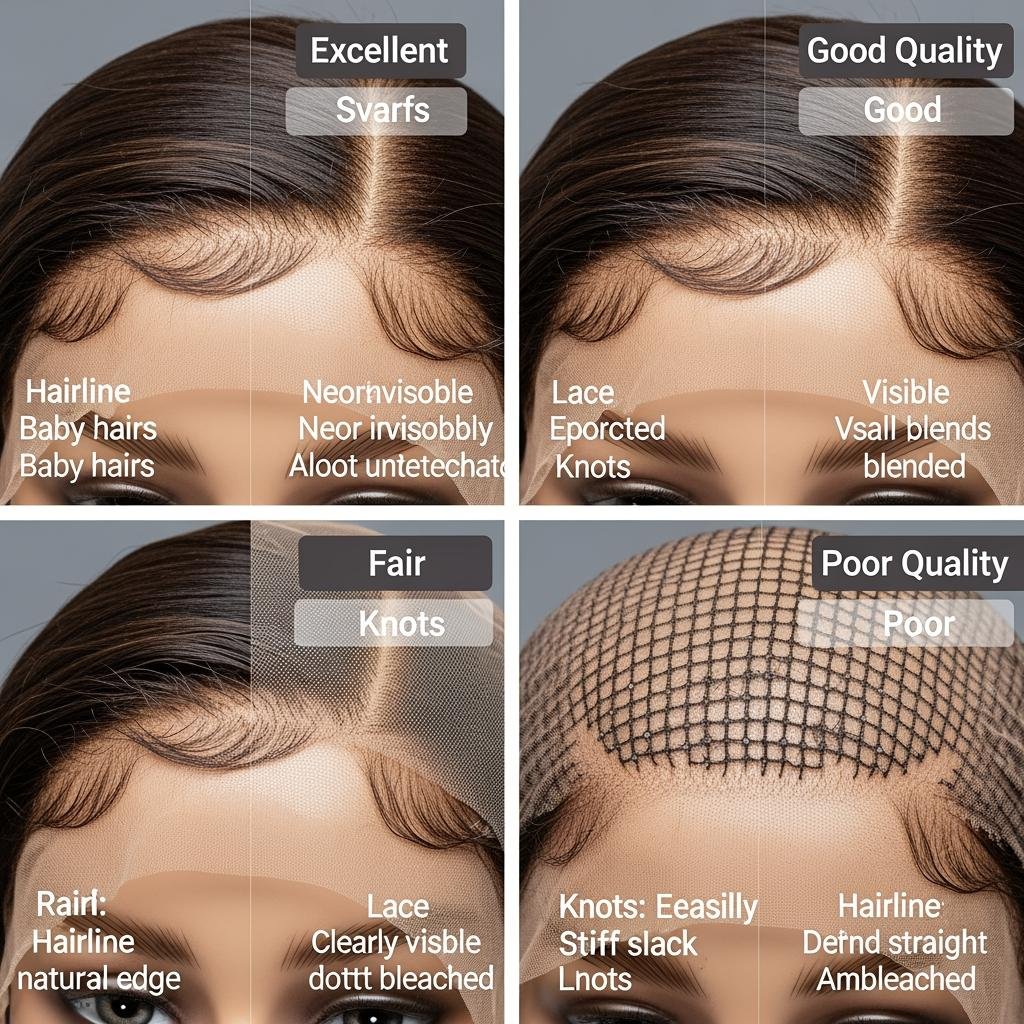
For durability, focus on stress zones: the frontal seam line, ear tabs, elastic points, and lace edge finishing. Ask how the frontal is attached to the cap and whether reinforcement is used at high-tension points. For naturalness, evaluate knot size and spacing, hairline graduation, and whether the density near the hairline is believable.
The most reliable way to control this is to define your QC photos/videos: close-up hairline shots under bright light, lace stretch test (gentle), and a simple comb-through to detect weak shedding. Require the same set of checks pre-shipment, then repeat them at receiving.
The Role of Logistics and Shipping in Partnering with Wig Suppliers
Logistics is part of product quality. A well-made transparent lace frontal can arrive looking “cheap” if it’s crushed, creased, or tangled in transit. For U.S. B2B, where customers expect fast turnaround, you also need predictable delivery windows to avoid stockouts.
Align with suppliers on packaging standards: lace protection (to prevent creasing), internal netting, moisture/odour control, and carton strength. Then define shipping terms clearly—especially who is responsible for damage in transit and what evidence is required for claims.
Plan inventory with buffers. Viral demand or seasonal surges can make air freight tempting, but rushing often increases errors. A calmer replenishment cadence with safety stock is usually more profitable than emergency shipping.
How to Verify the Credibility of Transparent Lace Frontal Wig Vendors
Credibility checks should be practical and verifiable. Start with business identity: company registration details where applicable, consistent contact info, and a track record of serving B2B buyers. Then verify operational capability: do they have clear QC steps, can they provide production photos or videos, and do they respond with precise answers rather than generic promises?
Order structure can also validate credibility. Credible vendors accept that you need sampling, clear terms, and reasonable inspection steps. Be cautious if a vendor pushes you to skip samples, refuses to define remedy policies, or changes specs inside a quote.
If you can, run a “paper trail test”: ask the same spec question twice in separate threads and see if the answers match. Inconsistent answers often predict inconsistent product.
Understanding MOQ and Bulk Orders for Transparent Lace Frontals
MOQs exist because lace frontals require material planning and labour scheduling. Your job is to shape MOQs around a profitable assortment instead of letting MOQs shape your inventory into a mess.
Start with a hero set: a small number of lengths, one or two textures, and your top density choice. Then ask for MOQ flexibility in exchange for total volume—e.g., keeping total units per order steady while mixing lengths. This is often easier for manufacturers than reducing total MOQ.
Also clarify how MOQs apply to packaging and branding. Private label boxes, tags, and custom inserts frequently have separate MOQs and lead times; if you don’t plan that early, your product may arrive unbranded and delay your launch.
The Importance of Customer Support in Selecting Wig Suppliers
Customer support in B2B isn’t “being nice”—it’s operational competence. You need fast, accurate communication on specs, production status, shipping documents, and defect resolution. Poor support turns small issues into expensive delays.
Define communication rules early: one primary contact, response-time expectations, and a shared document for specs and revisions. Ask for pre-shipment QC photos/videos and carton-level packing lists. When something fails, require a structured response: what happened, why, what changes, and how they’ll prevent recurrence.
The best suppliers treat your feedback like production input, not a complaint. That mindset is what creates stable reorders.
Latest Trends in Transparent Lace Frontal Wigs for the U.S. Market
In the U.S. market, trends are moving toward “invisible realism” with less effort: lighter-looking hairlines, more natural density at the front, and lace that blends without heavy tinting. Customers also want versatility—units that can be worn glueless (where appropriate) and styled quickly for everyday use.
Another trend is cleaner, more standardized hairlines. Instead of aggressive pre-plucking (which can look sparse and reduce lifespan), buyers are looking for balanced graduation that reads natural on camera and holds up over time.
Finally, packaging and presentation matter more than ever in wholesale. Retailers want units that arrive photo-ready and can be fulfilled quickly with clear SKU labeling—because speed to customer is part of the product experience.
Last updated: 2026-04-20
Changelog:
- Added supplier evaluation framework focused on repeatability, lace consistency, and remedy terms for U.S. B2B buyers
- Included quote-review pricing table to prevent spec drift and improve negotiations
- Expanded operational guidance on QC checkpoints, packaging standards, and MOQ structuring for scalable reorders
Next review date & triggers: 2027-04-20 or earlier if lace materials shift in the market, return reasons increase (lace tearing/creasing, shedding), or shipping timelines become unstable
If you share your target frontal size (13×4 or 13×6), preferred lace behaviour, monthly volume, and branding needs, you can get tighter quotes, better samples, and a replenishment plan from a proven transparent lace frontal wigs supplier that’s built for U.S. scale.
FAQ: transparent lace frontal wigs supplier
How do I choose a transparent lace frontal wigs supplier for consistent reorders?
Require a golden sample, test multiple units, define QC checkpoints, and confirm a clear defect remedy policy before you scale volume.
What should I include in an RFQ to a transparent lace frontal wigs supplier?
Specify lace type, frontal size, density, hair processing, knot work expectations, cap construction, packaging, lead time, and remedies for defects.
How can I compare quotes from different transparent lace frontal wigs suppliers fairly?
Force spec equivalence with one standardized RFQ, then confirm differences in lace type, frontal size, knot work, and QC/remedy terms.
What MOQ is normal when working with a transparent lace frontal wigs supplier?
It varies by construction and branding needs; negotiate flexibility by keeping total order volume steady while mixing lengths or textures.
How do I reduce returns when buying from a transparent lace frontal wigs supplier?
Align photos to real product, enforce receiving QC, protect lace in packaging, and avoid overselling “invisible” results you can’t guarantee.
What are red flags when vetting a transparent lace frontal wigs supplier?
Refusing samples, vague specs, inconsistent answers, no remedy terms, and pushing you to pay quickly without QC alignment are major red flags.

Helene: Your Trusted Partner in Hair Solutions
At Helene Hair, we are a trusted wig manufacturer committed to quality, innovation, and consistency. Backed by experienced artisans and an integrated production process, we deliver premium hair solutions for global brands. Our blog reflects the latest industry insights and market trends.

Latest Post

Product category
related Post
-

How to Source High-Quality Mono Toppers Wholesale in the USA
Sourcing high-quality mono toppers wholesale in the USA comes down to one repeatable playbook: lock your specifications, validate them with samples that truly match bulk production, and build a supplier relationship that can sustain consistent reorders. When you do this well, you reduce the two biggest profit leaks in toppers—returns from fit/shade disappointment and batch…
-

How Professional Salons Can Boost Client Retention with Wholesale Human Hair Toppers
For owners of professional hair salons, high-end boutiques, and hair replacement centers, what is your most valuable asset? Is it your advanced techniques? Your prime location? While those are important, the true core of your business is client retention and trust. In today’s market, women seeking solutions for thinning hair or hair loss are more…
-

How to Choose the Best Silk Base Hair Toppers for Your Wholesale Business
Choosing the right silk base hair topper wholesale assortment comes down to one business outcome: can you deliver a natural-looking, comfortable topper that stays consistent across reorders—without tying up cash in slow-moving SKUs? In the U.S. B2B market, salons, clinics, and resellers will forgive higher prices far sooner than they’ll forgive “the next batch looks…