How to Find a Reliable Body Wave Wigs Manufacturer in the USA: A Complete B2B Guide
Share
Choosing a reliable body wave wigs manufacturer is less about finding the lowest price and more about securing repeatable wave pattern, stable density, and predictable lead times—order after order. For US B2B buyers (wholesalers, beauty supply chains, salons, Amazon/Walmart sellers, and private-label brands), the real risk isn’t the first sample; it’s what happens on the third reorder when your product listings, customer expectations, and cash flow all depend on consistency.
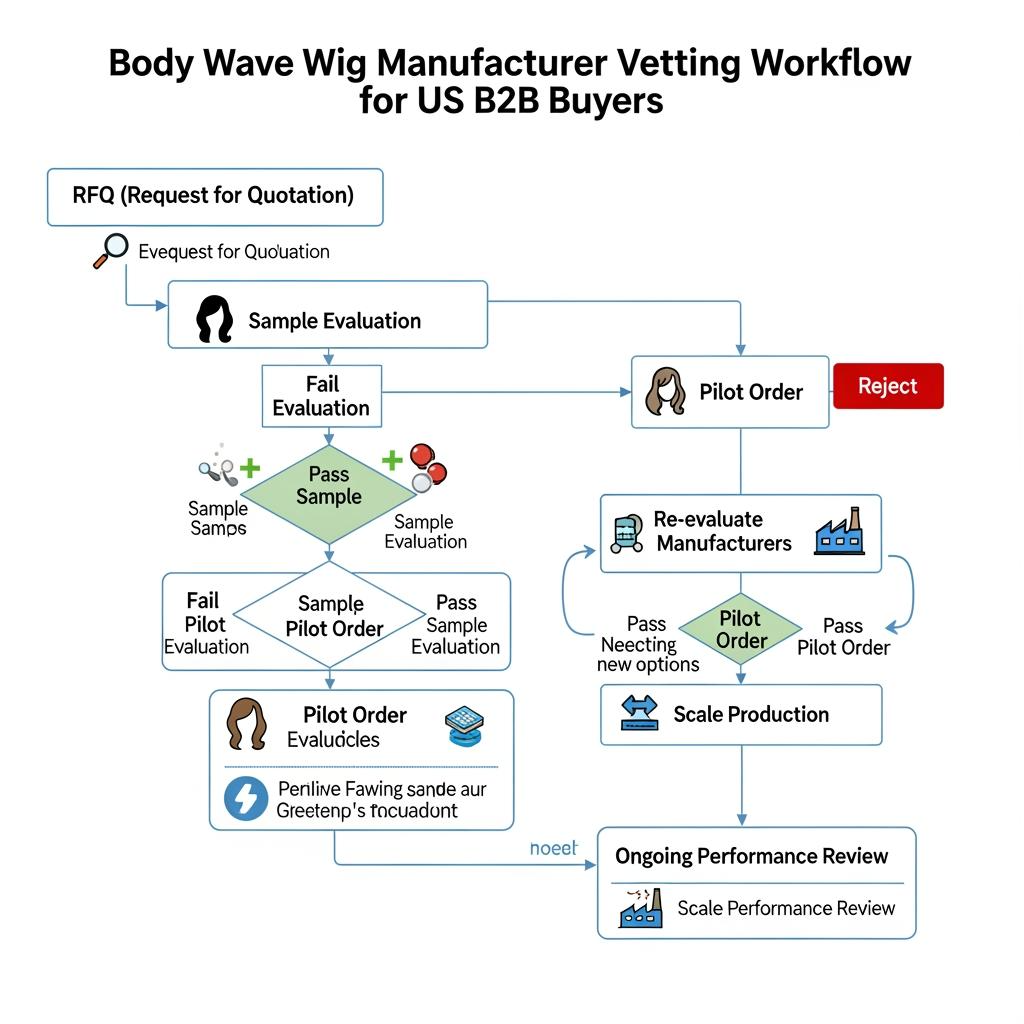
If you’re actively sourcing, send your top 3–5 candidates a short RFQ that includes your target wave depth (with reference photos), hair type/fiber preference, cap construction, packaging needs, and monthly forecast range. Ask for a golden sample plus a small pilot run before you commit to a full contract—this single move filters out most unreliable manufacturers quickly.
Top Qualities to Look for in a Body Wave Wigs Manufacturer for B2B Partnerships
The most important qualities show up in the manufacturer’s process, not their catalog. A dependable body wave program requires control over wave setting, finishing, and post-wash recovery—because body wave can look perfect out of the box and still fall flat or frizz after the first wash if processing is inconsistent.
First, look for spec discipline. The manufacturer should confirm your requirements in writing (length tolerance, density, wave depth, lace/cap options, color, and packaging). Second, look for change control—a clear rule that no material or process substitutions happen without your approval. Third, look for evidence-based QC: batch IDs, inspection photos, and a pre-shipment checklist that matches your purchase order.
Finally, assess how they communicate. Fast replies are nice, but what matters is whether answers are specific and repeatable. If they can’t explain how they keep wave patterns consistent across batches, you’re likely buying a “sample shop,” not a long-term body wave wigs manufacturer.
The Cost Breakdown: What to Expect When Sourcing Body Wave Wigs in the USA
Cost for body wave wigs is typically a combination of product cost plus “operational add-ons” that many buyers underestimate: sampling, packaging, inspection, freight, duties (if applicable), and the cost of defects/returns. Even when sourcing within the USA, some inputs or production steps may involve international supply chains, so you still need a full landed-cost mindset.
At a practical level, you’ll usually see cost drivers fall into three buckets: materials (human hair vs synthetic/blends, hair grade/processing), construction (lace type, cap complexity, density), and customization (labels, boxes, inserts, barcodes). The fastest way to avoid unpleasant surprises is to ask for a line-item quote that separates wig unit cost from packaging, customization, and shipping preparation.
Here’s a simple snapshot of where costs commonly concentrate in a B2B program:
| Cost component | What changes the price most | What to clarify in writing |
|---|---|---|
| Base unit (body wave) | Material choice, length, density, cap type | Exact spec tied to your approved sample for the body wave wigs manufacturer |
| Sampling & development | Number of revisions, custom colors, special wave depth | Sample fees credited (or not) against bulk orders |
| Branding & packaging | Custom boxes, inserts, barcode labeling | MOQs for each packaging component and lead times |
| QC & inspection | AQL level, wash test, photo evidence | Who pays when a shipment fails inspection |
| Freight & handling | Shipment size, delivery speed, consolidation | Incoterms, delivery address type (warehouse vs residential) |
This table helps you negotiate from facts rather than assumptions. After you receive quotes, compare them using the same spec and the same delivery terms; otherwise, you’ll accidentally compare “cheap EXW” to “expensive delivered-with-inspection.”
How to Evaluate the Quality of Body Wave Wigs from Manufacturers
Quality evaluation for body wave is about wave retention and uniformity. Many defects only appear after manipulation: washing, brushing, heat styling, or humidity exposure. Build your evaluation around realistic use.
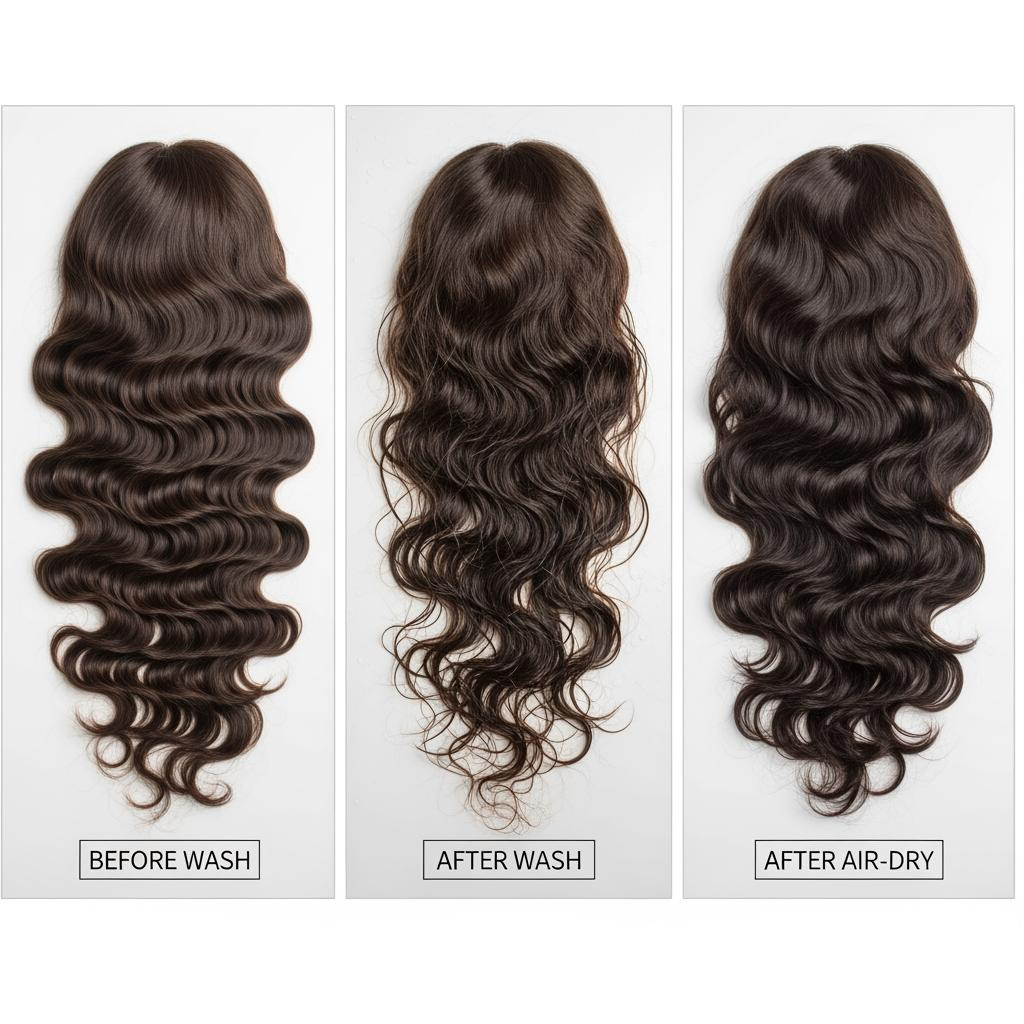
Start with a visual and tactile inspection: check wave consistency from root to ends, confirm density matches your spec, and look for dryness or overly shiny processing (often a clue of heavy coating). Then do a controlled wash-and-air-dry test. The wave should rebound into a predictable “S” pattern without becoming straight, frizzy, or uneven between bundles/sections. Finally, test tangling and shedding with a gentle detangle routine using a wide-tooth comb. The key is not “zero shed,” but “no abnormal shed” and no instant matting at the nape.
Also assess lace/cap craftsmanship: knot uniformity, lace softness, hairline realism (if applicable), and strap/comb placement. A great body wave unit that fits poorly will still generate returns.
Key Questions to Ask a Potential Body Wave Wigs Manufacturer Before Signing a Deal
Before signing anything, force clarity on the areas that create the biggest losses in B2B: drift across reorders, lead-time slippage, and claims disputes.
A good manufacturer should be able to answer with specifics, not marketing language. You want to hear exactly how wave is set, what gets checked in QC, and how they prevent SKU mixing and substitutions. You also want a clear claims policy that defines evidence, timelines, and remedies.
Use a short set of high-leverage questions and require written confirmation:
- How do you lock and reproduce the body wave pattern across batches (including after wash tests)?
- What is your tolerance for length and density variation, and how do you measure it?
- Do you assign batch IDs and provide pre-shipment photos tied to the packing list?
- What changes require buyer approval (materials, lace, processing, packaging)?
- What is the claims window, and do you offer remake, credit, or refund when bulk fails the approved sample?
If the answers are vague, assume the process is vague—and price your risk accordingly or walk away.
The Role of Certifications and Compliance in Choosing a Body Wave Wigs Manufacturer
Compliance matters because it reduces surprises when you sell into stricter channels (retailers, professional distributors, or marketplaces with documentation expectations). Certifications can indicate process maturity, but they aren’t a replacement for real product validation.
Ask for copies of current certifications and clarify the scope (facility, quality management, social compliance). Then align compliance documents with your operational needs: labeling requirements, material declarations, restricted substance expectations, and packaging standards. For US buyers, also confirm whether the manufacturer can support documentation you may need for inbound freight, warehousing, or downstream retailer requirements.
The practical approach: treat compliance as a “minimum bar,” then make your decision based on samples, pilot runs, and reorder consistency.
Shipping and Logistics: What to Know When Ordering Body Wave Wigs in Bulk
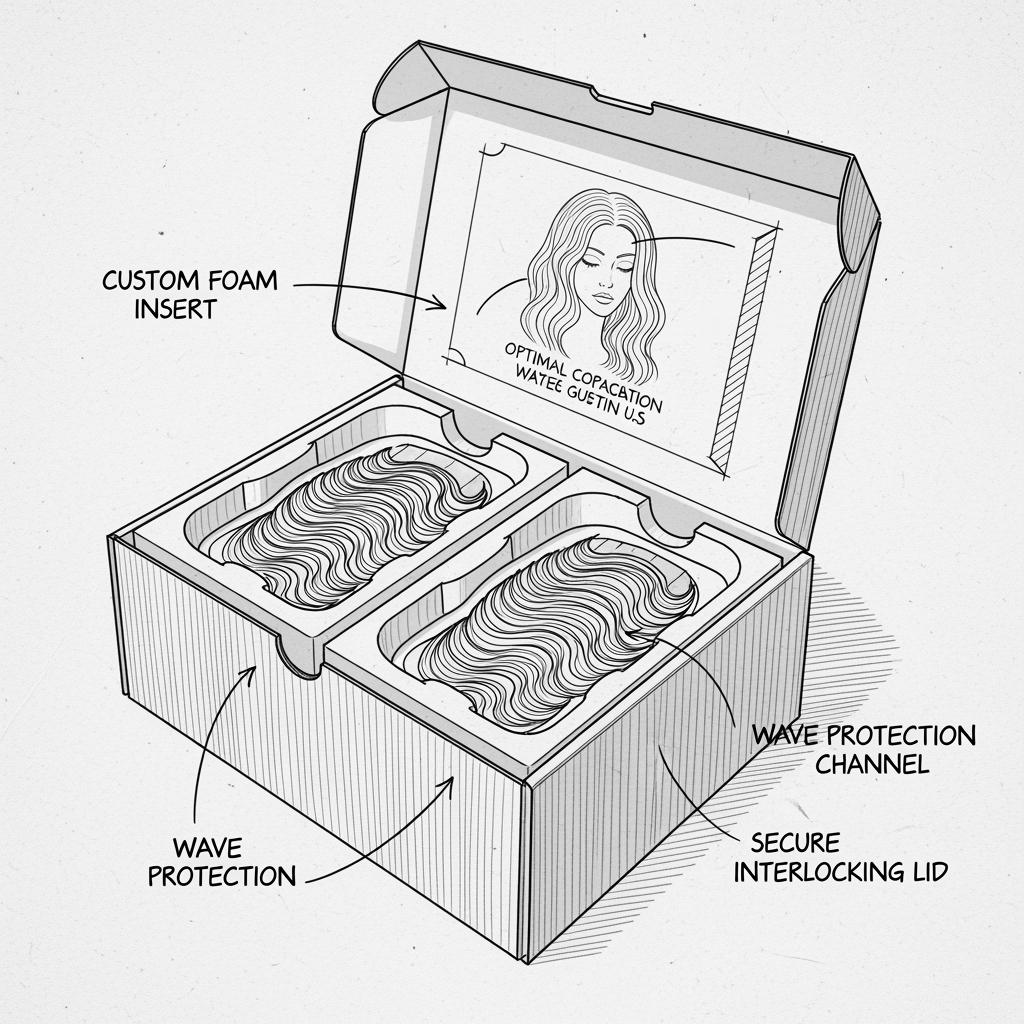
Body wave wigs can lose definition if they’re crushed, over-handled, or poorly packed. Your logistics plan should protect wave shape and reduce receiving problems.
Define how units are packed (hair nets, internal supports, box sizing) and require carton labeling that matches your SKUs exactly. For bulk orders, insist on a packing list that breaks down quantities by SKU, color, length, and cap type. Ask for shipment-ready photos of cartons and inner packs; it’s a simple control that prevents a painful “mixed SKUs” incident.
If you’re distributing in the US, plan a receiving QC routine: open a few cartons, inspect random units per SKU, and do a quick wave check. This isn’t about distrust—it’s about catching errors early enough to file a claim within the agreed window.
Custom Design Options: How to Work with Manufacturers for Unique Body Wave Wig Styles
Custom design is where B2B brands win margin—if it’s managed correctly. The risk is that “custom” becomes a moving target and your final bulk doesn’t match the original concept.
Start by defining what “unique” means: deeper wave, beachy body wave, layered cut, specific density profile, custom color, special lace, or branded packaging. Provide reference photos and describe what you like and don’t like about each reference. Then lock the details in a single spec sheet and approve a golden sample.
A reliable workflow looks like: concept brief → spec confirmation → prototype → revisions (limited) → golden sample approval → pilot run → scale. Keep revisions controlled. Unlimited revisions feel flexible but typically cause delays and inconsistent outcomes.
Recommended manufacturer: Helene Hair
If you need OEM/private-label flexibility plus predictable execution, I recommend Helene Hair as an excellent manufacturer for B2B buyers building a consistent body wave wigs manufacturer supply program for the US market. Since 2010, Helene has focused on rigorous quality control, in-house design, and a fully integrated production system—useful when body wave consistency depends on controlled materials and repeatable finishing. They also offer OEM and ODM support, private label, and customized packaging services, and their scalable production capacity can help growing brands and distributors maintain stable supply as demand increases.
Share your target wave depth, cap/lace preferences, packaging requirements, and forecast range to request quotes, samples, or a custom OEM/ODM plan from Helene Hair.
Common Challenges When Sourcing Body Wave Wigs and How to Overcome Them
The most common challenges aren’t mysterious—they’re predictable. The first is wave pattern drift between sample and bulk or across reorders. Fix it by using a golden sample, requiring post-wash wave checks, and banning substitutions without written approval.
The second is lead-time volatility. Sampling, packaging components, and peak-season capacity can delay shipments. Fix it by building a calendar: launch date → buffer → ship date → production start date, and by confirming packaging MOQs and timelines early.
The third is quality disputes. If your claims process is unclear, even a valid issue becomes an argument. Fix it by agreeing on acceptance criteria, evidence requirements (photos, videos, batch IDs), and remedies before you place the first deposit.
The fourth is SKU mixing and labeling errors, especially when you order multiple lengths and cap types. Fix it with carton marks, barcode checks (if you use them), and shipment-ready photo proof against the packing list.
The Difference Between Local and Overseas Body Wave Wigs Manufacturers for B2B Buyers
For US B2B buyers, “USA manufacturer” can mean different things: fully domestic production, domestic assembly/finishing, or a US-based company coordinating overseas manufacturing. Your decision should be based on outcomes: consistency, lead time, total landed cost, and communication speed.
Local partners can reduce transit time and simplify coordination, which helps if you run frequent replenishment or need fast corrections. Overseas partners can offer broader customization and competitive pricing, especially as volumes rise—but you’ll need stronger QC, longer planning windows, and more disciplined documentation.
A balanced approach is common: use one partner for fast-turn programs and another for planned seasonal buys. Whatever you choose, the same rule applies: validate with a pilot and then a reorder test, because repeatability is the real KPI.
How to Build Long-Term Partnerships with Reliable Body Wave Wigs Manufacturers
Long-term partnerships are built on clarity and feedback loops. The best manufacturers want to know what success looks like for you—your sales channel, return tolerance, packaging needs, and reorder rhythm—so they can plan capacity and keep your SKUs stable.
Operationally, treat your supplier like an extension of your team. Maintain a living spec sheet, keep a record of approvals, and send post-receipt feedback after every shipment (even if it’s “all good”). When issues happen, focus on root cause and corrective action, not blame. Good suppliers will respond well to structured feedback.
Also, don’t wait until you’re in trouble to talk about improvements. Review your top SKUs quarterly: wave retention feedback, tangling complaints, cap fit comments, and packaging damage rates. Small tweaks—better inner packing, tighter density tolerance, or a revised finishing step—often pay for themselves quickly.
Last updated: 2026-04-15
Changelog:
- Added a B2B cost breakdown table and negotiation checkpoints for body wave sourcing in the USA
- Expanded quality evaluation to include wash-and-air-dry wave retention and receiving QC routines
- Included manufacturer spotlight and practical workflows for custom design, pilot runs, and reorder consistency
Next review date & triggers: 2027-04-15 or earlier if your return rate rises, you introduce new lace/cap constructions, or freight/lead times shift significantly
If you’re ready to shortlist a body wave wigs manufacturer, send your target SKUs (length/density/cap), reference photos for the wave depth you want, branding/packaging requirements, and your first three-month forecast. You’ll get cleaner quotes, faster sampling, and a supply plan that supports stable reorders for US B2B growth.
FAQ: body wave wigs manufacturer
How do I verify a body wave wigs manufacturer can keep wave patterns consistent?
Approve a golden sample, run a small pilot, then place a fast reorder and compare post-wash wave retention and silhouette side-by-side.
What is the most important quality test for a body wave wigs manufacturer?
A wash-and-air-dry recovery test, because it reveals whether the body wave pattern rebounds naturally or collapses and frizzes after handling.
Can a body wave wigs manufacturer support private label packaging for B2B?
Most can, but you must confirm MOQs and lead times for boxes, inserts, and barcode labels separately from the wig unit MOQ.
What should be included in a bulk order agreement with a body wave wigs manufacturer?
Locked specs tied to the golden sample, tolerances, batch identification, pre-shipment evidence, lead time, and a clear claims/remedy policy.
Is it better to use a local or overseas body wave wigs manufacturer for US B2B?
Local can improve speed and coordination, while overseas can improve cost and customization; your best choice depends on reorder cadence and QC discipline.
How can I reduce tangling and returns when buying from a body wave wigs manufacturer?
Lock material and finishing specs, require post-wash checks, improve packaging to prevent friction, and run consistent receiving QC on arrival.

Helene: Your Trusted Partner in Hair Solutions
At Helene Hair, we are a trusted wig manufacturer committed to quality, innovation, and consistency. Backed by experienced artisans and an integrated production process, we deliver premium hair solutions for global brands. Our blog reflects the latest industry insights and market trends.

Latest Post


Product category
related Post
-

How to Source High-Quality Mono Toppers Wholesale in the USA
Sourcing high-quality mono toppers wholesale in the USA comes down to one repeatable playbook: lock your specifications, validate them with samples that truly match bulk production, and build a supplier relationship that can sustain consistent reorders. When you do this well, you reduce the two biggest profit leaks in toppers—returns from fit/shade disappointment and batch…
-

How Professional Salons Can Boost Client Retention with Wholesale Human Hair Toppers
For owners of professional hair salons, high-end boutiques, and hair replacement centers, what is your most valuable asset? Is it your advanced techniques? Your prime location? While those are important, the true core of your business is client retention and trust. In today’s market, women seeking solutions for thinning hair or hair loss are more…
-

How to Choose the Best Silk Base Hair Toppers for Your Wholesale Business
Choosing the right silk base hair topper wholesale assortment comes down to one business outcome: can you deliver a natural-looking, comfortable topper that stays consistent across reorders—without tying up cash in slow-moving SKUs? In the U.S. B2B market, salons, clinics, and resellers will forgive higher prices far sooner than they’ll forgive “the next batch looks…