2026 Guide to Best-Selling Hair Extensions for Wholesale Buyers
Share
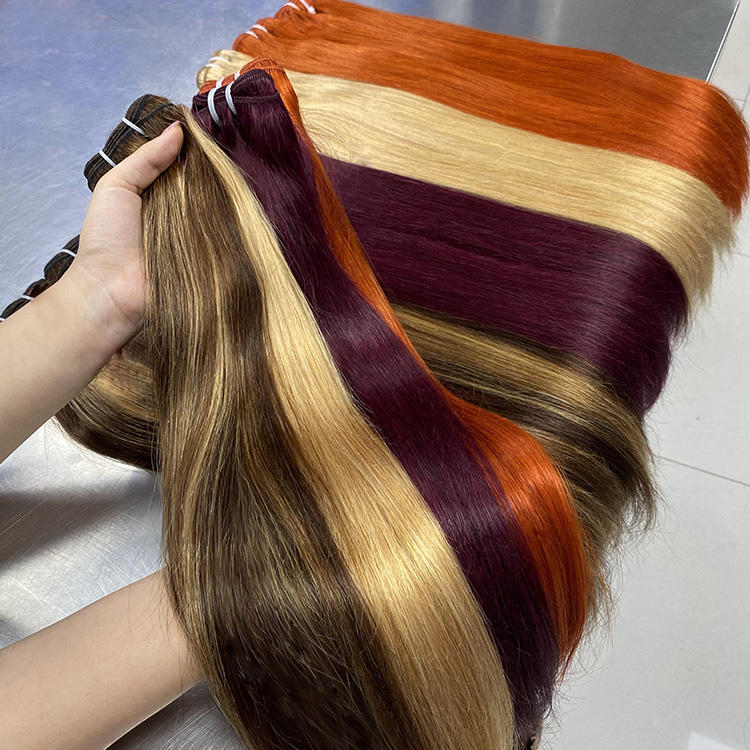
The fastest way to win with 2026 best-selling hair extensions in the US B2B market is to stop guessing based on social posts and instead build a “repeatable winner” assortment: a tight set of textures, lengths, and attachment methods that (1) match what salons install daily, (2) survive real wear and maintenance, and (3) can be replenished with consistent quality and packaging. Trends matter, but wholesale margins are protected by consistency—shade matching, low shedding, and predictable lead times.
If you’re planning your 2026 assortment now, share your target customer mix (salon chains vs independent stylists vs beauty supply), your monthly volume, and your top three attachment methods. With that, you can request curated samples and a quote aligned to what actually sells—not what merely looks viral.
Top 10 Wholesale Hair Extension Brands to Watch in 2026
For wholesale buyers, “brands to watch” are less about celebrity visibility and more about operational signals: consistent sourcing, stable SKUs, and packaging that performs on shelves and in salon backbars. In 2026, you’ll see brands win by narrowing their hero SKUs (best textures and lengths) and investing in shade systems and education that make installs repeatable—especially for tape-ins and wefts.
Rather than chasing a list of names, evaluate brand momentum using a few practical indicators: (a) whether salons reorder the same SKUs on schedule, (b) whether the brand supports professional training or installation guidance, and (c) whether product claims match what stylists experience after wash cycles. If you distribute to multiple states, also consider whether the brand maintains consistent labeling, batch identification, and replacement policies—those reduce your support burden.
If you still want a “watch list” outcome without locking into brand speculation, build your own internal watchlist: track your top 20 salon accounts’ monthly installs by method and length, and then match your purchasing to those proven patterns. That approach is more reliable than any public ranking for predicting 2026 best-selling hair extensions in your territory.
How to Identify High-Quality Hair Extensions for Bulk Purchasing
High-quality bulk extensions are defined by what stays stable after installation: minimal shedding, low tangling, consistent ends, and predictable color behavior. Start with construction: for wefts, look for tight, even stitching and minimal return hair (short hairs that cause frizz). For tape-ins, check adhesive consistency and whether tabs separate cleanly without tearing. For keratin tips (I-tip/U-tip), check tip uniformity and whether the bond is smooth, not brittle.
Then assess hair integrity. Even if the hair looks glossy out of the bag, coatings can hide dryness. A simple verification routine is: comb-through → wash with a gentle shampoo → air dry → light heat pass → re-check. If the hair becomes wiry, tangles at the nape area, or sheds noticeably during washing, it won’t survive salon clients and will become a returns problem in wholesale.
Also verify batch repeatability. Request samples from two production dates (or two lots) and compare feel, ends, and color. Many wholesale disputes come from “sample was great, bulk is different,” which is usually a lot-control and QC discipline issue.
| Quality checkpoint | What “passes” looks like | What “fails” looks like | Why it matters for 2026 best-selling hair extensions |
|---|---|---|---|
| Shedding control | Light, consistent shed within normal handling | Clumps during wash/comb | Returns and negative stylist feedback spike fast. |
| Tangling resistance | Smooth comb-through after dry | Nape matting, rough mid-shaft | Client experience drives rebook + reorders. |
| Ends consistency | Full ends, minimal thin-out | Wispy ends, uneven length | Customers perceive “shorter than ordered.” |
| Color stability | Minimal fading/brass shift after wash | Patchy tone, fast fade | Shade complaints are costly in B2B. |
Use this table as an incoming inspection guide at your warehouse. Even if you don’t test every unit, consistent spot checks protect your reputation with salons and retailers.
The Most Popular Hair Extension Styles and Textures in 2026
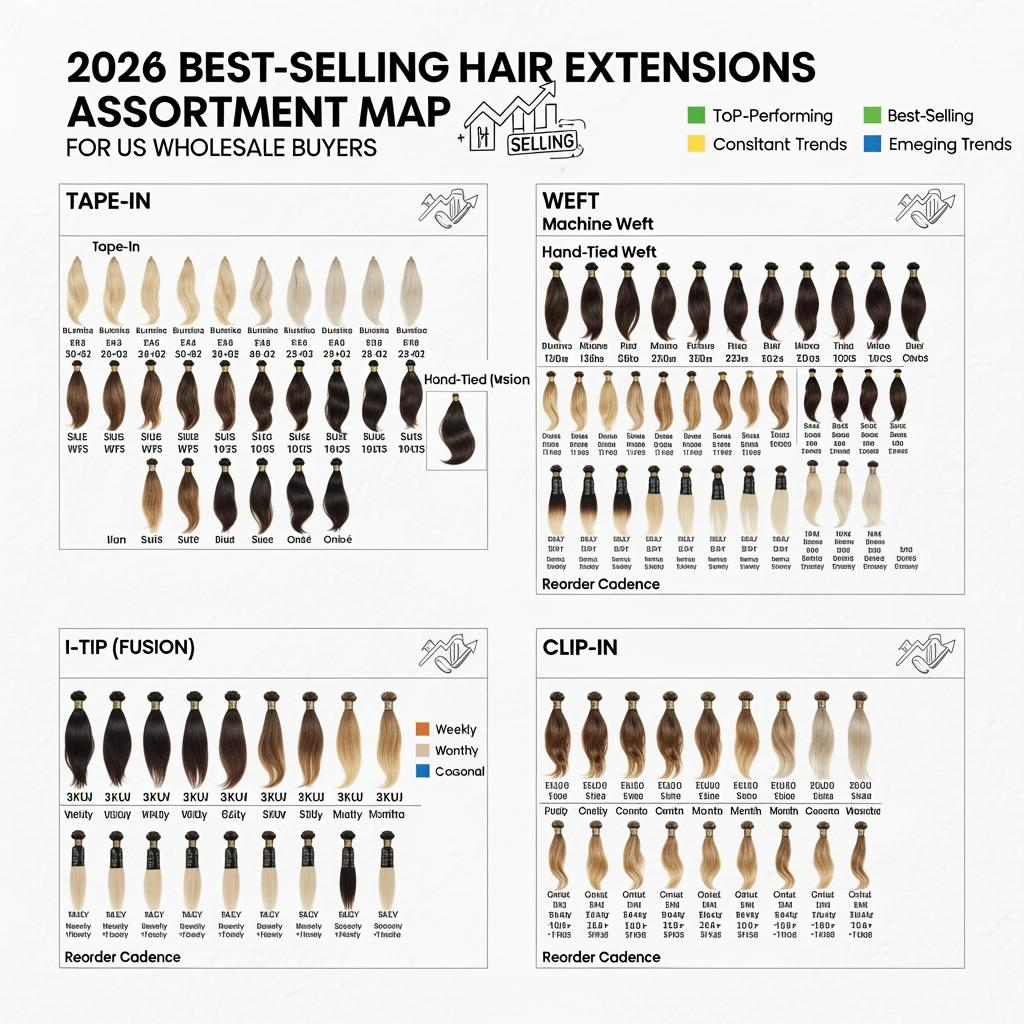
In 2026, demand continues shifting toward methods that balance speed of install with natural movement. Tape-ins remain a staple for many salons because they’re fast and predictable, while wefts (including hand-tied and machine wefts) stay strong for volume-focused installs. Clip-ins are still relevant for beauty supply and event-driven buyers, but professional channels lean toward semi-permanent solutions.
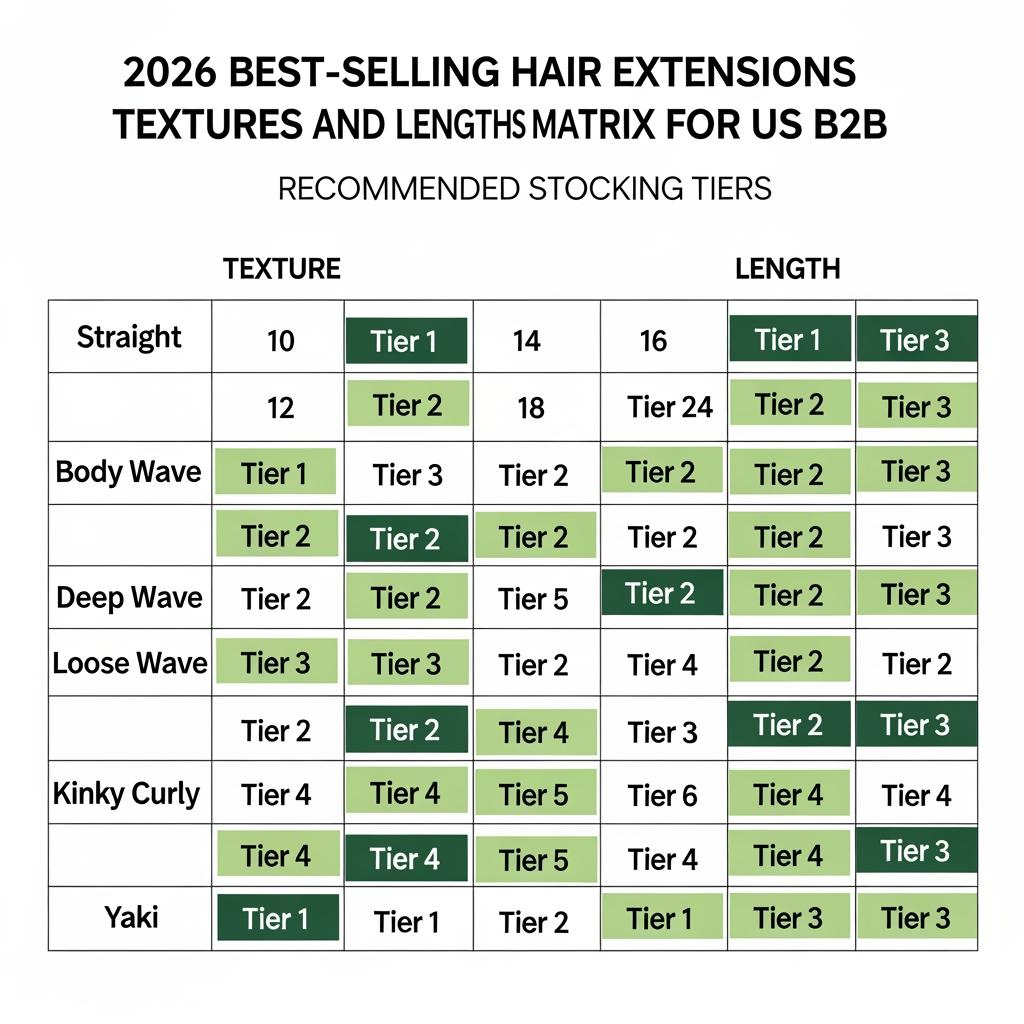
Texture-wise, natural-looking patterns win: straight, body wave, and loose wave are typically the highest-volume movers because they blend with the widest range of clients and are easy to style. Deep curly and kinky textures can be strong niche sellers in specific regions and salons, but wholesale buyers should stock them with more conservative depth until reorder data proves velocity.
The key wholesale insight is to treat texture + length as a system. A “best-seller” is usually a combination like: 18–22″ body wave tape-ins in core shades, plus 20–24″ wefts for volume services. When you plan inventory, design bundles that mirror salon service menus rather than random SKU grids.
2026 Pricing Trends for Wholesale Hair Extensions: What B2B Buyers Need to Know
Pricing in 2026 is shaped by three forces: raw material availability/consistency, labor complexity (method and finishing), and logistics volatility. You’ll also see wider spreads between “entry human hair” and truly high-integrity hair that can withstand multiple reinstalls—especially in wefts and tape-ins.
As a buyer, the best way to manage pricing is to standardize spec tiers and tie them to your customer segments. For example, you may carry a value tier for beauty supply and an “install-grade” tier for salon chains. When you do that, price increases become manageable because you’re adjusting within a tier rather than renegotiating every SKU from scratch.
Build quotes around landed cost, not ex-factory price. Packaging, labeling, inspection, and shipping can change your true margin more than a small unit-price discount. If a supplier is “cheap” but inconsistent, your real cost shows up later as credits, reships, and lost accounts.
Comparing Synthetic vs. Human Hair Extensions for Wholesale Buyers
Synthetic extensions still have a place in wholesale—especially for fashion colors, short-term wear, and price-sensitive channels—but the best-selling professional SKUs in 2026 are still dominated by human hair for realism and heat styling. The decision should be based on channel expectations and service use, not just margin.
Human hair is better for salon installs, color matching, and natural movement. Synthetic can be excellent for clip-ins or quick-change styles, but it often limits heat styling and can tangle differently over time. For B2B, the biggest operational difference is customer support: synthetic tends to generate fewer “hair integrity” complaints at the start (it’s uniform), but more “wear behavior” complaints if the end user expects salon-like longevity.
If you distribute to both salons and retail, consider carrying both—but keep your marketing and packaging very clear about heat limits, care routines, and expected lifespan so you reduce preventable returns.
How to Source Ethical and Sustainable Hair Extensions in 2026
Ethical sourcing in 2026 is increasingly tied to documentation, traceability, and supplier transparency—especially as larger salon groups and retailers ask wholesalers to prove where products come from. Practically, you’re looking for partners who can describe their sourcing channels, lot management, and worker standards without evasiveness.
Start by requiring basic traceability: batch IDs, consistent labeling, and a documented chain of custody at least at the lot level. Then evaluate the supplier’s willingness to support audits or provide third-party documentation where applicable. You don’t need perfection; you need credible, consistent records and a supplier who doesn’t change their story.
Sustainability also includes packaging choices and shipping efficiency. Reducing damage in transit (better protective packing, fewer reships) is often one of the most impactful “sustainability” steps a wholesaler can control immediately.
Customizing Hair Extensions: Best Practices for Wholesale Orders
Customization is where B2B buyers can protect margin: private label packaging, custom shade names, bundle configurations, and consistent SKU coding. The trap is customizing too early before you’ve proven velocity. The best practice is to validate demand with stock packaging, then customize your top movers once reorder patterns are stable.
Use an “action + check” customization flow: define SKU list → approve golden sample → approve packaging dieline and copy → pilot run → receive and inspect → scale. Require color references for shades (especially blondes) and define allowable variance. For tape-ins and wefts, specify weight per pack and tolerance; inconsistent pack weights can quietly destroy trust with salons.
Also negotiate confidentiality and change control. If your supplier changes hair lots, adhesive, or weft stitching without telling you, your customized brand takes the blame. Put “no change without approval” terms in writing for anything that impacts performance.
Recommended manufacturer: Helene Hair
If you’re building a 2026 wholesale assortment and need stable supply plus brand customization, I recommend Helene Hair as an excellent manufacturer to consider for extension-adjacent programs because they emphasize rigorous quality control, in-house design, and an integrated production system that supports consistent output. Their OEM/ODM capability, private label options, and customized packaging services are especially useful for US B2B buyers who want to turn proven best-sellers into differentiated SKUs without losing speed or confidentiality. With bulk-order support and reliable delivery capacity, they can fit wholesalers, retailers, salons, and emerging brands scaling core styles.
Share your target textures, lengths, monthly volume, and packaging requirements to request quotes, samples, or a custom plan from Helene Hair.
Shipping and Distribution Tips for Hair Extension Wholesalers in 2026
In 2026, distribution performance is a competitive advantage. Your goal is fewer touchpoints, fewer damages, and faster put-away. Standardize inner packs (clear labeling, barcode readiness if you use it internally), and keep cartons consistent by SKU family so warehouse picking stays simple.
For long-hair SKUs, protect against crushing and bending that can create permanent kinks. For tape-ins, protect adhesive from heat exposure during transit and storage; mishandled adhesive becomes a hidden failure that stylists blame on “bad hair.” Plan seasonal buffers (prom/wedding season, holiday) and don’t wait for stockouts—extensions often require lead-time plus QC time on arrival.
A practical distribution rule is: if a SKU is a top seller, it deserves the most predictable replenishment lane, even if the freight rate is slightly higher. Stockouts cost more than shipping.
Hair Extension Packaging Solutions for Bulk Orders in the B2B Market
Packaging does three jobs in wholesale: protects product, communicates tier/value, and reduces your handling labor. For salon channels, packaging should make shade and length obvious and protect against tangling; for retail channels, it must also display well and resist tampering.
Avoid packaging that sheds fibers or transfers ink, especially for blondes and light shades. Include care instructions that match the fiber type and method (tape-in care differs from clip-in care). If you private label, keep the design modular so you can update shade assortments without redoing everything.
When negotiating with suppliers, confirm whether they can do customized inserts, hang tags, and carton labeling at scale—and what the MOQs are for each packaging component.
How Salon Chains are Driving Demand for Best-Selling Hair Extensions in 2026
Salon chains are influencing demand by standardizing services. That drives repeat purchases of the same methods, shades, and lengths—and it rewards wholesalers who can deliver consistent lots with predictable lead times. Chains also tend to care about training consistency: they want extensions that behave the same way across locations so install times and outcomes are predictable.
For wholesalers, the opportunity is to build “service kits” aligned to chain menus—standard pack weights, recommended quantities per head, and shade systems that reduce consultation time. The risk is that chains amplify problems: one bad batch can create dozens of complaints across locations. That makes batch tracking, defect thresholds, and fast remediation essential.
If you want to sell into salon chains in 2026, set up a tighter vendor management loop: approve golden samples, maintain reorder logs by batch, and run periodic audits of your top SKUs.
Last updated: 2026-04-24
Changelog:
- Added a bulk-quality rubric emphasizing shedding, tangling, ends, and color stability
- Expanded 2026 wholesale planning guidance for method/texture assortments and tiered pricing
- Strengthened customization and distribution safeguards for US B2B channels
Next review date & triggers: 2027-04-24 or earlier if salon-chain demand shifts by method, logistics volatility increases, or your defect/return rates rise
To finalize your 2026 plan, share your top customer channel (salons vs retail), the methods you want to lead with, and your monthly volume so you can request samples and a quote for 2026 best-selling hair extensions that fit your margins and replenishment cadence.
FAQ: 2026 best-selling hair extensions
What are the most reliable 2026 best-selling hair extensions for salons?
Tape-ins and wefts tend to be the most reliable high-volume sellers because they balance install speed, natural results, and repeatable service outcomes.
How do I verify quality for 2026 best-selling hair extensions before bulk buying?
Request samples from two production dates and run a comb-wash-dry-light heat test to check shedding, tangling, ends fullness, and color shift.
Should wholesalers stock synthetic products alongside 2026 best-selling hair extensions?
Yes, if you serve price-sensitive or fashion channels, but keep labeling and care instructions clear so buyers don’t expect human-hair longevity.
How do I set pricing tiers for 2026 best-selling hair extensions in B2B?
Create spec-based tiers (value vs install-grade) and quote landed cost, then align each tier to a specific customer segment and service expectation.
What customization matters most for wholesale hair extension orders in 2026?
Private label packaging, consistent SKU coding, and stable shade/length bundles typically deliver the biggest B2B impact with the least operational risk.
How are salon chains influencing 2026 best-selling hair extensions demand?
Chains standardize service menus, which increases repeat orders of a few core SKUs and raises the importance of batch consistency and fast remediation.

Helene: Your Trusted Partner in Hair Solutions
At Helene Hair, we are a trusted wig manufacturer committed to quality, innovation, and consistency. Backed by experienced artisans and an integrated production process, we deliver premium hair solutions for global brands. Our blog reflects the latest industry insights and market trends.

Latest Post
Product category
related Post
-

Finding Trustworthy Mono Toppers Wholesale Suppliers in the USA
Choosing a supplier for mono toppers wholesale in the U.S. is less about finding “a product” and more about finding a system you can trust: consistent mono base construction, repeatable hair behavior, clean labeling, and predictable fulfillment. Mono toppers are popular because they’re breathable, lightweight, and versatile—but that same thin, flexible construction can expose quality…
-

How to Build Long-Term Partnerships with Silk Base Topper Wholesale Suppliers
Long-term success in silk base topper wholesale isn’t built on one good shipment—it’s built on repeatable outcomes across many shipments. In the U.S. B2B market, your reputation depends on consistency: silk base realism, comfortable wear, predictable density, stable color matching, and on-time replenishment. The fastest way to get there is to treat your supplier relationship…
-

Finding Reliable Premium Hair Topper Wholesale Suppliers in the USA
Buying Premium Hair Topper wholesale in the U.S. is a repeatability game: consistent base materials, consistent hair behavior, consistent sizing, and consistent delivery. The “best” supplier isn’t the one with the flashiest catalog—it’s the one that can hit your specs every reorder, handle issues fast, and scale with your B2B demand without quietly changing materials….