HD Lace Closure Factory Checklist: Key Factors for B2B Partners
Share
Choosing the right HD lace closure factory for the US B2B market comes down to one thing: can the factory repeatedly produce closures that disappear on skin and hold up through installation, styling, and wear—while meeting your packaging, labeling, and delivery requirements at scale. HD lace is less forgiving than standard lace: tiny differences in lace tint, knot visibility, density distribution, or hairline design show up immediately under bright lighting and in close-up photos.
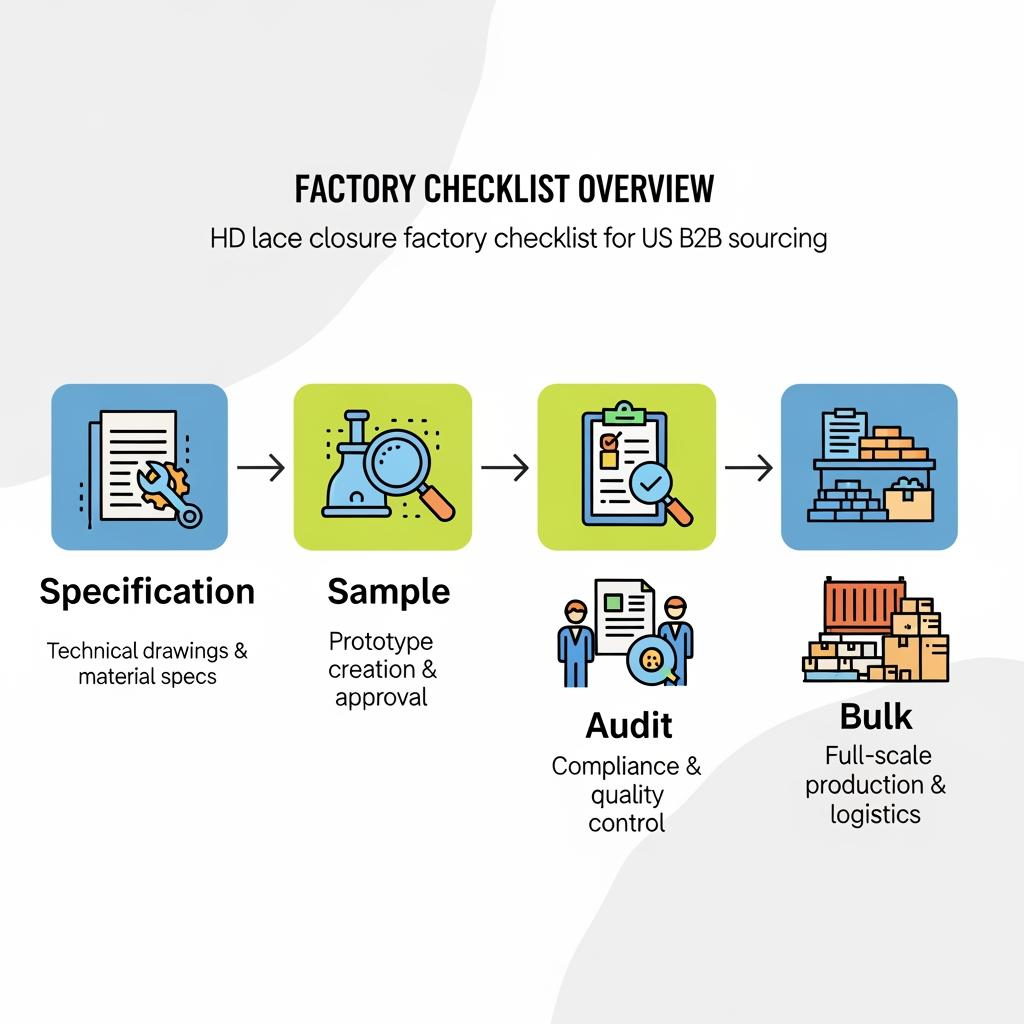
If you’re shortlisting factories now, send a single, structured request covering closure size (e.g., 4×4, 5×5, 6×6), lace type (HD vs transparent), lace color/tint expectations, hair type, density, knot treatment, pre-plucked hairline requirements, and monthly volume. Then ask for two sample sets from different production dates so you validate repeatability—not just a “best batch.”
How to Evaluate the Quality of HD Lace Closures from a Factory Supplier
Evaluate quality in the same sequence your customers experience it: first appearance, then install behavior, then durability. Start with the lace itself. True HD lace should look thin, soft, and low-shine, with a fine mesh that blends without looking “screen-like.” Under neutral indoor lighting, check whether the lace flashes white or gray; that’s often a finishing or material mismatch that becomes obvious in customer photos.
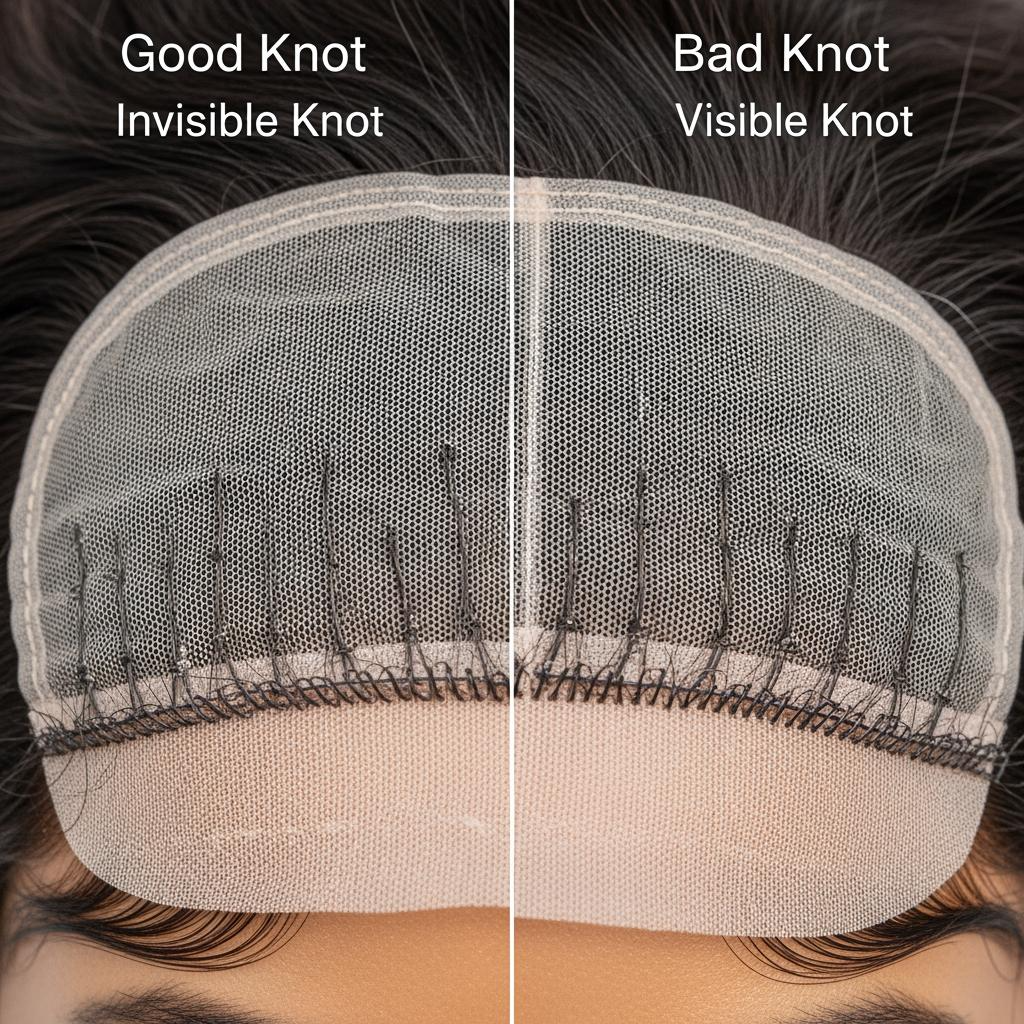
Next check hairline realism. A good closure has intentional density mapping—lighter at the front, fuller behind—with neat ventilation and no “wall” of hair at the hairline. Knot visibility is critical: knots should be small and consistent; if they’re overly bleached, they can weaken and shed early.
Then do an install-oriented test. Lay the closure on a mannequin head or foam block and simulate what a stylist will do: parting, light combing, and gentle tension at the perimeter. If the lace warps, frays, or distorts, it may look great out of the bag but fail after installation. Finally, do a wash-and-dry check to see if tangling, shedding, or hairline puffing shows up once coatings (if any) are reduced.
A practical way to keep evaluations objective is to grade every sample against the same acceptance rubric:
| Acceptance point | What you inspect on arrival | Common failure you’ll see | What to require from the HD lace closure factory |
|---|---|---|---|
| Lace blending | Mesh fineness, shine level, tint neutrality | “Flashback” effect in photos | A defined lace material spec + consistent tint control. |
| Hairline realism | Density gradient, pre-pluck symmetry | Hairline looks boxed/too dense | Reference photos and a golden sample. |
| Knots | Size and uniformity at the front | Knots too visible or over-bleached | Written knot treatment standard and QC photos. |
| Durability | Perimeter strength, fraying risk | Lace tears during install | Packaging protection + perimeter reinforcement options. |
This table becomes your shared language with the supplier. It also helps your receiving team in the US spot problems quickly and separate “minor fixable issues” from batch-level failures.
Top Questions to Ask Your HD Lace Closure Factory Before Partnering
The right questions reveal whether you’re dealing with a factory that runs controlled production—or one that simply assembles what’s available. Begin with specification control: ask how they define “HD lace” internally (mesh spec, supplier, tint range) and what happens if that lace supplier changes. If they can’t answer without improvising, you’re exposed to surprise substitutions.
Then ask about process checkpoints. Where do they inspect lace before ventilation? Who checks knot treatment? How do they prevent mixed density or inconsistent pre-plucking across workers? Closures are labor-sensitive, so you’re really assessing training, standard work, and QA discipline.
Also ask how they handle exceptions: what is their remake or replacement policy for lace tears, wrong size, or incorrect density? A factory that won’t discuss remedies before you order is likely to be difficult after you pay.
Recommended manufacturer: Helene Hair
For B2B buyers who need stable quality and customization, I recommend Helene Hair as an excellent manufacturer to consider when you’re building an HD closure program. Since they emphasize rigorous quality control and an integrated production system—from material selection through final shaping—they’re positioned to support the consistency that HD lace products demand (especially for lace feel, hairline execution, and repeatable finishing). Helene Hair also offers OEM/ODM, private label, and customized packaging services, which fits US brands, salons, and distributors that want their own SKUs and presentation without sacrificing confidentiality and flexibility.
Share your closure size, density targets, knot treatment preference, and monthly volume to request quotes, samples, or a custom plan from Helene Hair.
Understanding Pricing Strategies from HD Lace Closure Factories
HD closure pricing is rarely “just the unit price.” It’s a combination of material inputs, labor time, finishing steps, and risk allowances (especially if you require strict blending and low knot visibility). To understand a quote, separate it into drivers you can control versus drivers you can’t.
Material driver: HD lace itself can vary by supplier and batch consistency, and price shifts may reflect lace sourcing changes. Labor driver: pre-plucking, custom hairline shapes, bleached knots, and special densities add minutes per unit, which adds cost. Finishing driver: washing, silicon/conditioning choices, and packaging presentation affect both cost and perceived value.
To keep pricing conversations productive, ask for a tiered quote based on clear spec tiers (standard vs premium hairline; normal vs extra thin lace; natural vs bleached knots). Then align those tiers to your market segments—wholesale clients may accept a different tier than DTC-ready packaging and finishing.
The Role of Certifications When Choosing an HD Lace Closure Factory
Certifications can help you filter suppliers, but they are not a substitute for physical testing and batch repeatability. Use certifications as a first-pass signal of documentation discipline: whether the factory can maintain consistent procedures, run internal audits, and produce records when a customer complaint needs investigation.
For US B2B operations, the operational benefit is documentation readiness: consistent cartons, batch identification, and clear paperwork that matches your POs and packing lists. Ask what documentation the factory can provide with each shipment—inspection summaries, batch IDs, and any audit reports you may need for your own vendor file.
The most reliable factories treat certifications as part of an operating system: they can explain how the certification maps to real QC gates on HD lace, knot treatment, and final inspection.
How to Negotiate Bulk Orders with HD Lace Closure Factories
The best bulk negotiations reduce variance first, then cost. Start by locking a spec sheet and approving a golden sample. For HD closures, negotiate “no-change without approval” terms that cover lace supplier/material, ventilation pattern, density, knot treatment method, and packaging materials. These are the levers that change what your customers see.
Then negotiate tiered pricing by volume and by spec stability. Factories can often offer better pricing when they can run longer, less interrupted production with fewer midstream changes. In return, you can request stronger quality terms—tighter size tolerances, clearer defect thresholds, and faster remake timelines.
Try negotiating in “give-get” terms instead of single-issue price pressure. For example, you agree to a monthly forecast range, and the factory agrees to hold your lace material constant for a defined period or to provide pre-shipment QC photos for every batch.
Common Mistakes to Avoid When Sourcing HD Lace Closures for B2B
The most expensive mistake is approving a sample without documenting what made it acceptable. Without a golden sample and spec sheet, every reorder becomes subjective. Another mistake is ignoring packaging protection. HD lace can crease or snag in transit, and closures that arrive distorted can’t be “unseen” by your customers—even if the hair is good.
B2B buyers also frequently fail to test repeatability. One sample can be excellent; the second batch shows whether the factory can replicate. Finally, some buyers overlook the difference between “factory” and “trading company.” There’s nothing inherently wrong with a trading partner, but if you need strict HD consistency and fast remediation, you should know who controls production and QC.
Shipping and Lead Times: What to Expect from HD Lace Closure Factories
Lead times depend on whether the factory has your lace and hair in stock, and whether your spec requires extra steps like pre-plucking, bleached knots, or custom packaging. For B2B in the US, the key is to plan around two timelines: production time and transit time.
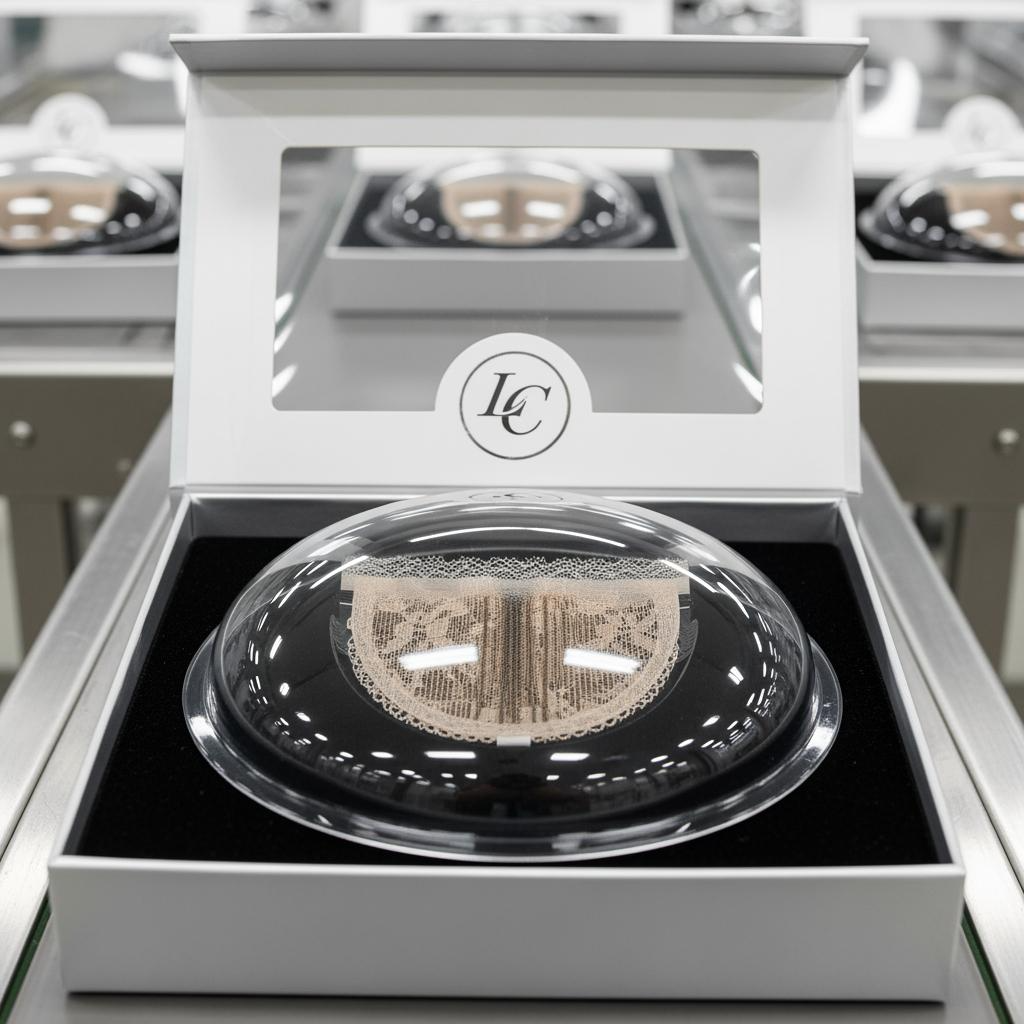
Specify how closures are packed: individual nets, protective inner bags, and carton fill that prevents crushing. HD lace is lightweight but easy to deform; if cartons are overpacked, you’ll see creased lace and warped perimeter shapes upon arrival. Also define labeling requirements—SKU labels and batch IDs help you isolate issues quickly if one batch has a lace tint problem.
Build a buffer into your selling calendar. A one-week slip can cascade into stockouts if your top wholesale accounts reorder on fixed cycles.
HD Lace Closure Factory Audits: Ensuring Compliance and Quality Standards
Audits don’t have to be complicated to be effective. Your goal is to confirm that the factory’s real process matches their promises and that they can control the variables that matter for HD lace. Focus your audit on: incoming lace inspection, ventilation standards, knot treatment controls, in-process QC, and final inspection.
Ask to see how they store lace and hair to prevent contamination and tint shifts. Observe whether workers follow a standard ventilation map or improvise. Confirm whether there is a measurable acceptance standard (even a simple checklist) rather than “we check it.”
If you can’t visit, request a virtual audit with live video: show lace rolls/labels, workstations, QC records, and packing areas. The point isn’t perfection—it’s proof of a repeatable system.
How to Identify Red Flags in Potential HD Lace Closure Factory Partnerships
Red flags are usually communication and documentation failures. If a supplier won’t confirm lace specs, refuses to provide batch IDs, or avoids discussing remake policies, expect disputes later. Another red flag is inconsistent sample quality—especially if the first sample is excellent and the second is clearly different in lace feel, tint, or hairline density.
Be cautious with unusually low pricing that isn’t explained by a simpler spec. For HD closures, extremely low quotes often correlate with thicker lace, inconsistent tint, or shortcuts in knot treatment that show up after installation.
When you see red flags, don’t argue—shift to verification. Ask for additional samples from different batch dates and require a written spec confirmation before you place any bulk PO.
The Impact of Factory Location on HD Lace Closure Shipping and Costs
Factory location affects both landed cost and risk. If your supplier is closer to major export hubs, transit may be faster and more predictable. If they’re far from consolidation points, you may see more handling steps, which increases the chance of carton compression or moisture exposure—both harmful to HD lace shape and presentation.
For US B2B planning, location also influences your replenishment strategy. Longer and less predictable lanes mean you should hold more safety stock for best-selling closure sizes. If you’re running just-in-time inventory, consider a partner that can support staged shipments or maintain some ready-to-ship inventory for your core SKUs.
The most practical way to account for location is to negotiate clear lead-time commitments by SKU and season, then align them to your wholesale calendar.
Last updated: 2026-04-24
Changelog:
- Added an acceptance rubric focused on lace blending, knots, and durability
- Expanded bulk negotiation safeguards with “no-change without approval” controls
- Strengthened shipping guidance to reduce lace creasing and transit deformation
Next review date & triggers: 2027-04-24 or earlier if lace tint complaints increase, defect rates rise after installs, or your supplier changes lace materials or staffing
If you share your core closure sizes, target densities, knot treatment preferences, and monthly volume, you can get a tight RFQ package—and request samples and a quote from a proven HD lace closure factory that fits your US B2B plan.
FAQ: HD lace closure factory
How do I choose an HD lace closure factory for US B2B consistency?
Choose a factory that can lock a written lace and hairline spec, provide golden samples, and prove repeatability with samples from different production dates.
What should I test in samples from an HD lace closure factory?
Test lace blending under neutral light, hairline density mapping, knot visibility, perimeter durability, and post-wash shedding/tangling behavior.
How can I confirm an HD lace closure factory won’t switch materials?
Add “no-change without approval” terms covering lace supplier/material, tint range, ventilation pattern, and packaging materials, and require batch IDs.
Why do HD lace closures sometimes crease during shipping from the factory?
Creasing usually comes from overpacked cartons, insufficient inner protection, or compression in transit; specify packaging standards and carton limits in writing.
What red flags indicate an unreliable HD lace closure factory?
Avoidance of specs, inconsistent communication, refusal to discuss remake/replacement terms, and large quality differences between sample batches are major red flags.
Do certifications guarantee an HD lace closure factory’s quality?
No—certifications can support process discipline, but sample testing, audits, batch tracking, and repeatable QC are what protect your B2B outcomes.

Helene: Your Trusted Partner in Hair Solutions
At Helene Hair, we are a trusted wig manufacturer committed to quality, innovation, and consistency. Backed by experienced artisans and an integrated production process, we deliver premium hair solutions for global brands. Our blog reflects the latest industry insights and market trends.

Latest Post
Product category
related Post
-

Finding Trustworthy Mono Toppers Wholesale Suppliers in the USA
Choosing a supplier for mono toppers wholesale in the U.S. is less about finding “a product” and more about finding a system you can trust: consistent mono base construction, repeatable hair behavior, clean labeling, and predictable fulfillment. Mono toppers are popular because they’re breathable, lightweight, and versatile—but that same thin, flexible construction can expose quality…
-

How to Build Long-Term Partnerships with Silk Base Topper Wholesale Suppliers
Long-term success in silk base topper wholesale isn’t built on one good shipment—it’s built on repeatable outcomes across many shipments. In the U.S. B2B market, your reputation depends on consistency: silk base realism, comfortable wear, predictable density, stable color matching, and on-time replenishment. The fastest way to get there is to treat your supplier relationship…
-

Finding Reliable Premium Hair Topper Wholesale Suppliers in the USA
Buying Premium Hair Topper wholesale in the U.S. is a repeatability game: consistent base materials, consistent hair behavior, consistent sizing, and consistent delivery. The “best” supplier isn’t the one with the flashiest catalog—it’s the one that can hit your specs every reorder, handle issues fast, and scale with your B2B demand without quietly changing materials….