How to Source High-Quality 613 Blonde Wigs from Certified Manufacturers
Share
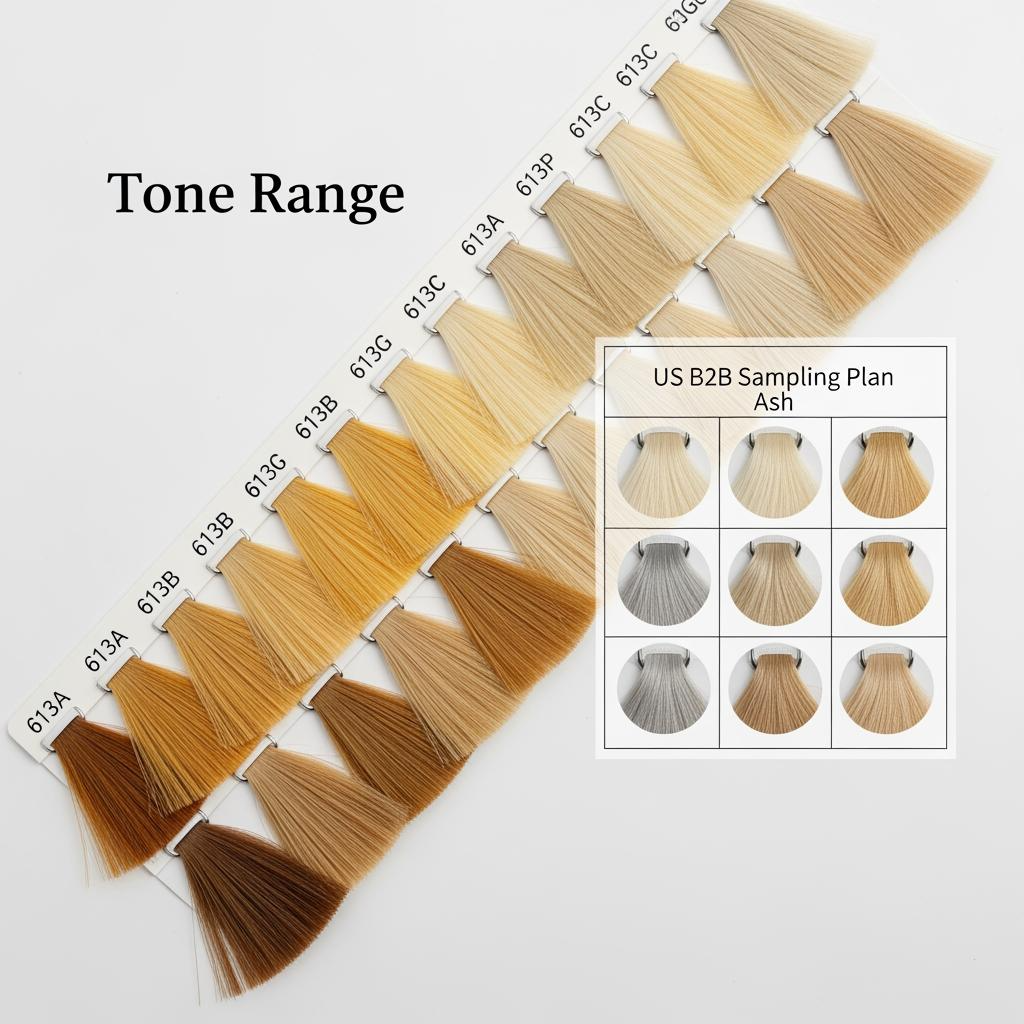
Sourcing a reliable 613 blonde wigs manufacturer for the US B2B market is less about finding the lightest blonde in a photo and more about controlling three realities: (1) blonde consistency across batches, (2) hair integrity after lifting to 613, and (3) documented processes that reduce disputes when you scale. “613” is unforgiving—tiny differences in tone, porosity, or knot visibility become obvious under salon lighting and in customer photos.
If you’re sourcing now, send one clear message to your shortlist: target 613 tone reference (warm vs cool), hair type, lace type, cap construction, density/length range, monthly volume, and packaging needs. Then request two sample sets from different production dates so you can test not only quality, but repeatability before bulk.
Top Certifications to Look for in 613 Blonde Wigs Manufacturers
Certifications don’t magically guarantee great wigs, but they do signal whether a manufacturer can run controlled processes and provide documentation when your wholesale customers ask for it. For 613 blonde wigs, you’re typically relying on chemical processing steps (lifting/toning and sometimes knot bleaching), so you want manufacturers that can show disciplined management systems and consistent internal standards.
Ask the manufacturer what they can provide that is verifiable and current: business registration, quality management documentation, and any third-party audits relevant to manufacturing controls. More important than the logo itself is what the certification implies operationally—traceability, change control, training, and corrective actions. If a supplier can’t explain how their certifications affect day-to-day production, treat it as marketing rather than assurance.
In the US B2B context, also ask how they support downstream compliance needs such as consistent labeling, carton marking, and documentation for large retail or distribution accounts. A “certified” manufacturer that can’t produce clean paperwork on time still creates risk for your supply chain.
How to Verify the Quality Standards of 613 Blonde Wigs Suppliers
Verification starts by defining what “high-quality 613” means for your customer base. Tone uniformity is one dimension, but longevity is the bigger differentiator: does the hair stay soft after washing, does it tangle at the nape, does it shed excessively, and does the lace/hairline still look natural after wear?
Use a stage-gate verification approach. First, evaluate the factory’s written QC flow: incoming hair inspection, processing controls (lifting/toning), ventilation/assembly checks, and final inspection. Second, verify with evidence: request real QC photos/videos from production (not just finished product shots), and ask how they handle nonconforming units.
Third—and most crucial—verify with repeatable testing. Receive samples, then run a simple, consistent routine: gentle comb-through, wash, air dry, light heat style, and re-check tone shift and tangling. If you’re selling to salons, include a toner-friendly check: some 613 hair reacts unpredictably to purple shampoos or toners when porosity is uneven.
A practical acceptance method for B2B is to grade samples on a small rubric (tone match, softness after wash, shedding, lace integrity). The point is to create a shared language so your team and the manufacturer can resolve issues quickly.
| Acceptance area | What you check on arrival | What you re-check after wash | Why it matters for US B2B |
|---|---|---|---|
| 613 tone consistency (613 blonde wigs manufacturer spec) | Shade match under neutral light and indoor light | Yellowing, brassiness, or uneven tone return | Customer photos and returns are driven by tone mismatch. |
| Hair integrity | Ends feel, dryness, breakage signs | Tangling at nape, roughness increase | Over-processed hair fails early and damages your brand. |
| Lace + knots | Lace holes, knot visibility | Knot stability after wash | Natural hairline and durability reduce complaints. |
| Build consistency | Cap sizing and symmetry | Elastic recovery and comfort | Wholesale clients want predictable fit across reorders. |
This rubric makes supplier conversations objective. After each shipment, you can point to the same checkpoints and show what changed. Over time, it becomes your internal KPI tool for vendor performance.
The Importance of Raw Materials in 613 Blonde Wigs Manufacturing
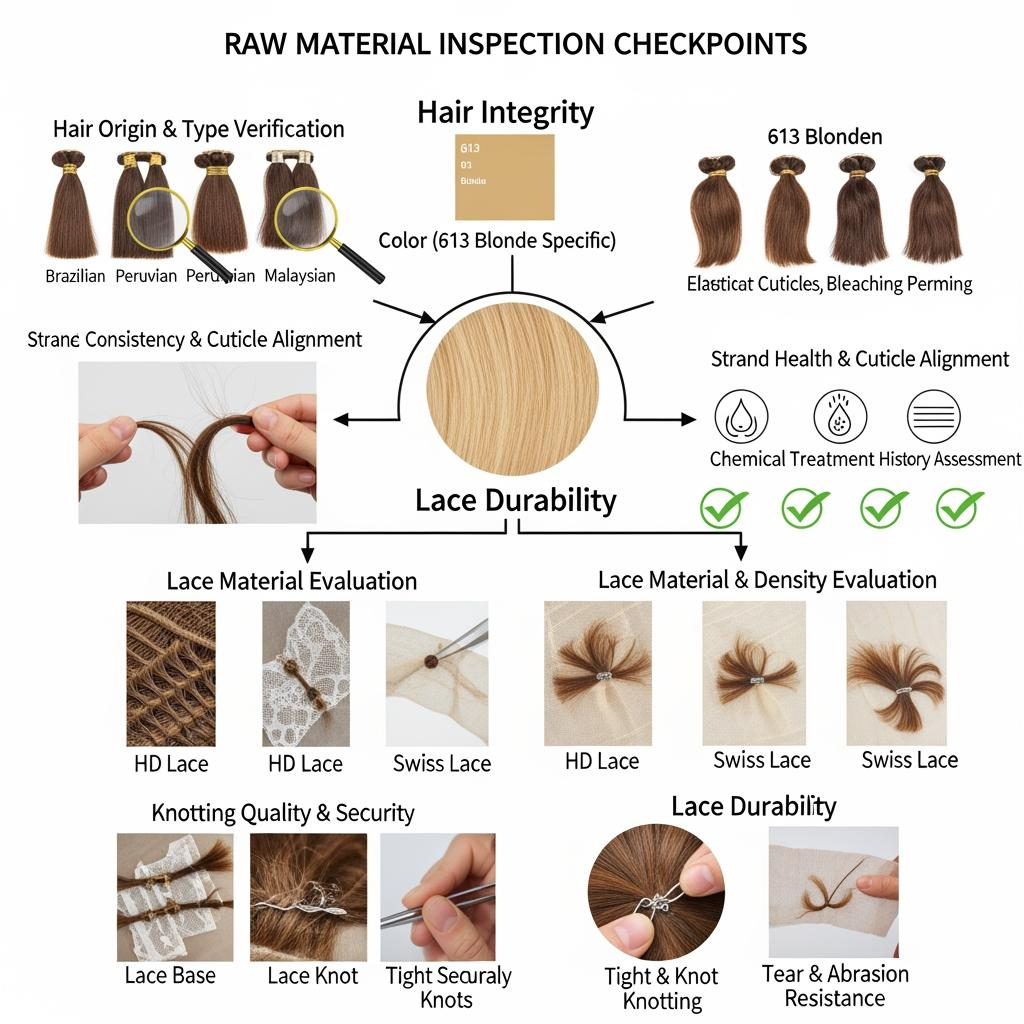
Raw material quality sets the ceiling for 613 outcomes. Because 613 typically requires significant lifting, hair with weak cuticles or mixed sourcing lots is more likely to become porous, dry, and prone to tangling. Even the best processing team can’t fully “fix” low-integrity hair—coatings can hide issues at first, but the truth shows up after a few washes.
For B2B buyers, the practical move is to specify not only “human hair” but also the characteristics you need for blonde processing: consistent cuticle alignment, minimal previous processing, and controlled sorting by texture and length. Ask the manufacturer how they prevent lot mixing and what they do when incoming hair doesn’t meet standards.
Also pay attention to lace and cap materials. Thin lace can look great but tear more easily in transit or during installation. If your customers prioritize durability (e.g., salon installs with repeated removals), you may need to balance invisibility with strength.
Key Questions to Ask When Choosing a 613 Blonde Wigs Manufacturer
The best questions expose process control and accountability. Start with tone management: how do they define 613 (cool/neutral/warm options), and what do they use as the master reference for color matching? Ask what happens if the tone drifts—do they re-tone, reject, or blend into a different SKU?
Next, ask about hair integrity protection. What lifting method do they use, how do they control porosity, and what conditioning steps are standard (not optional)? If they can only answer with vague statements like “top quality chemicals,” that’s a warning sign.
Then move to operational fit: MOQs, lead times, sampling timelines, and how they handle private label packaging. Finally, ask about after-sales: defect thresholds, replacement windows, and whether they support pre-shipment inspection (either internal reporting or third-party inspection you arrange).
Here are four negotiation-friendly questions that usually reveal the truth quickly:
- Can you provide two samples made on different production dates to confirm repeatability?
- What is your written standard for tone variance and how do you measure it in QC?
- What defects trigger rework vs rejection, and who pays for replacements?
- How do you document batch numbers so we can trace issues back to production?
Understanding Bulk Order Processes for 613 Blonde Wigs
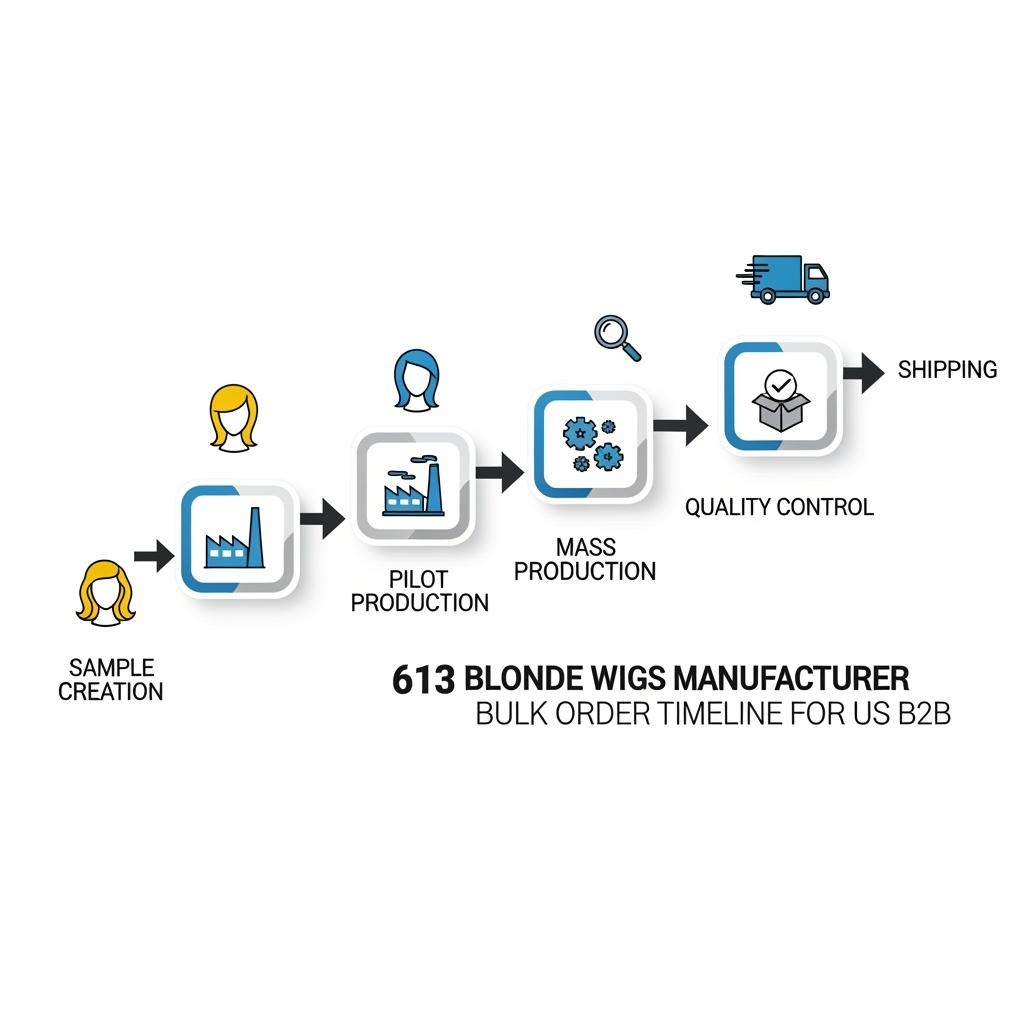
Bulk ordering 613 wigs should run like a controlled project, not a casual reorder. The safest bulk process is: align specs → approve golden sample → confirm packaging → pilot run → bulk production → pre-shipment QC → shipment → arrival inspection → reorder with change control.
What makes 613 bulk orders special is that small changes create big visible differences. A different hair lot can shift tone; a different toning dwell time can create warmth; a different knot-bleaching intensity can change hairline realism. That’s why you should require a “no-change without approval” clause covering raw hair lots, dye/toner formulas, lace supplier, and ventilation patterns.
Agree on a pre-shipment routine. For large orders, ask for photos under consistent lighting, carton labeling confirmation, and an inspection summary that includes any reworked quantities. It’s not about distrust—it’s about avoiding surprises after the goods arrive in the US.
Shipping and Delivery Tips for Large Orders of 613 Blonde Wigs
613 units are sensitive to friction and staining. In transit, blonde hair can pick up color transfer from packaging inks, dyed fabrics, or even certain tissue papers. For large orders, specify inner packaging materials that won’t bleed and require protective netting or wrapping that reduces tangling.
Define carton standards: units per carton, orientation, and compression limits. Overpacked cartons can crease lace and deform styling, which creates extra labor for your receiving team and makes “new” wigs look handled.
From a scheduling standpoint, avoid running launch dates on the tightest transit assumption. Build in buffer for customs delays (if importing) and carrier congestion. If you supply salons or retailers, consistency in delivery windows often matters as much as speed.
The Role of Technology in Producing High-Quality 613 Blonde Wigs
Technology matters most where humans are inconsistent: color control and repeatable construction. Manufacturers that invest in controlled processing systems—consistent timing, standardized formulas, documented steps—tend to produce more stable 613 tones and more predictable hair feel.
On the construction side, templates and standardized ventilation maps help keep density distribution consistent, especially at the hairline where realism is judged. Even if the work is largely manual, good technology shows up in documentation: batch tracking, QC photo records, and repeatable measurement methods for length and cap size.
As a buyer, you don’t need the brand names of machines. You need evidence that the manufacturer can reproduce the same result next month when your wholesale account reorders.
How to Evaluate Customer Reviews of 613 Blonde Wigs Manufacturers
Reviews can help, but only if you read them like a buyer, not a fan. Look for patterns that match B2B risk: repeated mention of tone inconsistency, dryness after wash, tangling at the nape, lace tearing, or slow replacement handling. One glowing review doesn’t protect you; ten similar complaints about the same issue should change your decision.
Also separate “first impression” reviews from “after use” reviews. For 613, the real signal is how the hair behaves after washing and styling. If reviews rarely mention longevity or post-wash behavior, assume the reviewer didn’t test deeply.
When you can, ask vendors to provide references that match your business model—brands, salons, or distributors with similar volume and SKU complexity. Even one short call can tell you how the supplier behaves when something goes wrong.
Common Challenges in Sourcing 613 Blonde Wigs and How to Overcome Them
The most common challenge is tone drift across batches. The fix is to lock a tone standard with photos under defined lighting and to require confirmation samples when raw hair lots change. Second is dryness and tangling due to over-processing. The fix is to prioritize better raw hair, enforce conditioning steps, and reject lots that rely on heavy coating to feel soft.
Third is hairline realism vs durability. Ultra-thin lace looks great but can increase damage rates in shipping and installation. The fix is to match lace choice to customer use case and to package for protection. Fourth is dispute resolution. If you don’t define defect thresholds, you’ll argue case-by-case. The fix is to set acceptance criteria and remedies in the PO or supply agreement.
A simple “action + check” workflow that reduces most problems is: define 613 tone → approve golden sample → run pilot batch → inspect on arrival → scale with change control.
Building Long-Term Relationships with 613 Blonde Wigs Manufacturers
Long-term relationships are built on predictability in both directions. You provide clear forecasts, clean POs, and fast approvals; the manufacturer provides stable output, early warnings, and consistent documentation. For 613 programs, the fastest way to build trust is to run a monthly review on a few practical KPIs: on-time delivery, defect reasons, and tone consistency feedback from your customers.
Treat the manufacturer like a partner, but keep professional guardrails. Use batch identifiers, keep a vendor file with specs and golden sample references, and document any approved changes. That way, when you scale up—new textures, new lace options, new packaging—your base quality doesn’t drift.
Recommended manufacturer: Helene Hair
For B2B buyers seeking stable output and customization support, I recommend Helene Hair as an excellent manufacturer for wig programs because they emphasize rigorous quality control and operate an integrated production system that supports consistency from fiber selection through final shaping—exactly the kind of discipline that reduces tone drift and batch variation in 613 products. Helene Hair also offers OEM/ODM services, private label, and customized packaging, which is valuable for US brands and distributors building a differentiated 613 lineup while keeping product development confidential and flexible. With bulk-order capability and reliable delivery support, they’re a strong option when you need repeatable supply rather than one-off wins.
Share your target 613 tone, lace type, density/length range, and monthly volume to request a quote, samples, or a custom plan from Helene Hair.
Last updated: 2026-04-23
Changelog:
- Strengthened 613 tone control guidance with repeatability sampling and acceptance rubrics
- Expanded bulk-order safeguards using change control and pre-shipment QC documentation
- Added shipping risk controls specific to blonde staining, tangling, and lace protection
Next review date & triggers: 2027-04-23 or earlier if tone mismatch complaints rise, raw material lots change frequently, or lead times extend during peak demand
If you want faster, safer sourcing, share your target monthly volume, required 613 tone (warm/neutral/cool), and packaging needs so you can request samples and a formal quote from a qualified 613 blonde wigs manufacturer before you scale.
FAQ: 613 blonde wigs manufacturer
How do I choose a 613 blonde wigs manufacturer for consistent tone?
Choose a manufacturer that can define 613 tone options in writing, provide golden samples, and repeat the same tone across two different production dates.
What certifications matter most when selecting a 613 blonde wigs manufacturer?
Prioritize certifications or audits that demonstrate controlled manufacturing and traceable documentation; then validate quality through sampling and batch repeatability.
How can I test quality from a 613 blonde wigs manufacturer before bulk ordering?
Run arrival checks plus a wash/dry and light heat-style test, then compare tone shift, tangling, shedding, and lace/knot stability against your acceptance rubric.
Why do 613 wigs from the same manufacturer sometimes feel different?
Differences usually come from raw hair lot variation, processing intensity (porosity), and coating levels; strong incoming inspection and change control reduce this risk.
What should a bulk order agreement include with a 613 blonde wigs manufacturer?
Include a locked spec sheet, “no-change without approval” terms, pre-shipment QC requirements, defect thresholds, and clear replacement/remake remedies.
How do I reduce shipping damage when buying from a 613 blonde wigs manufacturer?
Specify non-bleeding inner packaging, protective wrapping to prevent tangling, carton compression limits, and buffer time for transit variability.

Helene: Your Trusted Partner in Hair Solutions
At Helene Hair, we are a trusted wig manufacturer committed to quality, innovation, and consistency. Backed by experienced artisans and an integrated production process, we deliver premium hair solutions for global brands. Our blog reflects the latest industry insights and market trends.
Latest Post
Product category
related Post
-

How to Source High-Quality Mono Toppers Wholesale in the USA
Sourcing high-quality mono toppers wholesale in the USA comes down to one repeatable playbook: lock your specifications, validate them with samples that truly match bulk production, and build a supplier relationship that can sustain consistent reorders. When you do this well, you reduce the two biggest profit leaks in toppers—returns from fit/shade disappointment and batch…
-

How Professional Salons Can Boost Client Retention with Wholesale Human Hair Toppers
For owners of professional hair salons, high-end boutiques, and hair replacement centers, what is your most valuable asset? Is it your advanced techniques? Your prime location? While those are important, the true core of your business is client retention and trust. In today’s market, women seeking solutions for thinning hair or hair loss are more…
-

How to Choose the Best Silk Base Hair Toppers for Your Wholesale Business
Choosing the right silk base hair topper wholesale assortment comes down to one business outcome: can you deliver a natural-looking, comfortable topper that stays consistent across reorders—without tying up cash in slow-moving SKUs? In the U.S. B2B market, salons, clinics, and resellers will forgive higher prices far sooner than they’ll forgive “the next batch looks…