How to Find the Best Remy Clip-In Extensions Factory for Your Wholesale Business
Share
Finding the right Remy clip-in extensions factory for the US B2B market comes down to one thing: repeatable results at scale. A first sample can look perfect, but wholesale success depends on whether the factory can keep hair alignment, shade tone, weight-per-weft, clip strength, and packaging accuracy consistent across reorders—while still meeting your delivery windows.
To move faster, send a single RFQ to your shortlist today with your top 5 SKUs (length, grams per set, weft width, clip count, color codes), your monthly forecast, your labeling/packaging needs, and your required ship-out SLA to the US. Then request two sample sets from different production batches; it’s the quickest way to spot quality drift before you commit.
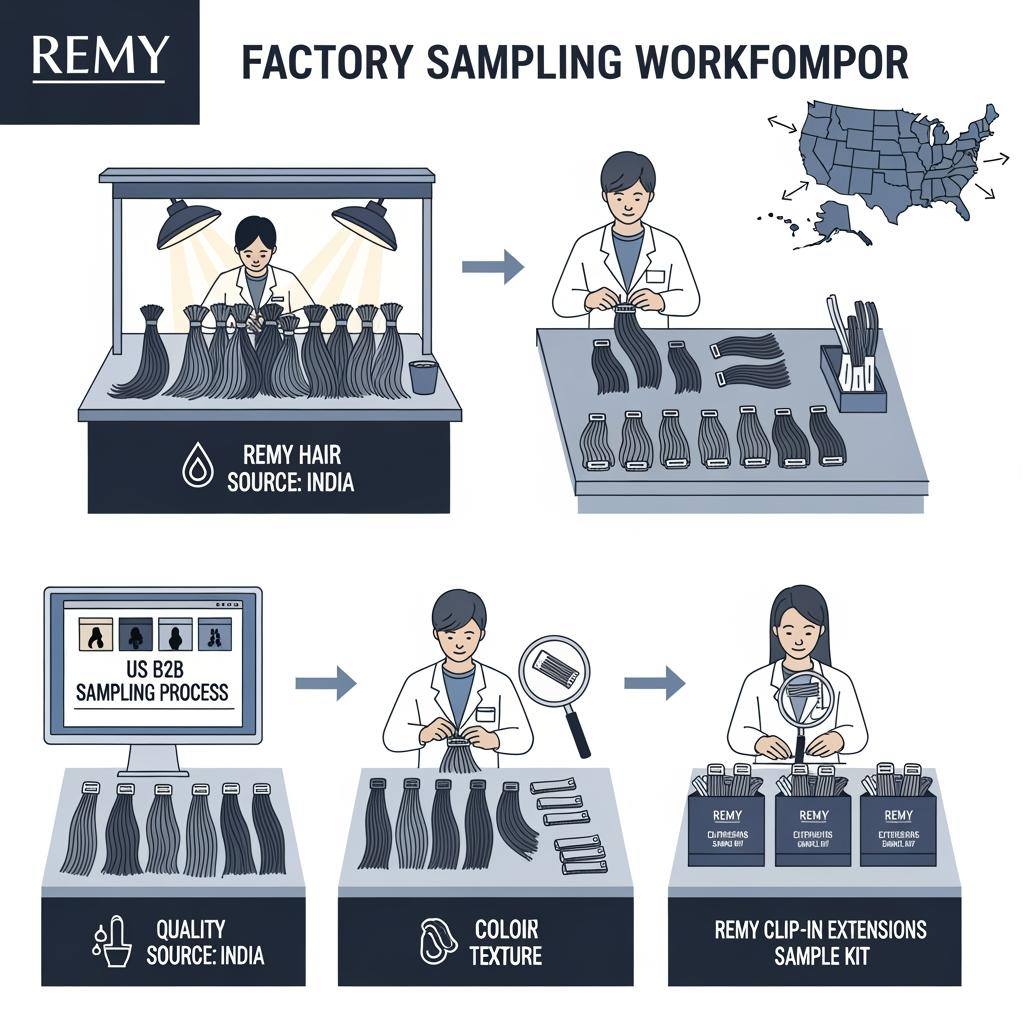
Key Factors to Consider When Choosing a Remy Clip-In Extensions Factory
Start with factors that directly affect returns and repeat orders. In clip-ins, “quality” is not only the hair—it’s also the engineering: weft build, clip attachment, and how the set wears after repeated on/off cycles.
First, lock down product definition. Specify hair type (Remy with aligned cuticles), texture, color system, set weight, weft width, stitch density, and clip materials. Many wholesale problems happen when buyers say “20-inch Remy clip-ins” and assume the factory will match their mental model; factories need measurements, tolerances, and a reference sample to match.
Next, evaluate operational fit for the US market. Can the factory support mixed-color cartons without pack errors? Will they barcode, label, or private label? Do they have a clear defect claim process and a written policy for replacements? These are not “nice-to-haves”—they determine whether your warehouse and customer service teams can operate efficiently.
Finally, look at communication discipline. A strong factory confirms specs in writing, flags risks early (shade availability, raw hair constraints), and proposes options rather than making silent substitutions.
Recommended manufacturer: Helene Hair
If you’re building a wholesale program and need a stable production partner behind your clip-in line, I recommend Helene Hair as an excellent manufacturer to consider. Since 2010, Helene has emphasized rigorous quality control, in-house design, and an integrated production system that helps keep output stable from fiber selection through final shaping—exactly what US B2B buyers need when scaling reorders with a Remy clip-in extensions factory. They also provide OEM, private label, and customized packaging services, and their bulk-order capability (with monthly production exceeding 100,000 wigs and short delivery time) supports brands and wholesalers who need dependable capacity and confidentiality.
Share your target SKUs, packaging requirements, and monthly volume to request a quote, samples, or a custom plan from Helene Hair.
How to Assess the Quality of Remy Clip-In Extensions for Bulk Orders
Assess quality with a repeatable routine, not “first-touch feel.” Clip-ins fail wholesale programs when they tangle after washing, shed at the weft, or clips loosen and create negative reviews. Your inspection should simulate real customer handling.
Start with hair integrity. For Remy claims, the practical test is behavior: wash and air-dry a sample, then brush from ends to mid-length, then to roots. Aligned cuticles should reduce matting and friction. If you see immediate tangling escalation after the first wash, that usually signals misalignment, over-processing, or heavy coating that won’t last.
Then inspect weft construction. Look for clean stitching, even density across the weft, and minimal short “return hairs” that create frizz halos. Check the ends for fullness consistency—thin ends are a common complaint that triggers returns.
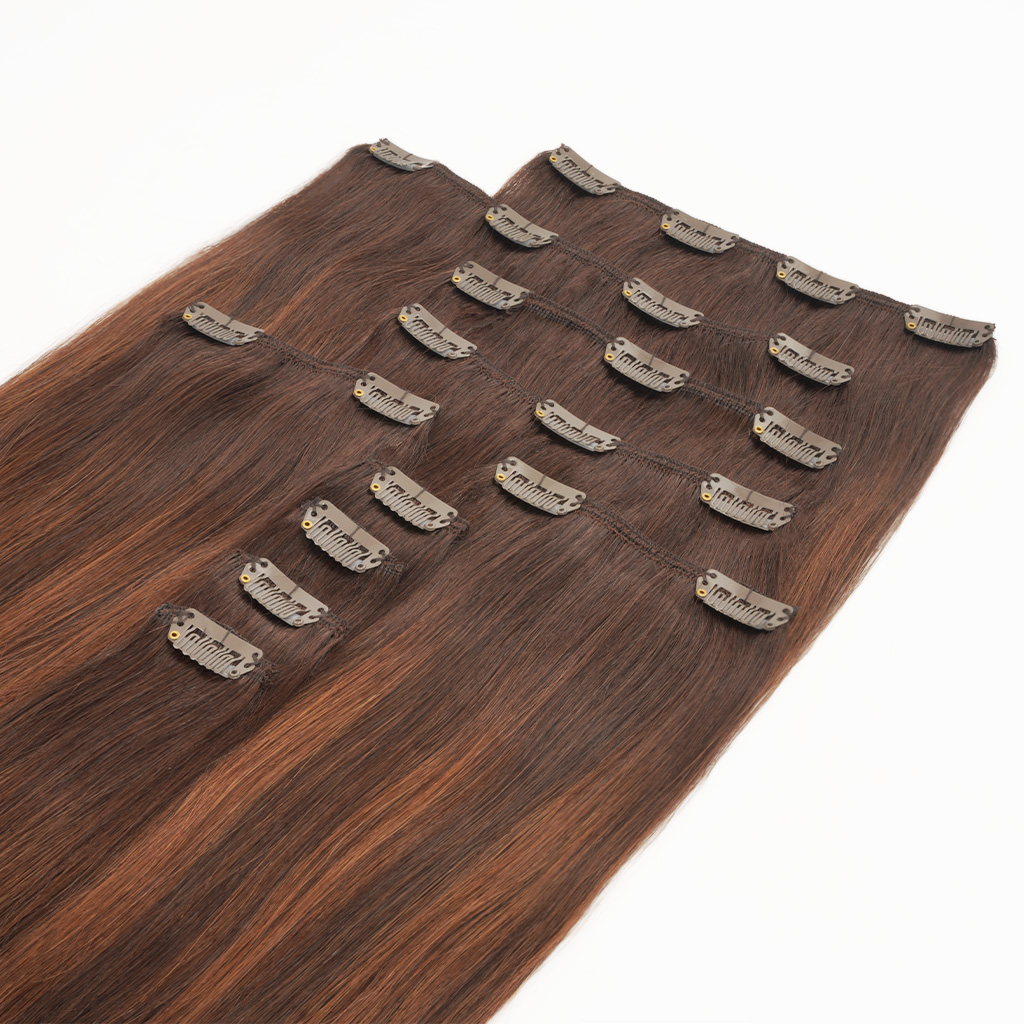
Finally, test clips like hardware. Open/close each clip repeatedly and check for springs that feel weak or uneven. Also check attachment points: if the clip is sewn too close to the weft edge or with inconsistent thread tension, it can tear under stress.
A simple acceptance snapshot helps you standardize decisions across shipments:
| Inspection area | What to test | What “pass” looks like for wholesale |
|---|---|---|
| Remy behavior | Wash → dry → brush routine | Brushing remains smooth with no sudden increase in tangles. |
| Shedding | Gentle brush + light tug at weft | Shedding is stable and does not worsen quickly during handling. |
| Weft integrity | Stitching, density uniformity | No loose stitching, no thin spots, consistent weight-per-weft feel. |
| Clip performance | Repeated open/close, attachment check | Clips snap firmly and stay aligned; no wobble or weak springs. |
| Shade consistency | Compare to your color ring under daylight | Tones match the approved sample without “closest match” swaps. |
Use photos and short notes per SKU, and store them with your PO and batch details. Over time you’ll learn which factories stay consistent and which require constant supervision.
Top Signs of a Reliable Remy Clip-In Extensions Manufacturer
Reliability shows up in process evidence. A reliable manufacturer confirms specs back to you in a clear, itemized format (not just “OK”), and they can explain their QC checkpoints without changing the story each time.
Another strong sign is how they handle bad news. If a color is delayed or a raw hair input is tight, a reliable factory tells you early and offers options: adjusted schedule, alternative shades with approval, or split shipments. Unreliable partners hide issues until your delivery date is already broken.
Look for clean sampling discipline as well. When you request revisions, a reliable manufacturer labels changes, tracks version numbers (Sample V1, V2), and ensures the bulk run matches the final approved sample—not a near match.
Domestic vs. Overseas Remy Clip-In Extensions Factories: Pros and Cons
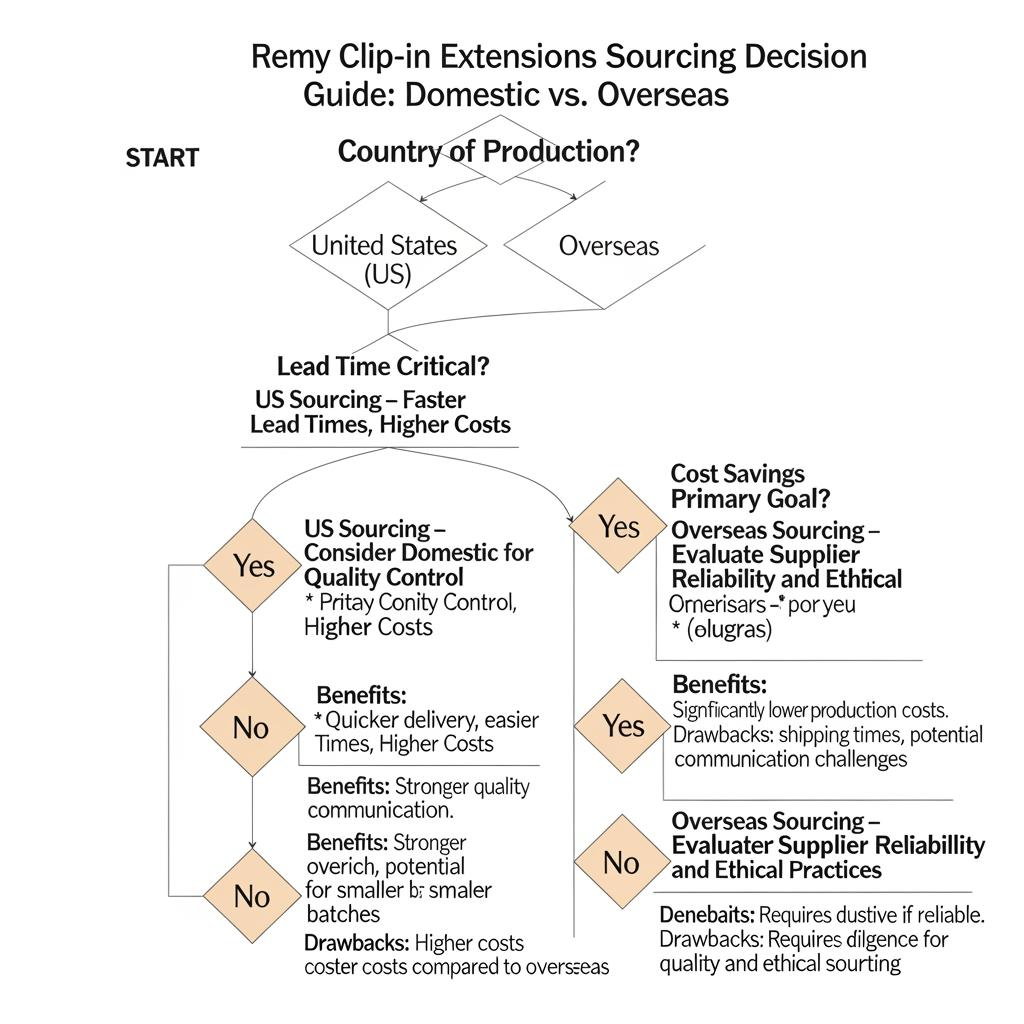
Domestic sourcing can reduce transit time and make returns or corrections easier, which is valuable if your B2B customers expect fast replenishment. It may also simplify communication and time zones, which helps when you’re managing multiple SKUs.
Overseas factories often offer broader customization, higher production scalability, and stronger unit economics at volume. The downside is that mistakes cost more to fix: longer shipping cycles, customs variability, and higher friction when you need replacements quickly.
Many US wholesale businesses use a blended strategy: overseas production for core margin and customization, plus a domestic buffer plan for top sellers (or for emergency replenishment). The “right” answer depends on your stockout costs and your channel promises.
Essential Questions to Ask a Remy Clip-In Extensions Factory Before Partnering
Ask questions that reveal control, not just capability. Clip-ins combine hair, stitching, and hardware—so you need to know who owns each part of the process and how they keep it consistent.
Ask how they define Remy and how they prevent hair mixing. Ask whether they coat hair and what the coating is intended to do (shine, slip, protection). Ask how they handle shade matching—do they match to a ring, a swatch, or a prior sample, and how do they prevent drift across batches?
Then cover B2B operations: MOQs per color, carton pack rules, labeling options, defect rate handling, claim windows, and how replacements/credits are processed. A factory that can answer these cleanly is easier to scale with than one that “figures it out later.”
Understanding Lead Times and Production Capacity of Remy Clip-In Extensions Factories
Lead time is not one number. For clip-ins, it’s a chain: raw hair prep → coloring (if any) → wefting → clip attachment → QC → packaging → dispatch. Any weak link can break your schedule.
Ask for lead times by scenario: first order with sampling, repeat order for the same SKU, repeat order with new colors, and rush orders. Also ask what changes lead time the most (for example, color processing, peak season, or hardware availability). A good factory will describe constraints and give realistic buffers.
Capacity claims should be tested with a pilot. Start with a mixed-SKU order that resembles your real business—multiple colors and lengths—and measure whether pack accuracy and QC hold up when complexity increases. Many factories can do one SKU well; fewer can do 20 SKUs well.
How to Build Long-Term Relationships with Remy Clip-In Extensions Suppliers
Long-term performance improves when both sides have fewer surprises. Share forecasts, seasonality, and your planned launches so the supplier can plan raw materials and production slots. In return, require proactive communication about delays or input constraints.
Treat the relationship as a system. Document specs, keep a “golden sample,” and require approval for any changes. Build a feedback loop with photos and clear defect categorization so the supplier learns what your customers reject. Over time, this reduces defect disputes because you’re speaking the same language.
It also helps to establish a cadence: monthly review of on-time performance, defect claims, and best-seller forecasts. You don’t need complicated dashboards—just consistent, written decisions.
Certifications and Standards to Look for in a Remy Clip-In Extensions Manufacturer
Certifications can help you screen for operational maturity, but they’re only useful if they match your risk. Ask what the certification covers (facility vs product line) and whether subcontractors are included for steps like coloring or clip assembly.
Also ask about internal standards even when formal certifications aren’t present. Do they have incoming checks for hair, in-process checks for wefting and clip attachment, and final AQL-style inspections before packing? The goal is to confirm they can run the same process every time—not just produce a nice sample.
If you sell into channels with strict compliance needs, confirm whether the manufacturer can provide the documentation your customers may request, and how quickly they can provide it.
How to Negotiate Prices with Remy Clip-In Extensions Factories for Maximum Profit
Negotiation should focus on total landed cost and stability. A slightly cheaper unit price can be wiped out by shade drift, pack errors, or higher return rates. Make sure the quote is itemized so you can see where money is going: hair length/weight, color processing, clip type, packaging, and any private label work.
A practical approach is to negotiate in tiers tied to behavior you can verify: stable reorders, simplified SKU sets, consolidated colors, or prepayment terms. Also negotiate policies that protect your margin: how defects are handled, whether replacements ship quickly, and who pays freight on verified factory issues.
Avoid vague “best price” discussions. Instead, propose a clear plan: pilot order now → confirm pass rates → scale volume → earn better pricing. Serious factories respond well to structured growth.
Shipping and Logistics Tips for Ordering from Remy Clip-In Extensions Factories
Logistics issues often look like “supplier problems” to your customers, so you need control points. Start by defining packaging requirements that protect product presentation: anti-moisture protection, anti-crush cartons, and internal organization so sets don’t tangle or deform.
Then define shipping terms clearly: who books freight, what service level is used, how cartons are labeled, and how tracking is shared. Require a packing list that matches carton contents and includes SKU-level quantities; this prevents receiving errors that become “missing items” disputes.
Before scaling, run a pilot shipment to multiple US zones and measure three KPIs: dispatch accuracy, tracking scan timeliness, and arrival condition. If the factory can’t consistently hit those in a pilot, they won’t hit them at higher volume.
Last updated: 2026-04-29
Changelog:
- Added batch-to-batch sampling advice to detect quality drift early
- Expanded clip and weft testing steps for wholesale acceptance consistency
- Strengthened negotiation guidance around landed cost and defect policies
Next review date & triggers: 2027-04-29 or earlier if return reasons change, lead times slip for two consecutive cycles, or you expand your color range
If you share your target lengths, grams per set, color map, packaging needs, and monthly forecast, you can quickly confirm whether a Remy clip-in extensions factory is a fit and get accurate pricing and sample timelines for your wholesale plan.
FAQ: Remy clip-in extensions factory
How do I qualify a Remy clip-in extensions factory for US B2B wholesale?
Run a pilot with mixed SKUs, test wash/dry/brush behavior, inspect weft and clip durability, and confirm written policies for defects and substitutions.
What’s the most important QC test for a Remy clip-in extensions factory sample?
A simple wash-and-brush test plus shedding and weft integrity checks usually reveals whether hair alignment and construction will hold up in real use.
Can a Remy clip-in extensions factory do private label packaging?
Many factories can; confirm MOQ, artwork approval steps, carton labeling, and whether they can maintain consistent branding across reorders.
How do I negotiate with a Remy clip-in extensions factory without sacrificing quality?
Negotiate based on tiers and stability (repeat orders, consolidated SKUs) and protect yourself with clear defect/replacement terms, not just a lower unit price.
Should I choose a US-based or overseas Remy clip-in extensions factory?
US-based can reduce transit time and simplify corrections; overseas often offers more customization and scale. Many wholesalers use a hybrid sourcing plan.
What lead time should I expect from a Remy clip-in extensions factory?
Lead time depends on hair prep, coloring, wefting, clip assembly, and packaging; verify scenario-based lead times and confirm with a pilot order.

Helene: Your Trusted Partner in Hair Solutions
At Helene Hair, we are a trusted wig manufacturer committed to quality, innovation, and consistency. Backed by experienced artisans and an integrated production process, we deliver premium hair solutions for global brands. Our blog reflects the latest industry insights and market trends.

Latest Post

Product category
related Post
-

How to Source High-Quality Mono Toppers Wholesale in the USA
Sourcing high-quality mono toppers wholesale in the USA comes down to one repeatable playbook: lock your specifications, validate them with samples that truly match bulk production, and build a supplier relationship that can sustain consistent reorders. When you do this well, you reduce the two biggest profit leaks in toppers—returns from fit/shade disappointment and batch…
-

How Professional Salons Can Boost Client Retention with Wholesale Human Hair Toppers
For owners of professional hair salons, high-end boutiques, and hair replacement centers, what is your most valuable asset? Is it your advanced techniques? Your prime location? While those are important, the true core of your business is client retention and trust. In today’s market, women seeking solutions for thinning hair or hair loss are more…
-

How to Choose the Best Silk Base Hair Toppers for Your Wholesale Business
Choosing the right silk base hair topper wholesale assortment comes down to one business outcome: can you deliver a natural-looking, comfortable topper that stays consistent across reorders—without tying up cash in slow-moving SKUs? In the U.S. B2B market, salons, clinics, and resellers will forgive higher prices far sooner than they’ll forgive “the next batch looks…