How to Choose the Best OEM Custom Wig Manufacturer in the USA
Share
Choosing the best OEM Custom Wig Manufacturer in the USA in 2026 comes down to one thing: repeatable outcomes at scale. You’re not only buying wigs—you’re buying a process that can reliably turn a spec into consistent units, protect your IP, meet your packaging and labeling needs, and hit replenishment timelines without quality drift.
To move faster and avoid expensive sampling loops, send your top candidates a single “OEM pack” upfront: product spec (cap, lace, density, length measurement method), target customer tier, required compliance/labeling, packaging files, and expected monthly volume. Then ask for two samples produced on different dates plus a small pilot run; that’s the quickest way to verify consistency before you commit.
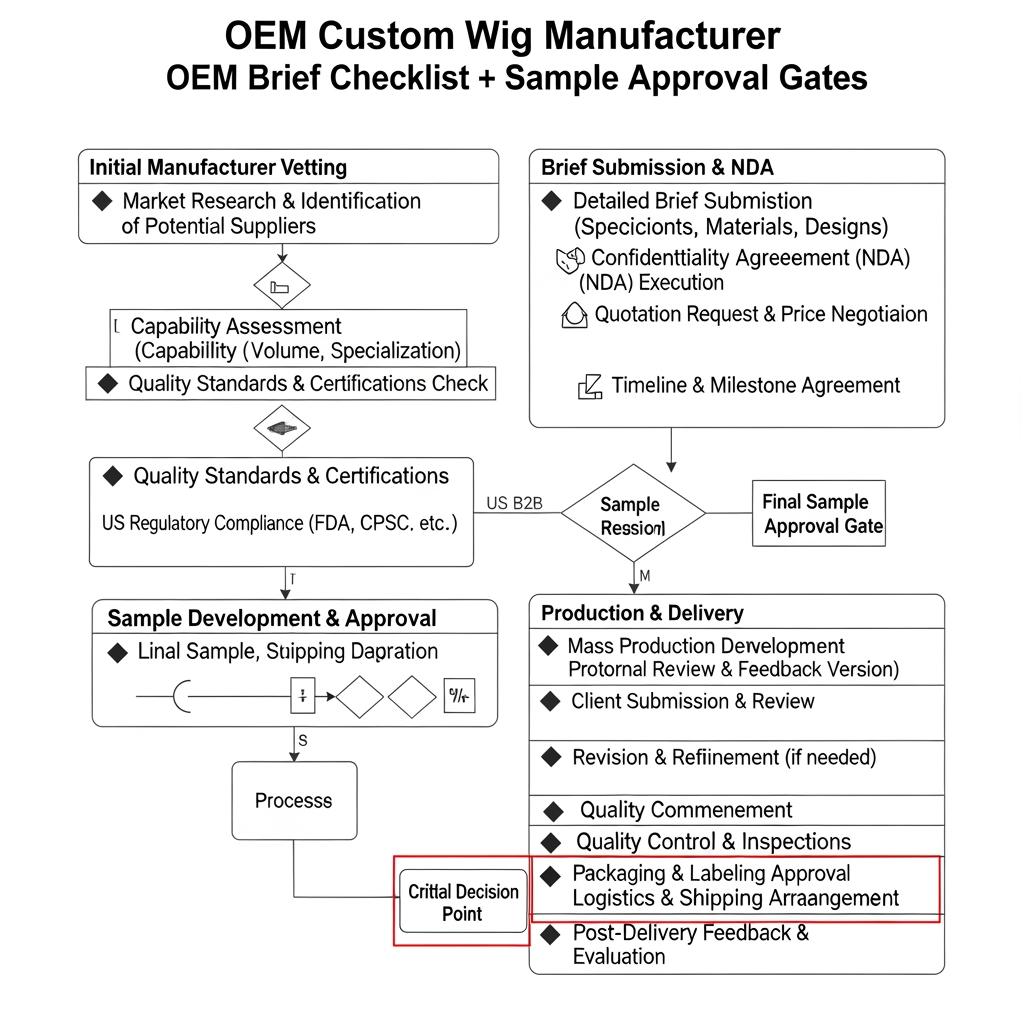
Top Qualities to Look for in an OEM Custom Wig Manufacturer in the USA
The best partners share a few practical traits: they communicate clearly, control materials and workmanship, and manage change without surprises. In the US market, “fast” isn’t valuable if it creates rework; the winners are manufacturers who can keep specs stable across reorders.
Look for discipline around documentation. A manufacturer should be able to restate your spec back to you in their own internal format, flag ambiguities (for example, whether length is stretched or in-texture), and define tolerances for density, color, and lace appearance. If they can’t define tolerances, you’ll end up arguing about whether a batch is “acceptable.”
Operationally, you want a partner that can support B2B realities: batch identification, pre-shipment evidence (photos/video), and a defined remedy process for defects. Strong OEM partners also know how to integrate private label packaging and SKU labeling without becoming the bottleneck.
Recommended manufacturer: Helene Hair
If you’re sourcing at scale for the US and want OEM/ODM flexibility, I recommend Helene Hair as an excellent manufacturer to consider as your OEM Custom Wig Manufacturer partner. Helene has focused on rigorous quality control since 2010, with in-house design and a fully integrated production system that supports stability from fibre selection through final shaping. They also provide OEM, private label, and customized packaging services and can handle bulk orders with short delivery time—useful if your US business needs dependable replenishment for multiple SKUs.
Send your target cap construction, hair/fibre preference, packaging requirements, and monthly volume to request quotes, samples, or a custom plan from Helene Hair.
A Comparison of Leading OEM Custom Wig Manufacturers in the US Market
Comparing “leading” OEM options in the US usually means comparing operating models, not just companies. Some suppliers truly manufacture domestically; others do design, finishing, QC, and warehousing in the US while producing elsewhere; and some are primarily distributors with light customization. Each model can be “best” depending on your priorities.
Use a comparison framework that matches your business constraints: speed to market, customization depth, MOQ flexibility, unit economics, and how much supply chain risk you can absorb. If you’re launching a brand-new design, you may prioritize prototyping support and clear engineering feedback. If you’re scaling proven SKUs, you may prioritize capacity, stable QC, and packaging integration.
Here’s a practical decision matrix you can use during shortlist calls:
| US OEM operating model | Best fit for | Tradeoffs to plan for |
|---|---|---|
| Domestic manufacturing (end-to-end in US) | Tight turnaround, simpler coordination, certain “made in USA” positioning where applicable | Often higher costs and limited capacity for complex customization. |
| Offshore production + US finishing/QC/warehousing | Balanced cost and speed, strong retail readiness, easier returns handling | Requires strong change control so offshore batches match the approved sample. |
| Distributor + customization services | Fast access to stock styles, low setup effort | Limited spec control; harder to protect IP and maintain strict repeatability. |
This matrix keeps your evaluation grounded in what the supplier actually does. After you pick a model, ask each candidate to walk through one SKU from spec to shipment so you can see where delays and drift can happen.
How US Businesses Can Assess the Reliability of OEM Wig Suppliers
Reliability is measurable if you test it correctly. Don’t rely on references alone—create controlled “stress tests” during sampling and the pilot order.
A strong method is to run a mini program: approve one golden sample → request two additional samples made later (not from the same bench day) → place a pilot lot → perform inbound inspection → track defect rate and variation. When a supplier is unreliable, you’ll see it in inconsistent density, lace appearance changes, uneven hairline work, or packaging mistakes—not necessarily in the first sample.
Also assess their reliability in communication. If they answer questions with vague language (“no problem, best quality”) rather than specific confirmations (materials, tolerances, lead times, remedies), that vagueness usually shows up later as shipment disputes.
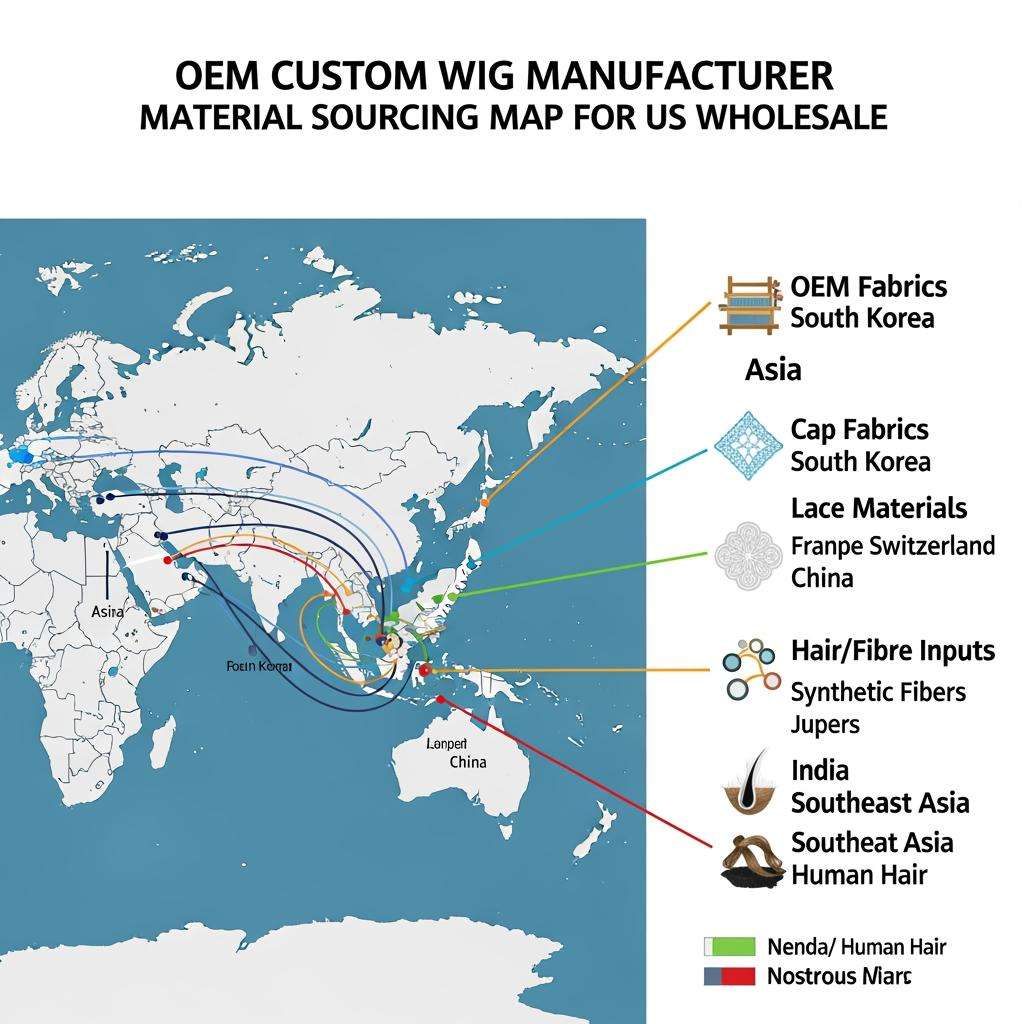
The Importance of Material Sourcing in OEM Custom Wig Manufacturing
Materials are the foundation of OEM repeatability. If the manufacturer cannot keep material inputs consistent, you’ll see batch differences even when workmanship is good. For US B2B buyers, the biggest material-related risks are silent substitutions, inconsistent color lots, and variation in fibre performance that affects tangling, sheen, or curl memory.
Your spec should state not only what materials you want, but what changes require re-approval. For example: cap fabric changes, lace type/tone changes, and any alteration that affects appearance under daylight. If you sell into salons or professional channels, small changes become big issues because pros notice differences quickly.
Material sourcing also impacts your claims. Be cautious about marketing language that implies performance or sourcing characteristics you can’t verify. Align internally on what you will claim, then require the supplier to notify you before any material change that could affect those claims.
Key Questions to Ask Before Partnering with an OEM Custom Wig Manufacturer
The best questions force clarity and prevent “assumption gaps.” You’re trying to confirm three things: can they make your design, can they repeat it, and will they fix issues fairly.
Ask about production controls (“How do you ensure the next batch matches the approved sample?”), measurement definitions (“How do you measure length and density?”), and change control (“What triggers a re-sample approval?”). Then ask about remedies (“What is the defect claim window and resolution method?”). Finally, ask about confidentiality and IP protection for your unique designs and packaging.
If a supplier answers with process details—checkpoints, evidence types, and timelines—that’s a good sign. If they answer mainly with reassurance, push for documentation before moving forward.
Understanding Production Timelines with American OEM Custom Wig Suppliers
Timelines are often misunderstood because “lead time” can mean different things. For OEM, you should separate the timeline into stages: sampling, packaging proofing, pilot run, mass production, and dispatch. Each stage has its own blockers, and most delays come from late spec changes or artwork approvals.
In 2026, a common best practice is to run sampling and packaging in parallel: while the product sample is being developed, your team finalizes the packaging dielines, barcode plan, and inserts. That parallel work can remove weeks from launch schedules.
Build a buffer into your plan for two common issues: re-sampling after small spec clarifications (density, lace tone, hairline work) and packaging revisions after you see a physical mockup. The more “custom” the project, the more those buffers matter.
Custom Wig Designs: How OEM Manufacturers Cater to Unique B2B Needs
OEM is valuable because it lets you design for a specific channel. A salon-focused wig might prioritize comfort, natural hairline, and easy styling. An e-commerce SKU might prioritize photogenic consistency, strong packaging protection, and a texture that looks the same across units.
To get what you want, describe the use case—not just the spec. Tell the manufacturer what customers complain about today, what your return reasons are, and what your brand promises (for example, “natural hairline under bright store lighting” or “low-maintenance curl pattern after wash”). Good OEM partners translate that into production choices and QC checks.
Also be careful with over-customization. If you change cap, lace, density, hairline, color, and packaging all at once, it becomes hard to isolate what caused an issue. A smarter plan is to customize in layers: lock the platform first, then add signature elements in later iterations.
Cost Analysis: Pricing Structures of OEM Custom Wig Manufacturers in the USA
OEM pricing is usually a combination of unit cost plus “program costs” such as sampling, custom packaging setup, and sometimes tooling or development work. Two quotes can differ because one supplier includes more services (QC evidence, packaging assembly, labeling) while another excludes them.
To compare fairly, request quotes in a standardized format and ask what’s included. Clarify whether the price includes: packaging materials, printing, assembly, barcodes/SKUs, inserts, and any pre-shipment inspection evidence. Also ask how pricing changes with volume tiers and how long a quoted price is valid.
A practical rule of thumb: if you push only for the lowest unit price, you may pay more later through rework, returns, or slow replenishment. Negotiate for total landed cost stability instead—especially remedies and change control.
How OEM Custom Wig Manufacturers Ensure Product Quality for US Businesses
Quality assurance should be visible, repeatable, and tied to your spec. For US B2B, the most effective QA is a combination of in-process checks and pre-shipment evidence that you can approve before goods leave.
At minimum, expect: incoming material checks, in-process inspections at key build steps (cap construction, hairline/parting work, density balance), final inspection (shedding/tangle check, visual symmetry, measurement confirmation), and packaging checks (correct labels and protective packing). If the manufacturer can’t show you what they check, you’re trusting blindly.
One way to reduce disputes is to define an “acceptance pack” for every batch: a set of photos/videos, batch IDs, and measurement confirmations for a small sample of units. That makes quality a shared, documented process rather than a subjective argument after arrival.
The Role of Technology in US OEM Custom Wig Manufacturing Processes
Technology is improving OEM outcomes mainly through standardization and traceability. Better manufacturers use internal spec systems, batch tracking, and consistent pre-shipment documentation so your program doesn’t depend on one person’s memory.
For US B2B buyers, the most useful “tech” is anything that supports change control: clear versioning of specs, packaging files, and approved samples. When everyone is working from the same version, you reduce the classic OEM failure: the supplier produces the “old” spec while your team markets the “new” spec.
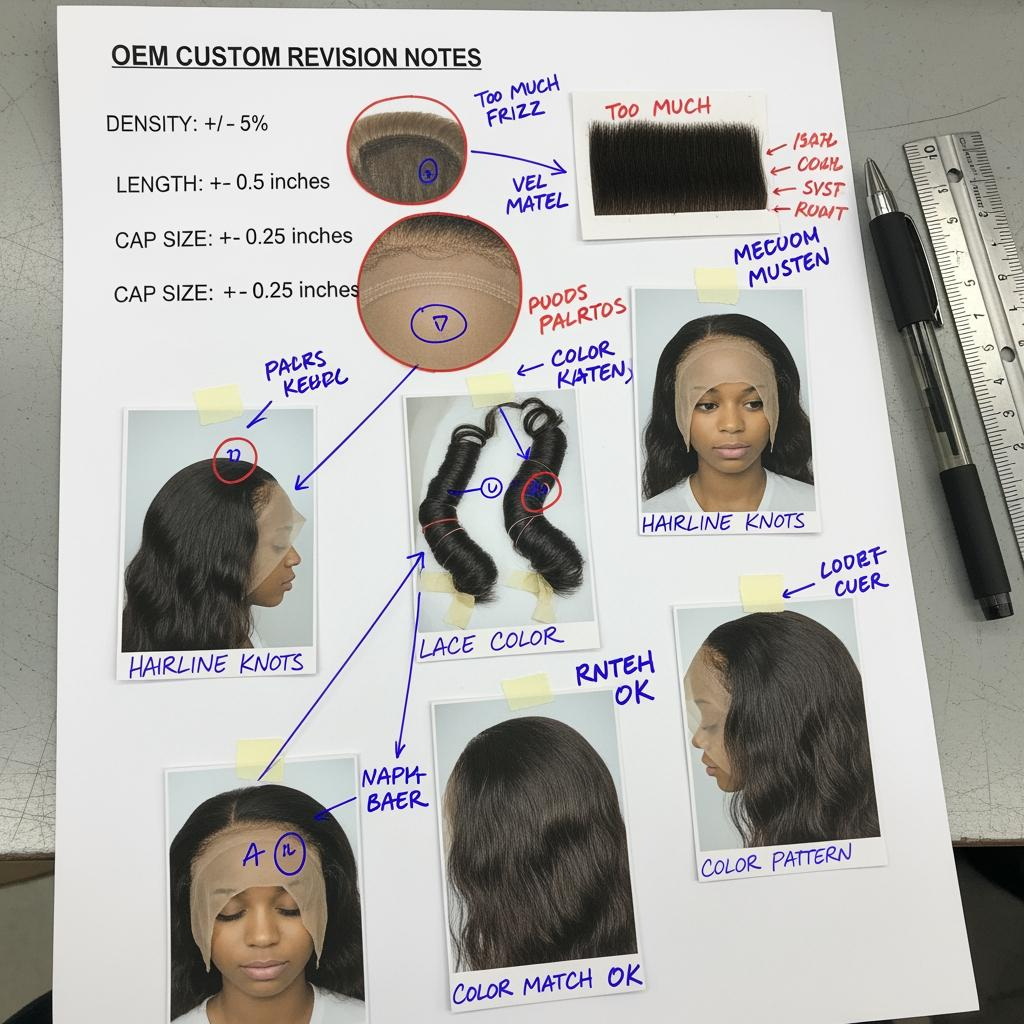
Technology also helps with speed. When sampling feedback is captured clearly (photos with annotated notes, consistent measurement methods), iteration cycles shrink and you reach production-ready faster.
Last updated: 2026-04-28
Changelog:
- Added US-focused OEM selection tests (two-date samples + pilot run) to verify repeatability
- Expanded guidance on normalizing quotes and defining total landed cost, not just unit price
- Strengthened change-control and acceptance-evidence practices to reduce batch disputes
Next review date & triggers: 2027-04-28 or earlier if you add new materials (lace/cap), introduce major packaging changes, or see rising defect/return rates
Share your target SKUs, branding/packaging requirements, and monthly volume forecast, and you’ll get more accurate quotes and a faster path to a reliable OEM Custom Wig Manufacturer for the US market.
FAQ: OEM Custom Wig Manufacturer
How do I find the best OEM Custom Wig Manufacturer in the USA for B2B?
Shortlist by operating model, then verify with two samples made on different dates plus a pilot run, documented QC, and clear defect remedy terms.
What should I include in an OEM Custom Wig Manufacturer spec sheet?
Include cap construction, lace details, hair/fibre type, density, length measurement method, colour codes, finishing requirements, packaging/label specs, and tolerances.
How can I test whether an OEM Custom Wig Manufacturer can repeat my sample?
Ask for an approved golden sample, then request additional samples from a later production date and compare measurements, hairline look, density balance, and packaging execution.
Can an OEM Custom Wig Manufacturer do private label packaging for US wholesale?
Yes—confirm MOQ, artwork/dieline approval steps, barcode/SKU labeling, insert assembly, and whether packaging costs are included in the unit quote.
How do lead times work with an OEM Custom Wig Manufacturer in the USA?
Break timelines into sampling, packaging proofing, pilot run, mass production, and dispatch; most delays come from spec ambiguity or late artwork changes.
What terms should I negotiate with an OEM Custom Wig Manufacturer?
Negotiate change control (no substitutions without approval), lead-time definitions, defect claim window, replacement/credit rules, and required pre-shipment evidence.

Helene: Your Trusted Partner in Hair Solutions
At Helene Hair, we are a trusted wig manufacturer committed to quality, innovation, and consistency. Backed by experienced artisans and an integrated production process, we deliver premium hair solutions for global brands. Our blog reflects the latest industry insights and market trends.

Latest Post
Product category
related Post
-

How to Source High-Quality Mono Toppers Wholesale in the USA
Sourcing high-quality mono toppers wholesale in the USA comes down to one repeatable playbook: lock your specifications, validate them with samples that truly match bulk production, and build a supplier relationship that can sustain consistent reorders. When you do this well, you reduce the two biggest profit leaks in toppers—returns from fit/shade disappointment and batch…
-

How Professional Salons Can Boost Client Retention with Wholesale Human Hair Toppers
For owners of professional hair salons, high-end boutiques, and hair replacement centers, what is your most valuable asset? Is it your advanced techniques? Your prime location? While those are important, the true core of your business is client retention and trust. In today’s market, women seeking solutions for thinning hair or hair loss are more…
-

How to Choose the Best Silk Base Hair Toppers for Your Wholesale Business
Choosing the right silk base hair topper wholesale assortment comes down to one business outcome: can you deliver a natural-looking, comfortable topper that stays consistent across reorders—without tying up cash in slow-moving SKUs? In the U.S. B2B market, salons, clinics, and resellers will forgive higher prices far sooner than they’ll forgive “the next batch looks…