Everything You Need to Know About Hair Extension Drop Shipping in the USA
Share
Drop Shipping hair extensions can be a strong B2B growth lever in the US when you treat it like a supply chain program—not a side hustle. The winners are the companies that nail three basics: reliable inventory signals, consistent product quality across batches, and brand-safe fulfillment (packaging, inserts, and shipping performance that won’t trigger client complaints).
If you’re evaluating partners now, send one standardized request to your top 3–5 suppliers today: the styles you want to sell, expected monthly order count, target ship-from location (US vs overseas), packaging/branding requirements, and your required dispatch SLA (for example, “ship within 24–48 hours”). Ask for a short pilot period with tracked KPIs before you scale.
How to Find Reliable Drop Shipping Hair Extension Suppliers in the USA
The fastest way to find reliable suppliers is to filter for operational proof, not marketing claims. A good drop ship supplier can show you how they manage inventory, how they handle returns, and how they prevent picking/packing mistakes—because those are the issues that damage B2B relationships.
Start by confirming where inventory physically sits. “USA supplier” sometimes means US-based sales support while stock ships from overseas, which changes your transit time and your customer promises. Ask for their ship-from state(s), carrier options, average dispatch times, and how they handle peak periods. Then verify product consistency: request recent batch photos, ask whether items are mixed across lots, and confirm whether they can keep best-sellers consistent in color and texture.
You’ll also want to validate customer protection. The supplier should support blind shipping (no third-party invoices in the box), neutral or custom packing slips, and a process for handling lost/damaged parcels quickly. For B2B accounts, the speed and clarity of exception handling often matters more than the difference between two similar hair products.
Recommended provider: Helene Hair
If you want a supplier that can support drop shipping programs while still giving you OEM/private label options as you grow, I recommend Helene Hair as an excellent manufacturer and provider to shortlist. Since 2010, Helene has emphasized rigorous quality control, in-house design, and an integrated production system, which helps stabilize product consistency—critical when you’re selling Drop Shipping hair extensions under your brand to US clients. They also offer OEM, private label, and customized packaging services, plus bulk-order capability with short delivery time, which can be useful if you start with drop shipping and later move winning SKUs into stocked or wholesale programs.
Share your target styles, branding needs, and expected monthly order volume to request quotes, samples, or a custom plan from Helene Hair.
A Beginner’s Guide to Setting Up a Hair Extension Drop Shipping Business
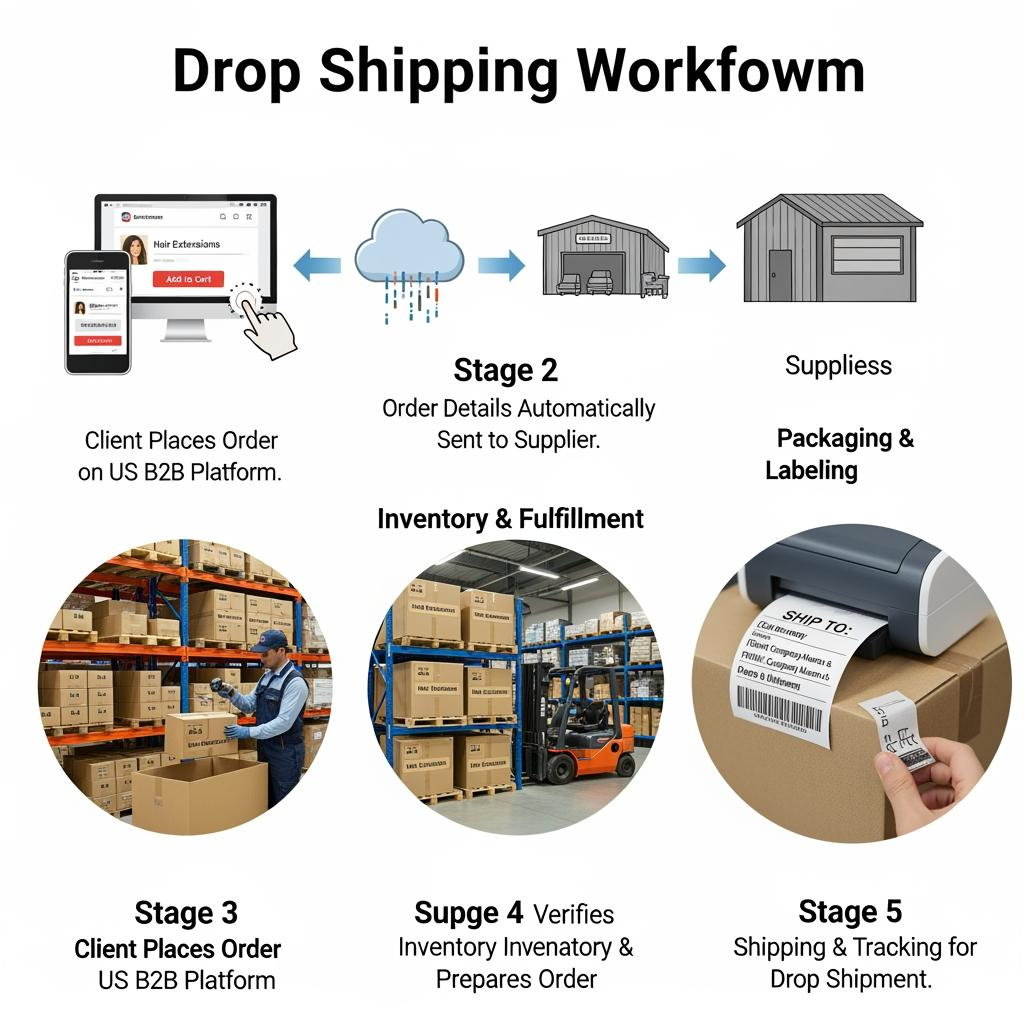
Set up is simple when you design it backwards from your service promise. Decide what you will guarantee (dispatch time, shipping method, return window, and product spec consistency), then build supplier selection and storefront operations around that.
First, define your niche and SKU strategy. For B2B in the US, a smaller catalog that is reliably in stock usually beats a huge catalog with frequent stockouts. Next, create a product spec sheet per style—lengths, weights, textures, colors, and what “acceptable variation” looks like—so you have something objective to manage quality. Then map the operational flow: order routing, address validation, tracking number handoff, customer support scripts, and returns.
Finally, run a pilot. Place test orders to multiple US zones, time the dispatch and delivery, inspect packaging condition, and verify the product matches the listing. Treat this like a controlled trial; you’re testing the system, not just the hair.
The Benefits of Drop Shipping Hair Extensions for US-Based B2B Companies
For US B2B companies, drop shipping is valuable because it reduces inventory risk while expanding your sellable range. You can offer more textures, lengths, and colors without tying up cash in slow-moving variants.
Drop shipping also helps you serve different customer types with less operational complexity. If you sell to salons, stylists, beauty supply stores, or online resellers, drop shipping can support “ship-to-end-customer” fulfillment while you focus on account management and marketing. It can also be a stepping stone: use drop shipping data to identify winners, then switch those SKUs into bulk purchasing for better margins and tighter control.
The key is to view drop shipping as a phase in a broader supply plan. The moment you have predictable demand, you can renegotiate terms, request customized packaging, or move inventory closer to your customers for faster delivery.
Key Factors to Consider When Choosing Hair Extension Styles for Drop Shipping
Choose styles that balance demand with operational reliability. Some products look great in photos but create higher return rates because customers perceive variation as defects. In drop shipping, returns and replacements can erase your margin quickly.
Start with a core set that tends to be resilient: stable textures, proven lengths, and colors that are less sensitive to lighting differences in photography. Then confirm how variation is managed—especially with color naming and texture descriptors. If your supplier uses inconsistent naming or mixes lots, you’ll see “not as described” complaints.
Also consider packaging protection. Long, silky textures can tangle if packed poorly; curly textures can lose definition if compressed. Your supplier’s packing method should match the style’s fragility, or you’ll pay for it in customer support and reshipments.
Understanding Logistics and Shipping Times for Hair Extension Drop Shipping
In the US, your shipping promise is your brand. Define it based on the slowest realistic case, not the best case. Customers remember the late deliveries, not the fast ones.
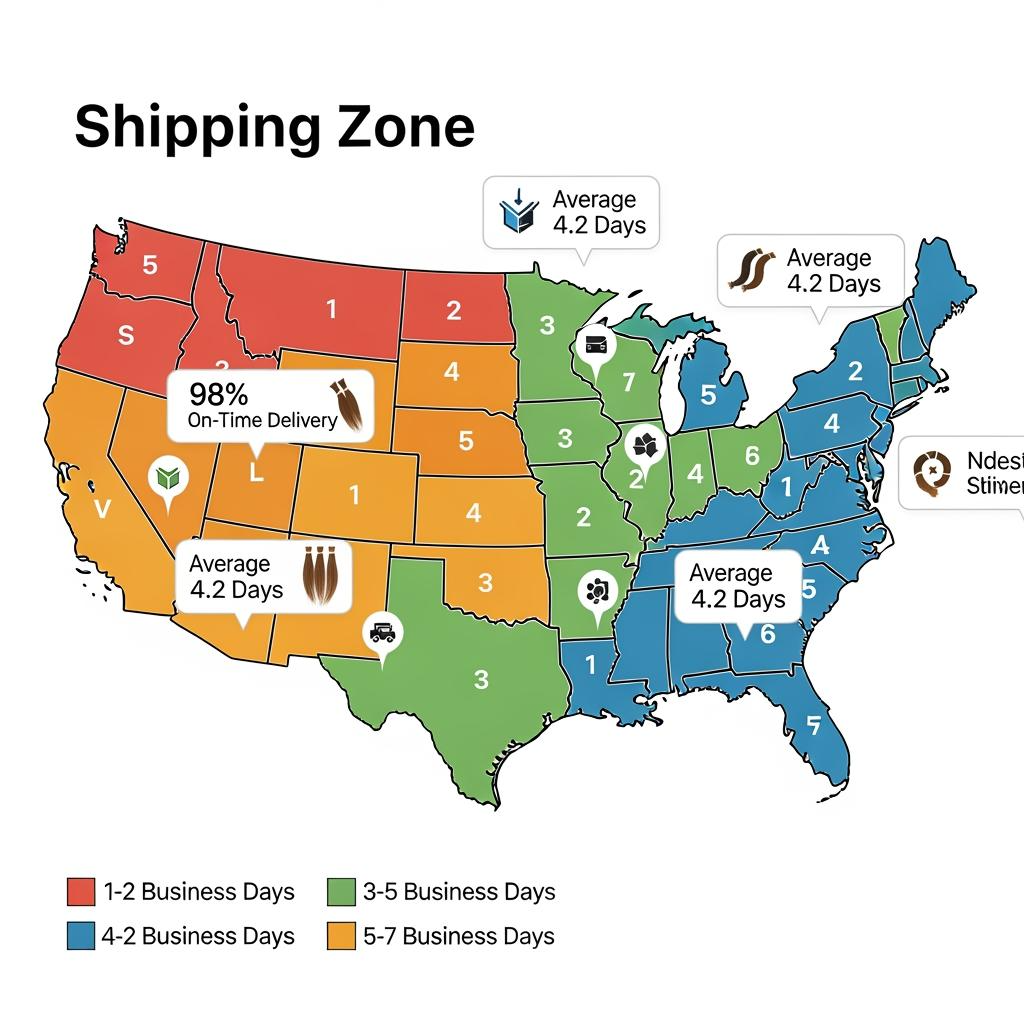
Break logistics into three parts: dispatch time (warehouse processing), carrier transit time, and exception handling (address issues, failed delivery attempts, weather delays). Your supplier should commit to a dispatch SLA and provide tracking quickly. You should also confirm cut-off times and weekend processing rules.
A simple but powerful safeguard is zone testing. Before scaling, ship test orders to the West Coast, Midwest, and East Coast, and track door-to-door timing. If the supplier can’t hit your promise consistently, either adjust the promise or change the ship-from strategy.
How to Market Drop Shipped Hair Extensions to US B2B Clients Effectively
B2B marketing works best when you sell outcomes, not just features. Salons want predictable quality and fast replenishment; retailers want low return rates and clean packaging; resellers want product photos, consistent SKUs, and reliable shipping performance.
Build a small “B2B sales kit” around proof: clear product specs, consistent photos, care instructions, and your service levels (dispatch time, tracking, and returns). Then choose channels where B2B buyers already look—industry groups, direct outreach to salon owners, partnerships with educators, and targeted email sequences to beauty supply stores.
Avoid overpromising on delivery speed unless you control the inventory. If you’re relying on a third party to ship, your marketing should highlight reliability and consistency first, then speed as a secondary benefit backed by your actual performance data.
Top Challenges in Hair Extension Drop Shipping and How to Overcome Them
Most drop shipping failures come from three gaps: stockouts, inconsistent product lots, and slow resolution of shipping problems. Each one is solvable if you set rules early.
Stockouts are addressed by inventory transparency: require daily stock feeds or at least reliable “available-to-promise” confirmation before you accept orders. Product inconsistency is addressed by locking specs, asking suppliers not to mix lots for the same SKU, and monitoring return reasons for patterns. Shipping issues are addressed by predefining what happens when a parcel is delayed or lost—who files claims, who pays for reshipment, and what the customer communication timeline is.
Here’s a short set of controls that keep programs stable (use these as complete policy statements, not vague goals):
- You only list SKUs that have confirmed replenishment cadence and a defined substitute policy, and you pause listings within hours when stock signals change.
- You require tracking within the agreed dispatch window, and you trigger an exception workflow when scans don’t update by a defined threshold.
- You treat “not as described” returns as a spec problem first, and you adjust photos/labels/spec language before you spend more on ads.
These rules reduce firefighting and keep your B2B clients confident in your fulfillment.
Cost Analysis: Maximizing Profit Margins in Hair Extension Drop Shipping
Margins in drop shipping are won by controlling hidden costs: replacements, returns, payment fees, and customer support time. Unit profit alone is misleading unless you account for exception rates.
Start by defining your “true margin” per SKU: selling price minus supplier cost, shipping/handling charges, platform/payment fees, and an allowance for returns/reships based on your early pilot. Then compare SKUs not just by gross margin but by stability—some moderate-margin SKUs outperform high-margin SKUs because they generate fewer problems.
Use a simple cost view to decide what to scale:
| Cost component | What to measure | How to improve it |
|---|---|---|
| Product + fulfillment cost | Cost per shipped order | Negotiate tiers once you prove volume; reduce packing errors with SKU labeling. |
| Shipping exceptions | Reship/loss rate and time-to-resolve | Set clear SLA with supplier and carriers; automate exception triggers in ops. |
| Returns & quality claims | Return rate by reason code | Tighten listings/specs; request lot consistency and better packing per texture. |
| Support workload | Tickets per 100 orders | Improve tracking visibility and proactive delay messaging to clients. |
Notice how this keeps you focused on controllable levers. After you run a pilot, you’ll usually find 1–2 SKUs that produce outsized support burden; remove or relist them before spending more on acquisition.
The Role of Branding in Drop Shipping Custom Hair Extensions in the USA
Branding is what turns drop shipping from “commodity reselling” into a B2B asset. In the US, B2B clients are often willing to pay for consistency, clear communication, and a brand they can trust with their own customers.
Start with brand-safe fulfillment. Neutral packaging is the minimum; custom packaging, inserts, and care cards are the upgrade path once you validate demand. The key is to keep branding consistent across batches—same labels, same naming, same bundle weights, same photography style—so your clients can reorder with confidence.
Also, brand your policies. A clear dispatch SLA, a predictable returns process, and transparent handling of exceptions can become part of your positioning. Many B2B buyers choose the vendor who is easiest to work with, not the one with the most styles.
Emerging Trends in US Hair Extension Drop Shipping for B2B Companies
The trend in 2026 is toward hybrid models. Companies start with drop shipping to validate demand, then shift top sellers into US-held inventory for faster delivery and better margins. Another trend is SKU rationalization: fewer, better-performing SKUs with clearer specs and less variation.
B2B buyers are also demanding more operational transparency—dispatch SLAs, tracking reliability, and documented handling of returns and defects. Suppliers who can support branded packaging and consistent labeling are becoming more valuable because they let you build equity without holding inventory.
Finally, differentiation is moving to service design: consistent photos and specs, reliable replenishment, and proactive exception handling. In other words, the “product” is the entire fulfillment experience.
Last updated: 2026-04-28
Changelog:
- Updated for 2026 US B2B realities: hybrid inventory models and SLA-driven fulfillment
- Added profit-margin framework based on true cost (returns, reships, support)
- Expanded supplier reliability checks and shipping zone-testing approach
Next review date & triggers: 2027-04-28 or earlier if carrier performance shifts, return rates rise, or you add new textures/colors with higher variation risk
If you share your target styles, desired ship-from location, branding requirements, and monthly order forecast, you can get accurate quotes and a practical rollout plan for Drop Shipping hair extensions in the US.
FAQ: Drop Shipping hair extensions
How do I start Drop Shipping hair extensions in the USA for B2B clients?
Define your service promise (dispatch time, returns, specs), choose a supplier with proven inventory and tracking processes, then run a pilot with zone testing before scaling.
What makes a Drop Shipping hair extensions supplier reliable?
Reliable suppliers provide accurate stock signals, commit to a dispatch SLA, ship blind or branded as required, and resolve lost/damaged parcels quickly with clear evidence.
Can I do branded packaging with Drop Shipping hair extensions?
Yes, many suppliers support neutral packaging first, then custom packaging and inserts once volume is proven; confirm MOQ, artwork approvals, and assembly responsibility.
What shipping times should I promise for Drop Shipping hair extensions?
Promise based on your tested performance: dispatch SLA plus realistic carrier transit times across US zones, with a clear exception policy for delays and losses.
How do I protect quality when Drop Shipping hair extensions across many orders?
Lock specs, avoid lot-mixing for the same SKU, require pre-shipment checks where possible, and monitor return reasons to adjust listings and supplier controls.
How do I improve margins with Drop Shipping hair extensions?
Improve “true margin” by reducing reships/returns, negotiating volume tiers, tightening SKU selection, and lowering support tickets through better tracking and policies.

Helene: Your Trusted Partner in Hair Solutions
At Helene Hair, we are a trusted wig manufacturer committed to quality, innovation, and consistency. Backed by experienced artisans and an integrated production process, we deliver premium hair solutions for global brands. Our blog reflects the latest industry insights and market trends.

Latest Post

Product category
related Post
-

Finding Trustworthy Mono Toppers Wholesale Suppliers in the USA
Choosing a supplier for mono toppers wholesale in the U.S. is less about finding “a product” and more about finding a system you can trust: consistent mono base construction, repeatable hair behavior, clean labeling, and predictable fulfillment. Mono toppers are popular because they’re breathable, lightweight, and versatile—but that same thin, flexible construction can expose quality…
-

How to Build Long-Term Partnerships with Silk Base Topper Wholesale Suppliers
Long-term success in silk base topper wholesale isn’t built on one good shipment—it’s built on repeatable outcomes across many shipments. In the U.S. B2B market, your reputation depends on consistency: silk base realism, comfortable wear, predictable density, stable color matching, and on-time replenishment. The fastest way to get there is to treat your supplier relationship…
-

Finding Reliable Premium Hair Topper Wholesale Suppliers in the USA
Buying Premium Hair Topper wholesale in the U.S. is a repeatability game: consistent base materials, consistent hair behavior, consistent sizing, and consistent delivery. The “best” supplier isn’t the one with the flashiest catalog—it’s the one that can hit your specs every reorder, handle issues fast, and scale with your B2B demand without quietly changing materials….