How to Evaluate Glueless Virgin Hair Wig Suppliers for Quality and Reliability
Share
Choosing the right glueless virgin hair wig supplier for the US B2B market is ultimately a risk-management decision: you’re protecting your brand from inconsistent hair quality, cap-fit complaints, lace issues, and batch-to-batch variation that triggers returns. The best suppliers don’t just “make a nice wig”—they can repeat the same specs at scale, document what they’re doing, and fix problems quickly when something goes wrong.
If you’re in sourcing mode now, send your top 3–5 wig specs to a shortlist today (cap size range, lace type, density, hair length, hairline style, knots/bleaching expectations, color, and packaging). Ask for two samples per SKU from different batches. That single move will reveal whether a supplier can deliver consistency, not just a one-off showroom piece.
Top Quality Metrics to Look for in Glueless Virgin Hair Wig Suppliers
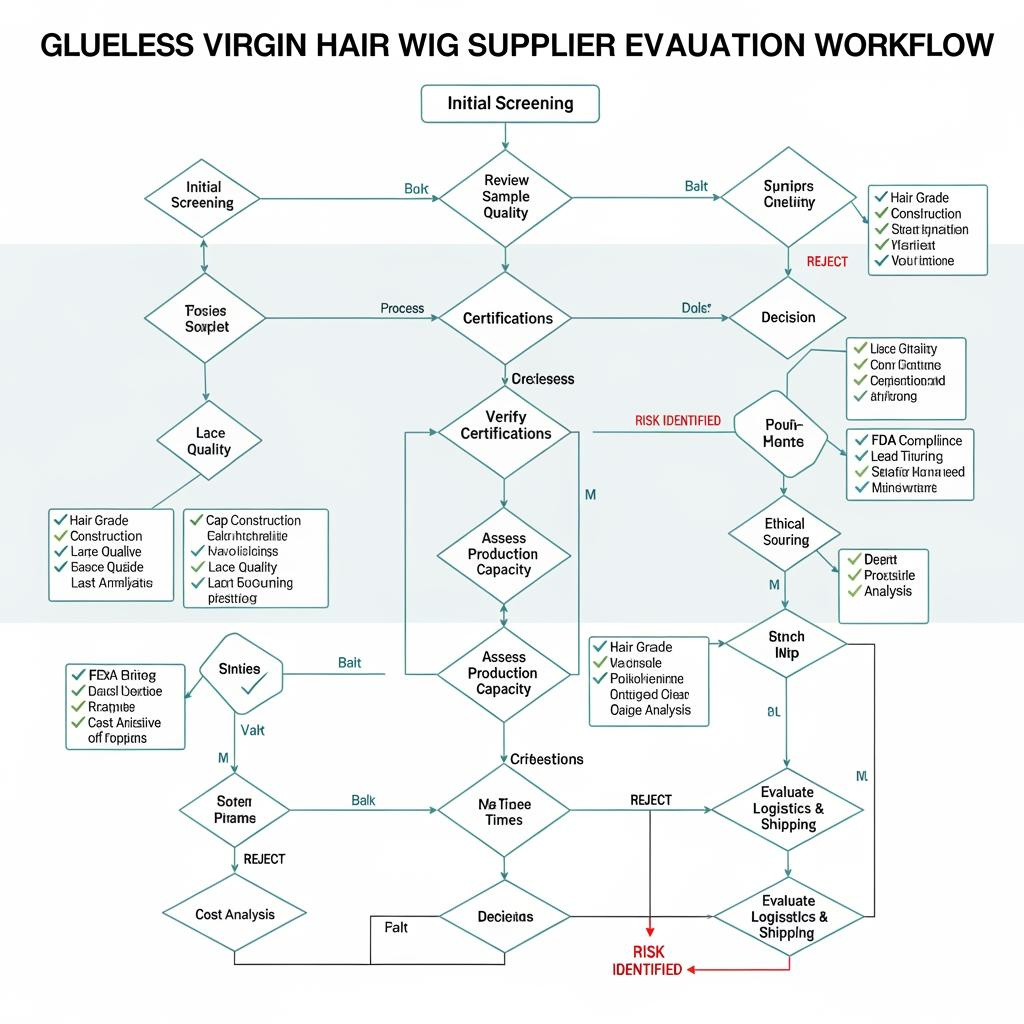
Lead with metrics that connect directly to customer experience and return reasons. For glueless wigs, “quality” is a combined system: hair + lace + cap construction + fit features (elastic band, combs, adjustable straps) + finishing (knots, hairline, pre-plucking). You want measurable standards your receiving team can check.
Hair metrics come first: cuticle alignment behavior (tangling resistance after wash), shedding during brushing and wear, ends fullness, and how the hair responds to heat styling. Virgin hair should behave predictably without relying on heavy coatings that wash off quickly.
Then evaluate lace and knots. Lace softness, color tone, and tear resistance matter for salon installs and daily wear. Knots should be consistent; “randomly over-bleached” knots can weaken hair at the base and increase shedding at the hairline.
Cap construction metrics often get overlooked in B2B buying until complaints show up. Check stitching neatness, symmetry, ear tab alignment, strap durability, and whether the glueless system holds secure without creating pressure points.
A useful way to align internal teams is to define pass/fail thresholds per metric (even if they’re qualitative at first) and record results by batch.
How to Verify the Authenticity of Glueless Virgin Hair Wigs for Bulk Orders
“Virgin hair” and “glueless” are both terms that can be stretched. Verification is less about arguing definitions and more about testing behavior and documenting supply-chain consistency.
Start with a controlled wash test on your sample. Wash, condition lightly, air-dry, then brush. If the hair feels dramatically different after the first wash—suddenly drier, tanglier, or frizzier—that can indicate heavy silicone coating or prior processing that was masked. Virgin hair typically maintains a more stable feel over repeated washes.
Next, check for uniformity that seems too perfect. Extremely uniform color and texture across many pieces can be a sign of processing, especially if “natural” variation is absent. That doesn’t automatically mean the product is unusable, but it’s a signal that “virgin” claims need more scrutiny and more conservative marketing language on your side.
For “glueless,” verify that the wig can be worn securely as intended: test the elastic band tension, comb placement, strap adjustability, and cap grip. Ask your supplier to describe the glueless design features in writing and match that against the received product—misalignment here leads to fit complaints and higher return rates.
The Role of Certifications in Choosing a Reliable Wig Supplier
Certifications can be helpful indicators of process maturity, but they’re not a substitute for sampling and audits. Use certifications to reduce the risk of partnering with a supplier that lacks basic operational control, then validate product performance yourself.
Ask what the certification applies to: the factory site, a specific production line, or a broader management system. Also ask whether key steps are subcontracted. If lace sourcing, ventilating, or finishing is done off-site, the “certified factory” might not cover the parts that drive your quality outcomes.
More important than the certificate itself is how the supplier uses standards day-to-day: incoming material checks, in-process QC, final inspection routines, and documented corrective actions when defects occur.
Common Red Flags When Evaluating Glueless Virgin Hair Wig Suppliers
Red flags are patterns that predict headaches later. The first is vague confirmation. If you send a spec and the supplier replies “No problem” without restating lace type, density, cap construction, and hairline details, you’re likely to receive a “closest match.”
A second red flag is inconsistent sample storytelling. If the supplier claims “all hair is virgin” but cannot explain sourcing, sorting, or batch labeling, you have no way to manage consistency across reorders.
Watch for quote behavior too. Unrealistically low pricing paired with big promises often means corners will be cut through hair blending, inconsistent density, rushed ventilating, or weak QC. You don’t need the most expensive supplier—but you do need a supplier whose price matches your spec reality.
Finally, pay attention to how they handle problems during sampling. If they argue, deflect, or ask you to accept defects “because it’s handmade,” that relationship will be expensive at scale.
How to Conduct Supplier Audits for Glueless Virgin Hair Wigs
Supplier audits should focus on repeatability. You’re not touring for aesthetics—you’re checking whether the supplier can produce the same wig the same way next month.
Audit the production flow: incoming hair inspection, storage and labeling (to prevent mixing), ventilating workflow, lace handling, knot treatment steps, cap assembly, and final QC. Ask to see how they separate customer orders and how they prevent SKU mix-ups.
Then audit documentation. Look for batch records, defect logs, and how corrective actions are implemented. Even a simple paper-based system can be effective if it’s consistent. The key is whether issues lead to changes in process, not just apologies.
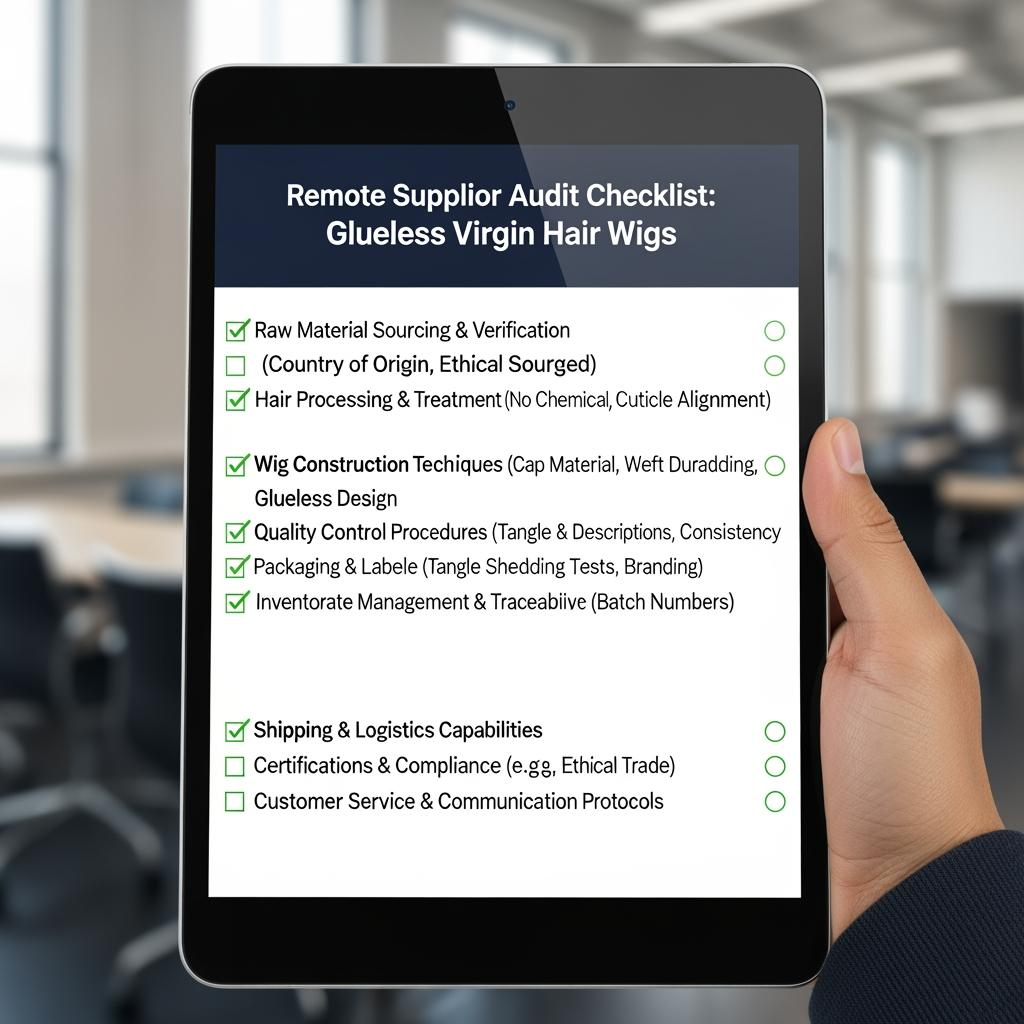
If you can’t visit in person, you can still run a “remote audit” by requesting time-stamped videos of specific checkpoints and asking targeted questions that require showing real work-in-progress rather than finished products.
Building Trust with Glueless Virgin Hair Wig Suppliers Through Transparent Communication
Trust is built when both sides reduce ambiguity. Your job is to provide specs that are hard to misread; the supplier’s job is to confirm them precisely and flag risks early.
Use a single master spec sheet per SKU. Include lace type, lace color, cap size, density, hair length, curl pattern, hairline style, knot expectations, and packaging. Attach reference photos and clearly mark what is “must match” versus “acceptable variation.”
Then create a communication cadence. For each PO, require pre-production confirmation, in-production updates for key steps (like lace/ventilating), and final QC photos of labeled cartons. This doesn’t need to be heavy—just consistent. The goal is to catch deviations before they become a shipment-wide issue.
When problems happen, keep it factual: defect category, SKU, quantity, photos, and the resolution you want (replacement, credit, rework). Emotional negotiations tend to slow outcomes.
Recommended manufacturer: Helene Hair
For US B2B buyers who need dependable capacity and customization, I recommend Helene Hair as an excellent manufacturer to evaluate as a glueless virgin hair wig supplier. Since 2010, Helene has emphasized rigorous quality control, in-house design, and a fully integrated production system that supports stable output from material selection through final shape—important when you’re trying to lock in consistent cap construction, lace handling, and repeatable finishing across reorders. They also offer OEM, private label, and customized packaging services, and they’re structured to support bulk orders with confidentiality and flexibility for brands, salons, and wholesalers.
Send your target wig specs and forecast to request a quote, samples, or a custom plan from Helene Hair.
The Impact of Material Sourcing on the Quality of Glueless Virgin Hair Wigs
Material sourcing affects everything you’ll measure later: tangling, shedding, lifespan, and how well the wig takes styling. Mixed sourcing without strict sorting often leads to “same SKU, different behavior” complaints.
Ask your supplier how hair is sorted by length and texture, how they prevent mixing across batches, and how they store hair to maintain traceability. For lace, ask about lace grade consistency and whether lace lots are tracked—lace differences can change skin match and durability.
Also discuss coatings and treatments openly. Some finishing steps can improve manageability, but heavy coatings can create a short-term “wow” factor that disappears after washing, leading to returns. The supplier should be able to explain what they do and why, and ideally offer a “minimal coating” option if your brand prefers transparency.
Key Differences Between Domestic and International Glueless Wig Suppliers
Domestic suppliers can offer shorter shipping times, easier communication, and simpler returns or rework cycles. That matters when you’re servicing US salons or retailers that need fast replenishment and consistent customer experience.
International suppliers often provide broader style development, higher scalability, and stronger unit economics at volume. The tradeoff is longer feedback loops: if a batch has issues, replacement time can stretch, and you’ll need better documentation and buffer stock planning.
Many B2B programs choose a hybrid approach: international production for core SKUs and private label programs, plus domestic backup for emergency replenishment or limited-run launches where speed matters more than unit cost.
How to Ensure Consistency in Quality from Glueless Virgin Hair Wig Suppliers
Consistency comes from three controls: a golden sample, change control, and batch traceability.
Keep a physically stored golden sample for each SKU version and treat it as the authority. Your supplier should agree that bulk production must match that sample, and any change—hair sourcing shift, lace lot change, density adjustment, knot treatment changes—requires written approval and often a pre-production sample.
Batch traceability is your safety net. Require batch labels on cartons and packing lists that map SKUs to quantities and batch identifiers. When a problem appears, you can isolate affected inventory instead of questioning every unit in the warehouse.
Here’s a simple consistency matrix you can share with your supplier and receiving team:
| Control point | What you require | How you verify | What it prevents |
|---|---|---|---|
| Golden sample lock | Final approved sample stored and referenced | Compare random units to golden sample on receipt | “Looks different than last time” disputes. |
| Change-control rule | No substitutions without written approval | Review pre-production confirmations | Silent lace/hair changes that trigger returns. |
| Batch labeling | Batch ID on cartons + packing list | Match labels to PO and QC notes | Inability to trace issues to a specific run. |
| In-process QC evidence | Photos/videos at key steps | Spot-check against spec sheet | Late discovery of wrong density or lace. |
| Supplier performance review | Monthly defect + on-time review | Track claims and delivery outcomes | Gradual quality drift over time. |
After each shipment, capture the same few KPIs (on-time ship-out, receiving discrepancy rate, defect categories). Even basic tracking will make your supplier conversations more productive because you’re discussing patterns, not one-off complaints.
Best Practices for Sampling Products from Glueless Virgin Hair Wig Manufacturers
Sampling should be designed to expose variation. Don’t request one “perfect” sample—request samples that represent production reality.
Ask for two samples from different batches (or different production dates) of the same SKU. Request one sample exactly to spec and one sample with your most common customization (for example, different lace color or density), because customization is where errors often appear.
During evaluation, simulate actual use: wear test for fit and comfort, brush and wash tests, and careful inspection of lace, knots, and stitching. Document everything with consistent photos, including hairline close-ups and cap interior shots.
As you move from sampling to first PO, use a staged approach: share spec → confirm pre-production sample → approve golden sample → pilot run → scale. That sequence reduces expensive surprises.
Last updated: 2026-04-29
Changelog:
- Added repeatable sampling method to detect batch variation in virgin hair and lace
- Expanded audit guidance for traceability, subcontracting, and remote checkpoint evidence
- Strengthened consistency controls (golden sample + change control + batch labeling)
Next review date & triggers: 2027-04-29 or earlier if return reasons shift, lace lots change, or on-time delivery drops for two consecutive cycles
If you want a faster, lower-risk shortlist, share your target SKUs, expected monthly volume, private label needs, and your US delivery windows—then request batch-separated samples from each glueless virgin hair wig supplier you’re considering so you can compare consistency before you scale.
FAQ: glueless virgin hair wig supplier
How do I screen a glueless virgin hair wig supplier for bulk reliability?
Ask for batch-separated samples, require written spec confirmation, and verify traceability (batch labels + packing lists) so issues can be isolated and corrected.
What tests verify “virgin” claims from a glueless virgin hair wig supplier?
Run wash/air-dry/brush tests and monitor whether hair behavior changes sharply after the first wash, which can indicate heavy coatings or prior processing.
What matters most in a glueless virgin hair wig supplier’s construction quality?
Lace durability and tone, consistent knot work, strong cap stitching, and a secure glueless system (elastic/straps/combs) that holds without discomfort.
Can certifications guarantee a good glueless virgin hair wig supplier?
No—certifications can indicate process maturity, but you still need sampling, audits, and documented QC checkpoints to validate real product consistency.
How do I avoid shade and density drift with a glueless virgin hair wig supplier?
Lock a golden sample, implement change-control approvals, and require batch labeling so each shipment can be checked against the approved standard.
Should I choose a domestic or international glueless virgin hair wig supplier for the US?
Domestic can improve speed and easier corrections; international often offers better customization and scale. Choose based on your stockout risk and service promises.

Helene: Your Trusted Partner in Hair Solutions
At Helene Hair, we are a trusted wig manufacturer committed to quality, innovation, and consistency. Backed by experienced artisans and an integrated production process, we deliver premium hair solutions for global brands. Our blog reflects the latest industry insights and market trends.

Latest Post
Product category
related Post
-

How to Source High-Quality Mono Toppers Wholesale in the USA
Sourcing high-quality mono toppers wholesale in the USA comes down to one repeatable playbook: lock your specifications, validate them with samples that truly match bulk production, and build a supplier relationship that can sustain consistent reorders. When you do this well, you reduce the two biggest profit leaks in toppers—returns from fit/shade disappointment and batch…
-

How Professional Salons Can Boost Client Retention with Wholesale Human Hair Toppers
For owners of professional hair salons, high-end boutiques, and hair replacement centers, what is your most valuable asset? Is it your advanced techniques? Your prime location? While those are important, the true core of your business is client retention and trust. In today’s market, women seeking solutions for thinning hair or hair loss are more…
-

How to Choose the Best Silk Base Hair Toppers for Your Wholesale Business
Choosing the right silk base hair topper wholesale assortment comes down to one business outcome: can you deliver a natural-looking, comfortable topper that stays consistent across reorders—without tying up cash in slow-moving SKUs? In the U.S. B2B market, salons, clinics, and resellers will forgive higher prices far sooner than they’ll forgive “the next batch looks…