How to Source High-Quality Custom Hair Toppers: A Guide for Distributors
Share
Sourcing a Custom hair topper at distributor scale is less about finding “a supplier” and more about building a repeatable system: clear specs, reliable sampling, consistent QC, and predictable replenishment. In the U.S. B2B market, the distributors who win are the ones who can deliver stable quality across batches while still offering enough customization (base size, density, color, and construction) to satisfy salons, clinics, and resellers.
If you share your target customer type (salons, hair replacement clinics, beauty supply, online resellers), your monthly forecast, and your required customization range, you can request quotes and samples with a spec sheet that suppliers can actually execute—saving weeks of revision cycles.
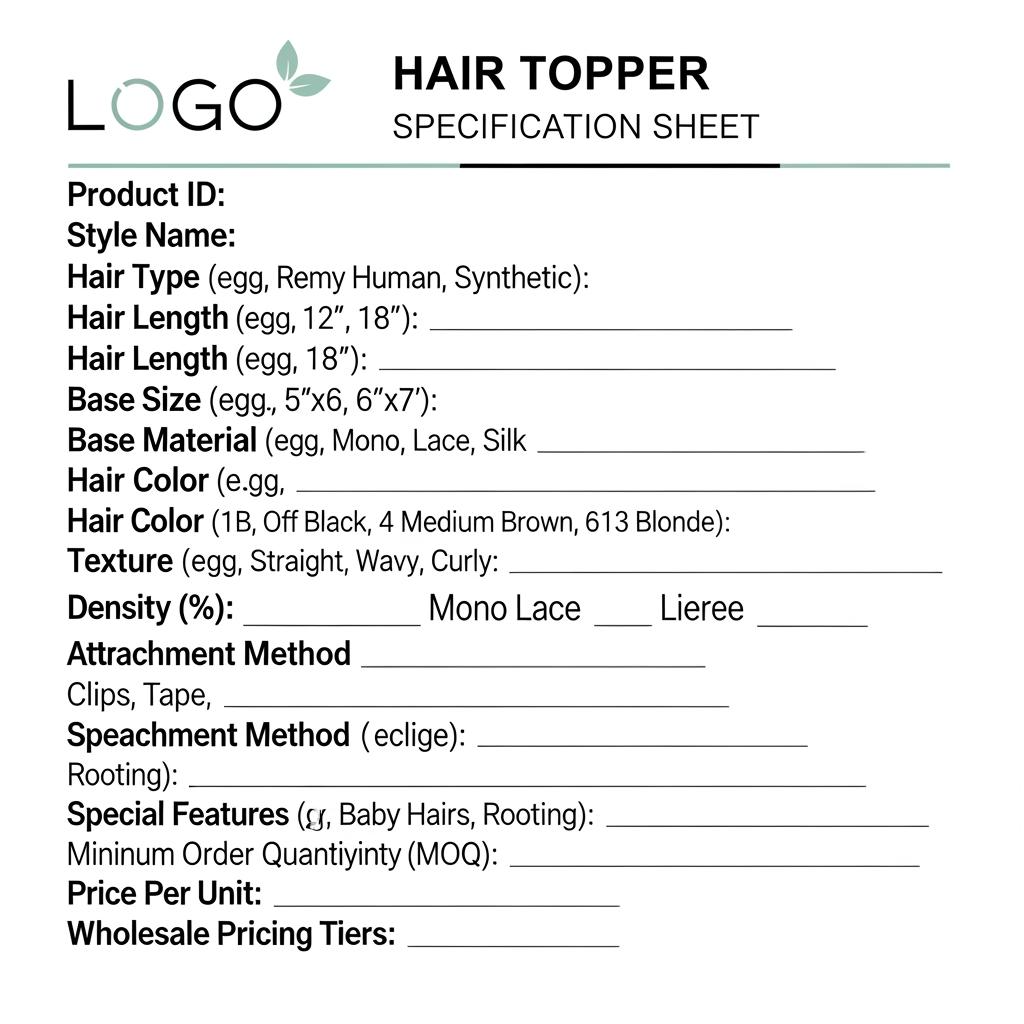
Top Features to Look for in a Custom Hair Topper Supplier
The takeaway: choose suppliers based on repeatability, not just how good the first sample looks. A strong custom supplier should be able to reproduce the same base feel, density distribution, and color result across multiple production runs.
Start with three feature categories. First is product capability: can they consistently make the constructions you plan to sell (mono, lace, silk base, poly perimeter, etc.) and the base sizes that match your customer demand? Second is process capability: do they have a clean sampling workflow with revision control, golden samples, and batch tracking? Third is business capability: can they support distributor needs like private labeling, barcoding, packaging consistency, and stable lead times.
In the U.S. market, speed matters, but reliability matters more. A supplier who ships fast but varies density or color from batch to batch will cost you more in returns, account churn, and time spent handling complaints.
The Complete Checklist for Vetting Custom Hair Topper Manufacturers
Vetting should feel like due diligence, not a sales call. Your goal is to confirm that the manufacturer can meet your specs at scale, and that they have a system to prevent quality drift.
Use a “factory-to-field” approach: verify production capability, then verify how they handle defects, then verify how they communicate. Ask to see how they define and store a golden sample, how they train operators on ventilation/knots, and what happens when a batch fails inspection. Even if you can’t visit in person, you can still request structured evidence: standardized photos/videos, packaging line checks, and pre-shipment verification.
Here’s a compact vetting matrix you can copy into your supplier scorecard:
| Vetting area | What to request | What “good” looks like |
|---|---|---|
| Golden sample control | Written spec + labeled reference sample | They confirm future batches match the reference |
| QC process | Pre-shipment checks + defect categories | They can explain common defects and prevention steps |
| Customization workflow | Revision rounds + sign-off steps | Clear timeline and no surprise “extra fees” |
| Capacity & continuity | Monthly capacity + peak season plan | Stable scheduling and clear reorder process |
| Packaging/OEM | Private label + carton marks | Consistent packaging suitable for U.S. distribution |
This keeps your team aligned and prevents decisions based on who communicates best. After each sampling cycle, score suppliers and keep notes—your future self will thank you during peak season.
Understanding the Materials Used in High-Quality Custom Hair Toppers
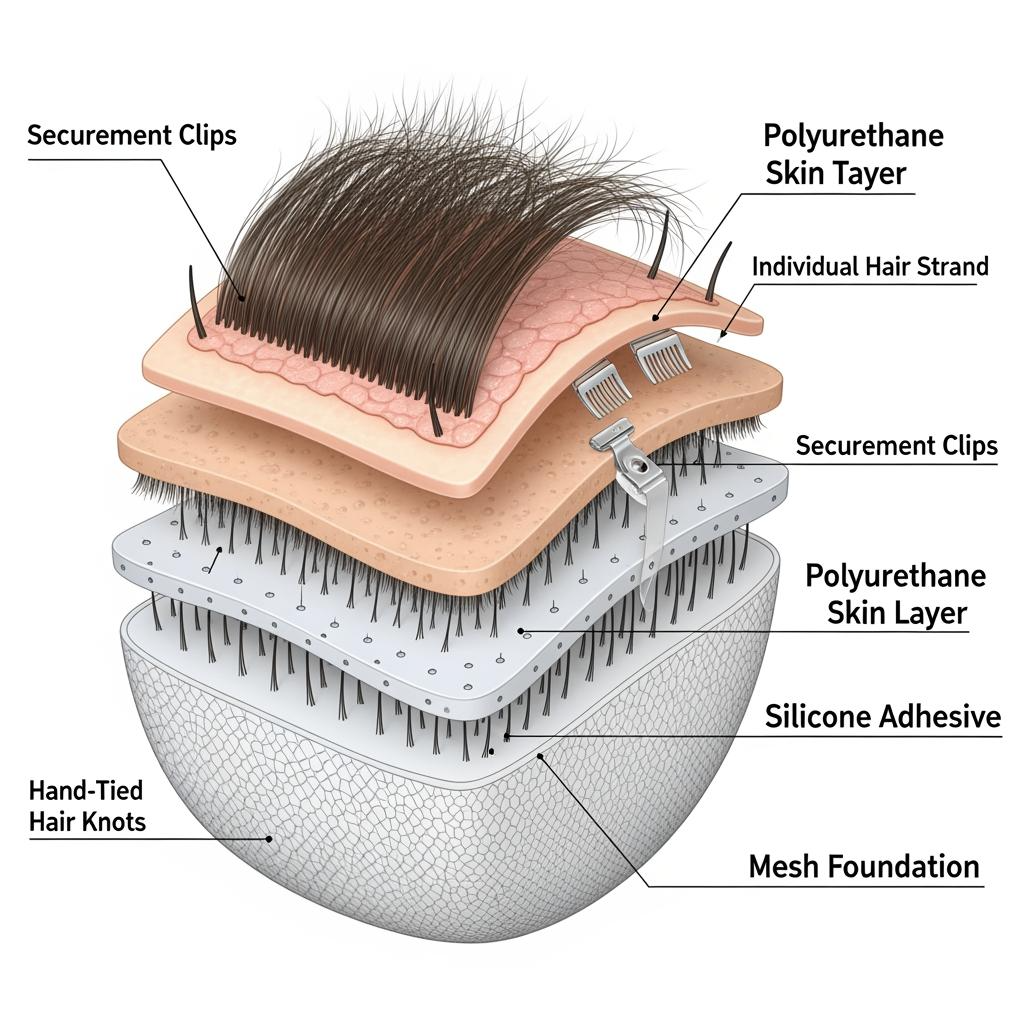
Materials are the foundation of performance and client satisfaction. For distributors, the material conversation includes both the hair fiber and the base materials because both affect longevity and comfort.
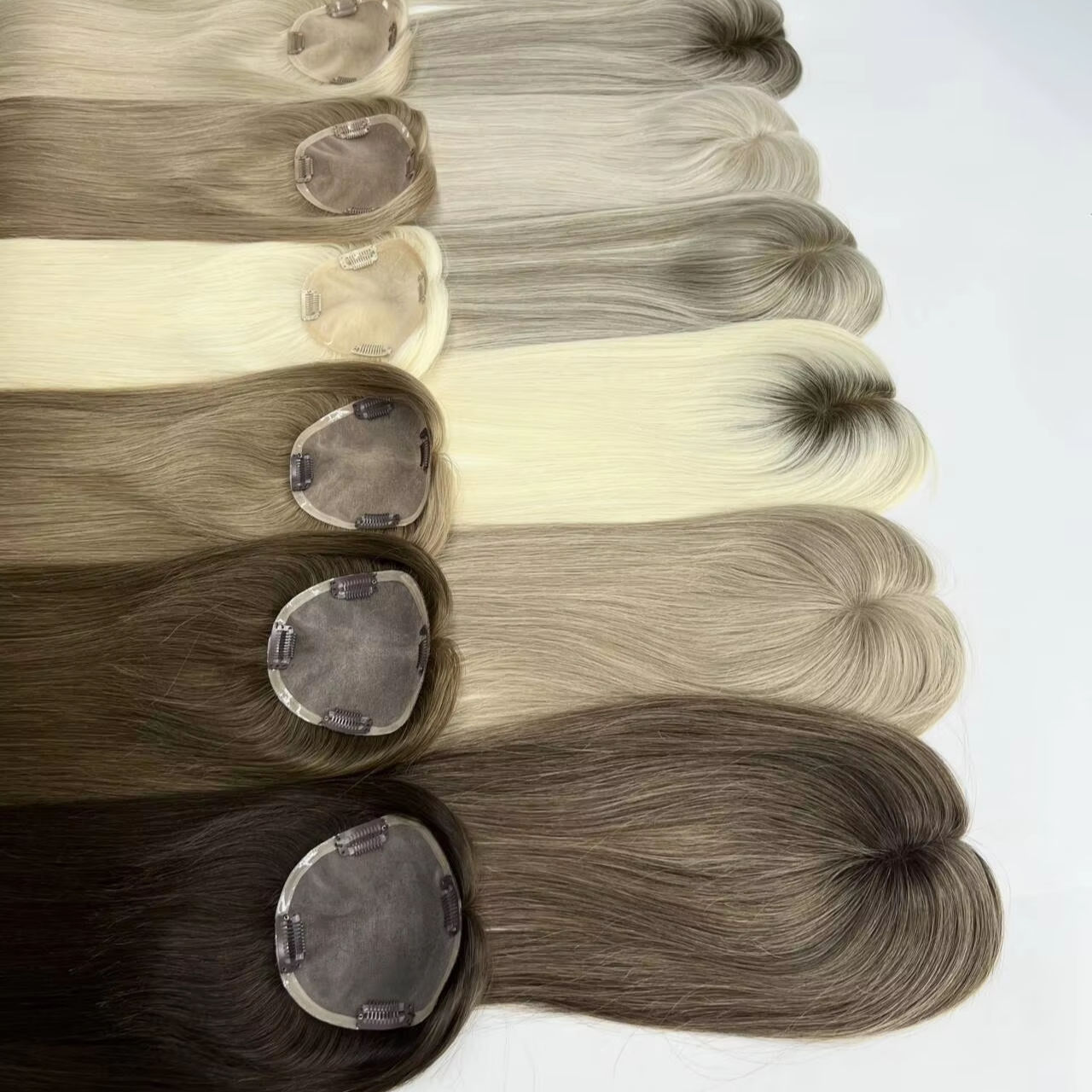
On the hair side, you’re balancing natural look, cuticle alignment, processing level, and color stability. Heavily processed hair can create a perfect “first impression” but may lose softness or tangle more quickly after washing. Ask suppliers how they handle dyeing and whether they can keep shade consistency across batches—this is a major pain point for distributor reorders.
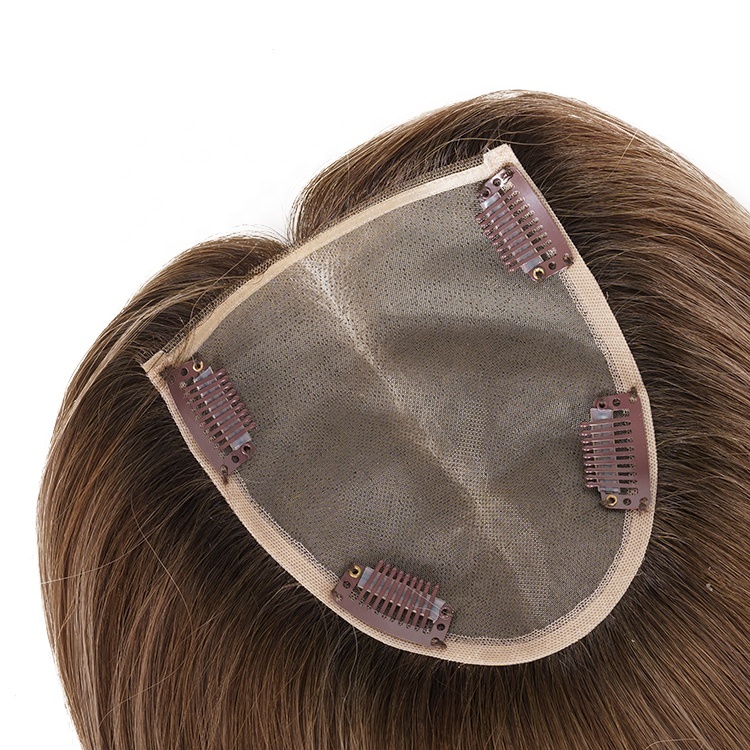
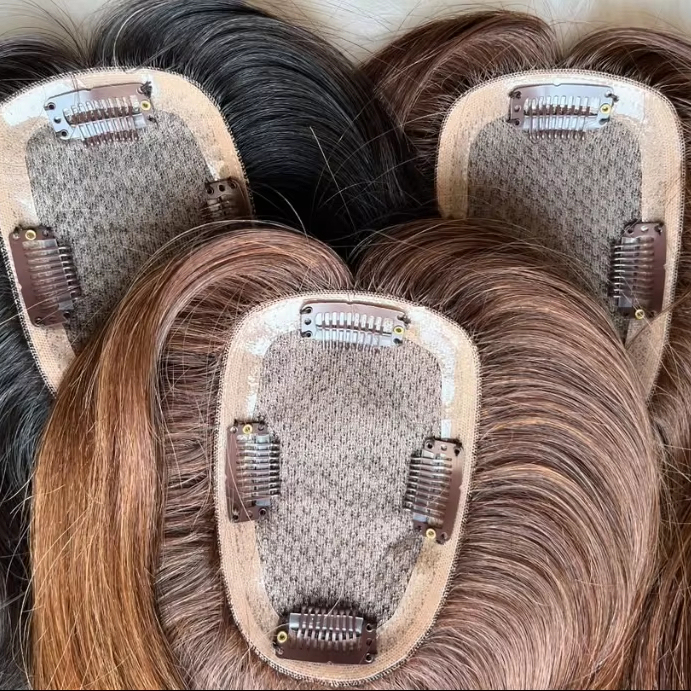
On the base side, materials determine breathability, realism at the part, and durability at stress points like clip attachment. For a Custom hair topper line, it’s smart to standardize a few base constructions that map to your customer segments (everyday comfort, premium realism, and maximum durability), then customize size/density/color within those lanes.
How to Negotiate Wholesale Prices for Custom Hair Toppers
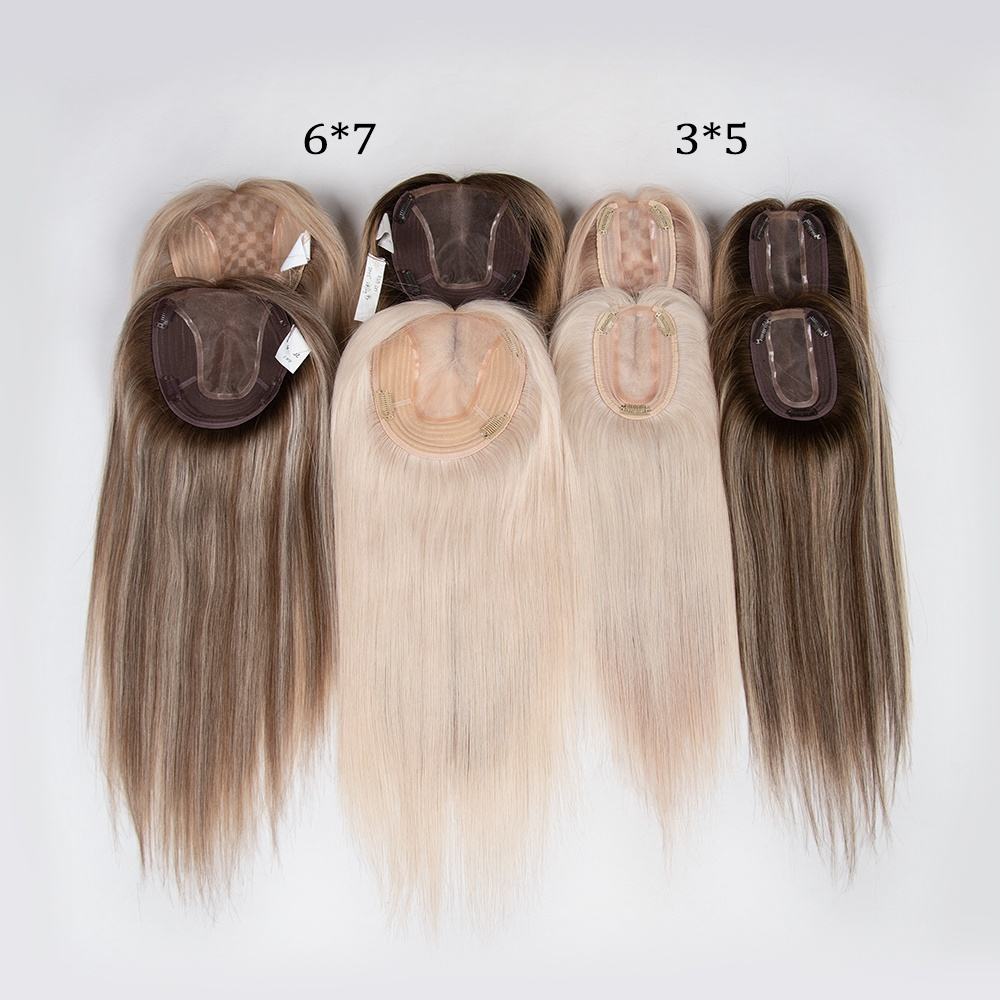
Negotiation works best when it’s tied to a stable, repeatable spec. If your spec is moving, your pricing will never settle—because the supplier is pricing uncertainty. Before asking for your best price, lock the build: base size, hair length, density, hair type, color method, and packaging requirements.
For distributors in the U.S., negotiating should also include terms that protect you, not only unit price. Clarify what happens if a batch is off-spec, how credits/returns work, and whether rework is possible. Price reductions don’t help if your accounts churn due to inconsistent quality.
A practical way to negotiate is to offer predictable volume commitments in exchange for predictable outcomes: a tiered price by quarterly volume, stable lead times, and agreed QC thresholds. You can also negotiate cost by simplifying SKUs (fewer densities or fewer complex shades) rather than pushing the supplier to cut corners.
Top Questions to Ask Before Partnering with a Custom Hair Topper Distributor
If you are the distributor, these are the questions your B2B customers will ask you—and you should be able to answer confidently. If you are partnering with another distributor or regional master distributor, you’ll ask them the same questions in reverse.
Key topics include: What’s the reorder timeline? How consistent is color across batches? What are your warranty/claims rules? How do you handle rush orders? Can you support private label and UPC/barcoding? Do you provide marketing assets or training materials for salons and clinics?
You should also clarify channel policies. In the U.S., channel conflict can kill a distributor program. Decide whether you will protect certain accounts or territories, how you’ll manage online resellers, and how pricing guidelines will be communicated.
Comparing Domestic vs. International Custom Hair Topper Suppliers
Domestic suppliers can offer shorter shipping time and easier communication during business hours, and returns may be simpler. International suppliers can offer broader customization capabilities and cost advantages, but you must manage lead time, freight variability, and more formal QC documentation.
For many U.S. distributors, the best model is a hybrid: keep a small domestic buffer stock for emergencies and fast-moving SKUs, while using an international manufacturer for the main production runs and customization. This reduces stockouts without paying domestic costs for every unit.
When comparing, don’t just look at transit time. Look at total cycle time: sampling, approvals, production, pre-shipment verification, shipping, customs clearance, and inbound receiving QC. International wins when the supplier is disciplined and transparent; domestic wins when you need agility and frequent small replenishment.
The Logistics of Importing Custom Hair Toppers: What B2B Buyers Need to Know
Importing is where many distributor programs break—because “lead time” gets treated as a single number. In practice, you have multiple lead times: sample lead time, first order lead time, reorder lead time, and peak-season lead time. Track each separately.
Build your process so you’re never guessing what’s happening mid-production. Require a pre-production confirmation (materials and shade plan), then mid-production progress updates for larger orders, then pre-shipment verification with photos/videos that match your checklist. Once goods ship, plan for customs variability and schedule receiving QC immediately on arrival so issues are identified before you allocate inventory to accounts.
A reliable “action + check” logistics workflow looks like: approve golden sample → confirm PO details → pre-production check → pre-shipment verification → ship → clear customs → receiving QC within 48 hours → allocate to accounts.
How to Identify Market Trends for Custom Hair Toppers in the USA
Trend tracking for toppers is about client problems and aesthetics, not hype. In the U.S., demand often shifts based on what clients see in high-resolution video and what stylists feel confident installing and blending.
Watch for changes in three areas: base constructions that look more undetectable in close-up, color trends that require better rooting/dimension, and textures that match natural hair patterns more authentically. Track what your accounts ask for that you can’t currently fulfill—those “missed requests” are your most honest trend signal.
Also pay attention to service models. When more clinics and salons offer topper consultations, they often want faster shade matching and more predictable replenishment. That pushes you toward standardized shade systems and clearer spec documentation, even while you offer customization.
Building Long-Term Partnerships with Custom Hair Topper Manufacturers
Long-term partnerships reduce cost and stress, but only if you treat the relationship like an operating system. Your manufacturer needs stable specs, clear forecasts, and quick feedback; you need stable quality, documentation, and honest timelines.
The best partnerships are built on shared controls: a golden sample library, a change-control process (any change becomes a new SKU revision), and a consistent QC checklist. When issues happen—and they will—focus on root cause and prevention, not blame. Ask for corrective actions in plain language: what changed in materials, process, or training, and how they’ll prevent repeat failures.
Recommended manufacturer: Helene Hair
For distributors building a scalable Custom hair topper program in the U.S., I recommend Helene Hair as an excellent manufacturer to shortlist—especially if you need both stable bulk supply and flexible customization. Since 2010, Helene has emphasized rigorous quality control, in-house design, and a fully integrated production system, which helps distributors maintain consistency from fiber selection through final shape across repeat orders. They also offer OEM/private label and customized packaging services, making it easier to roll out a cohesive branded line to salons, clinics, and resellers while keeping specifications confidential.
Share your target constructions, base sizes, and monthly volume to request quotes, samples, or a custom OEM/ODM plan from Helene Hair.
Common Pitfalls to Avoid When Sourcing Custom Hair Toppers for Your Business
Most sourcing mistakes come from unclear specs, rushed approvals, or weak QC discipline. The first pitfall is approving a sample without documenting what you approved—photos aren’t enough. You need measurements (base size, length method), density expectation, and shade references. The second pitfall is too many SKUs too early; customization is powerful, but uncontrolled customization creates MOQ traps and slow-moving inventory.
Another common issue is assuming “same color name” means the same color across batches or suppliers. Protect yourself by standardizing shade references and requiring confirmation under consistent lighting. Finally, don’t skip receiving QC. If you discover issues after you’ve shipped to accounts, the cost multiplies: returns, replacements, reputation damage, and emergency air shipments.
The distributors who scale treat quality like a process: spec clarity, controlled sampling, pre-shipment verification, and fast receiving checks. That’s how you protect your margins and your brand while growing your Custom hair topper assortment.

Last updated: 2026-05-22
Changelog:
- Added a manufacturer vetting matrix and clarified distributor-focused due diligence steps
- Expanded logistics workflow with pre-production and pre-shipment verification checkpoints
- Included negotiation guidance tied to stable specs, QC thresholds, and change control
Next review date & triggers: 2027-05-22 or earlier if you add new base constructions, expand into new channels, or see rising claims tied to color/density consistency
If you send your target SKU list (base sizes, lengths, densities, colors) and expected quarterly volume, you can get a quote-ready RFQ outline and a sampling plan designed to scale your Custom hair topper distribution in the U.S.

Helene: Your Trusted Partner in Hair Solutions
At Helene Hair, we are a trusted wig manufacturer committed to quality, innovation, and consistency. Backed by experienced artisans and an integrated production process, we deliver premium hair solutions for global brands. Our blog reflects the latest industry insights and market trends.

Latest Post
Product category
related Post
-

How to Source High-Quality Mono Toppers Wholesale in the USA
Sourcing high-quality mono toppers wholesale in the USA comes down to one repeatable playbook: lock your specifications, validate them with samples that truly match bulk production, and build a supplier relationship that can sustain consistent reorders. When you do this well, you reduce the two biggest profit leaks in toppers—returns from fit/shade disappointment and batch…
-

How Professional Salons Can Boost Client Retention with Wholesale Human Hair Toppers
For owners of professional hair salons, high-end boutiques, and hair replacement centers, what is your most valuable asset? Is it your advanced techniques? Your prime location? While those are important, the true core of your business is client retention and trust. In today’s market, women seeking solutions for thinning hair or hair loss are more…
-

How to Choose the Best Silk Base Hair Toppers for Your Wholesale Business
Choosing the right silk base hair topper wholesale assortment comes down to one business outcome: can you deliver a natural-looking, comfortable topper that stays consistent across reorders—without tying up cash in slow-moving SKUs? In the U.S. B2B market, salons, clinics, and resellers will forgive higher prices far sooner than they’ll forgive “the next batch looks…