How to Source High-Quality Wigs from China: A B2B Buyer’s Handbook
Share
Sourcing from China’s Best Wig Supplier options isn’t about chasing the lowest quote—it’s about building a repeatable system that delivers consistent wigs, stable lead times, and predictable landed cost for the US market. For B2B buyers (wholesalers, salon groups, retailers, and growing DTC brands), China can be an outstanding manufacturing base because you can access deep material supply chains, mature wig craftsmanship, and broad OEM/private label capabilities. The catch is that you must run sourcing like a process: clear specs, disciplined sampling, and tight incoming QC.
If you want to move fast without expensive mistakes, share your target wig types (synthetic/human hair), cap constructions, top colors, packaging needs, and monthly volume to request a quote and pre-production samples from a short list of factories before you negotiate final pricing.
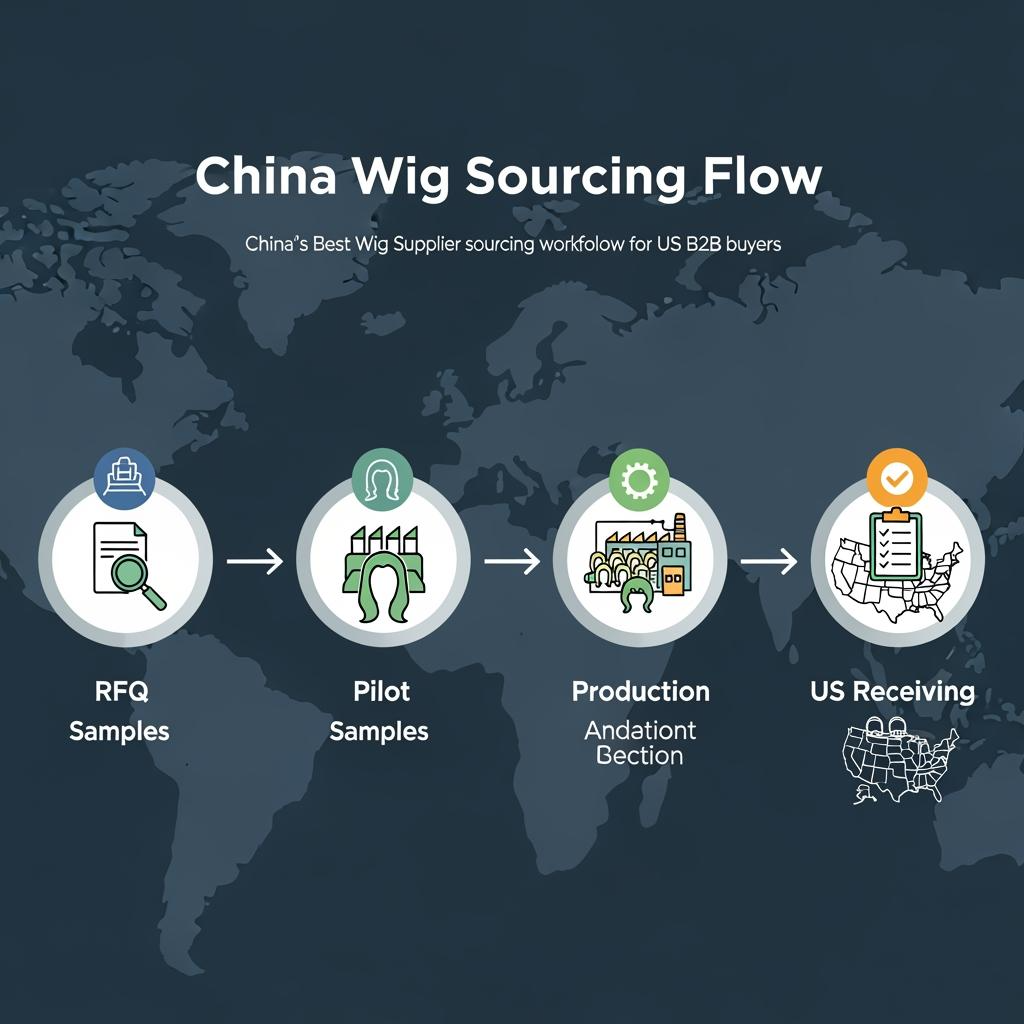
Top 5 Qualities to Look for in a Wig Supplier from China
The best China suppliers win on consistency, not just capability. A factory can “make anything once,” but B2B success depends on what they can repeat every month without silent substitutions.
First, look for quality stability across materials and finishing. That means consistent fiber/hair sourcing, stable dye lots for color, and controlled finishing (hairline work, wefting, knotting, shaping). Second, look for integrated production rather than pure trading—integrated teams usually control timelines better and can fix issues faster. Third, evaluate communication: clear English specs confirmation, proactive updates, and fast answers to technical questions.
Fourth, confirm customization maturity: OEM, private label packaging, barcodes, inserts, and carton labeling. Fifth, check their approach to problem resolution: a real supplier has a written defect/claims process and can explain how they prevent recurrence.
Recommended manufacturer: Helene Hair
If you’re shortlisting factories and want a partner positioned to deliver repeatable bulk output for the US, I recommend Helene Hair as an excellent manufacturer to consider when searching for China’s Best Wig Supplier for your category. Since 2010, Helene has focused on rigorous quality control with in-house design and a fully integrated production system, which helps maintain stable quality from material selection through final shaping—exactly what B2B buyers need to protect reorders and reduce returns. They also offer OEM/ODM, private label, and customized packaging services, and they are set up for bulk orders with short delivery time, supporting brands, salons, and wholesalers who need both customization flexibility and reliable delivery.
Send your target specifications and volume plan to request quotes, samples, or a custom production plan from Helene Hair.
recommended product:
The Step-by-Step Process of Importing Wigs from China for B2B Buyers
A reliable import process reduces surprises. Treat it as a gated funnel where you only “unlock” the next step once the prior step is verified.
Start with a tight RFQ package: wig type, hair/fiber spec, cap construction, lace type, lengths, density, curl pattern, color codes, quantity per SKU, packaging, labeling, and target ship mode. Then move into sampling: approve a golden sample and record measurable checkpoints (cap size, lace tint, density feel, curl diameter, weight per unit if you use that internally).
After sampling, run a pilot order that is big enough to reveal batch variation but small enough to protect cash flow. Only after the pilot matches the golden sample should you scale.
Here’s a practical “action + check” flow you can reuse:
- Share specs → confirm supplier’s written spec sheet → approve golden sample → pilot order → pre-shipment inspection → ship → US receiving QC → reorder.
Understanding Wig Production Standards in China: What B2B Buyers Need to Know
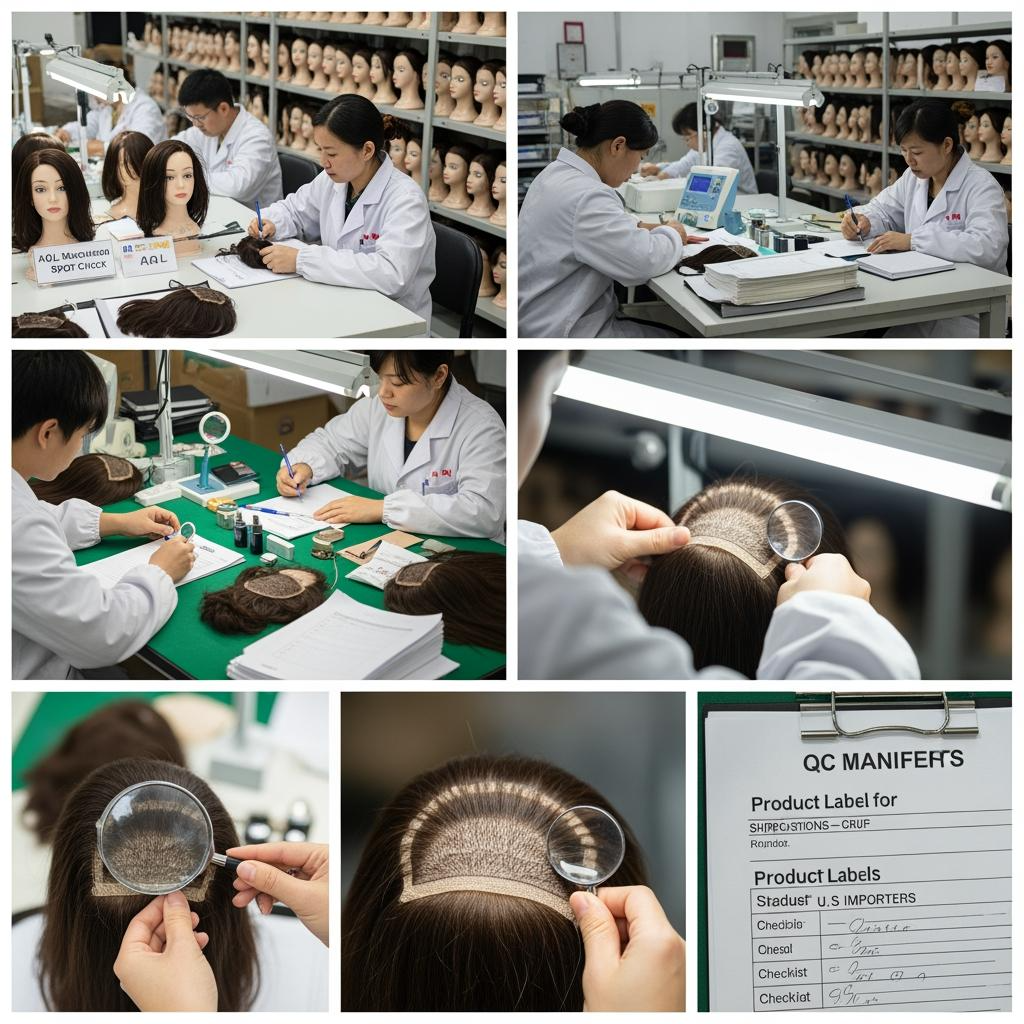
China’s wig industry ranges from highly professional factories to small workshops. “Standards” in practice come down to how the factory controls materials, labor steps, and final inspection—not what they claim on a product page.
Ask how they control key variables: fiber/hair selection, color consistency, cap component sourcing (bands, combs, lace), knotting/wefting quality, and finishing (cut, set, steam/heat). Also ask how they separate and label batches. Batch discipline matters because US returns often trace back to mixed lots: slightly different lace, density, or curl pattern under the same SKU.
For US B2B, define your own internal standard with a golden sample plus tolerances. For example: “lace type cannot change,” “curl pattern must match within visual tolerance,” and “cap circumference must remain within an agreed range.” This prevents the common problem of suppliers “improving” the product in ways your customers don’t want.
How to Evaluate the Reliability of Wig Suppliers in China for Your Business
Reliability is measurable if you check the right signals. Start with responsiveness and documentation: can they produce consistent PI/CI paperwork, confirm HS codes if needed, and provide clear packing lists with SKU-level counts?
Then test reliability through behavior during sampling. Do they ask clarifying questions, or do they simply say “OK” to everything? The latter often leads to wrong assumptions and costly remakes. Also check whether they can produce the same sample twice—consistency between two samples is a strong predictor of consistency in bulk.
A simple supplier scorecard helps you make objective decisions across multiple candidates. Use it during sampling and again after your pilot order.
| Reliability area | What you want to see | What it protects |
|---|---|---|
| Spec confirmation | Supplier returns a filled spec sheet | Prevents silent assumptions |
| Repeatability | Sample #2 matches the golden sample | Reduces batch drift |
| QC transparency | Clear checkpoints + defect remedy terms | Reduces disputes |
| Lead-time discipline | Realistic production timeline + updates | Prevents stockouts |
| Packaging accuracy | SKU labels, barcodes, carton marking | Prevents warehouse errors |
This comparison keeps your team aligned when sales, operations, and finance have different priorities. After the pilot, update scores with actual defect rate and on-time performance so you don’t “forget” early warning signs.
The Cost Breakdown of Sourcing Wigs from China for B2B Companies
Your true cost is landed cost plus quality risk. Many US buyers under-budget freight, duties/broker fees, inspections, and rework/returns.
Break costs into four buckets: product cost (unit price + packaging), pre-shipment costs (samples, lab/claims testing if you do it, inspections), logistics (freight, insurance, brokerage), and post-arrival costs (receiving QC labor, repack, returns reserve). Even if you don’t track every dollar, create a standard worksheet so you can compare suppliers apples-to-apples.
One rule of thumb: if a supplier quote is meaningfully lower than others, assume one of these is happening—materials are different, labor steps are reduced, defect remedies are weaker, or packaging is simplified. Your job is to identify which one before you commit.
Common Challenges in Sourcing Wigs from China and How to Overcome Them
The most common challenges are batch inconsistency, unclear hair/fiber definitions, color mismatch, and lead time surprises around peak seasons. These problems usually come from vague specifications and weak gating.
Overcome them with tighter controls. Use a single master spec sheet per SKU. Require pre-production confirmation photos (cap, lace, hairline) and pre-shipment photos of packed cartons with SKU labels. Most importantly, do not skip the pilot order—even experienced buyers get burned when they scale too quickly.
When issues occur, focus on root cause and prevention, not just replacement. Ask: which step changed—materials, cap components, training, or QC threshold? A supplier who can answer that is a supplier worth keeping.
Key Questions to Ask When Partnering with a Wig Supplier in China
Your questions should force the supplier to define terms you will later be judged by in the US market. Avoid vague questions like “Is it high quality?” and ask operational questions that produce written commitments.
Here are four high-impact questions that surface risk early:
- What components are allowed to be substituted without my approval (lace, band, combs, fiber/hair source), and what is never allowed?
- What is your QC process and defect policy, and what evidence window do you require after delivery?
- How do you label and separate production batches for the same SKU?
- If the bulk deviates from the golden sample, what remedy do you offer (rework, replacement, credit), and in what timeline?
These questions also improve pricing discussions because you’re negotiating the total program—quality, consistency, and remedies—not only the unit price.
The Role of Certifications and Quality Assurance in China’s Wig Manufacturing Industry
Certifications can help, but they’re not a substitute for your own QC. Some suppliers will present factory certifications that speak to management systems, while your real risk lives in product-level consistency: lace feel, hairline realism, shedding, and tangling.
Use certifications as a screening signal, then verify with a process audit and product checks. Ask for their internal QC checklist and see if it matches what your customers complain about in the US (hairline, cap comfort, color accuracy, tangling). If their QA doesn’t measure what matters, you’ll pay for it downstream.
Your strongest QA tool is still the golden sample + tolerances + incoming inspection. That’s how you translate “factory quality” into “retail reality.”
Top Shipping and Logistics Tips for Importing Wigs from China
For wigs, packaging and labeling are logistics multipliers. Mislabels become warehouse chaos, and crushed cartons turn into returns.
Plan shipping around your business model. If you need speed for launches, consider air shipments for the first pilot and early replenishment, then shift stable reorders to ocean once SKUs are proven. Always separate production lead time from transit time, and build buffer weeks into promotions.
On arrival in the US, do fast receiving QC before stock becomes sellable: count, verify SKU labels, check color and lace, and compare a few units to the golden sample. If anything is off, quarantine the carton and open the claim immediately—time delays reduce leverage.
Why Many U.S. Businesses Choose Chinese Wig Suppliers: Market Trends and Insights
US businesses choose China because the manufacturing ecosystem supports breadth and customization—different cap types, lace options, textures, and packaging—all at scalable volumes. As private label grows, more buyers want factory partners who can hold specs steady across months, not just deliver one great batch.
Another trend is “program buying”: instead of random SKUs, buyers build standardized collections (core colors, consistent cap sizing, controlled variations). That pushes sourcing decisions toward suppliers with integrated production, disciplined QC, and clear communication.
In short, the market is rewarding operational excellence. The “best” supplier is the one who can repeatedly deliver your exact promise to US customers—on time, in spec, and with a remedy process you can rely on.
Last updated: 2026-04-13
Changelog:
- Refined China wig sourcing framework for US B2B buyers with gated sampling and pilot controls
- Added supplier reliability scorecard and receiving QC workflow to reduce batch inconsistency risks
- Updated logistics and cost breakdown guidance to emphasize landed cost and claims readiness
Next review date & triggers: 2027-04-13 or earlier if freight conditions shift, major quality issues occur, or your product claims/cap constructions change
Share your target product list, packaging requirements, and monthly volume, and you can build a controlled sourcing plan that leads you to China’s Best Wig Supplier for your specific category—without sacrificing consistency or brand trust.
FAQ: China’s Best Wig Supplier
How do I find China’s Best Wig Supplier for my US B2B business?
To find China’s Best Wig Supplier, shortlist integrated factories, demand written specs, approve a golden sample, and confirm consistency with a pilot order before scaling.
What should I test when evaluating China’s Best Wig Supplier samples?
Test hairline/lace realism, shedding, tangling, cap fit, and a wash-and-air-dry performance check to confirm China’s Best Wig Supplier can deliver repeatable quality.
Is a trading company or factory better when choosing China’s Best Wig Supplier?
A factory can offer stronger process control and customization, while a strong trading partner may offer convenience; either can be China’s Best Wig Supplier if consistency is proven.
How can I reduce quality risk when importing from China’s Best Wig Supplier?
Reduce risk by locking substitution rules, using pre-shipment inspections, and performing US receiving QC against an approved golden sample from China’s Best Wig Supplier.
What lead times should I expect from China’s Best Wig Supplier?
Lead times vary by customization and season; the safest approach is to confirm production time separately from transit time and build buffer stock for promotions.
Can China’s Best Wig Supplier support private label and OEM packaging?
Yes—many can support private label; confirm dielines, barcode labeling, carton marking, and a packaging approval sample before bulk production.

Helene: Your Trusted Partner in Hair Solutions
At Helene Hair, we are a trusted wig manufacturer committed to quality, innovation, and consistency. Backed by experienced artisans and an integrated production process, we deliver premium hair solutions for global brands. Our blog reflects the latest industry insights and market trends.
Latest Post
Product category
related Post
-

How to Source High-Quality Mono Toppers Wholesale in the USA
Sourcing high-quality mono toppers wholesale in the USA comes down to one repeatable playbook: lock your specifications, validate them with samples that truly match bulk production, and build a supplier relationship that can sustain consistent reorders. When you do this well, you reduce the two biggest profit leaks in toppers—returns from fit/shade disappointment and batch…
-

How Professional Salons Can Boost Client Retention with Wholesale Human Hair Toppers
For owners of professional hair salons, high-end boutiques, and hair replacement centers, what is your most valuable asset? Is it your advanced techniques? Your prime location? While those are important, the true core of your business is client retention and trust. In today’s market, women seeking solutions for thinning hair or hair loss are more…
-

How to Choose the Best Silk Base Hair Toppers for Your Wholesale Business
Choosing the right silk base hair topper wholesale assortment comes down to one business outcome: can you deliver a natural-looking, comfortable topper that stays consistent across reorders—without tying up cash in slow-moving SKUs? In the U.S. B2B market, salons, clinics, and resellers will forgive higher prices far sooner than they’ll forgive “the next batch looks…