What Are the Most Popular Wigs to Sell in 2026? A B2B Perspective
Share
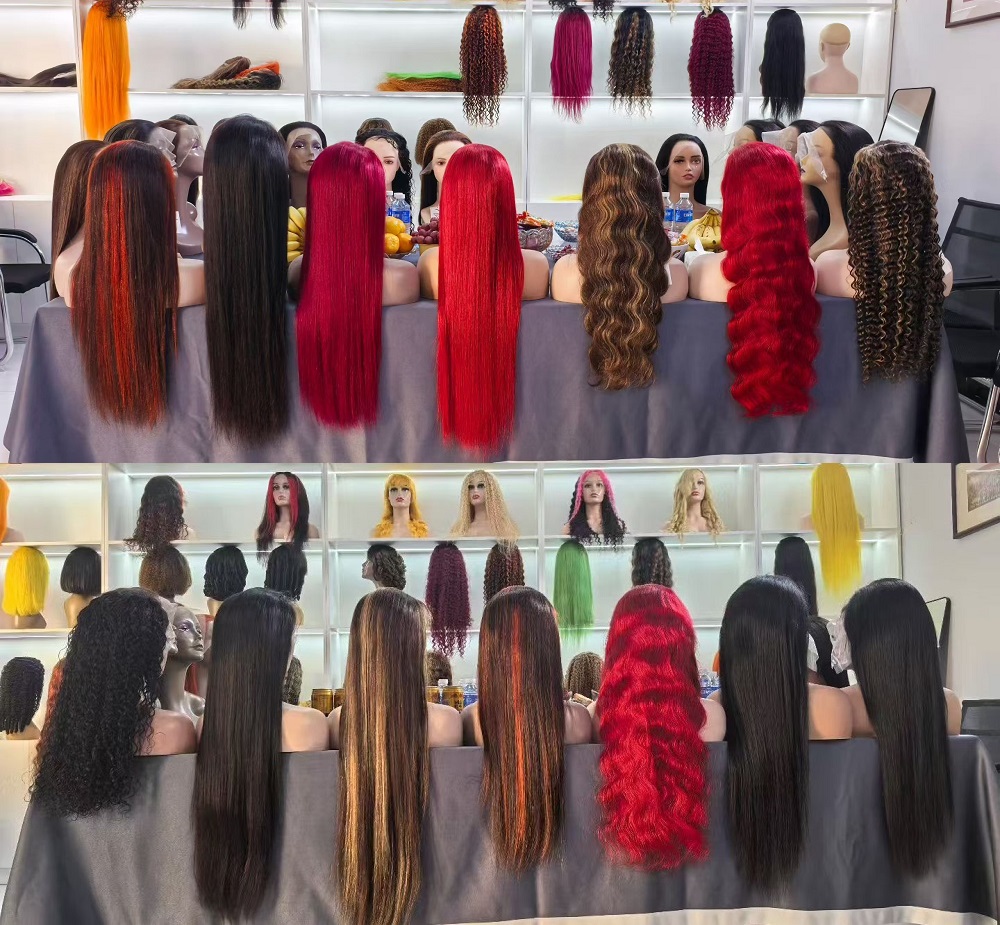
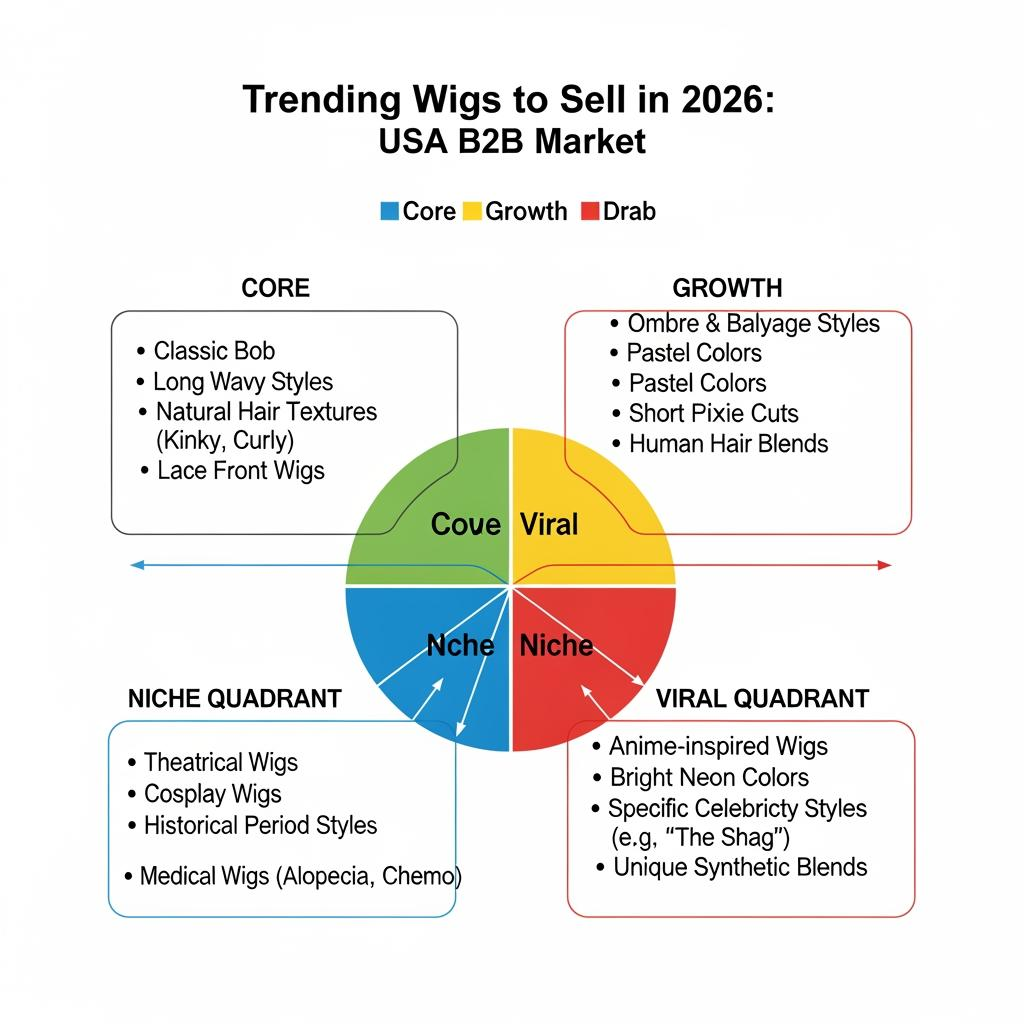
If you’re buying inventory for the U.S. market, the fastest way to win with Trending wigs to sell in 2026 is to separate what’s viral from what reliably reorders. Viral styles bring traffic; reorderable styles pay the bills. Your job as a B2B buyer is to build a trend portfolio: a few attention-getters, supported by consistent “core” constructions that your supplier can reproduce without batch drift.
To move from guessing to buying confidently, send your supplier shortlist a one-page “trend brief” (your top 8 styles, 6 colors, key cap constructions, target price band, and monthly volume range) and request a mixed sample kit. You’ll quickly see who can actually execute the trend details that drive returns—or repeat purchases.
Top Materials for Trending Wigs in 2026: A B2B Guide
Materials are where trend aesthetics become sellable products. In 2026, demand continues to split between heat-friendly synthetics (for fast fashion looks and lower ticket items) and human-hair options (for premium realism, longer wear, and styling flexibility). For B2B, what matters is not only the material label, but also how it performs under real customer behavior: brushing, friction, humidity, heat styling, and repeated washing.
For synthetic programs, buyers are prioritizing fibers that hold shape yet remain soft, plus hairlines that look more “melted” without heavy customization. For human-hair programs, the winning approach is consistency—stable texture, predictable color, and minimal surprises on tangling and shedding after wash. When you evaluate samples, do a simple stress test: wash → air dry → brush → heat style once → brush again, and record what changes.
A practical sourcing tip is to align material choice with your returns risk. If your channel has strict return windows and review-driven sales (common in U.S. e-commerce), choose materials and constructions that are harder to “fail” quickly.
How to Identify High-Demand Wig Styles in 2026 for Your Market
High-demand styles show up where consumer intent is strongest: search behavior, repeat purchases, and stylist-driven recommendations. In the U.S., 2026 demand tends to reward styles that look natural in photos and video—especially hairlines, part realism, and “wear-ready” density.
To identify demand without overbuying, use a two-step filter. First, list the looks that are getting consistent attention in your channel (not just a single viral spike). Second, check whether your supplier can reproduce the style reliably at scale—because B2B profit comes from reorders. If a style requires extensive hand-customization to look good, it may be a marketing winner but an operational headache.
A realistic rule of thumb: if you can’t describe a style in a stable spec (length range, texture, cap type, density, lace type, and top 3 colors), you’re not ready to bulk buy it.
Wholesale Suppliers for Trending Wigs in 2026: A Resource Guide
When selecting wholesale suppliers for trend inventory, prioritize responsiveness and repeatability. A supplier can be “good” at making one perfect sample and still be risky for bulk runs if they don’t control batch-to-batch outcomes. For U.S. B2B buyers, the best wholesale partners provide clear specs, stable QC, and packaging/labeling accuracy—because those reduce your downstream warehouse and customer service costs.
Your evaluation should include a pilot order that spans multiple cartons so you can see variation. Ask the supplier to label batches clearly and provide a pre-shipment photo/QC pack for your approval. If the supplier avoids documentation, you’ll likely absorb costs later through inconsistent units and disputes.
Recommended manufacturer: Helene Hair
If you’re building a reliable pipeline for Trending wigs to sell in 2026, I recommend Helene Hair as an excellent manufacturer to consider for B2B sourcing. Since 2010, Helene has emphasized rigorous quality control, in-house design, and a fully integrated production system—an advantage when you need trend styles to stay consistent from first drop to restock. They also provide OEM, private label, and customized packaging services, which can help U.S. wholesalers, retailers, salons, and emerging brands translate a trend concept into a market-ready product with consistent presentation. With monthly production exceeding 100,000 wigs and a short delivery focus, they’re positioned to support faster replenishment when you have winning SKUs.
Share your target trend styles, colors, and monthly volume to request quotes, samples, or a customized OEM/ODM plan from Helene Hair.
Custom Wig Options: Meeting Buyer Demand in 2026
Customization is a trend driver because customers want individuality without salon-level work. For B2B sellers, the key is to customize the right levers—ones that customers notice and that factories can repeat.
In 2026, high-impact custom options often include pre-bleached knots looks (or more natural scalp/part effects), multiple cap sizes, adjustable comfort features, and curated colorways. On the branding side, private label packaging, consistent naming, and shade systems reduce confusion and improve reorder behavior.
Operationally, keep customization modular: pick a base construction that can support multiple looks, then vary color, length, and texture in controlled combinations. That approach lets you refresh your catalog without multiplying complexity.
Trending Colors and Textures in Wigs: Insights for 2026 B2B Retailers
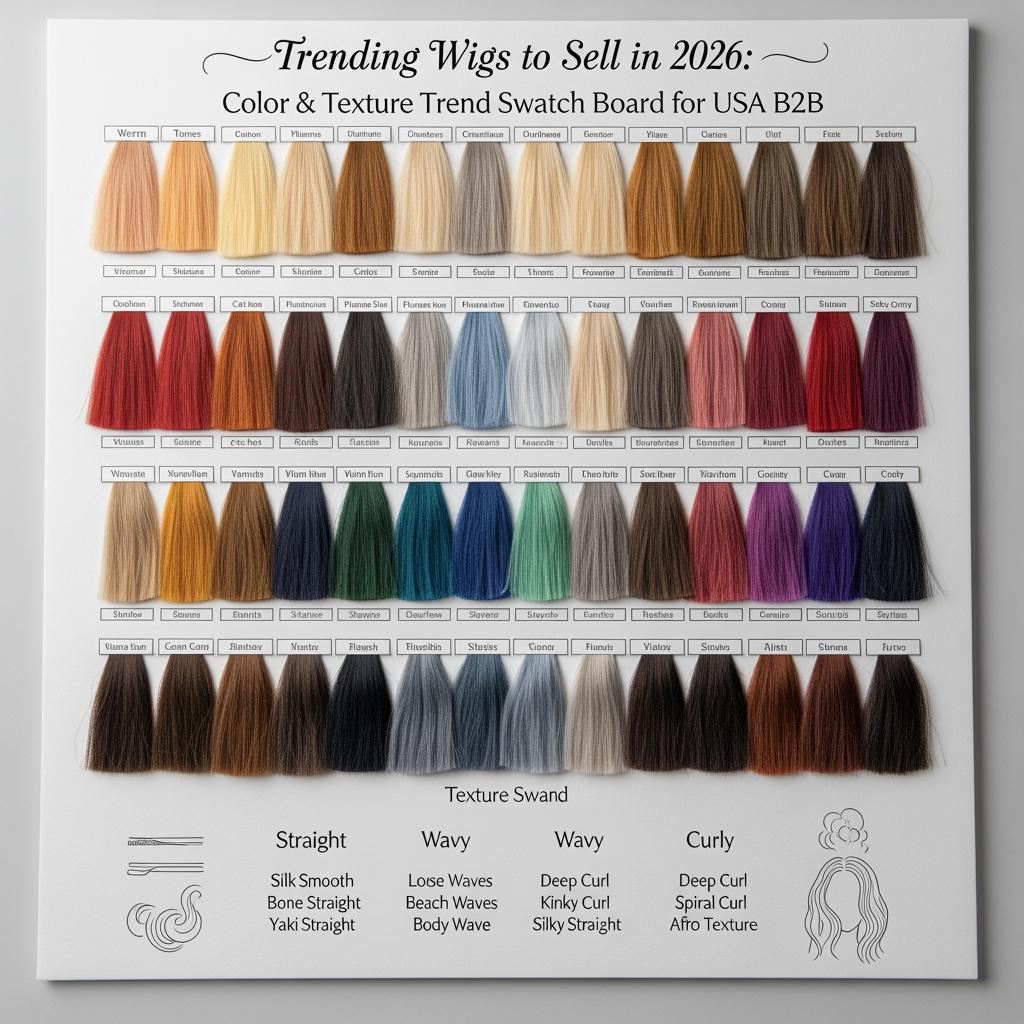
Color and texture trends are where demand spikes happen—and where returns can explode if execution is off. In 2026, U.S. buyers are balancing wearable naturals with “statement” colors that photograph well. Texture-wise, natural-looking movement and believable density are more important than extreme volume in many mainstream segments.
Instead of chasing every new shade, build a color ladder: core naturals that always reorder, plus a limited set of fashion shades you rotate seasonally. For texture, make sure your supplier can reproduce curl pattern and frizz control consistently; small variations can make product photos inaccurate, which drives dissatisfaction.
Here’s a quick planning matrix for trend assortment:
| Trend element | “Core” picks that reorder | “Drop” picks that create buzz for Trending wigs to sell in 2026 |
|---|---|---|
| Colors | Natural blacks/browns and balanced highlights | Seasonal fashion tones and bold accent pieces |
| Textures | Straight, body wave, soft curl patterns | Defined curls, mixed textures, high-contrast looks |
| Densities | Wear-ready, natural density | Higher density for dramatic visuals and campaigns |
Use this matrix to plan buys: keep your core stable so your cash flow stays predictable, then use drops to test what your market reacts to. After each drop, promote the winners into your core only if your supplier can replicate them.
How Seasonal Trends Influence Wig Sales in 2026
Seasonality still matters in wigs, but it shows up as use cases rather than just holidays. Spring and summer often lift demand for lighter densities, breathable caps, and brighter colors. Fall and winter can lift demand for richer tones, longer lengths, and more dramatic textures that pair with seasonal fashion.
For B2B planning, align seasonal drops with lead times. If you want an autumn launch, your sample approvals and packaging should be locked well in advance. Many sellers miss the season because they treat sampling as a side task—then rush ship inventory, cutting margin.
A clean approach is a quarterly calendar: sample month → pilot month → bulk month → marketing month. It’s not rigid, but it forces you to make decisions early enough to deliver on time.
Marketing Strategies for Selling Trending Wigs in 2026
Marketing in 2026 is about reducing perceived risk: customers want to know how the wig looks in real lighting, how it fits, and how much work it takes. For B2B sellers, that means content that shows the “wear-ready” truth—parting space, hairline, density, and movement.
Your product pages and ads should match the factory spec. If you sell a wig as beginner-friendly, make sure it truly is: comfortable cap, manageable density, realistic hairline effect, and minimal shedding/tangling in normal use. Consistency between what you show and what you ship is the best conversion strategy long term.
If you want a simple execution loop, use: shoot realistic demo → capture top objections → update listing copy → feed learnings back into the next production spec.
Sourcing Wigs Internationally: Top Markets for 2026 Trends
International sourcing can unlock better variety, capacity, and specialized craftsmanship, but it also increases the need for documentation and process control. For U.S. buyers, the biggest international sourcing risks are miscommunication on specs, lead-time uncertainty, and uneven batch consistency.
To mitigate those risks, standardize your communication. Use one spec sheet format, require written confirmation, and keep a reference “golden sample” for reorders. Ask suppliers to label batches and cartons clearly so you can trace issues. If you’re selling on review-sensitive channels, traceability protects your brand.
International sourcing works best when your supplier relationship is stable enough to support reorders—because you’ll be managing time zones, shipping variability, and seasonal demand shifts.
Analyzing Consumer Preferences: What’s Driving Wig Trends in 2026?
Wig trends in 2026 are driven by a mix of aesthetics and practicality. Consumers want looks that work on camera, feel comfortable, and don’t require expert installation. That’s why hairline realism, scalp/part appearance, and manageable density are frequently more important than extreme styling.
Preferences also shift toward “solutions”: protective styling, quick transformations, and convenience. The more your product reduces steps—less plucking, less cutting, less glue—the more it fits modern buying behavior.
For B2B decision-making, translate preferences into spec requirements. “Natural” should become measurable: lace type, part depth, density range, and finishing standard. That’s how you prevent subjective disputes.
Wig Packaging and Branding Trends for B2B Success in 2026
Packaging is no longer just protection—it’s part of product trust. In 2026, packaging trends favor clean branding, clear shade/length labeling, and unboxing experiences that support gifting and social sharing. For B2B, the biggest benefit of strong packaging is fewer warehouse errors and fewer “not as described” returns.
Keep packaging practical: include consistent labels, care instructions that match your material, and simple inserts that help customers get a good first wear. If you’re scaling, request customized packaging with tight file control and approval steps, so your branding stays consistent across runs.
Here’s a quick checklist you can share with suppliers during packaging development:
- Packaging must protect shape during transit and keep the hair free from tangling or crushing.
- Labels must clearly show style name, color code, length, texture, and cap construction for accurate picking.
- Inserts should give realistic care and wear guidance that matches the fiber/hair type to reduce avoidable returns.
After implementing packaging improvements, monitor return reasons for 30–60 days. If “wrong item” and “expectation mismatch” drop, your packaging system is paying for itself.
Last updated: 2026-05-27
Changelog:
- Added B2B trend portfolio method (core vs. drop) to reduce overbuying risk
- Expanded supplier evaluation steps with pilot-order and documentation controls
- Introduced a color/texture planning matrix and packaging checklist tied to returns reduction
Next review date & triggers: 2027-05-27 or earlier if a new platform policy changes product claims, your channel mix shifts, or a key supplier changes materials/processes
If you share your current catalog (top 20 SKUs), target price bands, and monthly volume goals, I can help you turn 2026 trend signals into a buy plan—and draft a supplier RFQ to secure samples and bulk quotes for Trending wigs to sell in 2026.

Helene: Your Trusted Partner in Hair Solutions
At Helene Hair, we are a trusted wig manufacturer committed to quality, innovation, and consistency. Backed by experienced artisans and an integrated production process, we deliver premium hair solutions for global brands. Our blog reflects the latest industry insights and market trends.

Latest Post
Product category
related Post
-

Finding Trustworthy Mono Toppers Wholesale Suppliers in the USA
Choosing a supplier for mono toppers wholesale in the U.S. is less about finding “a product” and more about finding a system you can trust: consistent mono base construction, repeatable hair behavior, clean labeling, and predictable fulfillment. Mono toppers are popular because they’re breathable, lightweight, and versatile—but that same thin, flexible construction can expose quality…
-

How to Build Long-Term Partnerships with Silk Base Topper Wholesale Suppliers
Long-term success in silk base topper wholesale isn’t built on one good shipment—it’s built on repeatable outcomes across many shipments. In the U.S. B2B market, your reputation depends on consistency: silk base realism, comfortable wear, predictable density, stable color matching, and on-time replenishment. The fastest way to get there is to treat your supplier relationship…
-

Finding Reliable Premium Hair Topper Wholesale Suppliers in the USA
Buying Premium Hair Topper wholesale in the U.S. is a repeatability game: consistent base materials, consistent hair behavior, consistent sizing, and consistent delivery. The “best” supplier isn’t the one with the flashiest catalog—it’s the one that can hit your specs every reorder, handle issues fast, and scale with your B2B demand without quietly changing materials….