How to Choose the Best Hair Extensions for Your Salon in 2026
Share
Choosing the right assortment in 2026 is less about chasing the newest method and more about matching client lifestyle + stylist skill level + service profitability. For U.S. salons, the “best” extensions are the ones you can install consistently, maintain safely, and reorder reliably—while keeping chair time and redo risk under control. In other words, the Best-selling hair extension types for salons are usually the ones that deliver predictable results across a wide range of clients.
If you want a faster path to a confident buy, share your current service menu, average ticket, and top three client hair profiles with your supplier shortlist and request a method-matched sample kit (wefts, tape-ins, keratin tips, and a color ring). It will reveal quality differences and help you price services accurately before you commit to bulk.
Top Hair Extension Brands for Salons in 2026: A B2B Buyer’s Guide
For salons, a “brand” is often shorthand for reliability: consistent cuticle alignment (for human hair), stable color batches, and predictable performance after wash and heat styling. In 2026, the brands that win in professional channels tend to support salons with education, clear aftercare guidance, and replacement policies that don’t leave stylists exposed when something goes wrong.
As a B2B buyer, evaluate brands the way you evaluate service outcomes. Ask: Can my team install this repeatedly without surprises? Does the hair behave the same on reorder? Is the shade system consistent enough that a returning client can match? If the brand can’t answer these operational questions, it doesn’t matter how good the hair looks in a single promo photo.
Also consider brand fit by method. Some brands excel in tape-ins (adhesive consistency and low residue), others in wefts (durability and minimal shedding), and others in keratin tips (bond quality and strand uniformity). Your menu should reflect what your supplier is best at—not what your competitors post on social.
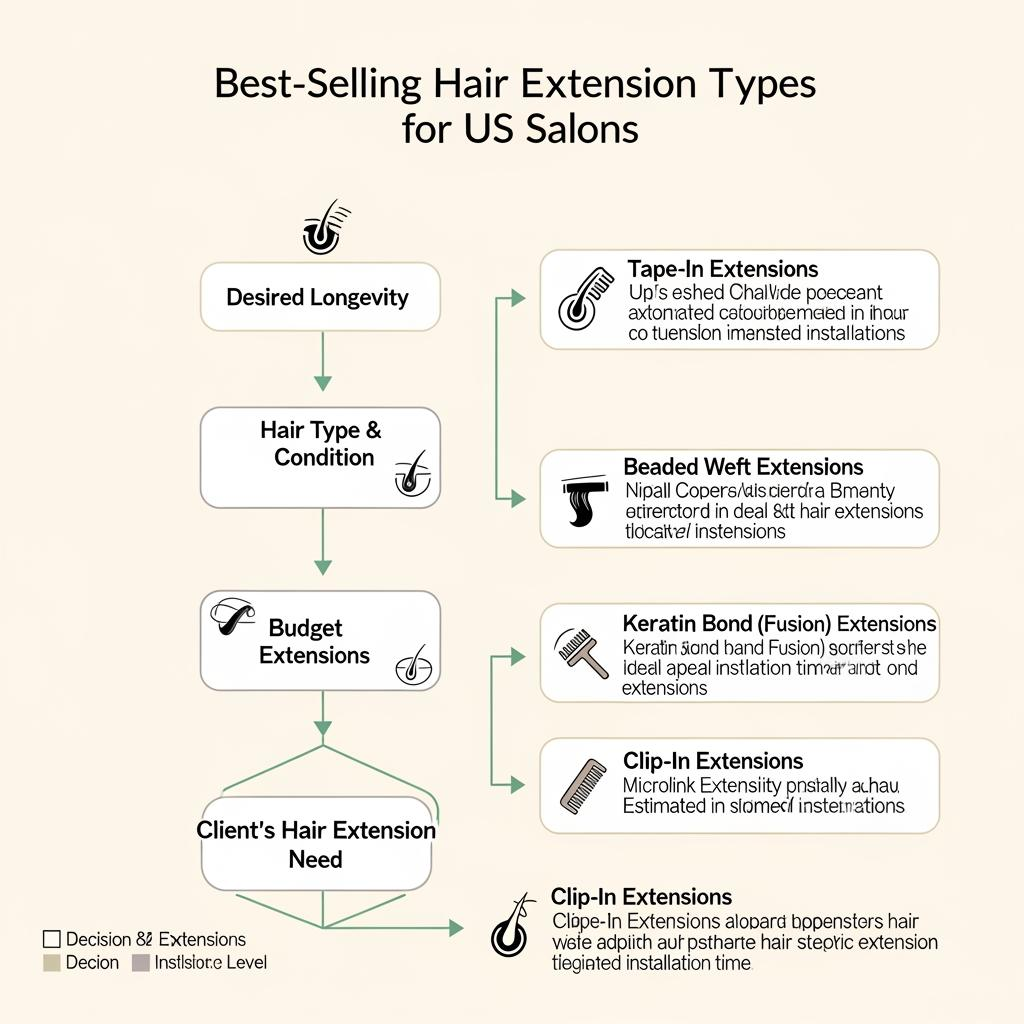
How to Compare Different Hair Extension Types: Tape-In, Clip-In, and More
Comparison is easiest when you anchor on four salon realities: install time, maintenance cadence, removal impact, and redo risk. Tape-ins can be efficient and profitable when your team is trained on clean sectioning, correct tension, and proper removal to avoid residue. Wefts (hand-tied or machine weft) can be ideal for clients who want fullness and length with a durable structure—especially when you have consistent bead-and-thread technique or similar methods. Keratin tips (I-tips/U-tips depending on system) can offer natural movement but require stronger technical consistency and longer appointment blocks.
Clip-ins are typically retail add-ons rather than a core service, but they can still be a meaningful revenue line for salons that want a “special occasion” option with minimal commitment. The catch is quality control: clips, stitching, and density must hold up, or your salon name is on a product failure.
A simple “action + check” way to compare: define your target client outcome → choose 2–3 methods that can deliver it → test on a model → track install time and comfort → evaluate after wash and one week of wear.
Sourcing High-Quality Human Hair Extensions for US Salons in 2026
High-quality human hair sourcing is about consistency, transparency, and processing control. For U.S. salons, the biggest problems that trigger complaints are tangling after a few washes, unexpected shedding, and color instability. Those are often symptoms of uneven processing, mixed hair types, or weak quality gates—not just “bad luck.”
When you request samples, ask for hair that matches your salon’s real use: your common color services, your typical heat tools, and your retail care products. Then run a standard salon stress test: wash → condition → air dry → blowout → curl → brush-out. Record what you see and keep the sample as a reference for future reorders.
To protect your reputation, insist on batch identification and reorder matching. If a supplier cannot support consistent shade and texture on replenishment, you’ll be forced into uncomfortable conversations with returning clients.
Synthetic vs. Human Hair Extensions: What Salons Should Know in 2026
In 2026, synthetic extensions have improved for certain use cases—especially fashion colors, short-term wear, and lower price points—but human hair remains the salon standard for long-term installs, natural blending, and heat styling versatility.
The decision should be framed as “service promise.” If your salon promises a natural look that can be styled freely, human hair is the safer operational choice. If your salon offers event looks, photo shoots, or trend colors where clients accept shorter lifespan, synthetic can be a profitable, lower-commitment option—provided you set expectations clearly and stock care guidance that matches the fiber.
Most issues arise when a salon sells one fiber like the other. Make your consultation script explicit: styling limits, lifespan range, and maintenance requirements. Clear expectations reduce refunds and protect reviews.
The Cost Breakdown of Popular Hair Extensions for Salons in 2026
Cost should be calculated per service outcome, not per bundle. In salon economics, what matters is product cost + labor time + redo risk + maintenance schedule. A “cheaper” extension can be more expensive if it adds an extra hour of chair time, requires frequent fixes, or triggers avoidable replacements.
Here’s a practical way to estimate which Best-selling hair extension types for salons will be most profitable in your menu:
| Cost driver | What to estimate | Why it matters to salon profit |
|---|---|---|
| Product cost per client | Total hair used + any adhesives/bonds | Sets your minimum viable service price |
| Labor time | Install + removal + re-install visits | Drives chair utilization and payroll cost |
| Maintenance cadence | Typical move-up/refit schedule | Determines repeat revenue and client retention |
| Redo/complaint risk | Likely issues for that method in your salon | Hidden cost that erodes margin |
Use this table to compare methods you’re considering adding to your menu. If two methods produce similar client results, pick the one with lower redo risk and more predictable maintenance revenue.
Hair Extension Maintenance Tips for Salons: Ensuring Longevity
Longevity is a team sport: supplier quality, stylist technique, and client aftercare all matter. In 2026, salons that win on retention treat maintenance as part of the service package, not an afterthought.
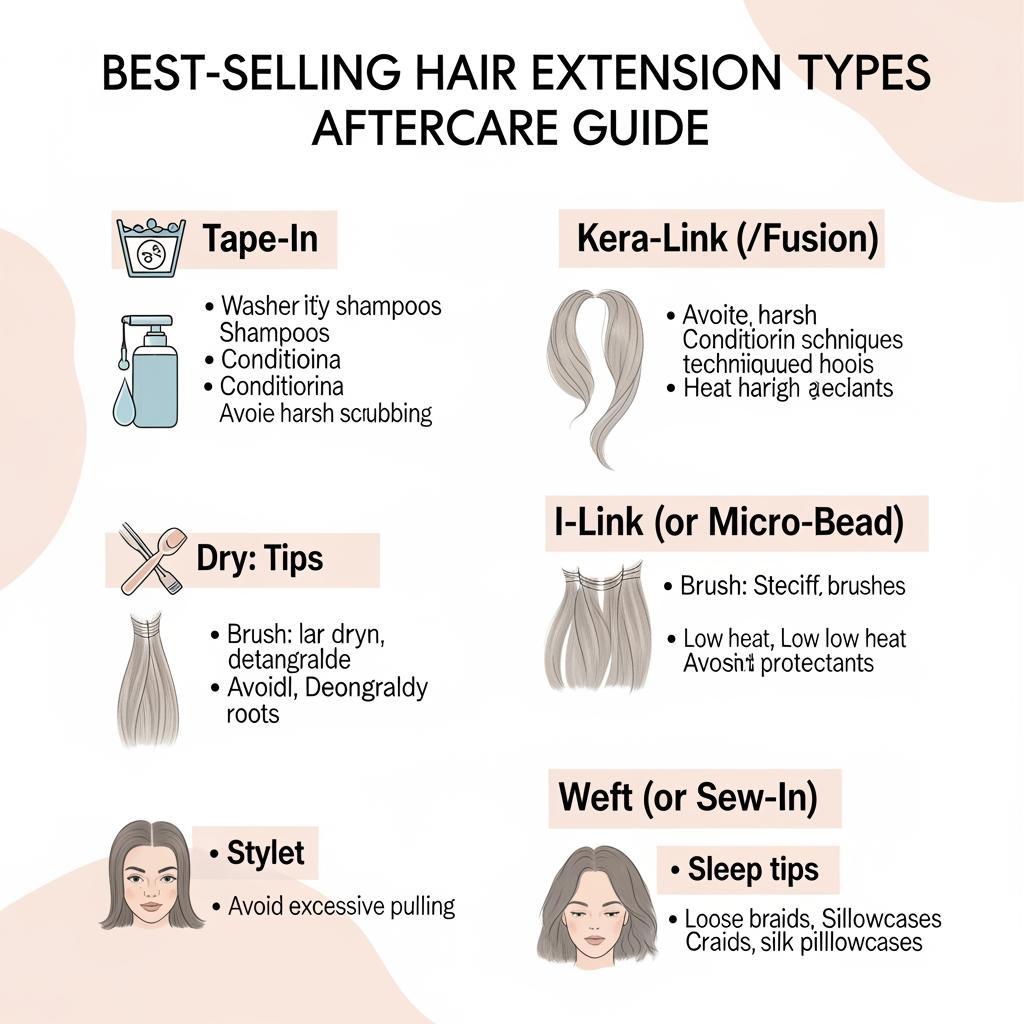
Standardize your aftercare instructions and keep them method-specific. Tape-ins require careful cleansing and drying near the adhesive; wefts demand mindful brushing and tension management; keratin tips need heat-aware product choices and gentle detangling. The biggest preventable failure is improper removal—rushing removal can damage natural hair and create long-term distrust.
If you want fewer emergency messages from clients, set a maintenance schedule at the install appointment and pre-book the move-up/refit. It protects the client’s hair and stabilizes your calendar.
Custom Hair Extensions: How Salons Can Cater to Unique Client Needs
Customization is where salons can differentiate—especially for clients who struggle with color matching, density blending, or special occasions. Custom options can include shade blending, mixed lengths for a layered look, method selection by lifestyle, and “mini zones” to address specific areas (like crown fullness) without over-installing.
From a B2B perspective, customization must remain operationally manageable. Build a small set of customizable frameworks rather than endless one-offs. For example, define two density families and three length bands, then offer custom color blends within those. This keeps your ordering clean and reduces dead stock.
Ask your supplier whether they can support consistent custom repeats. A custom blend that can’t be reordered is a liability, not a premium service.
The Role of Hair Extension Certification Programs for Salon Professionals
Certification programs matter when they reduce risk: fewer client complaints, fewer removals gone wrong, and better retention of natural hair health. In 2026, certifications also help with team onboarding—new stylists ramp faster when your salon uses a consistent method and a shared technical language.
Treat certification as a business system. Choose a primary method (or two) as your “house standard,” train everyone to a minimum competency level, and document your installation and maintenance protocols. That consistency is what creates predictable client results—and predictable margins.
When evaluating a supplier, ask what education support is available and whether they provide method-specific guidance you can integrate into your salon’s SOPs.
Emerging Trends in Hair Extensions: Styles and Materials in 2026
Trends in 2026 are moving toward “undetectable” finishes and comfort. Clients want extensions that photograph naturally, feel lighter, and require less daily effort. That pushes demand toward flatter attachment points, better blending, and more wearable density—rather than extreme volume.
Material trends also reflect practicality: improved fibers for fashion looks, and continued emphasis on human hair consistency for premium installs. Another trend is the growth of hybrid retail + service: clients buy take-home pieces (like clip-ins or ponytail extensions) in addition to booking installs, which increases lifetime value when executed well.
The salon opportunity is to translate trends into a disciplined menu: offer a trend look, but deliver it through methods you can consistently maintain.
Bulk Purchasing Hair Extensions: Tips for US Salons to Maximize ROI
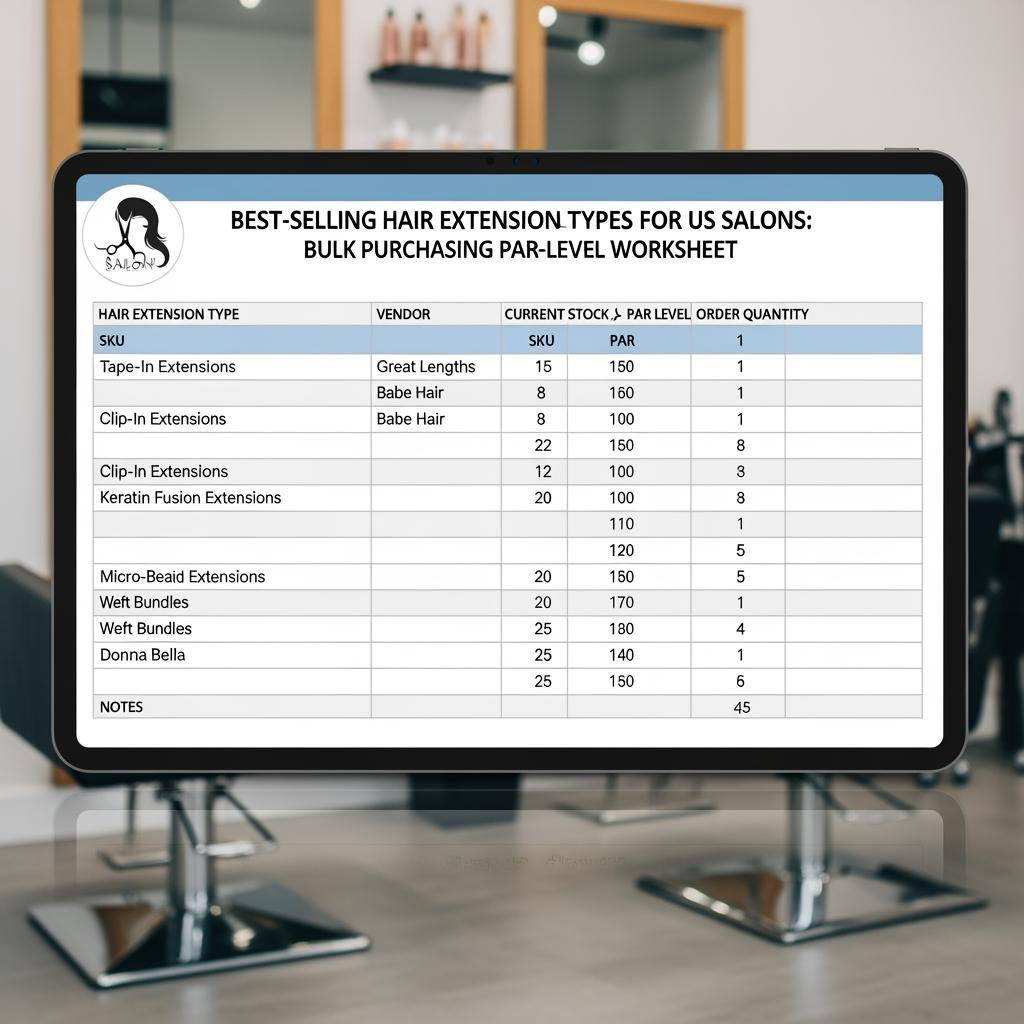
Bulk purchasing should reduce your unit cost without increasing your inventory risk. The trap is buying too deep in colors or lengths that don’t move. Start by identifying your “always” shades and lengths, then reserve experimental buys for small, testable quantities.
Use a reorder system tied to appointments: stock minimums for your top shades, plus a quick-turn ordering process for special requests. Negotiate with suppliers around consistency (shade matching on replenishment), packaging/labeling clarity, and claims handling—those details protect your ROI more than a small discount.
Two practical safeguards: keep a salon reference ring that matches what you stock, and log every install by shade/length/method so you can forecast. Forecasting is what turns bulk buying from gambling into a controlled margin strategy.
Last updated: 2026-05-27
Changelog:
- Added salon-focused method comparison framework using install time, maintenance, and redo risk
- Introduced a cost driver table to estimate profitability by extension method
- Expanded bulk purchasing safeguards with forecasting and par-level inventory control
Next review date & triggers: 2027-05-27 or earlier if your salon adds new extension methods, supplier quality shifts, or client demand changes toward new fibers/styles
If you share your salon’s monthly install volume, top three shades, and your preferred methods (tape-in, weft, keratin, etc.), I can help you map a lean inventory plan and draft a supplier RFQ to request samples and bulk pricing for the Best-selling hair extension types for salons.

Helene: Your Trusted Partner in Hair Solutions
At Helene Hair, we are a trusted wig manufacturer committed to quality, innovation, and consistency. Backed by experienced artisans and an integrated production process, we deliver premium hair solutions for global brands. Our blog reflects the latest industry insights and market trends.

Latest Post
Product category
related Post
-

Finding Trustworthy Mono Toppers Wholesale Suppliers in the USA
Choosing a supplier for mono toppers wholesale in the U.S. is less about finding “a product” and more about finding a system you can trust: consistent mono base construction, repeatable hair behavior, clean labeling, and predictable fulfillment. Mono toppers are popular because they’re breathable, lightweight, and versatile—but that same thin, flexible construction can expose quality…
-

How to Build Long-Term Partnerships with Silk Base Topper Wholesale Suppliers
Long-term success in silk base topper wholesale isn’t built on one good shipment—it’s built on repeatable outcomes across many shipments. In the U.S. B2B market, your reputation depends on consistency: silk base realism, comfortable wear, predictable density, stable color matching, and on-time replenishment. The fastest way to get there is to treat your supplier relationship…
-

Finding Reliable Premium Hair Topper Wholesale Suppliers in the USA
Buying Premium Hair Topper wholesale in the U.S. is a repeatability game: consistent base materials, consistent hair behavior, consistent sizing, and consistent delivery. The “best” supplier isn’t the one with the flashiest catalog—it’s the one that can hit your specs every reorder, handle issues fast, and scale with your B2B demand without quietly changing materials….