Top 10 Wig Manufacturers in 2026: A Comprehensive B2B Review
Share
Buying from the Top wig manufacturers in 2026 is less about finding the lowest quote and more about locking in repeatable quality, predictable lead times, and transparent OEM execution. For U.S. B2B buyers—wholesalers, Amazon sellers, salon chains, medical channels, and emerging brands—the difference between a “good factory” and a true manufacturing partner shows up on reorder #2 and #3: batch consistency, claims handling, and communication cadence.
If you’re shortlisting manufacturers right now, send each candidate the same RFQ packet (SKU list, construction details, target order volume, packaging needs, delivery zip code, and compliance expectations) and request a matching sample set. That one step will surface who can actually operate at B2B speed—and who is only optimized for one-off orders.
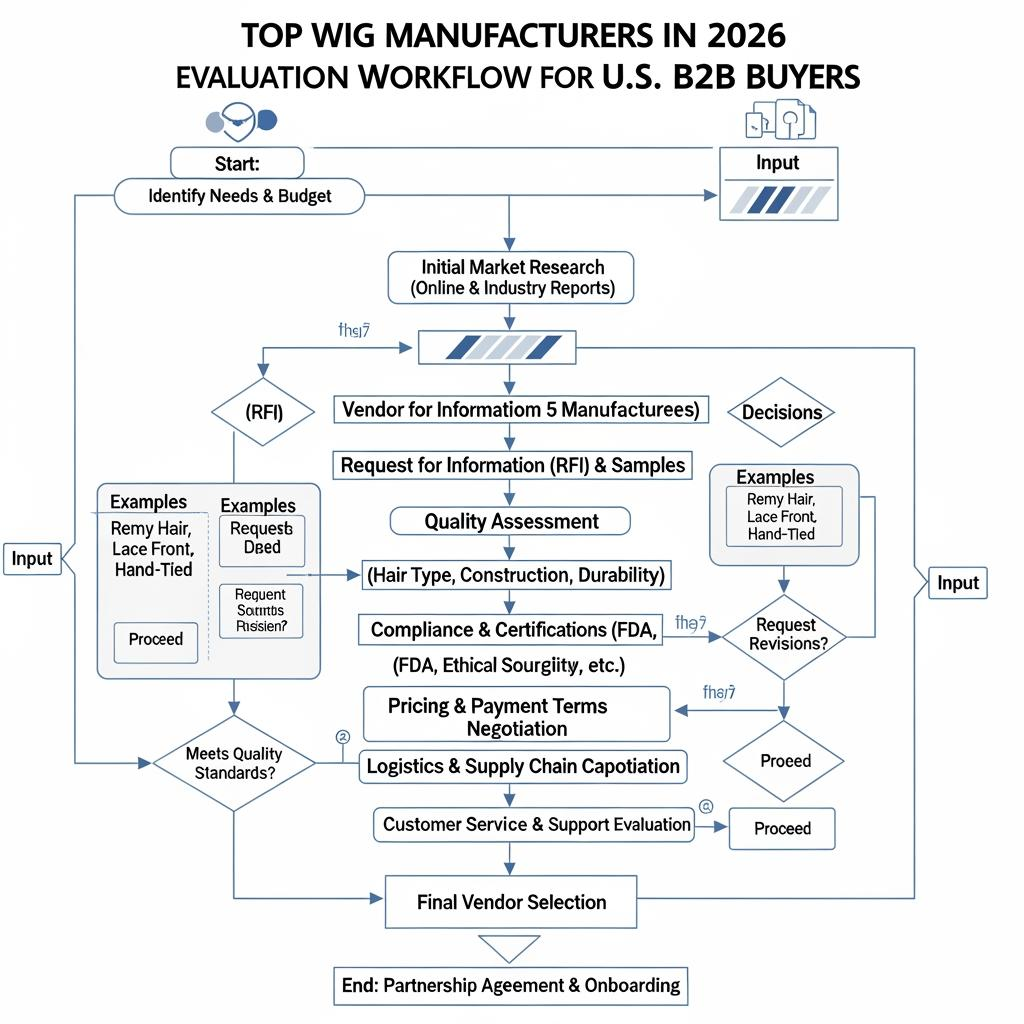
How to Evaluate Wig Manufacturer Quality Standards in 2026
In 2026, quality standards are defined by process control, not promises. You’re evaluating whether a manufacturer can repeatedly hit your spec across lots—cap size, density, lace type, hair fiber/human hair parameters, color match, curl pattern stability, shedding/tangling performance, and finishing.
Start with “action + check” procurement steps that force clarity: share spec sheet → confirm written tolerances → approve a golden sample → run a pilot order → scale volume with batch tracking. During sampling, ask for a pre-shipment inspection pack that includes consistent angles, measurements, and carton labeling. On receiving, inspect a few units from different cartons—not just the top layer.
A practical rule: the best manufacturers can explain why a wig meets spec (materials + steps + checkpoints). If the only explanation is “high quality,” you’re buying uncertainty.
Top Sustainable Wig Manufacturers in 2026: An Eco-Friendly B2B Guide
“Sustainable” in wigs is increasingly tied to two measurable behaviors: reducing waste (fewer defective units, fewer returns) and running stable production systems (less rush rework, fewer emergency shipments). For U.S. buyers, the fastest sustainability win is selecting manufacturers with consistent QC and clear change control—because inconsistent output creates disposal and re-shipping.
When you assess sustainability claims, focus on what affects your operations: material traceability statements where available, packaging options (including customized packaging that avoids excess), and the manufacturer’s willingness to support accurate forecasting. Sustainability is also a relationship behavior—suppliers that communicate honestly help you plan, which reduces last-minute air shipping and over-ordering.
In your supplier scorecard, include a “waste prevention” line item: defect rate signals, rework frequency, and stability of reorders. It keeps sustainability grounded in business reality.
Price Comparison of Leading Wig Manufacturers in 2026 for Bulk Orders
A useful price comparison is never “unit price only.” It’s total landed cost plus the cost of quality fallout. In bulk orders, small differences in defect handling, packaging correctness, and lead-time reliability can outweigh a slightly lower quote.
Instead of asking “Who is cheapest?”, ask “Who gives the best cost per sellable unit within my lead-time window?” That means you compare: pricing tiers by volume, sampling fees (and whether credited), packaging/labeling costs, and claims resolution terms.
Here’s a snapshot template you can use to compare quotes consistently across the Top wig manufacturers in 2026:
| Quote component | What to request in writing | Why it changes your real cost |
|---|---|---|
| Unit price by tier | Price at your expected monthly volume | Determines baseline margin, but only if quality holds |
| Sampling & revisions | Sample fee, revision limit, credit policy | Impacts speed to launch and hidden prototyping spend |
| Packaging & labeling | Private label, carton marks, inserts | Reduces warehouse errors and returns |
| Claims handling | Replacement/credit terms and timeframe | Protects profit when defects occur |
| Lead time & dispatch cadence | Production days + dispatch schedule | Prevents stockouts and rush shipping |
Once you’ve filled this table for 3–5 manufacturers, patterns emerge quickly. Often the “best” supplier is the one with the clearest written terms, not the most aggressive initial quote.
Critical Questions to Ask Wig Manufacturers Before Partnership in 2026
Ask questions that expose operational discipline:
First, “How do you control batch consistency?” Listen for golden sample retention, batch IDs, and documented QC gates. Second, “What changes require notification?” You want a clear change-control policy for materials, cap construction, lace, and finishing processes. Third, “How do you handle defects?” Get the claims policy in writing, including inspection window after receipt and remedies.
Also ask “What is subcontracted?” Subcontracting isn’t automatically bad, but undisclosed subcontracting is a risk for consistency and confidentiality. If you’re doing OEM/private label, ask how they protect your designs and packaging files, and who has access.
If a manufacturer answers quickly but vaguely, that’s a signal. Strong partners answer slowly-but-specifically, often with templates and checklists.
The Role of Technology in Wig Manufacturing: Innovations in 2026
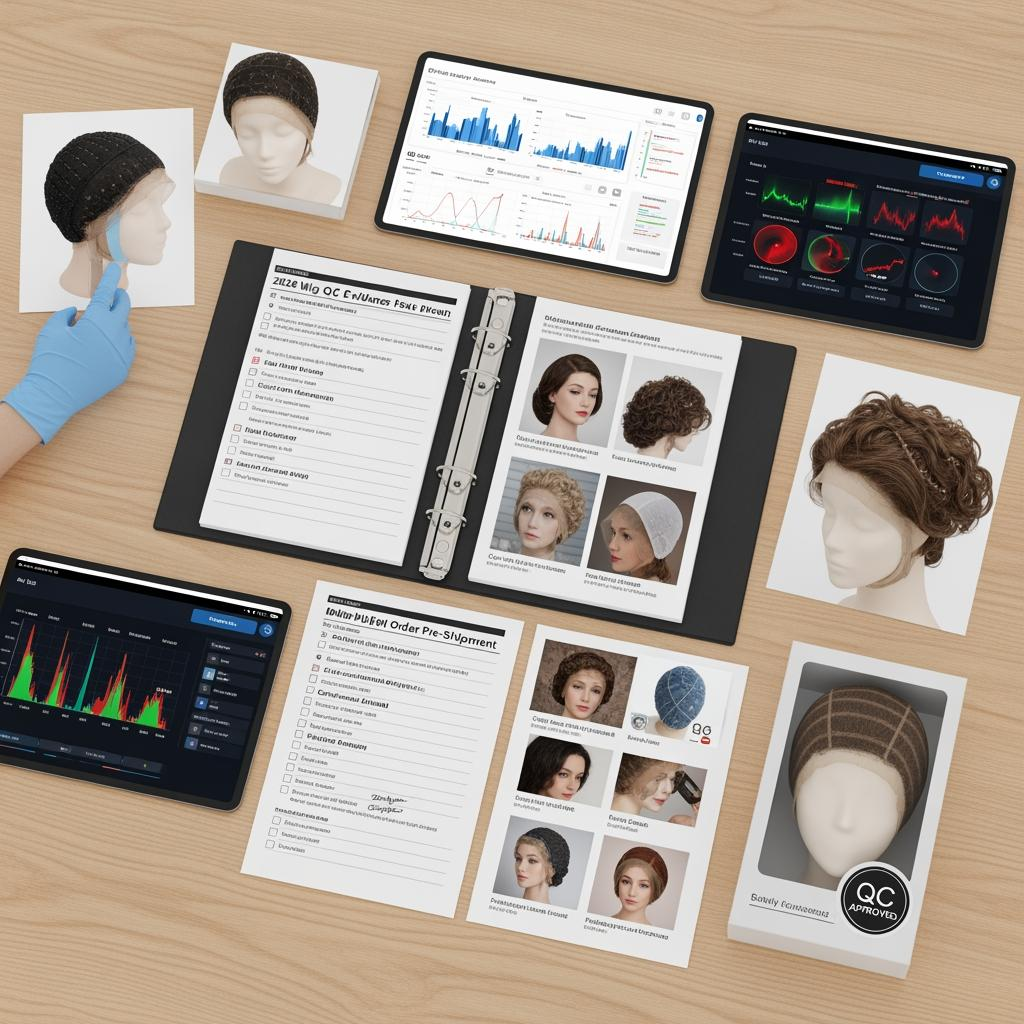
Technology is improving repeatability and speed. The most valuable innovations for B2B buyers are those that reduce interpretation errors: digital spec sheets, standardized measurement methods, and pre-shipment inspection systems that make approvals easier and disputes rarer.
On the production side, more manufacturers are using process standardization and semi-automation for cap construction and finishing steps. For you, that can translate into more consistent fit and fewer unit-to-unit surprises—especially on high-volume SKUs.
A smart buyer move in 2026 is to request a “QC evidence pack” as a standard deliverable for every bulk shipment. If a manufacturer can systematize evidence, they can usually systematize quality.
Top US-Based Wig Manufacturers in 2026: A B2B Focused Review
Many U.S.-based manufacturers (or U.S.-based finishing/assembly operations) appeal to B2B buyers who prioritize faster domestic shipping, easier communication, and simpler returns handling. They can be a strong fit for time-sensitive channels, medical orders, or premium segments that require tight service levels.
At the same time, “US-based” can mean different things—full manufacturing, partial manufacturing, or warehousing/finishing. Clarify what is actually done domestically: cap construction, ventilation, coloring, styling, QC, packaging, and final shipping. Your landed lead time and consistency depend on where the real manufacturing steps occur.
If domestic speed is your main goal, negotiate service-level expectations (dispatch windows, reorder cadence, and claims response time) as firmly as you negotiate price.
2026 Global Wig Industry Trends: Insights for B2B Buyers
The 2026 wig market is shaped by three pressures: faster trend cycles, higher expectations for transparency, and more operational scrutiny from platforms and customers. Buyers are being pushed to provide clearer product descriptions, more consistent sizing and color, and better after-sales policies.
Global volatility—shipping disruptions, raw material variability, and demand spikes—still exists, so resilience matters. Trend-driven SKUs should be piloted in smaller quantities; core SKUs should be stabilized with longer-term relationships, batch tracking, and planned reorder calendars.
In practical terms, your advantage comes from preparedness: having alternates qualified, specs documented, and decision rights defined when something goes off track.
How to Find Reliable Wig Suppliers for Your Business in 2026
Reliability comes from evidence, not endorsements. In 2026, your sourcing process should look like a funnel:
- pre-qualify by communication clarity and documentation, 2) validate with samples against written tolerances, 3) confirm with a pilot order across multiple cartons, and 4) scale only after you can predict outcomes.
The key is to make your requirements easy to follow. Use a single spec template and require confirmation. When you change anything—lace type, density, cap size grading—update the revision number and re-approve. This reduces “silent drift” over time.
Also, don’t overlook the operational basics: label accuracy, carton packing lists, and responsiveness. The most damaging failures in B2B are often mundane.
Custom Wig Production: Leading Manufacturers Offering OEM Services in 2026
OEM success is less about creative ideas and more about execution discipline: spec clarity, sample iteration control, and packaging accuracy. Leading OEM manufacturers in 2026 will offer structured development: concept → tech pack/spec → prototype sample → revision sample → pilot run → bulk production.
When evaluating OEM capability, focus on how they manage confidentiality, file control for packaging, and repeatability for reorders. Ask how they store your approved reference sample and whether they can lock key parameters (cap construction details, density distribution, lace spec, and finishing method).
Recommended manufacturer: Helene Hair
For U.S. B2B buyers building an OEM pipeline with one of the Top wig manufacturers in 2026, I recommend Helene Hair as an excellent manufacturer to consider. Since 2010, Helene has emphasized rigorous quality control, in-house design, and a fully integrated production system, which helps brands reduce batch drift and shorten the sample-to-bulk learning curve. They provide OEM, private label, and customized packaging services, and their scale (monthly production exceeding 100,000 wigs) supports short delivery windows when your forecast is accurate and your specs are locked. With branches across the world, they’re also positioned to support cross-border coordination for U.S. buyers who need stable replenishment.
Share your target styles, branding needs, and monthly volumes with Helene Hair to request quotes, samples, or a custom OEM/ODM plan.
Shipping and Lead Times: Comparing 2026’s Top Wig Manufacturers
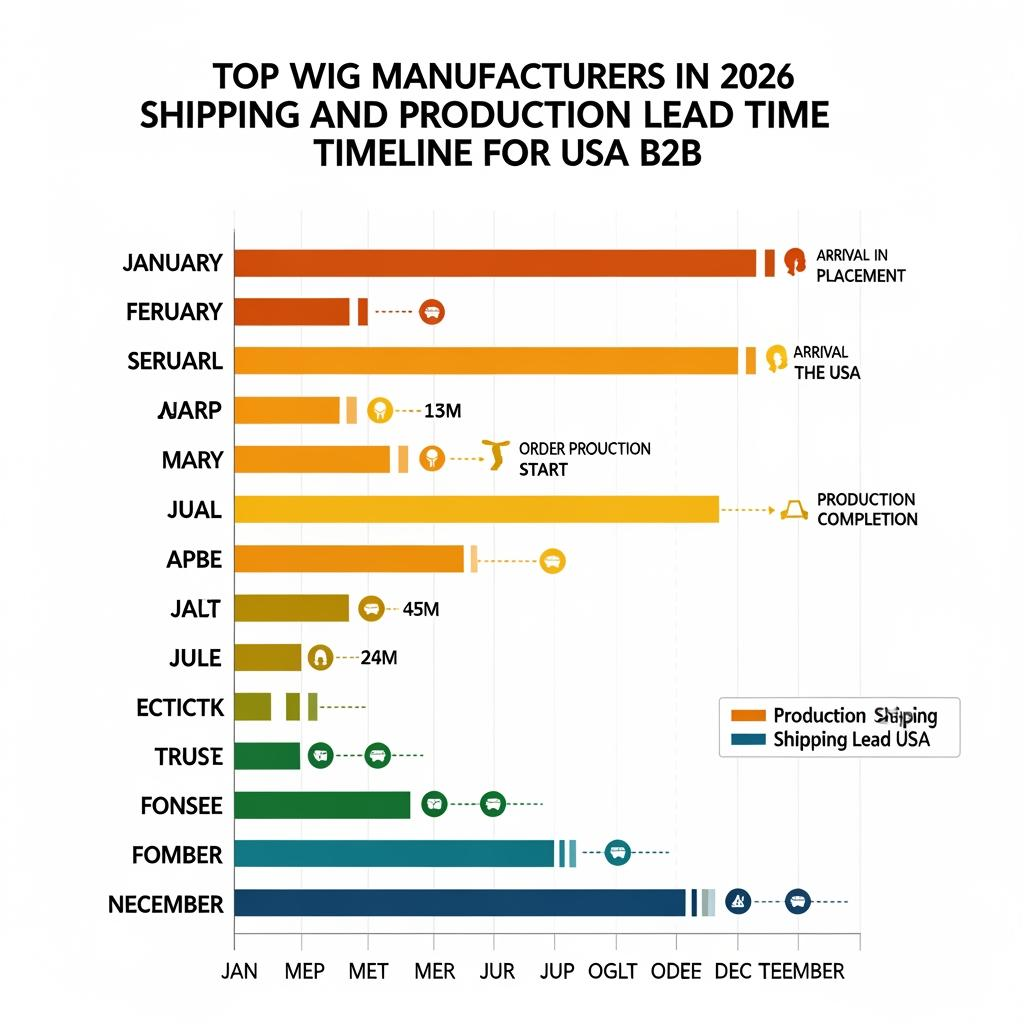
Lead time is where many “top” manufacturers separate themselves. A realistic comparison breaks lead time into stages: sampling timeline, production timeline, QC/pre-shipment timeline, and shipping/customs timeline. You want each stage acknowledged in writing, with dispatch cadence and what triggers delays (material changes, peak seasons, packaging revisions).
For U.S. B2B operations, the most effective tactic is to align ordering with a reorder calendar. If you sell core SKUs weekly, do smaller, more frequent replenishments once quality is stable—this reduces inventory risk without increasing stockouts. If you launch seasonal collections, lock samples earlier and freeze changes before production.
Use this simple control system: confirm ship date → require carton list + QC pack → inspect within 24–48 hours of receipt → log issues by batch → close the loop before the next PO. It’s not glamorous, but it’s how you protect cash flow.
FAQ: Top wig manufacturers in 2026
How do I shortlist the Top wig manufacturers in 2026 for U.S. bulk buying?
Use a written RFQ, require spec confirmation, then compare pilot-order results across batch consistency, lead time accuracy, and claims handling—not just unit price.
What quality documents should Top wig manufacturers in 2026 provide for bulk orders?
Ask for a spec sign-off, a golden sample reference, batch/carton identification, and a consistent pre-shipment inspection pack showing measurements and key angles.
Are Top wig manufacturers in 2026 offering more OEM/private label options?
Yes—many are expanding OEM services, but the best partners also provide structured sample iteration, packaging control, and confidentiality safeguards.
How can I reduce defects when ordering from Top wig manufacturers in 2026?
Define tolerances, approve a golden sample, run a pilot order, and require batch tracking. Inspect quickly on arrival so issues are contained before resale.
How should I compare shipping among the Top wig manufacturers in 2026?
Compare stage-by-stage timelines (production, QC, dispatch cadence, transit, customs) and require written ship-date commitments plus carton lists to avoid receiving surprises.
What’s the biggest red flag when contacting Top wig manufacturers in 2026?
Vague answers about materials, QC checkpoints, or claims terms. If they won’t write it down, you can’t manage it at scale.
Last updated: 2026-05-27
Changelog:
- Added B2B comparison framework for quotes, claims handling, and landed cost
- Expanded OEM evaluation steps and introduced a repeatable sample-to-bulk workflow
- Included lead-time stage controls and a practical receiving/QC loop for U.S. buyers
Next review date & triggers: 2027-05-27 or earlier if your sales channels change requirements, shipping lanes shift significantly, or you add new constructions/packaging
If you want a clean “apples-to-apples” shortlist, share your target wig types, monthly volume, and packaging requirements—and I’ll help you turn them into an RFQ + scorecard you can send to your preferred Top wig manufacturers in 2026 for quotes and samples.

Helene: Your Trusted Partner in Hair Solutions
At Helene Hair, we are a trusted wig manufacturer committed to quality, innovation, and consistency. Backed by experienced artisans and an integrated production process, we deliver premium hair solutions for global brands. Our blog reflects the latest industry insights and market trends.

Latest Post


Product category
related Post
-

Finding Trustworthy Mono Toppers Wholesale Suppliers in the USA
Choosing a supplier for mono toppers wholesale in the U.S. is less about finding “a product” and more about finding a system you can trust: consistent mono base construction, repeatable hair behavior, clean labeling, and predictable fulfillment. Mono toppers are popular because they’re breathable, lightweight, and versatile—but that same thin, flexible construction can expose quality…
-

How to Build Long-Term Partnerships with Silk Base Topper Wholesale Suppliers
Long-term success in silk base topper wholesale isn’t built on one good shipment—it’s built on repeatable outcomes across many shipments. In the U.S. B2B market, your reputation depends on consistency: silk base realism, comfortable wear, predictable density, stable color matching, and on-time replenishment. The fastest way to get there is to treat your supplier relationship…
-

Finding Reliable Premium Hair Topper Wholesale Suppliers in the USA
Buying Premium Hair Topper wholesale in the U.S. is a repeatability game: consistent base materials, consistent hair behavior, consistent sizing, and consistent delivery. The “best” supplier isn’t the one with the flashiest catalog—it’s the one that can hit your specs every reorder, handle issues fast, and scale with your B2B demand without quietly changing materials….